木材重構項目
2024-01-27 19:38:28布朗
世界建筑 2024年1期
贊·布朗
項目負責人:贊·布朗
項目合作者:J.Jensen,Roberto Crocetti
支持機構:Realdania慈善協會
Project Manager: Xan Browne
Project Associates: J.Jensen,Roberto Crocetti
Funded: Realdania
木材重構探究廢棄木材的建筑潛力,旨在挑戰我們對被視為廢物的材料的看法。將樹木轉變成建筑的過程中涉及到許多參與者、資源和文化模式,包括森林管理、砍伐、干燥、鋸切、打磨和表面處理。隨著時間的推移,木材與周圍環境(包括居民生活、工匠操作、昆蟲棲息和濕度變化)的相互作用會導致其出現裂縫、積灰、釘子嵌入、變形和涂改標記。這些特征往往是二手木材價值低的原因,其中大部分木材都被用于能源回收。
該項目研究了建筑如何將被認為是缺陷的材料特性作為積極因素來進行設計,從而延長木材的使用壽命。該結構被視為一個建筑部分,具有重復的組件、特定的荷載和公共建筑的規模。每個組件都具有相同的外部幾何形狀,但根據組件設計承載的負荷不同,其密度也有所不同。組件的生產體現了短供應鏈和將數字仿真與開放的制造技術相結合的設計方法。□(孫斯坦 譯)

1 木材重構項目 Wood ReFramed Project
Wood ReFramed explores the architectural potential of discarded wood,aiming to challenge our perception of materials that we regard as waste.The process of transforming trees into buildings involves many actors,resources,and cultural norms,including forestry,felling,drying,sawing,profiling,sanding,and surface treating.Over time,the interaction between timber and its environment -with inhabitants,craftspeople,insects,and humidity -results in cracks,dust,nails,deformations,and markings.These traits often the cause for secondary timber's low value,with the majority destined for energy recovery.
The project investigates how architecture can contribute to longer timber service lives by incorporating the material traits we call defects as active design contributors.The structure is conceived of as a building segment,featuring repetitive components,specific loads,and a scale reminiscent of a public building.Each component shares the same external geometry but varies in density based on the loads the components are designed to carry.Component production exemplifies short supply chains and design methods that integrate digital simulation with accessible fabrication techniques.
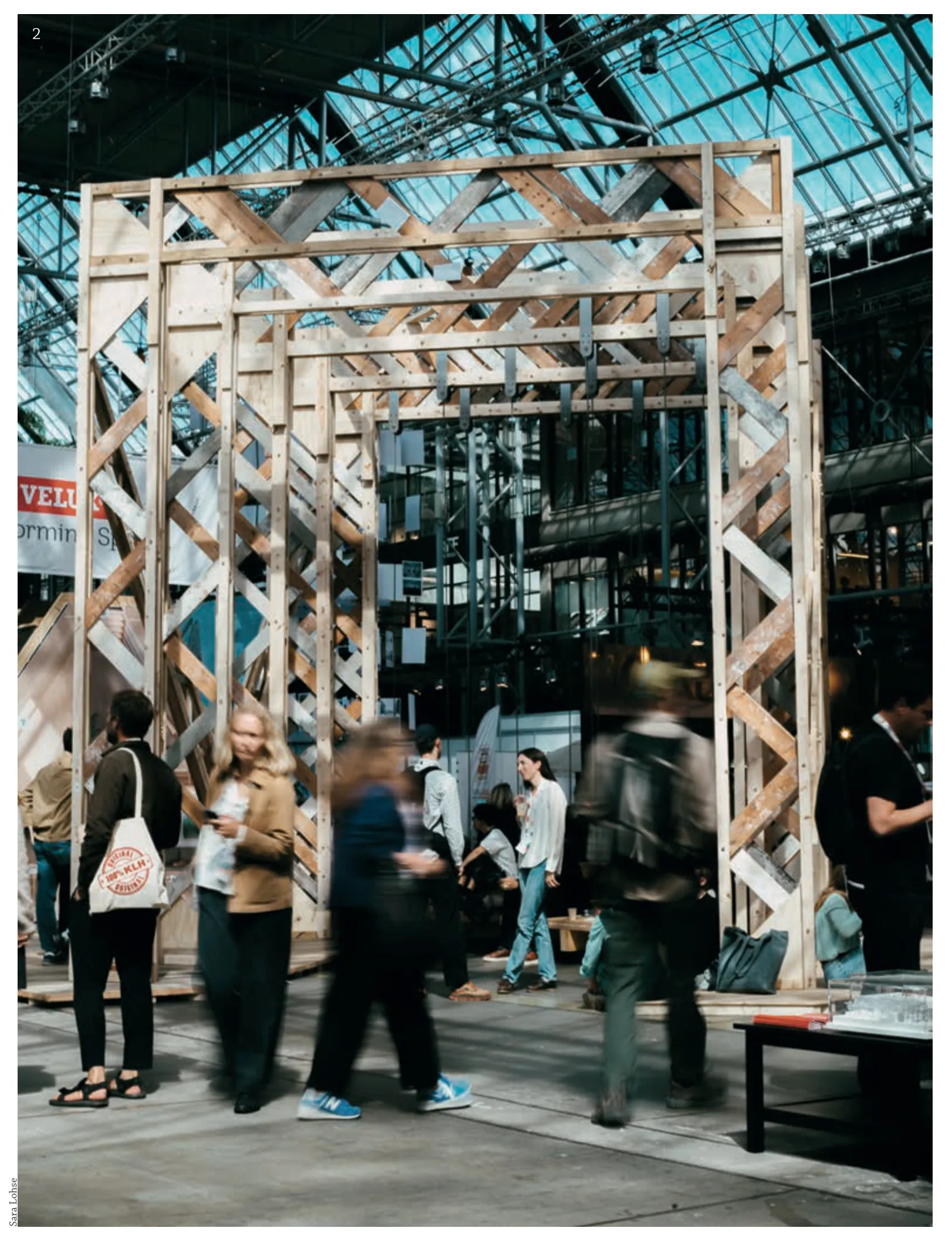
2 人們與展館互動 People interacting with the pavilion
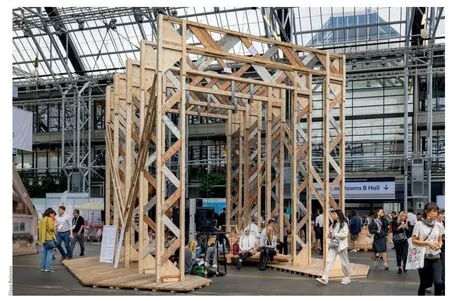
3 人們坐在展館里享受空間 People sitting and enjoying the pavilion space

4 廢木料 Wastewood material

5 亭子橫梁的細節 Detail of the pavilion beams

6 梁和柱之間的接縫 Joinery between beams and columns

7 展館休憩區 Pavilion sitting area
猜你喜歡
北方建筑(2021年6期)2021-12-31 03:03:54
文苑(2020年10期)2020-11-07 03:15:36
現代裝飾(2020年7期)2020-07-27 01:27:42
現代裝飾(2020年6期)2020-06-22 08:43:12
現代裝飾(2020年4期)2020-05-20 08:55:08
流行色(2020年1期)2020-04-28 11:16:38
藝術啟蒙(2018年7期)2018-08-23 09:14:18
海峽姐妹(2017年7期)2017-07-31 19:08:17
Coco薇(2017年5期)2017-06-05 08:53:16
福建農業科技(2016年10期)2016-03-07 09:46:49