西部陸海新通道物流和運營組織中心主任劉瑋: 西部大通道為暢通國內國際雙循環注入新動能
2023-12-25 10:23:08劉丁睿
重慶與世界 2023年11期
劉丁睿


Liu Wei, Director of the Coordination Center for Logistics and Operation of the New International Land-Sea Trade Corridor (ILSTC)
ILSTC Injecting New Momentum for Smooth Domestic and International Economic Circulations
實現西部12省區市全覆蓋、輻射全國18個省份,通達全球120個國家和地區,西部陸海新通道作為中國西部地區一條重要的南北向陸海聯動戰略通道,北接絲綢之路經濟帶,南接21世紀海上絲綢之路,協同銜接長江經濟帶,是服務“一帶一路”倡議和新一輪西部大開發的重要部署,也是加快形成國際國內雙循環新發展格局的重要舉措。
西部陸海新通道物流和運營組織中心主任劉瑋接受本刊記者專訪,回顧這條國際陸海貿易新通道十年蝶變,解讀其在擴大對外開放和交往中的獨特作用,并介紹未來聚焦發展領域。
整合市場資源? ?描繪陸海新通道“新藍圖”
2019年,國務院批復《西部陸海新通道總體規劃》,明確重慶為通道物流和運營組織中心。近年來,重慶積極牽頭會同沿線省(區、市)深化省際協商合作,高水平共建西部陸海新通道,形成許多具有辨識度的標志性成果,推動其成為“一帶一路”倡議框架下重要的國際公共服務產品和國際合作平臺。
劉瑋介紹,目前重慶利用自身的物流網絡,率先在西部陸海新通道上形成鐵海聯運、國際鐵路聯運、跨境公路運輸三種主要運輸組織方式,擴大貨源組織和輻射范圍。同時,以團結村中心站、魚嘴站、小南埡站三大始發站為主樞紐,配合三種主要運輸組織方式,實現西部陸海新通道在重慶的全域覆蓋。
“多種積極要素疊加之下,重慶在西部陸海新通道的物流規模,在沿線省(區、市)中持續領先。”劉瑋表示,2023年1—10月,重慶經西部陸海新通道三種主要運輸組織方式共運輸14.41萬標箱,同比增長20%,占沿線地區總量保持在27%左右。截至2023年10月底,重慶經西部陸海新通道三種主要運輸組織方式共累計運輸56.4萬標箱,貨值933.48億元,對外通達全球120個國家和地區的473個港口,貨物品類拓展到980余種。
擴大“朋友圈”? ?提升對外開放水平
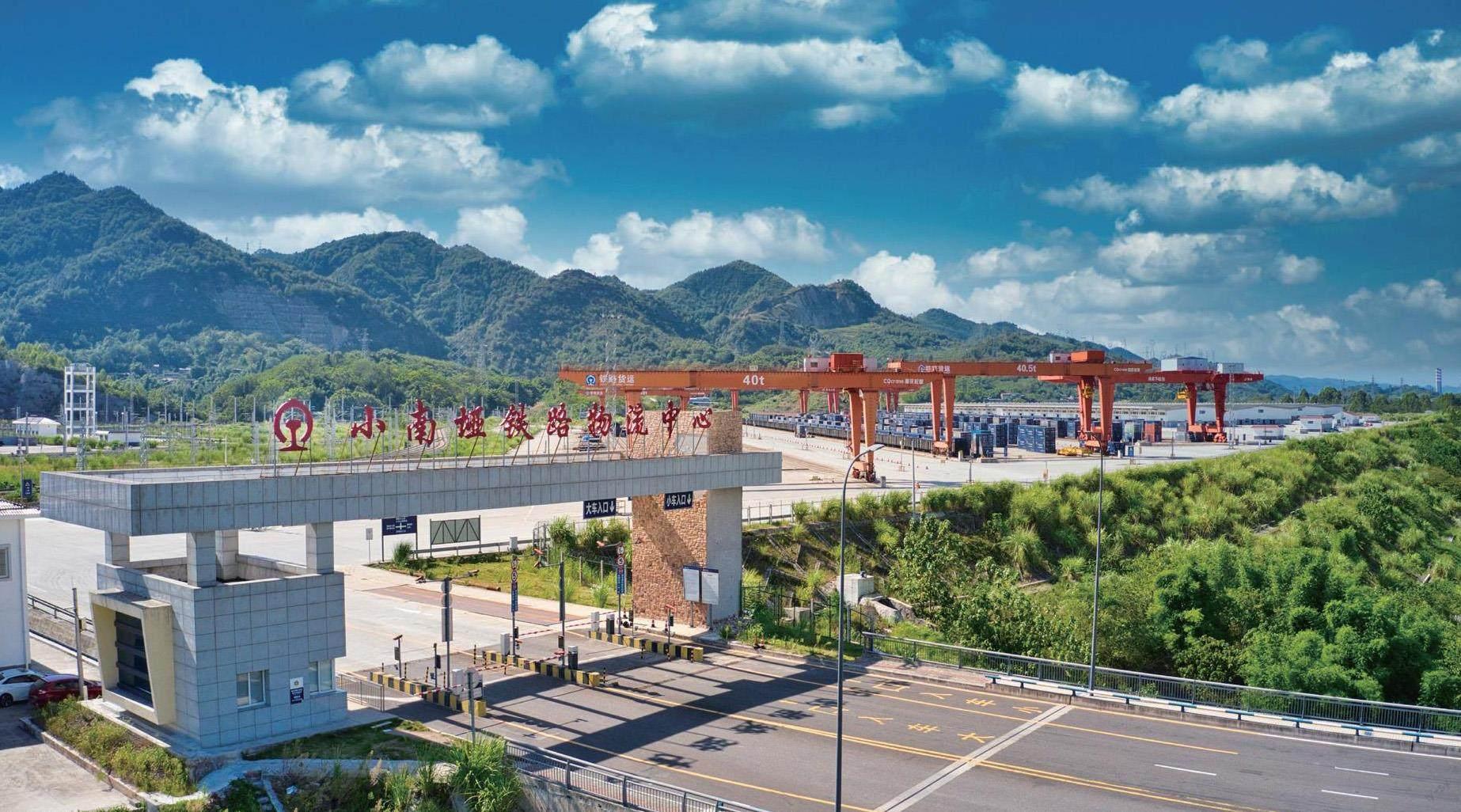
作為連接“一帶”和“一路”的陸海聯動通道,西部陸海新通道不斷加強對外開放及國際合作,積極拓展輻射范圍。8月31日,渝貿全球·重慶出口商品(泰國)展覽會在泰國曼谷舉行,西部陸海新通道部分特色產品集中參展外國展會,將重慶油茶、廣西果干、寧夏紅酒、甘肅百合等通道沿線省份特色產品展現給全世界;9月21日,首班西部陸海新通道火鍋食材進口班列抵達重慶江津小南埡鐵路物流中心,貨值680萬元的巴西進口凍雞爪、越南進口耗兒魚等火鍋食材進入重慶百姓的餐桌。“1個月內,西部陸海新通道在‘走出去‘引進來上連續實現新突破,充分展現在全球貿易中的重要作用和強大活力。”劉瑋稱。
如今,借助西部陸海新通道,老撾的優質大米、啤酒、咖啡、木炭源源不斷地進入中國市場;重慶的摩托車、汽車等產品遠銷東南亞。在重慶帶動下,僅一年多的時間,就有超過10個共建“一帶一路”國家的重點城市成為西部陸海新通道的新晉目的地,包括泰國林查班、緬甸仰光、哈薩克斯坦阿拉木圖等。
6年來,西部陸海新通道已成為推動高質量共建“一帶一路”,促進交流合作的強大動能。據統計,2017—2022年,西部陸海新通道沿線省份經廣西口岸進出口貿易總額,從不足3000億元增長至5200多億元,年均增長12%。沿線省份對東盟10國進出口額,從2019年的6916億元提高到2022年的8817億元,年均增長8.91%。
打造標志性成果? ?爭取突破性進展
3月27日,重慶市建設西部陸海新通道工作推進大會舉行。“按照會議精神,下一步我們將聚焦通道運輸能力、經濟協同發展、通道貿易規模、通道服務效率、通道數字賦能等五方面,會同‘13+2省(區、市),堅持‘共商、共建、共享原則,進一步加強交流合作,力爭取得更多標志性成果。”劉瑋說。
西部陸海新通道結下累累碩果,更承載著更大的合作空間。展望未來,西部陸海新通道將繼續保持良好發展態勢,為推動高質量共建“一帶一路”和加快構建以國內大循環為主體、國內國際雙循環相互促進的新發展格局作出更大貢獻。
圖/受訪者提供
As a strategically important north-to-south land-sea corridor in western China, the New International Land-Sea Trade Corridor (ILSTC) covers all 12 provinces (autonomous regions and municipalities) in western China, reaching 18 provinces in China and 120 countries and regions worldwide. It connects the Silk Road Economic Belt to the north and the 21st Century Maritime Silk Road to the south and coordinates with the Yangtze River Economic Belt, representing a significant project serving the Belt and Road Initiative (BRI) and a new round of development in western China, as well as an essential initiative to accelerate the formation of a new development paradigm with domestic circulation as the mainstay and domestic and international circulations reinforcing each other.
Liu Wei, Director of the Coordination Center for Logistics and Operation of the ILSTC, gave an interview to our reporter, reviewing the evolution of the ILSTC over the past 10 years, explaining its unique role in expanding opening-up and interaction, and outlining development priorities in the future.
Charting a New Blueprint for the ILSTC to Integrate Market Resources
In 2019, the State Council approved the Master Plan for the New International Land-Sea Trade Corridor, designating Chongqing as the corridors organization center for logistics and operations. Over the years, Chongqing has worked to engage the provinces (autonomous regions and municipalities) along the ILSTC with inter-provincial consultations and cooperation to build the corridor with high standards, delivering several landmark results and elevating the ILSTC to a significant international public good and an international cooperation platform under the framework of the BRI.
Chongqing has utilized its logistics network to spearhead the formation of three logistic organization forms along the corridor: rail-sea multimodal transport, international railway transport, and cross-border trucking services, thus expanding the organization and coverage of cargo sources, said Liu Wei. Meanwhile, three major departure stations, Tuanjiecun Terminal Station, Yuzui Station, and Xiaonanya Station, are used as the main hubs for the three primary forms of logistics organization, realizing the full coverage of the ILSTC in Chongqing.
“With those favorable factors at play, Chongqing is a leading player among the provinces (autonomous regions and municipalities) along the ILSTC in terms of logistic volume along the corridor.” From January to October this year, Chongqing transported 144,100 TEUs of cargo through the ILSTC, up 20% y-o-y, accounting for about 27% of the total volume along the corridor, said Liu Wei. As of the end of October 2023, Chongqing had transported 564,000 TEUs of cargo through the corridor, with a value of RMB93.348 billion, reaching 473 ports in 120 countries and regions worldwide, with the number of cargo categories expanding to 980.
Expanding the “Circle of Friends” to Enhance Opening-Up
As a land-sea corridor connecting the Silk Road Economic Belt and the 21st Century Maritime Silk Road, the ILSTC has expanded opening-up and international cooperation to enlarge its coverage. On August 31, the Chongqing Export Commodities Exhibition, themed on “Chongqing Trade with World,” was launched in Bangkok, Thailand, showcasing unique goods produced along the corridor to a global audience, such as Tea-oil Camellia from Chongqing, dried fruit from Guangxi, red wine from Ningxia, and lily buds from Gansu. On September 21, the first ILSTC train for importing hot pot ingredients arrived at Xiaonanya Railway Logistics Center in Jiangjin District, Chongqing, bringing RMB6.8 million worth of Brazilian frozen chicken claws, Vietnam filefish, and other hot pot ingredients to Chongqing peoples dining tables. “In just one month, the ILSTC made continuous breakthroughs in ‘shipping out and ‘bringing in, showing fully its important role and strong vitality in boosting global trade,” said Liu Wei.
Through the corridor, high-quality rice, beer, coffee, and charcoal from Lao PDR are flowing into the Chinese market, while motorcycles and automobiles from Chongqing are reaching as far as Southeast Asia. Spearheaded by Chongqing, in just over one year, more than 10 key cities in countries along the Belt and Road have become the newest destinations of the ILSTC, including Laem Chabang in Thailand, Yangon in Myanmar, and Alma-Ata in Kazakhstan.
Over the past six years, the ILSTC has emerged as a vital engine driving the high-quality Belt and Road cooperation and promoting exchanges and cooperation. Statistics show that from 2017-2022, the total import and export volume of provinces along the ILSTC through Guangxi ports grew from less than RMB300 billion to more than RMB520 billion, with a compound annual growth rate of 12%. The import and export volume of provinces along the ILSTC with the 10 ASEAN countries increased from RMB691.6 billion in 2019 to RMB881.7 billion in 2022, with a compound annual growth rate of 8.91%.
Delivering Signature Results and Striving for Breakthroughs
On March 27, a conference to accelerate the development of the ILSTC was held in Chongqing. “Putting into practice the guiding principles of the conference, going forward, Chongqing will strengthen exchanges and cooperation with ‘13+2 provinces (autonomous regions and municipalities) in terms of corridor transportation capacity, coordinated economic development, the trade volume of the corridor, the efficiency of corridor services, and the digital transformation of the corridor, by following the principles of ‘planning together, building together and benefiting together, striving to deliver more signature results,” said Liu Wei.
Based on the fruitful results, the ILSTC promises a broader space for future cooperation, said Liu Wei. Looking into the future, the ILSTC will maintain a sound development momentum and contribute more to the high-quality Belt and Road cooperation and the faster formation of a new development paradigm with domestic circulation as the mainstay and domestic and international circulations reinforcing each other.
Photos/Interviewees
猜你喜歡
環球人文地理(2022年8期)2022-09-21 03:49:42
物流技術與應用(2020年11期)2020-03-11 03:11:36
意林·全彩Color(2019年11期)2019-12-30 06:08:38
汽車觀察(2018年12期)2018-12-26 01:05:44
重慶行政(公共人物)(2018年5期)2018-11-06 07:42:18
消費導刊(2018年8期)2018-05-25 13:20:16
重慶文理學院學報(社會科學版)(2017年5期)2017-10-23 01:30:02
今日重慶(2017年5期)2017-07-05 12:52:25
現代企業(2015年2期)2015-02-28 18:45:09
商界(2014年12期)2014-04-29 00:44:03