
New Consensus of the British Party Politics and the Prospects of the UK-Europe Relations
2023-10-30 23:06:32WangZhanpeng
當(dāng)代世界英文版 2023年4期
Wang Zhanpeng
After the Brexit referendum, British politics went through the most turbulent period since the end of World War II. In less than four months during the summer and autumn of 2022, the UK had two Prime Ministers and three Chancellors of the Exchequer. Words such as “Italianize”, “moment of crisis”, and “national decline” popped up in the discussions on the UK. To observe and understand UK-European relations, it is important to look at political parties competition and their policy adjustments in response to the crisis.
Brexit and the Evolution of British Party Politics
In post-WWII British party politics, policies of the two major parties, the Conservative Party and the Labour Party, converged and diverged during party competition. The Labour Party vigorously pushed forward social democratic reforms, and the Conservative Party passively accepted most of the policy propositions of the Labour Party, laying the foundation of post-WWII consensus politics. The radical liberalism reforms of Margaret Thatchers administration and new Labour Partys adoption of the “third way” of market capitalism have, to some extent, remoted the development of consensus politics in the UK. Since the beginning of the 21st century, Western capitalism has faced a number of challenges, including economic and financial crisis and the rise of populism. Relationship with Europe has become a new issue of party political competition in addition to the traditional Left and Right-wing ideologies in the UK. Both the Conservative Party and the Labour Party have been trying to respond to these challenges by repositioning themselves. After Jeremy Corbyn became the Leader, the Labour Party turned left; whereas around the 2016 Brexit referendum the Conservative Party has been mired in internal strife on relations with Europe. With the liberals sidelined, Boris Johnson emerged as the spokesman for the partys right-wing and hardline Eurosceptic factions.
In 2019, the Conservative Party won the election, and British politics returned to the two-party model in format. But stability did not return to British politics. The legacy of Brexit - the ideologization of party politics, populism, and electoral politics - has exerted a significant impact on the Conservative governments internal and external policies. In the post-Brexit phase, UK-EU relations are no longer the most pressing political issue in Britain. COVID-19 pandemic, rising cost of living and the escalation of the Ukraine crisis have shifted the British governments attention. But the implications of Brexit, intertwined with these new problems, are still an important factor that directly or indirectly affects the direction of British party politics and the country.
For the Conservative Party, Brexit has resulted in reshuffling and reorganization in the party. After the 2019 election, the hardliners who are against European integration and advocate politics first have dominated the party leadership and parliamentary caucus. They have become a major force shaping policy formulation. At the beginning of Johnson administration, he put forward a regional balance program to dovetail social welfare with industrial strategy. However, the administration did not come up with practical measures to implement these policies. Due to the impact of COVID-19, the living cost continued to rise. Its ability to solve economic and social problems has raised doubts. In addition, the Johnson administration, haunted by corruption scandals, was weakened politically. Upholding the purity of Brexit and a tough stance on China and Russia have become a bargaining chip to gain the support of right-wing factions. As Britains economic woes worsened, it is all the more difficult to deliver the dividends proposed by the Brexit faction, such as immigration control, FTA network, and economic growth. This has resulted in a backlash from the public, the business community, and even the pragmatics within the Conservative Party.
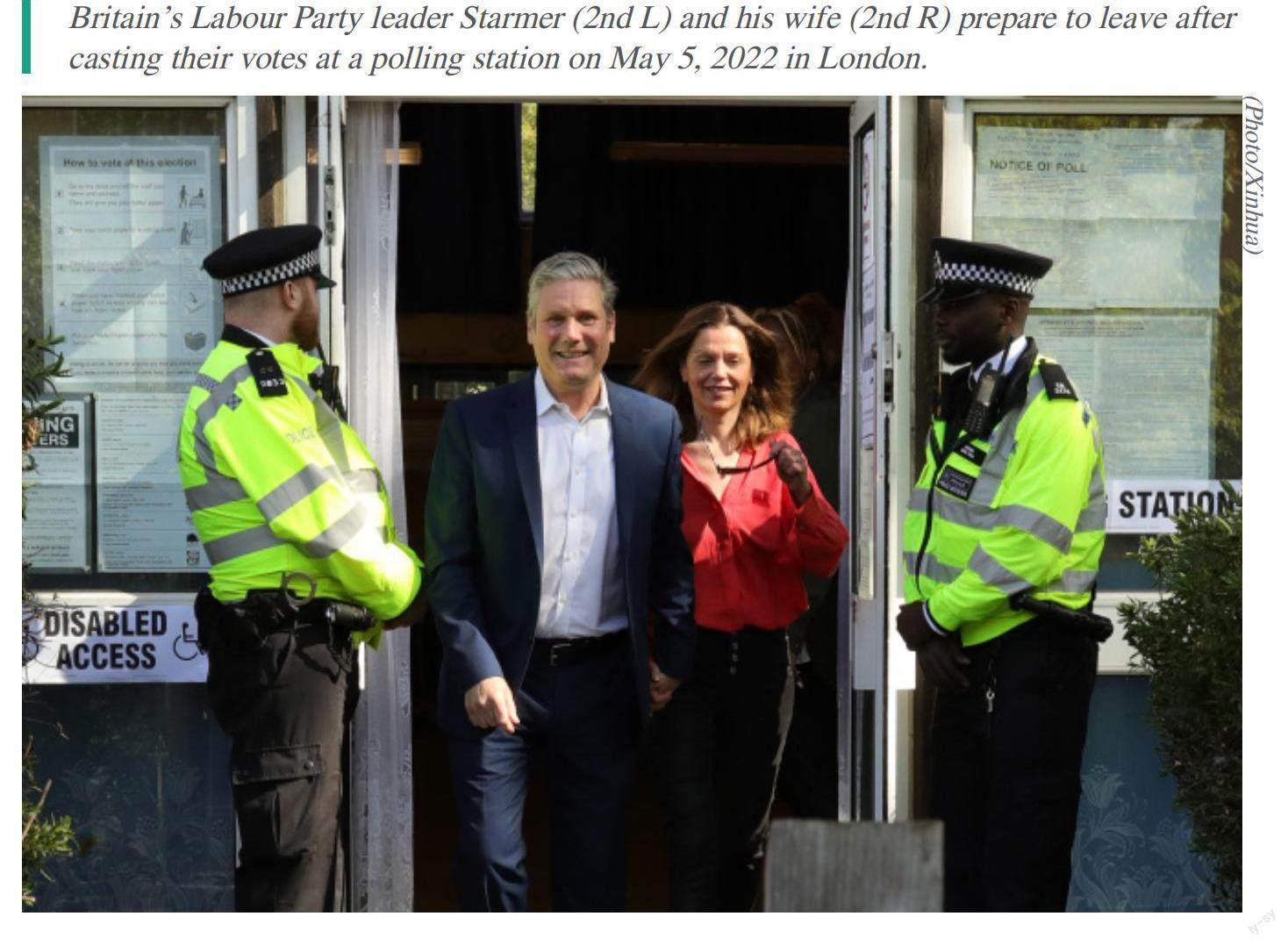
After losing four elections in a row since 2010, the new Labour Party leadership is faced with the urgent task of reorienting the party and regaining power. After the defeat in the 2019 election, the struggles between the leftists and the rightists or between the Corbyn faction and the Blair faction within the Labour Party has intensified. After Keir Starmer became the new leader of the Labour Party in April 2020, he first adopted the strategy of ideological silence, downplaying the left-wing ideological discourse to avoid the division of the Labour Party. Gaining a foothold within the party, the new Labour Party leadership gradually distanced itself from Corbynism.
With Brexit becoming a reality and people longing for stability, the Labour Party adjusted its policy towards the EU. Keir Starmer said that the Labour Party could not seek major changes in Britains relationship with Europe, the country should be united and look forward. If the Labour Party won the next election, it could immediately start to address the peoples concerns such as energy consumption, the high living cost, housing shortages, etc., actively respond to climate change, and improve the National Health Service and other services related to peoples immediate interests.
Sunak-Starmer consensus amid political turmoil
The turbulence in the British politics in 2022 exceeded expectations. The Conservative Party had to make policy adjustments after changing Prime Minister twice, while the Labour Party wished to maintain a steady policy position to retain its lead in popularity. The two major parties converged in dealing with urgent domestic economic and social issues and the European policy. Some commentators referred to it as the Sunak-Starmer consensus. The reasons for the political and economic turmoil in the UK in 2022 were mainly as follows.
First, the Conservative Party continued the politics-first and populist mindset formed during the Brexit process, and did not respond to the pressing governance issues in the post-Brexit period effectively. British political culture has a tradition of conservatism and pragmatism, focusing on the outcome of political behavior rather than following appropriate logic. However, the post-Brexit Conservative government, driven by the hardline right-wing Brexit faction within the party, deviated from this tradition. In the face of pressing economic and social problems such as the living cost crisis, the Conservative government has wavered and not performed. In the implementation of the Brexit agreement and on some other issues, the UK has became more confrontational, raising the risk of trade war with the EU and the negative effects of Brexit.
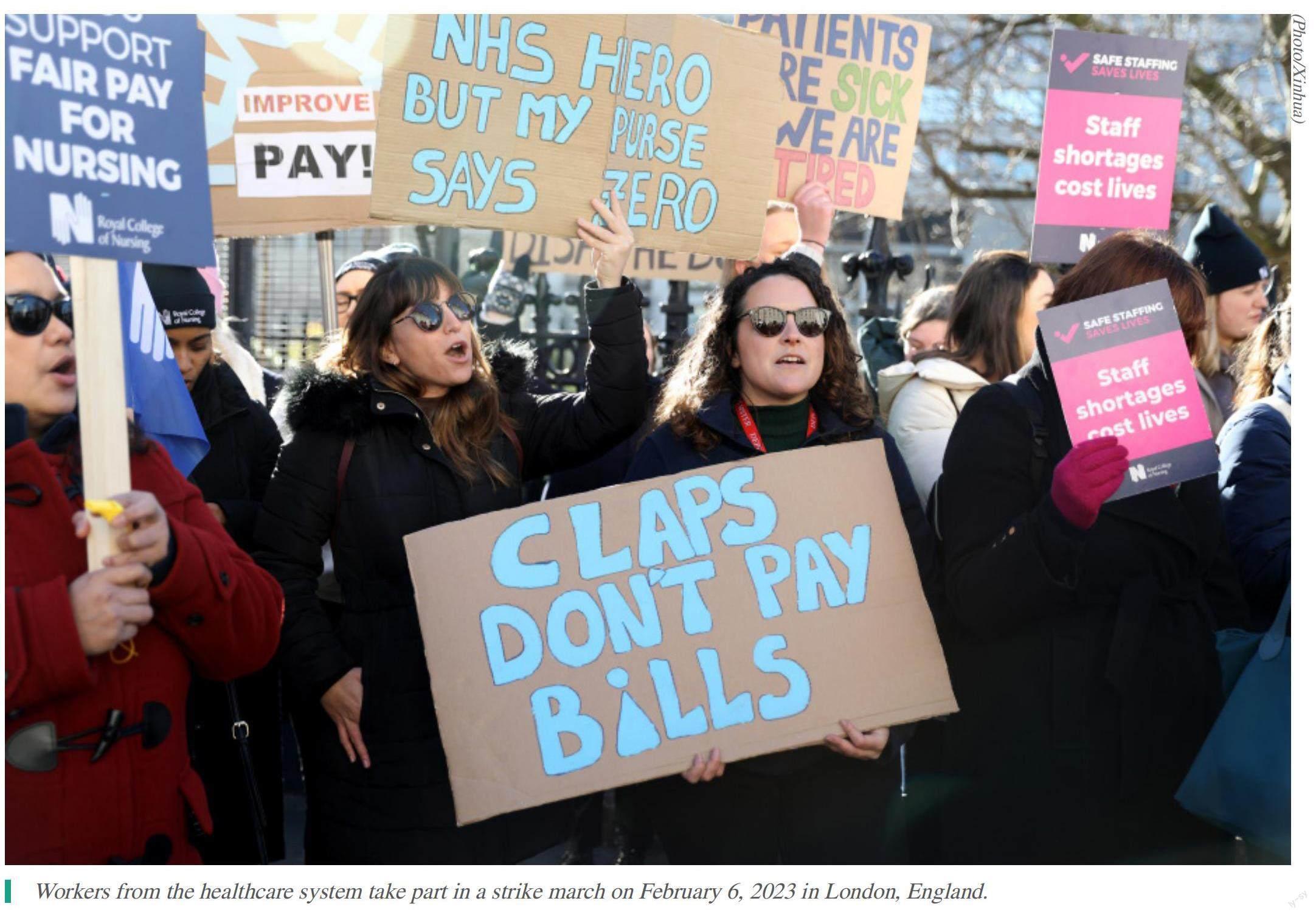
Second, the implications of Brexit, intertwined with the impact of COVID-19 and the Ukraine crisis, worsened the living cost crisis and economic problems. The stagflation and social unrest that plagued the UK in the 1970s have resurfaced, with the CPI surging and remaining high. Thus the UK faces the risk of prolonged recession. In response to pressures from the inflation and international financial market, the Bank of England has to tighten the monetary policy. The UK is facing a series of problems such as higher barriers to trade and movement of people, clogged industrial chain and supply chain, insufficient labor supply, and rising living cost. This has increased production and investment costs, leading to the closure, shutdowns, or relocations of manufacturing enterprises, and intensified industrial hollowing out. In addition, social divisions are growing, with strikes and street protests popping up.
Third, the scandals of the Boris Johnson government and the ensuing chaotic leadership change led to a crisis of confidence in the Conservative government and even in British politics. Plagued by scandals, the Johnson government was unstable. The subsequent chaotic change of Prime Ministers aggravated Britains political and economic difficulties. After being elected as Leader of the Conservative Party and becoming the Prime Minister, Liz Truss followed the neo-liberal dogma and pressed ahead with a tax cut budget to safeguard the interests of the rich in disregard of the reality of Britains unsustainable finances and constraints of the international market. As this policy led to financial market turmoil and rapid depreciation of the pound, the British credit rating faced the risk of being downgraded. The Bank of England had to intervene, and the Conservative Party had to push Sunak to the position of Prime Minister through a simplified leadership election process.
Fourth, since the Brexit, the Conservative Party has put Britain on the fast track of recession. The Westminster model of government, which the British is so proud of, has been labeled as “Italianized” in the process of Brexit. In 2022, the discussion of chaos in the UK extended to the economic sphere, delivering a new blow to the British pride. The British pounds depreciation to near parity with the US dollar and the Queens passing weakened the cohesion of the UK and the Commonwealth, marking a further decline in the UKs national strength and international standing. Strikes in various sectors had further lowered productivity. The competitiveness of the UKs traditionally leading industries, such as the financial sector, was eroded due to the uncertainty of the post-Brexit arrangements. The ongoing Ukraine crisis and the increased uncertainty in global economic growth have heightened the risk of the UKs further decline.
The 2024 election will be the focus for the Conservative Party and the Labour Party. The Sunak administration still does not have an effective strategy to address the UKs economic difficulties, and its ability to lead the ever more divided Conservative Party to cope with internal and external challenges and prioritize economic and livelihood issues has been widely questioned. Since September 2022, the approval rating of the Conservative Party has fallen behind that of the Labour Party by more than 20% in most of the opinion polls. If the Conservative Party fails to show its ability of improving peoples lives and boosting national economic growth as soon as possible, it will have little hope of winning the 2024 general election. The Brexit legacy is also becoming a political burden for the Conservative Party. Since Sunak assumed office, he took a change from his predecessor Johnsons governance style of making high-profile rhetoric. He paid more attention to the livelihood issues. When dealing with the EU, he toned down confrontation and focused on negotiation to solve the differences between the two sides.
The Labour Party, in a relatively favorable position, continues to criticize the Conservative Partys myopic policy and practice of sacrificing the countrys long-term future for the sake of election gains. But the Labour Party also refrains from radical policy propositions. The Labour leadership has promised not to increase public spending significantly if it wins the election. In terms of democratic governance, the Labour Party puts forward the ideas of strengthening democratic participation, streamlining institutions, and abolishing the House of Lords. Both parties emphasize the return to rationality and oppose short-term behavior, advocating a pragmatic stance on domestic and foreign policies and narrowing the ideological gap. Some observers believe this means Britain could return to the consensus politics. However, there are many uncertainties and constraints as to whether the nascent Sunak-Starmer consensus will become a new consensus politics. At present, neither parties have a practical and effective program to solve the economic and livelihood problems. Although populism in post-Brexit Britain is not so blatant, its foundation is still there. If severe economic recession begins, there will be space for extreme politics.
Intra-party tensions of the two parties have also increased the difficulty of the long-term stable development of this consensus. After Brexit, electoral politics has become more influential in Britain. For example, the hardline right wing of the Conservative Party will, to a certain extent, support Sunaks pragmatic policy adjustments out of the fear of losing the ruling position. The left wing of the Labour Party will also tone down their criticism on the leaderships refusal to accommodate the interests of the working class. This also draws a red line for the two parties policy adjustments.
The direction of UK-EU relations under the New Consensus
After the transitional period of Brexit ended in 2021, the UK-EU relations have been characterized by coldness, alienation and conflicts. However, positive changes appeared in the UK-EU relationship in 2022.
First, Rishi?Sunak changed the confrontational style of the previous two Prime Ministers who put politics first and played up nationalism. He explicitly adopted the position of solving issues through negotiation and avoiding trade wars, although he was still constrained by the red lines set by the hardliners in his party. In Sunaks first foreign policy speech since assuming office, he proposed that British diplomacy needed to change from “grand rhetoric” to “robust pragmatism”. This indicates that the Sunak government will gradually promote a wide-ranging cooperation with the EU. To achieve this, it takes calmness and prudence rather than wishful thinking.
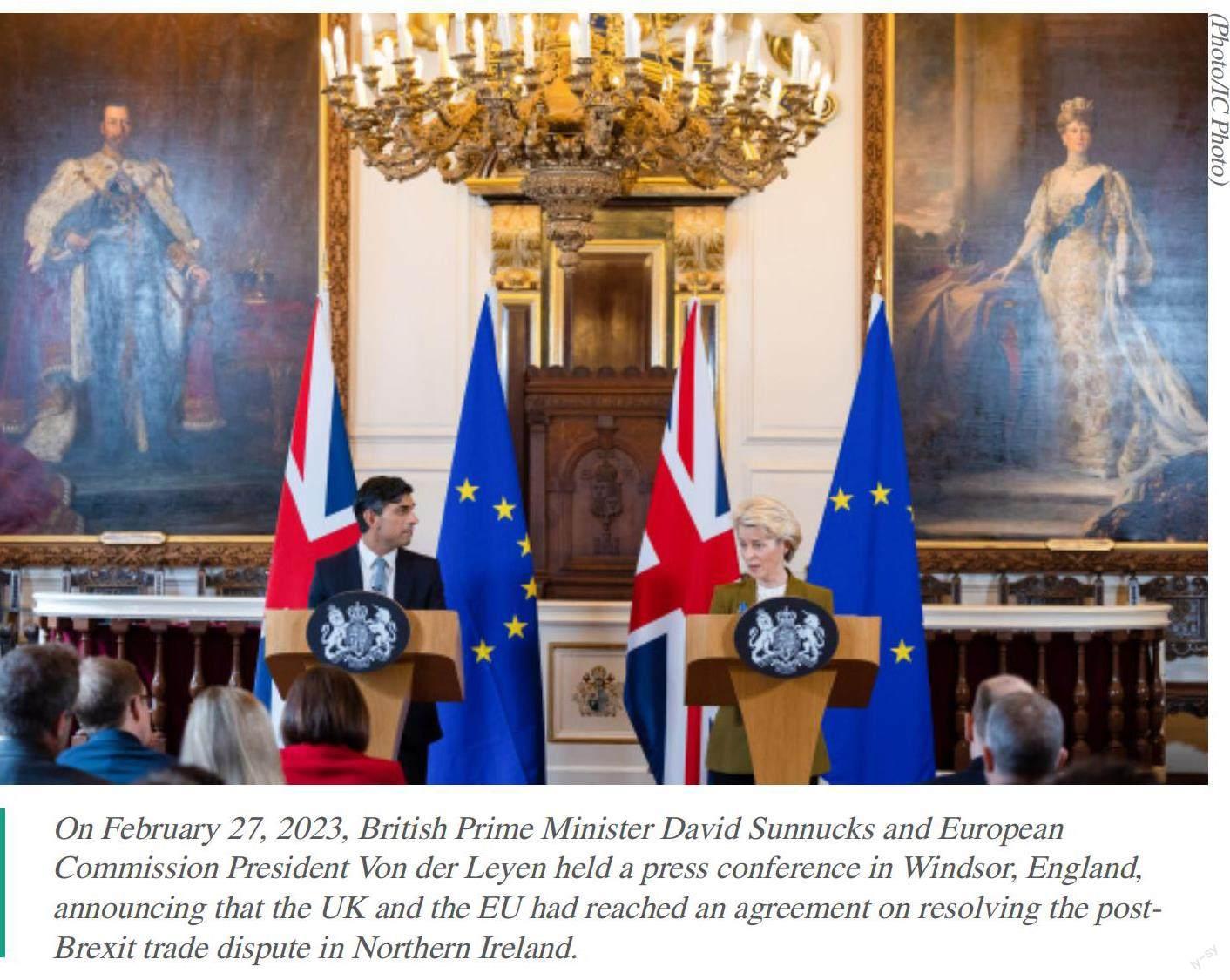
Second, despite the breakthrough in negotiations with the EU on the Northern Ireland border, the Sunak government still faces enormous pressure from the Eurosceptic within the party and Northern Ireland nationalist parties. Previously, the Boris Johnson government tried to unilaterally amend some key provisions of the Northern Ireland Protocol, with the excuse of protecting the sovereignty and the unified market of the UK. The EU reacted strongly. After the Sunak government came to power, the Britain and EU, using the negotiation on the Northern Ireland Protocol as a breakthrough, reached agreement on the Windsor Framework. It will help ease UK-EU relations and uphold the peace process in Northern Ireland. However, this principled agreement is still full of uncertainty in the implementation. Because the compromises have not met the requirements of the Democratic Unionist Party of Northern Ireland, and the hardliners in the British parliamentary deem ending the application of EU law in Northern Ireland as the sign of complete Brexit.
Third, with the escalation of the Ukraine crisis, the UK-EU political and security cooperation has continued to resume. The widely expected post-Brexit political and security agreement was not signed along with the economic and trade cooperation agreement. In the 2021 Integrated Review of Security, Defence, Development and Foreign Policy, the importance of the EU in the UKs foreign relations was weakened, to give emphasis to the independence of the UK brought by Brexit. In terms of action, while blindly following the United States, Britain favors small circles such as the Five Eyes and AUKUS, and its policies are tilting toward the Indo-Pacific region. After the outbreak of the Ukraine crisis, the Johnson administration intervened in high profile. The UK and EU stepped up policy coordination on the Ukraine issue. Meanwhile, the crisis has also strengthened the EUs strategic dependence on the US and transatlantic coordination, and the UKs significance in the Western strategic chess game has further weakened. The revised Integrated Review in 2023 has toned down acting as a leader in global affairs, setting out strengthening cooperation with the EU as a third party.
Against this backdrop, there have been three developments in the UK-EU political and security relations. First, the UK has been active in the European political community, expanding its influence in European affairs. This is in line with the long-term goal of “out of the EU but not out of Europe”. Sunak has actively participated in the activities of the community and pledged to host the 2024 Council meeting and serve as the rotating chair. Second, in November 2022, the United Kingdom joined the EU military mobility operations as a non-member state. Third, the UK has more active bilateral cooperation with EU member states. In March 2023, Sunak held a bilateral summit with Macron, announcing the rebooting of the entente. Under the NATOs Joint Expeditionary Force, the UK has interacted frequently with EU member states in Northern and Central and Eastern Europe. The sixth-generation fighter jet program jointly developed by the UK, Italy and Japan has been launched. In addition, the US has shelved the UK-US FTA negotiations, turned the UK out of the EU-US Trade and Technology Council, and push forward the Inflation Reduction Act in disregard of the interests of the EU and the UK. The EU has a stronger sense of strategic autonomy. All this has helped warm up the UK-Europe political and strategic relations.
At present, it is worth noting whether the UK-Europe relationship has come to a new critical point. Realizing its improbable to get the Brexit dividend, the British business community and the general public have begun to question whether its wise to leave the EU and have raised rejoining the EU. The two major parties have different views as to the scope and depth of the UK-EU relations. The Conservative Party faces more constraints, whereas the Labour Party is more earnest. But neither wants to reconsider Brexit in the short term. Although the Sunak government does not depend on the political legacy of Brexit as his predecessor did, he is still subject to the influence of the partys hardline Brexit faction. British think tanks and business community have proposed a moderate Swiss model, but the Conservative government states that the proposal is not on the agenda. The Labour Party, with a higher favorable rating, is unwilling to challenge Brexit, which has already become a reality, to avoid triggering new divisions within the party and potential voters.
Brexit has broken the existing economic and social ties and political balance. But the UK still has to face the dilemma of being “out of the EU” but unable to decouple. The political and economic turmoil in the UK in 2022 further demonstrates the UK is reliant on the global and European regional systems. The relationship is not exclusive. The political correctness of the hardline Eurosceptics has wavered. The public is seriously asking whether to return to the EU. The future of the UK-European relations is a complex game between Britain and Europe, between Britain‘s two major British political parties, and between the political elite and the public in the UK. In particular, the two major British political parties repeated games on ideology, electoral interests, and internal and external realities in the next one to two years will be critical. The outcome of future elections and whether the UK economy will be mired in a prolonged recession will have a significant impact. Whether the two parties can truly return to rationality and avoid expedient behavior under the constraints of the real world will also has a profound impact on the UKs internal and external policy choices, and will be crucial to whether the UK can avoid further decline.
——————————————
Wang Zhanpeng is Professor of the British Studies Centre of School of English and International Studies and Academy of Regional and Global Governance of the Beijing Foreign Studies University

- 當(dāng)代世界英文版的其它文章
- Erdogan’s Election Victory and the Direction of Turkish Politics
- Sovereign Debt Management in Developing Countries
- Dilemmas and Prospects of the World Bank’s Climate Finance
- Reconstruction of the Global Economic Governance System and China’s Role under the Profound Changes
- Restructuring and Transformation of East Asian Supply Chains in the Context of De-Globalization
- China’s Efforts to Build a Community with a Shared Future in the Neighborhood from the Perspective of Major-country Competition