
一樣的古鎮 不一樣的烏鎮
2022-10-28 11:56:54胡梓宸
文化交流 2022年10期
文/ 胡梓宸
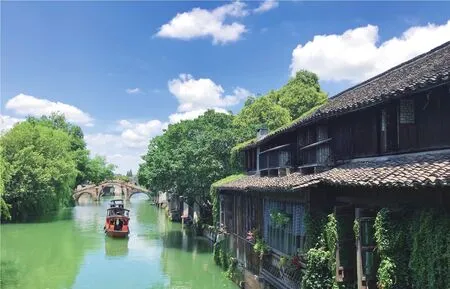
烏鎮西柵景區。The Wuzhen Xizha Scenic Area.
猶記得,那年中考剛考完,刷了整宿的劇,天一亮便和要好的一幫初中同學一起直奔烏鎮了。如今想來,除了感嘆年輕真好之外,還能清楚地記得當時有部挺火的電視劇叫《似水年華》,以及那句廣告詞“來過,便不曾離開”,給了許多人一個關于江南水鄉的夢,即使是我們這些從小生長在江南的花季少男少女,也免不了對烏鎮這個地方懷抱著憧憬與期待。如果說初中畢業時對烏鎮的印象僅僅停留在“傳統”二字上,那么時隔十幾年后再次踏上這片土地時,我開始驚喜于它在保有“傳統”內核的基礎上又被賦予了“現代”的新顏。
這種“傳統”包含了風土、歷史、人文,烏鎮人對故土的眷戀以及對文脈的傳承;這種“現代”指的則是烏鎮的保護再開發、對文化藝術的復興,烏鎮人對故土改造的熱忱以及與文脈相結合的商脈革新。兩者交織,既有詩情畫意,又充滿生機活力。
詩畫烏鎮,自然與人文的交融
欲說還休的江南煙雨,緩緩流淌的舊時光,斑駁婉轉的小橋流水,豐姿柔媚的粉墻黛瓦,暖意氤氳的枕水人家,輕語搖曳的搖櫓船,香茗裊裊的長街茶館,悠長徘徊的青青石板路,隨風飄揚的藍印花布,還有深巷中背影婀娜、撐著油紙傘的一個丁香一樣結著愁怨的姑娘……似乎所有充滿詩意之詞都應該用來形容這座江南水鄉的美好與韻味,它如一抹淺淺的墨色,在一張柔軟的宣紙上輕輕地描繪著,卻沒有任何一張畫能盡善盡美地勾勒出所有人心目中的烏鎮。
因為,它的內涵實在太豐富了。
烏鎮不僅有雅致與市井并存的自然風光,更有無數人文歷史故事。這里地處自古富饒優渥的杭嘉湖平原,北達蘇州,南接杭州,號稱“天上有蘇杭,烏鎮在湖心”。擁有7000多年文明史和1300多年建鎮史的烏鎮,以水為街,以岸為市,兩岸民居建筑面向河水,形成了迷人的水鄉風光,古老的大運河孕育了它豐沛的文化涵養和深厚的歷史品格,使其成為“詩畫江南”的獨特代表。
歷史上的烏鎮曾出過64名進士、161名舉人,昭明太子、沈約、裴休、鮑延博、夏同善、嚴辰、沈澤民、嚴獨鶴、孔令境、茅盾……這些靈杰無不是烏鎮的驕傲,同時也對故鄉烏鎮情有獨鐘。
活力烏鎮,故土與熱土的結合
談到烏鎮的蛻變,當地人常會想起一個人—陳向宏。與烏鎮的先人前輩們一樣,他對故土有一種難以割舍的情懷,與現實相結合,從而生發出更高的期待。在外人口中,他是烏鎮旅游景區總裁、總設計師,也是烏鎮戲劇節的發起人之一 ;身邊一起工作的同事、下屬習慣稱他為“陳主任”;而他個人則常自詡“包工頭”。但無論稱呼如何,不可否認的是,這座棲居在桐鄉之北的小鎮之所以能成為人們現在看到的“中國烏鎮”“世界互聯網大會永久舉辦地”,陳向宏功不可沒。
1999年大年初一,烏鎮發生了一場大火,正是這場火災,命運般地把陳向宏“帶回”了故鄉。時任桐鄉市政府辦公室主任的他,被市里派去安置受災百姓。工作結束后,市領導便決定讓陳向宏留在烏鎮,而這一留便是二十多年。
陳向宏最初接手管理的烏鎮,還默默無聞,甚至可以說是落寞的。他描述道:“我7歲離開烏鎮,多年以后回來工作,已經看不到任何江南文化重鎮的活力,只有衰敗。它以前是個大鎮,有好多國有和集體企業,經產業結構調整,一些工種已經沒了,我小時候生活的那整條街上的鄰居都不在了,都是附近鄉村來這里做生意的人,河里的水是漆黑的,馬桶直倒進去,一塌糊涂。對我來說,這樣的烏鎮是完全陌生的。”
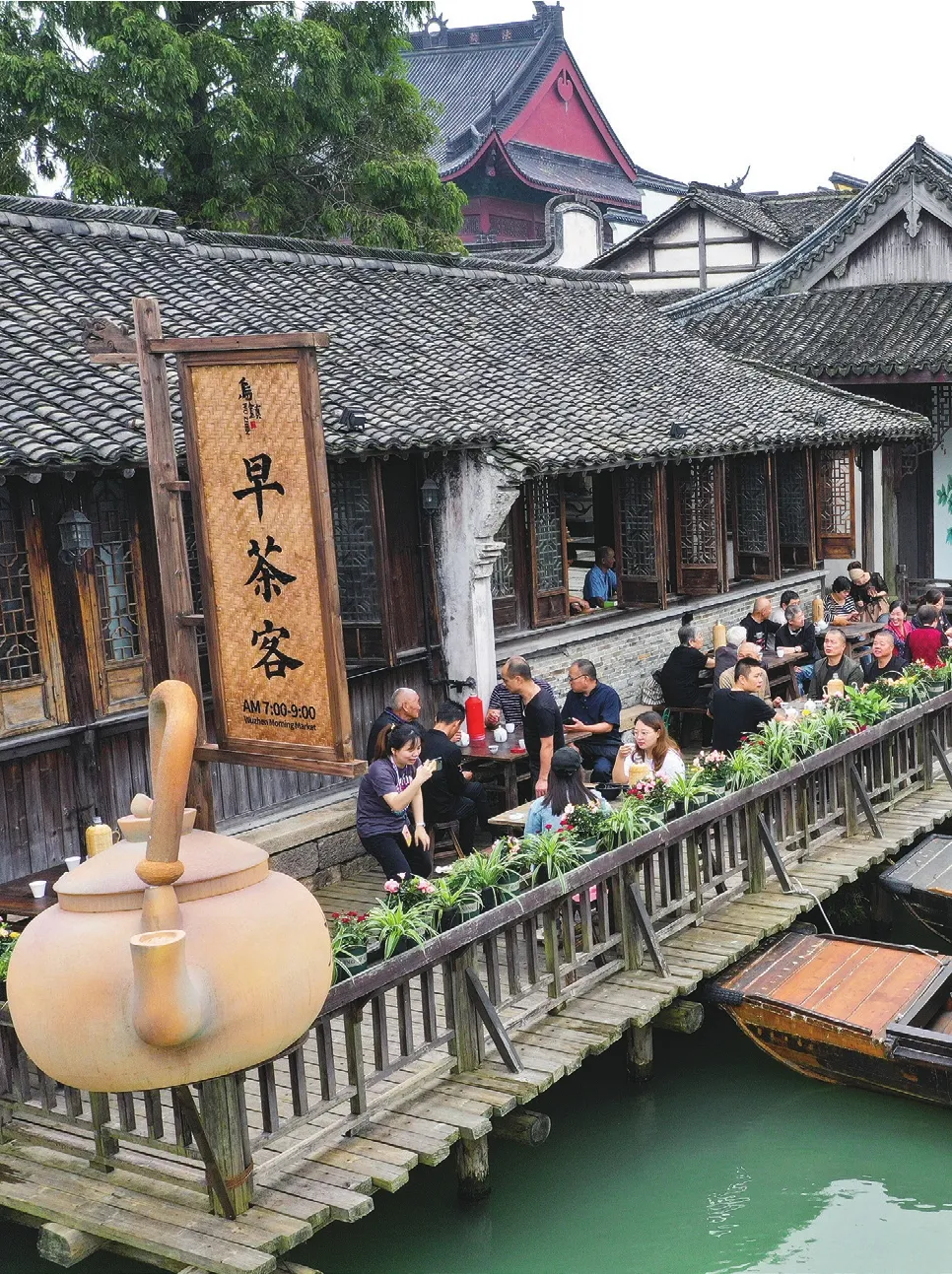
烏鎮早茶客。Zao Cha Ke (literally “morning tea drinkers”), an eatery serving breakfast in Wuzhen.
那時的他,開始立志要做“一樣的古鎮,不一樣的烏鎮”,要做“中國度假休閑古鎮的標桿”,即使遭遇了冷眼嘲笑與挫折失敗,也從未打消過這個烏鎮人以及他帶領的一批又一批烏鎮人振興家鄉的信念。在經歷幾次轉型后,烏鎮終于在全國甚至全世界有了屬于自己的地位。
在升級改造烏鎮的過程中,最值得一提的便是對文化藝術的復興。其中,木心美術館已然成為烏鎮一大標志性人文建筑,吸引著眾多木心粉絲從五湖四海專程趕來。
早在1994年,旅美藝術家、作家木心回到烏鎮,看到物是人非的故土,傷感地寫下《烏鎮》一文:“永別了,我不會再來。”1998年,經人推薦,陳向宏看到了這篇《烏鎮》,才知道原來木心也出生于烏鎮。骨子里深愛家鄉的人,在心意上是可以相通的,陳向宏說,“我能讀懂木心文章的那些情感”。此后,他便開始四處打聽木心的消息。
“把木心先生請回烏鎮,是我人生中值得驕傲的事情。”陳向宏這樣回憶自己與木心的緣分。2002年,木心親自題名的3000平方米故居“晚晴小筑”正式開工。2006年,陳向宏將木心請回烏鎮,當時木心79歲,在故鄉安享了人生的最后時光。“烏鎮在這件事情上是純粹的,我跟全公司的人講,我們是認了一個爺爺回來,完全是家鄉人民對一個漂泊在海外多年的藝術家的尊敬。”陳向宏如此坦露心聲。
2011年,木心在烏鎮逝世。2015年,木心美術館正式開館。開館以來,木心美術館陸續舉辦“林風眠與木心”“尼采與木心”“莎士比亞與湯顯祖”“木心的講述:大英圖書館珍寶展”“塔中之塔—木心耶魯藏品高仿及文學手稿真跡展”“古波斯詩抄本”“文學的舅舅:巴爾扎克”“米修與木心”“當文學成為影視—我的天才女友”等多個重要展覽。2018年,美術館舉辦木心音樂會,多位音樂人同唱《從前慢》。
雖然木心沒能親眼看到美術館的落成,但在彌留之際,由貝聿銘的學生林兵和岡本博設計的美術館方案剛好出來,他仿佛是預言似地說了句:“風啊,水啊,一頂橋。”近四年后建成的美術館,與他當初那句話的描述幾乎如出一轍,也恰恰印證了人與故鄉的雙向奔赴—念念不忘,必有回響。
人與故鄉的牽絆,還來源于抹不掉的兒時記憶。比如,在江南小鎮人的印象中,曾經每天下午是聽書的,那是小鎮重要的社交文藝活動。如今,令人欣喜和驕傲的是,一種富有現代感的藝術表達形式,讓這個江南水鄉舊時流傳下來的各種傳統故事得以重現。
2013年,第一屆烏鎮戲劇節開啟,首次將戲劇表演與古鎮風貌融合,精心選擇的表演場所(如劇院、露天劇場、街邊、商鋪等)與多樣化的戲劇表演形式,讓游客在欣賞戲劇的同時感受烏鎮的文化底蘊。11個日夜,6臺國際大戲、12部25場公演和青年競演、120組藝術團隊580場古鎮嘉年華演出、12次中外大師的小鎮對話,3場頂尖歐丁戲劇工作坊、17580名入場觀眾、18.3萬名游客及當地居民參與、139家媒體聚焦,中外200多名藝術家、專家和明星齊聚烏鎮。時任首屆戲劇節榮譽主席的Robert Brustein在《紐約評論》中評價說:“烏鎮戲劇節希望有一天能夠成為像阿維尼翁或愛丁堡一樣的重大國際戲劇事件。照首屆的成績,他們一定能達成。”直至今日,烏鎮戲劇節已成功舉辦8屆,其成功使烏鎮的影響力延伸至文化、娛樂市場,并成為烏鎮的新名片。
滄海桑田,閱盡萬千,中國人最富有詩意的情懷之一便是回歸故鄉。而烏鎮的活力,很大程度上也來自烏鎮人對故土的深切愛戀以及讓熱土變得越來越好的不懈實踐。
現代烏鎮,文脈與商脈的融合
20世紀90年代末的烏鎮,相比江浙滬的其他水鄉,沒有任何優勢,起步也最晚。當時對古鎮的打造與宣傳最流行的是掛紅燈籠、講故事—說說這里來了多少個皇帝、出了多少個秀才。但陳向宏認為,得走自己的路,既要注重文脈的傳承,又要用商業化的思維,思考如何讓年輕人回來,讓他們在大城市里享受的一切,在這里也能找得到,只有這樣,才能真正找到新的生機與活力。
在回答“傳統”與“現代”之間的關系、現代古鎮究竟該是怎樣的這些問題上,烏鎮的保護與商業再開發中有兩個細節尤為發人深思。
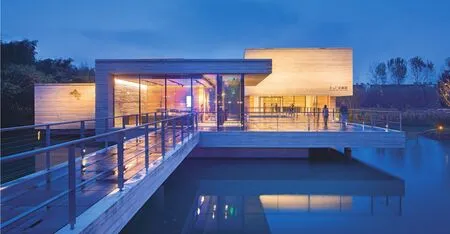
木心美術館。The Muxin Art Museum.
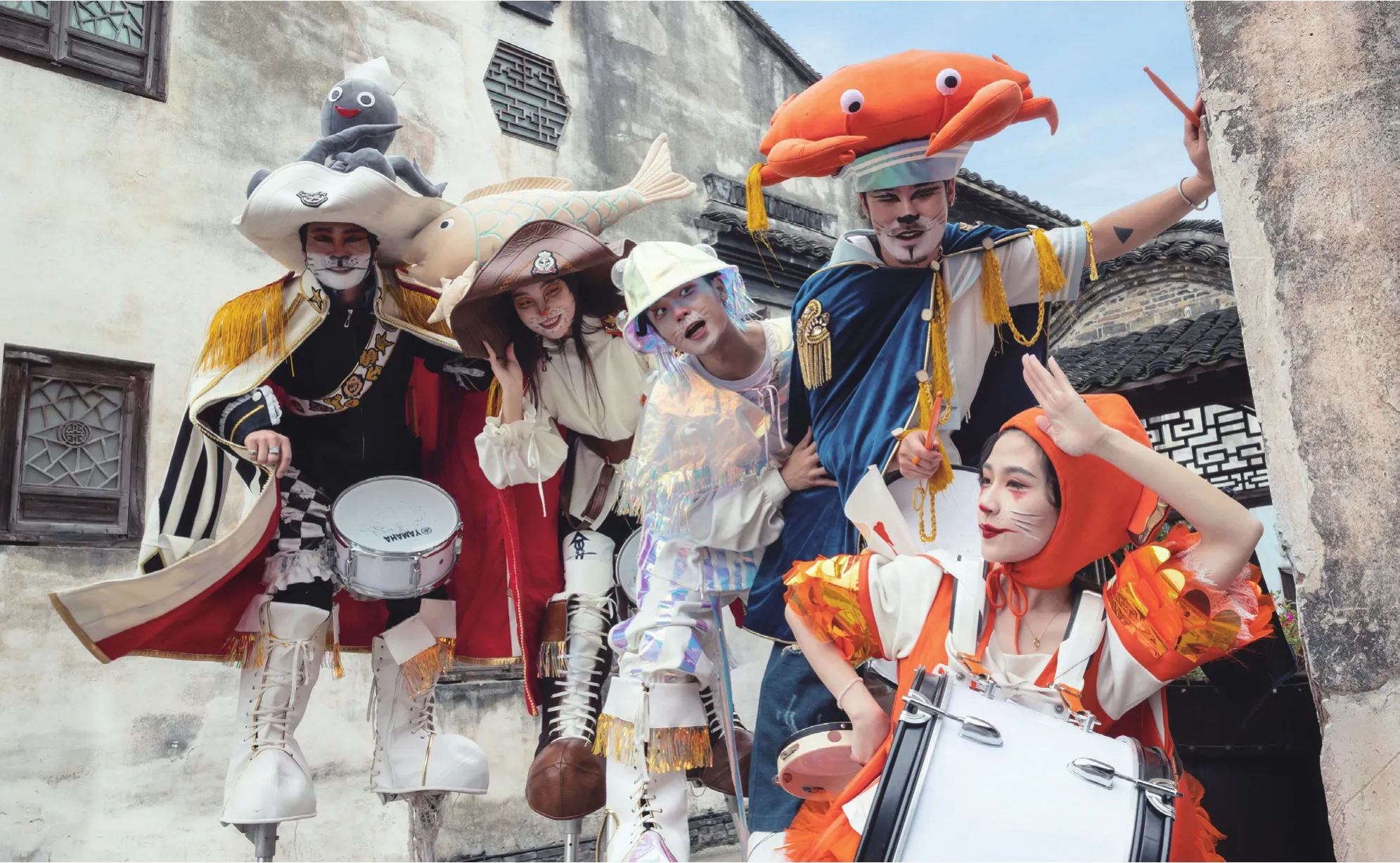
烏鎮戲劇節的古鎮嘉年華演出。Performers at the annual Wuzhen Theater Festival.
第一個故事發生在西柵搬遷征地時,9個月花光了用已改造的東柵抵押給銀行的所有資金,但當時最主要的壓力還是因為“歷史街區再利用”理念的提出在全國前所未有,從部分專家到領導、群眾都對這一模式都心存疑慮,有不同意見,許多人都覺得老街就應該維持從前的生活狀態,比如在河邊淘米、洗衣,甚至最好還有每天早上挨家挨戶倒馬桶的場景出現在游客的相機鏡頭中,否則烏鎮西柵將不再是“原汁原味”的古鎮。但是,烏鎮的實踐最終證明,那些回不去的生活方式并非決定成敗的關鍵因素,只要傳統人文精神的內核還在,古鎮應該是給現代人住的,而不是專給人看的。
第二個細節則與烏鎮之所以能成為世界互聯網大會永久會址有關。當在上海住酒店要上網卻還只能配一根網線時,烏鎮西柵景區就已完成了主干光纖的地埋鋪設,為智慧烏鎮打下了堅實的基礎。截至2017年,景區已完成了WIFI全覆蓋工程,共有WIFI-AP位3600個,涵蓋了景區各酒店、客房、餐飲、會議室、老街等公共休閑區,實現了景區無線信號全覆蓋。早在2002年,景區就完成了烏鎮官網的上線,2006 年烏鎮預訂網開發上線,同年景區正式上線了電子售檢票系統。目前,游客可通過烏鎮景區官方微信公眾號、預訂網、烏鎮手機網等多渠道購買景區電子票,掃碼即可進入景區,景區內所有酒店店鋪均支持支付寶和微信支付,真正實現了不帶錢包游烏鎮。同時,景區還針對住宿客人推出人臉識別服務,辦理入住后只需“刷臉”,在退房前便可無限次出入景區。此外,景區在游覽車和搖櫓船上逐步安裝了GPS和北斗雙模定位系統,并且設立監控調度室,通過精準定位實現車船的智慧調度。
可以說,沒有烏鎮十幾年的旅游發展及傳統生活下現代化配套設施的完備,世界互聯網大會這樣一個國際化的國家級會議不可能把烏鎮作為永久會址。當年為差異化游客體驗而采取的以舊修舊、管線地埋、更新民宿配套設施等一系列的小改進,終于為烏鎮帶來了“質變”的效果。
與文脈相結合的商脈給古鎮注入源源不斷的生命力的最大表現,就在于不僅能讓年輕人因現代化老街、因戲劇節、因各種文化藝術場館等而喜歡來這里,更因為工作機會的增多、生活的便利等而讓年輕人愿意留在這里。正如陳向宏所說:“‘小橋流水人家’是很多中國古鎮的特色,但理想的水鎮,既要有小橋流水的生活,也要有不亞于任何一個大城市的現代文明,不該回避商業化,反而應該擅長用最商業的方式把人留住。”
商業化并不可怕,忠于文脈傳承的商業既有人情味也有長遠發展前景。需要堅守的底線是什么?是自然、傳統、人文、歷史和情懷。需要求變的是什么?是產業、文化形態、生活質量和當地居民的理念心態。關于“詩畫江南、活力浙江”的釋義,或許這便是烏鎮帶給我們的啟示吧。
Wuzhen: An Ancient Water Town like No Other
By Hu Zichen

烏鎮互聯網國際會展中心。Painted by Wu Peng.
My first impression of Wuzhen, when I graduated from junior high, was all about “tradition”. Over a decade later when I stepped on the shoreland of this water town again, I was surprised by how it had put on a “modern” face while preserving its core of“tradition”.
Its “traditional” side includes natural, historical and cultural landscapes, Wuzhen people’s attachment to their hometown, and their cultural heritage. Its “modern” side refers to the preservation and redevelopment of Wuzhen, the revival of local culture and art,the enthusiasm of Wuzhen people for the transformation of their hometown, and the innovative combination of commercial and cultural atmosphere. Both sides are interwoven, poetic and full of vitality.
It seems that all poetic words should be gathered to describe the temperament of this water town in(south of the Yangtze River). It is like a touch of light ink gently dripped on a piece of soft rice paper. But not a single painting could perfectly outline the image of Wuzhen in different people’s minds because it is so rich in connotation.
Wuzhen has a natural scenery featuring urban and street culture, and it also tells countless stories about its humanistic history. It is located in the rich and fertile Hangzhou-Jiaxing-Huzhou Plain since ancient times, reaching Suzhou in the north and Hangzhou in the south. With more than 7,000 years of civilization and 1,300 years of town history, Wuzhen takes the waterway as the street and the shore as the market. It is blessed with charming unique scenery formed by the water-facing residential buildings on both sides of the river, a rich cultural connotation and a profound historical character nurtured by the ancient Grand Canal, which make Wuzhen a representative of the picturesque.
When it comes to the renovation of Wuzhen, locals often think of one person — Chen Xianghong. Like his ancestors in Wuzhen, Chen has an unbreakable affection for his hometown:he expects this land to become better than it is now. Chen is the president and chief designer of Wuzhen’s scenic area, and one of the initiators of the Wuzhen Theater Festival. His colleagues used to call him “Director Chen”; yet he often jokes about himself being a “contractor”. But regardless of the titles, it is undeniable that Chen is credited with making this town, which resides in the north of Tongxiang city, the “Wuzhen of China”, the permanent venue of the World Internet Conference ... in general, the way it is widely recognized today.
On the first day of the Chinese New Year in 1999, a fire broke out in Wuzhen, and it was this fire that brought Chen “back”to his hometown as fate would have it. As the then director of the Tongxiang Municipal Government Office, he was sent to settle compensations for the fire-affected victims. After his job was done,the municipal authorities decided to let Chen stay in Wuzhen.That “stay”, it later turned out, has lasted for more than 20 years.
When Chen initially took over the management of Wuzhen,it was an obscure or even desolate place. “I left Wuzhen at the age of seven. Years later I returned to work, only to find nothing but decay. There was not a trace of the old-time vitality of acultural town. It used to be a big town, with many state-owned and collectively owned companies. After industrial restructuring,some types of work had gone, and my childhood neighbors, a whole street of them, had gone. I saw businessmen from nearby villages everywhere, the river was pitch black, and people pouring toilets straight into the water ... a total mess. For me, this Wuzhen was completely foreign,” Chen recalled.
From then on, he decided to make Wuzhen stand out from the rest of ancient towns as “the benchmark of China’s resort and leisure town”, regardless of cold-eyed ridicule and frustrating failures. After several transformations, Wuzhen has finally made its name in the entire country and even the whole world.
In the process of Wuzhen’s upgrading, the most noteworthy thing is the revival of local culture and art. Among them, the Muxin Art Museum has become a major humanistic landmark in Wuzhen, attracting many fans of Mu Xin (1927-2011) from all over the world.
As early as 1994, the artist and writer Mu Xin returned to Wuzhen. Seeing everything was different in his hometown, he wrote an article titled “Wuzhen” sadly: “Farewell. I will never come back.” In 1998, Chen was recommended to read this article and found out that Mu was also a Wuzhen native. Chen said, “I could connect with the emotions expressed in his article.” After that, he began to ask around for news of Mu.
“Inviting Mr. Mu Xin back to Wuzhen is something I’m proud of in my life,” Chen spoke of his relationship with Mu. In 2002, Mu’s 3,000-square-meter residence came into construction.And in 2006, Chen invited him back to Wuzhen. Mu was 79 years old then and got to spend the last days in his hometown.“Wuzhen is pure in this matter. I told the whole company that we are welcoming back a grandfather. We were doing this out of sheer respect for an artist who has been drifting overseas for many years,”Chen poured out his most heartfelt emotions.
In 2011, Mu Xin passed away in Wuzhen; and in 2015, the Muxin Art Museum was officially opened.
Although Mu was not able to see the completion of the museum with his own eyes, the plan designed by I.M. Pei’s students Lin Bing and Hiroshi Okamoto came out just in time.He even responded with a prophecy-like sentence: “Wind, water and a bridge.” The art museum that was finished nearly four years later almost mirrors his “wind-water-bridge” prophecy. It is also a testament to the mutual affection between people and their hometown: “Something that stays in your mind will someday spring up in your life.”
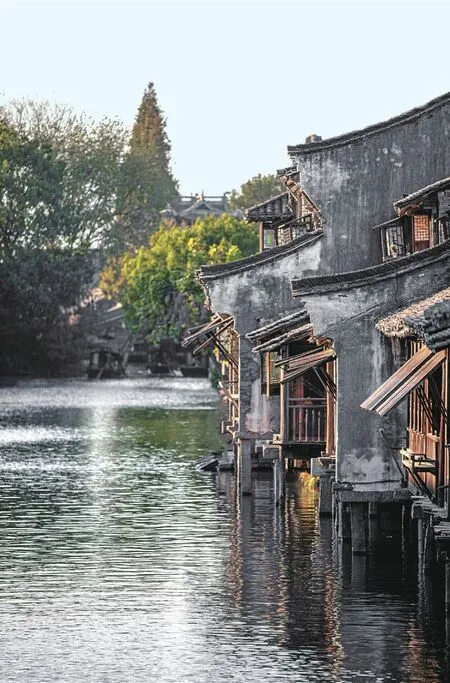
烏鎮西柵景區。Painted by Wu Peng.
In 2013, the first Wuzhen Theater Festival was held,integrating theater performances with the ancient town’s landscape for the first time. Carefully selected performance venues (such as theaters, amphitheaters, streets, stores, etc.) and diverse forms of theater performances allow visitors to experience the cultural heritage of Wuzhen while enjoying the plays. Until now, WuzhenTheater Festival has been successfully run for eight years, making the town influential in the cultural and entertainment sectors.
In the late 1990s, Wuzhen had no advantage over other water towns in Jiangsu, Zhejiang and Shanghai; plus it started pretty late.At that time, the most popular way of promoting ancient towns was to hang red lanterns and tell stories — talking about how many emperors and scholars came out from there. But Chen believed that Wuzhen had to go its own way. Attention should be paid to its cultural heritage, and also to commercialization. They must figure out how to get young people back and recreate big city things here for their enjoyment. Only in this way could real vitality be restored.
What is the relationship between “traditional” and “modern”?What should a modern ancient town look like? In answer to the above questions, two particularly thought-provoking stories about Wuzhen’s development are noteworthy.
The first story happened during the relocation and land acquisition of its Xizha Scenic Area in the west. The biggest pressure occurred in the middle of promoting the “reuse the historic district” concept: it was unprecedented nationwide, and thus much doubted by experts, leaders and the general public.Many people had different opinions about this model, claiming that the old streets should maintain a lifestyle from the old days,like doing daily chores by the river — rice washing, laundry, and even toilet cleaning. Otherwise, the scenic zone would no longer be the “original” ancient town. However, the practice of Wuzhen has ultimately proved that those outdated ways of life are not the key determinants of success or failure, as long as the core of the traditional humanistic spirit is still there. After all, the ancient town should be for modern people to live, not for them to see.
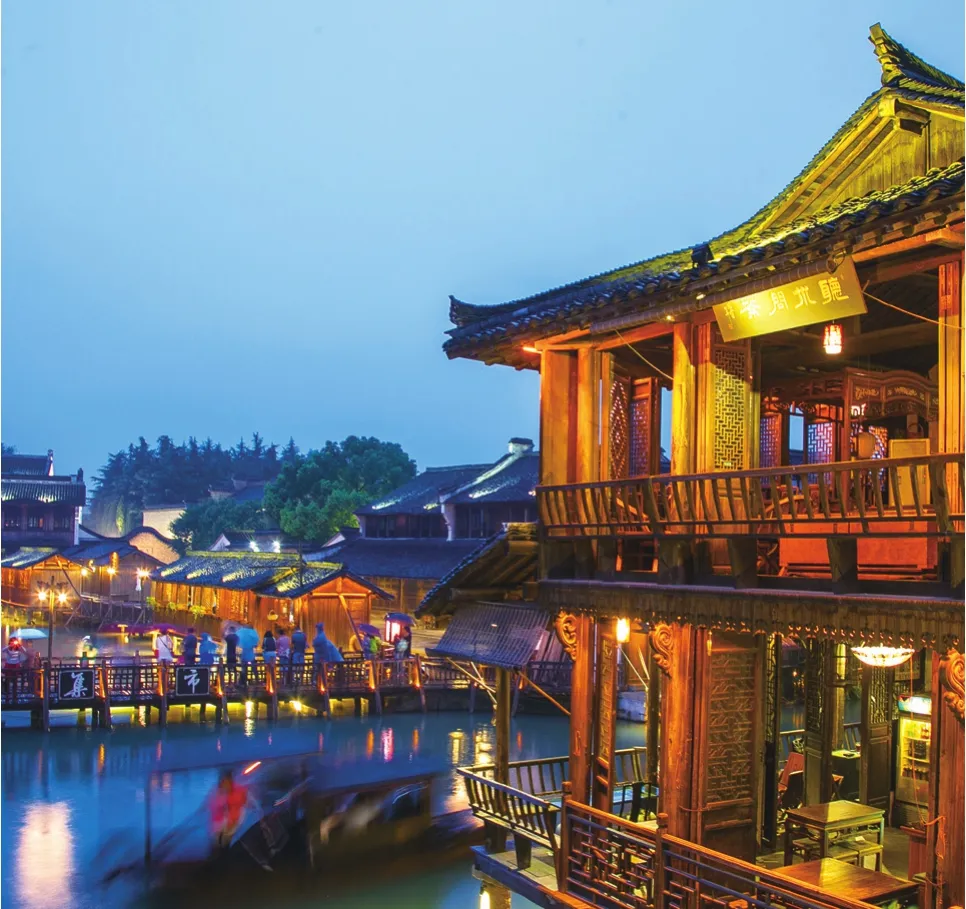
烏鎮西柵景區。The Wuzhen Xizha Scenic Area.
The second story has to do with what makes Wuzhen the permanent home of the World Internet Conference. When hotel rooms in Shanghai still had one network cable for internet access, Wuzhen’s Xizha Scenic Area had already completed the underground setup of the backbone fiber, laying a solid foundation for intelligent Wuzhen. As of 2017, the WiFi full coverage project was completed in the whole scenic area, with a total of 3,600 WiFi-AP points, covering all the public leisure places such as hotels, guest rooms, restaurants, meeting rooms and old streets.As early as 2002, the official website of Wuzhen’s scenic area was already launched; in 2006, the online booking system was released,followed by the online electronic ticketing system. Now visitors can buy electronic tickets through the official WeChat account,the booking network, the mobile network and other channels.They could enter the scenic area by QR code scanning, and pay their bills in all the hotels and stores through Alipay and WeChat.At the same time, Wuzhen’s scenic area also provides a special face recognition service for hotel guests, who after check-in and before check-out enjoy unlimited access back to the scenic area simply by“face swiping”. In addition, the tour buses and sculling boats of the scenic area have been gradually installed with GPS and Beidou dual-mode positioning system, and monitoring rooms have also been set up, realizing intelligent scheduling of vehicles based on accurate positioning.
It can be said that without the tourism development in Wuzhen for more than a decade and the completion of modern facilities supporting a traditional lifestyle, Wuzhen couldn’t be chosen as a permanent venue for such a high-level international conference in China. A series of small improvements for customized visitor experience such as repairing the old, burying the pipelines, updating the B&B facilities, etc., has finally brought a fundamental change to Wuzhen.
Commercialization is not horrible; businesses that are faithful to local cultural heritage are both humanistic and promising.
What is the bottom line that we need to stick to? It is nature, tradition, humanity, history and sentiment. What needs to be changed? Industrial and cultural patterns, quality of life,the mindset of local residents ... On the interpretation of the“Picturesque and Dynamic Zhejiang”, this may be the answer brought to us by Wuzhen.
