9 Scientists Behind Modern Biotech助推現(xiàn)代生物技術(shù)發(fā)展的九位科學(xué)家
2022-08-31 07:44:16海倫阿爾貝特焦琳審訂任東升
英語世界 2022年8期
文/海倫?阿爾貝特 譯/焦琳 審訂/任東升
By Helen Albert
Over the last 25 years, biotech has become a burgeoning worldwide industry. It only became the success it is today on the back of excellent science.
Here is a selection of scientists we think made a significant contribution.
1. Károly Ereky (1878—1952)
Károly Ereky was the first person to use the term ‘biotechnology’ to describe the transformation of raw materials into useful products using biology. A Hungarian agricultural engineer, he was an expert on the food industry and wanted to apply scientific principles to make food production more efficient and cost-effective. For example, one of his many publications was a book discussing how leaf proteins could be used as a possible food source. Known by some as the ‘father’ of biotechnology, he became the Hungarian Minister of Food in 1919. However, he was probably most well known for an enormous and highly profitable pig farm and slaughterhouse he set up that had the capacity to raise 100,000 pigs per year.
過去25年間,生物技術(shù)蓬勃發(fā)展,成為全球性產(chǎn)業(yè)。它取得今天的成功都是得益于科學(xué)的卓越成就。
以下是一些我們認為做出重要貢獻的科學(xué)家。
1. 卡羅伊·埃賴基(1878—1952)
卡羅伊·埃賴基是最先使用“生物技術(shù)”一詞指稱利用生物學(xué)知識將原材料轉(zhuǎn)化為實用產(chǎn)品的過程。他是一位匈牙利農(nóng)業(yè)工程師,也是食品工業(yè)專家,致力于運用科學(xué)原理提高食品的生產(chǎn)效率和成本效益。他著述頗多,其中一本書就探討了用葉蛋白制造食品的可能性。埃賴基被稱為“生物技術(shù)之父”,并在1919年出任匈牙利食品部部長。但他最廣為人知的事跡,大概還要數(shù)開辦了一家養(yǎng)豬兼屠宰場,規(guī)模大、效益高,每年生豬產(chǎn)能高達10萬頭。
2. Eva Ekeblad (1724—1786)
Swedish countess and scientist Eva Ekeblad was ahead of her time. In 1746,she discovered a technique to make both alcohol and flour from potatoes, a relatively rare vegetable in Sweden at the time. This discovery helped reduce famine by diverting grains used to make alcohol back into the food chain. An entrepreneurial spirit, she also realized the potato flour she created could be used as a cosmetic face and wig powder to replace the poisonous arsenic powder being used at the time.
3. Wilhelm Roux (1850—1924)
Wilhelm Roux was a clinical doctor,but spent much of his career conducting experiments in the field of embryology in animals, birds and amphibians. The German scientist is most well known for establishing the principles of tissue culture, an extremely widely used technique in modern labs. In an experiment carried out in 1885, he managed to keep neuronal cells taken from a chicken embryo alive in a warm saline solution for 13 days, a technique that was later refined and expanded on by other scientists. He also made enlightened observations on cell distribution during embryo development in studies using frog embryos.
2. 埃娃·埃克布拉德(1724—1786)
身為瑞典伯爵夫人的女科學(xué)家埃娃·埃克布拉德有著超前的思維。1746年,她發(fā)明了制作土豆酒和土豆粉的技術(shù),當時土豆在瑞典還不是常見蔬菜。得益于這一發(fā)現(xiàn),用于釀酒的谷物重回主食行列,從而緩解了饑荒。埃克布拉德頗具創(chuàng)業(yè)眼光,她發(fā)現(xiàn)自己制造的馬鈴薯粉還能當化妝撲面粉和假發(fā)粉用,足以取代當時常用的有毒砷粉。
3. 威廉·魯克斯(1850—1924)
威廉·魯克斯是一名臨床醫(yī)生,但他將職業(yè)生涯的大部分時間投入到了動物、鳥類和兩棲動物的胚胎學(xué)實驗中。這位德國科學(xué)家的最著名成就是提出了組織培養(yǎng)的原理,這一技術(shù)在現(xiàn)代實驗室中的應(yīng)用極為廣泛。他1885年做了一項實驗,從雞胚胎中提取神經(jīng)元細胞,使其在溫鹽水中存活了13天,這一技術(shù)被后來的科學(xué)家進一步完善和擴充。魯克斯還用青蛙胚胎開展研究,就胚胎發(fā)育過程中的細胞分布提出真知灼見。
4. Maurice Lemoigne (1883—1967)
Given the current popularity of the topic, it may seem a bit unbelievable that the first biodegradable ‘bioplastic’—polyhydroxybutyrate or PHB—was discovered in 1926 by French biologist and engineer Maurice Lemoigne.He was working with the microbe Bacillus megaterium and discovered that it produced PHB when nutrients were scarce and the conditions were‘stressful’ for the bacteria. At the time,petroleum was cheap and readily available and so Lemoigne’s discovery was ignored for many years. Now PHB is one of several bio-based and biodegradable plastics on the market. Lemoigne’s other research mostly had a focus on fermentation, water treatment, and soil fertilization.
5. Jean Purdy (1945—1985)
4. 莫里斯·勒穆瓦涅(1883—1967)
可降解生物塑料當下討論熱度極高,所以人們多少有點不敢相信,最早的可降解“生物塑料”——聚羥基丁酸酯(PHB)竟在1926年就已問世。它的發(fā)現(xiàn)者是法國生物學(xué)家、工程師莫里斯·勒穆瓦涅,他研究巨大芽孢桿菌時發(fā)現(xiàn),營養(yǎng)匱乏和狀況“緊張”會促使其產(chǎn)生PHB。但當時石油既便宜又充足,所以很多年里,勒穆瓦涅的發(fā)現(xiàn)都未引起關(guān)注。而到了今天,市面上的生物基可降解塑料也不過幾種,當中就有PHB。除此之外,勒穆瓦涅還進行了其他研究,主要集中在發(fā)酵、水處理和提高土壤肥力。
5. 瓊·珀迪(1945—1985)
瓊·珀迪是一名英國助研護士,與兩位同事——生物學(xué)家羅伯特·愛德華茲、臨床醫(yī)生帕特里克·斯特普托共同研發(fā)了體外受精技術(shù)。1968年,珀迪來到劍橋生理學(xué)實驗室與愛德華茲共事。他們利用不孕女性自愿提供的卵子進行實驗,最終于1978年在實驗室成功使一枚卵子受精。這枚受精卵被移植回母體后,誕生了世界上第一個“試管嬰兒”路易絲·布朗。珀迪因患黑色素瘤英年早逝,但不長的職業(yè)生涯中幫助孕育試管嬰兒多達370名。
Jean Purdy was a British research nurse who developed in vitro fertilization along with two colleagues—biologist Robert Edwards and clinician Patrick Steptoe. Purdy came to work with Edwards at the Physiological Laboratory in Cambridge in 1968. They experimented with eggs given voluntarily by infertile women and eventually managed to fertilize one in the lab in 1978.This egg was implanted and became Louise Brown, the first ‘test-tube baby’.Purdy died young of melanoma, but in her career she helped 370 children to be conceived in vitro.
6. Brigitte Askonas (1923—2013)
Brigitte Askonas was born in Austria to Czech parents, but spent much of her life in Canada, the US and the UK. She was head of the immunology division at the National Institute for Medical Research in London from 1976 until she retired. She was instrumental in designing one of the early methods for creating monoclonal antibodies,now widely used for treating cancer and autoimmune disease. She also discovered that immune cells called T-killer cells have the ability to recognize viral subtypes, a principle now being used to develop vaccines against a variety of infections including influenza and HIV.She was asked to join the Royal Society in the UK as a recognition of her achievements in 1973.
7. Daisy Roulland-Dussoix (1936—2014)
6. 布麗吉特·阿斯科納斯(1923—2013)
布麗吉特·阿斯科納斯的父母都是捷克人,她生在奧地利,但大部分時間生活在加拿大、美國和英國。從1976年起,她就是倫敦國家醫(yī)學(xué)研究院免疫學(xué)部門的負責人,一直干到退休。她幫助研發(fā)出了一種制造單克隆抗體的早期方法,如今廣泛用于治療癌癥和自身免疫疾病。她還發(fā)現(xiàn)被稱為殺手T細胞的免疫細胞具有識別病毒亞型的能力,人們利用這一特性進行疫苗研發(fā),預(yù)防多種感染,包括流感和艾滋病病毒。1973年,英國皇家學(xué)會向她發(fā)出入會邀請,以認可她的成就。
7. 黛西·魯蘭-迪蘇瓦(1936—2014)
黛西·魯蘭-迪蘇瓦是瑞士微生物遺傳學(xué)家。她師從瑞士科學(xué)家維爾納·阿貝爾攻讀博士學(xué)位期間,發(fā)現(xiàn)了限制性內(nèi)切酶,這種蛋白質(zhì)可以精確切割DNA。此前人們已經(jīng)了解,細菌能夠降解噬菌體病毒。然而,魯蘭-迪蘇瓦和阿貝爾1962年共同撰寫的一篇論文闡明,具有這一功能的其實是細菌產(chǎn)生的酶。職業(yè)生涯后期,魯蘭-迪蘇瓦一直在美國與哈羅德·瓦默斯共事,后者因發(fā)現(xiàn)病毒癌基因與邁克爾·畢曉普共同獲得1989年的諾貝爾獎。
Daisy Roulland-Dussoix was a Swiss microbial geneticist. She did her PhD with Swiss scientist Werner Arber and in the process discovered restriction enzymes, proteins that can cut DNA at precise points. It was already known that bacteria could break down viruses called phages. However, a paper authored solely by Roulland-Dussoix and Arber showed in 1962 that enzymes produced by the bacteria were responsible. Later in her career, she worked in the US with Harold Varmus, who was awarded the Nobel prize with Michael Bishop in 1989 for the discovery of viral oncogenes.
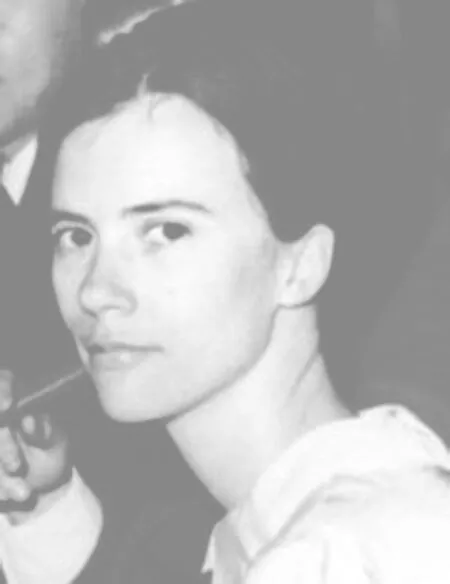
黛西·魯蘭-迪蘇瓦
8. Rudolf Jaenisch (born 1942)
Rudolf Jaenisch is a German scientist currently working as Professor of Biology at MIT. He had a breakthrough in 1974 with the American scientist Beatrice Mintz when they created the first transgenic mouse. They showed that injecting retrovirus DNA into mouse embryos led to the virus being integrated into the animal’s genome, a change that was also passed to the offspring. This technology is now widely used to create mouse models for a wide variety of human diseases and has been instrumental in the development of many drugs.
9. Fran?oise Barré-Sinoussi (born 1947)
8. 魯?shù)婪颉ひ崾?942—)
魯?shù)婪颉ひ崾┦且幻聡茖W(xué)家,目前是麻省理工學(xué)院生物學(xué)教授。1974年他與美國科學(xué)家貝婭特麗斯·明茨共同培育出世界上第一只轉(zhuǎn)基因老鼠,可謂重大科研突破。實驗表明,將逆轉(zhuǎn)錄病毒DNA注入老鼠胚胎會導(dǎo)致病毒被整合進老鼠的基因組,這種變化也會遺傳給后代。目前這項技術(shù)已被廣泛用于建立小鼠模型以研究各種人類疾病,并在多種藥物的開發(fā)中發(fā)揮了重要作用。
9. 弗朗索瓦絲·巴雷-西努西(1947—)
弗朗索瓦絲·巴雷-西努西,法國病毒學(xué)家,現(xiàn)已退休,曾是巴黎巴斯德研究所的教授。20世紀80年代艾滋病流行時,科學(xué)家們對病源毫無頭緒。巴雷-西努西對逆轉(zhuǎn)錄病毒有深厚研究,這使他于1983年發(fā)現(xiàn)了艾滋病毒。為表彰這一發(fā)現(xiàn),2008年她和前同事呂克·蒙塔尼耶被共同授予諾貝爾獎。1988年,巴雷-西努西在巴斯德研究所建立了自己的實驗室,帶領(lǐng)團隊進行了大量關(guān)于艾滋病毒及其傳播的研究。她的成就之一是發(fā)現(xiàn)了宿主先天免疫系統(tǒng)在控制艾滋病毒/艾滋病方面的作用,以及影響艾滋病毒母嬰傳播的因
素。 □
Fran?oise Barré-Sinoussi is a French virologist, now retired, who was a professor at the Institut Pasteur in Paris. During the AIDS epidemic in the 1980s, scientists were at a loss to know what was causing the disease. Her knowledge of retroviruses led her to discover the HIV virus in 1983.She was awarded the Nobel prize in 2008 for the discovery of HIV along with her former colleague Luc Montagnier. Barré-Sinoussi started her own lab at Institut Pasteur in 1988. She and her team have carried out enormous amounts of research relating to HIV and its transmission.Among other things, she discovered the role of the innate immune system of the host in control of HIV/AIDs and the factors that influence mother-to-child transmission of the virus. ■