廣州三元宮道觀園林審美文化特征
2022-07-16 11:51:03袁月?徐應錦?唐孝祥
廣東園林
2022年3期
袁月?徐應錦?唐孝祥
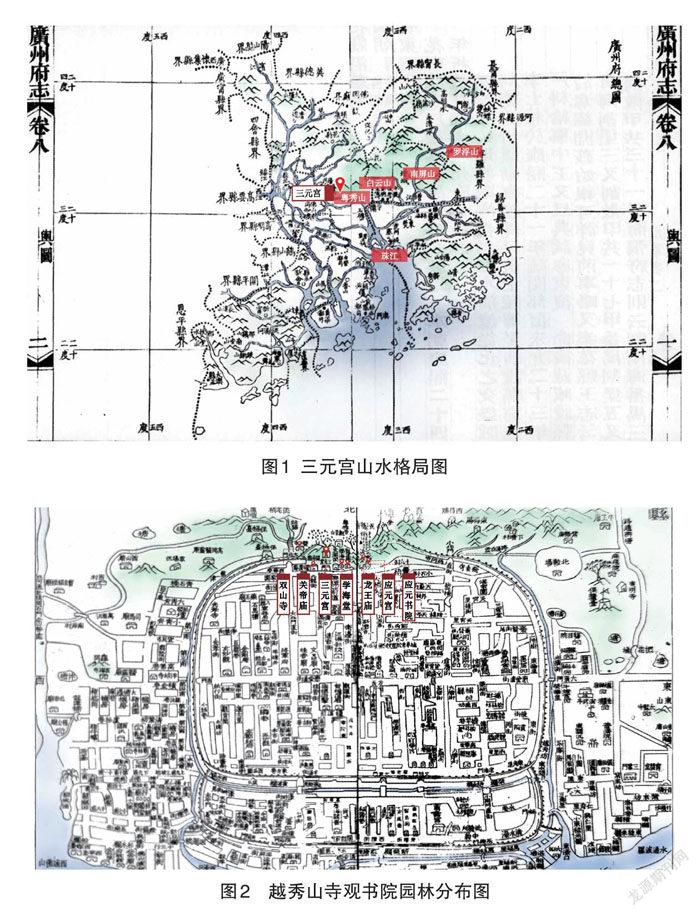
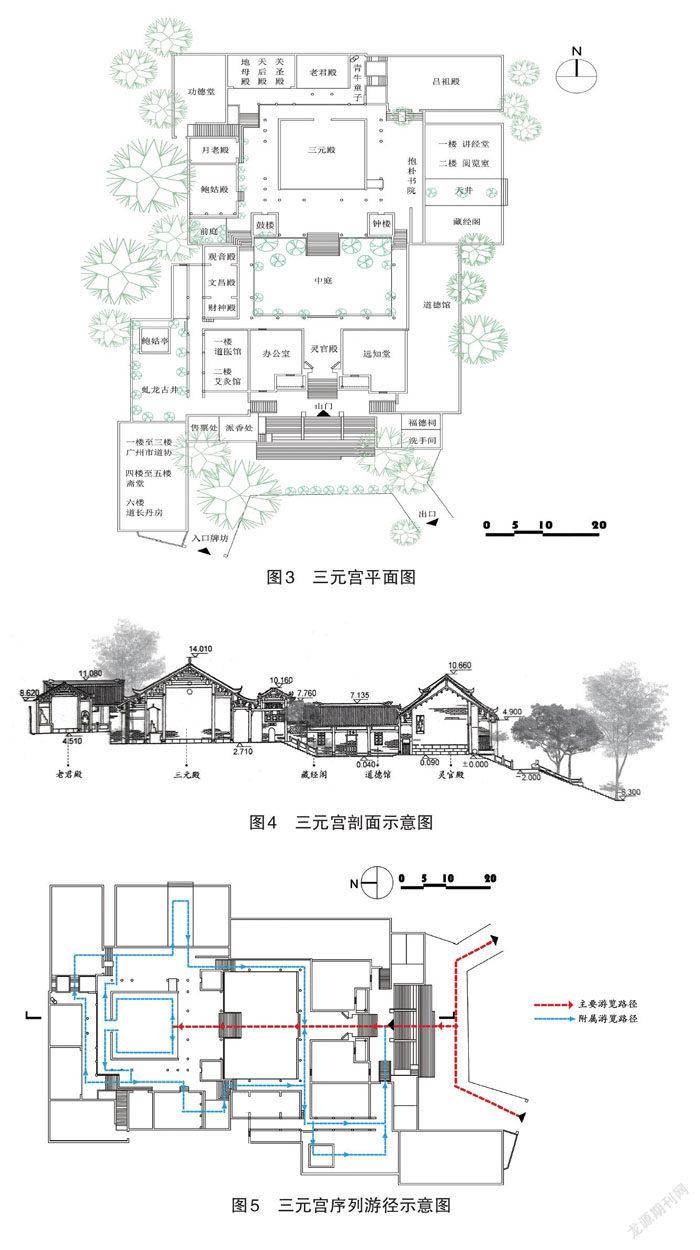
摘要:廣州三元宮是嶺南地區歷史最悠久的宮觀遺產之一,是研究嶺南道觀園林審美文化的重要線索。在分析其空間形成文化背景和社會條件的基礎上,結合風景園林美學和風景園林史學的相關理論研究發現,三元宮的環境格局、建筑布局和空間序列融匯了道家美學思想,呈現“藏風得水、道法自然”的格局特征。其借助中國傳統園林有無相生、步移景異的創作手法,營造出“時空一體、漸入佳境”景觀特點,并融匯嶺南文化中務實致用、尋樂享閑思想,形成“兼容世俗、追求真趣”的文化特色。
關鍵詞:風景園林美學;廣州三元宮;空間格局;景觀營造;文化意蘊
中圖分類號:TU986
文獻標志碼:A
文章編號:1671-2641(2022)03-0058-06
投稿日期:2021-10-10
修回日期:2021-12-16
Abstract: Guangzhou Sanyuan Palace is one of the oldest palace heritages in Lingnan. It is an important clue for studying the aesthetic culture of Lingnan Taoist gardens. On the basis of analyzing the cultural background and social conditions of its space formation, the research combines the related theories of landscape architecture aesthetics and landscape architecture history. It is found that the environmental pattern, architectural layout and spatial sequence of the Sanyuan Palace integrate the Taoist aesthetic ideas, presenting the pattern characteristics of “adapting to landscape environment and following nature”. With the help of the creative techniques of Chinese traditional gardens, such as “the interaction of being and nothingness and varying sceneries with changing view-points”, the landscape features of “integrating time and space and entering a higher realm of aesthetics” are created. It integrates the pragmatic and practical ideas of Lingnan culture and the idea of pursing pleasure and leisure, and forms the cultural characteristics of “being compatible with the common customs and the spirits to pursue nature”.
Key words:Aesthetics of landscape architecture; Guangzhou Sanyuan Palace; Spatial pattern; Landscape construction; Cultural implication
嶺南道觀園林承載了中國道家文化、嶺南世俗文化與地域園林文化,是我國風景園林美學研究的重要內容。古代嶺南相對獨立的政治環境和背依五嶺、面朝南海的自然環境,孕育出嶺南道觀園林獨樹一幟的審美文化特征[1~2]。廣州道教名勝三元宮歷史悠久,據《重修斗姥殿碑記》 載:“粵秀山三元宮,古越崗院也,六朝已有之,至明萬歷而更其名。”東晉南海郡太守鮑靚始建的越崗院(318年)是三元宮的前身,其女鮑姑與葛洪夫妻二人在此修道行醫,明代萬歷年間重修后主祀三元大帝,并更其今名。三元宮積淀了1 700余年的道家文化思想,歷史上修建次數之多難以詳計,幾度“山圖可按,屋宇全非”破毀傾壞①,又幾度復現“輝煌金碧,聿觀厥成”宏大壯麗②。……
登錄APP查看全文