GSI’s Value
2022-07-14 09:45:27TianWenlin
當代世界英文版 2022年3期
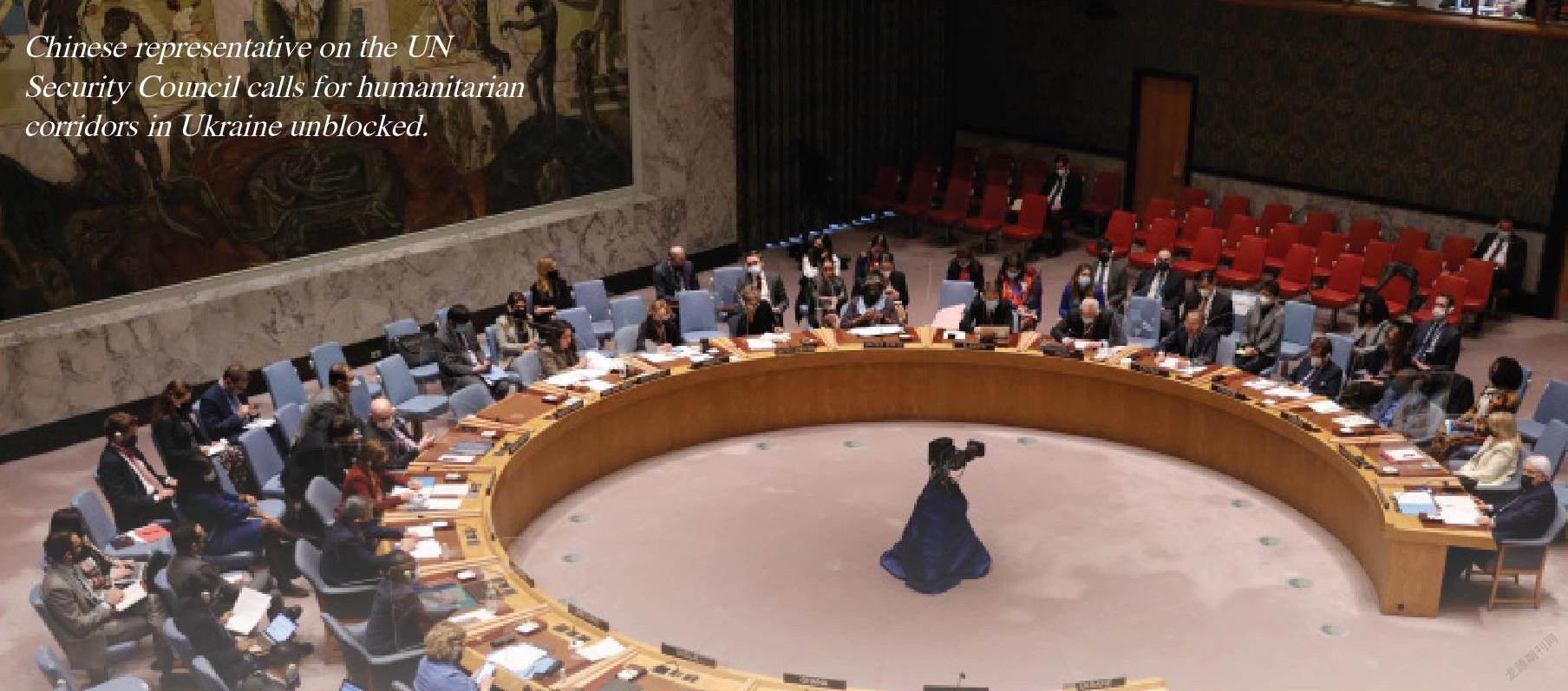
On April 21st, Chinese President Xi Jinping made an important keynote speech at the opening ceremony of the Boao Forum for Asia?nnual Conference 2022. He put forward for the first time the Global Security Initiative (GSI). Under the sway of traditional Western approach to security and the political predominance of the U.S.-led West, the international situation has kept to be in unrest, wars and conflicts occurring one after another, economic recovery being weak and faltering, and global development falling into stagnation. The Russia-Ukraine conflict and other flash-point international and regional security issues triggered off by major power rivalry become focus of global attention. Against this backdrop, the GSI’s theoretical significance and values to our times are self evident.
West-led World Order Is Full of Wars and Conflicts
Be it regarded in history or at present, security issues are the greatest challenge that threatens human society. Under the profound changes unseen in a century and a once-in-a-century pandemic, global security situation is increasingly deteriorating, and the world is becoming less and less peaceful and tranquil. It is right time to put forward the GSI.
I. A History of Wars and Conflicts
Since the modern times began, the Western powers, with their first-mover advantage in military and economic domains, had increasingly become the predominant forces of the world. In security perspective, a world history dominated by the West was nothing but one of wars and conflicts. As German sociologist Werner Sombart observed in War and Capitalism, between the 14th and 15th centuries, Britain and France fought for 100 years; in the 16th century, Europe only saw 25 years of peace; and the figure was shortened to 21 years in the 17th century. That is to say that 156 out of those two hundred years were at war. By comparison, East Asian region during the same period only witnessed several wars in relatively small scale between countries.
It is obvious that compared with other regions of the world, the world led by the Western powers was full of wars and conflicts. In waging foreign wars, the Western powers more and more adopted a warlike policy, became inclined to resort to war and violence, and ultimately created a hierarchical world system having “law of the jungle” as base color, a system brutal and bloody. On the surface, by military superiority and overseas wars, the Western powers had maintained their predominance in the world politics for centuries, but their zero-sum games, war havoc, and conflicts that prevailed everywhere only resulted in incalculable calamities and losses for the whole human society.
Eventually, the Western powers keen on resolving issues by war had taken the perilous direction of self-destruction. During the World War I (WWI), the Battle of Somme alone caused 1.3 million casualties. In the whole WWI, millions of young adults in Europe died in war, and a huge amount of achievements of human civilization were gone with the gunfire. To a degree, the World War II (WWII) was a continuation of the WWI. With ever rising level of industrialization, lethal and destructive abilities of all war weapons became unprecedented, and as a result, the catastrophe wrought by the WWII far exceeded that of the WWI. All this attests to the fact that to achieve hegemonic objectives by war will ultimately be counterproductive.
II. U.S.-led World Is More Turbulent
After the WWII, the emergence of nuclear weaponry accompanied by “balance of terror” greatly reduced the possibility of a world war. During the Cold War, in spite of saber rattling from time to time between the U.S. and the Soviet Union, both sides exercised relative restraint, leading to a rare pause of war. To a degree, the Cold War between the U.S. and the Soviet Union was a sort of cold peace. However, the disintegration of the Soviet Union had left the U.S. unchecked and becoming increasingly warlike. Five local wars have broken out since the Cold War ended (the Gulf War, the Kosovo War, the War in Afghanistan, the Iraq War, and the War in Libya), all waged or led by the U.S.. According to open sources such as the U.S. Congressional Record, in 111 years between 1890 and 2001, the U.S. had carried out 133 operations of military intervention.
In recent years, as power shift among major countries accelerates, the world undergoes profound changes unseen in a century. On the one hand, the U.S.-led West is on relative decline, financialization and hollowing of economy signalizing that the U.S. is over the hill. On the other hand, emerging markets represented by China are on the rise. Historical experience shows that the period of power shift tends to be one of multiple incidence of geopolitical contradictions. As Italian economist Giovanni Arrighi observed, there is positive correlation between capital accumulation and war. Since its emergence, capitalism has undergone three accumulation cycles, between which each transition (in fact also power shift) is ultimately resolved by a large-scale war.
The Russia-Ukraine conflict that broke out in February 2022 is on the surface that Russia took the initiative to attack, but it is rather in essence a consequence of the U.S. promoting eastward expansion of the NATO and squeezing Russia’s strategic space. Fundamentally, the Russia-Ukraine conflict is hegemony and anti-hegemony in nature, and it is a fight between an old system and a new one against the mega background of international power shift. Since the breakout of the conflict, the U.S.-led West has kept fanning the flames to organize a “proxy war” by providing military supplies to Ukraine, aiming to make the war last as long as possible in order to profit from it.
III. The World Order Is at a Dangerous Crossroads
For the U.S., to have a war going on is a good idea, but for the whole world it is no less than a catastrophic event. Studies show that since the WWII ended, the U.S. has been responsible for the loss of at least 20 million lives in 37 victim countries. It is not exaggerating to say that the U.S. is the greatest threat to world peace and development.
For all countries in the world, it is of paramount importance to maintain peace and stability. As security is the premise and basis for development, a stable and peaceful international environment is conducive for all countries to seek economic prosperity and social development, hence to be on a virtuous circle of security and development mutually reinforcing one another. Conversely, a less than secure situation will be greatly detrimental to local doing business environment, a high military spending directly squeezing input to livelihood, regional conflicts and local wars making both sides losers, and economic gains achieved over the years being destroyed overnight. Moreover, lagging in development will exacerbate regime insecurity and regional turbulence, and set countries concerned on a vicious circle of the more chaos, the more poverty--the more poverty, the more chaos.
Against the background of economic globalization, mutual interdependence among countries is on the increase, traditional security intermingling with non-traditional one, and international security and domestic one mutually affecting one another. Wars and conflicts originally belonging to traditional security and international security also produce gigantic spillover effects and secondary disasters extending over the entire world.
Even more worrying is the fact that compound effects of multiple factors such as continued spread of the COVID-19 pandemic, increasingly slowdown of the global economy, and the enduring Russia-Ukraine conflict are making a previously highly integrated world political and economic pattern fast split apart, with hidden contradictions and uncertainties continuing to crop up, and phenomena of imbalance, disorder and anomie intensifying in all areas worldwide. A series of dangerous tendencies have emerged in the current world pattern that feature major-power contradictions being white hot, and political blocs being built along with economic fragmentation, security self-helping, and confrontation between values. Once the above long built up contradictions cross over the critical point, unexpected large-scale wars and conflict may occur. In order to remove the root causes of war, and to build a better world, it is necessary to search for a new security framework that epitomizes new governance concepts.
GSI for Resolving Global Security Dilemma
As the COVID-19 pandemic and the Russia-Ukraine conflict intermingle, the world led by the traditional Western approach to security is in face of unprecedented turbulence and uncertainties. Imbalance in global development and ever protruding international contradictions give rise to more factors of instability and international security issues. The traditional Western approach to security that has the strong bullying the weak and risking other’s life to save one’s own at its core arouses discontent and disapproval from more and more countries and peoples of the world. Against the backdrop of accelerating readjustment of the international pattern, various countries in the world, especially developing countries are yearning for adopting across the globe a new security approach based on equality and mutual trust. GSI is born in response to safeguard broader security interests of the people the world over.
I. Defects of Traditional Western Approach to Security
Frequent wars and conflicts in a West-led international system are directly linked to power politics pursued by the Western countries. In the history and thinking of the Western countries, values of power politics are deep-rooted. With their admiration of the force of arms, the Europeans tend to use the military might as a main yardstick to tell whether a non-Western people is superior or inferior.
Realism is a theory of international relations that is the most widespread and of the highest acceptance in contemporary Western countries. The theory considers the international community as in a state of anarchy, where countries, out of fear, self interest and prestige, strengthen their sense of security self-help and seek to maximize their own national interest. For Western theorists of realism, the ultimate end for a country’s existence is to survive and become stronger. The theory on its own is not politics, but once reflected in a national policy, it will produce great effect on real politics. To a certain degree, it is because of this specious Western theory holding the sway that the international security dilemma continues to intensify, making the world today a bad world that benefits the few and hurts the many.
Observing and handling world affairs preceding from the values of individualism and departmental selfishness, the Western countries have come up with zero-sum thinking, the Cold War mentality, parochial nationalism that puts one’s own country above all else, and even hegemonism and power politics featuring the strong bullying the weak. The question is that the world is and will always be an organic entity. Countries are only its integral parts. As President Xi Jinping observed, “the international community has evolved so much that it has become a sophisticated and integrated apparatus. Acts to remove any single part will cause serious problems to its operation. When that happens, both the victims and the initiators of such acts will stand to lose.” As integral parts of that apparatus, the more various countries are able to coordinate and cooperate, the better optimized the world as a whole will become, thus leading to a good world.
II. The GSI Manifests the Spirit of the Times
To resolve the ever increasing global security dilemma, it is primarily necessary, on the value plane, to discard habitual practices arising from the Cold War mentality and zero-sum game. Facts show that the old approach to security long pursued by the Western countries has made the development path of human society narrower and narrower, the whole world being made more and more insecure. Against this background, it becomes increasingly imperative to promote and practice a new vision of common, comprehensive, cooperative, and sustainable security.
The GSI put forward by President Xi Jinping epitomizes this new approach to security. In regard to its concrete form and inherent logic, the GSI emphasizes on six commitments, pinpoints to all symptoms of security dilemma of today’s world and provides practical guidelines. All its propositions interlock, mutually support one another, and draw a blueprint for building a new, better world. In regard to its ideological origin, the basic content of the GSI on one hand condenses useful experiences of basic principles of international law and global security governance, and on the other highlights the cultural heritage and base color of the oriental civilization and the core socialist values. On philosophical plane, the Chinese civilization sets store by dialectical thinking, and understands that good fortune and disaster follow and lurk within one another, and that a pair of contradictions mutually transform one another. And therefore, it rarely takes the extreme but goes against any metaphysical either-this-or-that thinking like the Cold War mentality. Getting along with other nations, the Chinese civilization sets store by tolerance and inclusiveness. In security concept, the Chinese civilization holds strongly the notion of all under heaven belonging to one family, based on which the country promotes a vision of common, comprehensive, cooperative and sustainable security. As a socialist country, China sets store by the spirit of internationalism, standing for equality, mutual respect, and peaceful coexistence with all other countries. Its Five Principles of Peaceful Coexistence is a typical manifestation of the major country diplomacy with Chinese characteristics. The GSI becomes an organic part of the theoretical system.
Vertically, the GSI, a holistic approach to national security and the Asian Security Vision can be traced to the same origin with inherent logical connection, and three of them make a complete system of new security vision on national, regional and global planes. Horizontally, the GSI and the Global Development Initiative (GDI) complement one another. The GDI was proposed by President Xi Jinping in his statement via video at the general debate of the 76th session of the United Nations General Assembly in September 2021. Both concepts are important pillars for constructing a community with a share future for mankind, and provide theoretical and ideological basis for creating a new form of human civilization that is different from the Western system. The major innovative initiatives proposed by President Xi Jinping on global issues of security and development are the epitome of Chinese contributions to human society in the domain of values.
We Need to Oppose Hegemonism
In the course of development of human society, peace and security are the most important and most valuable global public good, also the most luxurious and rarest one at that. From the perspective of the history and current conditions of the world, capital accumulation by the Western countries is almost always attained by means of hegemonism. Hegemonism and power politics remain the direct cause of the intensifying global security dilemma. As always, history moves up in a spiral way, and waves forward. Likewise, to resolve the global security dilemma will be a long process in twists and turns.
World peace and stability cannot be achieved purely relying on goodwill and wishes, but rather, safeguarding world peace needs to oppose hegemonism. As Deng Xiaoping once pointed out, right now there are two fundamental problems in the world. The first one is to oppose hegemonism and safeguard world peace. The root of the world unrest stems from the struggle for hegemony, which is detrimental to the interests of the third world countries. Deng’s proposition of opposing hegemonism and safeguarding world peace remains relevant to our times.
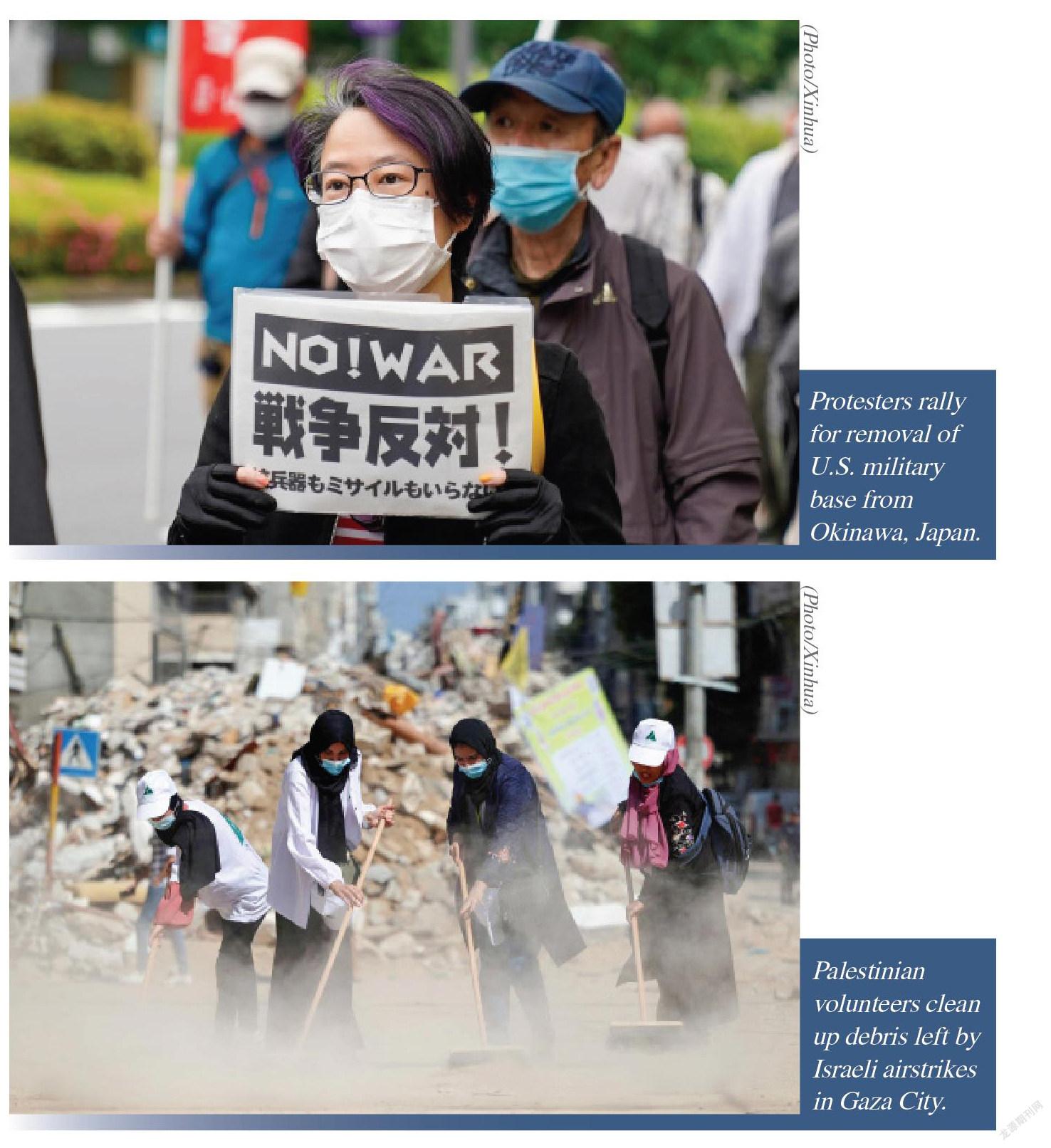
In today’s international politics, a warlike U.S. is ever becoming the greatest threat to world peace. Between 1945 when the WWII ended and 2001, 248 armed conflicts occurred in the world, and the U.S. initiated 201 of them, about 81 percent. With over 800 military bases overseas, the U.S. wages foreign wars frequently. The power and influence of the U.S. have become the main threat to world peace, and therefore it has become an important subject of our times to check U.S. unilateralism and hegemonic acts.
In order to safeguard world peace and stability highlighted by GSI, it is imperative to unite with all peace loving countries and peoples of the world in forming a united front against hegemonism. Only if all peace loving countries and peoples of the world are united and their force outweighs that for war, can world peace and stability truly be secured.
——————————————
Tian Wenlin is Professor at School of International Relations, Renmin University of China