China’s Solution to Global Governance Crisis
2022-07-14 09:45:27NéstorRestivo
當代世界英文版 2022年3期
[Argentina] Néstor Restivo
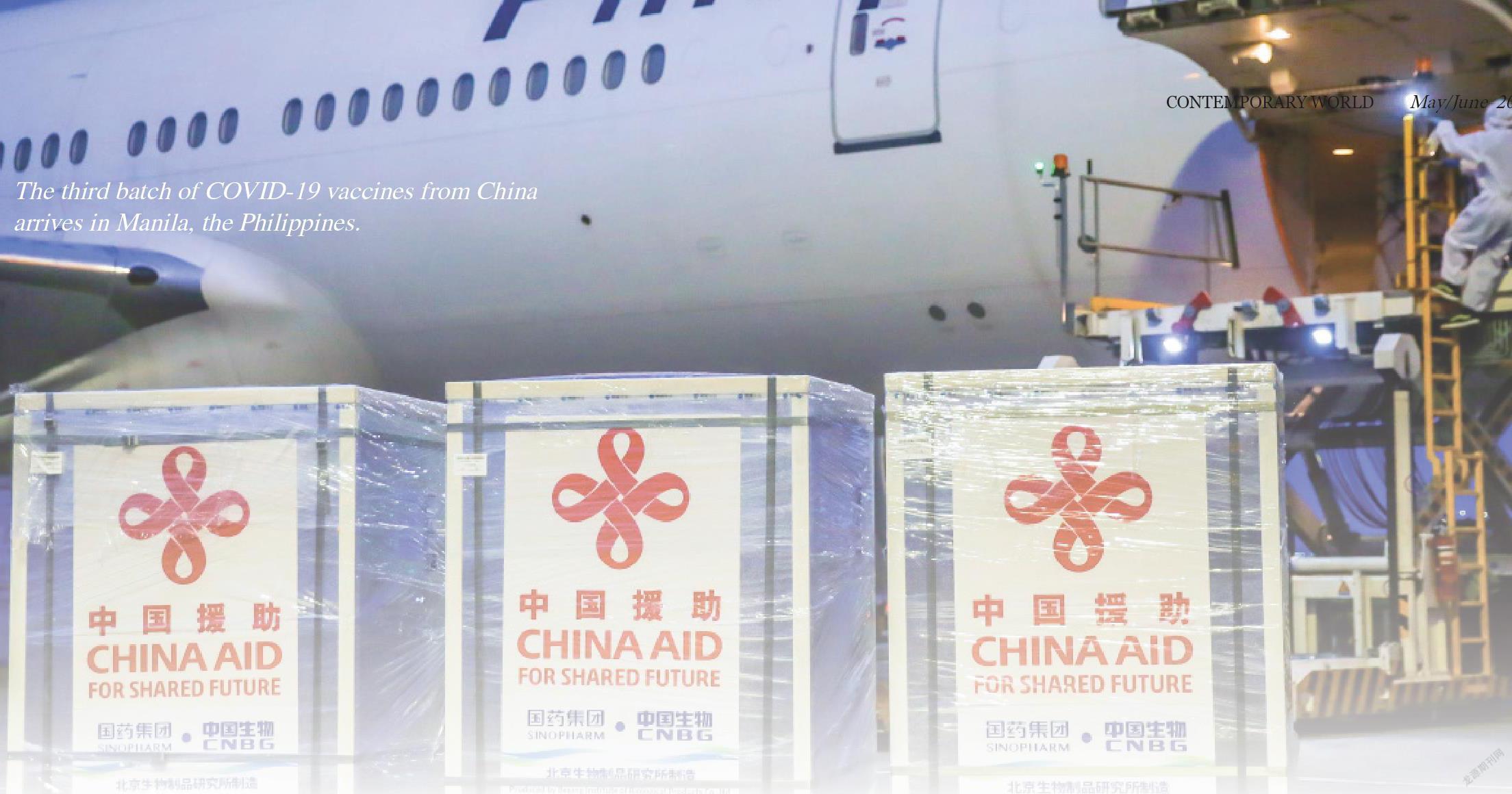
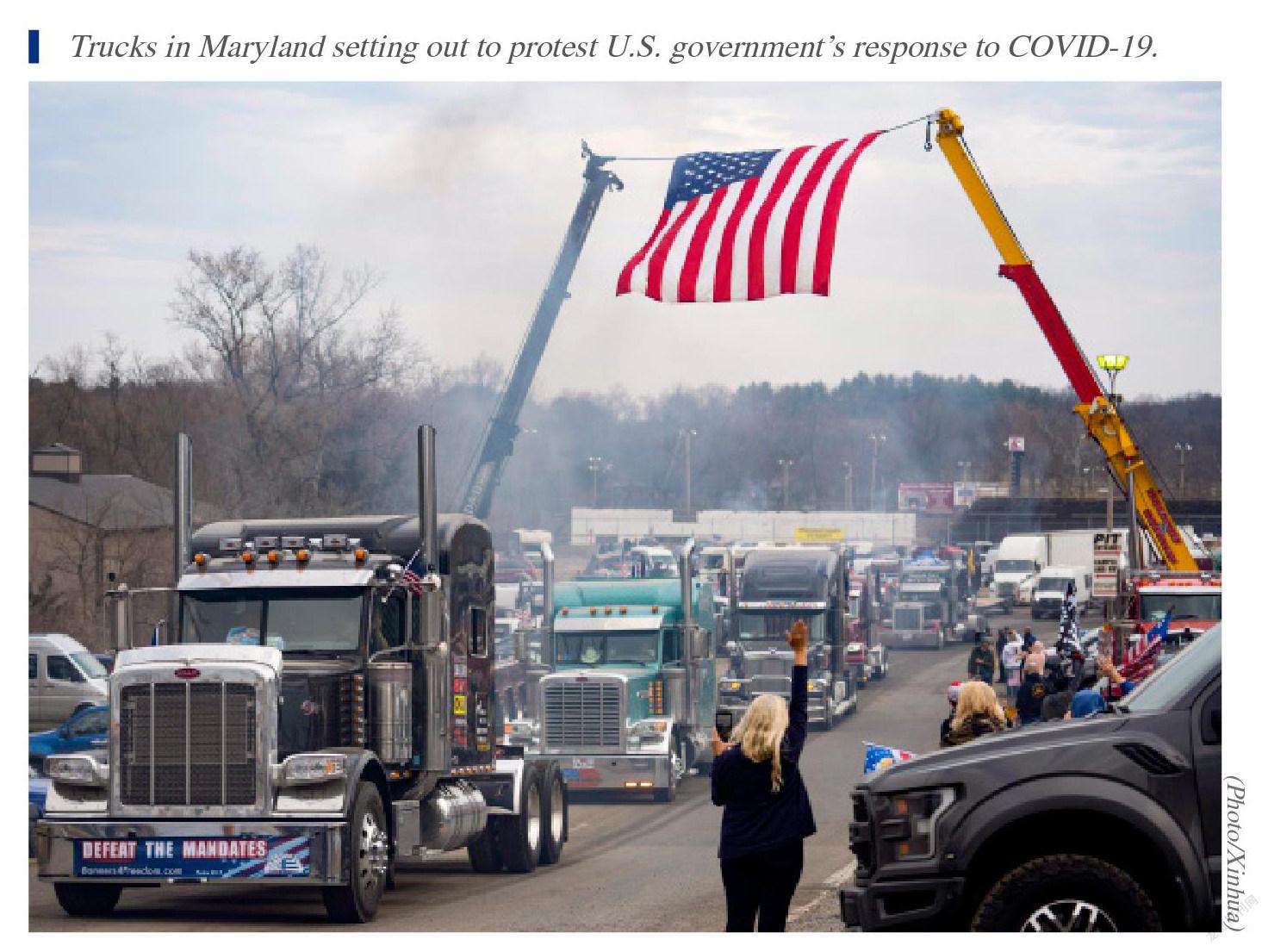

In today’s highly globalized world, countries and regions are ever more closely intertwined with more complex relations. As COVID-19 pandemic changes international order in a profound way, the challenges facing global governance system have intensified. There is an urgent call for change. In this context, China offers a new solution to improving global governance by proposing the vision of building a community with a shared future for mankind.
COVID-19 pandemic reflects limitations of global governance
At present, numerous international organizations and cooperation mechanisms are coordinating global endeavors in rules making, trade, finance, nuclear energy, migrant management and other hundreds of areas. They have played an indispensable role in the coordinated development of all countries in the world. There is, however, no doubt a long way to go between making rules and actually implementing them.
The UN is often limited in coordinating global issues despite itself being the largest international organization. To make up for that, the G20, an organization with far fewer members than the UN, was created. Since its inception, it has been committed to reforming the IMF and others, and addressing the ills of international financial system so as to improve the well-being of people in developing countries. With that said, it is overstretched in many circumstances. To this day, the IMF reform proceeds at a slow pace, and tax havens are still emerging. The current global governance is obviously far from being effective.
It is true that international organizations such as the UN, the WTO and the Intergovernmental Panel on Climate Change, as well as laudable agreements such as the Treaty on the Non-Proliferation of Nuclear Weapons, have played a positive role in promoting global development. However, as the existing global rules system took shape after the second world war and still stays within its original framework despite experiencing several reforms, it can no longer adapt to the adjustments and changes of the international landscape.
The public health crisis of COVID-19 outbreak has prompted further reflection. It has laid bare the flaws in global governance system, with U.S. and other western countries failing to coordinate and cooperate with each other without taking political position, letting alone organizing global efforts to respond to the pandemic. It has shown how the world is divided, and how the West often act with political and geopolitical intent, recriminations, prejudice, arrogance and racism. The ultimate victims of such are hundreds of millions of ordinary people. If the world had responded to the outbreak with concerted efforts led by a widely recognized body, say WHO, many lives would not have been lost.
However, the U.S.-led western countries blame China for the origin of the virus and manipulate public opinion to smear China. The U.S. is to blame for politicizing the pandemic.
Fortunately, their lies and false claims fall apart in the face of facts. There are more and more voices in international community in support of China. In July 2021, the Argentine Senate Center for the Observation of International Policy released report Vaccine Diplomacy, pointing out that COVID-19 has led to a surge of vaccine nationalism in the U.S., Europe and some other western developed countries who have rejected once and again the opportunities for consultation, joint planning and cooperation driven by their mere concern of self interests. Vaccine nationalism has pitted these countries against each other and against the WHO. In stark contrast to them, Chinese government has opened a dedicated air route connecting China and Argentina for transporting vital anti-pandemic supplies. This has ensured Argentina’s access to basic supplies, provided support for its response to COVID-19, and fended off the risks of vaccine nationalism.
COVID-19 has on the one hand shown the current global governance limitations, and on the other, presented mankind new opportunity to reflect and to explore how countries can transcend ideology and collectively respond to the unending global crises.
China’s role in global governance
There are some countries that always take a back seat in global decision-making system despite their important roles in global governance system. In order to have their say in global affairs they have begun to take steps. Since entering the 21st century, the world has seen profound power shift. East Asia, especially China, has once again become an important growth engine of the world economy. In South Asia, India is rising gradually. In Eurasia, Russia develops into an important local fulcrum. In Latin America, powers represented by Brazil are emerging. In Africa, South Africa has made positive progress in its political transformation. Although these regions still face their share of development difficulties, they are gradually developing into new forces without overturning the established world order.
China today is a world leader in many fields including economy, finance, trade, science and technology. China is committed to opening up, actively engaging in various international organizations and promoting multilateral cooperation. At the same time, China is working with other emerging countries to reform global governance system and build new global governance mechanism, so as to make it more open, inclusive, just and equitable.
For long China has been an advocate of world peace. It supports restoring active multilateralism, respects different cultures and civilizations, promotes global ecological and environmental governance, and safeguards the security of people of all countries. However, the outbreak of COVID-19 has seen global cooperation undermined by U.S.-led western countries with their arrogant and unilateral acts. At the Extraordinary G20 Leaders’ Summit on COVID-19 in March 2020, President Alberto Fernández of Argentina said, “in order to overcome this crisis, we need to develop and sign a great pact of global solidarity... we must act together, starting now, because no one is immune from this pandemic”. Although all countries are aware of the importance of cooperation in fighting the pandemic, only few can truly put human health and safety above rivalry and estrangement. It’s for all to see that China is responding to this major crisis in full gear. It has not only brought the pandemic under control at home, but also carried out global public health cooperation and formulated an inclusive and developmental policy for international cooperation. All China has done aims to build an international community featuring shared interests and win-win cooperation.
The most urgent need so far is to address the uneven distribution of vaccines. In the face of the vaccine gap, China has once again shouldered its responsibility. At the very beginning it proposed to make COVID-19 vaccine a global public good. To date it has become the world’s largest vaccine supplier and the leading supplier to developing countries. Latin American countries such as Argentina, Chile, Peru, Brazil, Venezuela and Ecuador are all beneficiaries of Chinese vaccines. Take Argentina as an example, while the rest of the world suffered from shortage of medical supplies and vaccines China offered assistance to the country, which has benefited its medical system and its people’s lives.
China’s solution in crisis
As COVID-19 poses unprecedented challenges to humanity, the debate on the human development path is becoming ever more intense. Some countries with ulterior motives intend to divide the world into democracies and autocracies, which is contrary to humanity’s aspiration for cooperation.
U.S. President Biden is now projecting the China-U.S. rivalry to a more geopolitical and value-oriented dimension, mentioning repeatedly that the struggle between democracy and autocracy is at a turning point. In his National Memorial Day remarks in May 2021, Biden defended America’s imperfect democracy and called for more work in order to deliver on the promise of the greatest experiment in world history. In December 2021, Biden went further by holding Summit for Democracy, attempting to sow divisions across the globe with the so-called concept of democracy.
In his speech at the Summit, Biden alluded to the imperfections of America’s democratic system, without being explicit about what they truly are. Are they inequalities in social, political, racial or other areas in the U.S.? Do they have anything to do with the harm America has done to many other peoples around the world? We don’t know. But we do know that democracy is not at its best, not just in the Great America, but in the West as a whole. There is no doubt that this so-called democratic system in the West is in deep crisis.
Biden said democracy is in decline at home and around the world not because of the fundamental problems outlined above but because of pressures from autocrats. Though he didn’t specify them, we know that he counted China in when saying so.
Facing the smear campaign, China as an Asian giant is showing the world another path forward. Thanks to its development path China has overcome enormous challenges and made remarkable achievements. It has eliminated absolute poverty, continued to improve environment, driven green and low-carbon development, actively practiced multilateralism, and advocated dialogue instead of confrontation to resolve conflicts of interests.
In recent years, significant changes have taken place in global governance structure. Under the leadership of President Xi Jinping, Chinese government takes an active part in global governance, and has put forward a raft of constructive proposals and initiatives, the most important of which is the concept of building a community with a shared future for mankind and promoting humanity’s common values. In his speech at the UN headquarters in Geneva in January 2017, President Xi stressed that mankind is in an era of major development as well as profound transformation and change, and that on the other hand, mankind is also in an era of numerous challenges and increasing risks. Facing this trend, China’s proposition is to build a community with a shared future for mankind and achieve shared and win-win development. He believes that to achieve this goal, the international community should promote partnership, security, growth, inter-civilization exchanges and the building of a sound ecosystem. He also reiterated the Chinese government’s firm stance in upholding world peace, promoting common development, forging partnerships and supporting multilateralism. He concluded that China is ready to work with all the other UN member states as well as international organizations and agencies to advance the great cause of building a community with a shared future for mankind. At the conference commemorating the 50th anniversary of the restoration of the lawful seat of the People’s Republic of China in the UN, President Xi stressed that we should vigorously advocate peace, development, equity, justice, democracy and freedom, which are the common values of humanity, and work together to provide the right guiding philosophy for building a better world.
While some countries are sparing no effort to divide the world and incite conflicts between nations with the labels of democracy and autocracy, China is committed to multilateralism and cooperation, and putting into practice the concept of a community with a shared future for mankind and the common values of mankind. Going forward, only when humanity understands that tensions between the new and the established must be eased at all costs, the gap between the rich and the poor narrowed and wealth redistributed, and nations, international organizations, and international cooperation institutions adapted to this new era, can we embrace a future that embodies the common values of mankind, achieve good global governance, and advance human civilization.
——————————————
Néstor Restivo is a Member of the Working Group on China at Argentine Council for International Relations, and the Honorary Advisory Council of the Argentine Foreign Ministry