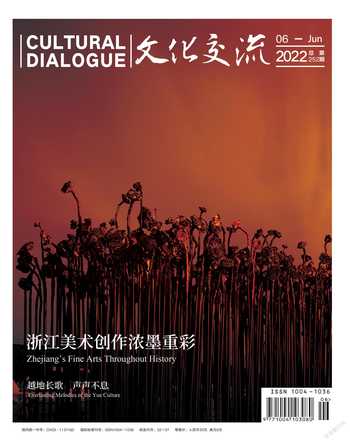
浙江美術創作濃墨重彩
2022-06-30 01:03:47王敏杰
文化交流 2022年6期
王敏杰

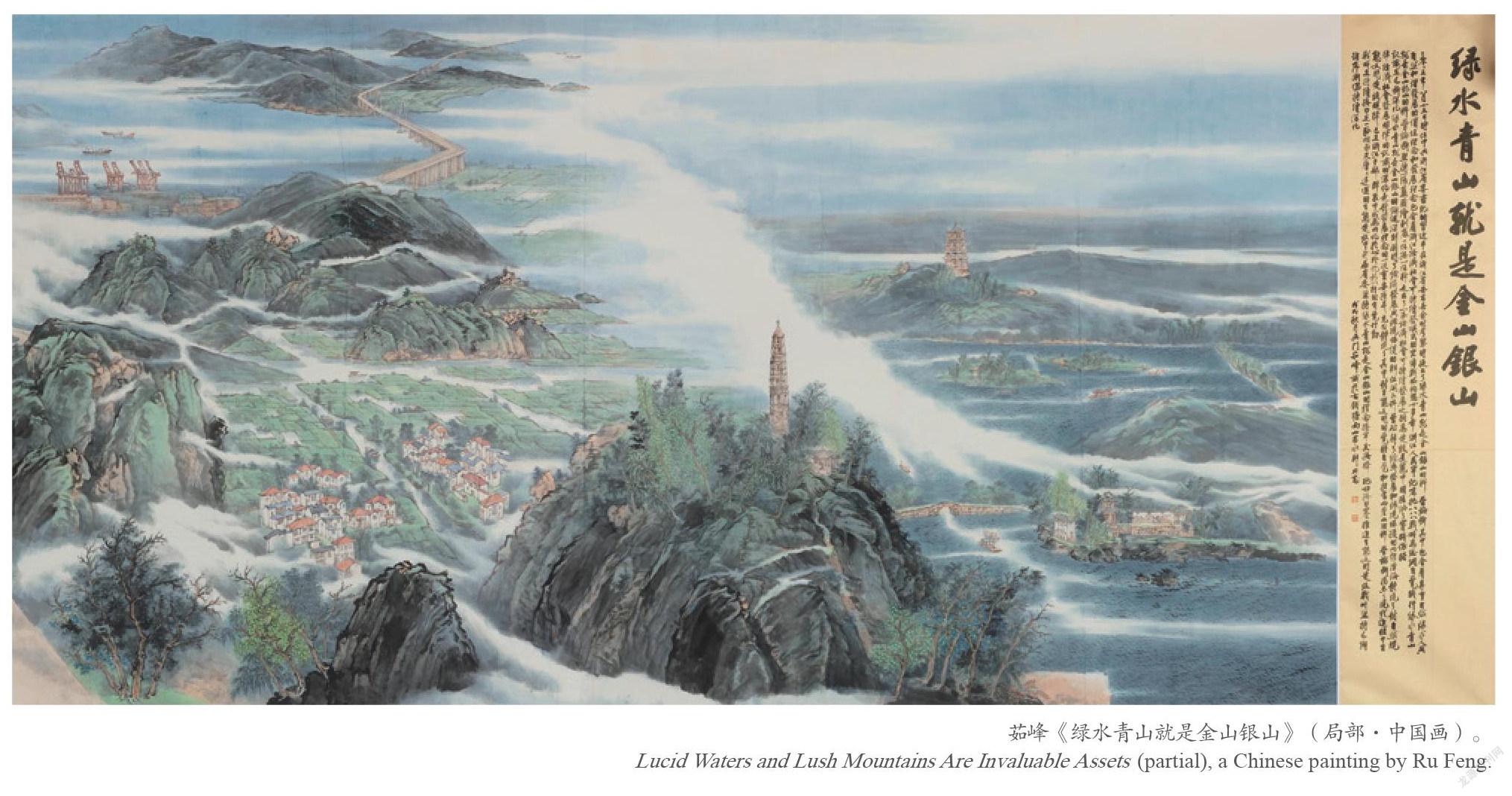

浙江大地,山水相依,悠遠深厚、意蘊豐富的歷史文化傳統,滋潤和激蕩著這里的千里水土、萬年人心。從上山文化粗獷質樸的彩陶,到良渚文化溫潤精微的美玉;從六朝的煙雨山川,到盛唐的吳越盛景;從馬遠、夏圭們的清遠溪山,到黃公望的富春山居;從徐文長的書齋晚風,到潘天壽的雁蕩山花……無論是浙派繪畫的代代出新,還是中西融合的兼容并蓄,浙江的繪畫總是以特有的堅韌和胸襟,博采眾長,推陳出新,奠定了在中國美術史上的歷史地位。
浙江美術創作,一路走來,名家輩出,佳作如林,群峰競秀,延綿不絕,歷經歲月洗禮,成為一股重要的引領力量凝聚著浙江悠長文脈、歷史記憶和精神傳統,為豐富和發展中華民族的文化藝術作出了重大貢獻。
宋代繪畫影響深遠? ? 新藝術運動功不可滅
梳理浙江的繪畫文脈源流,有兩個方面不容忽視。一是宋代繪畫傳統對“浙派”的滋養。北宋靖康二年(約公元1127年),金人攻陷汴京,宋徽宗、宋欽宗被俘,同時被擄走的還有所有的皇家畫院的畫家和其他伎藝百工。當年,康王趙構在南京應天府(今河南商丘)即位。后一路南逃,幾經輾轉,于紹興二年(1132年)遷都杭州。
在此期間,畫家李唐逃離金營的控制,歷盡磨難,南渡投奔高宗。李唐是畫院翹楚,《萬壑松風圖》是他的代表作之一。宋高宗年少時就與李唐相熟,敬佩他的畫技高超,畫院恢復舊制后,遂封其為畫院待詔并賜金帶,李唐的作品一直被奉為畫院經典、廣泛臨摹。南宋畫院中以劉松年、馬遠、夏圭最有影響,成就也最高,和李唐一起被后世稱為“南宋四大家”——其中山水畫的影響最為顯著和廣泛。
在宋之后,雖有所沉寂,但一些杭州山水畫家仍堅持繼承南宋畫院作畫風格,尤其以馬遠、夏圭兩個畫風最盛。至明代洪武之治,宋代畫風尤其是南宋的院畫重新崛起。浙江杭州(錢塘)人戴進在當時最有代表性,影響廣泛,從學者甚多,后人把這一畫派稱作“浙派”。浙派山水、人物取法南宋畫院體格而上接北宋,在繪畫上形成了較新的風格。
浙派的文脈代代賡續,1953年杭州國立藝專成立彩墨畫研究培訓班,從眾多有為青年學子中篩選出李震堅、周昌谷、方增先、顧生岳、宋忠元等,開始了現代人物畫的創作實踐,標志著新中國人物畫邁出了具有歷史意義的開拓性一步,被美術界稱之為“浙派人物畫”。其中,周昌谷因《兩只羊羔》,聲震畫壇,這幅作品是他結束敦煌之行進藏區深入生活后所作,1955年獲第五屆世界青年聯歡節金質獎章。
二是林風眠倡導的新藝術運動。林風眠1919年留學法國,先后在第戎美術學院、巴黎高等美術學校學畫。1925年回國,任北平國立藝術專門學校校長兼教授。1928年,在杭州主持創辦國立藝術院,任首任院長兼教授。他受蔡元培思想影響,倡導新藝術運動,長期從事美術教育與創作實踐。林風眠早期創作多為油畫,作品蘊含著強烈的人道主義精神,后期主要致力于中國畫創新。他提倡既繼承中國藝術傳統,又兼容西方藝術中的審美意識與表現手法,重視外師造化,融合中西,獨創出一種富于時代氣息和民族特色而又高度個性化的抒情畫風。林風眠是中國現代畫壇的藝術大師,杰出的藝術教育家,中國美術學院的創始人。
這兩股源流深深地滋養和影響著浙江美術的發展,尤其是中國美術學院已經成為浙江乃至中國美術人才的搖籃。
精品創作碩果紛呈? ? 藝術創新影響全國
在中國美術界,浙江美術一直以走在前列、勇立潮頭而聞名。無論是在中華文明歷史題材美術創作工程,還是在國家重大歷史題材美術創作工程,抑或是在最美中國人大型美術主題創作工程中,浙江的美術家創作團隊在入選作品的數量和質量上都遙遙領先、獨占鰲頭,為中國主題美術創作培養了一支有創作實力的“國家隊”。
事實上,在談到浙江美術界成就時,人們都會不約而同地提到浙江省美術家協會在傳承傳統繪畫藝術和發展美術創新中的作用。浙江省美術家協會第一屆代表大會于1961年7月30日召開,至今已更替九屆,先后有潘天壽、莫樸、肖峰、許江、高世名等美術家擔任協會主席,共有會員3055人,國家級會員726人。協會成立半個多世紀以來,團結引領廣大美術家深入生活、扎根人民,關切社會現實生活,深入時代生活前線,站在美術創作前沿。
2006年,浙江省決定實施浙江重大題材美術創作工程,以浙江7000年歷史為主線,再現浙江有影響的歷史人物、歷史事件,打造一批代表時代精神的藝術精品力作,通過這批精品力作展示浙江人文深厚的歷史底蘊。浙江重大題材美術創作工程得到所有主創人員的全情投入和積極配合。組委會發揮浙江美術創作人才高地的優勢,動員和組織有才華、有實力的藝術家投入到美術工程的創作中,以繪畫造型的當代語言來展示波瀾壯闊的浙江歷史進程,描繪活在記憶深處的歷史人物,藝術地再現中華民族及浙江人民獨特的精神氣質,不但為浙江美術史畫上了色彩濃重的一筆,更為當代創作提供了有力的實踐和寶貴的經驗。
自2014年持續至今的“百年追夢”浙江美術精品創作工程一到四期碩果累累,作品藝術化地呈現了浙江發展過程中具有歷史和時代意義的事件和人物,回顧歷史,觀照當下。
當代生活的重大題材繪畫,將繪畫的語言研究作為敘事倫理學的問題提了出來。繪畫所關心的并不僅僅是漫無涯際的語言拓新的探險,還有人類的價值是否可以被反復錘煉和深化的問題。重大題材與大時代的大風云相連,更與歷史的命運和人性的光華相連,它需要正面的吟詠,需要與其生活內涵高度一致的語言倫理的建構。循著這種建構,反反復復地回返人類理想和人類價值的歷史高度,來塑造藝術所維系的人民思想和倫理觀念。
五年一屆的“浙江省美術作品展”迄今已舉辦了14屆,三年一屆的“浙江省青年美展”已舉辦了八屆。這些展覽是省級綜合性大展,是廣大美術家展示才華的重要舞臺,旨在進一步繁榮浙江美術創作,推進浙江美術人才的培養,不斷推進藝術創新,積極體現民族精神和時代精神,鼓勵美術家創作出更多具有中國風格、中國氣派和浙江辨識度的當代美術精品。同時,向社會各界展示新時代浙江美術家的精神風貌、思想態度、文化修養。6E2E107E-4C8C-46AA-A6B0-1C02F9A15D28
此外,每年都推出油畫、國畫、水彩、版畫、設計等單項系列展,呈現浙江省美術家在各個藝術領域藝術創作的最新成就。浙江美術家從1984年第六屆全國美展到2014年第十二屆全國美展中,共有16位美術家的13件作品獲金獎。浙江的老藝術家趙延年、王伯敏、全山石先生先后獲國家美術獎終身成就獎。老一輩美術家是浙江的寶貴財富,這些老藝術家的生命經歷、藝術歷程和國家的命運緊緊相連。在新中國成立后中國美術初期發展的不同階段,他們都作出過杰出貢獻,取得過巨大成就,他們中的許多人在各個領域為中國美術建立了“國家標準”,是浙江美術界的驕傲,也是浙江美術界的底氣。
對于改革開放后浙江美術界的創新發展,業界總會提到1985年在杭州展開的一場創新大討論。當時,以浙江美術學院為中心的一批青年藝術家曠日持久的討論,最終在1985屆畢業生畢業展時爆發,并演變成為在全國轟動一時的“浙江美院的一場辯論”。1985年12月初,張培力、耿建翌、宋陵、包劍斐、查立、王強、徐進等“浙江青年創作社”的12位成員,在浙江省美術家協會的支持下,在浙江美術學院陳列館推出“85新空間畫展”;同年,吳山專、駱獻躍、張海舟、黃堅、倪海峰等在舟山集中創作“紅、白、黑”作品,并在杭州舉辦展覽,影響全國,成為中國美術界“85新潮”的主要代表。
與浙江民營經濟創新發展一樣,浙江民間美術的發展在全國也獨樹一幟。浙江擁有很多農民畫創作群體,是中國農民畫創作重鎮,在國內外具有廣泛影響。長期以來,浙江省美術家協會非常重視農民畫創作,舉辦“農民畫時代 ·? 時代畫農民——全國農民繪畫展”“來自畫鄉的報告——全國農民繪畫文獻展”“二十四節氣”柯城全國農民畫作品展、“2020全國農民畫作品展覽”“2020首屆中國(洞頭)漁民畫大展”等一系列農民畫展覽;連續四年舉辦麗水畬族民間繪畫主題性創作培訓班,舉辦“和美 · 景寧——畬族民間繪畫展”,為景寧縣培養了一支景寧縣畬族民間繪畫創作隊伍;組織專家赴衢州余東村、舟山東極鎮、溫州洞頭區、杭州蕭山區等地進行農民畫創作輔導,提升全省農民畫創作水平;赴阿克蘇開展農民畫培訓、指導,舉辦浙阿農民畫創作成果展,編輯《阿克蘇地區農民畫文獻集》。
國際交流影響世界? ? 人才輩出筑就高地
浙江美術發展史,也是一部中西融合、互學互鑒發展史,就在中國美院創辦之初,就有一大批像林風眠一樣留學海外的美術大師擔任教師。新中國成立以來,浙江美術界積極以各種形式開展國際學術交流活動。早在1960年,根據中羅兩國簽署的文化交流協定,埃烏琴 · 博巴受羅馬尼亞文化部的派遣,到浙江美術學院主持油畫訓練班的教學,為期兩年。這是繼20世紀50年代在中央美術學院舉辦“馬克西莫夫油畫訓練班”之后,又一個“請進來”的油畫教學實踐班。博巴的藝術觀念通過訓練班學員的教學實施,對浙江油畫的探索與拓展產生了積極的作用。1985年,旅法藝術家趙無極在浙江美術學院舉辦了為期一個月的油畫訓練班,這是改革開放之后最早也是極其重要的“外教”油畫訓練班。1992年,法籍華裔著名畫家和藝術理論家司徒立將具象表現繪畫介紹到中國并且得到了大力的推廣。中國美術學院油畫系的藝術家們,以自身大量的創作實踐為基礎,從哲學沉思和視覺追問兩個方面對“具象表現繪畫”進行了大量的研究和探索,揭示了具象表現繪畫藝術的基本內涵。這不僅對具象表現繪畫有深刻的指導意義,也為中國當代油畫藝術的教學提供了寶貴的教學理論支點。這個教學實踐至今長達30年,培養了大批繪畫實踐與理論研究的博士生。2014年,司徒立獲中國政府“友誼獎”。
新世紀以來浙江省美術家協會努力拓展國際美術學術交流,從2011年開始相繼舉辦了以“意之大者”“長卷視界”“輯頁輟英”“正大氣象”“和風屏山”和“雅集興答”為主題的杭州 · 中國畫雙年展。杭州纖維藝術三年展至今已舉辦三屆。這些國際性展覽的規模、規格和學術性引起了業界和社會的廣泛好評,提升了浙江美術事業在全國的地位和影響力。
杭州 · 中國畫雙年展學術宗旨:回眸世紀發展之路,標新國畫學術話語,重建當代文化聯系,再造東方藝術高峰。在全球化、信息化、城市化的時代背景之下,中國社會經濟結構正發生著迅猛的變化,中國畫也不斷面臨新的機遇和挑戰。中國畫雙年展的確立,在中華民族現代性的大視野中,承續中國畫百年發展之路;在全球化與本土化的大趨勢中,考量中國畫生存與發展的當代生態;將歷史尋繹和當代省思緊密鏈接,梳理、廓清中國畫傳承與拓展的歷史性線索,發現和解決當代中國畫發展的實質性問題。同時,打造當代中國畫拓新的創作平臺、研究的話語平臺、精英的推出平臺、高端的傳播平臺。
浙江有許多優秀的美術家幾十年深深地扎根于自己的土地,筆耕不輟,擁有大視野、大胸懷,以自己獨特的藝術作品走向世界,讓世界嘆服。中國文聯副主席、中國美術家協會副主席、中國油畫家學會主席、浙江省文聯主席、中國美院前院長許江就是其中的杰出代表。2003年,許江在亞歐交界的小亞細亞高原與“葵”不期而遇。此后,他陸續遭遇了生命中數個愀然于心的葵園現場,并從這些發生現場中反復自我開啟,在油畫、水彩、雕塑、影像等不同媒介之間琢磨、砥礪,鍛造出自己的藝術語言,提煉出葵的精神內核。
許江畫葵,迄今已是第十九個年頭。十九年來他不斷地訪葵、畫葵、種葵、談葵、憶葵、詠葵、格葵,持續地為這向陽之花賦予新的意蘊。自2006年迄今,許江帶著他的葵,先后在中國美術館、上海美術館、國家博物館、中華藝術宮、美國肯尼迪藝術中心、德國德累斯頓國家博物館、德國路德維希博物館、俄羅斯國家博物館等國內外重要機構展出,從叩問大地浮沉、歷史蒼茫的“遠望”系列,到呈現新中國一代人精神圖像的“東方葵”系列,再到黃鐘大呂般氣度恢宏的“葵頌”系列,受到海內外藝術界同仁的廣泛關注。
來自民間和政府間的美術國際交流也十分活躍,2018年9月4日,“古堰畫鄉——浙江特色小鎮海外推廣展”在法國巴黎中國文化中心開幕,通過油畫、攝影、表演等形式展現麗水古堰畫鄉的自然風光和人文底蘊。展覽以畫為媒,以景傳情,展出了60余幅繪畫與攝影作品,再現古堰畫鄉秀麗山水與淳樸民俗,讓山區的小鎮走向世界。6E2E107E-4C8C-46AA-A6B0-1C02F9A15D28
浙江十分注重美術人才培養,美術界代有人才出。尤其是近十年來,浙江美術界老、中、青薪火相傳,推出了“名家孵化”計劃和青年美術人才培養“新峰計劃”,其中“名家孵化”計劃2019年啟動,每三年一個周期,“新峰計劃”2013年啟動,已有十屆,選拔培養了一批優秀中青年美術創作人才,引領青年美術家的創作導向。協會不斷組織“名家孵化”和“新峰計劃”美術家參加美術采風、惠民、訪學等活動,舉辦“新峰計劃——青年美術家作品展覽”,出版、拍攝“群峰之路——名家孵化美術家作品集”及紀錄片,并開展多項宣傳推廣活動,助推中青年美術家,致力于打造浙江美術人才高地。
浙江進入新時代,浙江美術界將一如既往地持續打造文藝精品高地,帶領廣大美術家和美術工作者與時代同行、與人民同心,不負時代,努力創作出思想有深度、情感有溫度、語言有強度的精品力作。
(作者系浙江省美術家協會副主席兼秘書長)
Zhejiangs Fine Arts Throughout History
By? Wang Minjie
The land of Zhejiang, with its splendid mountains and rivers, profound historical and cultural traditions, has nourished and stirred the hearts of its people for thousands of years. From the rough and simple painted pottery of Shangshan Culture to the warm and delicate jade of Liangzhu Culture; from the misty and rainy landscape of the Six Dynasties to the prosperous scenery of Wuyue Kingdom; from the mountains and creeks under the brushes of painters like Ma Yuan and Xia Gui to Huang Gongwangs Dwelling in the Fuchun Mountains; from the night wind in Xu Wenchangs study to Pan Tianshous Yandang Mountain flowers … generations of Zhejiang-style paintings and the integration of Chinese and Western art have brought Zhejiangs paintings a unique tenacity and vision, both eclectic and innovative. Famous artists and masterpieces are in droves.
Two aspects in the origins of painting culture in Zhejiang cannot be ignored. The first is the nourishment of the “Zhejiang School” by the painting tradition of the Song dynasty (960-1279). In 1127, forces from the Jin dynasty (1115-1234) captured emperors Huizong (1082-1135) and Qinzong (1100-1161), including their Imperial Academy artists and other artisans. Zhao Gou (1104-1187) then ascended the throne in Yingtian (present-day Shangqiu, Henan) and became Emperor Gaozong. Later, he moved the capital to Linan (present-day Hangzhou) in 1132.
Then a leading painter Li Tang (ca. 1050-1130) escaped from the control of the Jin. Wind in the Pines Among a Myriad Valleys is among one of his most well-known works. Emperor Gaozong knew Li well and admired his superb painting skills. He named him an official at the restored painting academy and regarded his works as a classic to be widely copied. Among the “Four Great Masters of the Southern Song Dynasty”, Liu Songnian (1174-1224), Ma Yuan (1160-1225) and Xia Gui (1195-1224) were also most influential, especially for their landscape paintings.
After the Song dynasty, landscape painters in Hangzhou still painted in the style of the painters of the Southern Song Painting Academy, especially Ma Yuan and Xia Gui. In the early Ming dynasty (1368-1644), the Song style of painting, especially its academy painting, revived. Dai Jin (1388-1462), a native of Hangzhou, was the most representative at that time, with a wide range of followers, hence the “Zhejiang School”. Zhejiang School continued from generation to generation. In 1953, the Hangzhou National Art College established a training course in color and ink painting, and many promising young students, including Zhou Changgu (1929-1986), emerged from it and began the creative practice of modern figure painting, marking a historic pioneering step in Chinas figure painting in the new era, which is called “Zhejiang School Figure Painting”. For example, Zhou Changgus Two Lambs shocked the painting world. This work was created after he finished his trip to Dunhuang and went deep into the Tibetan area. In 1955, he won a Gold Medal at the Fifth World Youth Festival.6E2E107E-4C8C-46AA-A6B0-1C02F9A15D28
Then there was the New Art Movement advocated by Lin Fengmian (1900-1991), who studied in France in 1919 and learned painting at the Dijon Academy of Fine Arts and the Ecole des Beaux-Arts in Paris. In 1925, he returned to China and served as the principal and professor of Peiping National Art College. In 1928, he established the National Academy of Arts in Hangzhou, and served as its first dean and professor. Influenced by Cai Yuanpeis thought of “Aesthetic Education as Substitute for Religion”, he advocated the New Art Movement and engaged in art education and painting for a long time. Lins early works were mostly oil paintings. His later period was mainly devoted to the innovation of Chinese painting. He called for not only inheriting the Chinese art tradition, but also being compatible with the aesthetic consciousness and expressive techniques in Western art, attaching importance to learning from nature, integrating Chinese and Western art, and creating a highly personalized lyrical painting style full of the flavor of the times and ethnic characteristics. Lin was a master of modern Chinese painting, an outstanding art educator, and the founder of China Academy of Art.
These two sources nourish and influence the development of Zhejiang art, and China Academy of Art, especially, has become the cradle of artists in Zhejiang and even in China.
In the Chinese art world, Zhejiang has always been known for standing in the forefront of the tide. No matter in the art creation projects on the theme of Chinese civilization and history, or the national major historical theme, or the most beautiful China large-scale art theme, the artist teams in Zhejiang are far ahead in the number and quality of selected works, and they have produced a “national team” for the national theme art creation.
When it comes to the achievements of Zhejiang arts, people will invariably mention the role of Zhejiang Artists Association in inheriting the traditional art and in innovating art. Since the first congress of Zhejiang Artists Association was held on July 30, 1961, artists such as Pan Tianshou (1897-1971) and Mo Pu (1915-1996) have served as the chairman of the association, with 3,055 members currently, including 726 nation-level members. The association has been practicing the people-centered view of history, arts, the world, and morality, leading the artists to go deep into life, take root among the people, care about the real life of the society, dive deep into the front line and the grassroots level of the times, and stand at the forefront of artistic creation.6E2E107E-4C8C-46AA-A6B0-1C02F9A15D28
In 2006, the Zhejiang Provincial Government decided to implement a major theme art project. Taking the 7,000-year history of Zhejiang as the main line, it reproduced the influential historical figures and historical events with a batch of masterpieces representing the spirit of the times, a historical picture scroll of Zhejiang. The project team of talented and powerful artists went all out, and used the contemporary language of painting to recreate the magnificent historical process of Zhejiang, historical figures, the unique spiritual temperament of the Chinese nation and the people of Zhejiang. From 2014 to the present, the four phases of the Zhejiang Fine Arts Project of “Centennial Dreams” have been fruitful. The works artistically present events and figures of historical and epochal significance in the development of Zhejiang.
Paintings with major themes of contemporary life raised the study of painting as an issue of narrative ethics. What we care about is not only the endless exploration of art development, but also the question of whether human values ??can be deepened repeatedly. The quinquennial Zhejiang Provincial Art Exhibition has been held 14 times so far, and the triennial Zhejiang Provincial Youth Art Exhibition has been held eight times. These exhibitions promote the cultivation of art talents, continuously promote artistic innovation, encourage artists to create more contemporary art in Chinese style and show the spiritual outlook, ideological attitude and cultural accomplishment of Zhejiang artists in the new era to all sectors of society. In addition, a series of exhibitions on oil painting, traditional Chinese painting, watercolor, printmaking and design are launched every year, presenting the latest achievements of artists in various fields. From the Sixth National Art Exhibition in 1984 to the 12th National Art Exhibition in 2014, Zhejiang won gold medals for 13 works by 16 artists. Zhejiang artists Zhao Yannian, Wang Bomin and Quan Shanshi successively won the Lifetime Achievement Award of China Fine Arts Awards. These artists are closely linked with the destiny of the country. Many of them established “national standards” for Chinas art development.
When people speak of Zhejiangs innovation in arts, a great debate in Hangzhou that took place in 1985 is always mentioned. The protracted debate among a group of young artists mostly from Zhejiang Academy of Fine Arts (now China Academy of Art)happened during their graduation exhibition, and evolved into a national debate. The “debate at Zhejiang Academy of Fine Arts” involved 12 members of “Zhejiang Youth Creation Club”. In early December 1985, Zhang Peili, Geng Jianyi, Song Ling, among others, with the support of Zhejiang Artists Association, launched “85 New Space Painting Exhibition” at the exhibition hall of Zhejiang Academy of Fine Arts. In the same year, Wu Shanzhuan, Luo Xianyue, Zhang Haizhou and others concentrated on creating works in Zhoushan that would be made up of 75 percent red, 25 percent white and 5 percent black, which were then exhibited in Hangzhou. These works influenced the whole country and became the main representative of the “85 New Wave” in the Chinese art circle.6E2E107E-4C8C-46AA-A6B0-1C02F9A15D28
Like the innovative development of Zhejiangs private economy, the development of Zhejiang folk art is unique in China. Zhejiang boasts many painting groups for farmers, as an important center for Chinas farmer painting with extensive international influence. The Zhejiang Artists Association has sponsored exhibitions such as “Farmers in the Age of Farmer Paintings — National Farmer Painting Exhibition”, “Reports from Painting Villages — National Farmer Painting Documentary Exhibition”, “2020 National Farmer Painting Exhibition”, “2020 First China (Dongtou) Fishermens Painting Exhibition”. Thematic creation training classes on the ethnic She folk painting have been hosted for four consecutive years. “Peaceful Jingning — She Nationality Folk Painting Exhibition” cultivated a team of ethnic She folk artists in Jingning county, Lishui city. Teams of experts have been organized to places like Yudong village in Quzhou city, Dongji township in Zhoushan city and Dongtou district in Wenzhou city to help train the provinces farmer painters.
As early as in 1960, according to a bilateral cultural exchange agreement, Professor Eugen Popa (1919-1996) was dispatched by Romanian Ministry of Culture to teach oil painting training courses at Zhejiang Academy of Fine Arts for two years. This was another “imported” oil painting teaching practice class after “Maksimov oil painting training class” was held at the Central Academy of Fine Art in the 1950s. Popas artistic concept was implemented through the teaching, with a positive effect on the exploration of Zhejiang oil painting. In 1985, Zao Wou-Ki (or Zhao Wuji, 1920-2013), an artist living in France, held a one-month oil painting training class at Zhejiang Academy of Fine Arts. This was the earliest and most important oil painting training class from a “foreign teacher” after 1978. In 1992, Szeto Lap, a famous French-Chinese painter and art theorist, introduced figurative expressionism to China and it has been vigorously promoted. The artists, mainly from the Oil Painting Department of China Academy of Art, conducted research and exploration on figurative expressionism from aspects of philosophical contemplation and visual inquiry based on their own extensive practice. In 2014, he won the “Friendship Award” from the Chinese government.
In the 21st century, the Zhejiang Artists Association has expanded its national and international academic exchanges. For example, Hangzhou Biennale of Traditional Chinese Painting since 2011 and Hangzhou Fiber Art Triennial have enhanced the status and influence of the provincial art cause in China. The academic purpose of Chinese Painting Biennale of Hangzhou is “Looking back at the development of the past century, innovating the academic discourse of traditional Chinese painting, rebuilding the connection of contemporary culture and recreating the peak of oriental art. There are many outstanding artists in Zhejiang who have been rooted in their own field for decades. Xu Jiang, vice chairman of China Federation of Literary and Art Circles, vice chairman of China Artists Association, and former president of China Academy of Art, is one of the outstanding representatives. Since 2003, he has encountered several sunflower garden scenes, pondering and tempering between different media such as oil painting, watercolor, sculpture, video, etc., forging his own artistic language to extract the spiritual core of Sunflowers. The international exchanges of fine arts between the peoples and governments are very active. On September 4, 2018, “Guyan Painting Village — Overseas Promotion Exhibition of a Zhejiang Characteristic Town” opened at the China Cultural Center in Paris.
Zhejiang attaches great importance to the cultivation of artists, especially in the past decade. The “New Artist Program” and the “Famous Artist Incubation” program were launched in 2013 and 2019 respectively, which aim to foster young and upcoming artists. The Zhejiang Artists Association continues to organize artists in activities such as site visiting and art exhibitions, publishing collection of works and filming documentaries to build Zhejiang into an ideal place for artists.6E2E107E-4C8C-46AA-A6B0-1C02F9A15D28
猜你喜歡
非公有制企業黨建(2020年9期)2020-09-26 13:22:18
創作(2020年3期)2020-06-28 05:52:44
讀友·少年文學(清雅版)(2018年3期)2018-09-10 06:04:54
讀者·校園版(2018年13期)2018-06-19 06:20:12
領導決策信息(2017年12期)2017-05-17 04:49:18
中國衛生(2016年7期)2016-11-13 01:06:44
Coco薇(2016年2期)2016-03-22 16:58:59
讀者(2016年7期)2016-03-11 12:14:36
爆笑show(2014年10期)2014-12-18 22:27:48
中國衛生(2014年10期)2014-11-12 13:10:10