
Procollagen C-proteinase enhancer 1 promotes physiologic retinal angiogenesis via regulating the process of collagen
2022-06-22 03:14:02JiaLuoPeiQuanZhaoHaoJieChenMiaoMiaoLiuJiaQiHePingFei
INTRODUCTION
Cell count kit 8 (CCK8) assay was used to evaluate cell proliferation. hRMECs in 3-5 passage were used for CCK8 assay. Cells transfected with siRNA were seeded in a 96-well plate with a density of 2×10
cells/well.According to manufacturer’s instruction, cells cultured for 0, 24, 48, and 72h were then added with 10 μL CCK8solution (Dojindo Laboratories, Kumamoto, Japan) each well and incubated for 1h. Finally, the optical density (OD)values were measured at the wavelength of 450 nm and the cell viability were accessed according to the equation: cell viability = [(
-
)/(
-
)] × 100%.
stands for OD value of wells with cells transfected with siRNA, medium, and CCK-8 solution.
stands for OD value of wells without cells but with medium and CCK-8 solution, and
stands for OD value of wells containing cells, medium, and CCK-8 solution.
Collagen synthesis is of great importance in many physiological functions, which is closely related to angiogenesis. Collagen I and III are crucial components for blood vessel formation
,and collagen I and III are abundant in extracellular matrix(ECM) of retinal vasculature
. Procollagen C-proteinase enhancer 1 (PCPE1), encoded by
, was found to be a glycoprotein which was responsible for potentiating the activity of procollagen C-proteinase, thereby prompting the deposition of collagen
. Kanaki
and Masuda
respectively showed that PCPE1 could regulate the growth of vascular smooth muscle cells and tumor. Newman
demonstrated that
was important for endothelial cell lumen formation partly by enhancing the stiffness of the ECM, which indicated it played a possible role in angiogenesis. And there were studies suggested that PCPE1 may act as an anti-angiogenetic factor during the recovery process of alkali-injured cornea
. Therefore, PCPE1 has been reported as a novel factor that might be related to angiogenesis, while its specific role and mechanisms in retinal angiogenesis remain unclear.
hRMECs in 3-5 passage were used for tube formation assay. Matrigel (Corning, NY, USA) was melted at 4°C and coated into a 48-well plate with 150 μL/well for 1h at 37°C. Cells were then seeded into the pre-coated 48-well plate with a density of 6×10
cells/well. Images were photographed at 2, 4, 6, and 8h after incubation to assess the tube-like structures. The tube formation potential was assessed with Image J software based on total number of branches and total tube length.
MATERIALS AND METHODS
All animal experiments were approved by the Animal Care Committee of Shanghai Jiao Tong University and conformed to the protocol of the Care and Use of Experimental Animals. We conducted all animal experiments adhering to the tenets of the Declaration of Helsinki or the ARVO Statement for the use of Animals in Ophthalmic and Vision Research.
雙休日,他怕她貪睡,就給她發短信:親愛的豬豬,快起床看看你窗外的陽光吧!她睡的香時,他就一遍遍地發。煩了,她就回過一條:大色狼,想我了?他回:可不,大色狼想吃豬頭了。她回:煩人,自己解決去。發來發去,最后她簡稱他大狼。
Studies showed that PCPE1 can regulate the growth of vascular smooth muscle cells (SCM) and tumor
. Previous study found that TGF-β1, a cell proliferation regulator, can increase the level of
. Reduced SCM cell proliferation could lead to increased
mRNA, which may serve as a compensatory mechanism, suggesting
promotes cell proliferation. In this study, CCK8 results showed that
knockdown inhibited cell proliferation, which was consistent with the previous study. Findings in another study suggested that
gene played an important role in vessel lumen formation partly by enhancing the stiffness of the ECM
, which was consistent with our results that PCPE1 enhanced the tube formation ability of hRMECs. All these findings indicated a promoting role of
in retinal angiogenesis.
Three
small interfering RNA (siRNA; si-
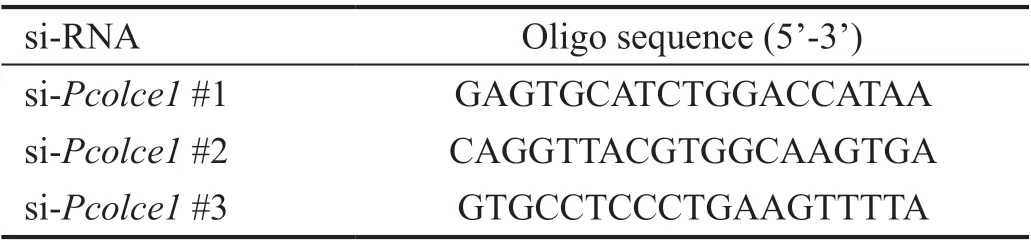
#1, 2, and 3)and one negative control (NC) siRNA (si-NC) were purchased from RIBOBIO (Guangzhou, China) and the sequences were listed in Table 1. Lipofectamine? 2000 transfection reagent (Invitrogen, Carlsbad, USA) was used for transfecting the siRNA into hRMECs in 6-well plate following manufacturer’s instructions, and cells were replaced with fresh medium 6h after transfection. RNA and protein were harvested from transfected cells at 24 and 48h after transfection. Cells with
expression knockdown were used to investigate the effects of
silencing on angiogenesis
cell proliferation and tube formation assays.
每畝農家肥1000-1500公斤、油菜專用配方肥25-30公斤、硼肥200克-400克,混合均勻后施用,施化肥時離苗根12-15cm,以防肥離根太近,導致燒根死苗。
To evaluate the relative expression level of mRNA in mouse retina or hRMECs, total RNA was extracted and used for quantitative real-time polymerase chain reaction(qRT-PCR) analysis. TRIzol Reagents (Invitrogen, Carlsbad,USA) were used for RNA extraction following the protocol,then dissolved RNA was quantified by Nano Drop micro spectrophotometer (Thermo Fisher, Waltham, USA) and 1 μg of RNA was reverse-transcribed into 20 μL of cDNA using transcriptase reagent kit (Vazyme, Nanjing, China). Applied Biosystems QuantStudio 7 Flex-1 (Thermo Fisher) was used for qRT-PCR with a 10 μL reaction system, including 5 μL of ChamQSYBR Color qPCRMaster Mix (Vazyme),4.5 μL of cDNA template, 0.2 μL of Rox Reference Dye(Vazyme), and 0.3 μL of primers. Relative gene expressions were analyzed by △△Ct and glyceraldehyde-3-phosphate dehydrogenase (GAPDH) was used as a reference gene. The primer sequences involved were listed in Table 2.
Previous studies indicated that PCPE1 was an anti-angiogenesis factor, and
-KO mice showed more intracorneal neovascularization than WT mice after alkali corneal burn
. To determine the role of PCPE1 in cell angiogenesis, three siRNAs (si-
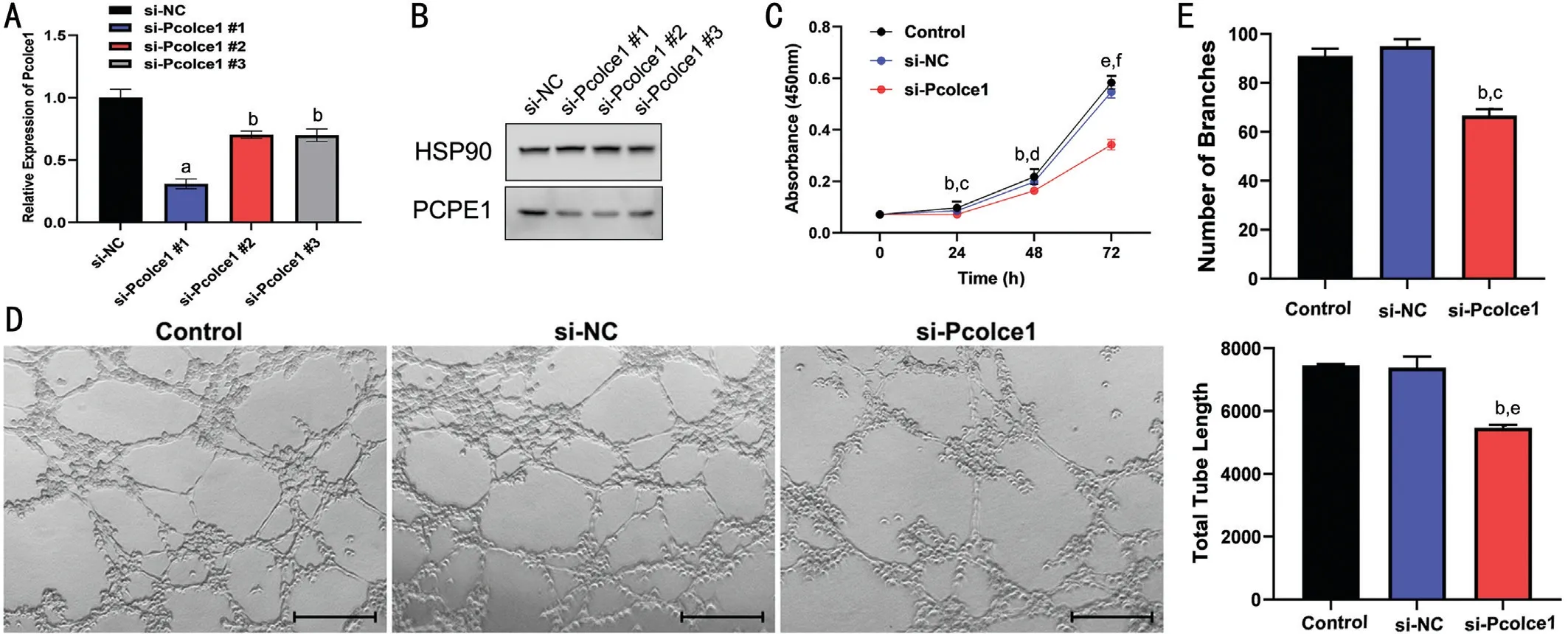
#1, 2, and 3) were designed and transfected into hRMECs according to manufacturer’s information. The silencing efficiency of the siRNAs were evaluated by qRT-PCR and WB, and results showed that the PCPE1 expression reduced to approximately 30% in si-
#1, which revealed the highest knockdown efficiency and was selected for following experiments (Figure 1A-1B). CCK8 assays were used to quantify cell proliferation abilities, results revealed that si-
stimulation led to a significant decrease in cell proliferation of hRMECs (Figure 1C). The angiogenesis potential of hRMECs was evaluated by tube formation assay,which showed that
silencing resulted in decreased angiogenesis potential (Figure 1D-1E).
Total protein was extracted from mouse retina or hRMECs with radio immunoprecipitation assay lysis buffer supplemented with protease inhibitors(Thermo Fisher), and quantified using BCA protein assay(Thermo Fisher). Samples were then separated by 12.5%acrylamide sodium dodecyl sulfate polyacrylamide gel electrophoresis (SDS-PAGE) gels and transferred onto the polyvinylidene fluoride membranes, followed by blocking with 5% non-fat milk for 1h at room temperature (RT).After washing for three times with Tris buffered saline Tween (TBST) solution, the membranes were incubated with primary antibodies, including PCPE1 (1:600, Santa Cruz Biotechnology, CA, USA), heat shock protein 90 (HSP90,1:1000, Abcam, Cambridge, UK), at 4°C overnight and then with anti-mouse or anti-rabbit horseradish peroxidase-labeled secondary antibodies (1:5000, Epizyme Biotech, Shanghai,China) for 1h at RT. Membranes were visualized using Omnienhanced chemiluminescent reagent (EpiZyme) and exposed in e-BLOT Touch Imager (e-BLOT, Shanghai, China).HSP90 was used as a loading control.
Angiogenesis refers to the formation of new blood vessels from existing capillaries, which plays a crucial role in both physiological and pathological processes,such as wound healing, tumor growth and so on. Retinal vascular diseases, including retinopathy of prematurity(ROP) or oxygen-induced retinopathy (OIR) model, diabetic retinopathy (DR), and age-related macular degeneration(AMD), are sight-threatening diseases which mainly due to abnormal retinal vascular development
. To describe the pathogenesis of these diseases and find the ways of prevention and treatments, many recent studies have focused on retinal angiogenesis
.

To determine the role of PCPE1 in retinal angiogenesis and possible mechanisms, we investigated the retinal vascular density of
and wild type (WT) mice retina
, and the angiogenic property change of human retinal microvascular endothelial cells (hRMECs) after silencing
. Results showed that PCPE1 had the ability to promote retinal angiogenesis. Furthermore, procollagen α1(I) cleavage assays demonstrated that the process of procollagen was involved in retinal angiogenesis, and it may provide a potential target for the treatments of retinal vascular diseases.
The
-knockout (KO) mice (C57BL/6J)were designed and purchased from Cyagen Bioscience Inc(Guangzhou, China). Mice were housed on a 12h light/dark cycle environment and fed with rodent chow diet. Genotypes were identified by PCR amplification on genomic DNA extracted from mousetails.
Mice were euthanized postnatally at 14d after birth (P14). Eyes were enucleated and fixed in 4% paraformaldehyde at 4℃ for 48h. Put the eyeball into PBS solution under the dissecting microscope and remove the anterior segments after cutting off the cornea,then be very careful to separate the retina from retinal pigment epithelium and sclera. It’s notable to sever the optic nerve head from retina, rather than forcibly pull it out, aiming to maintain the integrity of retinal whole mount. Wash retina in distilled water for three times (30min each) and then left it in the distilled water overnight at 4°C. Then incubate it in 3% Trypsin 1:250 (Macklin, Shanghai, China) at 37℃ for 2h and wash it in distilled water to isolate retinal blood vessels.Make four radial incisions in the intact isolated retina to allow it lie flat. Finally, attach the retina onto the slide with eyecup facing up and let it dry overnight at RT.
Rehydration the retinal whole mount in PBS for 15min, and blocking the nonspecific sites by incubating in PBS supplemented with 10% goat serum and 0.5% Triton for 1h at RT. Then, the retinal whole mount was exposed to a 1:100 dilution of antibody CD31 (Bio-Rad, Hercules, California, USA) overnight at 4°C. Rinse the sample in PBS for 3 times (10min each) and dry it at RT for 10min. Finally, placed one drop of anti-fading mounting medium on the retina and covered it with a coverslip. The images were taken using immunofluorescent microscope(Olympus, Tokyo, Japan) and evaluated by Image J software.
Retinal vessel can be counted as the most studied vessel in the entire body, and study retinal vasculature can further understand the pathogenetic mechanisms of retinal vascular diseases. As ROP, AMD and DR are vision-threatening and may lead to poor quality of life
, great efforts are made to search for new factors and mechanisms in retinal angiogenesis, which may provide novel targets for intervention and treatments. PCPE1 has been reported to be involved in angiogenesis, but its role in retinal angiogenesis has not been studied. In this study,
and
experiments were established to investigate the role of PCPE1 in retinal angiogenesis and the possible mechanism.
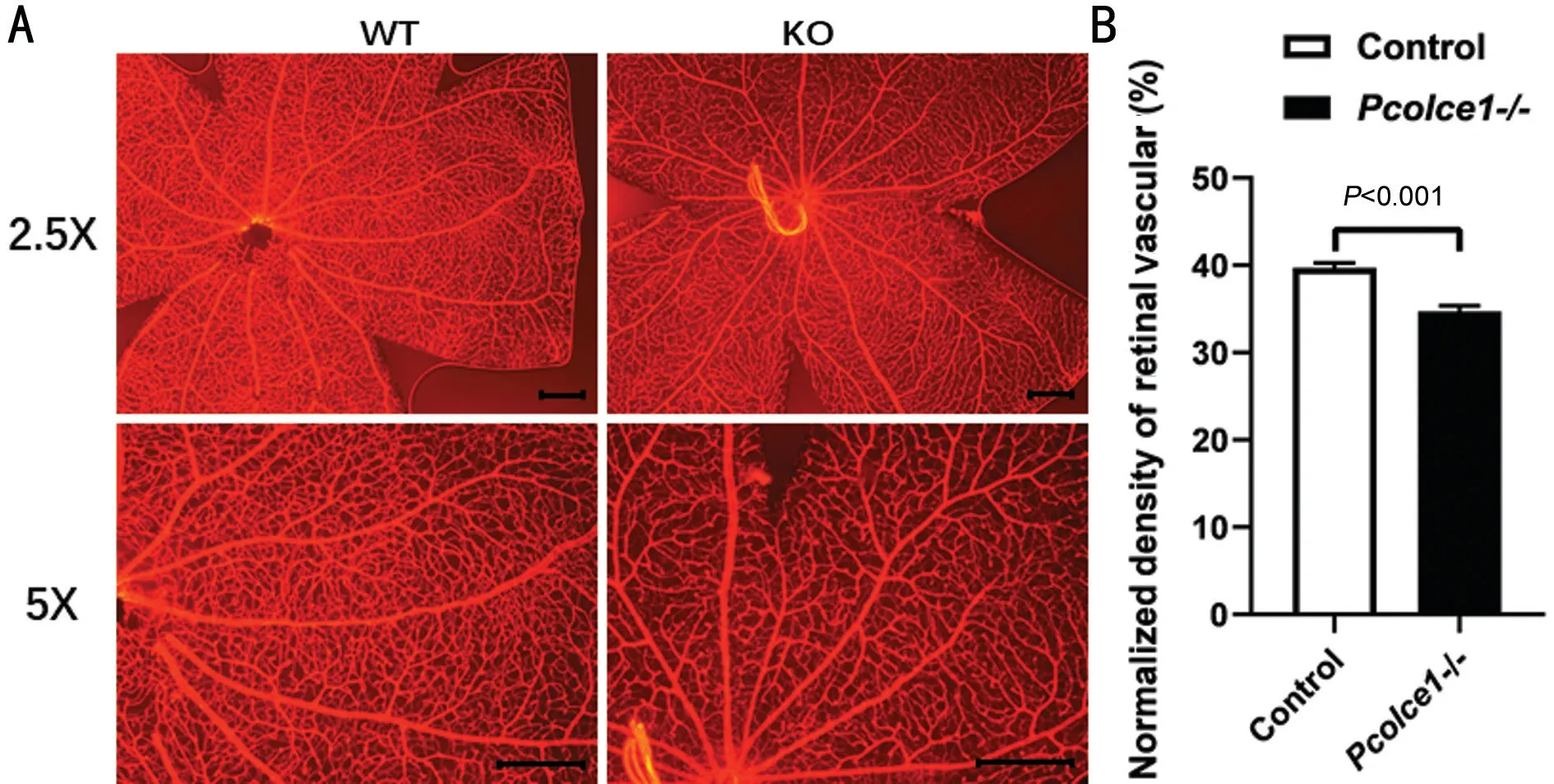
mice showed less retinal vasculature than that of WT mice at P14.
experiments revealed that
knockdown inhibited cell proliferation and decreased the tube formation abilities of hRMECs. Further procollagen α1(I)cleavage assays showed that
MEF cells were less efficient in enhancing mature collagen deposition than WT MEF cells, thus led to the decreased retinal vascular density in
mice.
MEF cells isolated from WT and
mice were cultured in Dulbecco’s modified Eagle’s medium (DMEM) containing 10% FBS and 1% PS. For collagen samples collection, cells reached 80% confluence were washed with PBS and switched to FBS-free DMEM medium which supplemented with 25 μg/mL soybean trypsin inhibitor and 50 μg/mL ascorbate for another 24h incubation at 37℃. Meanwhile, collect the conditioned medium with protease inhibitors [1 mmol/L para aminobenzamidine, 1 mmol/L N-ethylmaleimide,and 0.2 mmol/L phenylmethylsulfonyl fluoride (all were purchased from Sigma)] and ammonium sulfate, then stir the mixed medium gently at 4℃ for collagen components precipitation. Cell layers were scraped into 2× SDS loading buffer after washed twice with PBS, and then boiled for collagen sample preparation. Samples were finally electrophoresed on 7.5% acrylamide SDS-PAGE gels, and anti-α1(I) C-telopeptide polyclonal antibody LF67 (made in our lab from rabbits), were used at 1:1000 dilution for Western blot (WB) assays. Blots were quantified with Image J software.
Data were presented as mean±standard deviation (SD). Two-independent specimen
-test was utilized for comparison between two groups, and differences between groups were considered as significant with a
-value less than 0.05. Statistical analysis was performed using GraphPad Prism software version 8.4.0.
RESULTS
區塊鏈技術與智能合約在知識產權確權和交易中的運用及其法律規制 ..............................................................華 劼 02.13
晞月橫了青櫻一眼,不欲多言。青櫻亦懶得和她爭辯,先扶住了富察氏,等著眼明手快的小太監抬了軟轎來,一齊擁著富察氏進了偏殿。
Mice Compared to Wild Type Mice
Functional assays in hRMECs indicated a pro-angiogenic effect of
, which contradicted to the previous studies. To assess whether
acts as an anti-angiogenesis factor or pro-angiogenesis factor in retinal angiogenesis,
mice were obtained and bred for retinal whole mounts preparation. Equal number of
mice and WT mice aging of 14d were collected,retina whole mounts were made and incubated with anti-CD31 antibodies which marked the epithelium cells. CD31 immunofluorescent results showed a significant lower density of retinal vascular of
mice than that of WT mice(Figure 2), indicating that
KO leads to less retinal angiogenesis, which was consistent with our previous results.
Mice From both Medium and Embryo Fibroblasts
As previously demonstrated that
could enhance the procollagen C-proteinase (PCP)activity of bone morphogenetic protein 1 (BMP1), which can cleave C-propeptides from the procollagen precursors to form mature collagen
. To further investigate whether PCPE1 can enhance the cleavage activity of BMP1 and result in more mature collagen produce,
procollagen α1(I) cleavage assays were performed in MEF cells.Conditioned medium and cell layers of MEF cells isolated from
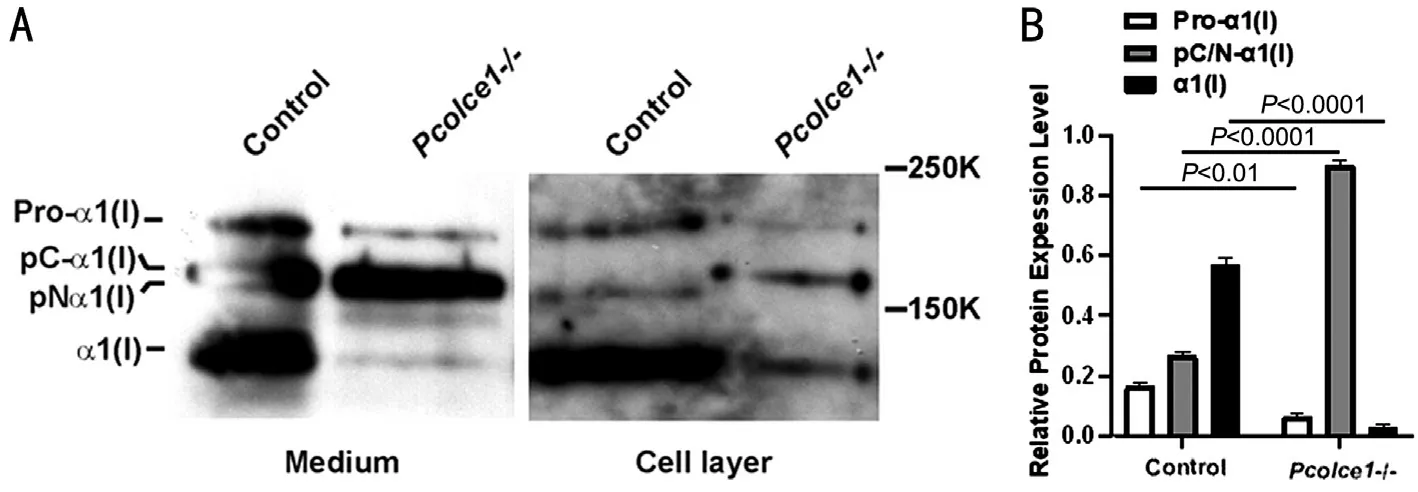
mice and WT mice embryos were harvested for WB. A polyclonal antibody LF67 was introduced to detect different forms of processing products: procollagen precursor, processing intermediates [pC/pN-α1(I)], and fully processed mature collagen α1(I) chain. As can be seen, in WT MEF cells, the mature collagen α1(I) chain was detected as the most abundant in the culture medium which contains about 60%, followed by pC/pN-α1(I) and procollagen-α1 precursor.Compared to WT MEF cells, procollagen α1(I) processing was markedly decreased in
MEF medium, the most abundant form of processing chains was pC-α1(I) and pN-α1(I) chains which accounting for approximately 91%in total, while the mature α1(I) chains were merely found in the culture medium. Similar results were also shown in cell layer of MEF cells (Figure 3). Due to the defects of collagens process which contributes to the angiogenesis, thus much less of mature type I collagens leads to the decreased retinal vascular density in
mice.
DISCUSSION
Mouse embryo fibroblasts (MEF) cells were isolated from
and WT mice embryos as described previously
. Pregnant mice were sacrificed at E12.5-14.5 and soaked with 75%ethanol solution for sterilization. Then, dissect out the uterus and wash it in PBS, organs and brain were extracted for genotype identification, carcass was removed to 6 cm dish containing PBS individually. After washing for twice, the carcass was minced finely, and centrifuged for 15min at 15 000 rpm. Then remove the supernatant and add trypsin-EDTA (Thermo Fisher) for digestion reaction for 30min. Cell suspension was filtered by a 100 μm filter and centrifuged for MEF cells collection. Finally, resuspend the cells pellet to a concentration of 2×10
cells/mL for further cell culture.After cultured for 24h, cells were replaced with fresh medium. When they reached confluence, froze them with a concentration of 3×10
cells/mL at -80℃ for subsequent experiments. MEF cells in 1-3 passage were used for following experiments.
The hRMECs were purchased from X-Y Biotechnology(Shanghai, China), and cultured in endothelial cell medium(ScienCell Research Laboratories, Carlsbad, CA, USA)containing 5% fetal bovine serum (FBS, ScienCell), 1%penicillin-streptomycin (PS, ScienCell) and 1% endothelial cell growth supplement (ScienCell) at 37℃ in 5% CO
atmosphere. The culture medium was refreshed every 2-3d.For subculture, remove the medium, and rinse hRMECs with phosphate buffered saline (PBS) three times, and then digested with 0.25% trypsin supplemented with 0.02%ethylenediaminetetraacetic acid.
As one of the crucial contents of ECM, fibrillar collagen types I and III are derived from the procollagens containing amino- and carboxyl-terminal peptides, which can be divided by two different proteases, procollagen N-proteinases and PCP, respectively
. PCP can remove the C-propeptides from procollagen, and the release of C-propeptides is regarded as the critical step in turning the soluble procollagen into insoluble fibrillar collagen
. PCPE1 is found to be a secreted glycoprotein which is responsible for potentiating the cleavage activity of BMP1, the same protein of PCP, up to 20 folds
. On the N-terminal of PCPE1, there are two complement/Uegf/BMP-1 (CUB) domains, which are thought to be the crucial functional binding regions of PCPE1 and related to the protein interactions
. It also contains a netrinlike (NTR) domain on the C-terminal, possessing the ability to suppress matrix metalloproteinases
. Studies revealed that many proteins contain the NTR domain, among which,secreted frizzled-related proteins act in synergy with PCPE1 to enhance the cleavage activity of BMP1
. Therefore,PCPE1 has pleiotropic effects in promoting collagen deposition. PCPE1 works
binding specifically to the type I procollagen C-propeptides
the calcium binding motif in CUB domain, so as to render the substrate a more suitable conformation to be cleaved by BMP1
. More specifically,the ability of
to prompt collagen deposition can be only through its effect on BMP1
, and PCPE1 only stimulates the activity of BMP1 when the substrates are fibrillar procollagen types I and III
. In this study, further procollagen α1(I) cleavage assays in MEF cells showed the same results with previous studies, which indicated that PCPE1 can potentiating the mature collagen production. The ECM structure contains instructive signals for migrating cells and plays a role of adhesive substrate in immature retinal astrocytes development
. Retinal astrocytes can not only induce VEGF expression and further stimulate retinal blood vessel development, but also influence retinal vasculature
-induced astrocyte proliferation and maturation
.Taking together,
may promote retinal angiogenesis
promoting collagen deposition.
本文采用相關性分析對研究假設H1、假設H1a~假設H1d、假設H3a~假設H3c進行檢驗,采用線性回歸模型擬合方法對研究假設H2進行檢驗。為滿足假設檢驗需求設置如下變量:全國兩化融合發展水平DLIII、企業兩化融合發展水平EDLIII、重點行業兩化融合發展水平SDLIII、第二產業兩化融合發展水平SIDLIII、上市公司市場總價值EMV、產業全要素生產率TFPI,第二產業的投入產出比IOR、人均增加值AVPC和全要素生產率TFPSI。
Contrary to the results of this study, previous study revealed
that the N-terminal domains of PCPE1, CUB1CUB2 fragment, exhibited significant anti-angiogenetic capacities.Nevertheless, the entire PCPE1 protein and its C-terminal NTR domain exerted weaker anti-angiogenetic abilities.The same study also demonstrated that the NTR domain of PCPE1 could interact with endostatin, one anti-angiogenic factor
. In another study,
cornea exerted a more active intracorneal neovascularization effect than WT cornea after alkali injury. According to aortic ring culture
, the number of new blood vessel sprouts in
aortic rings was markedly richer than that in WT aortic rings, what is more, the effect of recombinant PCPE1 on inhibiting growth of angiogenic sprouts was dose-dependent
. All these results suggested PCPE1 may have the function to inhibit angiogenesis. The different effects of PCPE1 on angiogenesis may due to the different targeted organs or the different pathways between physiological and pathological angiogenesis. There were many factors involved in normal retinal angiogenesis and pathological retinal neovascularization, like ROP and DR.Some of them played the same role in both processes. For example, high level of VEGF resulted in retinal vasculature,while reducing VEGF induced by hyperoxia treatment in OIR model led to neovascular tufts
. Erythropoietin(EPO) deficiency decreased retinal vascular stability, and intravitreal injection of EPO siRNA effectively suppressed retinal neovascularization
. However, retinal astrocytes which modulate retinal blood vessel development
providing template guidance for vascular network and VEGF production have divergent roles under different conditions
. Conditional knockout VEGF in astrocytes had no effect on normal retinal vessel development, while in the OIR mouse model, VEGF induced by astrocytes was critical for hypoxia-derived neovascularization
. Therefore,the divergent roles of PCPE1 in physiologic and pathogenetic retinal vasculature were accessible and further studies are needed to verify the specific mechanisms.
In conclusion, PCPE1 is a promoting factor in normal retinal angiogenesis, and its effect on retinal angiogenesis is partly achieved by regulating collagen synthesis. Therefore, our results elucidate the role of PCPE1 in retinal angiogenesis and provide a new therapeutic target of retinal vascular diseases.
Supported by the National Natural Science Foundation of China (No.81770963; No.81770964).
這套書一共5本,分別描述了花金龜、圣金龜、大孔雀蛾、節腹泥蜂等家族和直翅目家族等。每一幅畫和每一段文字都充滿著作者對法布爾先生的敬意,也體現了作者跟昆蟲融為一體的境界。
高校的教育目的是為了社會需要培養優秀人才,為了企業需求培養定向型專業人才,隨著社會形式的不斷發展,社會對人才水平的需要也在不斷提高。……
登錄APP查看全文
猜你喜歡
今日農業(2022年14期)2022-09-15 01:44:56
美與時代·美術學刊(2022年3期)2022-04-27 01:18:15
今日農業(2021年19期)2022-01-12 06:16:36
中老年保健(2021年11期)2021-08-22 03:15:44
中學生數理化(高中版.高考數學)(2021年1期)2021-03-19 08:28:38
民生周刊(2020年13期)2020-07-04 02:49:22
現代出版(2020年3期)2020-06-20 07:10:34
人大建設(2019年12期)2019-05-21 02:55:32
華人時刊(2018年23期)2018-03-21 06:26:00
中國火炬(2010年8期)2010-07-25 11:34:30
 International Journal of Ophthalmology
2022年6期
International Journal of Ophthalmology
2022年6期
- International Journal of Ophthalmology的其它文章
- Intraocular lens removal or not during vitrectomy for acute infectious endophthalmitis after cataract surgery
- Vitreous function and intervention of it with vitrectomy and other modalities
- Short-term outcomes of mitomycin C-augmented excisional bleb revision with capsulectomy for failed Ahmed glaucoma valve
- Evaluation of nintedanib as a new postoperative antiscarring agent in experimental extraocular muscle surgery
- Multimodal imaging of experimental choroidal neovascularization
- A novel Nance-Horan syndrome mutation identified by next-generation sequencing in a Chinese family