
Knowledge and awareness of glaucoma in Mexican patients with and without glaucoma diagnosis in an Ophthalmology Referral Center
2022-06-22 03:13:48ValeriaBecerrilLedezmaDanielaAlvarezAscencioClarisaEstherdelHierroGutirrezAlejandraHernandezOteyzaJessJimnezRomn
INTRODUCTION
Glaucoma is the leading cause of irreversible blindness in the world. More than 70 million people worldwide have glaucoma, and approximately 10% will develop blindness.Glaucoma is a silent disease that can remain asymptomatic in early stages until it progresses to a severe and irreversible condition, where it significantly reduces the patient’s visual field, vision and quality of life
.
Due to the asymptomatic nature of the early stages of glaucoma, the number of people affected is likely to be much greater than the number of people who know they have it,in fact, population surveys suggest that only 10% to 50% of people with glaucoma know their diagnosis
.Vast evidence indicates that a late diagnosis of glaucoma is an important risk factor for blindness, and that blindness from glaucoma is also associated with poor awareness and knowledge of the disease
. This makes patient education and awareness projects an essential part of the global fight against blindness. Educating the population encourages ophthalmological check-ups, directed screening, and active participation in follow-ups and treatments, thus, improving adherence and reducing disease progression
.
In previously published studies on glaucoma knowledge,it is estimated that 29%
to 59%
of the population have good knowledge of the disease. Among the causes that can contribute to the lack of knowledge in patients with glaucoma are a poor doctor-patient relationship, patient’s lack of interest or shyness to ask, brief medical consultations that do not leave time to explain the disease in detail, and use of complex language during the explanation
. A poor level of knowledge has been found to be associated with low level of education
,a short-term diagnosis, and advanced age. On the other hand, the factors that were associated with a higher score in glaucoma knowledge were having a family member or friend with the disease and being treated in the private healthcare sector
.
Regarding glaucoma awareness, previous studies have shown that from 35% to 79% of ophthalmology patients are aware of the existence of glaucoma. It has also been reported that developed countries have better glaucoma awareness compared to developing countries
. Having a family member diagnosed with glaucoma is also associated with greater awareness
, as this has been shown to encourage education about the disease. However, a high level of awareness about glaucoma does not imply that patients have adequate knowledge, in fact it has been shown that most people have a poor understanding of glaucoma despite being aware of the disease
.
The purpose of this study is to assess and compare knowledge and awareness of glaucoma in a population attending an Ophthalmology Referral Center in Mexico City.
SUBJECTS AND METHODS
The Institutional Ethics and Research Committee of Asociaci?n Para Evitar la Ceguera, Mexico City,approved the protocol, and the methodology adhered to the tenets of the Declaration of Helsinki. Written informed consent was obtained from all participants before enrollment.
近年來,國家開始著手對公交車行業(yè)和地鐵的建設,這些更廉價安全的出行方式對出租車的沖擊不言而喻。并且在人民收入水平的提高以及汽車價格的不斷下跌的現(xiàn)狀下,越來越多的人購置了屬于自己的汽車,這使得潛在的客戶越來越少。
值得慶幸的是,樓上和左達打賭的徐藝,這一把贏了,左達出的是石頭,徐藝出的是布。他不禁往上一蹦:“哈哈,你輸了!”
This cross-sectional study was conducted at the Asociaci?n Para Evitar la Ceguera in Mexico City, Mexico. Following a review of the literature, we designed a questionnaire containing a set of brief, structured questions in Spanish with easily understandable options to gather information on participants’knowledge and awareness of glaucoma adapted to our population. The questionnaire was divided into 4 parts:sociodemographic data, glaucoma awareness, glaucoma knowledge, and the patient’s personal preferences to receive education. Questions on sociodemographic data included participant’s age, sex, religion, marital status, educational degree, occupation and monthly income. Glaucoma awareness questions and general ophthalmological knowledge explore whether the participant has glaucoma, has previously heard about glaucoma, has family members or friends with a diagnosis of glaucoma, frequently attends ophthalmic evaluations, and their medical or surgical treatment for glaucoma, if applicable to the case. Glaucoma knowledge questions aim to determine basic knowledge about the affected anatomical site, types of glaucoma, signs and symptoms, risk factors, visual field alteration and patterns, progression and treatment. We also included questions about participants’preferences for obtaining educational information about glaucoma.The questionnaire was developed by a group of experts following the rules of the Delphi panel, then it was validated in a pilot group and Cronbach’s alpha was determined to assess internal consistency, obtaining a Cronbach’s alpha of 0.885. Glaucoma knowledge was classified into three groups according to the score obtained in the questionnaire (total score: 19) as: good (≥15 points), moderate (9 to 14 points), or poor (≤8 points).
The sample size was calculated by sample distribution of proportions, it was determined separately for awareness and knowledge. For the final calculation, glaucoma awareness of the participants was taken as the main outcome measure. The
required 440 patients, considering a 15% loss of participant due to incomplete questionnaires the minimum of patients required for statistical significance is 374 participants.
We analyzed factors related to a higher score and better knowledge and found a positive correlation between the level of knowledge and having frequent eye exams, similar to the results in the studies by Alemu
and Yenegeta
.We believe that by having more eye evaluations, the patient is more exposed to ophthalmological patient education simply by being in a hospital setting. Additionally, there was a positive correlation between level of knowledge and a higher level of education, as well as having a family member with glaucoma.In previous studies, the level of education and having a relative with glaucoma have been found to be associated with better glaucoma knowledge
. Moreover, Sood
observed that the most educated people were less likely to share their condition with their spouse or family. The authors believe that sharing this information with their immediate family can help remind and monitor usage of medication and ensure timely visits to the doctor for glaucoma monitoring,as well as educating family members on having their eyes checked.
A descriptive statistical analysis was carried out to determine knowledge and to compare it between groups (patients with glaucoma, without glaucoma and companions). Sociodemographic data were collected to assess the correlation between the level of knowledge and awareness using the Chisquare test and Logistic regression models, estimating the odd ratios (OR), 95% confidence intervals (CI), and
<0.05 were considered statistically significant.
RESULTS
河湖健康評估 河湖健康評估是指對河湖系統(tǒng)物理完整性(水文完整性和物理結(jié)構完整性)、化學完整性、生物完整性和服務功能完整性及其相互協(xié)調(diào)性的評價。
潘美麗扭著短粗的脖子,剜了丁主任一眼:你是給我老爸添麻煩。丁主任的臉更紅了,甲洛洛趕忙轉(zhuǎn)移視線:都是我的責任,不關丁主任的事,但我一定會查清楚,請大家放心。
Classifying the 394 respondents by group, 134 (34%) were patients with a diagnosis of glaucoma, 152 (38.6%) were ophthalmic patients without glaucoma and the remaining 108(27.4%) participants were companions of patients.
某油田注水流程:從海水提升泵過來的海水先通過粗過濾器,使95%直徑大于或等于80 μm的懸浮顆粒被祛除。PAP海水提升泵的海水經(jīng)過PAP粗過濾器過濾后與A平臺粗過濾器水出口匯合。
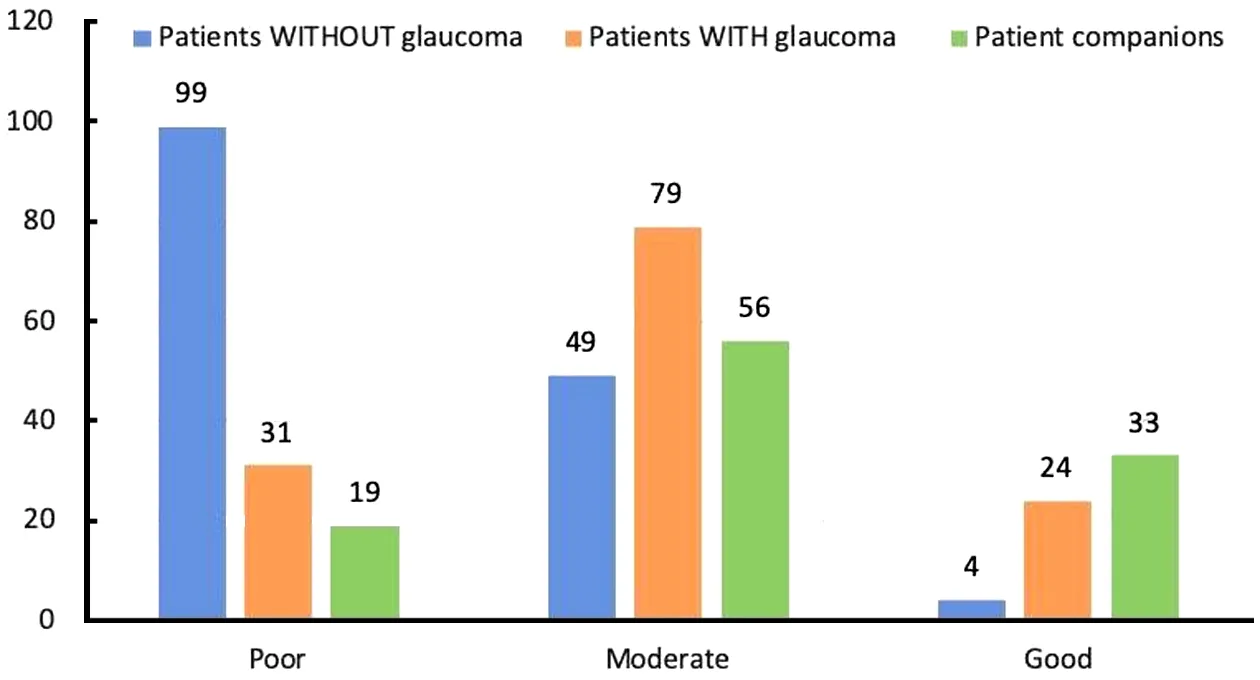
Knowledge was classified into three groups according to the score obtained in the questionnaire(total score 19) as: good (≥15 points), moderate (9 to 14 points)and poor (≤8 points). Most of the respondents (184, 46.7%)had moderate knowledge, 149 (37.8%) had poor knowledge and only 61 (15.5%) good knowledge. The comparison of knowledge between study groups is shown in Figure 1.We found that most ophthalmic patients without glaucoma had poor knowledge (99), most patients with glaucoma had moderate knowledge (79), and most patient companions had good knowledge (33). Patient companions were the group with overall highest scores.
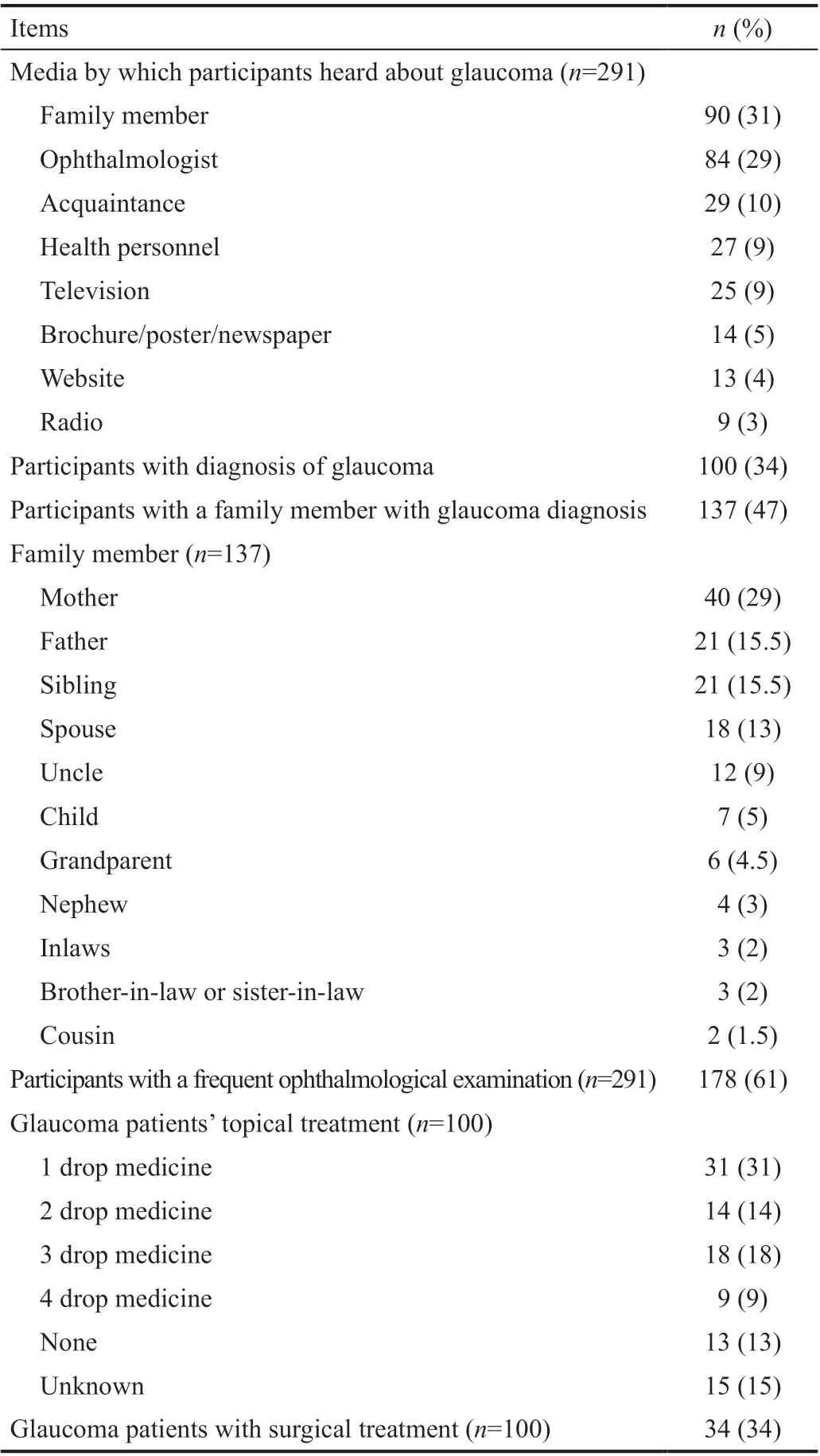
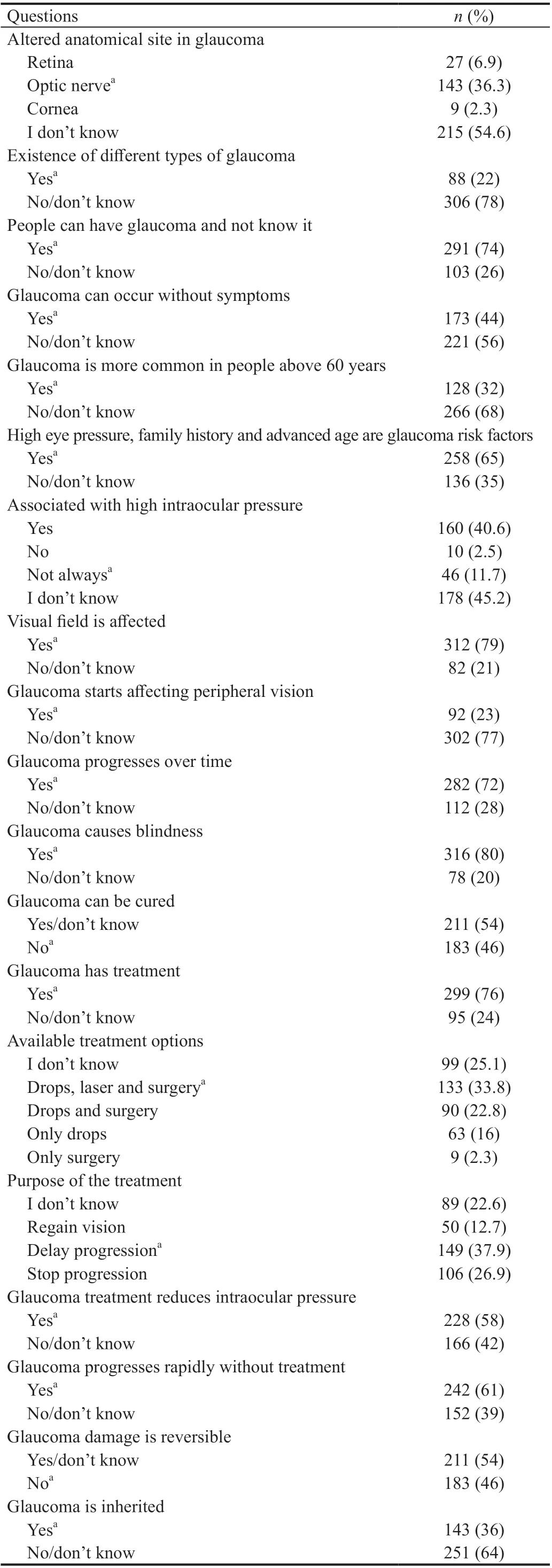
Regarding the specific knowledge of glaucoma (Table 3), most of the respondents (251, 63.7%) did not know the anatomical site of the glaucoma damage, 188 (47.7%) did not know if glaucoma was associated with high intraocular pressure,33.8% (133) could recognize the different treatments available,and 149 (37.9%) knew that the goal of treatment is to delay the progression of glaucoma. The majority of the participants had the notion that people could have glaucoma and not know it (78%, 306), that glaucoma affects the visual field (79%,312), even when they did not know the pattern of visual loss and glaucoma progresses over time (72%, 282) and causes blindness (80%, 316).
This cross-sectional study was conducted to report on awareness and knowledge of glaucoma in a population attending an Ophthalmology Referral Center in Mexico City,Mexico, using a multiple-choice questionnaire validated for our population. Our results show the general proportion of awareness was 73.9%, but despite this high percentage of awareness, scores reflecting good knowledge among respondents was only 15.5% (similar to the Uche
study). This could bring important public implications when we consider the visual impairment that glaucoma could cause.We defined “awareness” as having heard about the term glaucoma, considering this, the proportion of awareness about glaucoma in a Mexican population in our study is higher(73.9%) than previously reported by Paczka
in a survey conducted in an ocular disease detection campaign, where they found that 54% of their studied population had heard the term glaucoma. The difference between glaucoma awareness in these studies may be due to several factors, but we consider it is mainly because our study population was attending an Ophthalmology Referral Center, where people could have access to more information on ocular diseases. Also, our study was conducted 15y after the Paczka
’s
study,and nowadays patients have easier access to information and patient education.
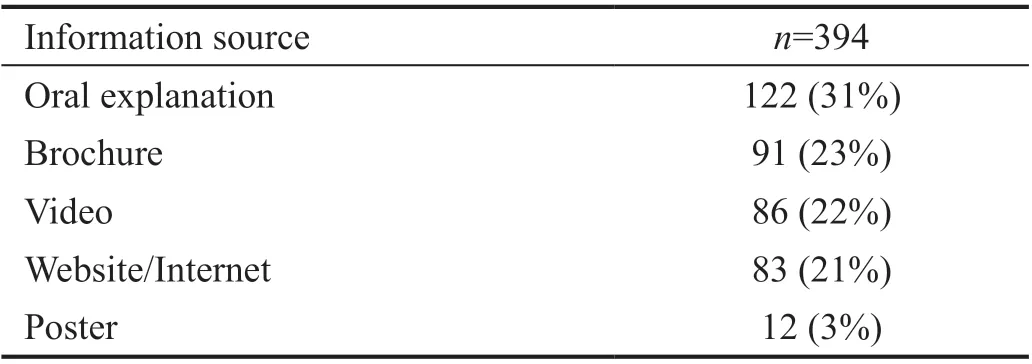
The preference of the majority of the participants for receiving information about glaucoma was an oral explanation (31%) followed by brochures(23%) and educational videos (22%), the rest is shown in Table 4.Regarding who should provide information, 74% of the participants preferred that they be an ophthalmologist. With respect to the topics of interest, most of the participants wanted more general information about the diagnosis and clinical evolution (313, 79%), types of glaucoma and risk factors (295,75%), surgical treatment options (273, 69%) and showed less interest in information on the treatment’s adverse effects (202,51%).
DISCUSSION
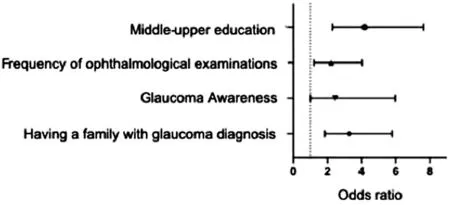
Better scores regarding knowledge were associated with frequent ophthalmological examinations (OR 2.24, 95%CI 1.33-3.77;
=0.02), higher level of education (OR 4.17,95%CI 2.28-7.64;
=0.00), and having a family member with glaucoma (OR 3.28, 95%CI: 1.85-5.78;
=0.00; Figure 2).
Published studies have shown that in general, between 25%and 79% of patients are aware of the existence of glaucoma
.Developing countries have low levels of awareness, as observed in studies carried out in Southwestern Ethiopia where the current level of glaucoma awareness was reported to be only 2.4%
and in Northwest Ethiopia where the proportion of awareness was 35.1%
, while studies conducted in developed countries indicate higher levels of awareness as reported in an American study in Massachusetts
, with a proportion of awareness around 72% or in Melbourne,Australia
where it was 79%.
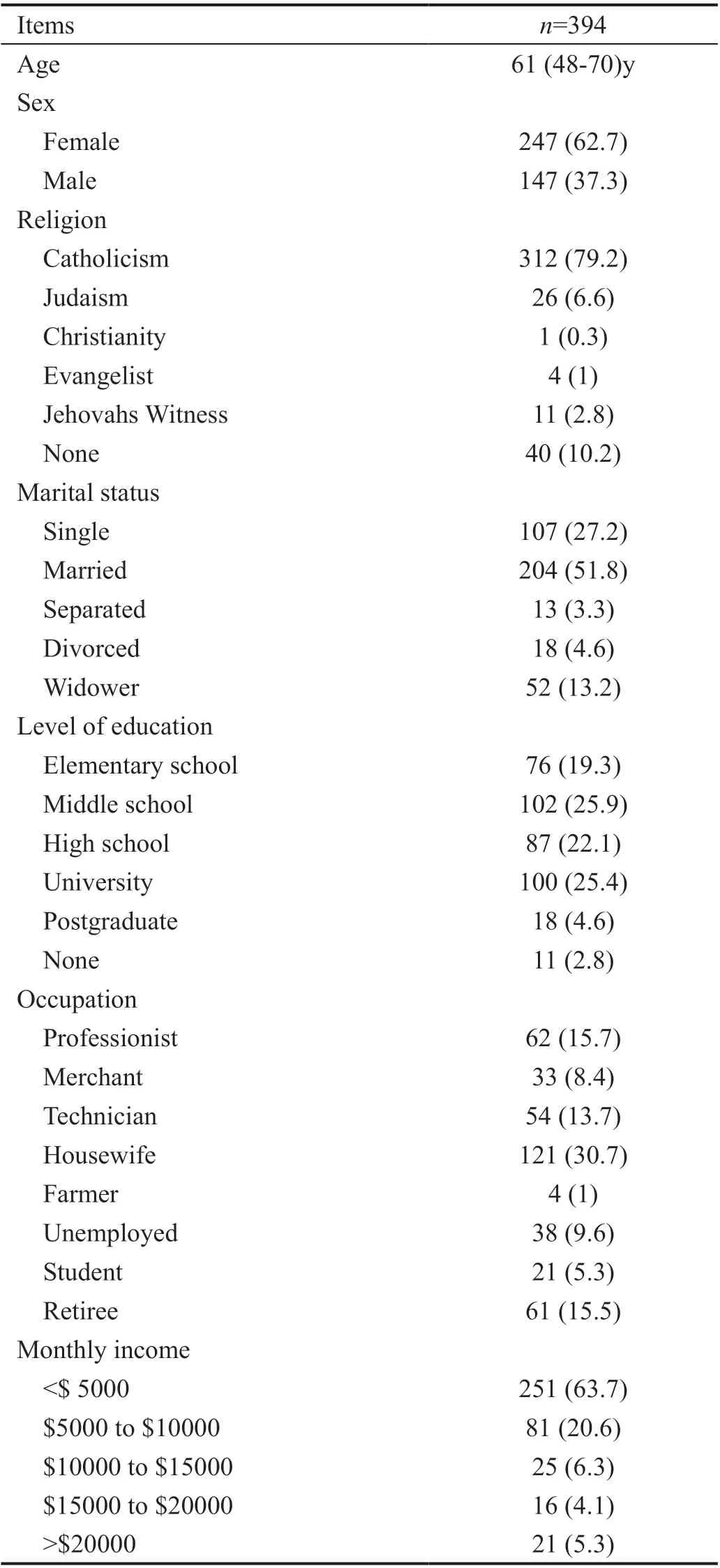
Three hundred and ninety-four adults participated, the male to female ratio was 1:1.7 with a median age of 61y (interquartile range of 48 to 70). The most frequent educational levels were university (100, 25.4%), high school (87, 22.1%) and middle school (102, 25.9%). Regarding occupation, the group that represented the largest number of participants was housewives(121, 30.7%), followed by professionals (62, 15.7%) and retirees (61, 15.5%). Of the 394 participants, 63.7% (251)belonged to a low socioeconomic stratum according to monthly income. The complete socio demographic data is shown in Table 1.
在新時代背景下,企業(yè)之間的競爭說到底即為人才之間的競爭,員工作為支撐房地產(chǎn)開發(fā)企業(yè)穩(wěn)步發(fā)展的重要人力資源,其重要性自不必多言。通過科學系統(tǒng)化的績效考核管理,將確保房地產(chǎn)開發(fā)企業(yè)在行業(yè)中永立于不敗之地。基于此,如果想要將績效考核管理的積極作用淋漓盡致的發(fā)揮出來,就需要盡快構建出以員工為本的績效考核指標體系。
One of the most striking results of our study is that only 34%of the patients with glaucoma were aware of the disease,this makes it more important to think about educational interventions that increase awareness of the disease due to the visual disability that it implies. According to the source of awareness, the most common source was from close acquaintance with relatives, family members, and friends of glaucoma patients, similar to what was found by Maharana
.
除了施工現(xiàn)場的安全檢查之外,施工技術的安全檢查很容易被忽視,導致很多建筑施工企業(yè)未能及時發(fā)現(xiàn)施工技術的缺陷,不僅不利于整個工程的建設質(zhì)量,而且還給施工項目帶來巨大的安全隱患,不利于整個項目的順利開展。……
登錄APP查看全文
猜你喜歡
哲學評論(2021年2期)2021-08-22 01:53:34
建材發(fā)展導向(2021年9期)2021-07-16 07:11:36
中華詩詞(2019年7期)2019-11-25 01:43:04
經(jīng)濟技術協(xié)作信息(2018年30期)2018-11-22 06:20:28
經(jīng)濟技術協(xié)作信息(2018年30期)2018-11-22 06:20:24
消費導刊(2017年24期)2018-01-31 01:29:20
影視與戲劇評論(2016年0期)2016-11-23 05:26:01
中國房地產(chǎn)業(yè)(2016年2期)2016-03-01 01:25:48
河南電力(2016年5期)2016-02-06 02:11:34
現(xiàn)代企業(yè)(2015年9期)2015-02-28 18:56:50
 International Journal of Ophthalmology
2022年6期
International Journal of Ophthalmology
2022年6期
- International Journal of Ophthalmology的其它文章
- Intraocular lens removal or not during vitrectomy for acute infectious endophthalmitis after cataract surgery
- Vitreous function and intervention of it with vitrectomy and other modalities
- Short-term outcomes of mitomycin C-augmented excisional bleb revision with capsulectomy for failed Ahmed glaucoma valve
- Evaluation of nintedanib as a new postoperative antiscarring agent in experimental extraocular muscle surgery
- Multimodal imaging of experimental choroidal neovascularization
- A novel Nance-Horan syndrome mutation identified by next-generation sequencing in a Chinese family