從大禹與鑒湖說(shuō)開(kāi)去
2022-06-08 15:59:57陳富強(qiáng)
文化交流 2022年5期
陳富強(qiáng)
夏日的紹興鑒湖艷陽(yáng)高照,微風(fēng)和煦,晴朗明媚,湖面水平如鏡,湖水清澈見(jiàn)底。隱約可看見(jiàn)水底涌動(dòng)的水草,岸上柳樹(shù)迎風(fēng)飄舞,坐上畫(huà)舫看紹興鑒湖,是最?lèi)芤獠贿^(guò)的事情。畫(huà)舫駛離紹興鑒湖碼頭,可眺的湖面已被分割成不規(guī)則的若干形狀,說(shuō)是寬闊的水道也可以,水道兩側(cè),布滿建筑,以商住樓為主,我稍稍有些失望。駛過(guò)其中一段,沿湖砌墻,墻繪主題,多與鑒湖有關(guān),富江南特色。令我驚奇的是,在墻與水面不足一米的空地上,居然長(zhǎng)滿綠油油的青菜。我有些詫異,種菜人是如何發(fā)現(xiàn),并且走到這片狹長(zhǎng)的土地上的?又是如何播種施肥的?
紹興春秋戰(zhàn)國(guó)時(shí)期稱越國(guó),古越文化博大精深,我一直想找找大禹與鑒湖的關(guān)系,但資料甚少,只看到一句:歷史上的鑒湖,可追溯到大禹治水的傳說(shuō)和古越國(guó)的水利建設(shè)時(shí)期。大禹在紹興地區(qū)最著名的傳說(shuō)和大禹的陵墓,恰好在鑒湖兩端,相距不遠(yuǎn),并且都在鑒湖八百里范圍之內(nèi)。
先來(lái)說(shuō)大禹在紹興的傳說(shuō)。相傳大禹在治水之際,認(rèn)識(shí)了一位涂山氏族的女子,一見(jiàn)鐘情,這位女子也深深地愛(ài)上了禹。禹忙于治水,涂山氏女在家天天盼望夫君大禹回來(lái)。在家盼望不到,又跑到涂山山南的山坡上去等候。一天天過(guò)去了,涂山氏女望穿了秋水,還是未見(jiàn)禹回來(lái)。她不禁長(zhǎng)嘆一聲,吟詠出這樣的一句:候人兮,猗!這四個(gè)字,據(jù)說(shuō)就是中國(guó)的第一首女聲獨(dú)唱,也是第一首南方情歌。
涂山氏族是夏族的始祖神,夏族就是日后建立中國(guó)第一個(gè)王朝夏的一個(gè)部落集團(tuán)。東漢趙曄 《吳越春秋 · 越王無(wú)馀外傳》:“禹三十未娶,行到涂山,恐時(shí)之暮,失其度制,乃辭云:‘吾娶也,必有應(yīng)矣。’乃有白狐九尾造于禹。禹曰:‘白者,吾之服也。其九尾者,王之證也。’涂山之歌曰:‘綏綏白狐,九尾龐龐。我家嘉夷,來(lái)賓為王。成家成室,我造彼昌。天人之際,于茲則行。’明矣哉!禹娶涂山氏族一女子,謂之女?huà)伞H⌒寥晒锛祝硇小J拢畫(huà)缮訂ⅰ⑸灰?jiàn)父,晝夕呱呱啼泣。”這段記載,似乎可以證明大禹在紹興地區(qū)留下的印跡,也告訴我們,涂山氏也稱女?huà)伞?/p>
涂山之歌在《先秦詩(shī)鑒賞辭典》中有記載,以《涂山歌》名,收錄四句:綏綏白狐,九尾龐龐。成于家室,我都攸昌。如果翻譯成白話文,是這樣:孤孤單單走來(lái)的白狐貍,九個(gè)尾巴毛茸茸又粗又長(zhǎng)。大禹和涂山女結(jié)為連理,我們這里將永遠(yuǎn)發(fā)達(dá)興旺!
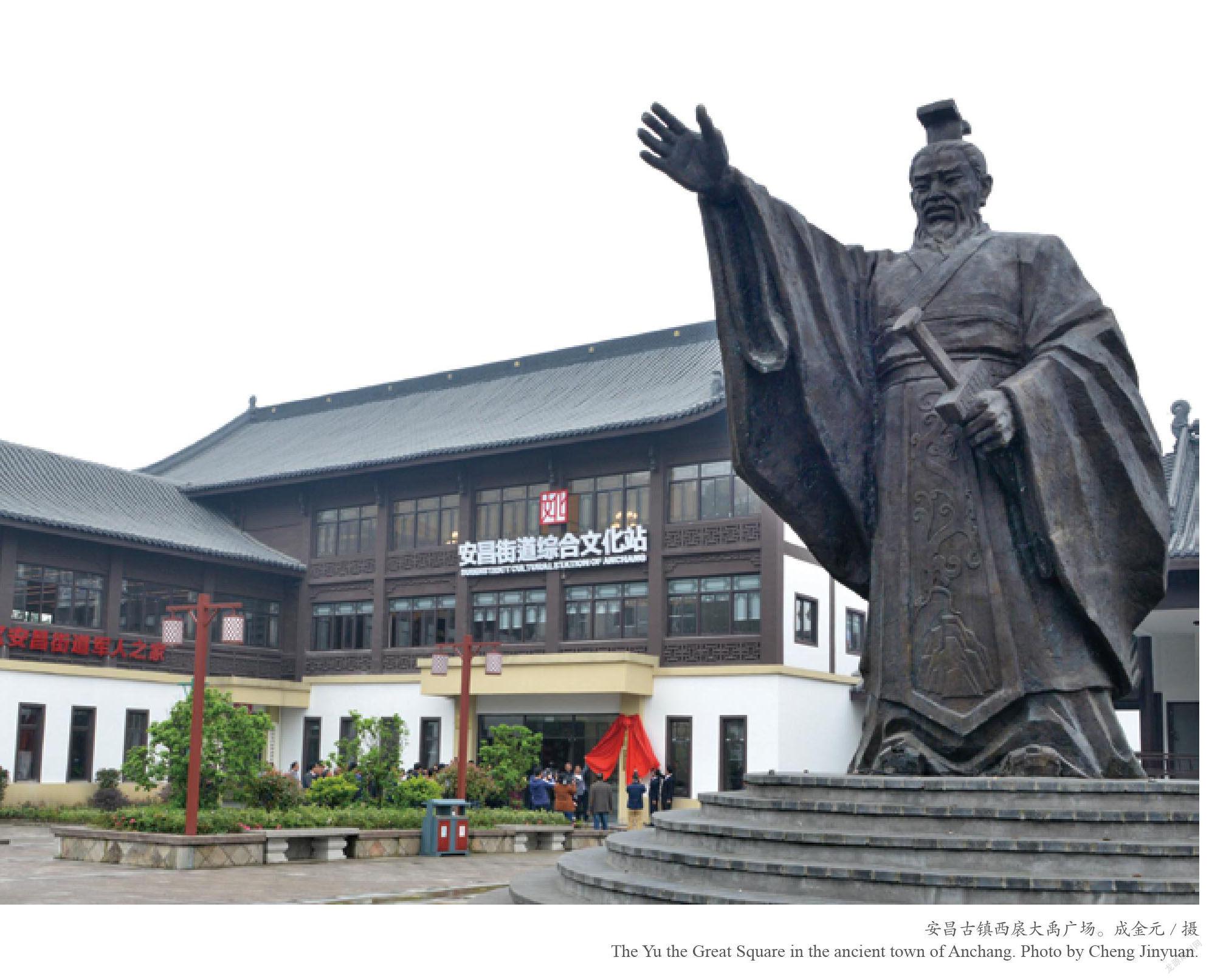
大禹娶涂山氏為妻,在紹興的傳說(shuō),是在古鎮(zhèn)安昌以東的涂山。這座山現(xiàn)在依然屹立,我們稱它西扆山,山不高,也不綿延,如果從遠(yuǎn)處俯瞰,稍顯孤單,從平原上拔地而起。每年清明,我都會(huì)和家人上山掃墓,我的父親和母親,合葬在西扆山南坡,地處山腰,從墓地再往上走,至山頂,可眺涂山四周,當(dāng)年,鑒湖湖面寬廣的時(shí)候,也可見(jiàn)湖水蕩漾。我一直慶幸,為父母的來(lái)生選在涂山,與大禹夫妻為鄰,再也沒(méi)有比這更美好的了。
相傳,涂山是大禹召集諸侯商議朝政大事的地方,據(jù)《尚書(shū) · 舜典》記載:帝舜之時(shí),大禹為司空,皋陶作士,伯益為虞。禹即帝位后,皋陶、伯益迭為首輔,涂山氏成了夏后氏最倚重的力量。為了進(jìn)一步獲得妻族的支持,大禹便攜同女?huà)桑谕可秸匍_(kāi)了緊急軍事會(huì)議,準(zhǔn)備與共工決一死戰(zhàn)。《左傳》也有記載:“禹會(huì)諸侯于涂山,執(zhí)玉帛者萬(wàn)國(guó)”;《史記》則云:“夏之興也以涂山”。正是涂山之會(huì),確立了禹的天下共主地位。
而涂山氏的家,則在山南。大禹娶女?huà)傻膫髡f(shuō),在安昌口口相傳,年長(zhǎng)者,都能說(shuō)出個(gè)子丑寅卯。童年時(shí),我常常跑到城隍殿,那兒有一座高高的拱橋,夏天在橋上乘涼的人,有一位說(shuō)書(shū)水平超群的,他不光說(shuō)四書(shū)五經(jīng)三國(guó)水滸,也能講大禹治水娶涂山女?huà)伞N覠o(wú)比欽佩他的記憶力,很想問(wèn)問(wèn)他,怎么知道這么多?成年后我才明白,他所說(shuō)的,除了古書(shū)上記載的,大多是民間傳說(shuō)。傳說(shuō)在民間的無(wú)窮力量,簡(jiǎn)直所向披靡。
然后,關(guān)于大禹娶妻的傳說(shuō),不僅在安昌有,在安徽和江西也有。特別是安徽,據(jù)稱建有涂山氏祖廟,發(fā)現(xiàn)“涂山氏國(guó)”遺址。安昌人,特別是西扆村的村民在聽(tīng)說(shuō)這個(gè)考古事件后,頗有些不以為然。他們的理由很簡(jiǎn)單,涂山在安昌,怎么也搬不走。安昌鎮(zhèn)也早早地在涂山北的西扆村建起了大禹廣場(chǎng),廣場(chǎng)正中,立起一座巍峨的大禹雕像,每年都有祭大禹儀式。此外,大禹陵就在距離安昌三十里之外的會(huì)稽山麓,樹(shù)高千丈,葉落歸根,大禹葬于此,就是最好的實(shí)證。
我認(rèn)同一些學(xué)者的觀點(diǎn),涂氏跟絕大多數(shù)姓氏一樣,當(dāng)初也是從中原遷徙而來(lái),而不是在江南土生土長(zhǎng)的,像《姓氏族譜箋釋》就認(rèn)為:“系出涂山氏;晉新吳侯涂欽渡江南至豫,為東南涂之氏之祖。”所謂“涂山氏”,很可能是上古時(shí)期一個(gè)諸侯的名稱,有關(guān)當(dāng)時(shí)涂山氏的所在地,很久以來(lái)眾說(shuō)紛紜。我覺(jué)得,各說(shuō)各的,也無(wú)妨。
不過(guò),紹興的大禹陵終究是獨(dú)一無(wú)二的。
最早的文字記載可追溯到始皇三十七年(公元前210年),十一月,秦始皇東巡狩,上會(huì)稽,祭大禹,登秦望山,眺南海,感嘆之余,命宰相李斯撰文刻于石上以歌頌秦始皇嬴政,故又名“李斯碑”。碑文字屬秦小篆,是秦統(tǒng)一六國(guó)后頒行的文字。
漢武帝元朔三年(公元前126年),司馬遷上會(huì)稽,探禹穴。所謂“禹穴”,也就是埋葬大禹的地方。或言大禹陵寢在今“大禹陵碑亭”下面。大禹陵寢至今沒(méi)有挖掘,是上策。大禹終究是一個(gè)傳說(shuō),傳說(shuō)在,大禹就在。
大禹陵由禹陵、禹祠、禹廟三部分組成。禹陵在中,禹祠位于禹陵南側(cè),祠外北側(cè)有“禹穴”碑。祠內(nèi)有“禹穴辯”碑,大禹陵碑亭北側(cè),順碑廊而下即為禹廟。陵區(qū)坐東朝西,從大禹陵下,進(jìn)東轅門(mén),自南而北的建筑依次為照壁、岣嶁碑亭、欞星門(mén)、午門(mén)、祭廳、大殿。整個(gè)建筑群高低錯(cuò)落,山環(huán)水繞。
以大禹陵為代表,大禹在紹興留下的遺蹤隨處可見(jiàn)。毗鄰安昌的另一座古鎮(zhèn)夏履鎮(zhèn),也與大禹有關(guān)。相傳大禹治水經(jīng)過(guò)這里,他的一只履被洪水沖走,老百姓為了紀(jì)念大禹治水的功績(jī),在他失履的地方造了一座橋,名曰“夏履橋”。再比如,大禹陵的守陵村,即禹陵村,有200個(gè)村民姓姒,而全國(guó)的姒姓后裔也不過(guò)幾千人。
更富有詩(shī)意的故事,出現(xiàn)在剡溪。紹興嵊州境內(nèi)的剡溪,堪稱大禹治水的典范之作,著名的“禹疏了溪”就發(fā)生在剡溪。大禹改堵為疏,“三過(guò)家門(mén)而不入”,終于治水成功,后世稱“禹疏了溪”。了溪,也就是后來(lái)的剡溪,為今天曹娥江的上游。李白賦詩(shī):“湖月照我影,送我至剡溪。”又說(shuō):“此去不為鱸魚(yú)膾,自愛(ài)名山入剡中。”杜甫也嘆:“剡溪蘊(yùn)異秀,天姥引歸帆。”
我曾在剡溪泛舟,眺望天姥山,驚嘆于大自然的巧奪天工,也欽佩詩(shī)人們的天才博學(xué),落筆有神,更為大禹治水在剡溪留下的印記而感動(dòng)不已。
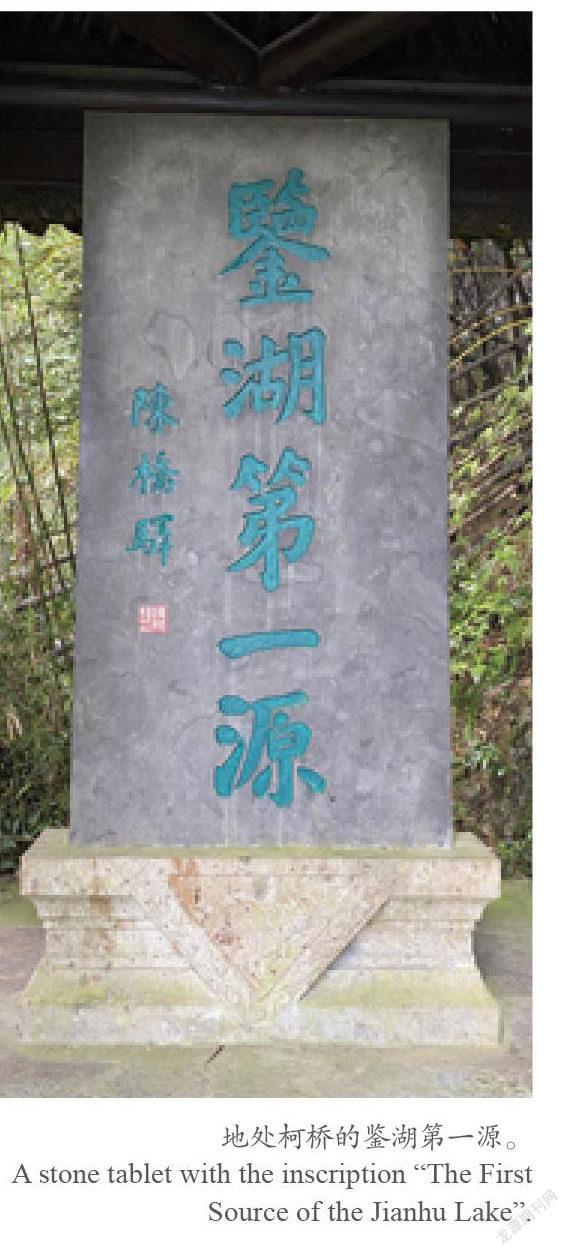
畫(huà)舫經(jīng)過(guò)鑒湖的一段古纖道,這段纖道是時(shí)間的證明,連接著歷史與現(xiàn)實(shí)。作為傳說(shuō)中黃帝鑄鏡而得名的鑒湖,又有鏡湖之稱,其實(shí)就是我國(guó)長(zhǎng)江以南著名的水利工程,全盛時(shí)面積近200平方公里,而我乘坐的畫(huà)舫經(jīng)過(guò)的水域,則是古鑒湖淹廢后的殘留部分。我再也看不到八百里鑒湖的浩渺,但連接著鑒湖的傳說(shuō),卻讓我眺望更為遙遠(yuǎn)的時(shí)空。
返回鑒湖碼頭途中,畫(huà)舫略有加速,湖上風(fēng)光正好,微風(fēng)輕拂,正應(yīng)了王羲之“山陰道上行,如在鏡中游”,怪不得連賀知章和陸游也要終老于此。畫(huà)舫又經(jīng)過(guò)那片狹長(zhǎng)的菜地,恰有一種菜的人,貼著墻根,往菜地上澆水,他的水桶里,裝滿了鑒湖的水,他的眼里,只有他的這片青菜地,但他只需抬眼,就是鑒湖。如果再往遠(yuǎn)處看,他看到的,應(yīng)該就是遼闊的八百里鑒湖了。
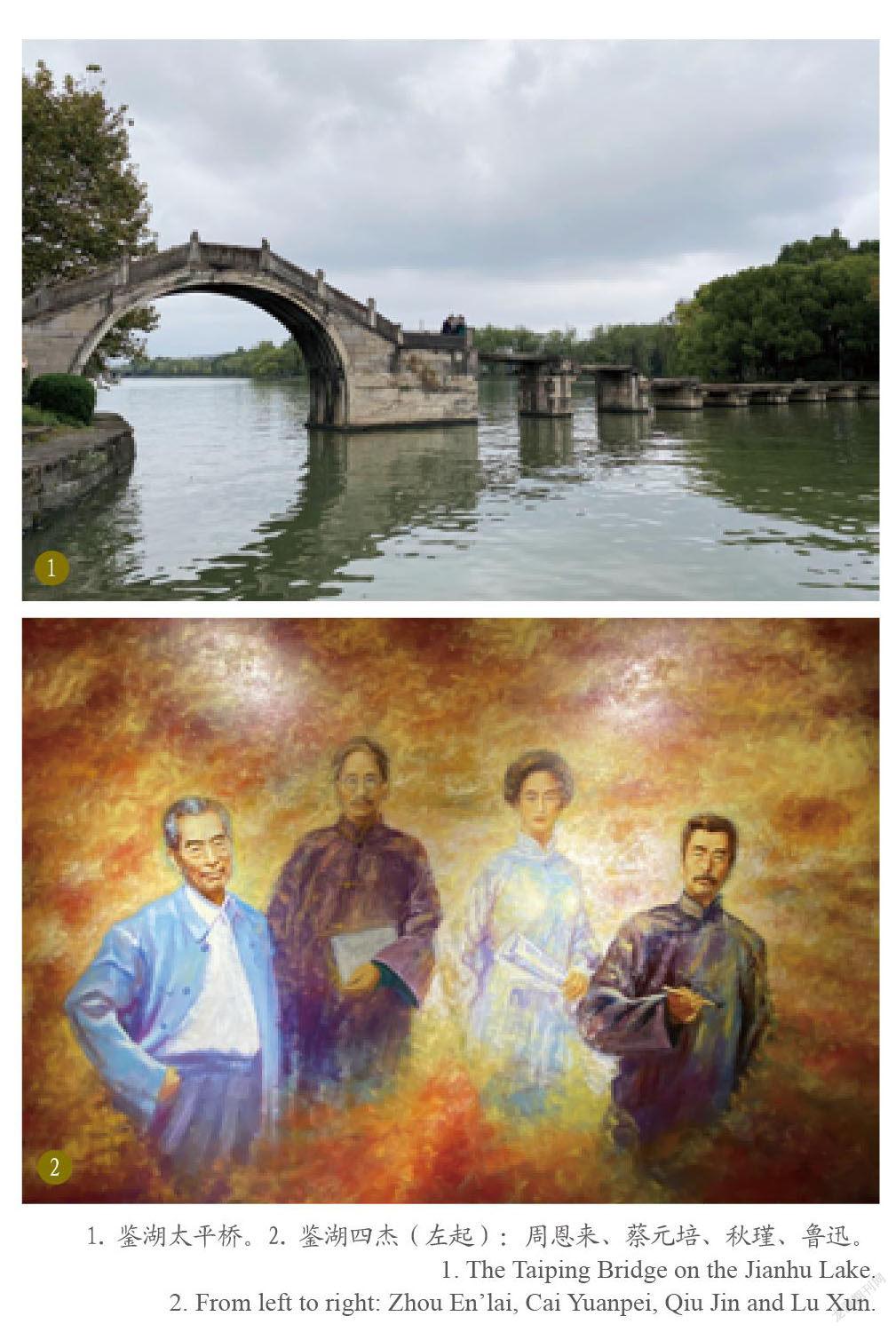
泊舟上岸,夜宿鑒湖大酒店。夜已深,竟未能入眠,下樓在大堂徘徊,一面墻上的巨幅油畫(huà),映入眼簾,畫(huà)上四人,神態(tài)傳神,分別是鑒湖人魯迅、蔡元培、秋瑾和周恩來(lái),隱隱覺(jué)得,少了誰(shuí),凝神良久,才想到,東漢永和五年,會(huì)稽太守馬臻納山陰、會(huì)稽兩縣36源之水為湖,是為鑒湖。賀知章和陸游也擇鑒湖終老,他們沒(méi)能出現(xiàn)在畫(huà)上,想必是畫(huà)幅不允,但晚年的詩(shī)人賀陸,已得人生真經(jīng),早有詩(shī)作傳世,與鑒湖融為一體。鑒湖跨湖橋下,馬太守也有墓,有廟,供百姓祭掃。由此我想,若能在鑒湖邊,幽靜處,劈一塊地,種幾畦菜,如果再有一間茅屋,半畝茶園,三兩知己,與先賢們毗鄰而居,那真是人間逍遙。
Yu the Great, the Jianhu Lake and Other Stories
By Chen Fuqiang
It is a sunny and breezy summer day. Traveling on the Jianhu Lake in Shaoxing city, one can even see the bottom of the mirror-like lake, with water plants swinging to and fro and willows on the banks fluttering in the wind. Sitting in a pleasure boat at this time is perhaps the most enjoyable. On the sides of the lake stand a slew of buildings. One section of the wall which has been erected along the lake has been painted with all sorts of pictures, mostly on the Jianhu Lake itself, full of Jiangnan (south of the Yangtze River) charm.
During the Spring and Autumn (770-476 BC) and the Warring States (475-221 BC) periods Shaoxing was known as the State of Yue (2032-222 BC). With the extensive and profound culture of ancient Yue, I have been trying to find the connections between Yu the Great and the Jianhu Lake, but the documentation is few and far between. Indeed, only one piece of information seems to be available: the origin of the lake can be traced back to the taming of floods by Yu the Great, as well as the efforts of the State of Yue on water conservancy. It so happens that the most widely known legend of Yu the Great in Shaoxing took place and his mausoleum lies just at both ends of the lake, within a radius of 400 kilometers.
So the tale goes like this. When Yu the Great went about controlling the floods, he met a lady of the Tushan clan, and they fell in love at first sight before tying the knot. But Yu was so busy with his work that he couldn’t come back for a long time. The Tushan lady was looking forward to his returning home day after day. Not satisfied just staying at at home, she went up to the south slope of the Tushan Mountain to look far and beyond for any trace of her husband. Days passed, yet Yu the Great still did not return. She couldn’t help but sigh, uttering a single line: “Oh, I am waiting for him!” This, some scholars believe, is China’s first poem by a female author and the first love song in the south.
There is a mythical element in their marriage as well. According to a number of classic Chinese texts, Yu the Great still hadn’t got married when he was thirty years old. At the time, he passed by the Tushan Mountain on his way to tame floods. Yu the Great was afraid that he would not be able to fulfill his moral obligation that required a man to marry by the age of thirty, recounted the texts, and he therefore asked for an omen for him to marry. Shortly afterwards, it is said, a white fox with nine tails appeared before him. To Yu the Great, that was exactly the sign that he prayed for, as he explained this through the so-called “Song of Tushan”, which has since been recorded in numerous poetry collections: The white fox comes alone, with nine bushy and long tails. When Yu the Great and the lady of Tushan get married, we will be prosperous forever and ever!
In fact, the Tushan clan is believed to be the ancestral gods of the Xia tribe, who later established China’s first dynasty, the Xia dynasty (ca. 2070-1600 BC).
According to the narrative passed down throughout generations in Shaoxing, Yu the Great and the lady from the Tushan clan married on the Tushan Mountain, now located in the east of the ancient town Anchang in Shaoxing. Neither too high nor a long mountain chain, it is still standing today, which is known as the Xiyi Mountain. But if you look down at it from a distance, the mountain appears a little lonely, rising as if from nowhere out of the plain. Every year during the Qingming Festival or the Tomb-Sweeping Festival, I would visit the graves of my parents with my family on the south slope of the Xiyi Mountain. From the mountainside, where the cemetery sits, if you go further up, to the top of the mountain, you can have a panoramic view around it. I have always been glad that I have chosen the “next life” of my parents here in the mountain, with Yu the Great and his wife as neighbors. There is no better life than this.
In addition, the Tushan Mountain is said to be the place where Yu the Great once discussed matters of national importance. Since Yu the Great ascended the throne, the powerful Tushan clan had become a great source of support for him. To further consolidate their relationship, he convened a special miliary council on the Tushan Mountain and declared his intention to fight Gongong, the water monster who reigned terror in that era. The meeting has been documented in various ancient texts, including the Book of Documents, the Zuo’s Commentary as well as the Records of the Grand Historian.
Indeed, the tale of Yu the Great and his marriage is so well-known that the local elderly in Anchang can tell the story in vivid details. However, Shaoxing is not the only place where the folktale spreads; it has been circulated in the provinces of Anhui and Jiangxi, too. In Anhui, for example, the ancestral temple of the Tushan clan and the ruins of a so-called “Tushan Kingdom” were said to have been found. Some experts argue — which I agree with — that the Tushan clan was probably not native to the Jiangnan area but migrated from central China.
Nonetheless, the Mausoleum of Yu the Great in Shaoxing is the one and only.
The earliest written records of the mausoleum can be traced back to 210 BC, the 37th year of the reign of Emperor Shihuang (259-210 BC), when he visited Kuaiji (present-day Shaoxing) and held sacrificial rituals for Yu the Great. His words and deeds were written down and inscribed on a stone tablet by Li Si (?-208 BC), the emperor’s righthand man. In 126 BC, Sima Qian (145 or 135 BC-?), author of Records of the Grand Historian, went to Kuaiji and explored the burial site of Yu the Great.
The Mausoleum of Yu the Great is consisted of three parts, the mausoleum, the shrine and the temple. Apart from it, traces of Yu the Great can be seen everywhere in Shaoxing. For instance, an ancient town called Xiaji township was so named because Yu lost one of his wood boots (a “ji”) here when he was working to control the floods. A bridge, Xiaji Bridge, commemorating the incident was also built in the place.
Then the Shanxi River was lauded as a model of Yu’s efforts, where he chose to dredge it instead of damming and blocking the water flow. It was working along this river that Yu the Great was said to “have passed his own home three times without entering once”. Later, quite a few poems were composed on the Shanxi River, including those by Li Bai (701-762) and Du Fu (712-770), who are considered the best Chinese poets.
Leaving the boat, I have stayed in a local hotel for the night. It is already late, but I cannot fall asleep, so I decide to go downstairs and have a stroll in the lobby. A large oil painting on a wall comes into sight, with four prominent contemporary figures intimately connected to the Jianhu Lake: Lu Xun (1881-1936), Cai Yuanpei (1868-1940), Qiu Jin (1875-1907) and Zhou Enlai (1898-1976). He Zhizhang (659-744) and Lu You (1125-1210), two of ancient China’s best-known poets, also chose the Jianhu Lake as the place of retirement. If I could have a small plot of land and grow some vegetables in the quietude by the lake, with a thatched cottage, a half mu of tea plantation and a couple of bosom friends, and with all the forebearers as my neighbors, it would be truly a world of bliss.