
Precise Positions of Triton in 2010–2014 based on Gaia-DR2
2022-05-24 14:20:52HuiyanZhangYongYuDanYanKaiTangandRongchuanQiao
Huiyan Zhang ,Yong Yu ,Dan Yan ,Kai Tang ,and Rongchuan Qiao
1 School of Mathematics,Physics and Statistics,Shanghai University of Engineering Science,Shanghai 201620,China;zhanghy1009@163.com
2 Shanghai Astronomical Observatory,Chinese Academy of Sciences,Shanghai 200030,China;yuy@shao.ac.cn
3 School of Astronomy and Space Science,University of Chinese Academy of Sciences,Beijing 100049,China
4 School of Physics and Electronic Information,Huanggang Normal University,Huanggang 438000,China
5 National Time Service Center,Chinese Academy of Sciences,Lintong 710600,China
Abstract With unique orbital and physical characteristics,Triton is a very important target because it may contain information of the origin and evolution of the solar system.Besides space explorations,ground-based observations over long time also play a key role on research of Triton.High-precision positions of Triton obtained from ground telescopes are of great significance for studying its orbital evolution and the physical properties of Neptune.As a long-term observational target,Triton has been observed by the 1.56 m telescope of Shanghai Astronomical Observatory since 1996.In this paper,based on our AAPPDI software and with Gaia DR2 as the reference catalog,604 positions of Triton during 2010–2014 are calculated,with standard errors of 19–88 mas.A comparison between our results and the ephemeris (DE431+nep096) is also given.
Key words:planets and satellites:general–techniques:image processing–methods:data analysis
1.Introduction
Based on long-term ground-based observations,and especially observations from close flyby of NASA Voyager 2 in 1989,Triton has been shown with many special characteristics,such as its retrograde orbit,high density,low temperature,and active geysers.Such evidence proved Triton is a Kuiper Belt Object captured by Neptune (McCord 1966;McKinnon 1984;McKinnon et al.1995).Considering Triton has relatively great quality and close distance to Neptune,scientists thought it may have broken the original satellite system of Neptune (Rufu &Canup 2017).All these factors mentioned above put Triton in the list of important targets of solar system,and lead Triton being selected as one of the four targets of American National Aeronautics and Space Administration (NASA) Discovery Program in 2020 (Howett et al.2020).
In spite of the space exploration,the long-term ground observational data of Triton are more important to understand its evolution.Long-term astrometry of Triton can improve Triton’s orbit,Neptune’s orbit and pole orientation (Jacobson 2009;Zhang et al.2014;Emelyanov&Samorodov 2015;Tang et al.2020;Ryan et al.2021;Yuan &Li 2021).
Historical positions of Triton will help to improve Triton’s orbit (Jacobson 2009;Zhang et al.2014;Emelyanov &Samorodov 2015;Tang et al.2020).Photometric data over a long time could be used to analysis its surface changes(Franz 1981;Goguen 1989;Buratti et al.1994;Elliot et al.2000;Fry &Sromovsky 2007).Spectroscopy of Triton at different epochs is quite useful to understand the atmosphere and its activities,especially its global warming (Buratti et al.1999;Hicks &Buratti 2004).
We have started observations on Triton since 1996 (Qiao et al.2007,2014;Yu et al.2019;Yan et al.2020;Zhang et al.2021),and our main purpose is to get its precise positions and improve its orbits.In this paper,we present positions of Triton from CCD observations which were made at the 1.56 m telescope of Shanghai Astronomical Observatory during 2010–2014,and we use Gaia-DR2 (Brown et al.2018) as the reference catalog.About 604 positions of Triton over 14 nights were obtained.
The observations and reduction procedures are described in Section 2.In Section 3,we compare our results with the Jet Propulsion Laboratory (JPL) ephemeris (DE431+nep089)(Folkner et al.2014,https://ssd.jpl.nasa.gov).Conclusions are given in Section 4.
2.Observations and Data Reduction
2.1.CCD Observations
All observations were made with the 1.56 m telescope located in Sheshan Station of Shanghai Astronomical Observatory.The information of the telescope and CCD camera is introduced in our previous paper (Zhang et al.2021).Like the previous observations,Triton was observed when the opposition of Neptune happened.
It is also worth noting that the CCD camera of the 1.56 m telescope was replaced by a new one in late of 2014,so the CCD images used in this paper are the last series of observations of Triton with the old CCD camera.
With Gaia DR2(Brown et al.2018)as the reference catalog,604 positions of Triton were calculated by a standard astrometric process.Table 1 presents an extract of the observed positions of Triton.Columns (1)–(3) are the year,month,and decimal day,respectively,in UTC of the middle time of each observation.Columns (4)–(6) are the R.A.,expressed in hour,minute and second.Columns(7)–(9)are the decl.,expressed in degree,arcminute and arcsecond.The final column is the IAU site code of the Sheshan Station.The full table will be available at the NADC/China-VO PaperData website (https://nadc.china-vo.org/article/20200519170135),the Strasbourg astronomical Data Center (CDS) and the Natural Satellites DataBase (http://nsdb.imcce.fr/nsdb/home.html) of the Institut de Mécanique céleste et de calcul des éphémérides(IMCCE,France).Here the R.A.and decl.are in topocentric coordinates,and the time of observation is given in UTC.
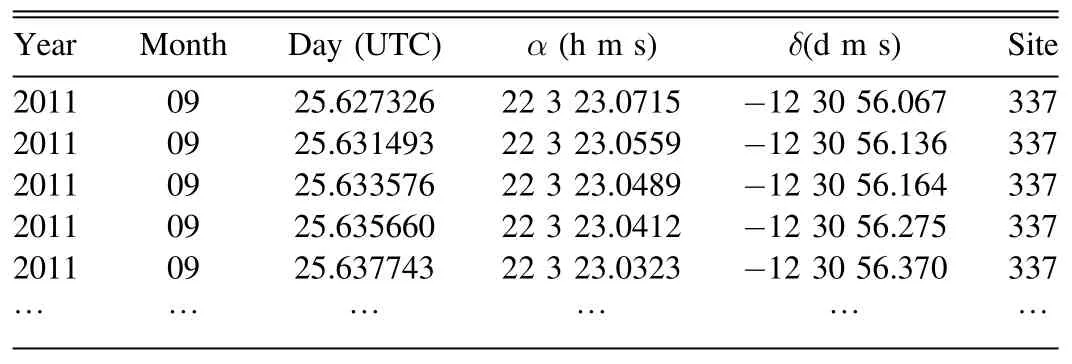
Table 1 Extract of the Observed Positions of Triton,the Whole Data is Available in Electronic Form at the CDS,IMCCE and NADC/China-VO PaperData Website
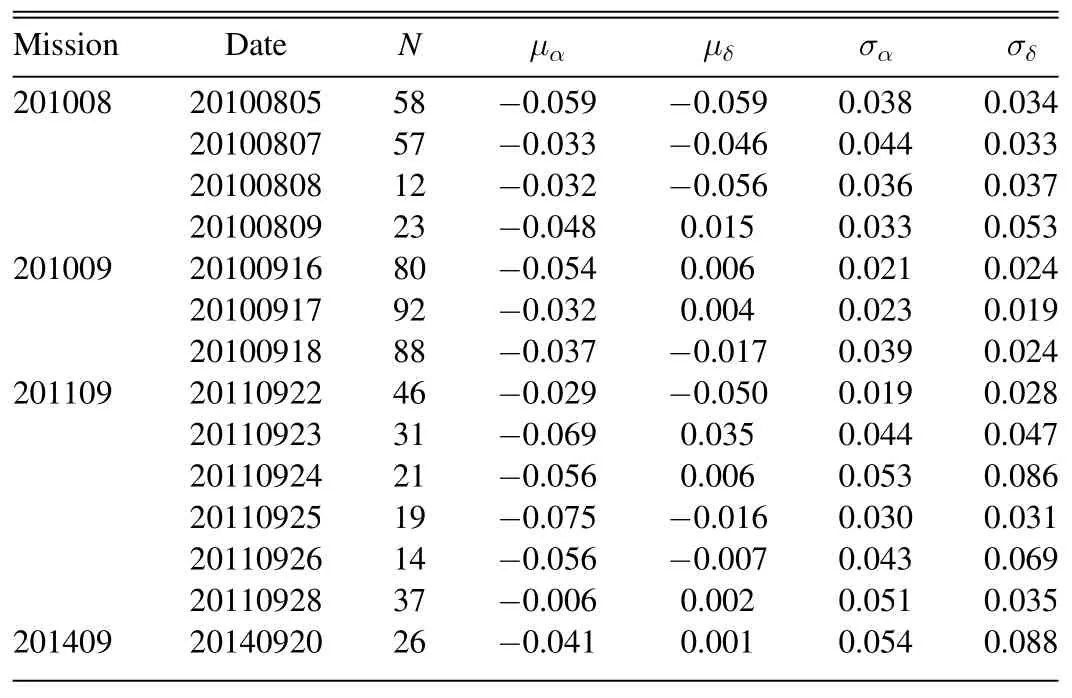
Table 2 The Mean Value μ(″) and Standard Deviations σ(″) of O?C
2.2.Measurement and Reduction
The data in this paper were reduced with the Automatic Astrometric Processing Program for Digital Images (AAPPDI)software which was developed by our research group and written in the Fortran language.The AAPPDI software contains four modules:image preprocessing,star detection and centroid calculation,reference star matching and target identification,target’s position calculation and statistics analysis.The flowchart of the four modules and the completed functions are shown in Figure 1.
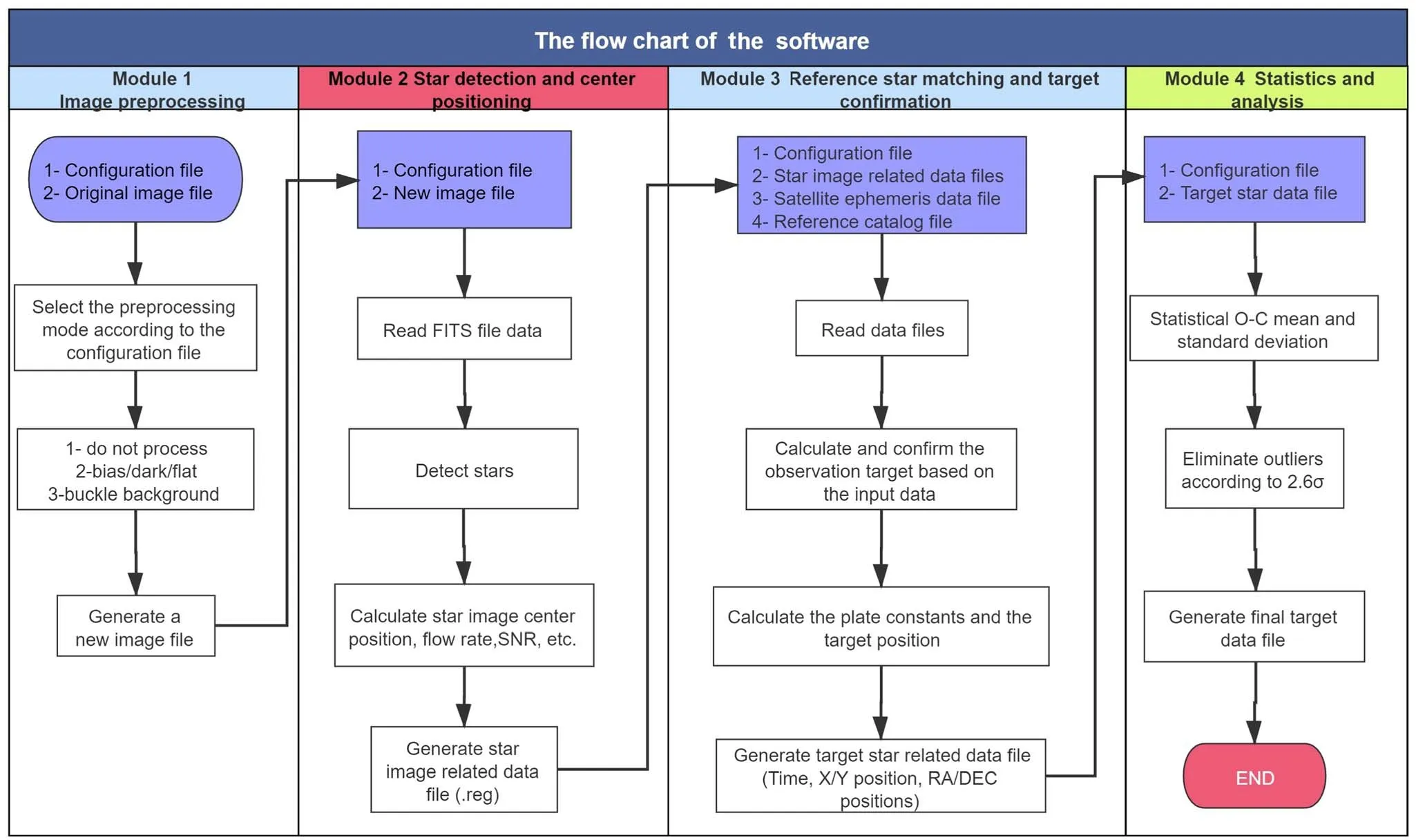
Figure 1.The flowchart of the four modules of AAPPDI software.
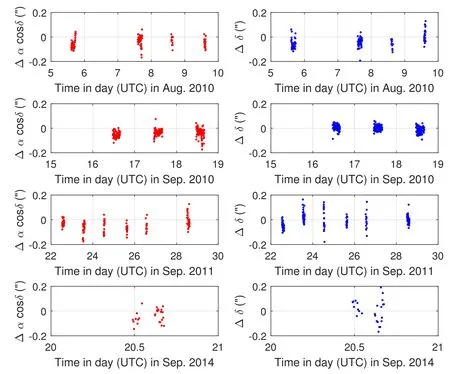
Figure 2.Comparison between positions of this paper and those from the latest JPL ephemeris,DE431+nep096.
The image preprocessing module has three modes to be chosen:(1) No preprocessing;(2) Bias/Dark/Flat correction;(3)Subtraction of background.The user can set the preprocessing mode in the configuration file before start.If the image processing focuses on the positioning of the target rather than photometry,the third mode is suggested.This mode generates a mean background image by filtering all original FITS images,and then subtracts the background from the original images.This algorithm has been verified to obtain higher precision positions (Zhang et al.2021).For algorithm introduction and verification results,please refer to the previous paper.The module of star image detection and centroid calculation also has two modes to be chosen:(1) Modified moment;(2) Intensity square weighted centroiding.The two algorithms are described and compared in detail in the previous paper(Zhang et al.2021).
In this paper,for the image preprocessing,we used the third mode,and for centroid calculation,we used the second mode.At the same time,the current version of the software focuses on natural satellite image processing.Because many natural satellites of the same major planet often appeared in the same CCD frame,the current program can obtain positions of many targets by automatic processing.This will make it very efficient when dealing with images of natural satellite of Saturn and Uranus in the future.For typical CCD frame of Triton,about 20 stars brighter than 16 magnitude were used as reference and their positions from Gaia DR2 were used to calculate plate constants.The six parameter model of plate constants is used based on the residual errors of reference stars.
Before analyzing the observational images,each module of the program has been optimized to make the whole program more automatic.At present,the program can automaticallyprocess long term observational data in batches,and generate statistical residual graphs of comparison with ephemeris.
3.Comparison with Ephemerides
After the positions of Triton were calculated,it is necessary to compare them with the ephemeris to evaluate the accuracy of observations and the ephemeris.The ephemeris DE431+nep096 (the Triton model) was selected.Table 2 shows the comparison between the observed positions in this paper and those from the DE431+nep096 ephemeris.This paper has 4 observational missions,which were carried out in 14 nights,and a total of 604 positions were obtained.The statistics of comparison in each observational night are given in Table 2.The mean of O?C on R.A.is from?75 mas to?6 mas,and the mean of O?C on decl.is from?50 mas to 15 mas,the standard deviation of O?C of all nights on R.A.is 19 mas–54 mas,and the standard deviation of O?C of all nights on decl.is 19 mas?88 mas.The residual distribution diagram of the comparison between the observation data and the ephemeris is shown in Figure 2.
From the observational record,the weather on 2011 September 24/26 and 2014 September 20 were cloudy,which affected the accuracy of the results,while the standard deviation of positions of the rest nights are much better,especially on 2010 September 16/17 and 2011 September 22/25.
4.Conclusions
This paper provides 604 precise positions of Triton during 2010–2014,which were calculated by AAPPDI software developed by our research group,with Gaia DR2 as the reference catalog.The electronic form of the data can be obtained on CDS and IMCCE.We compared our results with the Triton ephemeris(DE431+nep096),and gave the mean and standard deviation of O?C for each observational night.These four-year observational data could be useful for Triton orbit theory research and future deep space exploration.
Acknowledgments
This work has made use of data from the European Space Agency (ESA) mission Gaia (https://www.cosmos.esa.int/gaia),processed by the Gaia Data Processing and Analysis Consortium (DPAC,https://www.cosmos.esa.int/web/gaia/dpac/consortium).Funding for the DPAC has been provided by national institutions,in particular the institutions participating in the Gaia Multilateral Agreement.We acknowledge the support of the staff of the Sheshan station who work on the 1.56 m telescope.This work was carried out with the financial support of the National Natural Science Foundation of China(Grant Nos.11803019,12073062 and 11703007) and the Hubei Provincial Department of Education (Grant No.B2020162).
ORCID iDs
登錄APP查看全文
 Research in Astronomy and Astrophysics
2022年3期
Research in Astronomy and Astrophysics
2022年3期
- Research in Astronomy and Astrophysics的其它文章
- Estimation of HII Bubble Size Distribution from 21cm Power Spectrum with Artificial Neural Networks
- Influence of Megaregolith on the Thermal Evolution of Mercury’s SilicateShell
- Common Envelope to Explosion Delay time Distribution (CEEDTD) of Type Ia Supernovae
- V0644 Ser:An Active Ultrashort Period Contact Binary Star
- Hypercritical Accretion for Black Hole High Spin in Cygnus X-1
- Physical Properties of 29 sdB+dM Eclipsing Binaries in Zwicky Transient Facility