江蘇產(chǎn)研院:架兩世界橋梁,迎產(chǎn)學(xué)研挑戰(zhàn)
2022-03-21 08:31:42PaulBurrows英國美國張佳藝
國際人才交流 2022年3期
關(guān)鍵詞:大學(xué)
文/ Paul Burrows(英國/美國) 譯/ 張佳藝
從表面上看,大學(xué)和產(chǎn)業(yè)似乎自然而然是結(jié)合對象:大學(xué)創(chuàng)造技術(shù),產(chǎn)業(yè)運(yùn)用技術(shù)來制造產(chǎn)品,兩者應(yīng)是終身伴侶。大學(xué)和產(chǎn)業(yè)之間確實(shí)有著許多成功的合作伙伴關(guān)系。然而,就像一些婚姻一樣,雙方平穩(wěn)相處是很有挑戰(zhàn)性的。
跨越“死亡谷”的橋梁
大學(xué)的主要“產(chǎn)品”是知識(shí)。這通常被細(xì)分為可衡量的績效指標(biāo),如畢業(yè)生情況、論文發(fā)表或?qū)@谟枨闆r,這些都指向知識(shí)的生成。反觀產(chǎn)業(yè),其主要“產(chǎn)品”是所有者或股東的利潤。產(chǎn)業(yè)對社會(huì)有諸多裨益,理應(yīng)承擔(dān)社會(huì)責(zé)任,但如果沒有利潤,其長期生存也就成了問題。大學(xué)和產(chǎn)業(yè)這兩者的不同目標(biāo)導(dǎo)致了大相徑庭的研究方法。
拋開一些例外不談,大學(xué)研究往往處于相對早期的階段,由撥款資助;產(chǎn)業(yè)研究往往有更多具體要求,且自投資金,承擔(dān)著不在他處使用這些資金的“機(jī)會(huì)成本”的額外風(fēng)險(xiǎn)。盡管產(chǎn)業(yè)擁護(hù)創(chuàng)新以提高競爭力的理念,但企業(yè)可能會(huì)發(fā)現(xiàn)自身陷入“創(chuàng)新者困境”,所以通常較為保守。這是哈佛商學(xué)院已故的克萊頓·克里斯滕森(Clayton Christensen)在20世紀(jì)90年代推廣的一個(gè)概念,即當(dāng)企業(yè)專注于為不斷縮小的客戶群進(jìn)行增量改進(jìn)時(shí),一些技術(shù)進(jìn)步擾亂了他們的市場,他們會(huì)成為不可預(yù)見的技術(shù)進(jìn)步的犧牲品。
究其原因,在于應(yīng)對風(fēng)險(xiǎn)的方式不同。所有真正的創(chuàng)新都不能規(guī)避風(fēng)險(xiǎn),但從創(chuàng)新到市場,風(fēng)險(xiǎn)呈現(xiàn)出不同的特征。于大學(xué)而言,政府往往是投資方,大學(xué)教授處理技術(shù)風(fēng)險(xiǎn)時(shí)無須顧慮太多,他們需要考慮的是“能起作用嗎”,很少考慮經(jīng)濟(jì)損失。而產(chǎn)業(yè)面對的是商業(yè)風(fēng)險(xiǎn),主導(dǎo)問題是“會(huì)有人買嗎”。這兩者之間就是著名的資金死亡谷:那些對于院校來說過于專注而不可公開的、對于產(chǎn)業(yè)來說風(fēng)險(xiǎn)過高的創(chuàng)新直指死亡。
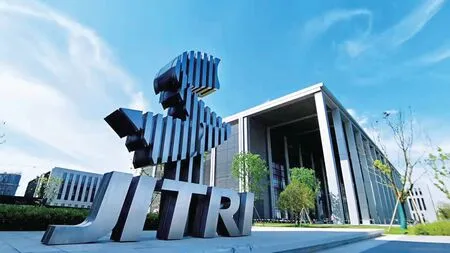
江蘇省產(chǎn)業(yè)技術(shù)研究院
江蘇省產(chǎn)業(yè)技術(shù)研究院(以下簡稱“江蘇產(chǎn)研院”)成立于2013年。作為跨越“死亡谷”的橋梁,致力于促進(jìn)江蘇產(chǎn)業(yè)從過去的勞動(dòng)力驅(qū)動(dòng)和資本密集型經(jīng)濟(jì)轉(zhuǎn)變?yōu)槿碌膭?chuàng)新驅(qū)動(dòng)型經(jīng)濟(jì)。為了履行這一使命,該院搭建了兩個(gè)平臺(tái)。
為了提升必要的研究能力,江蘇產(chǎn)研院在全省范圍內(nèi)建立了第一個(gè)主要平臺(tái)——研究機(jī)構(gòu)網(wǎng)絡(luò),為學(xué)術(shù)界提供專注于產(chǎn)業(yè)相關(guān)研究的環(huán)境,使其能與商業(yè)化專家密切合作。事實(shí)上,江蘇產(chǎn)研院的研究所每年都要接受評(píng)估,并根據(jù)相應(yīng)績效指標(biāo)獲得資金。這些指標(biāo)很大程度上取決于為當(dāng)?shù)禺a(chǎn)業(yè)服務(wù)的程度。自2016年以來,江蘇產(chǎn)研院新設(shè)的研究所由技術(shù)團(tuán)隊(duì)擁有多數(shù)股權(quán)。江蘇產(chǎn)研院現(xiàn)有60多個(gè)研究所,總?cè)藬?shù)超過11000人,每年新生100多個(gè)衍生公司。
第二個(gè)主要平臺(tái)是江蘇產(chǎn)研院的聯(lián)合企業(yè)創(chuàng)新中心(JICs),與江蘇領(lǐng)先企業(yè)有著合作伙伴關(guān)系的這些企業(yè)及其各自的產(chǎn)業(yè)鏈負(fù)責(zé)驗(yàn)證行業(yè)需求和市場機(jī)會(huì),并有望為解決這些需求提供資金。140多個(gè)聯(lián)合企業(yè)已經(jīng)開始運(yùn)行,并被列入www.jitri.cn的在線年度報(bào)告中。
聯(lián)合企業(yè)創(chuàng)新中心的需求首先由江蘇產(chǎn)研院的研究所來滿足。如果自身找不到所需的技術(shù),則由第三個(gè)主要平臺(tái)——國內(nèi)外大學(xué)創(chuàng)新合作伙伴來滿足。55個(gè)中國大學(xué)合作伙伴和100多個(gè)海外聯(lián)合項(xiàng)目是強(qiáng)有力的資源,在此非正式地稱之為聯(lián)合企業(yè)創(chuàng)新中心全球創(chuàng)新網(wǎng)絡(luò)。聯(lián)合企業(yè)創(chuàng)新中心將全球創(chuàng)新資源鏈接到江蘇省,為產(chǎn)業(yè)與學(xué)界搭建了橋梁。這也有助于將風(fēng)險(xiǎn)降至最低。
專業(yè)知識(shí)降低創(chuàng)新交易中的風(fēng)險(xiǎn)
優(yōu)秀的投資者會(huì)研究風(fēng)險(xiǎn)回報(bào)曲線,知道承擔(dān)更大的風(fēng)險(xiǎn)可以獲得更大的回報(bào),也可能遭受更大的損失。每個(gè)企業(yè)或投資者都有由損失容忍度設(shè)定的風(fēng)險(xiǎn)容忍度上限,這嚴(yán)格限制了他們探索更高風(fēng)險(xiǎn)創(chuàng)新的能力,也相應(yīng)地限制了他們的潛在收益。通過驗(yàn)證市場潛力、產(chǎn)業(yè)伙伴與大學(xué)共同資助研究,江蘇產(chǎn)研院降低了投資風(fēng)險(xiǎn),使行業(yè)能夠在風(fēng)險(xiǎn)回報(bào)曲線上比在正常舒適區(qū)內(nèi)走得更遠(yuǎn)。通過抵消損失風(fēng)險(xiǎn),創(chuàng)新回報(bào)的可能性也相應(yīng)增加。與此同時(shí),收集和驗(yàn)證產(chǎn)業(yè)需求使大學(xué)合作伙伴相信其技術(shù)具有商業(yè)價(jià)值。通過在大學(xué)和江蘇產(chǎn)研院之間的諒解備忘錄框架內(nèi)行事,教授個(gè)人遇到監(jiān)管或政策問題的風(fēng)險(xiǎn)也會(huì)降低。實(shí)際上,江蘇產(chǎn)研院的專業(yè)知識(shí)降低了創(chuàng)新交易中雙方的風(fēng)險(xiǎn)。
英國伯明翰大學(xué)是個(gè)成功的例子。該校與江蘇產(chǎn)研院機(jī)器人和智能設(shè)備研究所合作,共同開發(fā)了微粒子機(jī)械強(qiáng)度測量儀器。這是中國唯一自主研發(fā)的儀器。這項(xiàng)研究對中國的微尺度材料的研究、相關(guān)產(chǎn)品的開發(fā)和實(shí)際應(yīng)用具有重要意義。2019年,項(xiàng)目團(tuán)隊(duì)開發(fā)了一種基于開放代碼庫的商業(yè)儀器以進(jìn)行微粒機(jī)械強(qiáng)度測量,并建立了小規(guī)模的測試市場和客戶群。
當(dāng)然,顛覆性的大學(xué)創(chuàng)新成果可以以創(chuàng)業(yè)公司的身份直接進(jìn)入市場,但這需要外部投資。同樣,大學(xué)技術(shù)相對較長的孵化期可能會(huì)使其在任何地方都面臨挑戰(zhàn)。不過在中國,吸引時(shí)間跨度逾兩年的風(fēng)險(xiǎn)投資似乎特別困難。這可能適用于推出最新的社交媒體應(yīng)用程序,但任何涉及新材料或制造的東西都需要更長的跑道才能成功起飛。
相同情況下,我最成功的大學(xué)研究是普林斯頓大學(xué)于1994年分拆出的環(huán)球顯示器公司。這家開發(fā)有機(jī)發(fā)光材料的公司于1996年在納斯達(dá)克小盤股市場上市,獲得了一項(xiàng)專利,并在隨后的十年中多次出售更多股票以彌補(bǔ)虧損。事實(shí)上,直到2011年OLED顯示屏成為手機(jī)界的主流之前,環(huán)球顯示器公司每年都在虧損。2020年,環(huán)球顯示器公司以4.28億美元的營收實(shí)現(xiàn)了1.33億美元的凈收入,目前市值為70億美元。其實(shí)從大學(xué)研究到商業(yè)盈利,這種時(shí)滯并不罕見。
公開市場融資在中國也是大有可能的,但滬深證券交易所主板要求申請人在前三年有凈利潤,總凈現(xiàn)金流超過5000萬元人民幣,這就排除了處于虧損狀態(tài)的早期技術(shù)公司。為了在科學(xué)技術(shù)的關(guān)鍵領(lǐng)域產(chǎn)生更多的本地首次公開募股,并鼓勵(lì)新興技術(shù)公司在國內(nèi)而非海外上市,上海科創(chuàng)板和深圳創(chuàng)業(yè)板等較小板塊已經(jīng)推出。然而,大多數(shù)類別要求估值超過10億元人民幣,年收入超過1億元人民幣。這確實(shí)保護(hù)了公眾免受過度風(fēng)險(xiǎn)的投資選擇,但也將技術(shù)創(chuàng)新者與最具影響力的工作的資金支持隔離開來。
足夠接近商業(yè)化的項(xiàng)目可以通過江蘇產(chǎn)研院的項(xiàng)目經(jīng)理計(jì)劃直接落地。只有在江蘇產(chǎn)研院的專家網(wǎng)絡(luò)對商業(yè)計(jì)劃和市場潛力進(jìn)行驗(yàn)證之后,這些項(xiàng)目才會(huì)被接受。該計(jì)劃允許項(xiàng)目團(tuán)隊(duì)來到江蘇并完善他們的商業(yè)計(jì)劃,其目標(biāo)是在約一年內(nèi)落地一個(gè)新的商業(yè)實(shí)體。每年約有30—40個(gè)項(xiàng)目經(jīng)理團(tuán)隊(duì)被選中,占20%,成為江蘇創(chuàng)新生態(tài)系統(tǒng)的有力補(bǔ)充,其他80%無法落地。
這是早期風(fēng)險(xiǎn)管理的一個(gè)典型例子:經(jīng)常失敗,快速而廉價(jià)。最重要的是,成功落地涉及與當(dāng)?shù)卣虍a(chǎn)業(yè)園區(qū)的投資談判,從而支付新公司的資本設(shè)備和運(yùn)營費(fèi)用。這些投資者往往是相當(dāng)規(guī)避風(fēng)險(xiǎn)的。因此,江蘇產(chǎn)研院對公司和研究所的核心作用在于風(fēng)險(xiǎn)管理:地方政府投資允許采用輕資產(chǎn)商業(yè)模式,從而降低創(chuàng)新者(需共同投資)的風(fēng)險(xiǎn);江蘇產(chǎn)研院的團(tuán)隊(duì)網(wǎng)絡(luò)、商業(yè)計(jì)劃以及最為關(guān)鍵的市場潛力提供的驗(yàn)證,降低了地方政府投資者的風(fēng)險(xiǎn)。
江蘇產(chǎn)研院的市場評(píng)估對于降低風(fēng)險(xiǎn)的重要作用是如何強(qiáng)調(diào)都不為過的。在大學(xué)環(huán)境中,人們很容易愛上一項(xiàng)發(fā)明的技術(shù),但人們卻并不購買技術(shù)。如果你試圖出售它,幾乎一定會(huì)失敗。CB Insights在線發(fā)表的一項(xiàng)調(diào)查研究了美國100多家失敗的初創(chuàng)公司以發(fā)現(xiàn)它們失敗的原因。在前20個(gè)答案中,“技術(shù)”一詞出現(xiàn)了0次。大約35%的參與者最普遍的回答是,他們沒有發(fā)現(xiàn)市場需求。人們買的不是技術(shù),而是問題的解決方案。
江蘇產(chǎn)研院另一個(gè)成功的合作伙伴是來自澳大利亞的莫納什大學(xué)。該校在2015年首次簽署了諒解備忘錄,迄今已啟動(dòng)了十多個(gè)合作項(xiàng)目。2020年9月由江蘇產(chǎn)研院的關(guān)國良(Patrick Kwan)教授小組和常州科教城投資發(fā)展有限公司聯(lián)合成立的常州先趨醫(yī)療有限公司,正在為臨床快速體外診斷系統(tǒng)開發(fā)產(chǎn)品,并且有一家全資子公司已經(jīng)在澳大利亞墨爾本運(yùn)營。該公司支付著莫納什大學(xué)的聯(lián)合研究費(fèi)用,其主要業(yè)務(wù)包括四大平臺(tái):試劑開發(fā)、芯片試紙開發(fā)、檢測儀器開發(fā),以及癲癇病的人工智能診斷平臺(tái)。
將產(chǎn)業(yè)技術(shù)問題定義并包裝為教育產(chǎn)品
江蘇產(chǎn)研院現(xiàn)在正在開發(fā)一個(gè)新概念——將產(chǎn)業(yè)技術(shù)問題定義并開發(fā)為教育產(chǎn)品,即利用江蘇產(chǎn)研院的創(chuàng)新生態(tài)系統(tǒng),通過開發(fā)基于項(xiàng)目的跨學(xué)科學(xué)習(xí),實(shí)施雙導(dǎo)師系統(tǒng)。江蘇產(chǎn)研院已經(jīng)通過與大學(xué)合作,聯(lián)合培養(yǎng)了1000多名畢業(yè)生。產(chǎn)業(yè)、研發(fā)與教育的結(jié)合將培養(yǎng)出面向未來、面向需求和面向?qū)嵺`的產(chǎn)業(yè)創(chuàng)新人才,最終形成一所產(chǎn)業(yè)創(chuàng)新大學(xué)——江蘇省產(chǎn)業(yè)技術(shù)研究院大學(xué)。
降低創(chuàng)新風(fēng)險(xiǎn)的海外例子包括小企業(yè)創(chuàng)新研究,即SBIR計(jì)劃。美國聯(lián)邦政府規(guī)定其所有資助機(jī)構(gòu)撥出一小部分資金支持小公司在優(yōu)先領(lǐng)域進(jìn)行研究,而這通常是與大學(xué)合作。第一階段是短時(shí)間內(nèi)的小額資助,用以給予概念證明,最重要的是它有一個(gè)精、簡、易的提案模板和審查流程。少數(shù)能夠進(jìn)入第二階段的項(xiàng)目在政府希望推廣的既定領(lǐng)域獲得大量非稀釋性資金。根據(jù)報(bào)告,這些成功的項(xiàng)目創(chuàng)造了估為22:1的經(jīng)濟(jì)回報(bào)。
政府不能創(chuàng)新,但可以部署資源,以降低學(xué)術(shù)界和投資者的創(chuàng)新風(fēng)險(xiǎn),增加從大學(xué)到產(chǎn)業(yè)的思想交流,以及從產(chǎn)業(yè)到大學(xué)的挑戰(zhàn),從而培育創(chuàng)新驅(qū)動(dòng)型經(jīng)濟(jì)。目前,江蘇產(chǎn)研院正擴(kuò)展模式,擬在長三角國家技術(shù)創(chuàng)新中心創(chuàng)建國家創(chuàng)新中心,其諸多想法將在更大范圍內(nèi)產(chǎn)生更深遠(yuǎn)的影響,這值得我們期待。

多通道便攜式基因檢測分析儀,可同時(shí)測試多片多種類型基因試紙,可實(shí)現(xiàn)基因/核酸“現(xiàn)場”測試,結(jié)果快速而精準(zhǔn)
On the surface, industry and universities would seem natural candidates for marriage. Universities generate technology; industry consumes it to manufacture goods. They should be life partners. Indeed,there are many successful partnerships between universities and industry. Like some marriages, however, making it work smoothly can be challenging. This article offers some thoughts on those challenges and some illustrations of how the Jiangsu Industrial Technology Research Institute (JITRI) has worked to increase the flow of innovation into China’s manufacturing industry.
A bridge over the valley of funding death
The main product of a university is knowledge. This is often segmented into measurable performance indicators such as students graduated, papers published, or patents granted but the generation of knowledge is a common theme. The main product of industry, on the other hand, is profit for owners or shareholders. Industry has many positive benefits to society and should be socially responsible but in the absence of profit it will not survive long. These different goals lead to a fundamentally different approach to research.
While there are important exceptions, research in universities tends to be relatively early stage and funded by grants. Industry, on the other hand, tends to have much more specific requirements and invests its own capital with the added risk of an “opportunity cost” of not using that capital elsewhere. While industry embraces the idea of innovation for competitiveness, companies tend to be conservative and can find themselves in the “Innovator’s Dilemma,” a concept popularized in the 1990s by the late Clayton Christensen of Harvard Business School, falling prey to unforeseen technological advances that disrupt their market while they focus on incremental improvements for a shrinking customer base.
The problem is different approaches to risk. All true innovation involves risk but, from invention to market, risk takes on different characteristics. University professors are comfortable dealing with technical risk, characterized by the question “will it work?” and generally funded by government with little consideration for financial loss. Industry deals with business risk, characterized by the question “will anyone buy it?” Between the two lies the famous valley offunding death where innovation that is too focused (and unpublishable) for university research but too risky for industry can die.
The Jiangsu Industrial Technology Research Institute (JITRI) was founded in 2013 to serve as a bridge over this valley, with the goal of transforming Jiangsu industry from its labor-driven and capitalintensive past to a new, innovation-driven economy. To fulfill this mission, JITRI built two platforms.
To build research capacity where needed, JITRI established a network of research institutes across the Province to provide academics with an environment in which they could focus on industry-relevant research working closely with commercialization experts. Indeed,JITRI’s Institutes are evaluated annually and funded in accordance with performance metrics that are strongly weighted to how well they have served local industry. Since 2016, new JITRI Institutes are majority-owned by the technical team providing the leadership.JITRI has now established over 60 Institutes, totaling over 11,000 staff and yielding over 100 spin-off companies each year.
The second major platform is JITRI’s Joint Enterprise Innovation Centers, or JICs. These are partnerships with leading Jiangsu enterprises that, together with their respective industry chains, are tasked with validating industry needs and market opportunities and, hopefully,funding solutions to those needs. Over 140 JICs are already operating and are listed in the Annual Reports that can be found online at www.jitri.cn.
The overarching idea, then, is that needs from JITRI’s JICs are fulfilled by JITRI’s Institutes and, if the required technology cannot be found there, by the third major platform most relevant to this article:our university innovation partners both domestic and overseas. Our 55-plus Chinese university partners and over 100 joint overseas projects is a powerful resource in what I informally call the JITRI Global Innovation Network (GIN). JITRI bridges the global innovation re-source to Jiangsu Province, and industry to academia. It also serves to minimize risk.
Expertise reduces the risk in an innovation transaction
Good investors study the risk-reward curve and know that taking greater risk allows one to earn greater rewards… or suffer greater loss. Each company or investor has a ceiling of risk tolerance set by that tolerance of loss, which strictly limits their ability to explore higher risk innovation and correspondingly limits their potential gain. By validating the market potential and co-funding research between its industry partners and universities, JITRI reduces the risk of investment and enables industry to go further up the risk-reward curve than would be in its normal comfort zone. By offsetting the risk of loss, the possibility of innovation reward is correspondingly increased. At the same time, the collection and validation of industry needs gives the university partner confidence that its technology has commercial value and by acting within a framework MOU between their university and JITRI, the risk of an individual professor encountering regulatory or policy problems is also decreased. In effect,JITRI’s expertise reduces the risk for both parties in an innovation transaction.
One example of success is the University of Birmingham, UK,which worked with the JITRI Robotics and Intelligent Equipment Institute to jointly develop a mechanical strength measurement instrument for microparticles. This research is important for research into micro-scale materials, related product development,and applications in China. In 2019, the project team developed a commercial instrument for microparticle mechanical strength measurement with operating software based on open code libraries. A small-scale test market and customer base were also established for the instrument, which is the only one developed from independent research in China.
Of course, a disruptive university innovation may go directly to the market in the form of a startup company but this requires outside investment. Again, the relatively long incubation period of university technology can make this challenging anywhere, but it seems particularly difficult to attract venture funding with more than a two year time horizon in China. That might work for launching the latest social media app, but anything involving new materials or manufacturing needs a longer runway to successfully take off.
For context, my most successful university research led to the spinout, from Princeton University, of Universal Display Corporation in 1994. This company, developing organic light emitting materials,went public on the Nasdaq Small Cap market in 1996 with a single issued patent, and sold more stock several times over the subsequent decade to cover its losses. Indeed, UDC consistently lost money each year until 2011, when OLED displays finally went main-stream incellphones. In 2020, UDC made $133 million of net income on $428 million of revenues and currently has a market capitalization of $7 billion (I left long ago). The point is that such a time-lag from university research to commercial profitability is not unusual.
Funding in the public markets is also possible in China, too, but the Main Board of the Shanghai or Shenzhen Stock Exchange requires an applicant to have net profits for the previous three years and a total net cash flow of more than RMB 50 million, ruling out loss-making early technology companies. Smaller boards have been launched to generate more local IPOs in key sectors of science and technology and to encourage emerging technology companies to list in China rather than overseas, such as Kechuang in Shanghai and ChiNext in Shenzhen. Most categories, however, require a valuation in excess of RMB 1 billion and revenues over 100 million per year. This indeed protects the public from overly risky investment options but also isolates technology innovators from the sort of funding that enabled my most impactful work.
Projects close enough to commercialization can be landed directly through JITRI’s Project Manager Program. These projects are accepted only after validation of the business plan and market potential by JITRI’s specialist network. The Program allows a project team to come to Jiangsu and refine their business plan with the goal of landing a new commercial entity within about a year. About 30 - 40 project manager teams are accepted each year and up to 80% ultimately fail to land! The other 20%, however, become strong additions to the Jiangsu Innovation Ecosystem.
This is a classic example of early stage venture risk management: fail often, fast and cheap. Most importantly, successful landing involves the negotiation of investment from a local government or industry park to cover capital equipment and operating expenses for the new company. These investors are often rather risk-averse. Again, therefore, JITRI’s core role for both companies and Institutes is in risk management: the local government investment allows for an assetlight business model that reduces the risk for the innovator (who is required to co-invest) whereas the validation by JITRI’s network of the team, the business plan and, most importantly, the market potential reduces the risk for local government investors.
The importance of JITRI’s market assessment to reduce risk is hard to overstate. In a university environment, it is easy to fall in love with a technology that you invented. People don’t buy technology, however, and if you try to sell it you will almost certainly fail. A survey published by CB Insights online examined over 100 failed startup companies in the USA to discover why they failed. In the top 20 answers, the word “technology” appears zero times. The most common response, from around 35% of the participants, is that they found no market need. People don’t buy technology, they buy solutions to problems.
Another successful JITRI partner is Monash University from Australia, which first signed an MOU in 2015. More than ten joint projects have been launched to date. Changzhou Trendi Medical Technology Co., Ltd. is one recent example, jointly established by the group of Professor Patrick Kwan, JITRI, and Changzhou Science and Education Town Investment Development Co., Ltd. in September 2020. The team is developing products for a clinical rapid in vitro diagnostic system. Headquarters are in Changzhou science and Education Town, but a wholly-owned subsidiary is already operating in Melbourne, Australia, and the company is paying for joint research back at Monash. Its main business includes four platforms: reagent development, chip test paper development, detection instrument development, and artificial intelligence diagnosis platforms for epilepsy.
Industrial technology problems are defined and packaged as educational products
JITRI is now developing a new concept where industrial technology problems are defined and packaged as educational products. Leveraging JITRI’s innovation ecosystem, a system of dual supervisors is being implemented by developing project-based, interdisciplinary learning. JITRI has already jointly trained over a thousand new JITRI graduates by working in partnership with their universities. The integration of industry and R&D with education will cultivate futureoriented, needs-oriented and practice-oriented industrial innovation talent ultimately leading to an industrial innovation university-JITRI University.
Overseas examples of innovation risk-reduction include the Small Business Innovation Research, or SBIR Program, where the U.S.Federal government mandates all its funding agencies to set aside a small percentage of their support for small companies to do research in priority areas, usually in collaboration with a university. Phase 1 is small funding for a short time to give proof of concept and, most importantly, has a short, simple, and easy proposal template and review process. The few projects that make it to Phase 2 receive significant and non-dilutive funding in defined areas that the government wishes to promote. According to one report, the successes have created an estimated economic return of 22:1. SBIR is the best-kept secret about how America subsidizes its innovation ecosystem…and it’s no secret at all because all the information, including reports about its impact, is freely available on the internet. We should also learn from this success.
Universities and industry together create innovation. Government cannot create innovation. It can, however, deploy resources to reduce the risk of innovation for both academics and investors, increasing the flow of ideas from university to industry and challenges from industry to university to nurture an innovation-driven economy. As JITRI now expands its model to create a National Innovation Center in the Yangtze Delta Region, I look forward to seeing the impact of these ideas at larger scales.
猜你喜歡
中學(xué)生天地(A版)(2022年6期)2022-07-14 12:39:26
大學(xué)(2021年2期)2021-06-11 01:13:48
大學(xué)(2021年2期)2021-06-11 01:13:12
海峽姐妹(2020年12期)2021-01-18 05:53:08
文苑(2020年8期)2020-09-09 09:30:16
民主與法制(2020年16期)2020-08-24 06:54:50
新世紀(jì)智能(英語備考)(2020年6期)2020-08-14 01:06:20
華人時(shí)刊(2017年13期)2017-11-09 05:39:29
浙江工業(yè)大學(xué)學(xué)報(bào)(社會(huì)科學(xué)版)(2017年3期)2017-10-13 02:23:52
中國現(xiàn)當(dāng)代社會(huì)文化訪談錄(2016年0期)2016-09-26 08:46:07