板栗收獲拍打式落果裝置設計與試驗
2021-11-24 10:02:40宗望遠黃木昌肖洋軼鄧丁霖
農業工程學報 2021年18期
關鍵詞:設計
宗望遠,黃木昌,肖洋軼,李 茂,鄧丁霖
?農業裝備工程與機械化?
板栗收獲拍打式落果裝置設計與試驗
宗望遠1,2,黃木昌1,肖洋軼1,2,李 茂1,鄧丁霖1
(1. 華中農業大學工學院,武漢 430070;2. 農業農村部長江中下游農業裝備重點實驗室,武漢 430070)
針對板栗人工收獲效率低、高空落果易傷人等問題,該研究設計了一種板栗收獲拍打式落果裝置。裝置采用無急回特性的搖桿機構,建立拍打搖桿的角位移、角速度和角加速度運動學方程,進行動力學數值仿真。通過板栗樹果實與樹枝的分離力試驗,得出不同拉力角的分離力變化規律,0°~90°,隨著拉力角的增大分離力逐漸減小,拉力角為0°時最大分離力為65.24 N。對4種常用材料的拍打條分別進行三因素三水平正交試驗。結果表明,聚氨酯材料的拍打力小于板栗與樹枝的分離力,鐵片和玻璃纖維拍打力滿足要求但作用力過大容易損傷板栗樹枝,最佳拍打條材料為低密度聚乙烯,最優組合為電機轉速600 r/min、拍打條長度350 mm、拍打角度20°,此時拍打力大小為70.71 N。田間試驗結果表明,該落果裝置能有效采摘板栗果實,平均落果率為90.5%,且對板栗樹枝損傷較小。該設計滿足板栗果實的采摘要求,對板栗收獲機的研發提供了理論依據。
農業機械;收獲;板栗;落果裝置;數值仿真;分離力;拍打
0 引 言
板栗中富含淀粉,還有蛋白質、脂肪、B族維生素等多種營養物質,素有“干果之王”的美稱。中國是板栗第一生產大國,種植面積和產量均居世界第一,到2020年,中國板栗種植面積達183.24萬hm2,產量為214.91萬 t[1-3]。國內板栗種植主要分布在丘陵山地,其中湖北是板栗主產區之一,湖北羅田板栗于2007年被國家質量監督檢驗檢疫總局認定為地理標志產品[4]。在當前國家糧食安全戰略背景下,提高板栗生產機械化水平對促進板栗果實深加工產業發展具有重要現實意義[5-6]。
板栗收獲主要通過落果收集與掛果采摘2種方法完成[7-9]。落果收集法是待板栗果實完熟后自然落地,再人工撿拾收集,或使用簡易的機械設備輔助撿拾收集。此種方法操作簡便,但果實落地太久易脫水風干,影響其品質和儲藏時間。掛果采摘是在板栗成熟期采用外力擊打或振動作用實現落果,再人工或機械撿拾收集。國內板栗機械收獲研究還處于起步階段,相關研究包括便攜式堅果采摘機的設計[10],其操作簡單,但勞動強度高。板栗落果裝置研究可參考其他林果采摘機械經驗,國外類似研究包括Rezaei等[11]設計的氣動執行器,可短時間收獲杏仁;Larbi等[12]設計的櫻桃收獲機,能通過末端執行器快速撞擊樹干實現果實脫落;此外,橄欖、開心果和草莓等皆可通過相應機械設備實現高效率收獲[13-15]。國內果樹以丘陵山地種植模式居多,相較于國外平原種植模式,國內機械采摘發展較緩慢[16-17],饒洪輝等[18]設計的液壓驅動式油茶果采摘機,伍德林等[19]設計的搖枝式油茶果采摘機,采摘機構都較為靈活,在提高收獲效率的同時還能降低花苞損傷率;陳軍等[20]設計的振刷式枸杞采收機,可完成枸杞高效收獲;王克奇等[21]設計的擊打式松果采摘機器人,可實現復雜林間環境下對松果精準采摘;徐麗明等[22]設計的臍橙采摘機器人末端執行器可滿足無損采摘的要求,且采摘機器人智能化程度較高。
針對板栗果實帶刺、落果易傷人、采摘難度較大等問題,結合現有采摘機械的研究現狀,本文設計了一種板栗收獲拍打式落果裝置,適于丘陵山地等復雜地區板栗采收,以期為板栗收獲機械研制提供有力支撐。
1 整機結構與工作原理
1.1 整機結構
板栗收獲機基本結構如圖1所示,主要由履帶底盤、電器控制箱、升降液壓臺、定位結構、落果裝置和電源等組成。落果裝置安裝于定位結構前端,用于采收板栗果實;電器控制箱內裝有控制器,可實現手動或遙控操作;定位結構通過安裝板固定在升降液壓臺上,主要由電機、電動推桿和伸縮架組成,可帶動落果裝置在6個自由度上運動。升降液壓臺固定在履帶底盤上,通過液壓驅動帶動工作部件上下移動,最高作業高度可達8 m。
履帶底盤有高速、低速和倒擋3個檔位,最大爬坡角度為35°,最小轉彎半徑為1.1 m,丘陵山地板栗種植地區地面坡度多為6°~25°,種植間距為3~5 m,因此板栗收獲機可以在板栗種植地區正常行駛;履帶底盤上裝有柴油機、液壓泵和電源等供能設備,底盤上方的支撐架用于支撐非工作狀態下的定位結構,可增強機器在行走過程中的平穩性,底盤兩邊用于支持地面的4個螺旋桿用于保證整體機器在作業時的穩定性。板栗收獲機主要作業參數如表1所示。

表1 板栗收獲機主要作業參數
1.2 工作原理
在采摘過程中,板栗收獲機行駛至采收地點,對于不平整的工作地面,需將機身兩側4根螺旋桿支撐于地面,保證其在工作過程中的穩定性。升降液壓臺與定位結構協調作業實現落果裝置的移動,調節電機轉速,使落果裝置達到工作所需拍打頻率,在避免損傷板栗樹枝的情況下對板栗果實及樹枝不斷擊打。板栗果實主要通過2種情況脫離樹枝:當拍打部件擊中果實時可直接將拍打力傳遞給果實,若拍打力大于果實與樹枝的結合力,果實脫離樹枝;當拍打部件擊中樹枝時,樹枝受迫振動給果實傳遞一個慣性力,若慣性力大于結合力時板栗也會脫離樹枝,從而實現采摘。
2 采收機關鍵部件設計
2.1 拍打機構
拍打機構是落果裝置在板栗收獲環節中實現板栗落果的關鍵部件,如圖2a所示,拍打機構主要包括直角架、電機、聯軸器、箱體結構、拍打條等結構。電機和箱體結構安裝在直角架上,兩者通過聯軸器連接;箱體內部結構如圖2b所示,由搖桿、連桿、銷、軸、偏心塊和軸承座等組成,偏心塊通過軸承座安裝于軸兩端,其上有與電機連接軸相偏置的安裝孔,安裝孔偏置距離即曲柄長度;軸安裝于偏心塊安裝孔上,連桿一端連接在軸上,另一端通過銷連接搖桿,搖桿另一端安裝于箱體結構鉸接處。箱體結構兩側通過曲柄搖桿機構組成一對可往復運動的拍打部件,共設計3對拍打部件,拍打條用螺栓固定于搖桿末端,工作時,偏心塊在電機的驅動下轉動,從而帶動拍打條運動,實現拍打功能。
2.2 無急回特性的曲柄搖桿機構設計
拍打機構工作條件為高空作業,機構運動的穩定性需保證機器整體的性能要求,故設計一種無急回特性的曲柄搖桿機構,要求在運動時左右搖桿可滿足同時到達拍打最高點和最低點。結構示意圖如圖3a所示。
對于上述成對存在的無急回特性曲柄搖桿機構,由于結構呈對稱性,選其一側設計即可。其機構簡圖如圖 3b所示,搖桿在運動時,到達1和2兩個極限位置,1和2的延長線1和2所掃射的角度即裝置拍打板栗的范圍。曲柄1與2的極限位置夾角為0°,此時2、1、2、、1點在一條線上,能夠保證兩側搖桿同時到達最上和最下2個極限位置,同時這條直線與箱體側面平行,以此滿足拍打條以相同的角度沿上下方向運動。
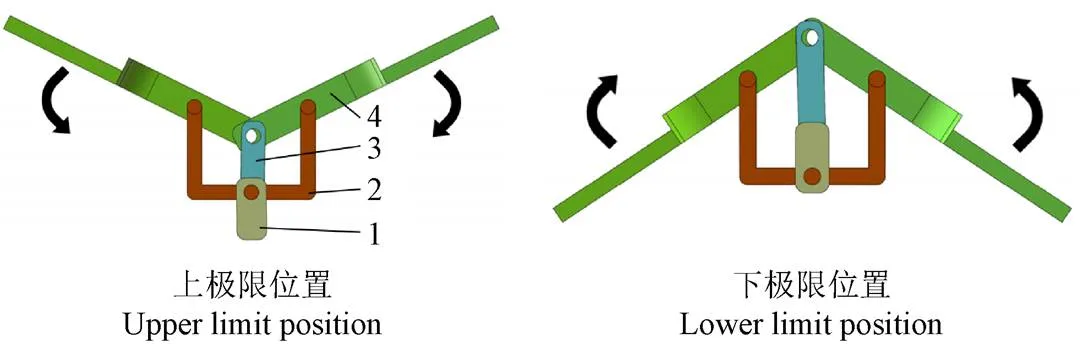
1.曲柄 2.機架 3.連桿 4.搖桿
1. Crank 2. Frame 3. Connecting rod 4. Rocker
a. 搖桿上下極限位置運動簡圖
a. Rocker upper and lower limit position motion diagram
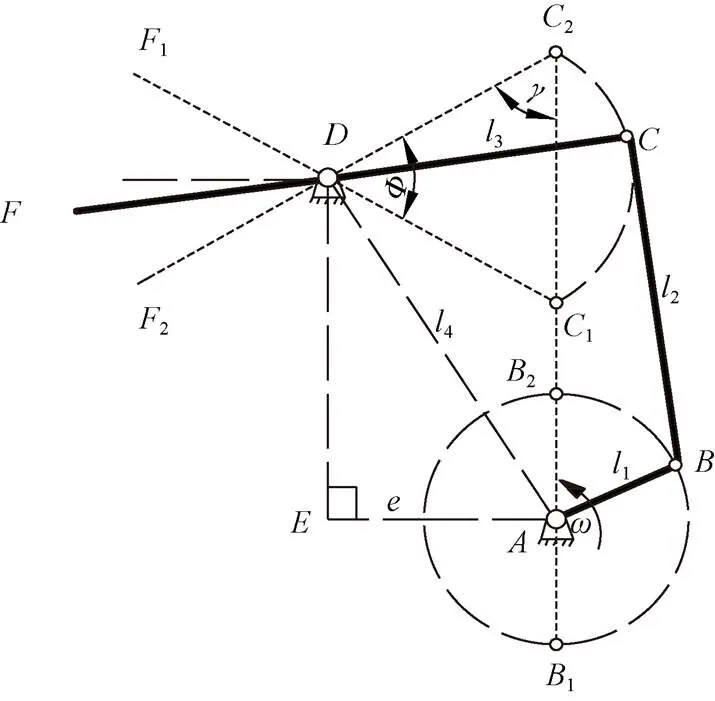
注:、、、為曲柄搖桿機構連接點;為搖桿延伸點;為機架水平投影方向與豎直投影方向的交點;1、2為曲柄的極限位置點;1、2為搖桿的極限位置點;1、2為搖桿延伸方向的極限位置點;1為曲柄長度,mm;2為連桿長度,mm;3為搖桿長度,mm;4為機架長度,mm;為機架水平方向投影長度,mm;為曲柄角速度,rad·s-1;為搖桿擺角,(°);為傳動角,(°)。 Note:、、、are the connecting points of the crank-rocker mechanism;is the extension point of the rocker;is the intersection of the horizontal projection and vertical projection directions for the frame;1、2are the limit positions of the crank;1、2are the limit positions of the rocker;1、2are the limit positions of the extension direction of the rocker;1is the length of the crank, mm;2is the length of the connecting rod, mm;3is the length of the rocker, mm;4is the length of the frame, mm.is a projection length of the rack horizontal direction, mm;is the angular velocity of the crank, rad·s-1;is the swing angle of rocker, (°);is the transmission angle, (°).
b. 無急回特性曲柄搖桿機構結構簡圖
b. Structural diagram of crank rocker mechanism without quick return characteristics
圖3 搖桿極限位置和無急回特性曲柄搖桿機構示意圖
Fig.3 Limit positions of the rocker and schematic diagram of crank rocker mechanism without quick return characteristics
根據無急回特性曲柄搖桿機構特性[23]可得:
2.2.1 曲柄長度1和搖桿長度3的確定
由于機架上鉸接孔是在箱體外側,考慮到加工箱體結構的壁厚以及鉸接孔與箱體側面的預留間隙,取鉸接孔到箱體內側的長度為,mm;為避免曲柄1在運動過程中干涉箱體內側,應有:
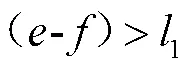
為了使裝置在工作中有較好的拍打效果,需在保證結構強度以及裝置在移動過程中的靈活性,同時保證結構的輕量化,本文取1=11 mm,=8 mm,由此可得擺角為
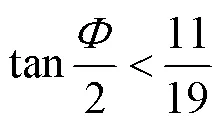
由式(3)解得<60.1°,取=60°,由式(1)得搖桿長度3= 22 mm。
2.2.2 連桿長度2和機架長度4的確定
在曲柄搖桿機構中,傳動角用來衡量機構的傳力性能,許用傳動角[]一般為40°~50°[24],而最小傳動角要大于許用傳動角[]才能發揮機器的傳動性能,值越大,代表傳力性能越好。在無急回運動的情況下,最小傳動角min出現在曲柄與機架連線重合的2個位置上,且2位置傳動角相等,結合公式(1)有如下關系式[25]:
3 拍打機構仿真分析
落果裝置在采收過程中拍打機構穩定運動能減小采收機振動,提高機械整體性能;故本文還需進一步分析拍打機構曲柄搖桿機構的運動規律,并對搖桿進行運動學仿真,分析其在不同轉速下的性能。
3.1 運動規律分析
注:1為曲柄角位移,rad;2為連桿角位移,rad;3為搖桿角位移,rad。
Note:1is the angular displacement of the crank, rad;2is the angular displacement of the connecting rod, rad;3is the angular displacement of the rocker, rad.
圖5 曲柄搖桿機構矢量圖
Fig.5 Vector diagram of crank-rocker mechanism
根據式(5)在軸和軸上的投影可得:
角位移分析:
由式(6)可得:
將三角函數式:
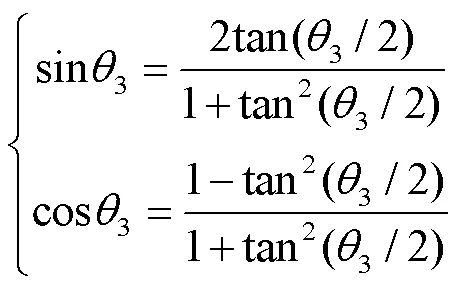
由此解得:
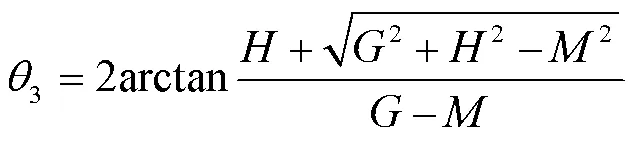
角速度分析:
將式(5)對時間求導,得到:
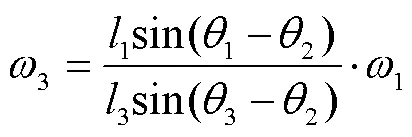
式中1為曲柄角速度,rad/s;3為搖桿角速度,rad/s;類似求得:
式中2為連桿角速度,rad/s。
角加速度分析
將式(12)對時間再次求導得:

式中3為搖桿運動角加速度,rad/s2;類似求得2為:

式中2為連桿運動角加速度,rad/s2。
3.2 運動學仿真分析
為得到搖桿運動過程中的規律,使用ADAMS仿真軟件對其進行仿真分析。由于三對曲柄搖桿機構運動的一致性,選擇其中一對分析即可,本文為了分析簡便,建模時將軸承座與箱體簡化為一個整體。箱體添加固定副,偏心塊與箱體連接使用旋轉副,偏心塊與軸使用恒速副,連桿與軸使用旋轉副,連桿與搖桿、搖桿與箱體鉸接孔分別添加旋轉副,在偏心塊輸出軸上添加旋轉驅動。
由于在實際板栗采收中,300 r/min以下拍打效果不佳,而大于600 r/min拍打機構振動效果較為明顯,故在300~600 r/min的轉速內分析搖桿運動較為合適;設定分析時間為0.5 s,仿真步數為500步,通過改變偏心塊的輸出軸轉速,在300、450、600 r/min的條件下分析搖桿的運動曲線。

表2 仿真分析主要結果
通過圖6a搖桿角速度和圖6b搖桿加速度曲線圖分析可得,搖桿在運動過程中角速度和角加速度的最大值隨轉速的增大不斷增大;結合表2數據,在同一轉速下,左右兩側搖桿所能達到的角速度和角加速度最大值基本一致,且在不同轉速下,運動規律對稱,說明兩側搖桿運動的一致性,表明設計合理,滿足落果裝置工作過程中的穩定性要求。因為搖桿在不同轉速下的上下極限位置角位移基本不變,通過圖6c分析可得兩側搖桿擺角分別為60.1°和60.2°,且上下極限角度與30°偏差很小,表明在實際板栗收獲中拍打條上下拍打角度為60°。
4 板栗果實與樹枝的分離力測量
4.1 試驗設備與方法
為獲取板栗樹果實與樹枝的分離力,2020年9月份在湖北省孝感安陸市孛畈鎮板栗園對板栗果實與樹枝的分離力進行了測量。測力設備采用數顯拉力計(型號:ELK-300,量程:0~300 N,精度±0.5%),測量位置為果實與果柄連接處,選擇果實數量較多的板栗樹,由于落果裝置拍打時板栗果實主要沿著果實生長方向0°~90°脫落,故選擇沿著板栗果實生長0°、45°和90°三個拉力角方向進行測量[26],每個測量角度的試驗樣本數量為40個。所測樣本在果實與果柄位置處的分離力如圖7所示。
4.2 試驗結果分析
由圖7a可知,在0°方向上,最大分離力為65.24 N,最小分離力為14.81 N,平均分離力為39.38 N,分離力范圍主要集中在20~60 N之間。由圖7b可知,在45°方向上,最大分離力為45.64 N,最小分離力為13.56 N,平均分離力為28.94 N,大部分果實分離力集中在15~40 N之間。由圖7c可知,在90°方向上,最大分離力為46.13 N,最小平均力4.56 N,平均分離力為19.31 N,分離力范圍主要集中5~30 N之間,大部分果實分離力小于30 N。
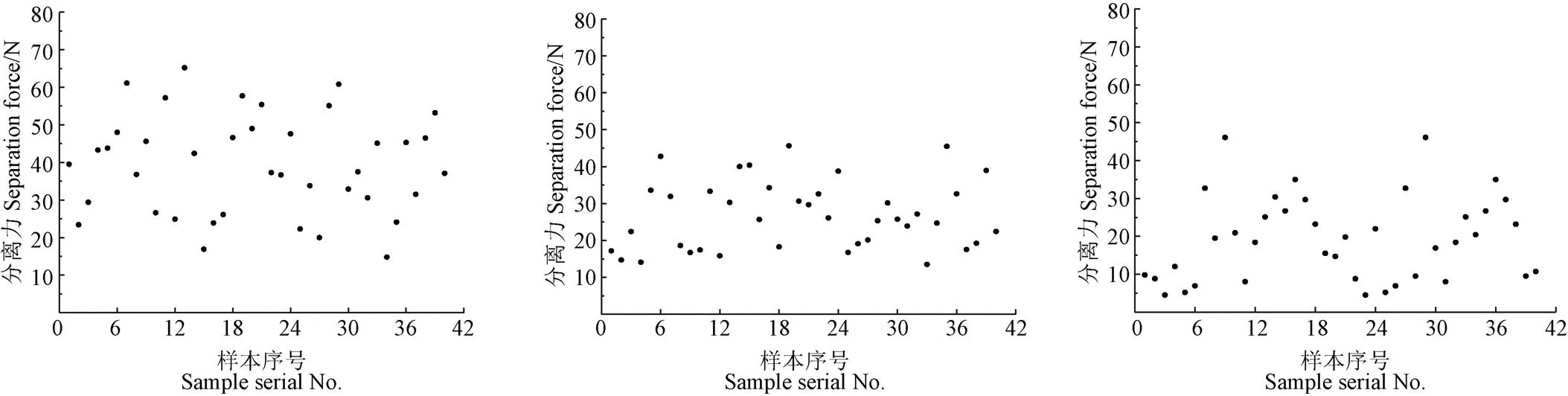
a. 0°b. 45°c. 90°
根據測量數據分析可得,平均分離力的大小與作用在果實生長方向的拉力角有關,在不同的角度上其平均分離力也不同。隨著拉力角的增大,分離力主要分布范圍和平均分離力逐漸減小[27],在0°時的平均分離力比90°時大20.09 N,說明在板栗采摘過程中垂直果柄方向比沿果柄方向更易脫落。為了保證收獲效率,拍打機構所提供的最大拍打力應不低于最大分離力65.24 N。
5 拍打力試驗
5.1 板栗采摘過程碰撞力分析
拍打機構在板栗收獲過程中,會與樹枝和果柄產生碰撞,碰撞模型如圖8所示,為減小碰撞過程中拍打條對板栗樹的損傷,擬采用表面光滑、具備彈性變形能力的材料。根據所選材料性質,忽略碰撞過程中的切向摩擦力和能量損失,在Hertz理論接觸力模型[28]中以純彈性接觸力模型進行試驗,其法向接觸力為
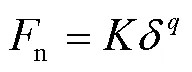
式中R(=)為接觸體、的曲率半徑,mm;β(=)與接觸體材料屬性有關,表達式為

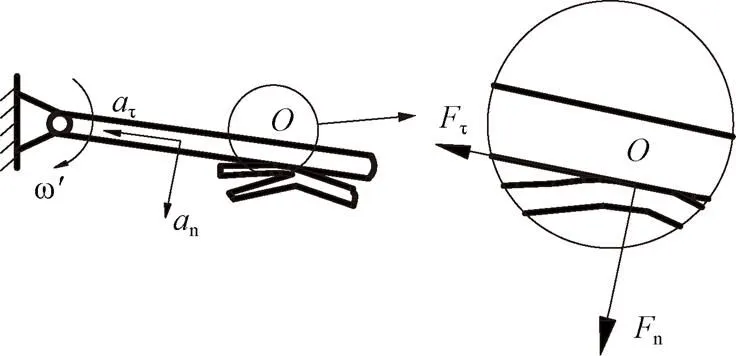
注:ω' 為拍打條角速度,rad·s-1;O為碰撞接觸點;ατ為碰撞點切向加速度rad·s-2;αn為碰撞點法向加速度rad·s-2;Fτ為碰撞點切向摩擦力N;Fn為碰撞點法向接觸力N。
通過圖8模型可知拍,打條與板栗樹枝的碰撞力大小與接觸變形量、接觸位置曲率半徑、材料彈性模量和泊松比有關。由于材料屬性系數是常數,因此碰撞時接觸位置處的變形量和曲率半徑是影響接觸力的2個主要參數。拍打機構在工作過程中,在接觸位置處,電機轉速和拍打條拍打部位是影響變形量和曲率半徑的關鍵因素,因此可通過改變電機轉速、拍打條長度和拍打角度使拍打條達到不同的拍打力。
5.2 材料與方法
剛柔并濟的材料能避免拍打機構工作時在鉸接處因受力過大而產生結構破壞[29],同時也能減少剛性碰撞對板栗樹枝的傷害,選用彎曲能力不同的PU(聚氨酯,Poly-urethane)、LDPE(低密度聚乙烯,Low Density Polyethylene)、鐵片(鍍鋅鐵皮)和玻璃纖維4種常見材料進行試驗,材料屬性如表3所示。所選材料PU最易彎曲,其次是LDPE,鐵片和玻璃纖維較難彎曲。
針對公式(18)分析出的2個主要影響參數,進行如圖9所示試驗,拍打機構固定,壓力采集設備采用JN-CJ型采集卡和平面膜盒式壓力傳感器(型號JHBM-H1,量程200 N,精度0.1%)。試驗過程中,拍打條拍打壓力傳感器,采集卡將采集數據上傳到上位機,實時記錄傳感器測量數據。絲杠升降臺調節拍打條的測力角度,以得到不同拍打角度的拍打力;在拍打條不同長度處標記測試點,測試不同拍打長度的拍打力;驅動器改變電機的轉速,使拍打條達到不同的拍打頻率,從而得到不同頻率下的拍打力。采集卡采樣頻率選擇200 Hz,采樣時間10 s,拍打力取采樣平均值;上位機測試界面結果顯示如圖10。

表3 材料屬性
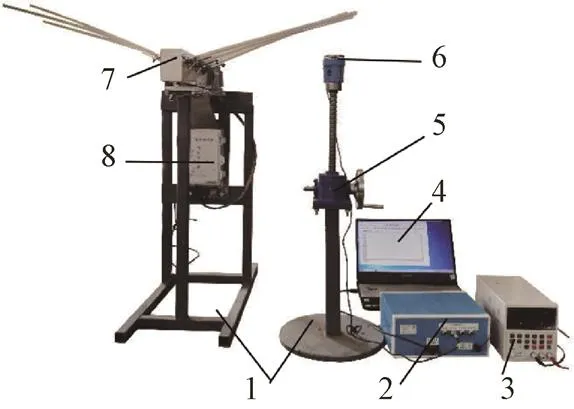
1.臺架 2.采集卡 3.可調電源 4.上位機 5.升降臺 6.傳感器 7.拍打機構 8.電機驅動器
5.3 正交試驗
5.3.1 試驗方案
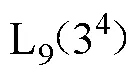
5.3.2 試驗方案與結果
通過表5數據分析可得,4種材料中,影響PU材料拍打力大小的主次因素為、、,較優組合為332,在該因素組合下進行試驗,得出拍打力大小為 44.31 N;影響LDPE材料拍打力大小的主次因素為、、,較優組合為321,在該組合下進行試驗,得出拍打力大小為70.71 N;影響鐵片材料拍打力大小的主次因素為、、,較優組合為321,在該因素組合下進行試驗,得出拍打力大小為87.46 N;影響玻璃纖維材料拍打力大小的主次因素為、、,較優組合為311,在該因素組合下進行試驗,得出拍打力大小為94.03 N。
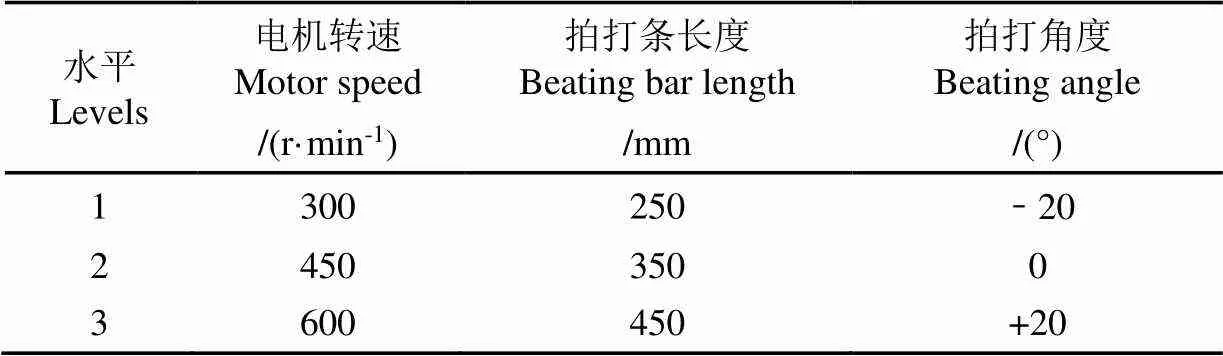
表4 因素水平

表5 試驗結果與分析
分析可知,采用PU材料進行拍打力試驗,最大拍打力44.31 N小于板栗與樹枝的最大分離力65.24 N,因此在實際采摘中最大分離力超過44.31 N會導致板栗果實落果困難。其他3種材料在最優條件下最大拍打力均大于65.24 N,故滿足板栗果實落果要求,結合公式(18)可知,拍打接觸力與材料屬性有關,通過對比,鐵片和玻璃纖維拍打力雖然較大,但其彎曲能力較LDPE弱,易損傷樹枝,且對機械裝置沖擊較大,因此拍打條材料選擇LDPE較為合適,電機轉速600 r/min,拍打條長度350 mm以及拍打角度+20°時拍打條能提供最大拍打力70.71 N。
6 田間試驗
每年8月下旬是板栗收獲時期。如圖11所示,2020年9月份在湖北省孝感市安陸市孛畈鎮板栗種植林區進行田間試驗。為了驗證實際工作中拍打機構能否有效拍落板栗果實,根據臺架測力試驗最優組合,選擇拍打條材料LDPE,長度350 mm,電機轉速600 r/min。
為評估所設計落果裝置的拍打落果性能,將落果裝置移動后進行定點采收,選擇多塊相互獨立、果實數量較多、面積相差不大且拍打條能覆蓋到的樹枝作為采收區域。在采收過程中,拍打后存在少數板栗果實難以脫落,但長時間在同一區域拍打會對樹枝產生損傷;經試驗采摘時間超過10 s后,果實雖能完全采收,但板栗樹大量樹葉被打落,樹枝出現磨損情況,對枝芽產生一定程度損傷,如圖12所示,而采摘時間在10 s內能完成大部分果實采收,打落樹葉較少且對樹枝無明顯損傷,故每次試驗時間選擇10 s較合適。試驗前,先統計所選各區域樹枝板栗果實總數,拍打采收后,記錄各區域未被采收板栗果實數,以落果率評價落果裝置的工作性能:
田間試驗結果表明,所設計的落果裝置的平均落果率達到90.5%(表6),且拍打力滿足板栗采收要求。由于該機器仍處于試驗階段,目前鮮有板栗樹標準化果園種植模式(湖北地區板栗多種植于山坡及梯田),離真正的機械化采摘還存在一定的差距,因此后期需要農機與農藝深度融合,種植出宜機化板栗樹形,研制出適合國內丘陵山地種植模式的板栗收獲機械。
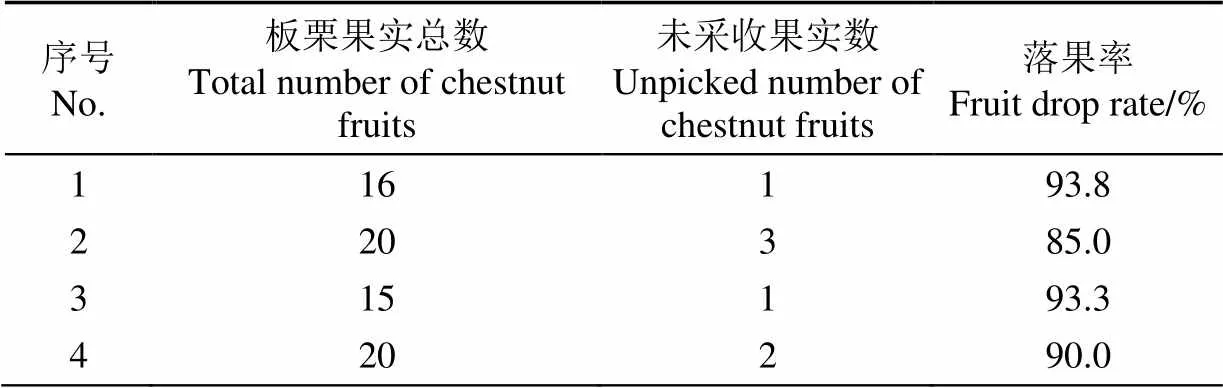
表6 收獲試驗結果
7 結 論
1)針對國內丘陵山地板栗人工收獲效率低、勞動強度大、高空落果易傷人等問題,本文設計了一種板栗收獲拍打式落果裝置,可實現丘陵山地等地形條件下板栗機械化采收。
2)闡述了整機結構和工作原理,落果裝置拍打機構兩側根據無急回特性曲柄搖桿機構進行設計;得出拍打機構運動規律方程,對其進行運動學仿真分析,通過結果可得:拍打機構兩側搖桿隨曲柄轉速增大而不斷增大,且運動過程基本能保持一致性,兩側搖桿擺角分別為60.1°和60.2°,滿足運動穩定性要求。
3)通過板栗果實與樹枝的分離力試驗,得出在0~90°上,隨著拉力角的增大分離力逐漸減小,在0°拉力角上存在最大分離力為65.24 N;對4種材料的拍打條進行三因素三水平正交試驗,結果表明:最佳拍打條材料為LDPE,當電機轉速600 r/min,拍打條長度350 mm,拍打角度20°時,拍打力大小為70.71 N。通過田間試驗結果表明:落果裝置的平均落果率達到90.5%,且對樹枝損傷較小。所設計落果裝置基本滿足板栗采收要求。
[1] 闞黎娜,李倩,謝爽爽,等. 我國板栗種質資源分布及營養成分比較[J]. 食品工業科技,2016,37(20):396-400.
Kan Lina, Li Qian, Xie Shuangshuang, et al. Resource distribution and nutritional quality difference of Chinese chestnuts[J]. Science and Technology of Food Industry, 2016, 37(20): 397-400. (in Chinese with English abstract)
[2] 韓元順,許林云,周杰. 中國板栗產業與市場發展現狀及趨勢[J]. 中國果樹,2021(4):83-88.
[3] 中國經濟林協會. 板栗產業從大到強需科技助力[EB/OL]. (2020-12-2)[2021-07-05]. http: //www. forestry. gov. cn/jlxh/3511/ 20201202/145256993227256. html
[4] 羅田板栗[J]. 中國果業信息,2008(7):32-33.
[5] 易善軍. 我國板栗產業發展現狀及策略[J]. 西部林業科學,2017,46(5):132-134,149.
Yi Shanjun. Situation and development strategy of chestnut industry in China[J]. Journal of West China Forestry Science, 2017, 46(5): 132-134, 149. (in Chinese with English abstract)
[6] 陳世龍. 羅田縣板栗產品市場推廣的現狀,問題及對策研究[D]. 武漢:華中師范大學,2013.
Chen Shilong. The Study on the Present Situation, Problems and Countermeasures of Marketing of Luotian Chestnut Products[D]. Wuhan: Central China Normal university, 2013. (in Chinese with English abstract)
[7] 周遠航,坎雜,李成松,等. 落地林果集果撿拾技術研究及進展[J]. 農機化研究,2017,39(1):256-263.
Zhou Yuanhang, Kan Za, Li Chengsong, et al. The research and development of the falling tree fruits and Nuts collect and pick-up technology[J]. Journal of Agricultural Mechanization Research, 2017, 39(1): 256-263. (in Chinese with English abstract)
[8] Kang W S, Guyer D. Development of chestnut harvesters for small farms[J]. Journal of Biosystems Engineering, 2008, 33(6): 384-389.
[9] 韓元順,許林云,周杰,等. 基于高速攝影的板栗果實振動脫落特性分析[J]. 林業工程學報,2021,6(3):133-134.
Han Yuanshun, Xu Linyu, Zhou Jie, et al. Analysis of chestnut fruit shedding characteristics by vibration using high-speed videos[J]. Journal of Forestry Engineering, 2021, 6(3): 133-134. (in Chinese with English abstract)
[10] 曹成茂,詹超,孫燕,等. 便攜式山核桃高空拍打采摘機設計與試驗[J]. 農業機械學報,2018,49(3):130-137.
Cao Chengmao, Zhan Chao, Sun Yan, et al. Design and experiment of portable walnut high-altitude pat-picking machine[J]. Transactions of the Chinese Society for Agricultural Machinery, 2018, 49(3): 130-137. (in Chinese with English abstract)
[11] Rezaei A, Loghavi M, Kamgar S. Mechanical harvesting of wild almond () by a pneumatic branch shaker[J]. International Journal of Advances in Agricultural Science and Technology, 2016(4): 1-15.
[12] Larbi P A, Karkee M, matya S, et al. Modification and field evaluation of an experimental mechanical sweet cherry harvester[J]. Applied Engineering in Agriculture, 2015, 31(3): 387-397.
[13] Bernardi B, Falcone G, Stillitano T, et al. Harvesting system sustainability in Mediterranean olive cultivation[J]. Science of the Total Environment, 2018, 625: 1446-1458.
[14] Khorsandi F, Loghavi M, Kamgar S. The effects of shaking frequency and amplitude on the detachment of Estahban dried fig (.[J]. Iran Agricultural Research, 2012, 31(1): 49-62.
[15] Kurpaska S, Sobol Z, Pedryc N, et al. Analysis of the pneumatic system parameters of the suction cup integrated with the head for harvesting strawberry fruit[J]. Sensors, 2020, 20(16): 4389.
[16] 鄭永軍,江世界,陳炳太,等. 丘陵山區果園機械化技術與裝備研究進展[J]. 農業機械學報,2020,51(11):1-20.
Zheng Yongjun, Jiang Shijie, Chen Bingtai, et al. Review on technology and equipment of mechanization in hilly orchard[J]. Transactions of the Chinese Society for Agricultural Machinery, 2020, 51(11): 1-20. (in Chinese with English abstract)
[17] 陳度,杜小強,王書茂,等. 振動式果品收獲技術機理分析及研究進展[J]. 農業工程學報,2011,27(8):195-200.
Chen Du, Du Xiaoqiang, Wang Shumao, et al. Mechanism of vibratory fruit harvest and review of current advance[J]. Transactions of the Chinese Society of Agricultural Engineering (Transactions of the CSAE), 2011, 27(8): 195-200. (in Chinese with English abstract)
[18] 饒洪輝,黃登昇,王玉龍,等. 液壓驅動式油茶果采摘機設計與試驗[J]. 農業機械學報,2019,50(5):133-139,147.
Rao Honghui, Huang Dengsheng, Wang Yulong, et al. Design and experiment of hydraulic-driven camellia fruit picking machine[J]. Transactions of the Chinese Society for Agricultural Machinery, 2019, 50(5): 133-139, 147. (in Chinese with English abstract)
[19] 伍德林,傅立強,曹成茂,等. 搖枝式油茶果采摘機設計與試驗[J]. 農業機械學報,2020,51(11):176-182,195.
Wu Delin, Fu Liqiang, Cao Chengmao, et al. Design and experiment of shaking-branch fruit picking machine for camellia fruit[J]. Transactions of the Chinese Society for Agricultural Machinery, 2020, 51(11): 176-182, 195. (in Chinese with English abstract)
[20] 陳軍,趙健,陳云,等. 振刷式枸杞采收機設計與試驗優化[J]. 農業機械學報,2019,50(1):152-161,95.
Chen Jun, Zhao Jian, Chen Yun, et al. Design and experiment on vibrating and comb brushing harvester for[J]. Transactions of the Chinese Society for Agricultural Machinery, 2019, 50(1): 152-161, 95. (in Chinese with English abstract)
[21] 王克奇,張維昊,羅澤,等. 擊打式松果采摘機器人設計與試驗[J]. 農業機械學報,2020,51(8):26-33.
Wang Keqi, Zhang Weihao, Luo Ze, et al. Design and experiment of hitting pine cone picking robot[J]. Transactions of the Chinese Society for Agricultural Machinery, 2020, 51(8): 26-33. (in Chinese with English abstract)
[22] 徐麗明,劉旭東,張凱良,等. 臍橙采摘機器人末端執行器設計與試驗[J]. 農業工程學報,2018,34(12):53-61.
Xu Liming, Liu Xudong, Zhang Kailiang, et al. Design and test of end-effector for navel orange picking robot[J]. Transactions of the Chinese Society of Agricultural Engineering (Transactions of the CSAE), 2018, 34(12): 53-61. (in Chinese with English abstract)
[23] 劉志剛,王德成,翟改霞,等. 往復式雙動刀灌木收割機設計與試驗[J]. 農業機械學報,2013,44(S2):102-106.
Liu Zhigang, Wang Decheng, Zhai Gaixia, et al. Design and experiment on reciprocating double knife shrub harvester[J]. Transactions of the Chinese Society for Agricultural Machinery, 2013, 44(S2): 102-106. (in Chinese with English abstract)
[24] 馮立艷,關鐵成,田姍姍,等. 傳力性能最佳的有急回曲柄搖桿機構的設計[J]. 機械設計與制造,2018(6):66-69.
Feng Liyan, Guan Tiecheng, Tian Shanshan, et al. Design of quick-return crank-rocker mechanism with optimum transmission performance[J]. Machinery Design & Manufacture, 2018(6): 66-69. (in Chinese with English abstract)
[25] 金世偉,黃立波,吳小珍,等. 無急回特性曲柄搖桿自動拋光裝置的設計[J]. 組合機床與自動化加工技術,2017(12):140-142.
Jin Shiwei, Huang Libo, Wu Xiaozhen, et al. Design of crank rocker mechanism automatic polishing device with non quick-return characteristic[J]. Modular Machine Tool & Automatic Manufacturing Technique, 2017(12): 140-142. (in Chinese with English abstract)
[26] 傅隆生,張發年,槐島芳德,等. 獼猴桃采摘機器人末端執行器設計與試驗[J]. 農業機械學報,2015,46(3):1-8.
Fu Longsheng, Zhang Fanian, Gejima Yoshinori, et al. Development and experiment of end-effector for kiwifruit harvesting robot[J]. Transactions of the Chinese Society for Agricultural Machinery, 2015, 46(3): 1-8. (in Chinese with English abstract)
[27] 吳問天. 油茶果采摘機的關鍵部件設計與試驗[D]. 合肥:安徽農業大學,2018.
Wu Wentian. The Design and Test of Key Components of Camellia Oleifera Picking Machine[D]. Hefei: Anhui Agricultural University, 2018. (in Chinese with English abstract)
[28] 黃劍鋒,余濤,陳江義. 剛體碰撞的Hertz接觸力模型比較分析[J]. 機械設計與制造,2017(8):28-30.
Huang Jianfeng, Yu Tao, Chen Jiangyi. Comparison and analysis of hertz contact force models for collision of rigid bodies[J]. Machinery Design & Manufacture, 2017(8): 28-30. (in Chinese with English abstract)
[29] 段玥晨,章定國. 基于彈塑性接觸的柔性多體系統碰撞動力學[J]. 南京理工大學學報,2012,36(2):189-194.
Duan Yuechen, Zhang Dingguo. Flexible multibody system impact dynamics based on elastic-plastic contact[J]. Journal of Nanjing University of Science and Technology, 2012, 36(2): 189-194. (in Chinese with English abstract)
Design and experiment of the fruit-beating dropping device for chestnut harvesters
Zong Wangyuan1,2, Huang Muchang1, Xiao Yangyi1,2, Li Mao1, Deng Dinglin1
(1.,,430070,;2.,,430070,)
Difficult picking is often found in the harvesting of fresh chestnut, particularly in the low efficiency and high labor cost of manual harvesting, as well as the high risk of high-altitude picking. However, only a few research focused on this field in China. In this study, a beating-type fruit dropping device was proposed for a chestnut harvester, according to the characteristics of chestnut trees and the planting mode of Chinese chestnut. The overall structure and working principle were also introduced into the design of the chestnut harvester. Two situations were included to separate the chestnut fruit from the branch. When the beating bars hit the fruit, the beating force was directly transferred to the fruit. As such, the fruit was separated from the branch, if the beating force was greater than the binding force between the fruit and the branch. When the beating bars hit the branch, an inertia force was transmitted from the branch to the fruit, where the chestnut was separated from the branch to complete the chestnut harvest, if the inertia force was greater than the binding force. A beating mechanism was also designed as a crank-rocker without quick returning, in order to ensure the overall performance of the machine, and the stability of the fruit dropping device in the process of operation. The size of the crank-rocker mechanism was also determined under the optimal conditions. A kinematic model was established for the crank-rocker mechanism, further to obtain the kinematic relationships of angular displacement, angular velocity, and angular acceleration of the rocker. A dynamic simulation was also performed on both sides of the beating device in the crank-rocker mechanism. It was found that the motion of the rocker was symmetrical in terms of the motion curve, where the swing angle of the rocker reached 60° suitable for the stability requirements. Furthermore, the variation of separation force between chestnut fruit and branch was obtained at different tension angles. Specifically, the separation force decreased gradually with the increase of tension angle in the range of 0°-90°, where the maximum separation force was 65.24 N at 0° tension angle. The collision model between the beating bars and the branch was established to determine the main factors affecting the beating force, including the speed of the motor, the length of the beating bars, and the beating angle. A three-factor three-level orthogonal test was conducted, where the materials of beating bars were selected as polyurethane, low-density polyethylene, iron sheet, and glass fiber. The results show that the maximum beating force was only 44.31N for the polyurethane, while the maximum separation force of chestnut fruit and branch was 65.24 N, indicating that the maximum beating force provided by polyurethane was less than that of chestnut fruit and branch, fail to meet the requirements of beating force for fruit picking. The maximum beating forces of iron sheet and glass fiber were 87.46 N and 94.03 N, respectively. Nevertheless, the excessive force was easy to damage chestnut branches. Fortunately, the maximum beating force of low-density polyethylene was 70.71 N, similar to that of chestnut fruit and branch (65.24 N), indicating the best beating material. In this case, the optimal combination was achieved, where the motor speed of 600 r/min, the beating bar length of 350 mm, and the tapping angle of 20°. A field test of the chestnut harvesting machine was carried out to verify each area for harvesting. Several areas were selected on the chestnut tree for the harvest experiment after the positioning structure moved the fruit dropping device. The field test shows that the beating force provided by the fruit dropping device can effectively beat the chestnut fruits within 10s, where the fruit drop rate was 90.1%, while less damage to the chestnut trees. Consequently, the beating-type fruit dropping device can fully meet the harvest requirements of chestnut fruits. The finding can provide a strong reference for further research and development of chestnut harvesting machinery.
agricultural machinery; harvest; chestnut; fruit dropping device; numerical simulation; separation force; beat
10.11975/j.issn.1002-6819.2021.18.001
S23-01
A
1002-6819(2021)-18-0001-10
2021-07-05
2021-08-21
湖北省重點研發計劃項目(2020BED027)
宗望遠,教授,博士生導師,研究方向為現代農業裝備設計與測控。Email:zwy@mail.hzau.edu.cn
宗望遠,黃木昌,肖洋軼,等. 板栗收獲拍打式落果裝置設計與試驗[J]. 農業工程學報,2021,37(18):1-10. doi:10.11975/j.issn.1002-6819.2021.18.001 http://www.tcsae.org
Zong Wangyuan, Huang Muchang, Xiao Yangyi, et al. Design and experiment of the fruit-beating dropping device for chestnut harvesters[J]. Transactions of the Chinese Society of Agricultural Engineering (Transactions of the CSAE), 2021, 37(18): 1-10. (in Chinese with English abstract) doi:10.11975/j.issn.1002-6819.2021.18.001 http://www.tcsae.org
猜你喜歡
河北畫報(2020年8期)2020-10-27 02:54:06
現代裝飾(2020年7期)2020-07-27 01:27:42
流行色(2020年1期)2020-04-28 11:16:38
電子制作(2019年19期)2019-11-23 08:41:36
電子制作(2019年15期)2019-08-27 01:11:50
電子制作(2019年7期)2019-04-25 13:18:16
藝術啟蒙(2018年7期)2018-08-23 09:14:18
海峽姐妹(2017年7期)2017-07-31 19:08:17
Coco薇(2017年5期)2017-06-05 08:53:16
商周刊(2017年26期)2017-04-25 08:13:04