安徽省農業現代化發展水平及障礙因素研究
2021-11-07 01:28:16潘福鑫馬鳳戈詠
安徽農學通報 2021年20期
潘福鑫 馬鳳 戈詠
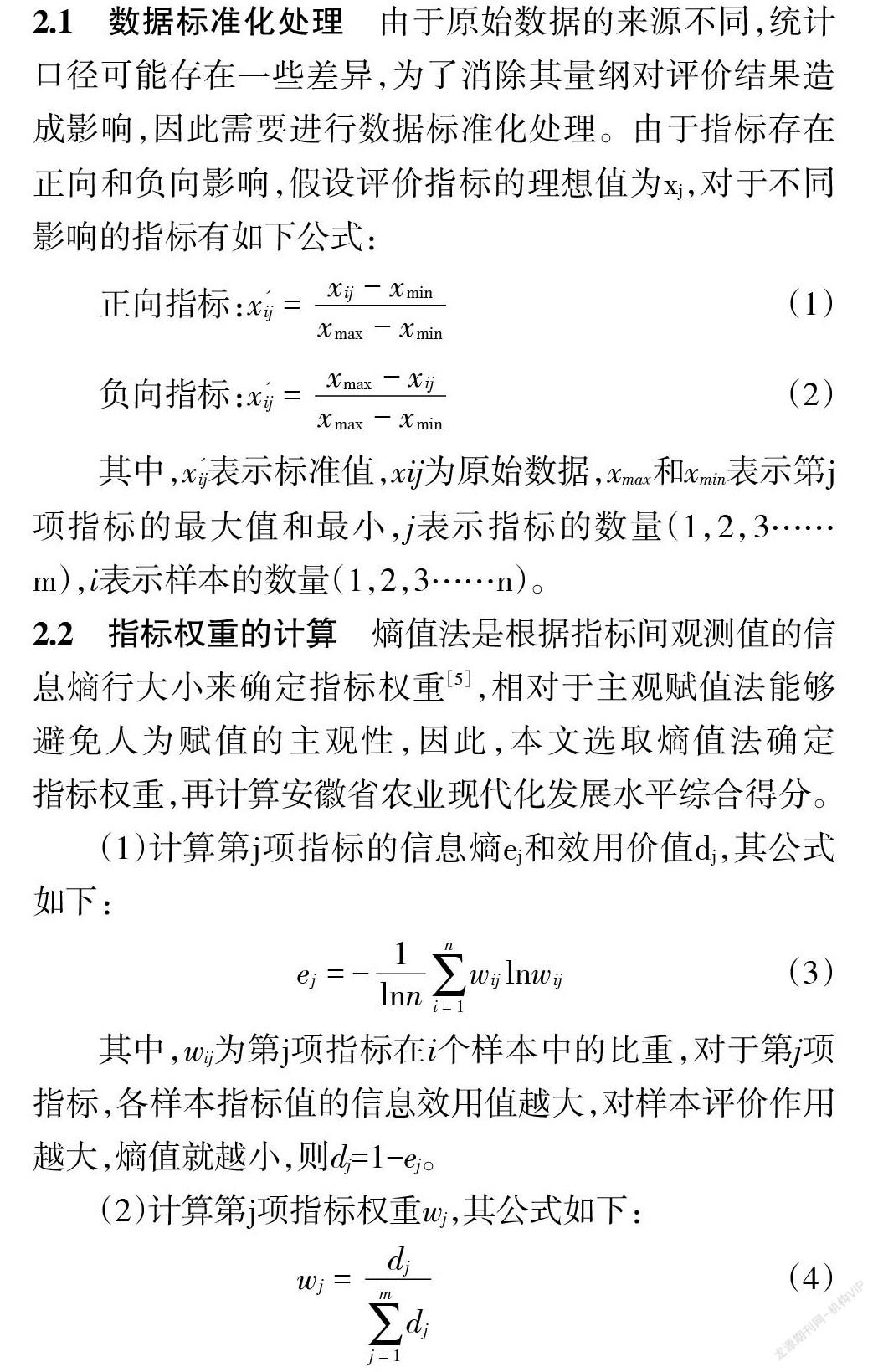
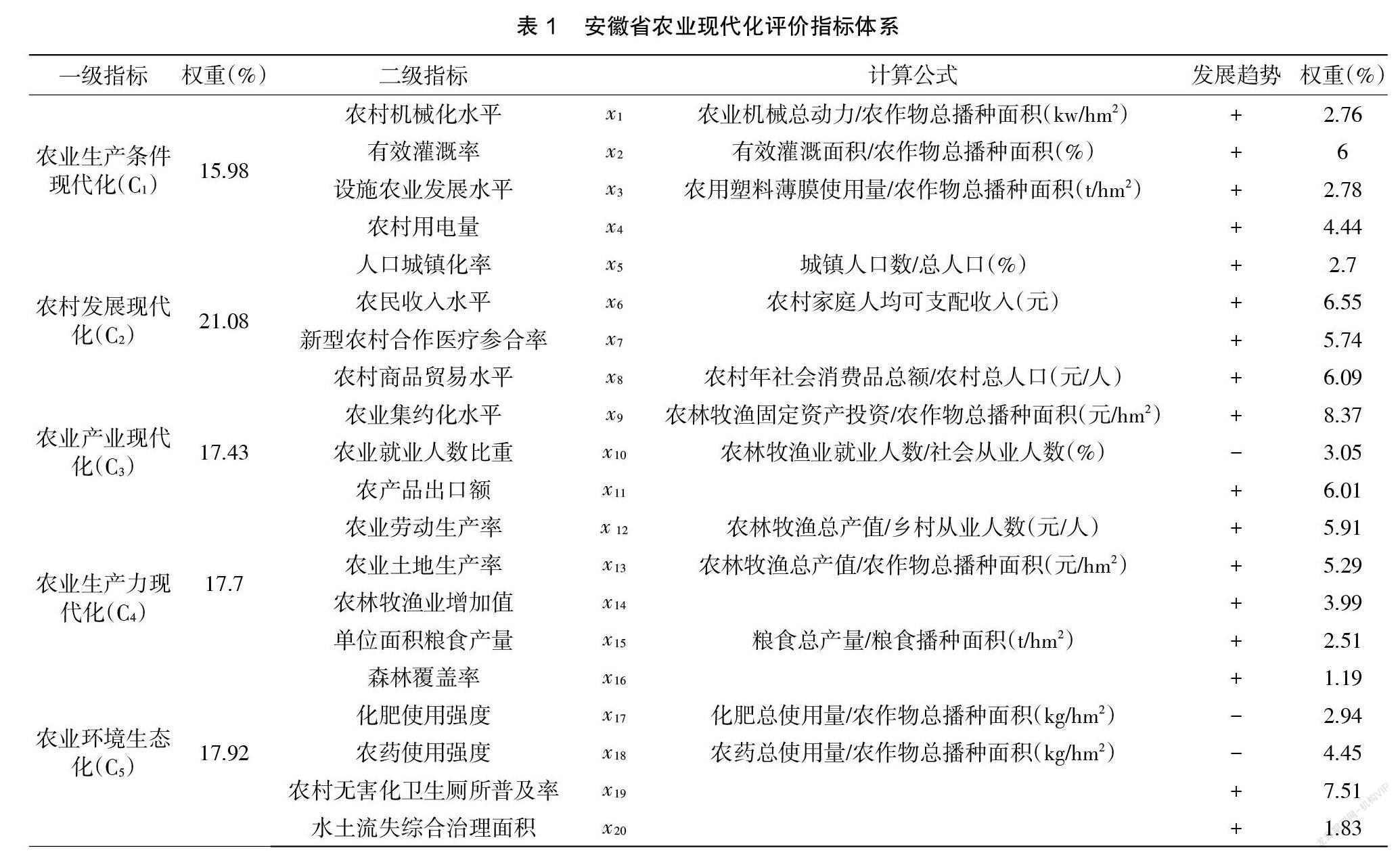

摘 要:基于農業現代化的內涵和特征,從6個維度選取23個指標構建了安徽省農業現代化評價指標體系,通過熵值法確定各指標權重,綜合評價安徽省農業現代化發展水平,然后借助障礙度模型,研究了1999—2018年20年間安徽省農業現代化發展的制約因素,結果表明:安徽省農業現代化發展水平整體上呈上升趨勢,農業生態環境現代化、農業生產力現代化、農村發展現代化和農業生產條件現代化等4個維度是制約安徽省農業現代化發展的主要障礙維度。并提出了針對性的對策建議。
關鍵詞:安徽省;農業現代化;熵值法;障礙因素
中圖分類號 F320.1? 文獻標識碼 A文章編號 1007-7731(2021)20-0006-04
Research on the Developement Level of Agricultural Modernization and Obstacle Factors in Anhui Province
PAN Fuxin et al.
(College of Economics and Management, Anhui Agricultural University, Hefei 230036, China)
Abstract: Based on the connotation and characteristics of agricultural modernization, 23 indicators are selected from six dimensions to construct an evaluation index system for agricultural modernization in Anhui Province. The weight of each index is determined by the entropy method, and the development level of agricultural modernization in Anhui Province is comprehensively evaluated. Then, the obstacle degree model is used to study The restrictive factors of the development of agricultural modernization in Anhui Province during the 20 years from 1999 to 2018. The results show that the development level of agricultural modernization in Anhui Province is on the rise as a whole. The four dimensions of modernization of agricultural ecological environment, modernization of agricultural productivity, modernization of agricultural development, and modernization of agricultural production conditions are the main obstacle dimensions that restrict the development of agricultural modernization in Anhui Province,and put forward targeted countermeasures and suggestions.
Key words:Anhui Province; Agricultural modernization; Entropy method; Obstacles
1 引言
自改革開放以來,我國農業現代化水平取得了長足的進步,但與發達國家相比,尚存在不小的差距。農業作為基礎產業能否健康發展關系到我國社會主義建設的全局。中央歷年來十分重視農業、農村的發展,自[2004]年開始,中央一號文件連續17年[聚焦“三農”]問題。2013—2016年,連續4年中央“一號文件”都圍繞著農業的現代化問題。因此,在當前“十三五”收官及“十四五”籌劃之年,科學合理地分析農業現代化的發展水平及其障礙因素,準確把握發展現狀,探索出一條適合農業現代化發展的道路,具有重要意義。
國外從20世紀60年代開始研究農業現代化問題,主要圍繞以下3個方面:(1)農業現代化理論。西奧多·W·舒爾茨在其代表作《改造傳統農業》中提出農業現代化理論。20世紀70年代,拉坦及佑次郎分別對美日的農業現代化進程進行了探索,提出了誘導性技術創新理論。(2)農業現代化的指標構建。1966年,西里爾·E·布萊克教授提出了現代化的10項標準。英格爾斯在20世紀80年代創立了國際上比較常用的現代化評價指標體系。(3)農業現代化影響因素。Godfrey等對烏干達政府的農業政策進行分析,研究在農業現代化進程的影響及減少農村貧困等方面的作用[1]。Kansanga等研究了農業機械化對加納北部小農戶的種植方式和農場規模的分布影響[2]。
國內學術界關于農業現代化的研究相對較晚,主要圍繞以下3個方面:(1)農業現代化的理論。李周等認為我國在農業生產中使用的新生產要素和品種不斷增多,新技術對農業發展的影響越來愈大,我國正在向現代農業轉變,但轉化速度較慢[3];(2)農業現代化指標體系構建和評價方法。構建評價指標體系方面,辛嶺等對我國農業現代化水平進行評價時,建立了農業投入水平、農業產出水平、農村社會發展水平、農業可持續發展水平4個準則指標[4]。評價方法方面,國內學者使用了諸如多指標綜合評價法、構建模型法、重點參數比較法、人工神經SOFM網絡法等。(3)農業現代化區域差異及制約因素。趙穎文等選取了4個維度22個評價指標構建四川農業現代化指標體系,診斷出2006—2016年四川省10年來主要障礙維度:發展支撐和產出效益[5]。劉銳等研究了2002—2016年甘肅省農業現代化發展區域空間差異性及其影響因素,發現影響甘肅農業現代化水空間演變的關鍵因素是人均農機化財政投入等[6]。