
Research and simulation on synchronization algorithm of PSS in a 5G system based on block cross-correlation
2021-10-21 11:14:24ZhengRuimenWangXiaojunPanWeiChenXiaoshu
Zheng Ruimen Wang Xiaojun Pan Wei Chen Xiaoshu
(National Mobile Communications Research Laboratory, Southeast University, Nanjing 210096, China)
Abstract:In response to the downlink synchronization requirements of the user equipment (UE) or third-party radio equipment in fifth-generation (5G) mobile communication systems, a synchronization algorithm of primary synchroni-zation signal (PSS) was designed and developed in the 5G system based on block cross-correlation. According to the new characteristics of the 5G synchronization channel and broadcast channel, starting from the traditional downlink synchronization algorithm of long-term evolution (LTE), the detection performance of the algorithm under a low signal-to-noise ratio (SNR) is improved by introducing an incoherent accumulation, and the new scheme of joint coarse frequency offset estimation is used to improve the frequency offset estimation performance. Finally, the performance of the proposed synchronization algorithm is verified by conducting a simulation on a 5G downlink simulation platform based on MATLAB software. Simulation results show that the improved downlink synchronization algorithm has stable performance in the tapped delay line-C (TDL-C) and additive white Gaussian noise (AWGN) channels with large frequency deviation and low SNR.
Key words:fifth-generation (5G) cell search; downlink synchronization; cross-correlation detection; frequency offset estimation
The fifth-generation mobile communication system (5G) and the long-term evolution (LTE) have similar procedures for establishing communication, both taking cell search as the first step in establishing communication between the user equipment (UE) and the base station. Therefore, the performance of the 5G cell search will affect the performance of the 5G physical broadcast channel (PBCH), which also has an impact on the subsequent communication process.
Compared with LTE[1], the 5G system adopts a large number of new technologies to achieve various key performance indicators proposed in the 5G system. In terms of spectrum management, the 5G system exploits not only the low-frequency band of 450 to 6 000 MHz, but also the millimeter-wave frequency band of 24 to 100 GHz, thus making the millimeter wave technology[2]a 5G key technology. When it comes to channel coding, the polar code[3]is used in the 5G control channel and the low-density parity-check code (LDPC) is used in the 5G data channel. Moreover, there are also many differences between the 5G system and the LTE system in terms of the frame structure, modulation mode, channel model, and so on. Therefore, it is of great significance to conduct research on the 5G cell search technology involving time-frequency synchronization and synchronization signal detection. This paper focuses on the downlink synchronization algorithm of the primary synchronization signal (PSS) in 5G, where an improved PSS block cross-correlation detection algorithm is developed to improve the detection performance under a low SNR. The impact of coarse frequency offset and residual frequency offset is also analyzed for better frequency offset estimation. The 5G downlink simulation platform is built on the MATLAB simulation software to verify the improved algorithm.
1 Downlink Synchronization Algorithm
1.1 Downlink synchronization process
In the cell search process, the UE first tries to access the cell where it last resided. If there is no previous resident information, the UE will use a global synchronization channel number (GSCN) in the 5G working frequency band to search for the SS/PBCH block according to the supported subcarrier spacing. It will then complete the detection of PSS, SSS, and the PBCH decoding to obtain the master information block (MIB).
This paper mainly studies the detection process after the UE searches for the SS/PBCH block ergodically according to the GSCN and the supported subcarrier spacing. At the transmitting terminal, both the SS/PBCH block and the PDSCH are added to improve the degree of simulation reduction. The main processes at the receiving terminal include the PSS and SSS detection, timing and frequency synchronization, and PBCH demodulation. The entire simulation flow chart is shown in Fig.1.
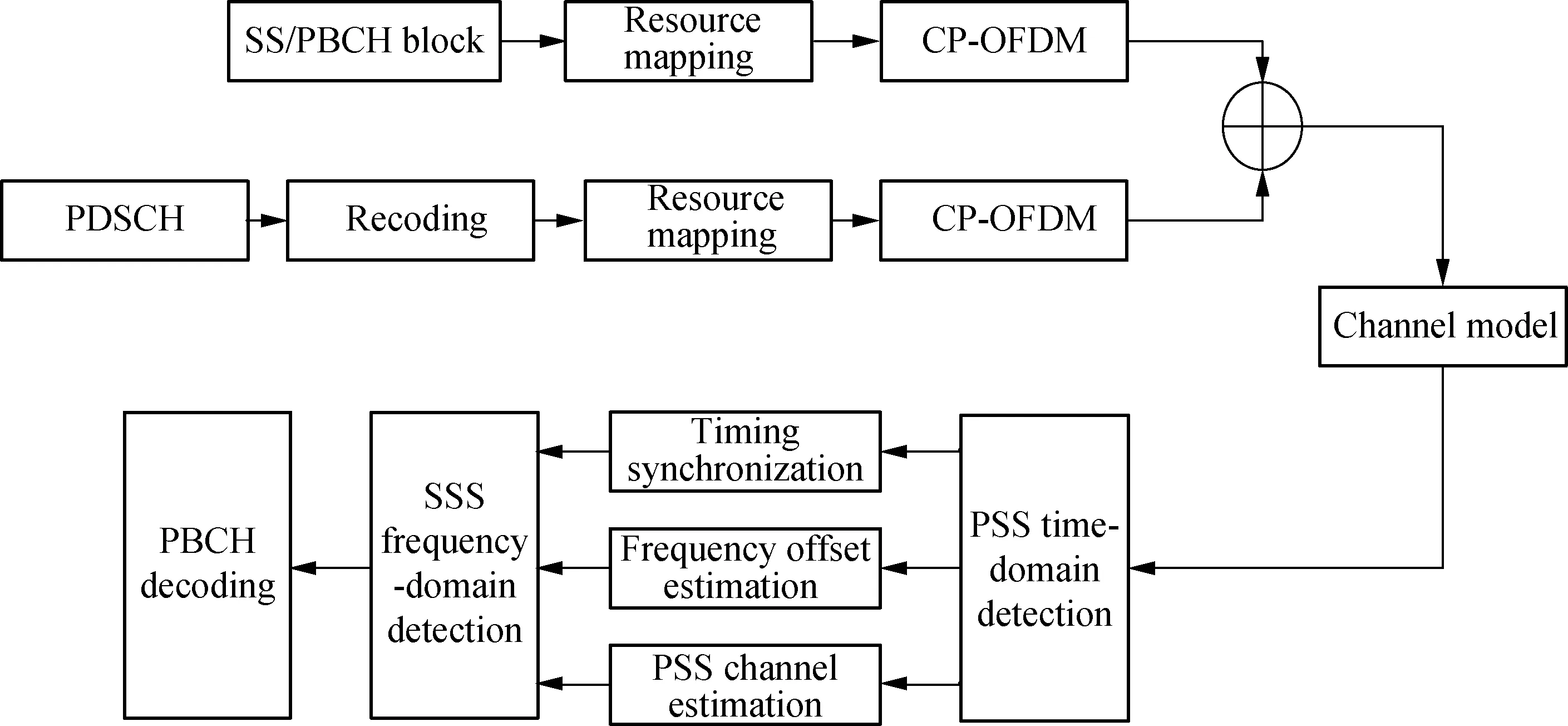
Fig.1 5G UE downlink synchronization simulation flowchart

1.2 PSS sequence
Both the 5G and LTE physical layers define the PSS and the SSS. The UE completes the downlink synchronization by searching and analyzing the primary and secondary synchronization signals transmitted by the base station. Compared to the synchronization signal in LTE, which is always located on the 72 subcarriers in the center of the frequency band and is fixed on a specific symbol in the time domain, the time and frequency position of the 5G synchronization signal is more flexible.
The frequency-domain sequence of the PSS and SSS is only related to the physical layer ID of the cell where it currently resides. LTE supports 504 cell physical layer IDs, while 5G can support up to 1 008 cell physical layer IDs. The calculation formula is as follows[4-5]:
(1)
5G systems choose anm-sequence with a length of 127. The PSS production formula of them-sequence is as follows:
dPSS(n)=1-2x(m)
(2)
wheredPSS(n) represents the PSS frequency domain sequence, andx(m) represents anm-sequence with a length of 127. The generator polynomial is as follows[6]:
x(i+7)=[x(i+4)+x(i)]mod 2
(3)
The initial state of the register is shown as follows:
[x(6)x(5)x(4)x(3)x(2)x(1)x(0)]=
[1 1 1 0 1 1 0]
(4)
2 Traditional PSS Block Cross-Correlation Detection Algorithm
The block cross-correlation algorithm reduces the cumulative influence of the normalized frequency offsetεin the calculation of the cross-correlation function value by block. Moreover, it can still complete an accurate coarse timing synchronization under a large frequency offset, which overcomes the weakness of the direct cross-correlation algorithm with poor anti-frequency offset performance[7]. The principal block diagram of the block cross-correlation algorithm is shown in Fig.2.
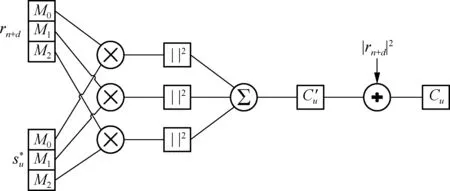
Fig.2 Block cross-correlation algorithm flowchart(M=3)
The block cross-correlation algorithm divides the received sequence and the local PSS sequence in the sliding window intoM=3 blocks. Each sequence is operated separately and the modulus squared is superimposed. Similarly, to reduce the effect of the PAPR of the OFDM system, the block cross-correlation result set normalizes the signal energy in the sliding window[8]. The formula is described as follows:
u∈{0,1,2}
(5)
whereL=N/Mis the length of each sequence, andP(d) is the signal energy in the sliding window. It can be seen from Eq.(5) that the sequence block for the correlation operation allows the influence of the frequency offset to be accumulated only on the cross-correlation result of each sequence, which reduces the influence of the frequency offset on the entire cross-correlation result in the sliding window. In theory, the larger the number of blocks, the better the anti-frequency offset performance. However, an increase in the number of blocks will make the autocorrelation characteristics of the sequence worse under a low SNR. Consequently, the relative height of the correlation peaks will decrease and peak misalignment will appear[9].
3 Improved PSS Block Cross-Correlation Detection Algorithm
The traditional block cross-correlation algorithm has good detection performance and anti-frequency offset performance under a high SNR, but its performance under a low SNR cannot meet the needs of the 5G downlink synchronization. This paper is based on the traditional block cross-correlation algorithm and improves the traditional detection algorithm according to the new characteristics of the 5G SS/PBCH block[10].
3.1 Incoherent accumulation
Pulse accumulation is commonly used to improve the detection performance of radars[11]. Early radars used the afterglow effect of the display to achieve the accumulation effect. Presently, pulse accumulation is completed through special electronic equipment, and the accumulated signal is then judged. Pulse accumulation can be divided into coherent accumulation and incoherent accumulation. Although the effect of coherent accumulation can better improve the SNR, the use of coherent accumulation in PSS detection is more complicated and has strict coherence requirements for the transceiver equipment due to the time and frequency dispersion of the wireless channel. Thus, this study uses incoherent accumulation to improve the detection performance[12].

3.2 Joint estimation of coarse frequency offset
Coarse frequency offset estimation is realized by a pre-compensation of the local PSS time series frequency offset.
To improve the detection performance of the algorithm, the coarse frequency offset estimation is not equal to the integer multiple frequency offset estimation, and the frequency offset detection granularity is set to 1/2 subcarrier spacing.
To reduce the influence of computational complexity caused by the fusion of coarse frequency offset estimation, the coarse frequency offset estimation does not use the optimal signal detection algorithm (such as the maximum likelihood detection algorithm) but uses the sub-optimal signal detection algorithm, namely the Monte Carlo (MC) detection algorithm.
The PSS cross-correlation detection algorithm fused with a coarse frequency offset estimation is described as follows: Monte Carlo’s normalized frequency offset candidate set is {-1,-0.5,0,0.5,1}. After the receiver generates the local PSS time sequence, it performs a frequency offset pre-compensation on these local sequences and generates a total of 15 types of PSS local time sequence (see Fig.3).
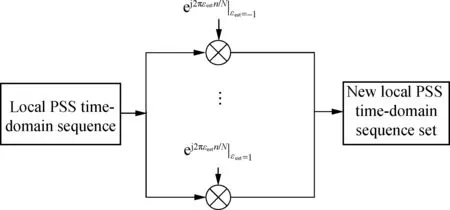
Fig.3 Pre-compensation for the frequency offset of the local PSS time sequence
The original local PSS time sequence issu(n) (u∈{0,1,2}), and the new sequence after coarse frequency offset compensation is:
su,εest(n)=su(n)ej2πεestn/N
u∈{0,1,2},εest∈{-1,-0.5,0,0.5,1}
(6)
Based on the block cross-correlation detection algorithm, the estimation formulas of the coarse frequency offset estimation, coarse timing position and cell group identification are:
u∈{0,1,2},εest∈{-1,-0.5,0,0.5,1}
(7)
Compared with the traditional cross-correlation detection algorithm, the cross-correlation detection algorithm fused with coarse frequency offset estimation can correctly detect the received signal whose frequency offset exceeds a subcarrier interval of 1 and avoid the repeated detection of PSS after frequency offset compensation.
4 Simulation Results and Analysis
In this section, a downlink simulation platform based on MATLAB simulation software is built to test the performance of the improved PSS block cross-correlation detection algorithm in different frequency offsets and different channels.
This paper selects the TDL-C channel model and configures the parameters of the TDL-C channel according to the 3GPP TS38.901 protocol[13]. In the simulation, the detection accuracy rate is used to measure the algorithm performance of the identity estimation in the cell group, and the coarse timing position and frequency offset estimation use the root mean square error (RMSE) of both to detect the algorithm performance. The RMSE calculation formula is as follows:
(8)

4.1 Comparison between direct and block cross-correlation
First, the performances of the block cross-correlation algorithm in the AWGN channel under differentMvalues are compared.
Fig.4 shows the simulation results. WhenM=4,8, the frequency offset has less effect on the detection accuracy of PSS, which conforms to the theoretical derivation that states that the larger the value ofM, the stronger is the anti-frequency offset performance. However, the detection accuracy is greatly affected by the SNR. The best detection accuracy is obtained whenM=2, but the anti-frequency offset performance is slightly worse. Using the block cross-correlation algorithm withM=2, the performances of the direct cross-correlation algorithm and the block cross-correlation algorithm withM=2 under different channels and different frequency offsets are compared.
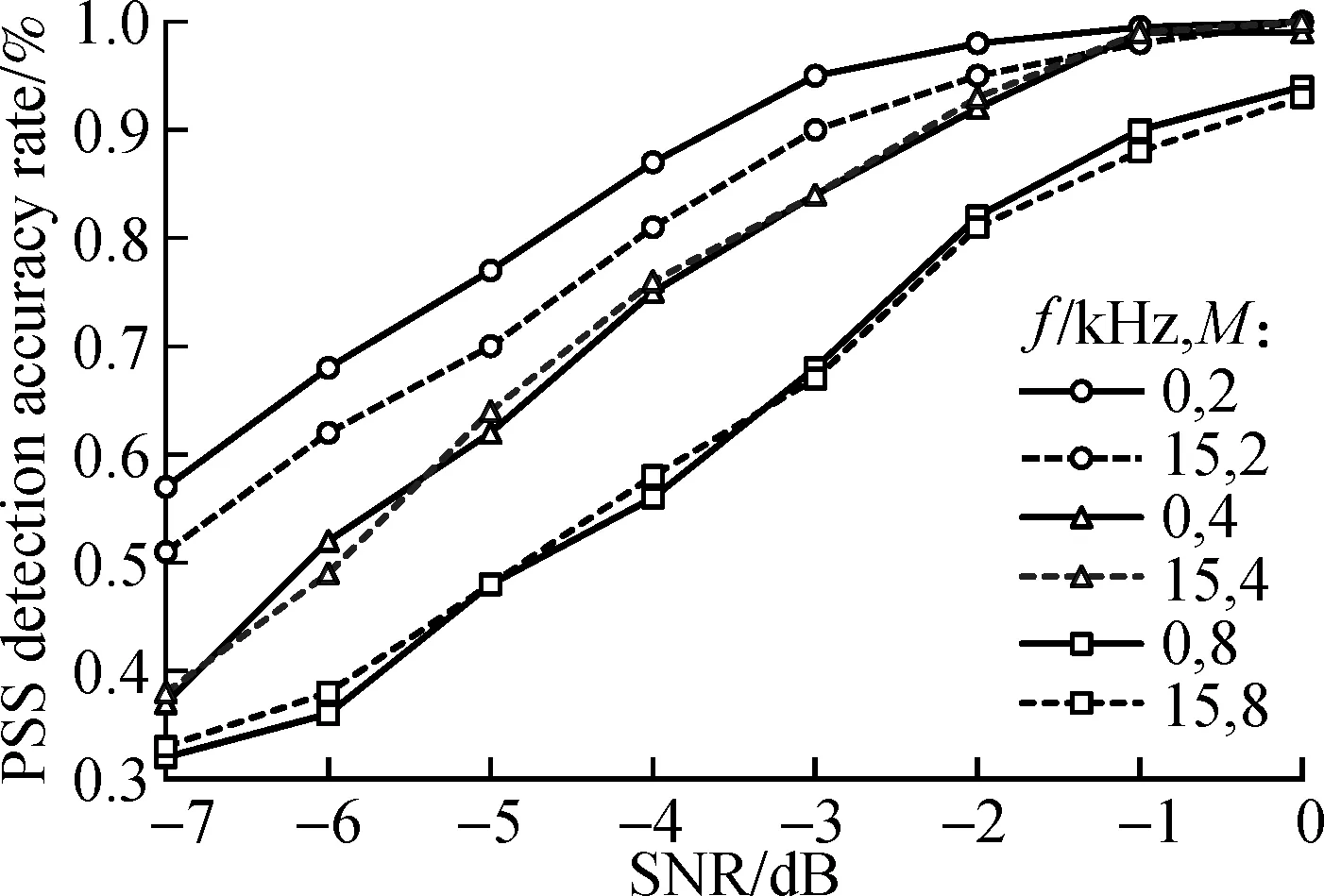
Fig.4 Comparison chart of the PSS detection accuracy rate under different numbers of blocks
As shown in Figs.5 (a) and (b), when the AWGN channel has no frequency offset, the direct cross-correlation algorithm has better detection performance than the block cross-correlation algorithm under a low SNR. When the frequency offset is 15 kHz, i.e., the normalized frequency offset is 0.5, the detection accuracy and the coarse timing position RMSE of the block cross-correlation algorithm under the AWGN channel or the TDL-C channel are significantly better than those by the direct cross-correlation algorithm. Among them, in an AWGN channel with an SNR of -4 dB, the block cross-correlation algorithm can increase the detection accuracy by up to 22%, and the coarse timing RMSE is reduced by 39.2%.
4.2 Influence of incoherent accumulation on detection performance
Incoherent accumulation can improve the SNR of the cross-correlation result setCu(d) and improve the detection performance of the PSS detection algorithm under a low SNR. Based on the block cross-correlation algorithm ofM=2, the influence of incoherent accumulation on the detection performance under different channels is tested.
As shown in Fig.6 (a) and (b), in terms of detection accuracy, incoherent accumulation brings a 5-dB performance improvement in the AWGN channel and an 8.7-dB improvement in the TDL-C channel with an average accumulation of 3 times. In terms of coarse timing RMSE, the traditional algorithm is as high as 847.92 under the TDL-C channel and the SNR of -7 dB, and the improved algorithm is reduced to 4.71, meeting the actual symbol timing requirements. Therefore, incoherent accumulation can effectively improve the performance of the detection algorithm under a low SNR.
5 Conclusions
1) The improved block cross-correlation algorithm not only has good detection performance and anti-frequency offset performance under a high SNR, but it also can meet the needs of the downlink synchronization under a low SNR.
2) Introducing the incoherent accumulation method in radar signal processing and adapting the accumulation times resulted in a stable performance of the cross-correlation detection algorithm of PSS under the condition of a low SNR.
3) The new scheme of joint estimation of coarse frequency offset is used to replace the traditional scheme, which avoids the shortcomings of insufficient performance of the fractional frequency offset estimation algorithm. In addition, by introducing the incoherent accumulation method into the frequency offset estimation and configuring different weights in the accumulation process, the accumulation error is reduced and the defect of the traditional estimation algorithm where the RMSE is relatively high under the low signal-to-noise ratio is solved.
 Journal of Southeast University(English Edition)2021年3期
- Journal of Southeast University(English Edition)的其它文章
- Drivers’ fixation transfer characteristics in urban tunnels
- Performance analysis of a novel tobacco-curing system with a solar-assisted heat pump
- Crossed products for Hopf group-algebras
- Sustainability of health information exchange platform based on information cooperation
- Comparative study of low NOx combustion optimization of a coal-fired utility boiler based on OBLPSO and GOBLPSO
- Concept and evaluation method of equipment system of systems contribution rate