
Benzodiazepines and Amphetamines Use among Methadone Maintenance Participants and Their Associations with Treatment Adherence
2021-07-14 01:43:38CHENGZhaoDIAOFeiCHENGuoHongLINChunQingLILiWUZunYouandCAOXiaoBin
CHENG Zhao , DIAO Fei , CHEN Guo Hong , LIN Chun Qing , LI Li , WU Zun You , and CAO Xiao Bin,,#
It has been well documented that methadone maintenance treatment (MMT) can reduce illegal opioid use and drug-related crimes,and decrease the HIV infection risk[1].China initiated its MMT program in 2004,which was rapidly scaled up nationwide[2].By the end of 2016,there were 778 MMT clinics established in 29 provinces,serving more than 430,000 opioid users[2].To have desirable treatment outcomes,MMT requires long-term or even lifelong daily attendance at clinics[3].One major concern is that participants with illegal use of opioids or non-opioid drugs while in treatment will likely have poor compliance with MMT[4].
Emerging synthetic non-opioid drugs,e.g.,amphetamines and benzodiazepines,have recently replaced opioid drugs as the most widely used illegal drugs in China.Benzodiazepines,a family of nonopioid central nervous system depressants,has been widely used in MMT clinics in Jiangsu Province[5],while amphetamines are commonly used stimulants among MMT participants in other areas of China.We already know that illegal opioid use during MMT resulted in the poor adherence to MMT[2].However,the association between the illegal use of non-opioid drugs and MMT adherence remains unclear.Thus,a cross-sectional survey was conducted from May to August,2017 to examine the possible associations between the illegal use of benzodiazepines and amphetamines and MMT adherence.
MMT participants 18-year-old and above,who were enrolled at least 6 months,attending MMT at least once in the last week prior to the study were included.Five MMT clinics (two in Nanjing,two in Wuxi,and one in Lianyungang) were randomly selected from clinics with more than 200 MMT participants in Jiangsu as the study sites. A convenient sampling method was used to recruit participants from these clinics.Urine samples were tested for morphine,amphetamines,and benzodiazepines by utilizing colloidal gold rapid detection methods.Face-to-face interviews were then conducted by qualified interviewers using a well-structured questionnaire to collect data involving socio-demographics,MMT treatments,and illegal drug uses during treatments.This study was approved by the Institutional Review Board of the National Center for AIDS/STD Control and Prevention,China CDC.Data were de-identified and informed consent was obtained from every participant prior to urine tests and interviews.
The primary outcome of this study was MMT adherence,which was defined as poor with either dropout or a methadone-taking compliance lower than 50%.Dropout was defined as not taking methadone for 7 consecutive days,and methadonetaking compliance was defined as the percentage of days that participants took methadone in clinics in the past 6 months as the numerator and the cumulative days of the past 6 months as the denominator. Good adherence meant that adherence was ≥ 50%,while poor adherence meant that adherence was ≤ 50%.Benzodiazepine and amphetamine use was defined as any positive urine tests or self-reported results during the previous 6 months.Chi-square tests and logistic regression models were used to estimate the association between benzodiazepines or amphetamines use and MMT adherence,with adjustments for potential confounders. Differences were considered as statistically significant using two-tailed tests with a value ofP< 0.05.All data were double-entered and validated using EpiData 3.0 software.SAS 9.3 (SAS Institute,Cary,NC,USA) software was used for data cleaning and analysis.
A total of 496 participants were eligible and included in the study.The average age of the participants was 44.7 ± 7.5 years old.The majority of them (75.8%) were male.More than half (51.6%) of the participants were married,and 25.2% had no income.Approximately half of the participants(47.3%) spent < 30 min traveling to MMT clinics.The median daily methadone dose was 59.3 mg.More than one-third (35.3%) of the participants used illegal opioids during the treatment period.The profiles of participants are shown in Table 1.The prevalences of amphetamine and benzodiazepine use were 9.5% (47/496) and 14.5% (72/496),respectively.A total of 108 participants (22%)illegally used amphetamines or benzodiazepines during the MMT treatment periods.Among them,61.1% (66/108) participants used benzodiazepines or amphetamines more than once per week,and the median duration of use was 6.9 years (please see Supplementary Table S1,available in www.besjournal.com).
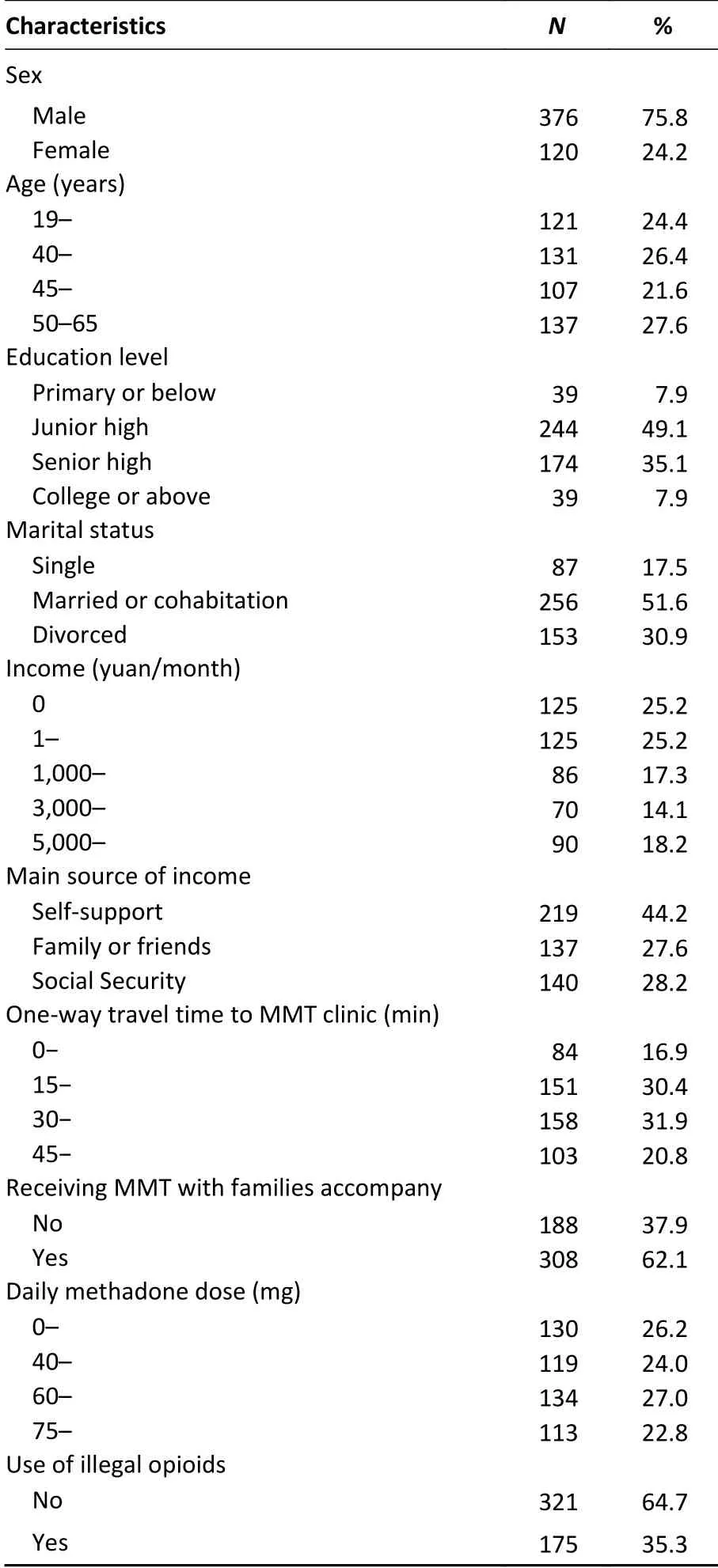
Table 1. Characteristics of participants
A total of 38.5% (191/496) of the participants had poor treatment adherence in the previous 6 months.No significant association between using benzodiazepines or amphetamines and poor adherence was found using both univariate [odds ratio (OR):1.24,95% confidence interval (CI):0.81-1.92)] and multivariate analysis (OR:1.41,95%CI: 0.75-2.67). Notably,when we further characterized the associations between MMT adherence and each type of substance,the results showed MMT adherence between benzodiazepine users (33.3%) and nonusers (39.4%) were similar.Participants who did not use the two substances had a MMT adherence of 37.4%,indicating that benzodiazepine use might not have decreased MMT adherence. However,participants using amphetamines had a significantly increased risk of poor MMT adherence.Thus,amphetamine use was associated with poor MMT adherence.When we combined use of the two substances,the negative impact of amphetamine use was compromised by the effect of using benzodiazepines.Associations between benzodiazepine or amphetamine use and MMT adherence are shown in Table 2.
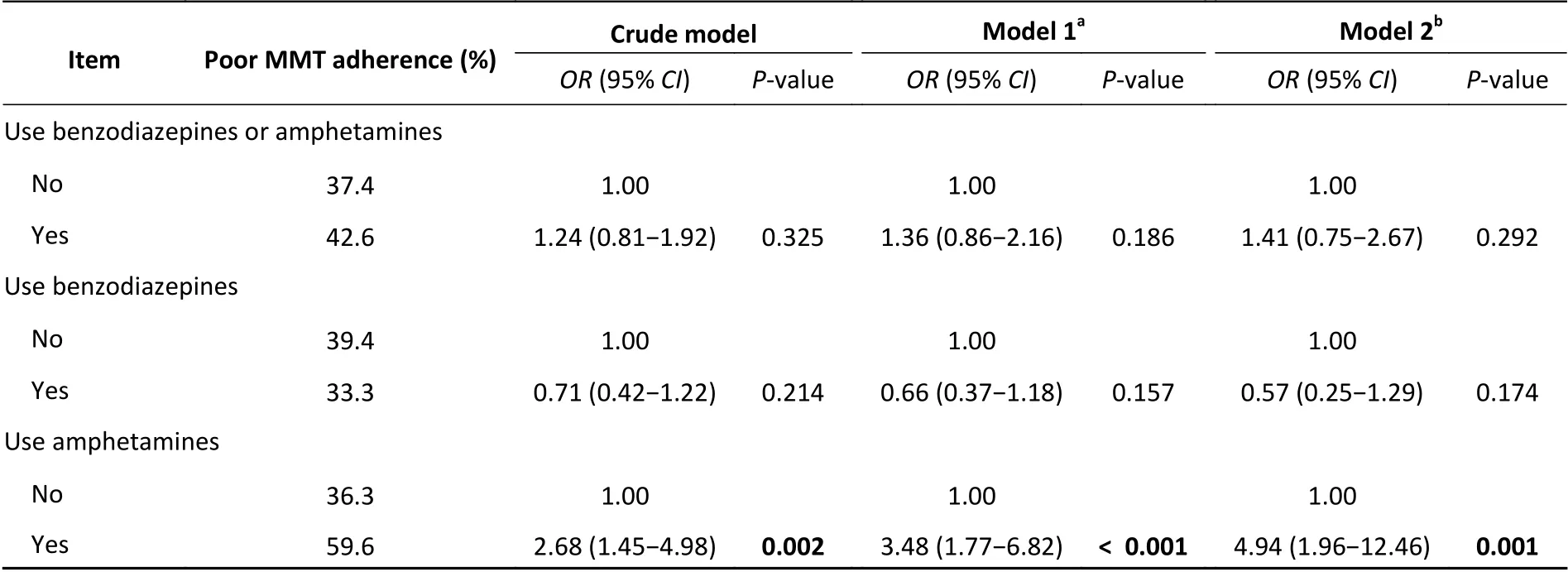
Table 2. Associations of poor MMT adherence with benzodiazepine or amphetamine use
Studies of benzodiazepine use among MMT participants showed mixed effects on treatment outcomes.Some showed a higher dropout,while others showed no effects,as in the present study[6-7].The high prevalence of benzodiazepine use among MMT participants might be explained by the fact that they were suffering from elevated levels of psychiatric comorbidities (e.g.,depression,anxiety,etc.) and side effects (e.g.,insomnia,pain,etc.) of long-term opioid dependence,including the use of methadone[8].MMT participants tended to use benzodiazepines,both from prescriptions and from illegal markets,to treat their health disorders,which did not decrease their daily MMT attendance[9].A 17 year cohort study also indicated that the percentage of MMT patients concurrently using benzodiazepines stayed stable during the treatment period[10].Even though benzodiazepine use did not lead to poorMMT adherence,it has been well-established that it put MMT participants at a greater risk of overdose,personal injury,and death[8]. Thus,targeted interventions and counseling services are needed for these patients. In accordance with previous studies[9],due to its associations with risk-taking behaviors,cognitive and physical health impairments,antisocial personality as well as the involvement of criminal activities,participants who used amphetamines might be less likely to be compliant with MMT treatment.These additional complexities might hinder the ability of patients to regularly attend treatments,and to make compromised treatment outcomes more likely.
Based on the above results,the associations between characteristics of amphetamine use and MMT adherence were examined. When only controlling socio-demographics (model 1),the risk of poor adherence was 3.30-fold higher among those who used amphetamines more than once per week(OR:3.30,95%CI:1.14-9.58) compared to nonusers.Moreover,in fully adjusted model 2,the risk of poor adherence was 3.15-fold higher among those who used amphetamines less than once per week (OR:3.15,95%CI:0.98-10.14) compared to nonusers.Furthermore,these kinds of risks might show a rising tendency as the frequency of amphetamine use increased (Ptrend< 0.05).In addition,participants with shorter amphetamine use tended to have a higher risk of poor MMT adherence,especially for those who used amphetamines < 5 years (OR:15.98,95%CI:3.27-77.99) when controlling for sociodemographics (model 1).Adjusting model 2 for all potential confounders resulted in similar results.Similar results were also obtained from a cohort study in Washington[9]. Higher frequency of amphetamine use usually reflects a greater severity of addition and more chaotic lifestyles.Therefore,it was not surprising that these participants did not attend MMT in a timely manner.Table 3 summarizes MMT adherence differing by the characteristics of amphetamines use.
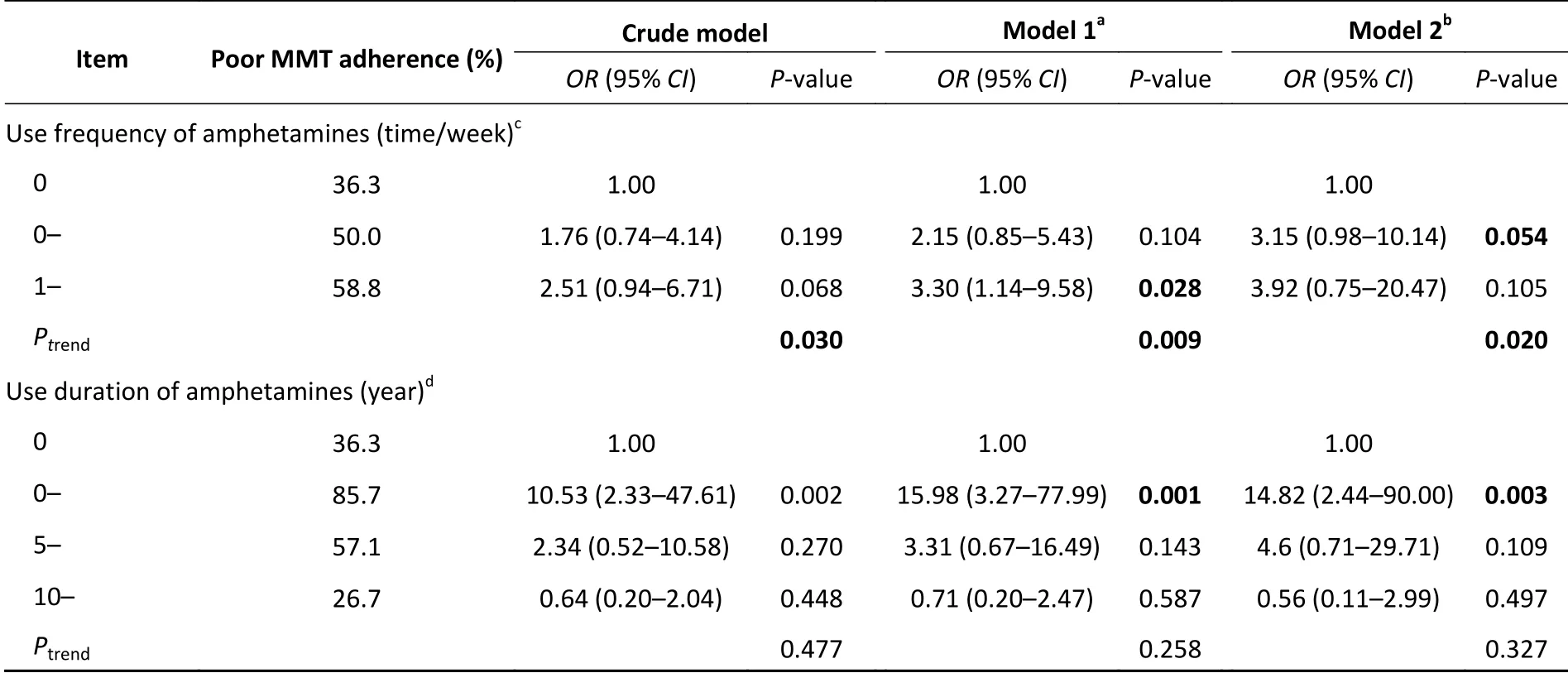
Table 3. Associations of poor MMT adherence with different characteristics of amphetamine use
There were a few limitations in this study.First,although we included the results of urine tests,benzodiazepine or amphetamine use was based partially on self-reporting.Thus,the magnitude of this use might result in an underestimation.This underestimation was unlikely to change the conclusions,but could modify their effects.In addition,benzodiazepines could be used with medical intention.Missing information regarding this use might restrict the accurate interpretation of the results.Second,there might have existed other unidentified confounding factors,such as comorbidity,alcohol use,and the duration of MMT attendance,which were not collected in this study and might distort the estimated associations.However,the main risk factors for poor MMT adherence were well-controlled in our analyses.Third,the study was conducted in Jiangsu Province,so generalization of the conclusions is a concern.Last,due to the nature of the cross-sectional study,no causal inference could be drawn from the results,but only the associations between using amphetamines or benzodiazepines and MMT adherence could be concluded.Despite these limitations,the present study presented an overview picture of benzodiazepine or amphetamines use among MMT participants,and thus provided practical considerations for future interventions.
In conclusion,this study showed that benzodiazepines and amphetamines were popular with MMT participants,and that amphetamines use might lead to poor MMT adherence.In addition,the frequency and duration of amphetamine use might also play roles in decreased treatment adherence.Thus,findings from this study supported the urgent need for further research to characterize therapeutic interventions of non-opioid substance use among MMT participants in China.
Disclosure StatementThe authors report no relations that could be construed as a conflict of interest.
AcknowledgementsWe thank the staff from Jiangsu Provincial CDC and five MMT clinics for their collaboration and collection of data.We also thank all the study participants for their participations and contributions.
 Biomedical and Environmental Sciences2021年6期
- Biomedical and Environmental Sciences的其它文章
- Collaborative Efforts of Families,Schools,Health Care Providers,and the Government to Control Childhood Obesity in China
- The Improved Lipid Accumulation Product is an Accurate Index for Predicting Metabolic Syndrome in the Xinjiang Population
- Quantitative Microbial Risk Assessment of Cryptosporidium and Giardia in Public Drinking Water in China*
- Campylobacter Outbreak Associated with Duck Blood Curd in 2019 in Shunyi District,Beijing,China
- Phylogenetic Analysis of Legionella Strains and ldentification of Serogroups by Lipopolysaccharide-and O-antigen-based PCR Assay*
- Development of a High-Resolution Melting Curve Analysis to Differentiate Candida parapsilosis Complex Species