
NASICON型Na4FeV(PO4)3的合成、晶體結構和電化學性能
2021-07-10 07:05:52張育芳高建華
無機化學學報 2021年7期
關鍵詞:物理
張育芳 張 佩 高建華
(西北大學物理學院,西安 710069)
0 Introduction
With the development of wind energy and solar energy, energy storage devices have been paid more and more attention[1-3]. As a new type of energy storage device,lithium-ion batteries(LIBs)have a series of significant advantages, such as high working voltage,large specific capacity,light weight,small size,long cycle life, and no memory effect[4-6]. However, the high price of lithium compounds limits the widespread use of lithium-ion batteries. By contrast, sodium,a member of the same family as lithium, is more widely distributed and cheaper than lithium[7]. Therefore, exploring sodium-ion batteries (SIBs) is a meaningful direction in the field of energy storage.
Enormous efforts have been dedicated to the development of new electrodes for SIBs, particularly for cathode materials, two type of materials, sodium layered oxides and polyanionic materials, have attracted considerable attention[8-10]. Layered oxides are known by their high capacity, but they suffer from poor cycling stability[11].Compared with layered oxides,polyanion compounds have been extensively studied for their structural stability and open frames that promote sodium ion extraction and insertion[12]. The stable 3D host framework leads to better thermal stability, longer cycle life, and better safety features[13-14]. Such excellent characteristics have made it fairly popular in SIB applications. Among all polyanionic compounds, phosphates particularly gained a great deal of interest, because of their excellent structural stability, which arise from the strong P—O chemical bond[15].For example,Na3V2(PO4)3(NVP) with a NASICON-type structure is a promising candidate, which satisfies the requirements of being a high-performance cathode[16].Its electrochemical activity is related to the redox couple V3+/V4+at around 3.4 V vs Na/Na+[17].Besides,NASICON-type structure can accommodate a wide selection of transition metals, which offer the replacement of V3+in NVP by other cheaper transition metals towards developing new cost-effective NASICON-type cathode materials[18]. In previous research, several NASICON-type cathode materials were reported such as Na3MnTi(PO4)3[19]and Na4MnV(PO4)3[20].Na4MnV(PO4)3has a corner-shared Mn/VO6octahedral and PO4tetrahedral units to establish the anion framework [MnV(PO4)3]4-. This stable 3D frame structure can provide a large channel for the transmission of sodium ions. Inspired by these works, we attempted to synthesize the analogous Na4FeV(PO4)3by replacing Mn2+with the more environmentally-friendly and cheaper Fe2+in Na4MnV(PO4)3. Finally, we synthesized the single crystal of Na4FeV(PO4)3by high temperature molten salt method and obtained its structural information by single crystal XRD analysis.
1 Experimental
1.1 Syntheses
Polycrystalline powder of Na4FeV(PO4)3was prepared by the sol-gel method using analytically pure Na2CO3, FeC2O4·2H2O, NH4VO3and NH4H2PO4in a molar ratio of 2∶1∶1∶3. Firstly, 5 mmol of Na2CO3, 7.5 mmol of NH4H2PO4and 20 mL of deionized water were put into the beaker to form solution A. Secondly, 2.5 mmol of NH4VO3was dispersed in deionized water (20 mL) under vigorous stirring at 80 ℃to obtain a yellow solution. After the heat source was turned off, 1.5 g of citric acid was added into the solution and stirred until the color of the solution gradually changed blue to form solution B. Thirdly, the mixture of A and B was kept at 70 ℃to evaporate water until it turned into a viscous gel. The viscous gel was heated in a muffle furnace at 300 ℃for 1 h to obtain the dry gel. Finally, 2.5 mmol of FeC2O4·2H2O were added into the above-mentioned dry colloid and ground uniformly, then the mixture was put in a tube furnace and sintered at 800 ℃for 36 h in reducing atmosphere (5% H2and 95% N2,V/V). The final product was obtained.
Crystals of Na4FeV(PO4)3were grown by employing the NaCl as flux in a vacuum quartz tube.The powder samples of Na4FeV(PO4)3and NaCl in the weight ratio of 1∶4 were melted in a vacuum quartz tube. The samples were heated to 940 ℃from room temperature at a rate of 7 ℃·min-1, held for 2 h to ensure that the samples turned into a homogeneous liquid solution,and then slowly cooled at a rate of 0.1 ℃·min-1to 700 ℃, followed by furnace-cooling to room temperature. The high quality crystals can be selected under an optical microscope(Fig.1).
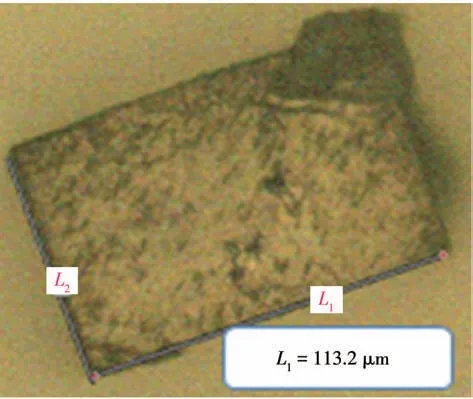
Fig.1 Single crystal picture of Na4FeV(PO4)3
1.2 Characterization
The powder X-ray diffraction (PXRD) data were collected over the 2θangle range of 10°~70°by a Bruker D8 advance (tube voltage was 40 kV, tube current was 40 mA) diffractometer using CuKαradiation (λ=0.154 178 nm) with a step size of 0.02° and a constant counting time of 0.1 s. The chemical composition was determined by an energy dispersive X-ray(EDX)detector(HITACHIS-4800).
1.3 X-ray crystallography
Crystals were selected under an optical microscope equipped with a polarizing light attachment and mounted on a glass fiber with epoxy for X-ray diffraction studies.Diffraction data were collected on a Bruker Smart APEX CCD diffractometer using a graphite monochromatic MoKαradiation (λ=0.071 073 nm) at room temperature. Absorption corrections were performed with the SADBAS program[21].The structure was solved by direct methods using the SHELEX-97 program and refined onF2by full-matrix least-squares techniques[22]. The final refined structural parameters were corrected by PLATON program[23]. The crystallography data are listed in the Table 1~2,respectively.
CCDC:2048805.
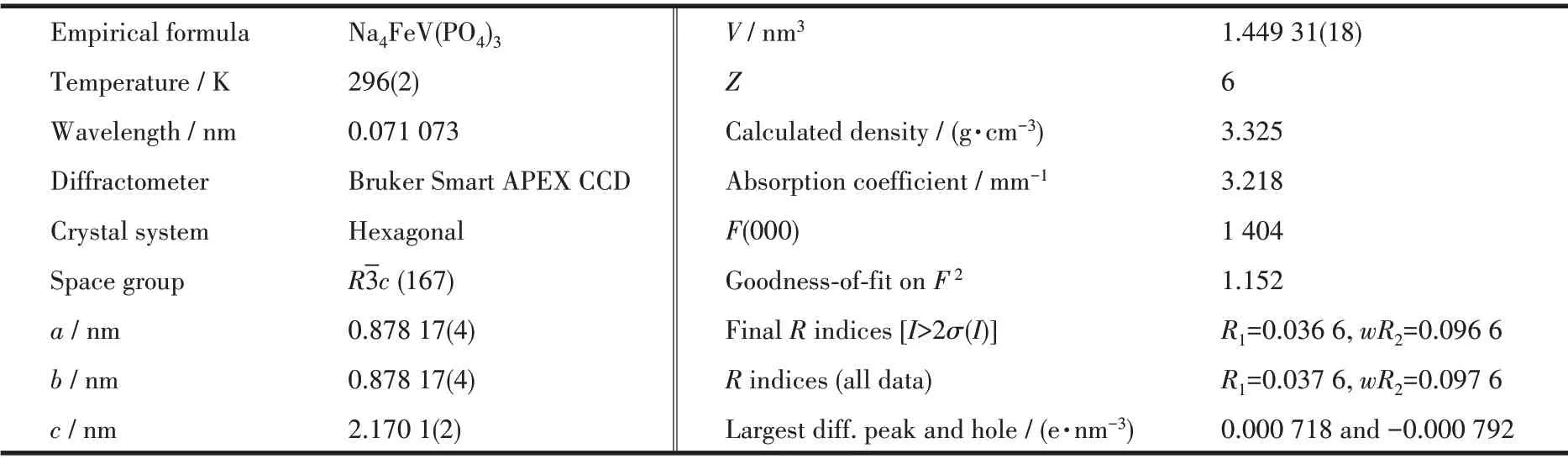
Table 1 Crystal data and structure refinement for Na4FeV(PO4)3
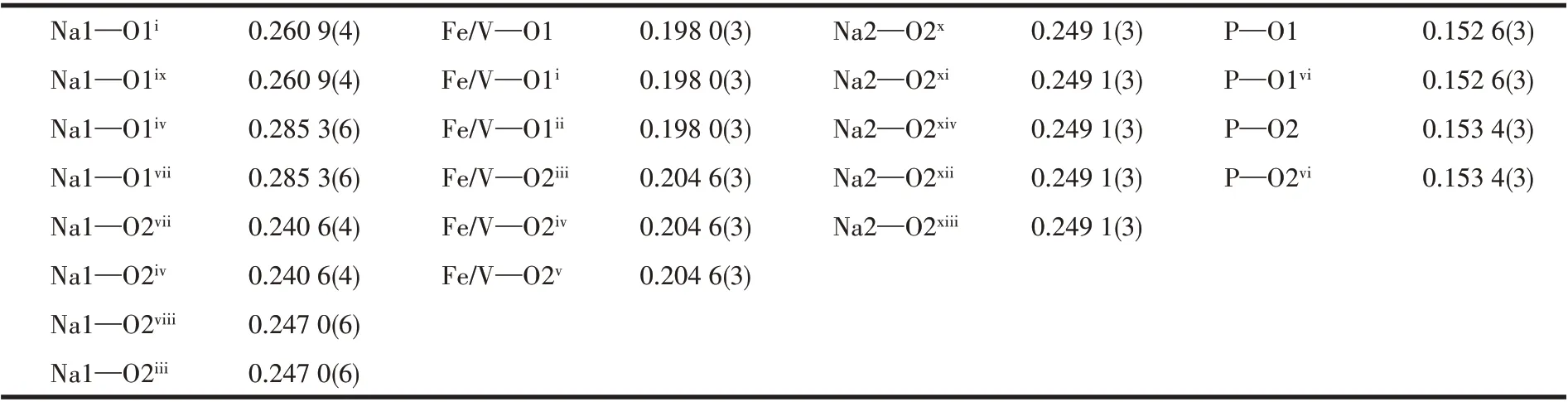
Table 2 Selected bond lengths(nm)for Na4FeV(PO4)3
1.4 Electrochemical measurements
Firstly, the samples were mixed with super P (9∶1,w/w)by ball milling at 300 r·min-1for 12 h.Secondly, the mixture of the milled powder, super P and polyvinylidene fluoride (PVDF) in a weight ratio of 7∶2∶1 was dissolved inN-methyl-2-pyrrolidone (NMP) to form a slurry, which was uniformly coated on an Al foil and dried at 120 ℃for 12 h. Finally, the electrochemical properties were measured with CR2025 coin cells assembled in a glove box filled with pure argon gas. In Na+half cells, sodium metals were used as counter electrodes, a 1 mol·L-1solution of NaPF6in vinyl carbonate(EC)-propylene carbonate (PC)(1∶1,V/V)as the electrolyte,and a glass fiber as a separator.Charge/discharge tests were performed at ambient temperature on a Land 2100 testing system.
2 Results and discussion
2.1 PXRD analyses
Polycrystalline powder of Na4FeV(PO4)3was characterized by PXRD at room temperature. Fig.2 shows the observed powder XRD pattern of Na4FeV(PO4)3together with that calculated from the single-crystal diffraction data for comparison. The observed XRD pattern is in good agreement with the theoretical one except for the pattern of trace impurities.

Fig.2 Experimental PXRD pattern(down)and calculated PXRD pattern(up)based on single-crystal XRD analysis of Na4FeV(PO4)3
2.2 EDX
The chemical composition was analyzed by EDX in a selected crystal (Fig.3 and Fig.4). It can be seen that the elements of Na, Fe, V, P and O were distributed uniformly in the crystal with an approximate mole ratio of 4∶1∶1∶3∶15. The excess O element may originate from the adsorptive O2.

Fig.3 EDX spectrum capturing signals of constituent elements
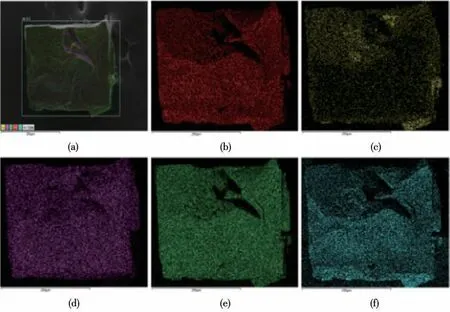
Fig.4 Representative crystal of as-synthesized samples(a);Elemental mappings of Na(b),Fe(c),V(d),P(e)and O(f)atoms of the representative crystal
2.3 Crystal structure description
Na4FeV(PO4)3crystallizes in hexagonalR3cspace group witha=0.878 17(4) nm,b=0.878 17(4) nm,c=2.170 1(2) nm,Z=6,V=1.449 31 nm3. Its structure belongs to the typical NASICON-type structure. In the structure of Na4FeV(PO4)3, the atoms of V and Fe were considered to disorder on a same site with 50% occupancy for each. A Fe/V atom is coordinated with six oxygen atoms to form octahedron. A P atom is coordinated with four oxygen atoms to form tetrahedron, Fe/VO6octahedra and PO4tetrahedra form three-dimensional (3D) [FeV(PO4)3] framework by sharing the common corners. The framework offers 3D tunnels for Na+migration. Two different types of Na+are located in the gap of the frame, Na1 belongs to 8-coordination and Na2 belongs to 6-coordination(Fig.5).
2.4 Electrochemical properties
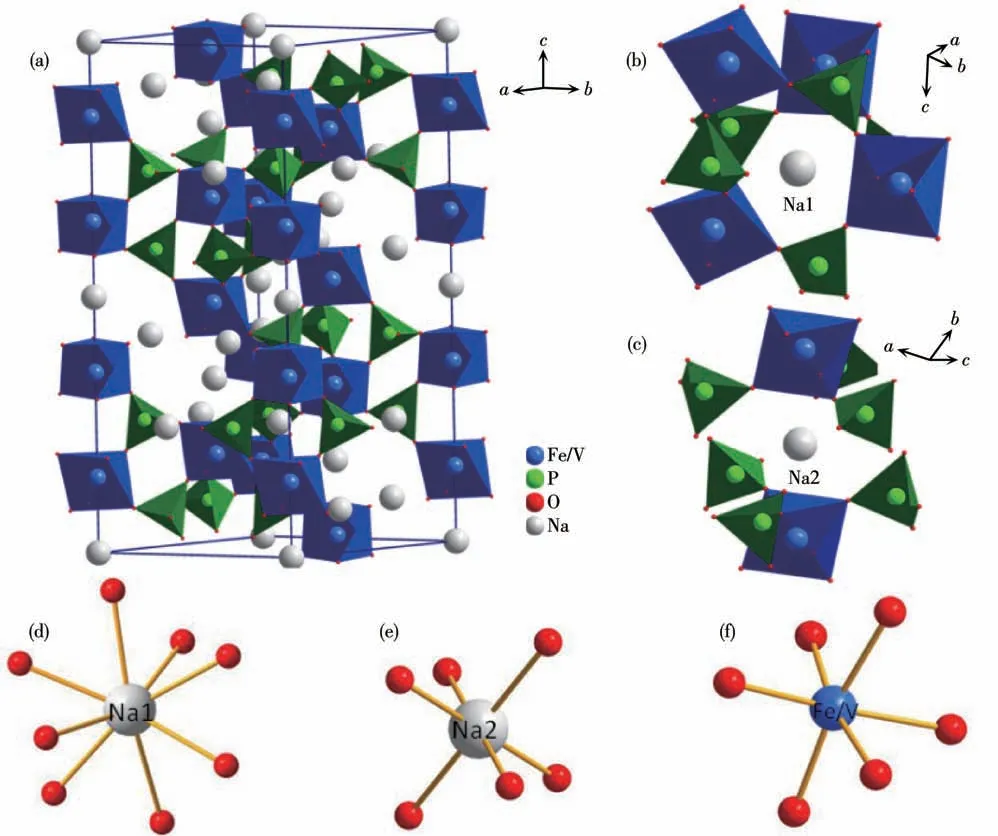
Fig.5 (a)Structural illustration of the Na4FeV(PO4)3;(b,c)Location of sodium atoms;(d~f)Coordination of Na1,Na2 and Fe/V with surrounding oxygen atoms
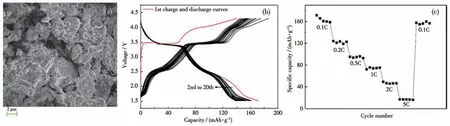
Fig.6 (a)SEM image of the as-prepared Na4FeV(PO4)3;(b)Charge-discharge curves of Na4FeV(PO4)3 at a 0.1C rate(1C=100 mAh·g-1);(c)Capacity retention rate of Na4FeV(PO4)3 under different discharge current densities
The electrochemical performance of the asprepared Na4FeV(PO4)3as cathode material for sodiumion batteries were examined by galvanostatic cycling in half-cell with sodium metal as counter electrode.Fig. 6a shows the SEM image of the as - prepared Na4FeV(PO4)3sample, it is composed of irregular particles, the particle size was about 0.5~2 μm. Fig.6b shows its charge-discharge profiles at a rate of 0.1C,respectively. Three plateaus were observed at about 3.4,2.5 and 1.6 V,which corresponds to the redox couples of V4+/V3+, Fe3+/Fe2+and V3+/V2+. In the voltage range of 1.5 to 4.3 V, the capacity was only 140 mAh·g-1during the first charging process, which is due to the fact that less sodium ions are released from the positive electrode. The battery capacity started to increase since the second charge because more sodium ions are inserted into the positive electrode after the first discharge. The maximum discharge capacity for the first time was 171 mAh·g-1, which is higher than the theoretical capacity for insertion of more Na ions, similar phenomenon was also found in Na3V2(PO4)3[24]. Fig.6c shows the rate performance of Na4FeV(PO4)3at various current densities of 0.1C, 0.2C, 0.5C, 1C, 2C and 5C.As the current density increased, the battery capacity decayed quickly, which may be caused by the larger particle size or clustering together (Fig.6a). Even so,when the current density was different, it can still be reversibly cycled 5 times without structural damage,showing excellent rate performance.
3 Conclusions
In conclusion, the Na4FeV(PO4)3single crystal was synthesized by high temperature molten salt method and the single crystal diffraction analysis demonstrated that it crystallizes in the typical NASICONtype structure. The pure polycrystalline samples of Na4FeV(PO4)3can be synthesized using a sol-gel method.In Na+half cells,Na4FeV(PO4)3as the cathode materials, the maximum discharge capacity was 171 mAh·g-1, and the capacity decayed by 14.2% during the 2nd to 20th cycles. It can reversibly cycle 5 times at different magnifications without structural damage, indicating the NASICON type Na4FeV(PO4)3can be the potential cathode candidate for sodium ion battery.
猜你喜歡
中學生數理化·八年級物理人教版(2023年11期)2023-12-26 07:50:02
井岡教育(2022年2期)2022-10-14 03:11:44
中學生數理化(高中版.高考理化)(2022年5期)2022-06-01 06:27:46
中學生數理化(高中版.高考理化)(2022年1期)2022-04-26 13:53:42
中學生數理化(高中版.高考理化)(2022年3期)2022-04-26 13:41:26
中學生數理化(高中版.高考理化)(2022年3期)2022-04-26 13:41:24
課堂內外(初中版)(2022年2期)2022-02-28 02:00:30
云南教育·中學教師(2020年9期)2020-11-16 00:27:58
中學生數理化·八年級物理人教版(2019年9期)2019-11-25 07:33:00
中學生數理化·八年級物理人教版(2017年9期)2017-12-20 08:11:28
