畜禽舍移動式智能監測平臺研制
2021-06-30 07:33:42龍長江譚鶴群覃光勝黃彭志
農業工程學報 2021年7期
龍長江,譚鶴群,朱 明,辛 瑞,覃光勝,黃彭志
畜禽舍移動式智能監測平臺研制
龍長江1,2,譚鶴群1,2※,朱 明1,2,辛 瑞1,覃光勝1,黃彭志1
(1. 華中農業大學工學院,武漢 430070; 2. 農業農業部長江中下游農業裝備重點實驗室,武漢 430070)
畜禽養殖場內溫度、濕度及各種氣體構成畜禽生長的外圍環境,直接影響畜禽日常行為和生長速度及免疫狀態。對這些畜禽養殖場內進行檢測并監控畜禽健康狀態及尋找二者間的聯系,對優化養殖環境,發展健康養殖具有重要意義。該研究以STM32單片機為控制核心,在固定點傳感器外設置移動式智能監測平臺,通過無線定位系統UWB(Ultra Wide Band)和集成傳感器對畜禽養殖場內環境進行監測,利用帶圖傳功能攝像頭和紅外測溫裝置實時監控畜禽狀態。傳感器獲取信息后將數據以UART、IIC或模擬量輸出方式傳遞給STM32,STM32處理數據后通過物聯網WIFI模塊上傳至阿里云IoT(The Internet of Things)物聯網平臺,用戶登錄網頁頁面即可對數據進行遠程訪問,并對畜禽狀態進行實時監控。實測結果表明,智能檢測平臺檢測數據與豬場內布置的傳感器檢測結果相近,二者偏差小于10%,在無遮擋情況下布置無線定位系統,定位誤差接近10 cm級。系統檢測數據可信,數據傳輸正常,可持續長時間穩定運行。機動平臺還開發了搬運功能,單次運送能力為200 kg左右。移動式智能監測平臺為畜禽養殖場內實現全范圍環境監控提供了設備基礎。
溫度;濕度;傳感器;智能監測;畜禽養殖;阿里云
0 引 言
工廠化畜禽養殖已成現代養殖主流,養殖環境中的溫度、濕度、CO2、H2S和NH3等氣體含量以及顆粒懸浮物濃度等環境因子直接影響畜禽的日常行為和生長速度及免疫狀態[1-2]。當環境因子異常時,畜禽行為可顯著改變,并可導致生長異常,發育停滯甚至疫病肆虐等嚴重后果[3],養殖場附近居民身體健康亦會受到影響[4-5]。對養殖區域內環境因子和畜禽狀態進行監控是現代化養殖業的基本要求。
歐美國家在20世紀80年代即對畜禽舍環境和污物排放進行了嚴格的法律規定,因此對環境因子的智能化檢測研究和應用處于領先地位。Ni等[6]通過布置傳感器連續采集畜禽舍內氣體含量,研究了有害氣體與家畜的體質量增長間的定量關系。Pan等[7]在豬場中應用無線傳感器網絡研究豬的生理狀況與有害氣體濃度關系,大大減少了病豬的死亡率。Lysenko等[8]研究了傳感器在畜禽舍內的最優布置問題,利用多種智能算法優化節點布置。利用多點合理布置傳感器可較為全面的研究畜禽舍內環境因子分布狀態和變遷規律,分析環境因子和畜禽生長及健康的相互關系,以此為依據可優化畜禽舍結構,降低能耗,改善畜禽生活狀態,提高飼養效率。
李保明等[9]對國內規模化養雞場內溫度控制穩定性與通風均勻性及裝備進行了研究。汪開英等[10-11]對國內外畜禽場的各種有害氣體、PM、惡臭及顆粒物等主要空氣污染物的檢測方法與技術進行介紹。介鄧飛等[12]對國內外規模化畜禽養殖主要污染氣體現場檢測方法和分析儀器研究現狀進行了綜述,對國內外畜禽養殖環境因子的現場檢測技術和控制進行了總結和對比,對未來發展新型現場檢測儀器和控制方法提供了研究方向。鑒于畜禽舍內環境具備一定腐蝕性,化學傳感器壽命較低,何瑩[13]設計了基于吸收光譜的氨排放源在線檢測裝置,但該裝置檢測結果易受粉塵和風速等外界因素的干擾。譚鶴群等[14]利用封閉光程采氣室采用可調諧吸收光譜檢測畜禽舍氨氣濃度,該裝置避免了電化學傳感器壽命短的缺點,且穩定性好,抗干擾能力強,可用于長期監控。
隨著國家對環保的日益重視,為減少溫室氣體排放,董紅敏等[15-16]對中國農業源溫室氣體排放與減排技術進行了綜述,并對育肥豬舍甲烷排放濃度和排放通量進行了測試;高新星等[17]對規模化豬場的甲烷排放通量進行了測試分析;劉安芳等[18]對豬舍內糞污廢棄物和有害氣體減排技術進行了研究。以上文獻對畜禽舍的不同季節、不用時段的氨、甲烷等有害氣體的度變化范圍和排放通量進行統計,為后期在線檢測和減排技術開發提供參考。
為探究畜禽舍內溫度分布和流場規律,需要獲得畜禽舍內多點的持續數據。計算流體動力學(Computational Fluid Dynamics,CFD)技術被引入到當前研究中。尚峰軍等[19]對蛋雞舍溫熱環境進行仿真和評估,賀城等[20]對豬舍溫度場和氣流場進行了仿真和對比分析。這些研究為優化通風設計方案提供了依據,但仿真結果還需進一步實際測試進行驗證。林加勇等[21]對公豬舍夏季溫度和流場進行了仿真,并通過局部布點對仿真結果進行了驗證,相對誤差最大30.8%,如進行全范圍檢測,可接數據進行分析,進一步優化仿真模型和設置,使仿真結果更貼近實測。由于互聯網和物聯網技術的發展,國內開始利用相應技術布置傳感器長時間自動檢測畜禽舍內環境因子并無線上傳數據以利于環境因子變化規律的研究[22-25],朱虹等[26]對生豬養殖場無線傳感器網絡路徑損耗構建了模型并進行了驗證,高云等[27-29]對豬舍內的氣流及環境參數變化進行了仿真及無線傳感器網絡測試,杜文田等[30-31]研究了一種帶有云平臺的畜禽舍環境控制系統,解決了目前檢測系統數據處理能力不足的問題。但由于技術尚未完全成熟,數據傳輸的穩定性和數據處理的實時性還有待提高。將監測與控制方法結合,謝秋菊等[32]為優化豬舍內環境,設計了檢測調控系統和控制策略;王斌等[33]采用可編程控制器設計了豬舍生態環境監測及控制系統;李立峰等[34]應用模糊控制策略設計了分娩母豬舍環境監控系統。精細的控制策略需要準確的模型,而構建準確的模型需要大量實時數據,但大規模布置固定點傳感器費成本高,靈活性欠缺。
研究畜禽舍內環境因子的分布和擴散規律需要仿真結果結合實際測試數據進行對比。數據和規律的準確性是畜禽舍結構和節能降耗環境控制方法優化的前提,因此獲取養殖區域全范圍內的環境因子信息非常必要。過去研究多在某些點固定布置傳感器,全面監測需要大量布點,鑒于養殖場內環境變化較為緩慢,如采用攜帶集成傳感器的移動式智能化檢測平臺快速巡檢畜禽舍內各區域環境,結合重要節點固定布置傳感器,可實現全區環境因子監測并節省大量成本。本文結合傳統固定點傳感器的布局,設計了移動式智能檢測平臺,以實現畜禽舍內外環境的全范圍檢測。
動物生病時,最常見特征為體溫或行為異常。為實現健康養殖,防止疫病傳播,還需要對畜禽狀態進行監控。為創造最佳養殖環境,研究環境和動物行為及生長速度之間的關系,也需要同時采集畜禽狀態和環境因子間的數據。本移動式智能檢測平臺以四輪小車為載體,在折疊升降結構上固定集成環境傳感器,實現養殖區域內不同高度環境因子信息的檢測,利用車體前端可轉向的紅外測溫裝置和視頻監控裝置實現對畜禽狀態的監控。
1 移動式智能檢測平臺系統功能設計
根據畜禽養殖場對環境和對畜禽自身狀態的監控要求,針對畜禽養殖環境中對畜禽健康影響較大的溫濕度、CO2、H2S和NH3等氣體含量及粉塵濃度在全區域內進行機動檢測,并可對畜禽狀態進行實時監控。檢測數據實時上傳至阿里云IoT平臺,用戶通過網頁遠程訪問數據。為充分利用小車機動功能,在不檢測時將檢測模塊收縮折疊,安裝帶斜面的上蓋板后,可搬運重物或畜禽。
車體高設計為0.2 m,檢測模塊最低高度貼近地面,通過伸縮折疊調整,最大測試高度1 m,收縮折疊部件最大長度為0.8 m,折疊范圍0°~90°。考慮到試驗豬舍內走道寬度1.2 m,小車可原地掉頭,因此長度需小于過道寬度大于收縮桿長度(收縮時實際為0.5m),預留空間給監控設備,整車長度設計為0.7 m;長寬比約為1:2,寬度設計為0.4 m。小車凈質量約50 kg,運輸的生豬體質量約為50~150 kg,加上安全裕量,最大總重設計為250 kg。豬舍長度60 m,為保證不同測試點時間盡可能接近,要求小車能快速到達豬舍兩端,結合電機功率考慮,小車速度設計為0~3 m/s,滿載時考慮到運輸工件和飼料的平穩性,加速度為0.2 m/s2,根據滿載和空載的質量比,對應空載加速度為1 m/s2,滿載速度為0.6 m/s。上蓋板尺寸略大于車體,系統總體設計參數如表1所示。
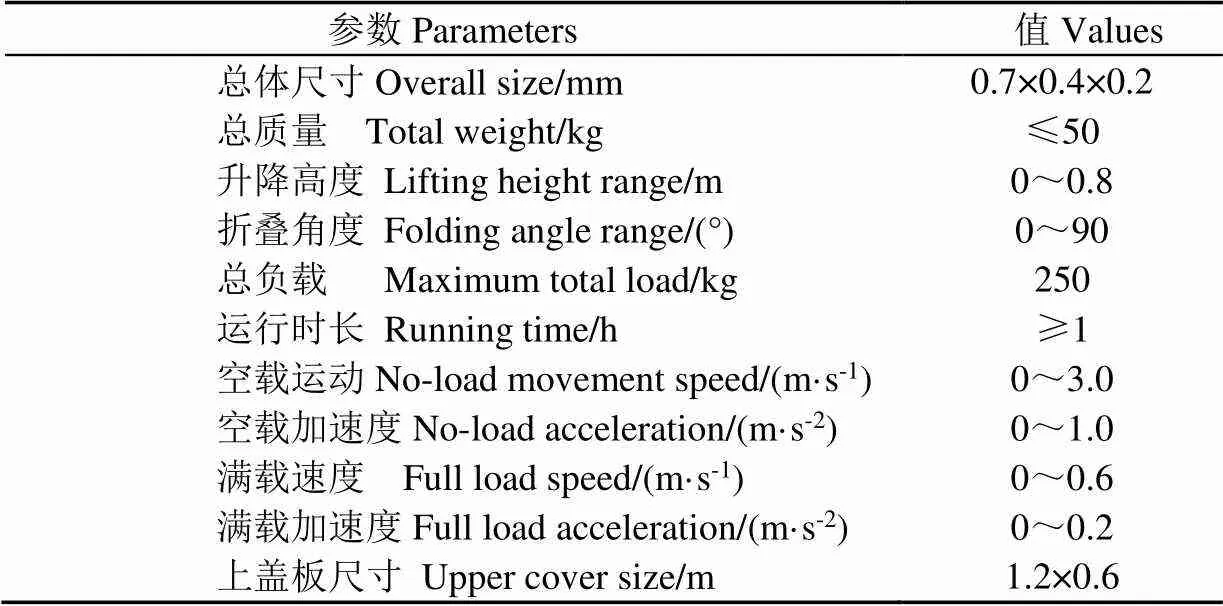
表1 系統設計參數
環境因子檢測傳感器利用PCB技術制作集成為一個模塊,整體安裝于可通過折疊升降調節高度的運動部件上,整個電路板及其上各傳感器可獨立拆卸、安裝,方便維護和更換。車體前端安裝帶圖傳模塊的攝像頭和遠程紅外測溫系統以方便對畜禽狀態進行監控。圖像數據通過遙控器內帶SD卡暫存后轉移至電腦,其余檢測數據通過UART、IIC或模擬量輸出等方式傳遞給主控STM32芯片,芯片對數據進行處理后通過WIFI模塊上傳至阿里云IoT平臺。用戶通過遙控器操控移動式智能監控平臺移動及調節可折疊升降機構改變檢測模塊的高度,實現對畜禽舍內全范圍環境因子數據實時采集和對畜禽狀態進行監控。系統總體設計方案如圖1所示。
2 移動式智能監測平臺軟硬件設計
由于養殖場內部為平整硬化路面,移動平臺采用輪式結構以節能并簡化設計。考慮防水防腐要求,車體傳動部件和驅動模塊整體置于平臺內部,上覆鋁合金板,鋼板以螺絲固定在平臺上,連接處以玻璃膠填縫處理,需要獨立運動的檢測監控模塊安裝在鋁板上(如圖2a所示)。為方便養殖場內搬運畜禽和物料,傳感器折疊后,車體上部可附加不銹鋼蓋板,蓋板上設置一荷載1 361 kg的12V電動絞盤和斜面以方便拖拽搬運對象,系統整體外觀如圖2b所示。
a. 結構簡圖
a. Schematic diagram
b. 裝置實物圖
b. Physical picture
圖2 移動式智能監測平臺
Fig.2 Mobile intelligent monitoring platform
車體由40 mm×40 mm鋁型材和面板搭建而成,采用電機驅動,利用鏈輪系統傳動,轉向使用差速機構實現。車輪直徑15 cm,在硬質路面摩擦系數0.010~0.015情況下,根據車體最大負荷250 kg及加速度0.2 m/s2的要求,選用JM-039型大扭矩永磁蝸輪蝸桿減速直流電機,其額定電壓12 V,功率80~120 W,額定電流10 A,輸出扭矩0~40 N·m,滿足系統動力指標要求。
檢測模塊高度調節子系統采用可折疊升降機構,由電動分度盤1在90°內轉動以實現折疊,步進電機推桿器驅動安裝傳感器的集成模塊移動實現升降。兩電機通過PWM波以計步方式精確控制折疊角度和升降距離,距地高度通過兩者聯合控制。電動分度盤1、2型號均為HST100ZT,臺面尺寸直徑100 mm,傳動比180:1,可360°旋轉,無細分時分辨率為0.18°,承重45 kg。步進電機推桿器采用龍翔步進50,其行程50 cm,推力250 N,速度12 mm/s。
環境因子檢測子系統包含濕度、溫度、二氧化碳、硫化氫、氨氣及顆粒懸浮物等信息。選用傳感器主要參數如表2所示。
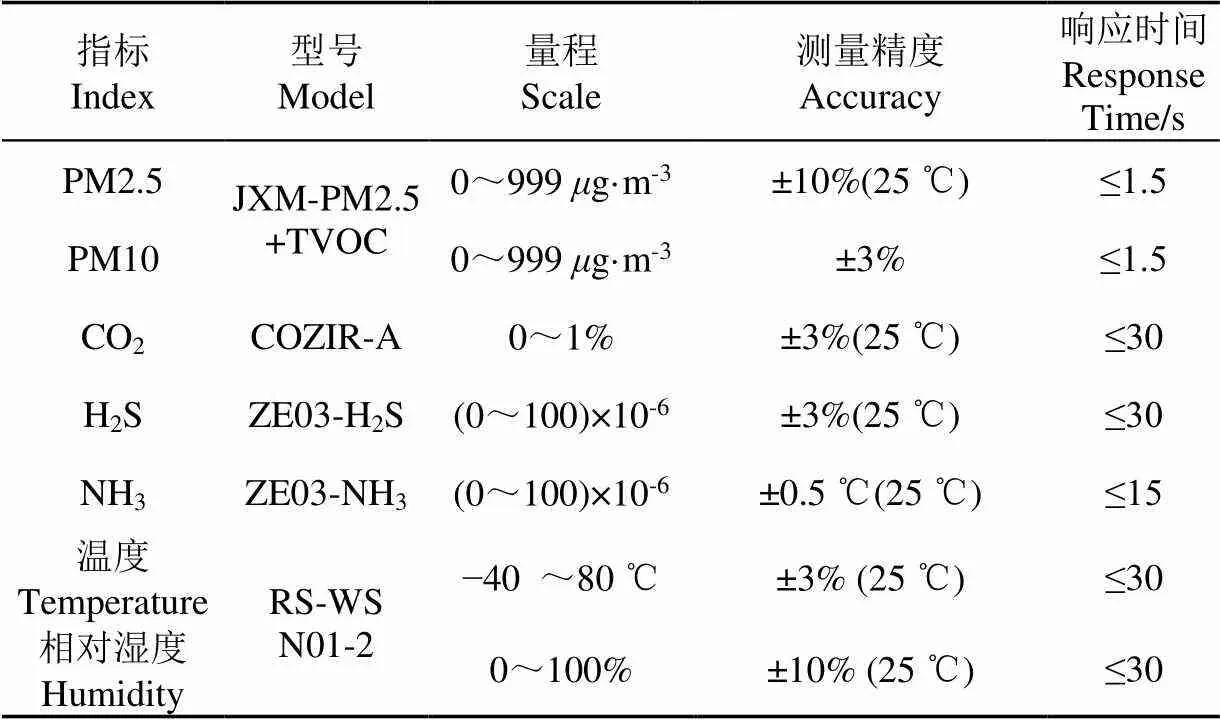
表2 各指標監測傳感器參數
為方便監控禽畜狀態,需采集體溫和圖像2種信息。體溫采用GY-906-DI紅外測溫傳感器,測量距離0.5 m以內,測溫范圍?40~125 ℃,在0~50 ℃溫度范圍內測量精度±0.5 ℃。圖像監控系統采用Sony-FPV700TVL航拍小攝像頭,其像素52萬,FPV圖傳系統發射功率僅600 mW,信號傳輸距離可達5 km。2種傳感器固定安裝在位于車體前端的電動旋轉分度盤2的舵機末端,控制系統可遙控電動分度盤2左右旋轉及舵機進行俯仰角度調整。舵機采用LDX-218大扭矩舵機,可180°旋轉,速度1.6s/60°,扭矩15 kg/cm。
平臺采用32位微控制器系列單片機STM32F103ZET6作為主控制器,使用云卓H16遙控器。主控制器接收遙控器信號輸出6路PWM波,2路控制車體左右電機運動實現平臺整體移動和轉向,2路驅動折疊升降機構電機,實現檢測模塊高度控制,2路控制監控系統分度盤旋轉和舵機俯仰。
平臺利用無線定位系統(UWB)進行厘米級精確定位,定位標簽通過串口將位置數據發送給主控制器。為防止小車在行進過程中觸碰障礙物,在車體前端左右設置了兩個超聲波避障傳感器,自動避障規則為一側有障礙信號時向另一邊轉彎,兩側均有障礙時后退,若連續退讓3次后仍無法避開障礙,則暫停運動并報警,依靠車體前端監控攝像頭提供視頻信息等待操作人員進行遙控操作。
CO2及溫、濕度傳感器采用IIC通信;NH3、PM2.5及PM10傳感器統一波特率后使用74LS151實現共用一個串口通訊;H2S通過模擬A/D接口采集。主控芯片獲取數據后,采用Savitzky-Golay濾波算法進行處理,此算法可在濾波時保留信號的細節特征,后使用USART1串口將數據通過WIFI模塊上傳至阿里云IoT物聯網平臺。
視頻通過攝像頭所帶圖傳模塊經2.4G無線網傳輸到云卓H16遙控器接收端進行顯示并暫存于SD卡中,后期轉存至電腦。養殖場內畜禽圖像可通過電腦端推流軟件對外直播,實現遠程觀看。
3 數據接口及網頁設計
網頁界面按功能系統分為用戶信息模塊、定位模塊,環境因子檢測模塊、健康狀態監控模塊及系統運動控制模塊。用戶信息模塊用于用戶的注冊和登錄以及確定不同級別用戶的使用權限,用戶注冊時綁定1組或多組巡檢設備的ID,登錄后可查看所有已綁定設備的數據集;定位模塊用于移動平臺位置監控及軌跡顯示,給出巡檢車在養殖場內實時運行的三維坐標;環境因子檢測模塊用于實現檢測平臺與客戶端的數據通訊、圖表繪制及超值報警功能,環境因子數據信息由單片機實時采集后存儲到云數據庫,隨時調取,分溫濕度曲線、氣體濃度曲線、定位信息等3個主頁面進行顯示;健康狀態監控模塊提供養殖場內畜禽的實時圖像,通過查看畜禽表面圖像判斷其健康狀況;系統運動模塊提供控制接口,用戶可在網頁端操控巡檢平臺行進的方向和速度。
4 移動智能監測平臺性能測試
4.1 試驗方法
試驗于2020年10月10日至2021年3月20在華中農業大學種豬場進行。豬舍長60 m,寬12 m,過道寬度1.2 m左右,單側11個豬欄,圍欄高0.8 m,小門寬0.6 m,現有約50頭種豬,采用人工控制通風和清糞。
由于豬舍尺寸限制,UWB定位基站無法布置為最優的等邊三角形,故設為直角三角形形式。為避免墻角反射干擾和圍欄遮擋,定位基站0置于距離門內側0.5 m、高1.0 m的窗臺上,作為坐標原點;以過道方向軸,基站1位于軸30 m處窗臺上;以垂直過道方向為軸,基站2位于圍欄內坐標2.4 m處。所有基站高度均為1 m,與升降桿上集成傳感器最高高度一致,以使定位時圍欄內、外定位標簽均不受遮擋并與基站在同一水平面上。
為檢驗平臺數據是否準確,以養豬場內固定設置的山東精訊暢通電子科技有限公司傳感器數據為參照。其中RS485型高精度工業級CO2傳感器量程為(0~10 000)×10-6,分辨率50×10-6,精度±5%,響應時間<60s;RS485型NH3傳感器量程為(0~100)×10-6,分辨率1×10⁻⁶,響應時間≤15 s;RS485型H2S傳感器量程為(0~100)×10-6,分辨率1×10⁻⁶,精度±3%(25 ℃),響應時間≤15 s;RS485型S20溫濕度傳感器的溫度檢測范圍?40~80 ℃,溫度分辨率0.1 ℃,精度0.3 ℃,濕度檢測范圍0~100%RH,分辨率0.1%RH,測量精度±7%(25 ℃),響應時間≤15 s。
現場測試圖如3所示。
4.2 數據處理
采用Matlab2017進行數據分析及制圖。
4.3 定位功能測試結果與分析
2020年12月10日,移動檢測平臺在3個不同位置點上進行平面定位偏差測試。點1位于圍欄內,偏向軸。點2位于過道上,偏向軸,點3位于圍欄內,距離、軸接近等距,各點具體坐標如表3所示。每個點連續測量50次。3點的測量誤差分布如圖4所示。
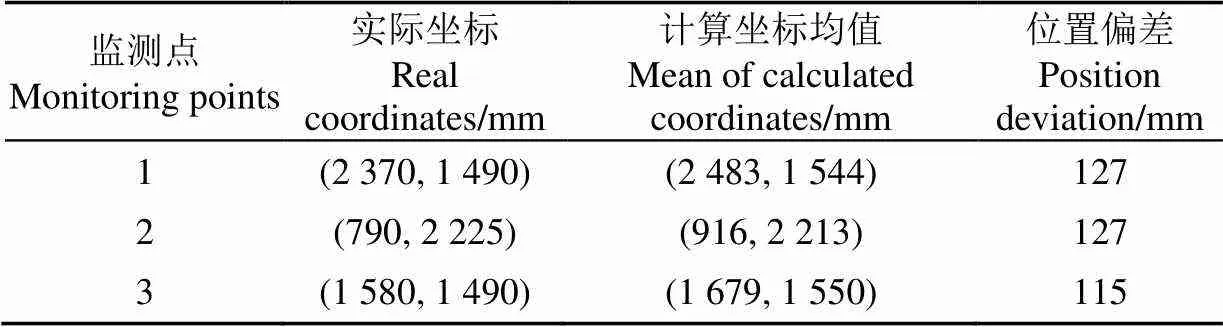
表3 定位試驗測試數據表
無線電波受到障礙物反射和折射時,會產生多路徑效應,導致信號特性變化,信噪比下降。定位精度還與基站的布置方式及移動平臺的與基站和標簽的相對位置有關。由于豬場內由環境復雜,信號受到墻體、圍欄及支柱的反射,定位誤差比空曠區域大。由表3測試結果可知,由于基站無法采用最優布置方式,加上環境復雜,定位誤差在10 cm級,比技術手冊上給定的5 cm級大。當標簽與各基站間距離差異較大時,如監測點1、2,測量誤差相對較大,平均位置偏差為127 mm;當標簽與基站的距離均相近時,如監測點3,測量誤差相對較小,平均位置偏差為115 mm。試驗中還發現基站不能放置于角落,基站與定位標簽間不可有遮擋物,否則誤差會急劇增大。
2021年3月10日環境因子數據監測結果如圖5所示,監測顯示頁面如圖6所示。為方便對比,測試時將小車放置在養豬場內原來固定設置的山東精訊暢通電子科技有限公司傳感器旁邊。自動發送數據的時間間隔均為10 s,后臺數據為1 min內數據取平均后顯示。登錄網頁頁面,瀏覽智能監控平臺上傳的信息。結果表明,由于兩者位置接近,智能監測平臺傳感器檢測結果與豬場內原傳感器檢測結果相近,溫度、相對濕度、CO2測量值差異不到5%;由于H2S濃度低于2種傳感器檢測下限,均為0;NH3濃度在固定點傳感器無波動,智能移動平臺監測結果波動幅值達10%,二者偏差小于10%可能與固定點傳感器慣性較大及二者布置位置差異有關;移動平臺粉塵傳感器檢測到飼喂時粉塵濃度明顯增長,PM2.5濃度達PM10的3倍以上,可能與飼料粒度有關。由于傳感器特性不同,智能監測平臺的傳感器靈敏度較高,慣性較小,數據波動較為頻繁,但二者數據總體變化趨勢相同,可認為智能檢測平臺的檢測數據可信,并能進行持續檢測及穩定上傳數據,實現對畜禽舍內的環境因子進行遠程監測。
在不監測時折疊收起檢測裝置,加上蓋板后利用蓋板上的電動絞盤將重物通過斜面拖拽上平板,捆扎后進行運輸。測試表明,系統在滿載250 kg時仍可正常運行,單次運送能力達200 kg。
5 結 論
本文設計了一種可畜禽養殖場所使用的移動式智能檢測平臺。檢測系統在重要位置固定布置傳感器外,其他位置利用移動平臺攜帶可調節高度的集成傳感器機動進行環境因子自動檢測,并可利用圖像傳感器和遠程紅外測溫裝置對特定對象的健康和行為狀態實施監測。監測數據通過WIFI模塊實現檢測模組與阿里云IoT平臺的通信,從而實現與互聯網用戶端的交互。實測結果表明,智能檢測平臺檢測數據與原豬場內布置的傳感器檢測結果相近,溫度、濕度、CO2測量值差異不到5%;由于H2S濃度低于2種傳感器檢測下限,均為0;NH3濃度的固定點傳感器監測結果無波動,智能移動平臺監測結果波動幅值接近10%,可能與固定點傳感器慣性較大及二者布置位置差異有關;移動平臺粉塵傳感器檢測到飼喂時粉塵濃度明顯增長, PM2.5濃度達PM10的3倍以上,可能與飼料粒度有關。無線定位系統誤差接近10 cm級,系統可持續運行,檢測數據可信,傳輸功能穩定。利用該移動式智能檢測平臺可對室內、室外的環境因子進行全區域監測,可利用獲得的大數據分析環境因子與動物行為和生長速度之間的關系,為健康養殖提供基礎信息。
移動式智能檢測平臺可在遠程遙控下運行,如結合衛星定位技術及激光雷達建圖技術,移動平臺可在室內室外實現自主巡航和定時自動檢測。系統還可進一步拓展傳感器種類,通過PCB 板上預留接口,增加光照及風速等其他傳感器,利用74LS151實現一個串口同時與多個傳感器的分時通訊。如機動平臺舍棄搬運功能,車體舍棄上蓋板,總負載可由250 kg減少到50 kg,選用小電機,車體寬度和功率可進一步減小。
[1] Seo I H, Lee I B, Moon O K, et al. Modeling of internal environmental conditions in a full-scale commercial pighouse containing animals[J]. Biosystems Engineering, 2012, 111: 91-106.
[2] 高中霞. 基于無線傳感器網絡畜禽舍環境監測系統[D]. 吉林:吉林農業大學,2012.
Gao Zhongxia. Study on Monitoring System of Poultry House Environmental Based on Wireless Sensor Network[D]. Jilin: Jilin Agricultural University, 2012. (in Chinese with English abstract)
[3] 劉鴻濤,鄭進碧. 農村散養雞的無公害生產技術探討[J]. 中國禽業導刊,2004,21(22):34-34.
Liu Hongtao, Zheng Jingbi. Discussion on nuisanceless production technology of free-range chicken in rural area[J]. Guide to China Poultry, 2004, 21(22): 34-34. (in Chinese with English abstract)
[4] 郭軍蕊,劉國華,楊斌,等. 畜禽養殖場除臭技術研究進展[J]. 動物營養學報,2013,25(8):1708-1714.
Guo Junrui, Liu Guohua, Yang Bing, et al. Deodorization technology of livestock and poultry farming[J]. Chinese Journal of Animal Nutrition, 2013, 25(8): 1708-1714. (in Chinese with English abstract)
[5] 戴鵬遠,沈丹,唐倩,等. 畜禽養殖場顆粒物污染特征及其危害呼吸道健康的研究進展[J]. 中國農業科學,2018,51(16):3214-3225.
Dai Pengyuan, Shen Dan, Tang Qian, et al. Research progress on characteristics of particulate matter in livestock houses and its harmful effects on respiratory tract health of livestock and poultry[J]. Scientia Agricultura Sinica, 2018, 51(16): 3214-3225. (in Chinese with English abstract)
[6] Ni J Q, Hendriks J, Vinckier C, et al. Development and validation of a dynamic mathematical model of ammonia release in pig house[J]. Environment International, 2000, 26(1): 105-115.
[7] Pan L L, Yang S X. A new intelligent electronic nose system for measuring and analyzing livestock and poultry farm odours[J]. Environ Monit Assess, 2007, 135(1/2/3): 399-408.
[8] Lysenko A I, Chumachenko S N, Valuiskyi S V. Technology for environmental monitoring using wireless sensor networks[C] 24th International Crimean Conference “Microwave & Telecommunication Technology”, IEEE, 2014.
[9] 李保明,王陽,鄭煒超,等. 中國規模化養雞環境控制關鍵技術與設施設備研究進展[J]. 農業工程學報,2020,36(16):212-221.
Li Baoming, Wang Yang, Zheng Weichao, et al. Research progress in environmental control key technologies, facilities and equipment for laying hen production in China[J]. Transactions of the Chinese Society of Agriculture Engineering (Transactions of the CSAE), 2020, 36(16): 212-221. (in Chinese with English abstract)
[10] 汪開英,吳捷剛,趙曉洋. 畜禽場空氣污染物檢測技術綜述[J]. 中國農業科學,2019,52(8):1458-1474.
Wang Kaiying, Wu Jiegang, Zhao Xiaoyang. Review of measurement technologies for air pollutants at livestock and poultry farms[J]. Scientia Agricultura Sinica, 2019, 52(8): 1458-1474. (in Chinese with English abstract)
[11] 汪開英,吳捷剛,梅威達,等. 畜舍顆粒物減排技術研究現狀[J]. 農業工程學報,2020,36(18):204-212.
Wang Kaiying, Wu Jiegang, Mei Weida, et al. Research status on particulate reduction technology in livestock houses[J]. Transactions of the Chinese Society of Agriculture Engineering (Transactions of the CSAE), 2020, 36(18): 204-212. (in Chinese with English abstract)
[12] 介鄧飛,泮進明,應義斌. 規模化畜禽養殖污染氣體現場檢測方法與儀器研究進展[J]. 農業工程學報,2015,31(1):236-246.
Jie Dengfei, Pan Jinming, Ying Yibin. Advances in methods and instruments for determining concentration of gaseous air pollutants in large-scaled livestock farms[J]. Transactions of the Chinese Society of Agriculture Engineering (Transactions of the CSAE), 2015, 31(1): 236-246. (in Chinese with English abstract)
[13] 何瑩. 基于激光吸收光譜的主要人為氨排放源在線檢測技術與應用研究[D]. 合肥:中國科學技術大學,2017.
He Ying. Study on On-Line Detection Technology and Application of Main Anthropogenic Ammonia Emissions Based on Laser Absorption Spectroscopy[D]. Hefei: University of Science and Technology of China, 2017. (in Chinese with English abstract)
[14] 譚鶴群,李鑫安,艾正茂. 基于可調諧吸收光譜的畜禽舍氨氣濃度檢測[J]. 農業工程學報,2020,36(13):186-194.
Tan Hequn, Li Xin’an, Ai Zhengmao. Detection of ammonia concentration in livestock poultry houses based on tunable diode laser absorption spectroscopy[J]. Transactions of the Chinese Society of Agriculture Engineering (Transactions of the CSAE), 2020, 36(13): 186-194. (in Chinese with English abstract)
[15] 董紅敏,李玉娥,陶秀萍,等. 中國農業源溫室氣體排放與減排技術對策[J]. 農業工程學報,2008,24(10):269-273.
Dong Hongmin, Li Yu’e, Tao Xiuping, et al. China greenhouse gas emissions from agricultural activities and its mitigation strategy[J]. Transactions of the Chinese Society of Agriculture Engineering (Transactions of the CSAE), 2008, 24(10): 269-273. (in Chinese with English abstract)
[16] 董紅敏,朱志平,陶秀萍,等. 育肥豬舍甲烷排放濃度和排放通量的測試與分析[J]. 農業工程學報,2006,22(1):123-128.
Dong Hongmin, Zhu Zhiping, Tao Xiuping, et al. Measurement and analysis of methane concentration andflux emitted from finishing pig house[J]. Transactions of the Chinese Society of Agriculture Engineering (Transactions of the CSAE), 2006, 22(1): 123-128. (in Chinese with English abstract)
[17] 高新星,趙立欣. 規模化豬場甲烷排放通量測量與分析[J]. 農業工程學報,2006,22(增刊):248-252.
Gao Xinxing, Zhao Lixin. Measurement and analysis of methane flux emitted from animal manure lagoon of livestock farm[J]. Transactions of the Chinese Society of Agriculture Engineering (Transactions of the CSAE), 2006, 22(Supp.): 248-252. (in Chinese with English abstract)
[18] 劉安芳,阮蓉丹,李廳廳,等. 豬舍內糞污廢棄物和有害氣體減量化工程技術研究[J]. 農業工程學報,2019,35(15):200-210.
Liu Anfang, Ruan Rongdan, Li Tingting, et al. Research progress of in-house reduce engineering technology for piggery manure wastes and poisonous gas[J]. Transactions of the Chinese Society of Agriculture Engineering (Transactions of the CSAE), 2019, 35(15): 200-210. (in Chinese with English abstract)
[19] 尚峰軍,趙潔. 采用CFD技術分析和評估蛋雞舍溫熱環境質量[J]. 中國家禽,2021,43(2):61-68.
Shang Fengjun, Zhao Jie. Using CFD technology to analyze and evaluate the quality of the warm environment of layer house[J]. Chinese Poultry, 2021, 43(2): 61-68. (in Chinese with English abstract)
[20] 賀城,牛智有,齊德生. 豬舍溫度場和氣流場的CFD 模擬比較分析[J]. 湖北農業科學,2010,49(1):134-136.
He Cheng, Niu Zhiyou, Qi Desheng. CFD simulation and comparative analysis about air temperature and airflow in the piggery[J]. Hubei Agricultural Sciences, 2010, 49(1): 134-136. (in Chinese with English Abstract).
[21] 林加勇,劉繼軍,孟慶利,等. 公豬舍夏季溫度和流場數值CFD模擬及驗證[J]. 農業工程學報,2016,32(23):207-212.
Lin Jiayong, Liu Jijun, Meng Qingli, et al. Numerical CFD simulation and verification of summer indoor temperature and airflow field in boar building[J]. Transactions of the Chinese Society of Agriculture Engineering (Transactions of the CSAE), 2016, 32(23): 207-212. (in Chinese with English abstract)
[22] 吳武豪. 基于物聯網的豬舍環境監控系統研究[D]. 杭州:浙江大學,2014.
Wu Wuhao. A Study on Piggery Environment Monitoring and Control System Based on Internet of Things[D]. Hangzhou: Zhejiang University, 2014. (in Chinese with English abstract)
[23] 李惠敏,連京華,孫凱,等. 家禽環境自動化控制技術研究進展[J]. 中國家禽,2013,35(14):41-44.
Li Huiming, Lian Jinghua, Sun Kai, et al. Research progress of poultry environmental automation control technology[J]. China Poultry, 2013, 35(14): 41-44. (in Chinese with English abstract)
[24] 左現剛,孔德川,周逸,等. 基于ARM控制器的豬舍有害氣體無線檢測控制系統[J]. 江蘇農業科學,2016,448:440-443.
Zuo Xiangang, Kong Dechuan, Zhou Yi, et al. Wireless detection and control system of harmful gas in pig house based on ARM controller[J]. Jiangsu Agricultural Science, 2016, 448: 440-443. (in Chinese with English abstract)
[25] 潘榮德. 一種家禽養殖無線傳感器網絡監測系統:CN201710453917.0[P]. 2020-04-07.
[26] 朱虹,李爽,鄭麗敏,等. 生豬養殖場無線傳感器網絡路徑損耗模型的建立與驗證[J]. 農業工程學報,2017,33(2):205-212.
Zhu Hong, Li Shuang, Zheng Limin, et al. Modeling and validation on path loss of WSN in pig breeding farm[J]. Transactions of the Chinese Society of Agricultural Engineering (Transactionsof the CSAE), 2017, 33(2): 205-212. (in Chinese with English abstract)
[27] 高云,刁亞萍,林長光,等. 機械通風樓房豬舍熱環境及有害氣體監測與分析[J]. 農業工程學報,2018,34(4):239-247.
Gao Yun, Diao Yaping, Lin Changguang, et al. Monitoring and analysis of thermal environment and harmful gases in mechanically ventilated multistory pig buildings[J]. Transactions of the Chinese Society of Agricultural Engineering (Transactions of the CSAE), 2018, 34(4): 239-247. (in Chinese with English abstract)
[28] 高云,陳震撼,王瑜,等. 多環境參數控制的豬養殖箱設計及箱內氣流場分析[J]. 農業工程學報,2019,35(2):203-212.
Gao Yun, Chen Zhenhan, Wang Yu, et al. Design for pig breeding chamber under multiple environment variable control and analysis of internal flow field[J]. Transactions of the Chinese Society of Agricultural Engineering (Transactions of the CSAE), 2019, 35(2): 203-212. (in Chinese with English abstract)
[29] 高云,魯斯迪,廖慧敏,等. 基于無線傳感器網絡的豬舍環境監測研究進展[J]. 中國豬業,2019,14(6):67-74.
Gao Yun, Lu Sidi, Liao Huimin, et al. Research progress on environmental monitoring of pig house based on wireless sensor network[J]. China Swine Industry, 2019, 14(6): 67-74. (in Chinese with English abstract)
[30] 杜文田. 帶有云平臺的畜禽舍環境控制系統及控制方法:CN108803736A[P]. 2018-11-13.
[31] 曾志雄,余喬東,易子騏,等. 基于WSN的集中通風式分娩豬舍環境參數時空分布特性[J]. 農業工程學報,2020,36(12):204-211.
Zeng Zhixiong, Yu Qiaodong, Yi Ziqi, et al. Spatiotemporal distribution characteristics of environmental parameters of centralized ventilation delivery sows based on WSN Development of mobile intelligent monitoring platform for livestock and poultry house[J]. Transactions of the Chinese Society of Agricultural Engineering (Transactions of the CSAE), 2020, 36(12): 204-211. (in Chinese with English abstract)
[32] 謝秋菊,蘇中濱,Ni Ji-Qin,等. 密閉式豬舍多環境因子調控系統設計及調控策略[J]. 農業工程學報,2017,33(6):163-170.
Xie Qiuju, Su Zhongbin, Ni Ji-Qin, et al. Control system design and control strategy of multiple environmental factors in confined swine building[J]. Transactions of the Chinese Society of Agricultural Engineering (Transactions of the CSAE), 2017, 33(6): 163-170. (in Chinese with English abstract)
[33] 王斌,劉雪梅,張國強,等. 豬舍生態環境監測和清潔控制系統的設計[J]. 農業工程學報,2020,36(3):55-62.
Wang Bin, Liu Xuemei, Zhang Guoqiang, et al. Design of control system for pig farm cleaning and ecological environment monitoring[J]. Transactions of the Chinese Society of Agricultural Engineering (Transactions of the CSAE), 2020, 36(3): 55-62. (in Chinese with English abstract)
[34] 李立峰,武佩,麻碩士,等. 基于組態軟件和模糊控制的分娩母豬舍環境監控系統[J]. 農業工程學報,2011,27(6):231-236.
Li Lifen, Wu Pei, Ma Shuoshi, et al. Monitoring and controlling system for delivery sow house environment based on configuration software and fuzzy control[J]. Transactions of the Chinese Society of Agricultural Engineering (Transactions of the CSAE), 2011, 27(6): 231-236. (in Chinese with English abstract)
Development of mobile intelligent monitoring platform for livestock and poultry house
Long Changjiang1,2, Tan Hequn1,2※, Zhu Ming1,2, Xin Rui1, Qin Guangsheng1, Huang Pengzhi1
(1.,430070,; 2.,,430070,)
Environmental factors including temperature, humidity, and gas atmosphere directly determine the daily performance, growth rate, and immune status of livestock and poultry in a farm. It is highly urgent to detect the factors for real-time monitoring the health state of livestock and poultry, particularly the relationship between environmental factors and health state. Therefore, a healthy aquaculture pattern can be developed to optimize the breeding environment. In this study, a mobile intelligent monitoring platform was established to detect the key environmental factors within the whole area. An integrated sensor system was installed in the fixed important points. A four-wheel trolley with sprocket wheels was used to drive the platform. The motor and transmission components were installed inside the car body in the need of waterproof and anti-corrosion. The upper side of the car was sealed with a cover plate, and only the integrated sensor system installed on a foldable telescopic mechanism that needs to be exposed was fixed on the plate. Height adjusting of an integrated sensor system was performed via changing the folding angle and telescopic length of a foldable telescopic mechanism. The sensors were assembled separately and disassembled conveniently, in order to facilitate repair and maintenance, and even the integrated sensor system was replaced as a whole. AnSTM32 microcontroller was used as the master control unit in the system. A PCB-integrated sensor system was selected to detect the temperature, humidity, CO2, H2S, NH3,and dust concentration in the environment. Three standard conditions were set for the detection. Specifically, when the livestock or poultry felt uncomfortable, their behavior appeared too quiet or too irritable. When the livestock or poultry was sick, their body temperature was abnormal. When an infection occurred, the surface of the skin was ulcerated. A camera with a high-speed image transmission and a remote infrared temperature measurement device was used to monitor the livestock and poultry, where the abnormal state of their body temperature was observed in time, and the infection was found at an early stage. Two monitor sensors were installed on an electromechanical actuator, which was fixed on an electromechanical indexing plate in the front of the mobile platform. The actuator was used to adjust the pitch angle, whereas, the indexing plate was used to change the horizontal angle. An Ultra-Wide Band (UWB) wireless system was also selected to accurately locate the position of the mobile platform. All the data was sent to the STM32 microcontroller in UART, IIC, or analog output mode. The STM32 microcontroller processed the data with the Savitzky-Golay filtering, and then uploaded the data to the Ali Cloud IoT platform through a WIFI module. The users can login to the web page to remotely access the data, and thereby monitor the status of livestock and poultry in real time. The experimental results show that the detection data of a mobile intelligent detection platform was similar to that of the sensors in the former pig farm, where the difference between them was less than 10%. The positioning error was close to the 10 cm level, when the base stations were located at the optimal position. The monitoring data were reliable, and the mobile intelligent monitoring platform ran stably for a long time. The mobile platform can also serve as a carrier to transport about 200 kg of heavy objects. For instance, materials and livestock can be transported by the platform, when installing an upper cover plate with a winch and inclined plane on the surface. The proposed mobile intelligent monitoring platform can provide a hardware foundation for whole-scale environmental monitoring of livestock and poultry farms.
temperature; humidity; sensors; intelligent monitoring; livestock and poultry breeding; Ali cloud
2020-11-19
2021-03-30
“十三五”國家重點研發計劃項目(2018YFD0500702)
龍長江,博士,副教授,研究方向為自動控制和無損檢測。 Email:lcjflow@163.com
譚鶴群,博士,教授,研究方向為農產品加工機械與畜牧機械。Email:thq@mail.hzau.edu.cn
10.11975/j.issn.1002-6819.2021.07.009
TP23; TP242.3; S817.3
A
1002-6819(2021)-07-0068-08
龍長江,譚鶴群,朱明,等. 畜禽舍移動式智能監測平臺研制[J]. 農業工程學報,2021,37(7):68-75. doi:10.11975/j.issn.1002-6819.2021.07.068 http://www.tcsae.org
Long Changjiang, Tan Hequn, Zhu Ming, et al. Development of mobile intelligent monitoring platform for livestock and poultry house[J]. Transactions of the Chinese Society of Agricultural Engineering (Transactions of the CSAE), 2021, 37(7): 68-75. (in Chinese with English abstract) doi:10.11975/j.issn.1002-6819.2021.07.068 http://www.tcsae.org
猜你喜歡
中學生數理化·七年級數學人教版(2021年6期)2021-11-22 07:50:58
中學生數理化·七年級數學人教版(2021年6期)2021-11-22 07:50:58
中學生數理化·七年級數學人教版(2021年6期)2021-11-22 07:50:58
中老年保健(2021年12期)2021-08-24 03:30:40
中國傳媒大學學報(自然科學版)(2021年1期)2021-06-09 08:43:00
中學生數理化·七年級數學人教版(2020年12期)2021-01-18 06:57:46
中學生數理化·七年級數學人教版(2020年12期)2021-01-18 06:57:46
中國生殖健康(2020年6期)2020-02-01 06:28:50
新世紀智能(英語備考)(2019年12期)2020-01-13 06:07:18
中國生殖健康(2019年11期)2019-01-07 01:28:02