瑪歌酒莊
2021-05-11 06:42:54NigelYoung
世界建筑導報 2021年2期
建設單位:CRIBA
項目地點:法國瑪歌
設計單位:福斯特建筑事務所
合作單位:A3A Cabinet d’Architecture
結構設計:福斯特建筑事務所(釀酒廠),
英格洛普(Vinotheque)
景觀設計:福斯特建筑事務所,Secath KEE
面積:現(xiàn)有橘園翻新:640 平方米現(xiàn)有酒廠翻新:1 500 平方米Nouveau Chai:1 200 平方米Vinothèque:1 430 平方米
設計/建造:2009 / 2015 年
攝影:Nigel Young / 福斯特建筑事務所
Client: CRIBA
Location: Margaux, France
Architect: Foster + Partners
Collaborating Architect: A3A Cabinet d’Architecture
Structural Engineer : Foster + Partners (Winery), Ingerop (Vinotheque)
Environmental Engineer: Foster + Partners, Secath KEE
Area: Refurbishment of existing orangery: 640 m2Refurbishment of existing winery: 1 500 m2Nouveau Chai: 1 200 m2New Vinothèque: 1 430 m2
Design / Completion: 2009 / 2015
Photography: Nigel Young / Foster + Partners
福斯特建筑事務所為瑪歌酒莊制定了一個戰(zhàn)略性的總體規(guī)劃,建設了該區(qū)域的第一棟可視建筑,其中的天花板已經有200 年的歷史。除了新酒莊Nouveau Chai 之外,該項目還包括一個新的Vinothèque 以及對現(xiàn)有建筑的翻新,還有對橘園的歷史性修復,這些藝術設施讓供酒商再創(chuàng)輝煌。
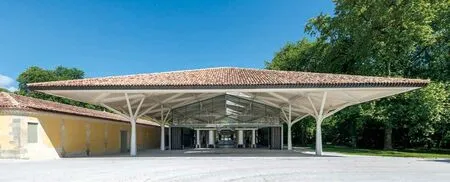
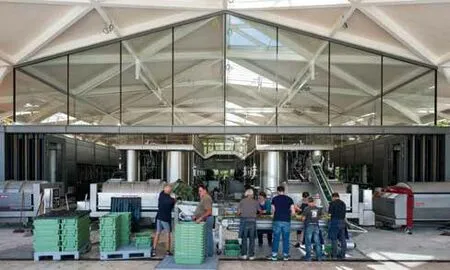
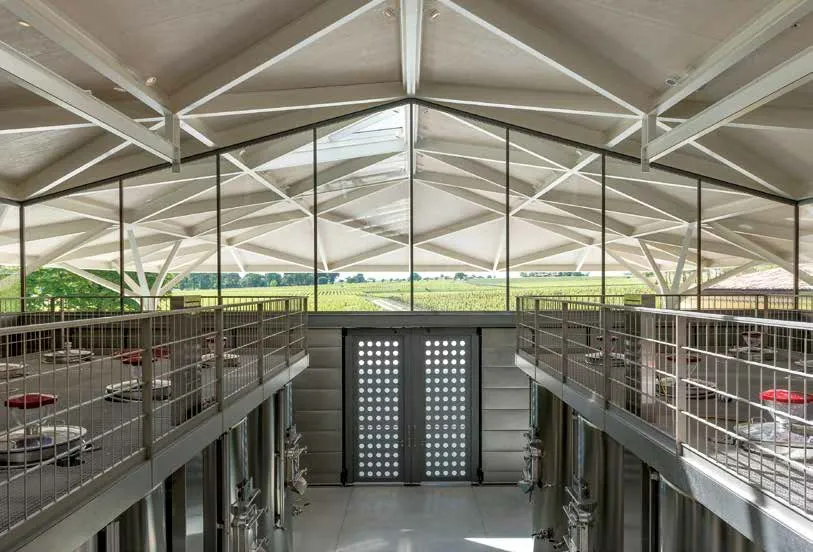
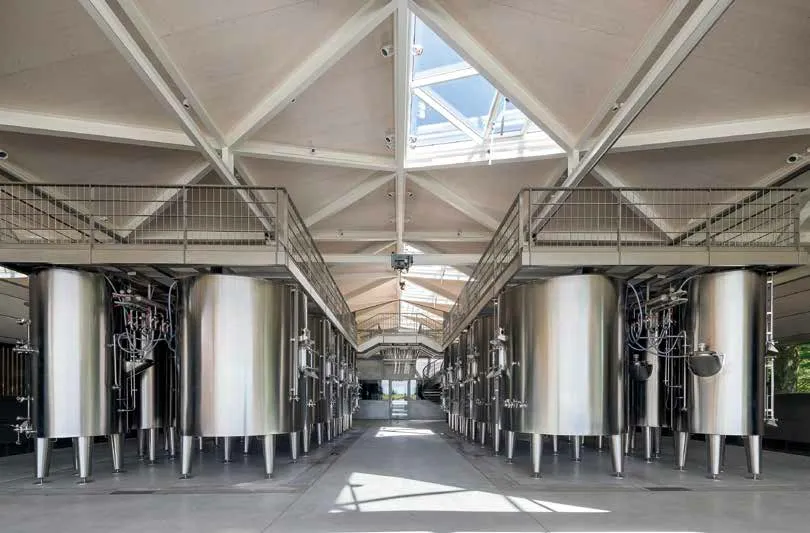
Nouveau Chai 是一棟新建筑,同時生產紅葡萄酒和白葡萄酒,在十九世紀綜合體的基礎上進行了東翼的擴建,使整個布局得到了平衡。它具有很強的可變性,開放體量的形態(tài)由釀酒的具體過程決定,包括一個新的研究和發(fā)展中心。建筑十分簡潔,重新詮釋了當?shù)鼐哂械赜蛐缘耐呶蓓敚c現(xiàn)有的工廠建筑很協(xié)調,新建筑在同一層有補丁的屋頂,由樹狀的柱子進行支撐,上方有透光孔。創(chuàng)新性的結構解決方案是事務所的建筑師和工程師共同努力的結果。
建筑在葡萄藤庭院的下方,給景觀帶來了最小的干預,新的Vinothèque 有70 米長,與原有的區(qū)域距離較遠,新設施提供了安全、環(huán)境穩(wěn)定的地下儲藏空間,其核心地帶收集了著名的瑪歌酒瓶。混凝土的熱功能幫助自然地平衡了溫度。
Following a strategic masterplan, the practice has completed the first new visible building on the estate since the Chateau and the existing cellars were completed two hundred years ago. In addition to a large new winery, the Nouveau Chai, the project includes a new Vinotheque, and the refurbishment of existing buildings and the historic Orangery - together, these provide state of the art facilities to support this leading wine producer in its continued quest for excellence.
The Nouveau Chai is a new building for the production of both red and white wine, which extends from the eastern wing of the early nineteenth century complex, balancing the overall composition. Its highly flexible, open enclosure is shaped by the different winemaking processes and includes a new research and development centre. In its simplicity, the architecture reinterprets the region’s vernacular of tiled roofs and harmonises with the estate’s existing industrial buildings - the new building has a pitched roof at the same level, supported by tree-shaped load bearing columns and punctuated by light wells. The innovative structural solution was the result of teamwork between engineers and architects within the practice.
Buried beneath the vineyard to make the minimum intervention in the landscape is a new 70-metre-long Vinotheque. Located away from the flooding area, the new facility provides safe, environmentally stable underground storage at the heart of the estate for the collection of celebrated Ch?teau Margaux bottles.The thermal mass of the concrete structure helps to naturally regulate temperatures.
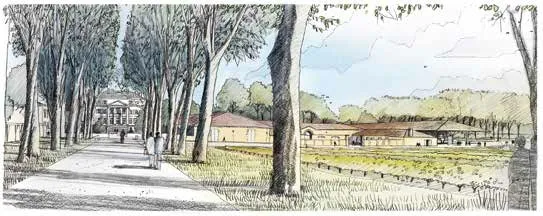
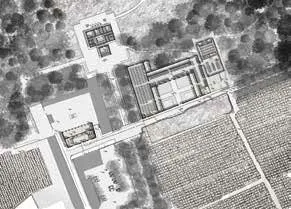
新建的Nouveau Chai 和Vinothèque 之后,現(xiàn)有的酒莊區(qū)域就可以被重新利用。它現(xiàn)在完全被用于生產紅酒。為了重新利用空間,制桶之類的工作被轉移到了別處,原有的vinothèque 成為了桶的倉庫。其他的空間包括游客空間和舊有倉庫被重新裝修,增強了游客的體驗。中央庭院被重新設計,以應對收獲季節(jié)臨時性的工作。
場地的北端有一個640 平方米的橘園,這是整個區(qū)域最古老的結構,它也被重新裝修。曾經的建筑被改造,失去了原有的風貌。改造后增加的建筑現(xiàn)在已經被拆除,讓原有的結構得以展現(xiàn)。工程包括暴露南向的大窗戶以在冬季引入光線,以及提供臨時性活動的場地。橘園在冬季的幾個月重新種植了橘子和檸檬樹,在收獲的季節(jié)可以被用作食堂。
With the addition of the Nouveau Chai and Vinotheque, there was an opportunity to utilise space in the existing winery - this building is now devoted entirely to the production of red wine. To maximise efficiency, areas such as the cooperage have been relocated, and the former vinoth?que has once again become a barrel store. Other spaces, such as the visitor walkway to the ageing cellars,have been refurbished to enhance the experience for guests. The central courtyard has also been redesigned to accommodate the installation of temporary equipment during the harvest season.
Located in the north of the site, the 640-square-metre Orangery - the oldest structure on the estate -has been completely refurbished. Over time, the historic building had been altered and its character lost. The recent additions have been removed and the fabric of the original structure has been restored. This has included revealing and opening up the large south-facing windows to create a lightfilled winter garden, which provides a flexible space for events. The Orangery once again protects orange and lemon trees during the winter months, and at harvest time is used as a refectory.
猜你喜歡
北方建筑(2021年6期)2021-12-31 03:03:54
文苑(2020年10期)2020-11-07 03:15:36
現(xiàn)代裝飾(2020年6期)2020-06-22 08:43:12
藝術啟蒙(2018年7期)2018-08-23 09:14:18
海峽姐妹(2017年7期)2017-07-31 19:08:17
Coco薇(2017年5期)2017-06-05 08:53:16
中國科技博覽(2016年2期)2016-04-25 20:32:39
小學生導刊(2016年34期)2016-04-11 00:49:44
少兒科學周刊·兒童版(2015年6期)2015-11-24 03:49:38
電測與儀表(2015年5期)2015-04-09 11:30:52