美國航天港
2021-05-11 06:42:50NigelYoung
世界建筑導報 2021年2期
業主單位:新墨西哥航天港
項目地點:美國新墨西哥
建筑設計:福斯特建筑事務所
建筑工程/項目管理/結構及機電工程:URS 公司
合作單位:SMPC 建筑師事務所
環境設計:PHA 咨詢公司
用地面積:27 880 平方米
總建筑面積:10 219 平方米
設計/建造:2006 / 2014 年
攝影:Nigel Young / 福斯特建筑事務所
Client: New Mexico Spaceport Authority (NMSA)
Location: New Mexico, USA
Architectural Lead Design: Foster + Partners
Architecture and Engineering, Project Manager, Structural and MEP Engineer:URS Corporation
Architecture: SMPC Architects
Environmental Design: PHA Consult
Site Area: 27 880m2including apron
Gross Area: 10 219 m2
Design / Completion: 2006 / 2014
Photography: Nigel Young / Foster + Partners
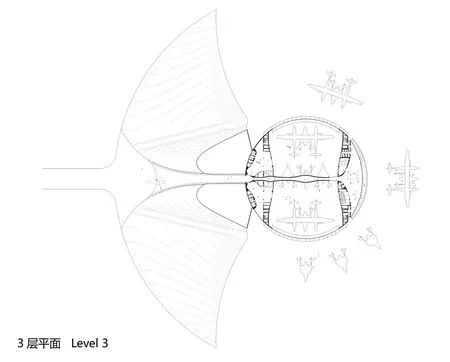
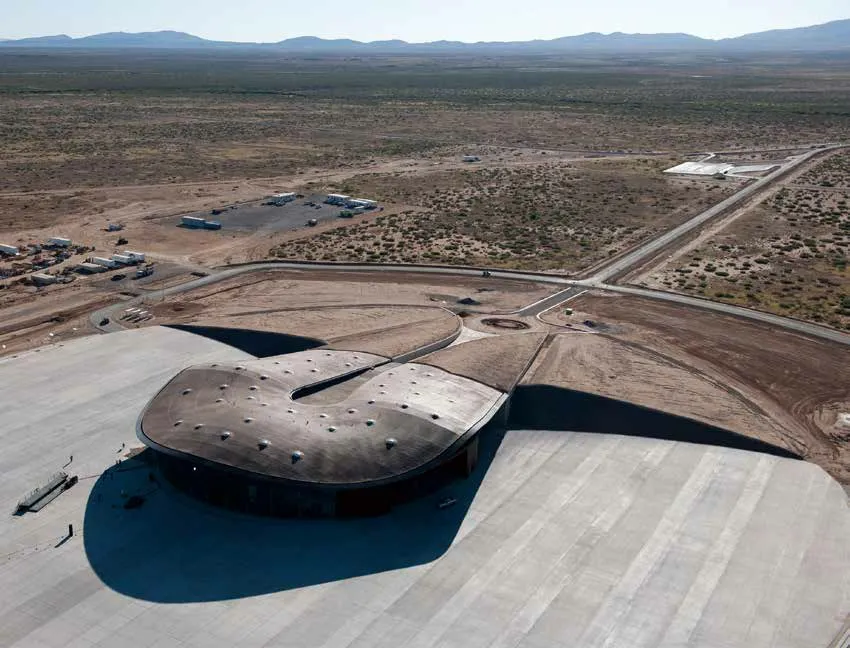
美國航天港位于新墨西哥州沙漠類景觀中,是目前世界上首座同類型建筑。其設計旨在向第一批太空游客傳達太空旅行的興奮感,同時把對環境造成的影響最小化。從空中看,此航天港讓人想起維珍銀河(Virgin Galactic)的眼睛品牌標志,并且讓人聯想到長條狀的瞳孔,而停機坪則構成了虹膜。從歷史悠久的皇家大道走近,航天港的有機形態在景觀中呈現出微妙的上升過程。
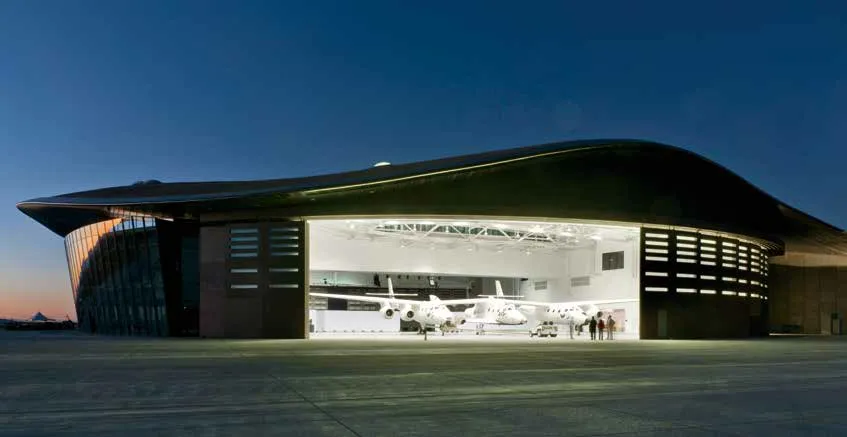
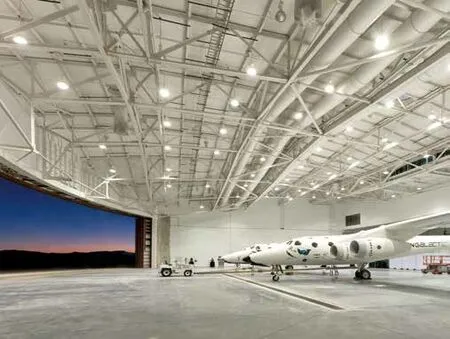
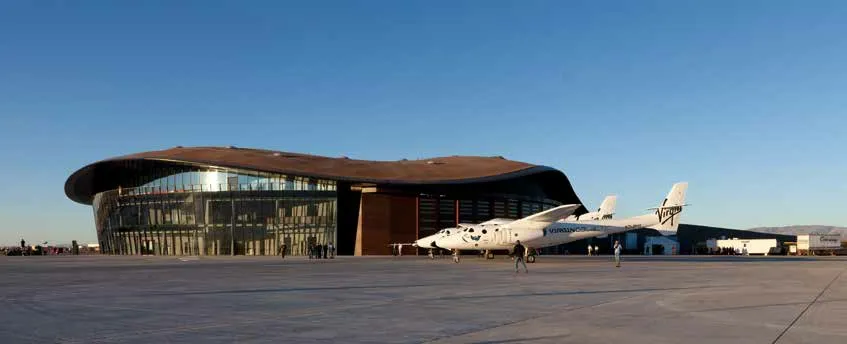
在一個高效、合理的計劃下,航天港依據航天器的尺寸設計。可訪問性和隱私之間也要達到一種謹慎的平衡。宇航員活動區域和游客空間與建筑的其他部分完全融為一體,而更敏感的區域——如控制室——是可見的,但進入權限有限。游客和宇航員通過一條切斷景觀的深處通道進入建筑。擋墻結構圍成了一個展覽空間,里面記錄了太空探索的歷史,以及有關該地區和定居者的故事。通道的強線性軸線繼續延伸進大樓,在一個有長廊的高度上到達超級機庫——里面停有太空船并建有模擬室——穿過航站樓。跑道上的玻璃立面在候機樓內組成了一個平臺,供人們欣賞到達和離開地球的宇宙飛船。
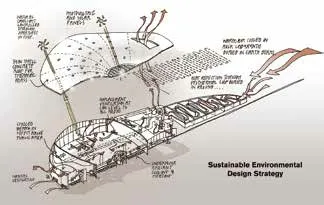
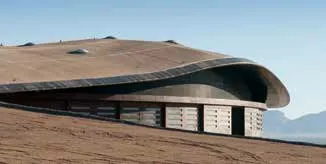
該方案具有最低的隱含碳和少量的額外能源要求,旨在獲得享有盛譽的LEED 黃金級認證。景觀中的地勢經挖掘后變低以利用地熱,這緩沖了建筑所受的新墨西哥極端氣候的影響,并利用盛行西風來通風;此外還通過天窗來最大限度地利用日光。建筑采用了本土材料和區域性施工技術,在保持可持續發展的同時,又對周圍環境保持敏感。
Located in the desert-like landscape of New Mexico, Spaceport is the first building of its kind in the world. Its design aims to articulate the thrill of space travel for the first space tourists while making a minimal impact on the environment. Viewed from space, the terminal evokes Virgin Galactic’s brand logo of the eye, and is suggestive of an elongated pupil, with the apron completing the iris.Approached from the historic El Camino Real trail, the terminal’s organic form appears as a subtle rise in the landscape.
Organized into a highly efficient and rational plan, Spaceport has been designed to relate to the dimensions of the spacecraft. There is also a careful balance between accessibility and privacy.The astronauts’ areas and visitor spaces are fully integrated with the rest of the building, while the more sensitive zones - such as the control room - are visible, but have limited access. Visitors and astronauts enter the building via a deep channel cut into the landscape. The retaining walls form an exhibition space that documents a history of space exploration alongside the story of the region and its settlers. The strong linear axis of the channel continues into the building on a galleried level to the super hangar - which houses the spacecraft and the simulation room - through to the terminal building. A glazed facade on to the runway establishes a platform within the terminal building for coveted views out to arriving and departing spacecraft.
With minimal embodied carbon and few additional energy requirements, the scheme has been designed to achieve the prestigious LEED Gold accreditation. The low-lying form is dug into the landscape to exploit the thermal mass, which buffers the building from the extremes of the New Mexico climate as well as catching the westerly winds for ventilation; and maximum use is made of daylight via skylights. Built using local materials and regional construction techniques, it aims to be both sustainable and sensitive to its surroundings.


猜你喜歡
現代裝飾(2021年6期)2021-12-31 05:27:54
北方建筑(2021年6期)2021-12-31 03:03:54
小學科學(學生版)(2020年12期)2021-01-08 09:28:10
文苑(2020年10期)2020-11-07 03:15:36
現代裝飾(2020年6期)2020-06-22 08:43:12
少年漫畫(藝術創想)(2020年12期)2020-06-09 05:50:08
藝術啟蒙(2018年7期)2018-08-23 09:14:18
海峽姐妹(2017年7期)2017-07-31 19:08:17
Coco薇(2017年5期)2017-06-05 08:53:16
少兒科學周刊·兒童版(2015年6期)2015-11-24 03:49:38