
借
2021-04-13 02:36:56
漢語世界 2021年2期
Here’s a character to borrow in hard times—but don’t forget to give it back
有借有還,再借不難

In 208, when general and strategist Zhou Yu (周瑜) of the Three Kingdoms period challenged his rival Zhuge
Liang (諸葛亮) to prepare 100,000 arrows within 10 days for their upcoming fight on the Yangtze River against the army of warlord Cao Cao (曹操), Zhuge knew that Zhou was setting him up for defeat.Nevertheless, he pledged to accept any punishment if he failed to complete the task in three days.
Instead of asking for craftsmen and materials, Zhuge prepared 20 boats covered with a black curtain, each loaded with 30 men and over 1,000 bundles of straw.In the early hours of the third day, under the cover of darkness and screened by heavy fog,Zhuge sent the boats floating toward Cao’s camp on the opposite bank.When they drew near their target,Zhuge’s 600 men began hollering loudly and beating drums, mimicking the sound of an attack.Alarmed,Cao ordered around 10,000 men to shoot arrows at the non-existent horde—all landing harmlessly on the bales of straw.
According toThe Romance of Three Kingdoms(《三國演義》), a classic novel of the Ming (1368 - 1644) that dramatized events from this period in history, Zhuge’s troops sailed back before daybreak with over 100,000 arrows.The tale gave rise to the idiom 草船借箭 (cǎochuán jiè jiàn,“borrowing arrows with thatched boats”), which refers to achieving one’s goals by harnessing another person’s strengths.It is commonly cited as evidence of Zhuge’s genius,though historians believe the clever ruse was in fact planned and carried out by Zhou Yu’s boss, the warlord Sun Quan (孫權), in another battle against Cao Cao in 213.
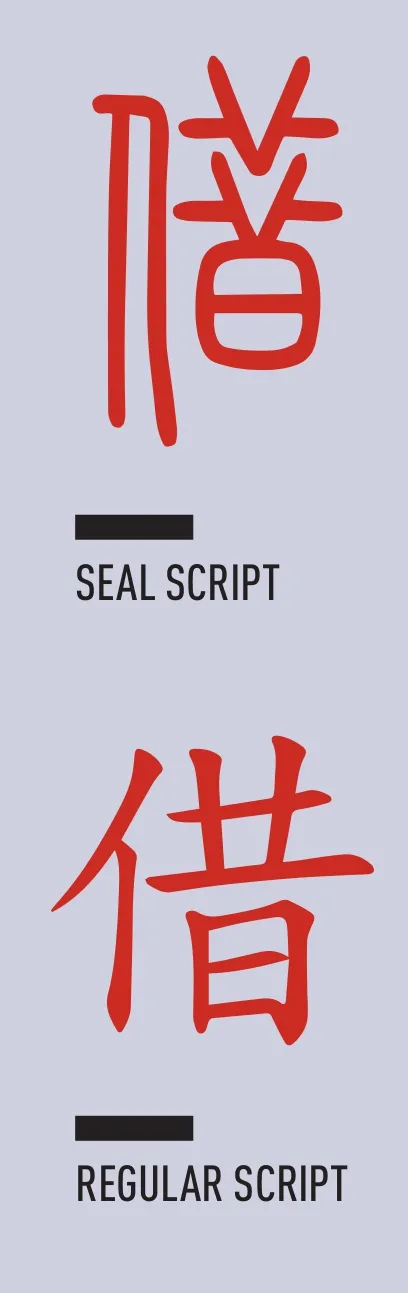
First appearing in the 2,000-year-oldAnalytical Dictionary of Chinese Characters(《說文解字》), the character 借 (jiè,borrow) consists of a “person (人 rén)”radical on the left side, and a “past(昔 xī)” radical on the right side.It refers to making temporary use of other people’s property, as in 借錢(jièqián, to borrow money) and 借書(jièshū, to borrow books).
The latter phrase naturally found favor with China’s scholarly elites.Yan
IN THE SPIRIT OF BORROWING
Throughout history,Chinese people have resorted to drinking to forget their troubles,encapsulated by the idiom 借酒澆愁 (jièjiǔjiāochóu, “drowning one’s sorrow in wine”).As Cao Cao wrote in his poem “Short Song(《短歌行》)”: “Who can unravel these sorrows of mine? / I know of only one man, the God of Wine (何以解憂,唯有杜康).” However, in the Tang dynasty (618 - 907),the poet Li Bai (李白)—a well-known alcohol addict—wrote, “Sorrow returns, though we drown it with wine (舉杯消愁愁更愁).”Tuizhi (顏之推), a scholar and educator from the sixth century, instructed inThe Family Instructions of Master Yan(《顏氏家訓》),“We must cherish all books borrowed from others (借人典籍,皆須愛護 Jiè rén diǎnjí,jiē xū àihù).” The Qing dynasty (1616 - 1911)literatus Yuan Mei (袁枚) noted a paradox about reading, “Only borrowed books will be earnestly read (書非借不能讀也 Shū fēi jiè bùnéng dú yě)”—namely, people will probably not read their own books because they believe they can read them anytime, but they will devour borrowed books because they need to return them eventually.
Confusingly, 借 means not only to borrow,but to lend.A librarian might say, “這本書是孤本,不外借 (Zhè běn shū shì gūběn, bú wài jiè, This is our only copy of the book,so it cannot be lent out).” When it refers to lending, 借 is often followed by the verb 給(gěi, to give) to indicate who the recipient is—for instance, 她把手機借給同學了 (Tā bǎ shǒujī jiègěi tóngxué le, She lent her mobile phone to a classmate).
Paired with its synonym 貸 (dài, loan), 借貸(jièdài) refers to the borrowing and lending of money, as in 這個工廠靠借貸維持生產 (Zhè ge gōngchǎng kào jièdài wéichí shēngchǎn, This factory depends on loans to operate).The receipt of a loan, or an IOU, is a 借條 (jiètiáo)or 借據 (jièjù).
As the folk saying goes, “One loan returned in time makes it easier to borrow a second time (有借有還,再借不難 Yǒu jiè yǒu huán,zài jiè bù nán).” It is important for a person to build a good reputation by returning borrowed goods or repaying (還 huán) their creditors in a timely manner.However, not all borrowed items can be returned, as the verbs借宿 (jièsù, putting someone up for the night)and 借讀 (jièdú, studying at a school away from one’s home area) indicate.
In the examples above, the character 借has been extended to mean making use of something in a broader sense.借鑒 (jièjiàn) is to draw lessons on others’ experience, and 借古諷今 (jiègǔ-fěngjīn) is to borrow a historical parable to criticize a current practice, often to disguise the barb and protect the critic from retribution.
In many idioms, 借 is used metaphorically.借刀殺人 (jièdāo-shārén, “to murder with a borrowed knife”) is to take advantage of another person to get rid of an adversary, and借花獻佛 (jièhuā-xiànfó, “to present Buddha with borrowed flowers”) is to make a present out of objects or opportunities provided by others.You might hear at a banquet, 今天是老孟請客,我借花獻佛,敬你一杯 (Jīntiān shì Lǎo Mèng qǐngkè, wǒ jièhuā-xiànfó, jìng nǐ yì bēi,Though Meng is the one treating us to dinner,I’d like to take the opportunity to toast you).
借 can also indicate the use of pretexts, as in借口 (jièkǒu, excuse) and 借故 (jiègù, making an excuse).In international politics, the Chinese government is often heard protesting against countries’ interference in others’ internal affairs in the name of human rights (借人權問題干涉別國內政 jiè rénquán wèntí gānshè biéguó nèizhèng).
In addition the character is used for etiquette.For instance, 借光 (jièguāng, literally“borrowing the light”), is a polite phrase one can use before asking others the time or for directions, or to request favors, as in “借光,去火車站怎么走 (Jièguāng, qù huǒchēzhàn zěnme zǒu, Excuse me, could you tell me the way to the railway station)?” It also refers to benefiting from association with somebody else,as in “借這個高考狀元的光,我們全校受到了市長的表揚 (Jiè zhège gāokǎo zhuàngyuán de guāng, wǒmen quánxiào shòudào le shìzhǎng de biǎoyáng, Thanks to a classmate who scored highly on the national college entrance exams,our entire school was praised by the mayor).”
It is said that 借光 originated with the nocturnal reading habits of Kuang Heng (匡衡), a man born to a poor family who grew up to be a prime minister in the Western Han dynasty (206 BCE - 25 CE).As a child, Kuang had been keen to learn, but had to work in the daytime and had no lamp oil for reading at night.One evening, he noticed a slim beam of light shining from his neighbor’s house through a small hole in the wall, so he chiseled a bigger hole to use the light for reading.Known as 鑿壁借光 (záobì-jièguāng, “borrowing light by chiseling a hole in the wall”), the story has been used to encourage children to study hard(hopefully without damaging their neighbors’property or invading their privacy).
