
A Case Study on Students’Attitude in Blended Learning
2021-01-11 03:08:28
Proceedings of Northeast Asia International Symposium on Linguistics,Literature and Teaching 2020年0期
Xinjiang University,Xinjiang,China Email:454576233@qq.com
[Abstract]The present study surveyed into the students’attitude toward blended learning from three dimensions.The subjects are non-English majors,and the results show that the students hold a positive attitude toward blended learning.Among the affective attitude,behavioral attitude and cognitive attitude,the students’affective attitude towards blended learning is the highest.Behavioral attitude is the lowest whereas it is still above the average level,which proves that the students are willing to accept the mode of blended learning.The individual factors,such as birth place,family educational background,personal average income play significant roles in affecting students’attitude toward blended learning.
[Keywords]blended learning,learning attitude
Introduction
Since 2007,the online teaching as a new teaching model has affected many countries in the world.However,online teaching has certain disadvantages,like lacking of interaction between the students and teachers,and lacking of focus from the students’part compared with traditional face-to-face teaching.Blended learning combines the advantages of traditional teaching and online teaching(He,2004).Attitudes plays a vital role in the process of learning.This survey is to investigate the students’attitude toward blended learning to supplement the previous research.
Literature Review
Blended Learning
He Kekang(2004)is the first one in China to propose that the so-called blending learning is to combine the advantages of traditional learning methods with the advantages of E-learning.Only in this way the teaching mechanism of students centered can be realized.Bliuc(2007)described blended learning as the combination of face-to-face interaction and online interaction between students and students,students and teachers,and students and resources.Yen and Lee(2011)called blended learning“a fundamental change and redesign of the teaching model”,and proposed three characteristics of mixed teaching:(1)a shift from lecture-centered to student-centered;(2)increase in interaction between students-instructor,student-student,student-content,and student-outside resources;(3)integrated formative and summative assessment mechanisms for students and instructors.
Attitude
Attitude,as a mental and neural state of readiness,organized through experience,exerting a directive or dynamic influence upon the individual’s response to all subjects and situations with which it is related.(Allport,1954,p.45)
Learning attitude refers to a relatively stable psychological tendency of students in their learning situations.Rosenberg and Hovland(1960)proposed the ABC three-dimensional structure theory of learning attitudes.They believed that learning attitudes consist of three parts:individual’s emotional experience(A),behavioral tendency(B)and cognitive level(C).
Studies on the Relationship Between Blended Learning and Attitude
Raven et al.(1998)found the WWW(World Wide Web)-dependent class had a higher mean gain for attitude toward writing compared with traditional instruction.He and Fan(2004)found that learners’attitudes towards computer-assisted teaching affected the teaching effect under the information-based model.Liaw et al.(2007)found that learners’attitudes,self-paced,teacher-led,and multimedia instruction are major factors to affect learners’attitudes toward e-learning.Liaw et al.(2008)indicated that five attitude factors(system functions,system satisfaction,collaborative activities,learners’characteristics,and system acceptance)should be examined at the same time when building a Web-based collaborative learning system.Sezer(2016)revealed that students’attitudes toward e-learning were neutral.Watson et al.(2017)found the MOOC learners often view MOOCs more as entertainment as opposed to formal education.
Research Methodology
Research Background
The subjects of this study are 1981 non-English majors from a university in Xinjiang.This study intended to investigate the learners’affective attitude,behavioral attitude and cognitive attitude in their current blended learning of English,thus to put forward some advice and suggestions for further improvement.
Research Questions
What are the attitudes of the subjects in their blended learning of English?
What factors may influence the subjects’attitude?
Data Collecting Instrument
Questionnaire was used to conduct the survey.The question was adopted from Zhang’s research(2019),and was revised based on the situation of real teaching.A pilot study was conducted to make sure the survey was qualified.The questionnaire includes 47 items.The first part consists of 11 items on the subjects’personal information.The second part includes 27 items on the affective attitude(6 items)and cognitive attitude(21 items).The last part is about the behavioral attitude(9 items).Both of the second part and the third part use the Likert Scale.The Cronbach alpha of the current study is 0.950.The KMO and Bartlett's Test coefficient is 0.964.Data indicates that the questionnaire is of high reliability and validity.
Results and Discussion
The Mean of ABC Attitude
According to table 1,the mean of the affective,behavioral and cognitive attitudes are all above three points.The result shows the students hold a positive attitude towards the blended learning.And the affective attitude is the highest which proves the students are willing to accept the blended model of learning.Though behavioral attitude is the lowest,the mean of the behavioral attitude is still above 3 point,hence the students’behavioral attitude is still positive.

Table 1.The mean of the ABC attitude
The Affective Attitude
Affective attitude refers to the emotion or feelings including statements of likes or dislikes.The mean of the items are all above 3 points.This means that the students are willing to accept the model of blended learning.The second item gets the highest mean of all the six items.The university’s online video is composed of different parts,which are presented by different teachers.Each teacher has their own teaching styles to invoke the students’enthusiasm and to avoid the visual fatigue.Item 3 shows that the students are willing to discuss or cooperate with their classmates during offline learning.The fourth,fifth and sixth items are different learning styles,the mean score shows the students are more willing to accept blended learning compared with online learning,the data also proves that the students are accustomed to have the teacher to accompany with them in their learning process.
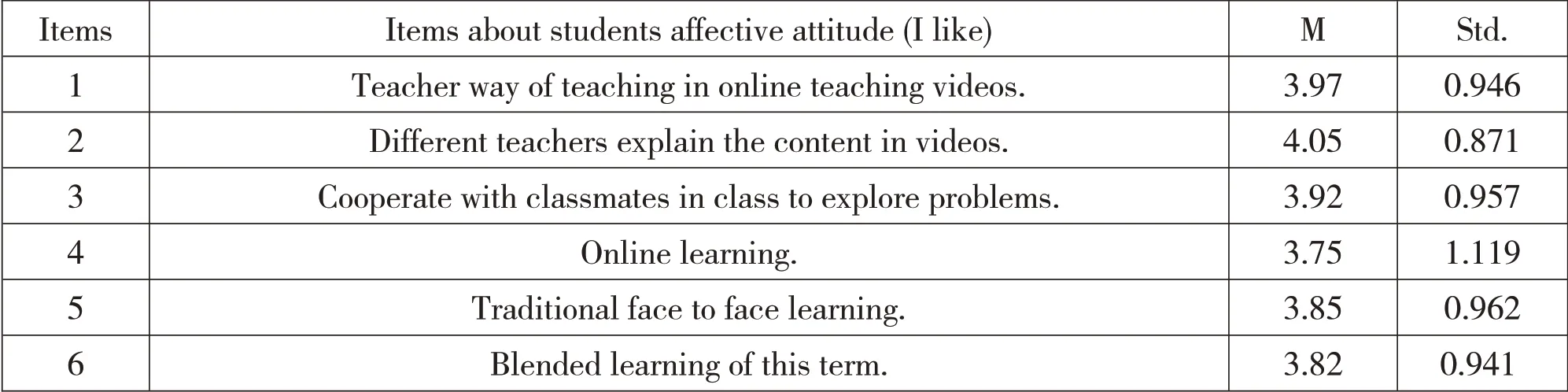
Table 2.The Mean of the Affective Attitude
The Behavioral Attitude
Behavioral attitude refers to the behavioral purposes or real behavior of a person to learn.

Table 3.The Mean of the Behavioral Attitude
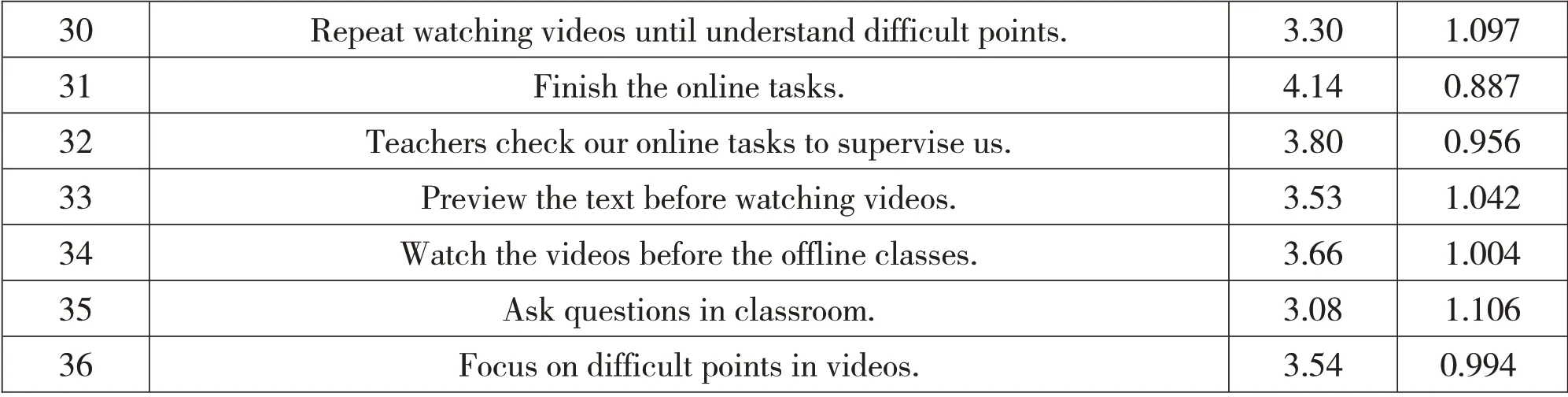
30 31 32 33 34 35 36 Repeat watching videos until understand difficult points.Finish the online tasks.Teachers check our online tasks to supervise us.Preview the text before watching videos.Watch the videos before the offline classes.Ask questions in classroom.Focus on difficult points in videos.3.30 4.14 3.80 3.53 3.66 3.08 3.54 1.097 0.887 0.956 1.042 1.004 1.106 0.994
Table 3 shows the behavioral attitude of the students,5 out of 9 items are above 3.5 points,which indicates that students’behaviors in these perspectives are rather satisfactory.Taking notes,trying to solve the difficult points by themselves,repeating to watch the videos and asking questions in class are relatively lower compared with others.The result indicates that students’learning strategies concerning these aspects need to be strengthened.
The Cognitive Attitude
Cognitive attitude refers to a person’s concept and view of learning.The questionnaire explores the cognitive attitudes from the perspectives of online learning,offline learning and blended learning.Table 4 indicates that overall the students cognition attitude is above the average level,whereas the blended cognition gets the highest among them,then comes the offline,the online is the lowest.

Table 4 The Mean of the Cognitive Attitude
Cognitive attitude toward online learning is related to technology,teachers,teaching content and learning autonomy.In the aspect of technology,the result indicates that the students are not satisfied with their own technique ability,so the training of the students’usability is a necessity.The data also shows network quality is an indispensable part in blended learning,the result corresponds to Zhao & Yuan’s(2010).In the aspect of teachers,the teacher should not speak too fast or present too much content for the students,the students who are not good at English may find it is difficult for them to understand and follow the teacher’s pace.In the aspect of teaching content,students think that through the online videos,their listening,reading,speaking,writing ability can be improved,especially the listening ability,this finding corresponds with the former scholars as well.In the aspect of learning autonomy,the data indicates that the students lack of self-control ability,the relevant department or teachers should take some measures to supervise the students’learning.
The offline learning data shows that the students think that presenting in class,cooperating and discussing with classmates and critical thinking can result in good learning outcomes.Blended learning concern with student’s proficiency,the result indicates blended learning can help students improve their independent learning ability,speaking ability,overall ability and broaden their knowledge to a large extent.
The Influence of Individual Differences on Learning Attitude
Difference on Birth Place
Table 5indicates that the students from the rural area are more positive toward blended learning in all three aspects,especially in the aspect of behavioral attitude(sig=0.013<0.05).

Table 5 Independent Samples T Test on Birth Place
Difference on Father and Mother’s Educational Background.
The ANOVA test shows that there is a significant difference(sig.=0.003<0.01)on the behavioral attitude and cognitive attitude in the aspect of mother’s educational background.Surprisingly,the result proved that when students’mother educational background is as high as postgraduate or above,the students’attitude towards blended learning declines,though the data is just a little above that of high school.Compared with mother’s educational background,the higher fathers’educational background is,the more positive attitude will be.The father’s educational background plays a role(sig.=0.009<0.01)in affecting student’s behavioral attitude towards blended learning.
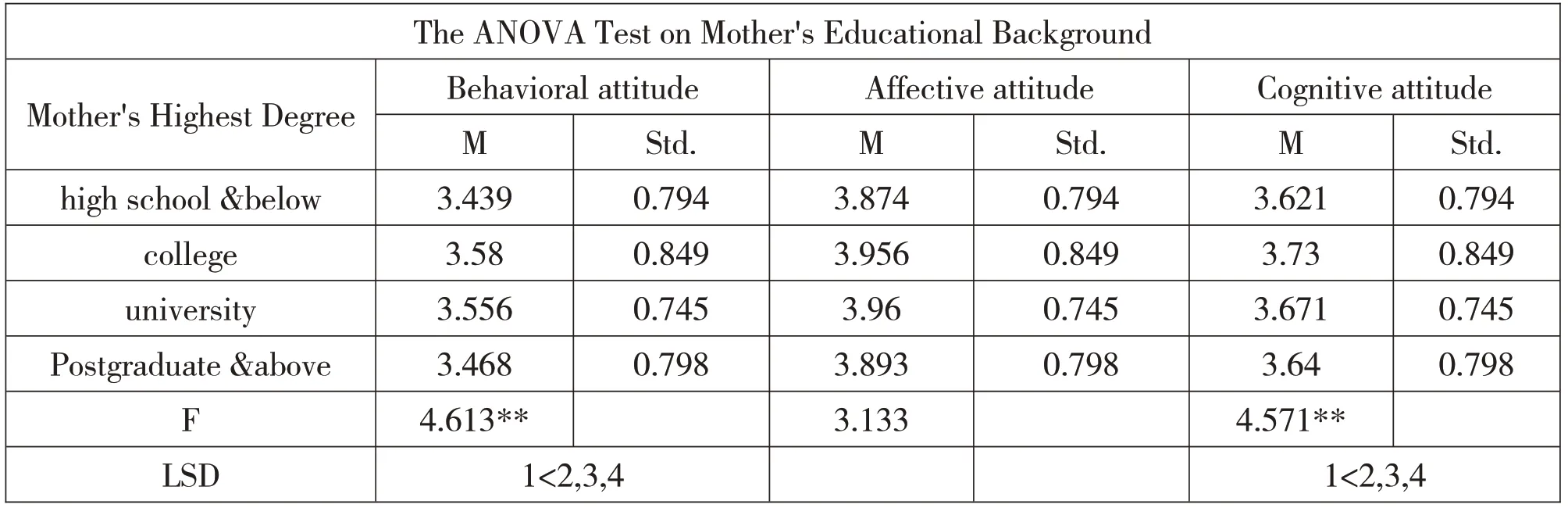
Table 6 The ANOVA Test on Mother’s Educational Background
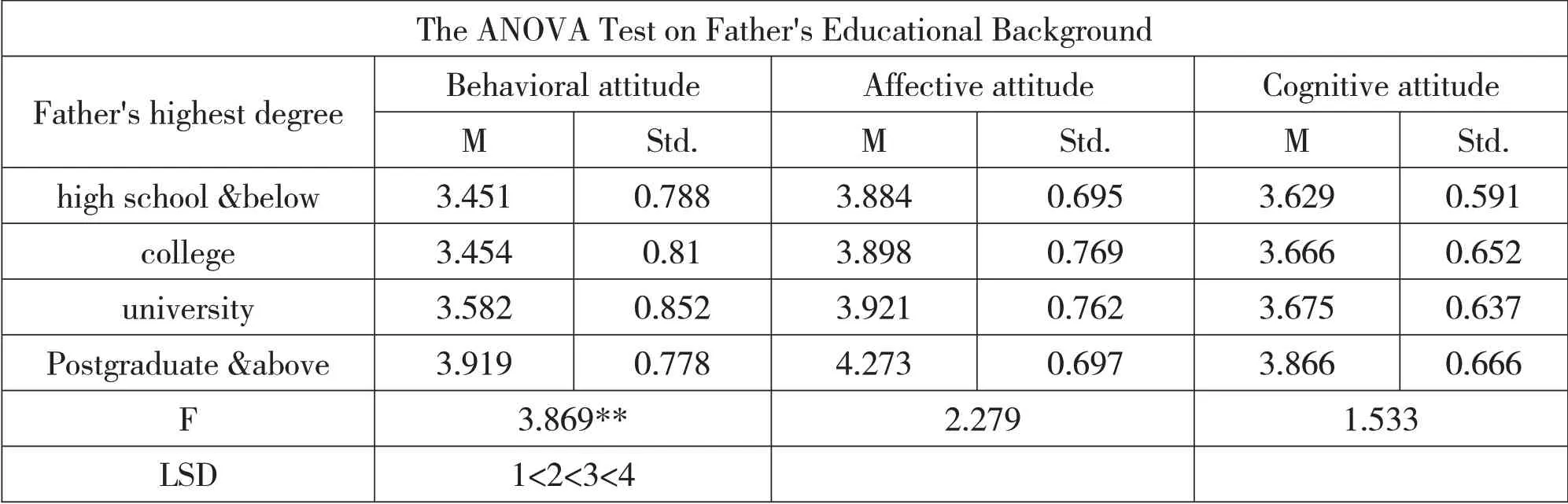
Table 7 The ANOVA Test on Father’s Educational Background
Difference on Average Personal Income.
The ANOVA test shows that there is a significant difference(sig.=0.04<0.05)in the aspect of average personal income in the construct of the behavioral attitude.The mean of the result shows that the students’family average income below 600 yuan each month has a more positive attitude in the aspect of the behavioral attitude compared with the family whose personal average income is higher.
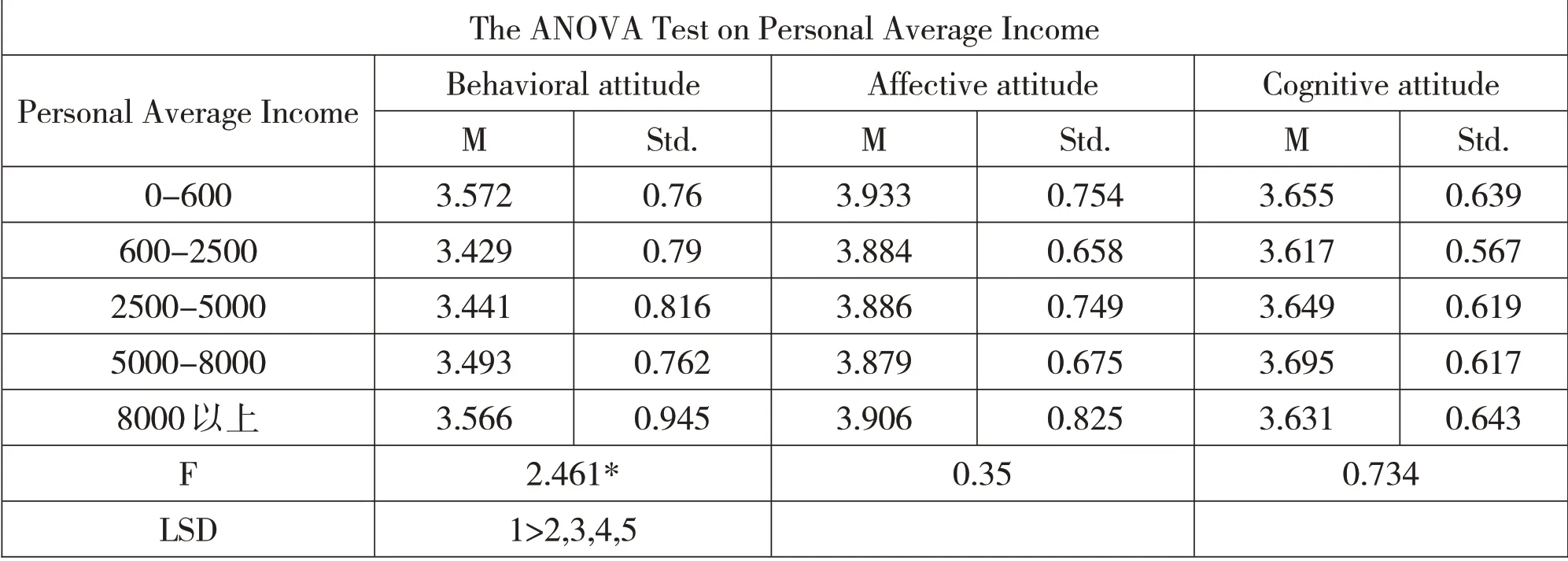
Table 8 The ANOVA Test on Average Personal Income
Conclusion
This survey looks into students’attitude towards blended learning through three aspects.The students hold positive attitudes in all the three aspects of attitude towards blended learning.Among them,the affective attitude gets the highest,then comes the cognitive attitude.Behavioral attitude is the lowest,however it is still above the average level.
A series of t-tests and one-way analysis of variance(ANOVA)test were conducted.The result indicates that birth place,family educational background and personal average income may play a significant role in affecting students’attitude towards blended learning.
Acknowledgements
Support for the present research by the Scientific Research Fund for Ph.D Scholars of Xinjiang University[BS180107],the Fund of Education Department of Xinjiang[XJGXWYJG2018JA01],and the Postgraduate Innovation Projects funded by Education Department of Xinjiang[XJ2020G018]is gratefully acknowledged.
 Proceedings of Northeast Asia International Symposium on Linguistics,Literature and Teaching2020年0期
- Proceedings of Northeast Asia International Symposium on Linguistics,Literature and Teaching的其它文章
- Exploration of the SPOC-based Blended Teaching Model:Case Study of Business English Course
- Reducing Students’Foreign Language Speaking Anxiety Through Drama Performance
- An Action Research on Blended Learning through News Broadcasts in EFL Listening Context
- Growth Mindset in Teaching
- A Study on Corpus Stylistics Assisted English and American Literature Teaching
- Promoting Architectural Values in Culturebound Scenery in Tourist Destinations