為千年紙山作證
2021-01-09 11:41:38黃松光
文化交流 2021年12期
關(guān)鍵詞:文化
黃松光


何為澤雅?何為紙山?何為千年紙山?何為千年紙山文化?長(zhǎng)期以來,澤雅被無標(biāo)準(zhǔn)地名、無行政版圖、無文字史料這些“頭巾”遮蓋著,人們一直視它為神秘之地,并渴望打開這塊人類自然文化歷史“活化石”之謎?
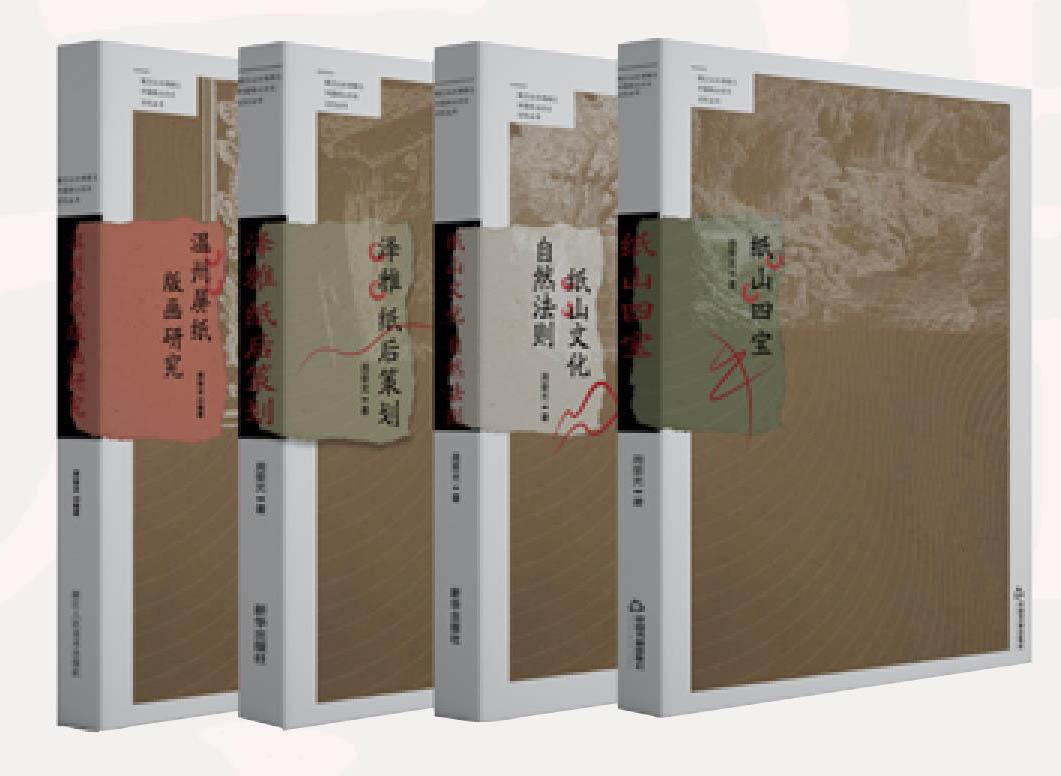
一年前,溫州媒體報(bào)道了年逾八旬的甌海區(qū)退休干部周榮光退休十年只做一件事的事跡。他心系大山、著書立說、傳播千年紙山文化的報(bào)道發(fā)布后引起社會(huì)較大反響。今年國(guó)慶前夕,86歲的“浙江好人”周榮光在經(jīng)歷一場(chǎng)大病的磨難之后又不遺余力、傾其心血交出了圓滿答卷:“甌江山水詩路”之中國(guó)紙山文化記憶叢書《紙山文化,自然法則》《溫州屏紙版畫研究》《紙山四寶》《澤雅 · 紙后策劃》《那年,紙山行》《許愿三章》分別由新華出版社、浙江人民美術(shù)出版社、中國(guó)民族文化出版社、中國(guó)書籍出版社付梓出版了。
結(jié)緣:解開澤雅前世今生
論“澤雅”起源,說“紙山”出身,講“千年紙山”身價(jià),道“紙山文化”地位……在歷史的長(zhǎng)河里,標(biāo)準(zhǔn)答案自然難找,因此成為歷代澤雅人接續(xù)不斷的歷史使命。
周榮光一個(gè)甲子都扎根于澤雅。1952年,以永嘉縣財(cái)糧統(tǒng)計(jì)隊(duì)小組長(zhǎng)的身份,第一次翻山越嶺去澤雅山區(qū)校對(duì)山農(nóng)土地的“田畝冊(cè)”。1962年,以溫州市民政局干部身份負(fù)責(zé)澤雅山區(qū)扶貧濟(jì)困工作。1982年,經(jīng)組織批準(zhǔn)周榮光正式調(diào)往上海市醫(yī)藥局黨校工作,但實(shí)現(xiàn)了與妻子和兒女團(tuán)聚愿望的他,一直牽掛著澤雅,又萌發(fā)重返澤雅山區(qū)扶貧工作的心愿。1987年9月,他從上海市委黨校脫產(chǎn)讀書畢業(yè)后,就立即申請(qǐng)重回溫州澤雅“踐行學(xué)術(shù)研究”,扶貧再次開啟生涯。
半個(gè)多世紀(jì)與澤雅結(jié)緣的周榮光,對(duì)解開澤雅神秘之謎如癡如醉。他發(fā)現(xiàn)澤雅曾是個(gè)陌生的地名,據(jù)已發(fā)現(xiàn)的建于唐龍紀(jì)年間(889)的極樂禪寺寺碑記載,此前澤雅已有人類活動(dòng),但沒有留下明確地名,僅稱“永嘉西路諸山”,至晚清《永嘉縣志》才標(biāo)有“寨下”地名。明弘治《溫州府志》記載:澤雅舊稱“寨下”。清光緒《永嘉縣志》載有“澤雅”之名,與溫州方言“寨下”諧音。
周榮光從重返澤雅當(dāng)“父母官”——澤雅區(qū)副區(qū)長(zhǎng)、區(qū)長(zhǎng)、書記起,立誓做地地道道的“澤雅人”,很快跑遍80余個(gè)村莊,與干部促膝談心,與老農(nóng)結(jié)為故友,摸清一山一水、一草一木、一垅一地、一村一落、一宅一姓的“底細(xì)”。他斷定澤雅神秘之處:地處甌江支流戍浦江沿岸,是一個(gè)山巒疊嶂、巔峰林立、坑谷縱橫、溪流密布、平地狹小的地域,有千年造紙歷史,始于唐宋,盛于明清,歷以“紙山”為統(tǒng)稱。這個(gè)區(qū)域的造紙方式,長(zhǎng)期以來基本上與《晉書》所載的“造作水輪”“水激輪轉(zhuǎn)”“一起一落舂之,即連機(jī)碓也”的方式相同,甚至千年不變。
周榮光將澤雅紙山文化的特征歸納描述為:中國(guó)南方沿海山區(qū)紙農(nóng)文化,是中華民族文化脈脈相承的特殊區(qū)域文化,屬古甌越文化中農(nóng)耕文化的一個(gè)支脈。這個(gè)支脈的文化發(fā)展特征是:在原始古老的山水文化孕育下,以千年紙山文化為主流文化的多元文化的特殊區(qū)域文化。它是古甌越文化的一個(gè)支脈、中華民族“大文化”的重要組成部分,是綿延不斷的千年文化遺產(chǎn),此地構(gòu)筑起了一座沒有圍墻的全域“紙山文化博物館”,給人以智慧與力量。
周榮光將澤雅人自然文明觀敘述為:澤雅人以“山為骨架,水為血脈”的自然環(huán)境構(gòu)想,因地制宜,就地取材,追求人與自然和諧統(tǒng)一,把田園山水景觀裁剪到人居村落中來融入宗族禮制、宗教信仰、風(fēng)水觀念、防御意識(shí)和勞動(dòng)內(nèi)容、煙火飲食、人文藝術(shù)等多方面功利要素和文化理念,構(gòu)成“天人合一”的中國(guó)古代紙農(nóng)社會(huì)特點(diǎn)的理想環(huán)境和協(xié)調(diào)的總體布局,創(chuàng)造了自身的生存繁衍和千年紙山文明史。這便是這一獨(dú)特區(qū)域中誕生的紙山文化之魂脈。
澤雅人獨(dú)特的生產(chǎn)生活方式是:山水為源,人力為本;平疇建屋,山坡造田;依山種竹,傍水造碓(槽);遠(yuǎn)水搗刷(料),高山種地;肩擔(dān)手?jǐn)y,徒步裸履;石(巖)竹(材)制具,柴木生火;山外賣紙,山里為居;野餐為常,家聚為半;雜糧為主,瓜菜為代;全家勞作,自給自足。
澤雅人的性情氣質(zhì)表現(xiàn)為:粗放原始、古樸真實(shí)、簡(jiǎn)潔直觀、自然本我,其中包括人的文化意識(shí)、思維方式、性格性情,待人接物、處事行為以及生產(chǎn)生活的勞動(dòng)工具、勞動(dòng)對(duì)象、制作技術(shù)、產(chǎn)品造型、用材質(zhì)地、民居建筑、生活飲食等方面。
續(xù)愿:叫響“紙山文化”
數(shù)十年來,老周幾乎終年山里山外、進(jìn)進(jìn)出出,不間斷地走在澤雅、住在澤雅、吃在澤雅,尤被千年紙山文化深深吸引,暗自許諾在有生之年要讓“紙山文化”走出大山。
2010年農(nóng)歷大年初二,已邁入75歲高齡的周榮光,由74歲老伴當(dāng)“秘書”、女兒當(dāng)“司機(jī)”,徑直從上海出發(fā),一路到慶元、遂昌、龍游、縉云、武義、青田等地吃“菜”比較,開始了研究“紙山文化記憶”的首個(gè)課題——“紙農(nóng)菜”之旅。歷經(jīng)五載春秋,他最終搜集了澤雅山區(qū)1000余種紙山菜品、上百種炊具,把菜品歸納為23個(gè)大類、120個(gè)系列、1082種,包括30多種點(diǎn)心小吃、10多種家酒、10多種飲料、18種食療菜整理概括了一整套操作方法流程、配套設(shè)施設(shè)備名稱和宴請(qǐng)禮儀習(xí)俗,并總結(jié)出5大經(jīng)典特色、6大傳統(tǒng)技術(shù)、8大飲食文化、16字品質(zhì),形成菜品文化體系和譜系,并花費(fèi)100余萬元,由中華書局出版了中國(guó)第一部“紙農(nóng)菜”研究成果叢書。囊括75萬字、800余張圖片的《澤雅 · 紙農(nóng)鄉(xiāng)味》,第一次叫響了中國(guó)“紙農(nóng)菜”,并且有了自己的譜系。
屏紙版畫是以澤雅屏紙?jiān)蠟榛A(chǔ)的杰作,更為溫州悠久文明歷史孵化的產(chǎn)物,曾一度被定為迷信用品而銷聲匿跡。周榮光從2018年開始探訪溫州尚存的兩大發(fā)明即活字印刷術(shù)、紙馬雕版印刷術(shù)和屏紙?jiān)旒埿g(shù)(簡(jiǎn)稱“三術(shù)”),之后從歷史考證和實(shí)際應(yīng)用分析了“三術(shù)”聯(lián)姻可使屏紙版畫重生的可能性、現(xiàn)實(shí)性,提出“三術(shù)”聯(lián)姻有“十同”基礎(chǔ)結(jié)合點(diǎn):同源、同流、同藝、同伴、同、同韻、同道、同需、同求、同命運(yùn)。他邊求索邊實(shí)踐終于使失傳已久的古老藝術(shù)再現(xiàn)輝煌。他從10個(gè)方面的文化脈絡(luò)予以發(fā)掘研究、考察論證,認(rèn)為它是蘊(yùn)含非遺“三術(shù)”元素的文化脈絡(luò)源流之粹,具有獨(dú)特藝術(shù)個(gè)性與文化意境韻味:故韻屏紙,甌風(fēng)雕術(shù)。他完成撰著《溫州屏紙版畫研究》,成為我國(guó)首部古甌越文化之屏紙版畫的研究著作。
“千年紙山”文化脈絡(luò)告訴人們,澤雅存有“四寶”:紙農(nóng)菜、屏紙版畫、周岙挑燈、四連碓。“紙農(nóng)菜”是澤雅人文化魂脈之延伸,是古甌越文化中農(nóng)耕文化在特殊區(qū)域的形式的一種食文化,是一座取之不盡、用之不竭的人類物質(zhì)與非物質(zhì)的文化寶庫,給人類社會(huì)以“魂”與“力”,推動(dòng)著歷史發(fā)展與進(jìn)步,是中華民族大文化中的一宗歷史、一脈文化、一種資源。“屏紙版畫”是與非遺“三術(shù)”技藝結(jié)合,從而創(chuàng)造出的一種新的技藝,也是一種文化藝術(shù)品。“周岙挑燈”指的是周岙正月十三鬧花燈,這項(xiàng)民俗文化活動(dòng)已有600余年歷史,被稱作浙南地區(qū)保存最好、最熱鬧、最有韻味的元宵燈會(huì)民俗活動(dòng),被列入省級(jí)非物質(zhì)文化遺產(chǎn)名錄。“四連碓”被稱為是中國(guó)古代造紙術(shù)的“活化石”,其四連碓造紙作坊被列為全國(guó)重點(diǎn)文物保護(hù)單位。周榮光撰著的《紙山四寶》,論述“四寶”的產(chǎn)生、存在與發(fā)展的自然物化價(jià)值,并運(yùn)用“原著手稿”與“正文對(duì)照”方式,成為獨(dú)特新穎的著作。
紙山風(fēng)光秀麗,古紙遺輝,地靈人杰,物華天寶。浸潤(rùn)于紙山山水之中,他用文學(xué)筆調(diào)寫下了一篇篇散文,創(chuàng)作出了《那年,紙山行》。他還寫了一首歌詞《澤雅美,美就美在澤雅水》,邀名家譜曲,配以高昂雄壯、堅(jiān)定信心旋律,令人振奮無比。
周榮光從在澤雅數(shù)十年的工作和生活中發(fā)現(xiàn),澤雅97%地域是山與水,93%人口從事紙業(yè)與農(nóng)業(yè),造紙業(yè)衰落之后,該地區(qū)產(chǎn)業(yè)結(jié)構(gòu)、就業(yè)結(jié)構(gòu)、資源配置等都發(fā)生了巨大的變化,因此它的未來區(qū)域規(guī)劃、資源利用、發(fā)展模式和經(jīng)營(yíng)方式、區(qū)際經(jīng)濟(jì)關(guān)系等都亟需重組。所以他大膽提出了《澤雅 · 紙后策劃》課題,從特定的理論與應(yīng)用兩個(gè)方面,對(duì)其區(qū)域經(jīng)濟(jì)進(jìn)行模擬規(guī)劃。
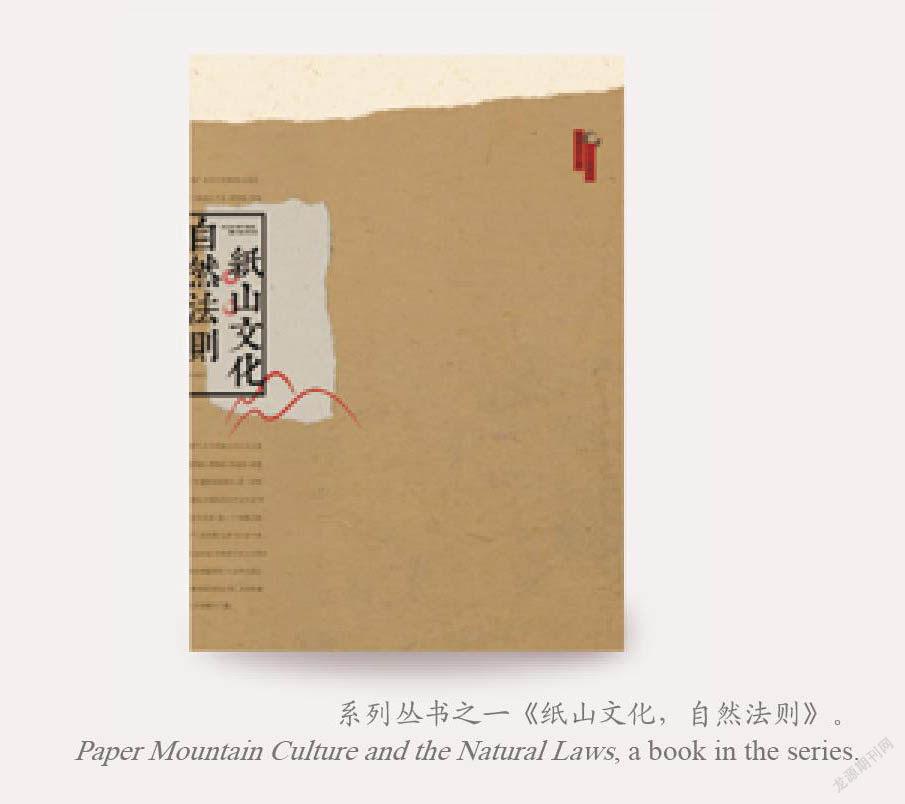
紙山文化是人類社會(huì)共有的財(cái)富,周榮光在《紙山文化,自然法則》中給出了答案:天、地、人、道和自然融合一起,“千年紙山,自然澤雅”是自然法則,他集中論述了“紙山文化”源于自然、回歸自然及其“在原始古老的山水文化孕育下,以千年紙山文化為主流文化、多元文化并存的特殊區(qū)域文化”的屬性與定義。
夙愿:出版紙山文化叢書
周榮光自稱“不文不武”,其實(shí)他從幾十年參政、參軍及退休的人生歷程中走來,一直都屬于“能文能武”者。尤其是46歲時(shí)他萌發(fā)“仕途淡去,學(xué)術(shù)有道”之念,自我設(shè)計(jì)人生“方向標(biāo)”,走上亦政亦學(xué)之路,開始潛心攻研區(qū)域經(jīng)濟(jì)學(xué),他在澤雅邊實(shí)踐邊探索,撰著了《澤雅山區(qū)經(jīng)濟(jì)探索》一書,用40年撰著了1000萬字、100余篇研究論文,均以真摯的情感、求是的信仰閱讀世態(tài)、探究經(jīng)濟(jì)、策劃時(shí)空,破譯人類社會(huì)發(fā)展的源和流。他先后撰著出版22本書籍,其中由新華出版社出版他在國(guó)內(nèi)首次提出“跨越第三步”命題的同書名《跨越第三步》。他被譽(yù)為“區(qū)域經(jīng)濟(jì)研究學(xué)者”“獨(dú)立策劃人”,新華出版社此后又出版了他的經(jīng)濟(jì)研究論文集、上下冊(cè)的《天地方寸間》。
十年紙山行之后,85歲的周榮光立誓要在有生之年完成紙山文化記憶叢書撰著。2020年5月31日,他再次帶著84歲且大病康復(fù)中的老伴來到溫州,并將老伴安置在甌海頤養(yǎng)中心,自己則撲在出書上,從《溫州屏紙版畫研究》等叢書的封面設(shè)計(jì)、書樣校對(duì)、文章修改到書號(hào)申請(qǐng)等。那段時(shí)間他每天沒日沒夜地工作,疾病突然降臨:7月9日午夜,他肝部疼痛難忍,徹夜難眠,熬到次日四時(shí)多,只身到附近醫(yī)院急診掛滴,然后輾轉(zhuǎn)至溫州市中心醫(yī)院救治。但在住院治療的十天里,他仍不停地在病床上改稿、寫稿,并撰寫“眾籌”出版發(fā)行的策劃書。7月19日,他被兒子轉(zhuǎn)院到上海治療,卻被診斷為肝癌。7月24日,85歲的他被推上手術(shù)臺(tái)前最牽掛的仍是紙山文化記憶叢書的出版發(fā)行……兩個(gè)月后,當(dāng)就在出院康復(fù)療養(yǎng)的當(dāng)天,他又風(fēng)塵仆仆地乘高鐵從上海返回溫州。之后的一年多,他一邊療養(yǎng)康復(fù),一邊護(hù)理老伴,一邊繼續(xù)撰寫、修改叢書,并由溫州甌海區(qū)委組織部、宣傳部等“眾籌”到120萬元幫助他實(shí)現(xiàn)晚年的“心愿”。今年國(guó)慶前夕,由他編著的200萬字的“甌江山水詩路之中國(guó)紙山文化記憶叢書”六冊(cè)終于出版發(fā)行。這是首部反映古甌越特殊山水風(fēng)情文化的見證記錄,是記錄千年紙山文化遺產(chǎn)之巨作,向世人展示了“甌越文化遺存,活態(tài)保護(hù)傳承”之瑰寶。
周榮光自稱,為千年紙山作證是有生之年的最大愿望,十年間,他獨(dú)立完成了寫澤雅、說澤雅人、講紙山、道紙山文化的10本共400萬字、上萬張圖片的珍貴文史書籍創(chuàng)作,成為破譯人類社會(huì)發(fā)展“密碼”的集大成者之一。
Bearing Witness to the Thousand-Year-Old
Paper Mountain
By? Huang Songguang
What is Zeya and where is it? What is the Paper Mountain? What is the thousand-year-old Paper Mountain? What is the thousand-year-old Paper Mountain culture? For a long time, Zeya is “obscured” by a lack of standard place names, administrative territories and written historical materials. To outsiders, Zeya has always been looked upon as a mystery, and many are keen to crack open the secrets of the “l(fā)iving fossil” of mankind’s natural and cultural history.
Thanks to an 86-year-old retiree, more people will now get to know about Zeya and its mysterious Paper Mountain culture. For more than a decade, Zhou Rongguang, a retired official from Ouhai district in Wenzhou city, has been dedicated to one single goal: to write about the Zeya mountain area and its papermaking tradition. The result? A series of six books, including The Paper Mountain Culture and the Natural Laws, A Study on Wenzhou’s Screen Paper Prints, The Four Treasures of the Paper Mountain and Journeys to the Paper Mountain, which have been published recently by Xinhua Publishing House, Zhejiang People’s Fine Arts Publishing House, China Nationality Culture Press and China Book Publishing House.
When it comes to the origins of Zeya and the Paper Mountain, and the significance of the Paper Mountain culture, there seems no standard answers readily available, which has become the historical mission for the local Zeya people to find out.
It has taken Zhou Rongguang a full sixty years to know Zeya. In 1952, the first time that Zhou had ever set foot in the Zeya mountain area, he was there calibrating the local agricultural land. In 1962, he was put in charge of the poverty alleviation campaing in the Zeya mountain area. Twenty years later, Zhou was finally able to reunite with his family in Shanghai, but poverty alleviation in Zeya was never far from his mind. In September 1987, he asked to return to Zeya and stayed there for another six years.
From the very beginning, Zhou has been fascinated by the enigmatic Zeya. For one thing, he found that the name of the place is a puzzle in itself. While a temple inscription dating back to the year 889 in the Tang dynasty (618-907) shows that humans had long been settled in the area, no specific names were recorded, except for the general designation “mountains in the west of Yongjia [as Wenzhou has been historically known]”. It wasn’t until the late Qing (1616-1911) period that the name “Zhaixia” was found in the local annals. Zhaixia, literally meaning “under the mountain village”, is pronounced Zeya in the local dialect.
After Zhou Rongguang returned to Zeya, he became the head of the then Zeya Area. He immersed himself into the place, vowing to be a genuine “Zeyan”. Soon he covered more than 80 villages in the area, had heart-to-heart talks with the locals and got to know the details of every household, every hill, every river. He concluded that Zeya, located in the Oujiang River tributary, has a thousand years of papermaking history, which started in the Tang and Song (960-1279) dynasties and prospered in the Ming (1368-1644) and Qing dynasties. The place has historically known as the “Paper Mountain”. Indeed, throughout the millennium, the way of producing paper in this area remains unchanged.
For Zhou, the Paper Mountain culture is a paper agricultural culture in the mountainous areas of east China’s coast. It is a unique regional culture in China and a branch of the agricultural culture of the ancient Ouyue culture. He defined it as “a special regional with the thousand-year-old Paper Mountain culture as its core, born in the primitive ancient landscape culture”. Now, it has become a “Paper Mountain Culture Museum” without walls.
The Zeya people’s unique way of production and life is described as human-oriented, taking nature as the source. They build houses on flat ground and till farmland on the hillside; they plant bamboo along the mountains and build water hammers alongside the rivers; they soak fresh bamboo in lime water and mash it through water hammers; they carry goods with shoulders and hands, and walk barefooted; they make tools out of stones and bamboo; they sell paper outside of the mountain area whiling living inside; and the whole family works and provide for themselves. The temperament of Zeya people is considered to be natural and ingenuous.
Over the years, Zhou had stayed in the Zeya mountain area, traversing there, sleeping there, eating there, mesmerized in particular by the age-old Paper Mountain culture. He was determined to bring the Paper Mountain culture to a much wider audience in his lifetime.
In 2010, on the second day of the Chinese New Year, the then 75-year-old Zhou, accompanied by his wife, who doubled as his “secretary”, and his daughter, who served as his “chauffer”, hit the road for his first project on the Paper Mountain culture: the local cuisine. In the next five years, he collected over 100 cooking utensils and 1,082 dishes, which he then put into 23 categories and 120 series. In addition, he also obtained more than 30 snacks, 10 acholic drinks, 10 soft drinks as well as 18 dietary therapy dishes and their cook methods, apart from wedding banquet customs. He personally spent one million yuan and published with the Zhonghua Book Company the first ever book series in China on “paper farmers’ dishes”.
The screen paper prints are another project that Zhou worked on. Based on the Zeya screen paper, the traditional screen paper prints, often used as paper charms, have been lost in recent decades. However, after Zhou examined Wenzhou’s movable type printing craft, its traditional paper charm printing craft and the screen papermaking craft in Zeya, he not only helped revive the practice of screen paper prints, which is now called “Wenzhou Screen Paper Prints”, but also published a monograph — again China’s first — on it.
In another of Zhou’s book, Four Treasures of the Paper Mountain, he recounts the origins, development and significance of the four treasures in Zeya. The paper farmers’ dishes are seen as the essence of the local food culture and a mirror of Zeya’s unique regional culture, while the screen paper prints are regarded as a historical art form given new life. On the other hand, the “Zhou’ao Hanging Lanterns”, observed on the 13th of the first lunar month for the past 600 years, is one of the largest and best-preserved lantern traditional fairs in Southern Zhejiang, and it is also an intangible cultural heritage protected at the provincial level. The fourth treasure, the Siliandui Papermaking Workshops, mainly consisting of workshops in Shiqiao village, Hengyang village and Tangzhai village in the Zeya mountain area, is the “l(fā)iving fossil” of China’s ancient papermaking craft.
On top of the above works, Zhou has studied on Zeya’s economic, industrial, employment and resources structure, offering advice and formulating plans for its future development. He has also composed essays (collected in the Journeys to the Paper Mountain) and even lyrics for Zeya.
While often self-deprecatingly calling himself an incompetent writer, Zhou has published 22 books and some 100 papers in the past four decades. In July 2020, even when he was diagnosed with liver cancer and had to undergo operation, Zhou still insisted on finishing writing on Zeya and the Paper Mountain culture. The six books on the history of Zeya and the Paper Mountain are valuable records on this unique culture, and on the natural beauty and social customs of the Oujiang River area. Their publication is also a testament to Zhou’s perseverance and his love for Zeya.
猜你喜歡
中國(guó)德育(2022年12期)2022-08-22 06:16:18
湖北教育·綜合資訊(2022年4期)2022-05-06 22:54:06
金橋(2022年2期)2022-03-02 05:42:50
金橋(2022年1期)2022-02-12 01:37:04
英語文摘(2019年1期)2019-03-21 07:44:16
小天使·一年級(jí)語數(shù)英綜合(2018年9期)2018-10-16 06:30:16
西部大開發(fā)(2017年8期)2017-06-26 03:16:12
西部大開發(fā)(2017年8期)2017-06-26 03:15:50
人民中國(guó)(日文版)(2015年10期)2015-04-16 03:53:52
人民中國(guó)(日文版)(2015年9期)2015-03-20 15:08:05