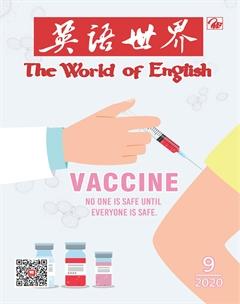
冠狀病毒病:疫苗的競爭
2020-10-09 11:18:55周可勇
英語世界 2020年9期
周可勇
Vaccines take over a decade to develop in a safe and effective manner. Vaccine candidates must first be proved to work in the lab and then tested for toxicity in animals before reaching early phase clinical trials. Once they have reached human trials, a vaccine must be tested for safety (phase I) and side effects (phase II) before entering large scale clinical trials (phase III). There is a high level of attrition1 as vaccines pass through the various stages of clinical trials, either because they are unsafe, ineffective or both. It is difficult to fast-track vaccine development; these stages cannot be skipped.
The covid-19 pandemic is accelerating the slow process of vaccine development but how long will it be until we can effectively vaccinate populations? This article looks at how the industry is responding to the covid-19 outbreak in the race for a vaccine.
Current vaccine candidates
According to the World Health Organisation (WHO), there are more than 40 vaccines against SARS-CoV-2 in development, with two already at the clinical trial stage. The Coalition for Epidemic Preparedness Innovations (CEPI), a foundation that takes donations to finance2 independent research projects to develop vaccines against emerging infectious3 diseases, is currently working with eight companies, all of which are having to adapt to accelerate their vaccine development process.
The first stage of vaccine development is research-intensive and involves the identification of natural or synthetic antigens that might help combat the disease. However, within a week of sequencing4 the SARS-CoV-2 genome, Chinese scientists had shared it publicly. Sharing the viral genome globally has allowed for an acceleration of the early development stage. Researchers at Imperial College, for example, took just two weeks from receiving the genome to producing a candidate vaccine.
Another way of accelerating the development process is to run trials in parallel. Researchers at Oxford University are currently recruiting for5 a safety trial in humans for a vaccine candidate that uses a chimpanzee adenoviral vector. Provided these go smoothly, they will move to larger trials to assess efficacy6. The same vaccine will undergo animal trials concurrently. This is unusual as animal work should normally be completed before human trials can begin. However, the chimpanzee adenoviral vector has been studied extensively and used safely in thousands of subjects in vaccines targeting over ten different disease types. This makes it easier to justify the accelerated move to human testing. Regulatory approval can also be accelerated if similar products have been approved before.
For similar reasons, many companies are also repurposing7 vaccines. Coronaviruses have caused two recent epidemics: SARS and MERS. In both cases, work started on vaccines was subsequently8 stopped when the epidemics were successfully contained. Inovio Pharmaceuticals had already started to work on a DNA vaccine for MERS prior to9 the covid-19 outbreak, allowing the company to quickly develop a potential vaccine for covid-19. Sanofi is repurposing a SARS protein vaccine and Novavax are working on several repurposed vaccines that will reportedly be ready for human trials in the spring.
As well as the more traditional techniques being used, such as live-attenuated and recombinant vaccines, new techniques are being used to develop a vaccine against SARS-CoV-2: RNA vaccines. These are faster and cheaper to develop than the more traditional vaccines as researchers dont need to grow large amounts of the virus in the lab, which overcomes both regulatory and manufacturing hurdles. However, no RNA vaccine has ever been approved for use and the safety of such vaccines is unknown at present. Moderna gave the first dose10 of their novel RNA vaccine to a human participant on 16 March and currently has 45 participants enrolled in11 in clinical trials. However, they expect the trials to continue into next year. Although the vaccine may have been quicker to develop, they cannot circumvent the necessary steps to show the vaccine is safe and effective.
One step that can potentially be fast-tracked is authorisation. The European Medicines Agency (EMA) ?has regulatory mechanisms in place to speed up development and approval. The PRIME scheme was launched to provide early and enhanced scientific and regulatory support to medicines that have the potential to address unmet medical needs. Developers of medicines and vaccines benefitting from PRIME will be eligible12 for accelerated assessment, reducing the timeframe for the EMA to review applications for market authorisation. The EMA can also grant a conditional marketing authorisation for vaccines where the benefits of immediate availability outweigh the risks of less comprehensive data than normally required. Developers working on vaccines that could be used for the prevention of covid-19 are encouraged to contact the EMA and discuss their research as soon as possible.
Once a safe and effective vaccine has been developed, there are further hurdles such as large-scale manufacturing. Many organisations researching a vaccine dont have the required manufacturing capacity. Vaccine development is high risk, with many candidates failing to reach clinical application. Further, manufacturing facilities tend to be tailored to13 specific vaccines. Scaling these facilities up when the future deployment14 of a vaccine is still in the uncertain early stages is not commercially viable15. However, CEPI can shoulder16 some of that risk by providing funding not only to research facilities developing vaccine candidates but also to manufacturing facilities in parallel. At the same time as clinical trials are taking place in Oxford, production of the vaccine is being scaled up ready for larger trials and possible future deployment. By starting the scale up at an early stage, researchers are ensuring that sufficient doses will be available as soon as possible if the trials prove that the vaccine is safe and effective.
Current issues
Researchers in Beijing studied the viral genome from 103 infected patients and identified two types of the virus, S and L. At present, scientists do not know how the underlying genetic differences in the two strains relate to disease severity. Genetic analysis of a man in the US who tested positive in January has shown that it is possible to be infected by both strains. Any vaccine candidate will have to target features present in both strains in order to be effective. The genetic differences between the two strains are small at present and unlikely to affect the production of proteins, so as not to change the way the virus works. Genetic diversity doesnt necessarily mean the virus is changing however we can expect more strains to emerge.
It is generally agreed that, once infected, individuals are unlikely to be infected again, unless the virus mutates to overcome host immunity. It is possible that this selection pressure will lead to an outbreak of a new strain, in a similar fashion to seasonal flu. As is the case with flu, new variants can emerge that infect individuals, whether or not they have been infected in the past. This will clearly have an impact on the long-term efficacy of vaccines currently in development.
以安全有效的方式研發疫苗一般需要十多年的時間。候選疫苗必須首先在實驗室中證明有效;之后,在進入早期臨床試驗之前,要在動物身上測試其毒性。一旦進入人體試驗階段,疫苗必須先進行安全性(第一階段)和副作用(第二階段)測試,然后才能開展大規模臨床試驗(第三階段)。在臨床試驗的各個階段,疫苗損耗非常大,要么由于疫苗不安全,要么由于疫苗無效,再或者兩者都有。疫苗研發難以快速推進,上述這些階段都不可省略。
2019冠狀病毒病大流行加速了原本緩慢的疫苗研發進程,但究竟需要多長時間才能有效地為人們接種疫苗呢?本文探討的就是疫苗行業在疫苗研發競爭中如何應對2019冠狀病毒病的暴發。
現有的候選疫苗
根據世界衛生組織的消息,針對新型冠狀病毒,目前研發中的疫苗有40多種,其中2種已進入臨床試驗階段。流行病預防創新聯盟(CEPI)是一個基金會,接受捐款用于資助針對新發傳染病開發疫苗的獨立研究項目。該基金會目前正與8家公司合作,所有公司都不得不根據現狀加以調整,加速疫苗研發進程。
疫苗研發的第一階段是研究密集型的,著眼于識別可能有助于對抗新冠病毒病的天然抗原或人工合成抗原。然而,中國科學家在對新冠病毒基因組進行測序后的一周之內就公開分享了測序結果。新冠病毒基因組全球共享使研發的第一階段得以加速展開。例如,英國帝國理工學院的研究人員在獲得基因組以后,僅花兩周就制作出了一個候選疫苗。
加速疫苗研發進程的另一種方法是進行平行試驗。牛津大學的研究人員目前正在招募志愿者測試一個候選疫苗的安全性,該疫苗使用的是黑猩猩腺病毒載體。如果進展順利,他們將進行更大規模的試驗來評估其效果。同樣的疫苗將同時進行動物試驗。牛津大學這種操作很不尋常,因為動物試驗通常應該在人體試驗啟動之前完成。不過,科學家已對黑猩猩腺病毒載體進行過廣泛研究,并在數以千計的疫苗試驗對象身上安全使用過,涉及十多種不同的疾病類型。這使上述候選疫苗加速進入人體測試環節的理由更加充分。如果類似產品之前已經獲得批準,監管部門的審批速度還可能加快。
出于類似的原因,許多公司也在將已有疫苗改作新用。冠狀病毒造成了最近的兩種流行病:非典(SARS)和中東呼吸綜合征(MERS)。針對這兩種流行病所進行的疫苗研發工作在疫情得到成功控制后都相繼停止了。在2019冠狀病毒病暴發之前,伊諾維奧制藥公司已經開始為MERS患者研發DNA疫苗,這使公司能夠迅速開發出針對2019冠狀病毒病的候選疫苗。賽諾菲公司正在改造一種SARS蛋白疫苗,而諾瓦瓦克斯醫藥公司也正改造幾種疫苗。據報道,這些疫苗將在明年春季準備好開始人體試驗。
除了減毒活疫苗和重組疫苗這些正在使用的比較傳統的技術外,人們也在利用新技術開發針對新冠病毒的核糖核酸疫苗(RNA疫苗)。與傳統的疫苗技術相比,這些新技術的研發速度更快、成本也更低,因為研究人員不需要在實驗室中培養大量的病毒,從而避開了監管和生產兩方面的障礙。然而,目前還沒有RNA疫苗得到過使用批準,而且這種疫苗的安全性目前尚不清楚。莫德納公司于3月16日給一名志愿者首次注射了他們的新型RNA疫苗,目前已有45人參與了這項臨床試驗。但是,他們預計試驗將持續到明年。雖然疫苗的研發速度也許更快了,但他們仍然無法繞過證明疫苗安全且有效的必要環節。
一個有可能快速推進工作進程的做法是官方授權。歐洲藥品管理局(EMA)有適當的調控機制,可以加快疫苗的研發和審批。機制之一是PRIME項目,最初設置是針對可能滿足某些無藥可用的醫療需求的藥品,希望盡早為這類藥品的研發加強科學及監管支持。受益于PRIME項目的藥品和疫苗研發機構將有資格獲得加速評估,從而縮短EMA審批上市的時間。臨床數據不像通常要求的那樣充分全面會帶來風險,但如果盡快推出疫苗帶來的益處大于風險,EMA還可能為這類疫苗授予有條件的上市許可。EMA鼓勵正在研發2019新冠病毒病疫苗的機構盡快與EMA聯系并討論他們的研發工作。
一款安全而有效的疫苗研發出來后,還會遭遇其他的問題,例如大批量生產的問題。許多研發疫苗的機構不具備必要的生產能力。疫苗研發風險很大,許多候選疫苗進入不到臨床應用階段。另外,生產設備往往是為特定的疫苗量身定制的。倘若一種疫苗還處于日后投放使用尚不確定的初期研發階段,那么擴大生產設備的規模就很不劃算。但是,CEPI既可以為研發候選疫苗的機構提供資助,也可以為生產部門提供支持,從而分擔一部分風險。在牛津大學進行臨床試驗的同時,這種疫苗的生產規模也在擴大,以便為更大規模的試驗和未來可能的疫苗投放做好準備。在研發初期就開始擴大生產規模,研究人員可以確保,一旦試驗證明疫苗安全有效就能盡快向市場供應充足的疫苗。
當前的問題
北京的研究人員對103名感染者的病毒基因組進行了研究,發現了S型和L型兩種類型的病毒。目前,科學家還不了解這兩類毒株潛在的遺傳差異與疾病嚴重程度之間的關系。美國一名男子在1月的病毒檢測中呈陽性,基因分析顯示,他可能同時感染了這兩類毒株。任何候選疫苗都必須靶向這兩類才算有效。這兩類毒株目前的遺傳差異很小,不大可能影響蛋白質的生成,因此不會改變病毒的感染機制。基因多樣性并不一定意味著病毒在變異,但很可能會有更多類型的毒株出現。
一般認為,除非病毒發生變異并戰勝宿主的免疫系統,否則感染過的個體不太可能再次感染。這種選擇壓力可能導致病毒新毒株的暴發,正如季節性流感一樣。與流感類似,病毒可能出現新型變異并感染人類個體,無論他們過去是否被感染過。這一情況顯然將影響目前研發中的疫苗的長期療效。
(譯者單位:北京四中)