影視團體心理治療應用于軀體形式障礙患者的護理研究
2020-09-15 16:17:20王淑君張媛媛楊寶琴劉靈江
中國現代醫生
2020年21期
關鍵詞:護理
王淑君 張媛媛 楊寶琴 劉靈江
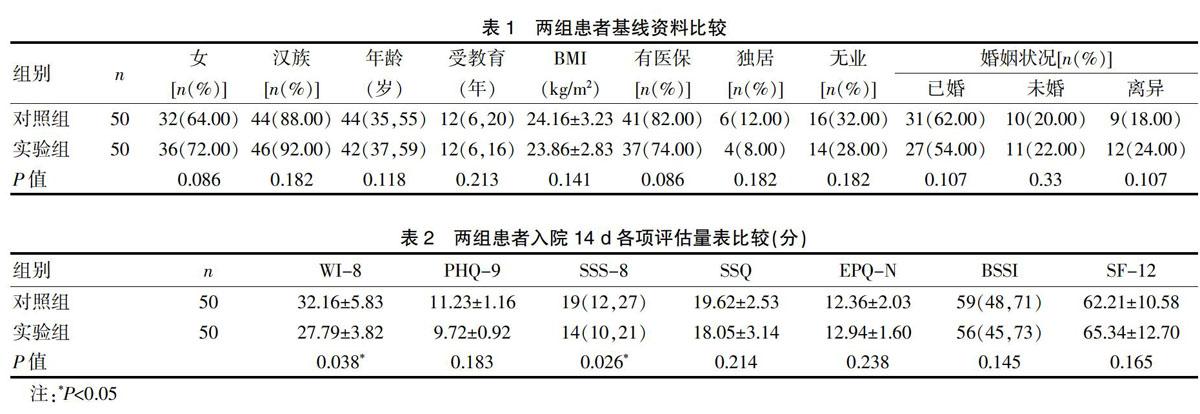

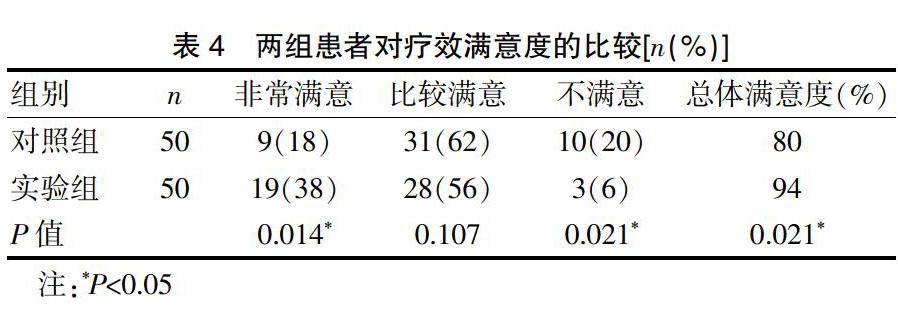
[摘要] 目的 探討軀體形式障礙患者住院期間應用影視團體心理治療干預后的療效,從而為完善臨床診療提供參考依據。 方法 基于本院往年同期相關患者就診量的分布情況,自2016年12月20日起,連續性納入寧波市康寧醫院心身科收治的SSD患者為研究隊列,直至納入滿100例為止。使用Excel軟件RAND函數將其隨機分為對照組和實驗組,實驗組在對照組基礎上予以影視團體心理治療術干預。比較兩組患者入院后14 d、21 d時相關心理評估量表變化,并于出院后隨訪6個月以明確中遠期的復發情況。 結果 本研究自2016年12月20日起始,至2018年3月19日截止,完成100例研究對象的數據搜集,并于2018年10月26日完成隨訪,隨訪期內累計5例患者失訪(對照組2例、實驗組3例)。與對照組比較,實驗組患者入院14 d時健康相關焦慮評定量表、軀體癥狀量表-8量表均顯著下降,差異有統計學意義(P<0.05);入院后21 d時,實驗組患者WI-8、SSS-8及Beck壓力量表均顯著下降,差異有統計學意義(P<0.05);至出院時實驗組患者的總體滿意度顯著增加,差異具有統計學意義(P<0.05);對兩組患者的隨訪進程進行Kaplan-Meier生存分析,實驗組復發SSD的趨勢顯著低于對照組(Log RANK χ2=3.771,P<0.05)。 結論 對于SSD患者予以影視團體心理治療干預,可顯著增強療效,并降低中遠期復發率。
[關鍵詞] 心理治療;軀體形式障礙;護理;隨機對照試驗
[中圖分類號] R749.7;R472 ? ? ? ? ?[文獻標識碼] B ? ? ? ? ?[文章編號] 1673-9701(2020)21-0176-05
Application of video group psychotherapy in the nursing of patients with somatoform disorders
WANG Shujun ? ZHANG Yuanyuan ? YANG Baoqin ? LIU Lingjiang
Department of Pediatrics, Kangning Hospital of Ningbo City, Ningbo ? 315201, China
[Abstract] Objective To explore the therapeutic effect of video group psychotherapy on somatoform disorder patients during hospitalization, so as to provide reference for improving clinical diagnosis and treatment. Methods Based on the distribution of related patients' visits in the same period of previous years in our hospital, SSD patients who were continuously included in the pediatrics department of Ningbo Kangning Hospital from December 20, 2016 were enrolled in the study until 100 patients were included. Excel software RAND function was used to randomly divide it into the control group and the study group. The changes of psychological assessment scale were compared between the two groups on the 14th and 21st day after admission, and the patients were followed up for 6 months after discharge to determine the long-term recurrence. Results The data collection of 100 cases of subjects was completed from December 20, 2016 to March 19, 2018.The follow-up was completed on October 26, 2018, during which 5 patients were withdrawn(2 in the control group and 3 in the study group). Compared with the control group, the self-rating anxiety scale(SAS) and self-rating somatization symptoms scale-8 (SSS-8) in the study group decreased significantly on the 14th day after admission, and the difference was statistically significant(P<0.05); on the 21st day after admission, the WI-8, SSS-8 and Beck pressure scale in the study group decreased significantly, and the difference was statistically significant(P<0.05); the overall satisfaction of the study group increased significantly at the time of discharge, and the difference was statistically significant(P<0.05); Kaplan-Meier survival analysis of the follow-up process of the two groups showed that the trend of recurrent SSD in the study group was significantly lower than that in the control group(Log RANK χ2=3.771, P<0.05). Conclusion Group video psychotherapy intervention for SSD patients can significantly enhance the efficacy and reduce the recurrence rate in the medium and long term.
[Key words] Psychotherapy; Somatoform disorder; Nursing; Randomized controlled trial
軀體形式障礙(somatic symptom disorders, SSD)也稱為Briquet綜合征,其特征為患者長時間被各種不同軀體癥狀的憂慮感觀所支配,在此基礎上產生過度和不恰當的思維和行為[1-2]。SSD患者常因為各種軀體不適而反復就診,但多半不能從生物醫學層面找到可解釋其癥狀的器質性病變,且醫生的專業解釋亦不能消除患者的憂慮。因而醫患雙方均對于對方的滿意度極低,SSD患者更是產生醫患沖突的高危人群[2-4],且直接的醫療花費及反復就醫而消耗的醫療資源尤其值得醫療群體注意。……
登錄APP查看全文
猜你喜歡
安徽醫學(2022年10期)2022-11-12 02:42:20
醫學食療與健康(2021年27期)2021-05-13 18:46:23
醫學概論(2021年18期)2021-01-21 22:46:45
中華養生保健(2020年7期)2020-11-16 01:14:02
中華養生保健(2020年3期)2020-11-16 00:52:46
中華養生保健(2020年2期)2020-11-16 00:49:54
家庭醫學(下半月)(2019年9期)2019-10-12 08:04:18
經濟技術協作信息(2018年20期)2019-01-19 02:56:26
中國衛生(2016年2期)2016-11-12 13:22:32
中國中醫藥現代遠程教育(2014年20期)2014-03-01 04:31:38