重慶多式聯運連通瀾湄國家助力西部開放、跨國合作跑出“加速度”
2020-05-25 02:28:46賀煜
重慶與世界 2020年4期
賀煜
2020年2月20日,國務委員兼外交部長王毅在老撾萬象出席瀾滄江-湄公河合作第五次外長會后會見記者表示,加力打造瀾湄流域經濟發展帶,以貿易聯通為切入點,把瀾湄合作與“陸海新通道”結合起來,加強基礎設施互聯互通,提升貿易和通關便利化,帶動產能、跨境經濟、工業園區合作,加快推進經濟發展帶建設,為瀾湄合作注入新的強勁動力,將是下一步重點推動的合作之一。
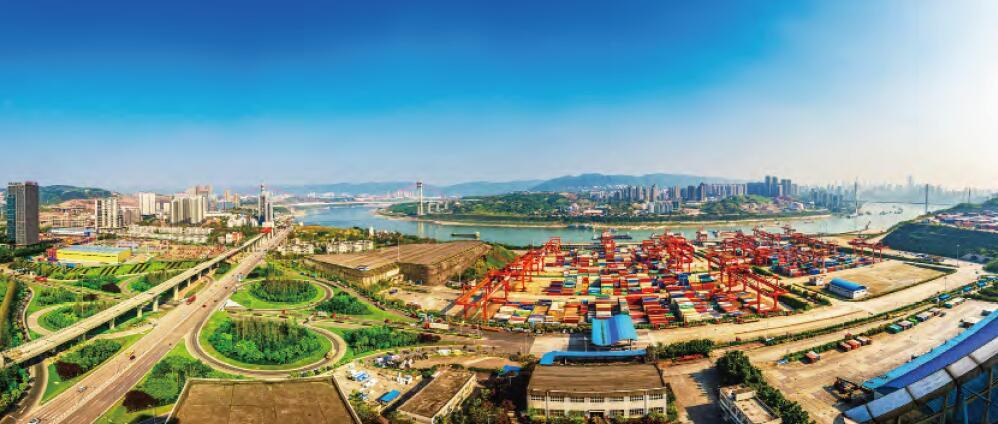
地處中國內陸腹地、遠離出海口岸的重慶,近年來,依托縱貫西北、西南的向南出海出境國際物流大通道—“陸海新通道”,實現自身開放,并帶動、聯動西部其他省區市共同發展,成為中國西部開發開放的新動脈,助力西部開放、跨國合作跑出“加速度”。
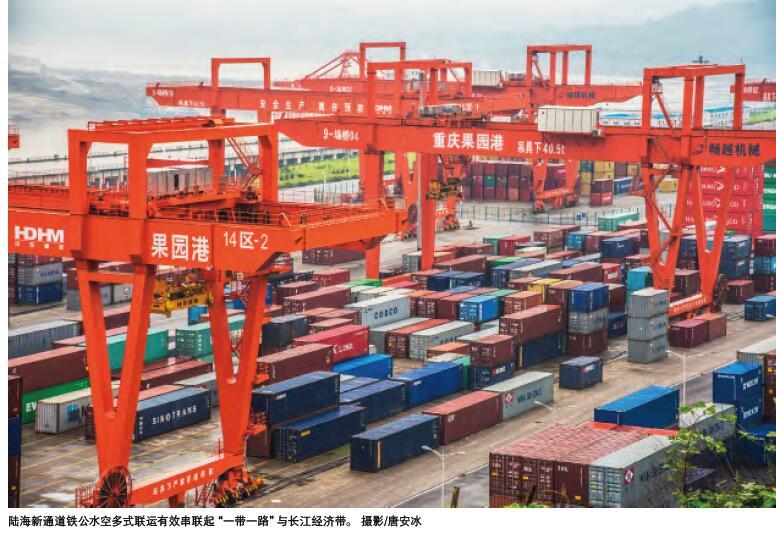
目前,重慶與湄公河國家的物流運輸主要依托“陸海新通道”進行。“陸海新通道”包含國際鐵海聯運、跨境公路運輸、國際鐵路聯運3種物流組織形式。經過近4年的發展,“陸海新通道”已上升為西部地區共商共建共享的國家性戰略通道,形成了鐵海聯運班列、國際鐵路聯運班列、跨境公路班車3種主要物流組織方式,鐵公水空多式聯運有效串聯起“一帶一路”與長江經濟帶。
國際鐵海聯運從重慶經鐵路至中國廣西北部灣港,再經海運銜接中南半島主要港口及國際航運網絡,使中國西部到東盟的物流時間縮短三分之二左右,具有時效快、運量大、成本低的綜合優勢。2017年9月以來,已累計開行超過1700班,輻射92個國家和地區、220個港口。目前,鐵海聯運正積極創新探索冷鏈運輸,湄公河國家的巴沙魚、榴蓮等海鮮、水果產品可通過鐵海聯運的冷鏈運輸到達重慶,是重慶市民喜愛的優質食材。
跨境公路運輸從重慶經中國廣西、云南沿邊口岸,覆蓋緬甸、老撾、泰國、柬埔寨、越南等湄公河五國,并拓展至新加坡,具有時效快、“門到門”服務便捷的優勢。2016年4月以來,已累計發運超過2800車次。目前,越南、泰國生產的電子、輕工等產品已通過跨境公路運輸到重慶及中國西部其他地區,部分再經中歐班列輻射中亞、歐洲市場。
國際鐵路聯運從重慶經廣西憑祥與泛亞鐵路銜接,形成連通中南半島的國際鐵路聯運網絡,通達湄公河國家。目前主要開行重慶至越南河內線路,已累計發運130余班。隨著中老鐵路全線貫通和中泰鐵路等啟動建設,國際鐵路聯運將迎來新的重大發展機遇。
鐵公水空多式聯運有效串聯“一帶一路”和長江經濟帶
一組來自市政府口岸物流辦的數據顯示:截至3月22日,“陸海新通道”國際鐵海聯運班列(重慶—廣西北部灣)2020年度開行了144列,已累計開行1724列,外貿貨物貨值累計約9.4億美元,內貿貨物貨值累計約44.6億元人民幣;目的地已覆蓋全球6大洲92個國家和地區的222個港口,運輸貨品包括汽車整車及零配件、建筑陶瓷、化工原料及制品、輕工及醫藥產品(飲料)、生鮮凍貨等300余個品類。
多方合作共建朋友圈擴大至“13+1”個省區市
為擴大“朋友圈”,讓“陸海新通道”真正成為西部地區融入“一帶一路”建設的重要平臺。重慶起草了關于通道合作機制的《框架協議》,渝、黔、桂、隴成為第一批簽署協議的西部省區市,標志著通道共商共建共享的合作機制初步形成。隨后,云南、寧夏、陜西、四川等越來越多的西部省區市相繼加入共建機制。2019年10月,西部12省區市、海南省、廣東湛江市在重慶簽署框架協議,合作共建“陸海新通道”。
與此同時,周邊國家也對“陸海新通道”表現出極大的興趣。
2019年國慶前夕,中國駐越南大使館、越南計劃投資部戰略研究院聯合舉辦了“國際陸海貿易新通道—中越合作潛力與機遇”座談會。越方表示,將積極參與“陸海新通道”建設,正在加快境內高速公路建設,規劃鐵路建設。同時,越方還提出將進一步發揮和完善老街口岸功能(中國對應為河口口岸),推動更多農產品進入中國內地、通過“陸海新通道”和中歐班列出口歐盟等建議。
On February 20, 2020, Chinese State Councilor and Foreign Minister Wang Yi met with the press after the 5th Lancang-Mekong Cooperation (LMC) Foreign Ministers' Meeting in Vientiane, Laos. He said, for the next step, efforts to promote the LMC will be focused on boosting the construction of the LMC Economic Development Belt by taking trade facilitation as an entry point and combining the Lancang-Mekong Cooperation with the New International Land-Sea Trade Corridor; strengthening infrastructure connectivity, improving trade and customs clearance facilitation, promoting cooperation in production capacity, cross-border economy and industrial parks; and speeding up the construction of the economic development zone and injecting new strong impetus into the LMC.
Located in the inland of China and far away from the ports of entry to sea, Chongqing has in recent years realized its own opening-up by relying on the New International Land-Sea Trade Corridor, a major international logistics channel that runs through the northwest and southwest to the south. It has also driven and helped other provinces, autonomous regions and cities in the west to develop together, and has become a new artery for the development and opening-up of China's western region, and helped to boost the opening-up of the China's western region and the acceleration of cross-border cooperation.
At present, the logistics and transportation between Chongqing and Mekong countries mainly rely on the New International Land-Sea Trade Corridor that uses three forms of logistics organization: international rail-sea multimodal/intermodal transportation, cross-border road transportation and cross-border rail transportation. After nearly four years of development, the New International Land-Sea Trade Corridor has become a national strategic corridor which is jointly built and shared by the western region. Three major forms of logistics have taken shape, namely, trains for rail-sea multimodal/intermodal transport, trains for international rail transport and trucks for cross-border road transport. The multimodal/ intermodal transport via rail, road, sea and air has effectively connected the Belt and Road Initiative and the Yangtze River Economic Belt.
The international rail-sea multimodal/intermodal transportation that starts from Chongqing and reaches Beibu Gulf port by rail and is then connected by sea transportation to the main ports of Indo-china Peninsula and the international shipping network shortens the logistics hours from western China to ASEAN countries by about 2/3, thus enjoying the advantages of shorter shipping time, larger loads and lower cost. Since September 2017, more than 1,700 rail and sea combined trains have been operated, radiating 92 countries and regions and 220 ports. At present, the rail-sea multimodal/intermodal transportation is exploring and innovating on the cold chain transportation which could bring high-quality seafood and fruits popular among Chongqing people, such as Pangasius hypophthalmus and durian, from the Mekong River region to Chongqing market.
The cross-border road transportation from Chongqing to China's Guangxi and Yunnan border ports covers the five Mekong countries including Myanmar, Laos, Thailand, Cambodia, Vietnam, and extends to Singapore. It has the advantages of greater efficiency and convenient door-to-door service. Since April 2016, more than 2800 vehicles have been operated. At present, electronics, light industry products and other products made in Vietnam and Thailand have been transported to Chongqing and western China by cross-border road, and some of them are distributed to the markets in Central Asia and Europe via China-Europe Freight Trains.
The cross-border rail transportation links up with trans-Asian railways from Chongqing via Pingxiang of Guangxi Autonomous Region to form an international rail multimodal/intermodal transport network connecting Chongqing with Indo-china Peninsula and all the five Mekong countries. At present, the main route is from Chongqing to Hanoi, Vietnam, and more than 130 operations have been realised. With the completion of the entire China-Laos railway and the construction of the China-Thailand railway, international rail multimodal/intermodal transport will usher in new major development opportunities.
Rail, road, water and air multimodal/intermodal transport
Connecting the BRI with Yangtze River Economic Belt with greater efficiency
Data from the Port and Logistics Office of Chongqing Municipal Government shows that by March 22, 144 trains had been operated in 2020 for the rail-sea link along the New International Land-Sea Trade Corridor (Chongqing-Guangxi Beibu Gulf) while the total number of trains operated stands at 1,724 with a total value of goods for foreign trade of US$ 940 million and goods for domestic trade of about 4.46 billion yuan. The destinations have covered 222 ports in 92 countries and regions on 6 continents, and the goods transported include more than 300 categories such as automobiles and spare parts, building ceramics, chemical raw materials and products, light industrial and pharmaceutical products (beverages), fresh frozen goods, etc.
Building the Corridor together through multilateral cooperation
“Circle of friends” expanded to "13+1" provinces, autonomous regions and municipalities
In order to expand the "circle of friends" of Chongqing and truly make the New International Land-Sea Trade Corridor an important platform to integrate the western region into the Belt and Road Initiative, Chongqing drafted a "Framework Agreement" on the cooperation mechanism of the Corridor. Chongqing, Guizhou, Guangxi and Gansu became the first western provinces, autonomous regions and municipalities to sign the agreement, marking the initial formation of the cooperation mechanism of joint construction and sharing of channels. Subsequently, increasing numbers of western provinces and cities including Yunnan, Ningxia, Shaanxi and Sichuan joined the co-construction mechanism one after another. In October 2019, 12 provinces, autonomous regions and municipalities in the west, Hainan Province and Zhanjiang City in Guangdong Province signed a framework agreement in Chongqing to jointly build the New International Land-Sea Trade Corridor.
At the same time, neighboring countries have also shown great interest in the New Land-sea Corridor.
On the eve of the National Day in 2019, the Chinese Embassy in Vietnam and the Institute of Development Strategy of the Vietnamese Ministry of Planning and Investment jointly held a symposium on potentials and opportunities for China-Vietnam Cooperation in the New International Land-Sea Trade Corridor. Vietnam said that it would actively participate in the construction of the Corridor and was speeding up the construction of domestic expressways and planning railway construction. At the same time, Vietnam also proposed to further develop and perfect the function of the port of Lao Cai(port of Hekou on the Chinese side), promote more agricultural products to enter the inland of China, and export them to the EU through the New International Land-Sea Trade Corridor and China-Europe Freight Trains.
猜你喜歡
環球人文地理(2022年8期)2022-09-21 03:49:42
云南畫報(2021年12期)2021-03-08 00:50:54
意林·全彩Color(2019年11期)2019-12-30 06:08:38
物流技術與應用(2019年8期)2019-09-04 03:29:56
汽車觀察(2018年12期)2018-12-26 01:05:44
重慶行政(公共人物)(2018年5期)2018-11-06 07:42:18
鐵道通信信號(2018年7期)2018-08-29 01:17:04
今日重慶(2017年5期)2017-07-05 12:52:25
通信電源技術(2016年4期)2016-04-04 02:58:04
工程建設與設計(2016年3期)2016-02-27 10:50:46