考慮錯誤檢測兩階依賴性以及錯誤校正延遲效應的軟件可靠性模型
2020-05-25 09:03:53李迎春曲立翟永正高凱燁彭銳
網絡空間安全
2020年1期
李迎春 曲立 翟永正 高凱燁 彭銳
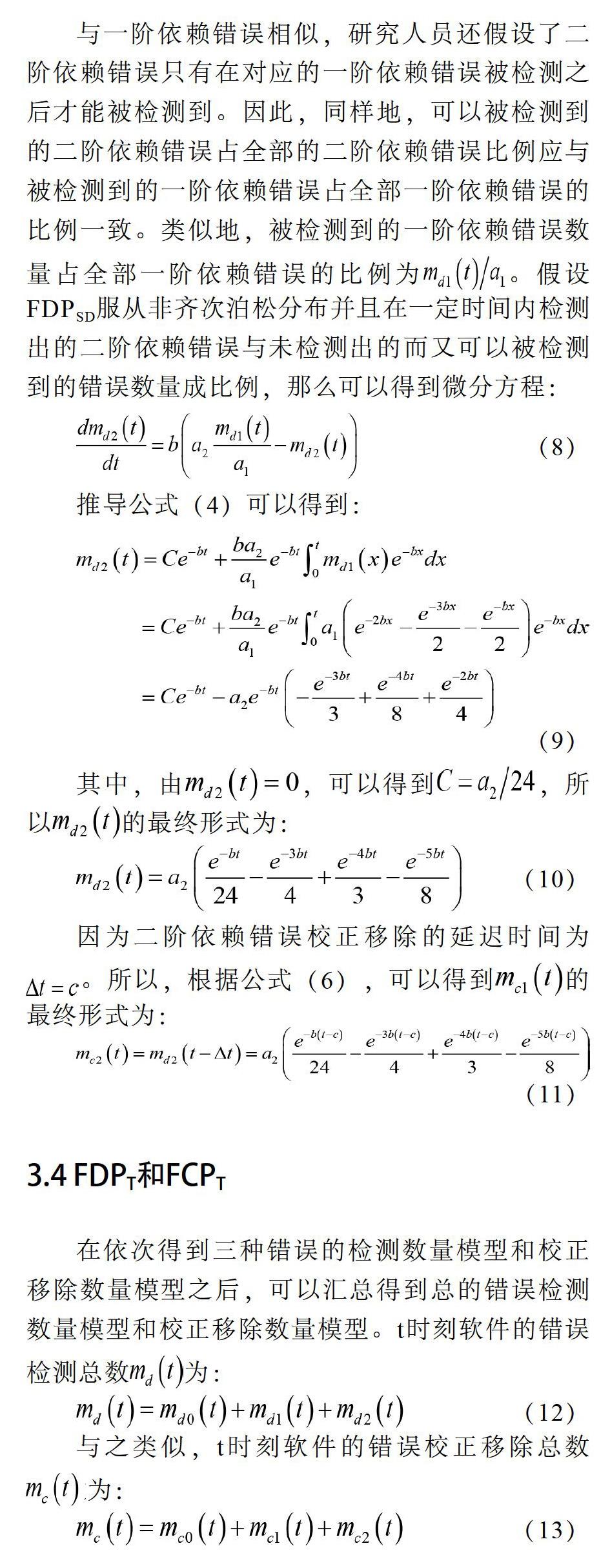
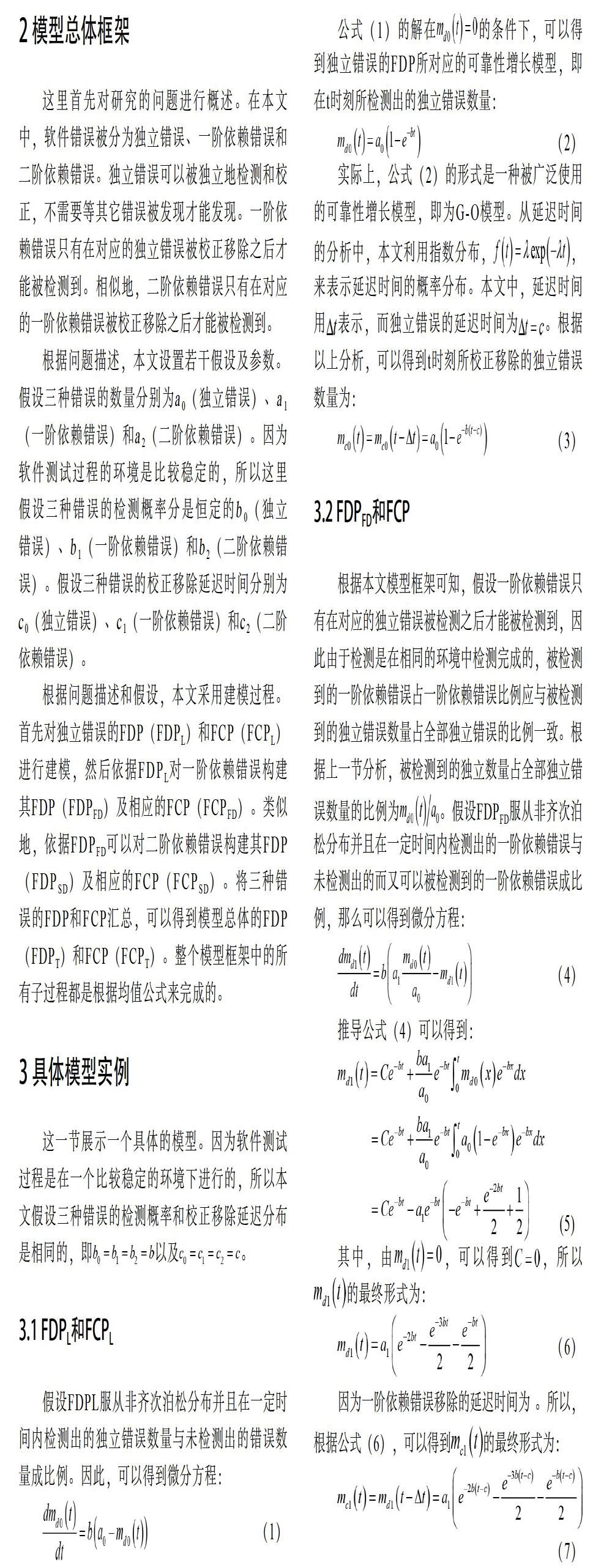
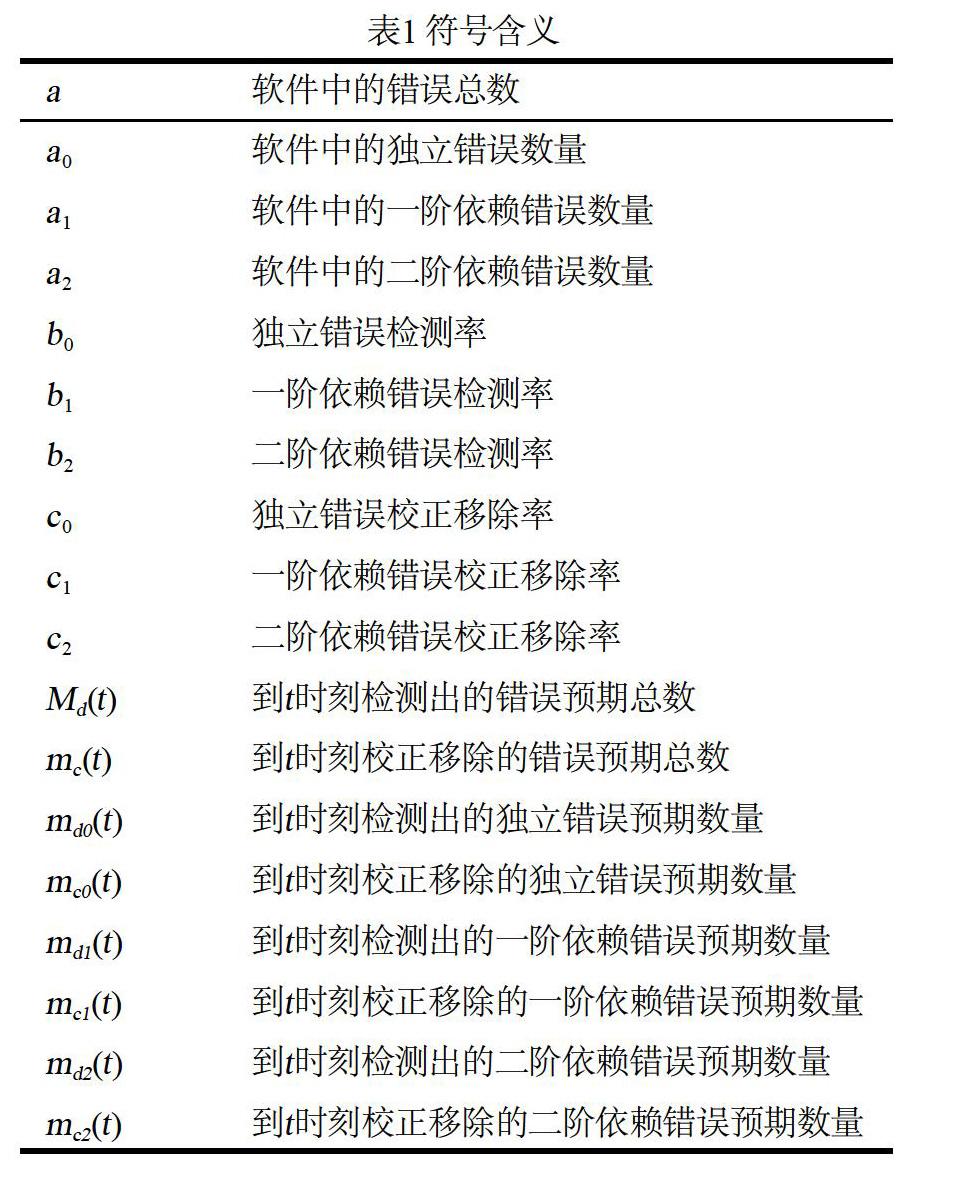
摘? ?要:隨著科技的進步和全面智能化時代的到來,軟件在人類社會扮演著愈發重要的角色,因此軟件的可靠性成為了一個重要的研究領域。然而到目前為止,還沒有研究綜合考慮到軟件錯誤檢測兩階依賴性和校正延遲效應的文獻。文章提出了一個軟件可靠性增長模型。該模型考慮了錯誤檢測的兩階依賴性和錯誤校正的延遲效應。在文章中,軟件錯誤被分為三種類型:獨立錯誤、一階依賴錯誤和二階依賴錯誤。后兩種錯誤依次對前一種錯誤具有依賴性,即只有相應的錯誤被檢測之后,對應的依賴性錯誤才能被檢測到。利用該模型可以計算出不同時刻下錯誤檢測出的數量和校正的數量。這個模型相比于之前的模型更加符合實際情況。該模型對于軟件投放時間等重要決策具有很大的參考價值。
關鍵詞:兩階依賴性;延遲時間;錯誤檢測;錯誤校正;軟件可靠性
Abstract: With the advancement of science and technology and the advent of the era of comprehensive intelligence, software is playing an increasingly important role in human society. Therefore, software reliability has always been an important research area. However, up to now, there has been no literature that comprehensively considers the second-step dependence of software error detection and correction delay effects. This paper proposes a software reliability growth model. The model considers the second-step dependence of error detection and the delay effect of error correction. In this paper, software errors are classified into three types: independent errors, first-step dependency errors, and second-step dependency errors. The latter two errors have a dependency on the former error in turn, that is, only after the corresponding error is detected can the corresponding dependency error be detected. The model can be used to calculate the number of errors detected and the number of corrections at different times. This model is more in line with the actual situation than the previous model. This model has great reference value for important decisions such as software launch time.
Key words: second-step dependence;delay time;error detection;error correction;software reliability
1 引言
隨著信息技術的發展,計算機已經在社會的各個領域被廣泛使用。作為計算機與人交互的核心工具,軟件的作用顯得越來越重要。近年來,隨著人工智能等新興技術的發展,算法和程序的進步速度,已經遠遠的超過當前社會其他技術的進步速度。由此帶來軟件代碼的長度成幾何倍數的增長,因此軟件的質量已經成為一個非常有意義的研究內容。
軟件的可靠性是衡量軟件質量的一個關鍵指標,是可以廣義地應用于衡量軟件可信性。……
登錄APP查看全文