?塊根膨大期施用激素對木薯GR4農藝性狀和產量的影響?
2020-05-06 09:22:35段元杰楊玉皎孟富宣劉海剛黃潔魏云霞
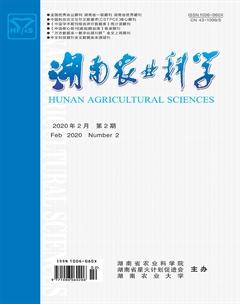
湖南農業科學
2020年2期
關鍵詞:產量
段元杰 楊玉皎 孟富宣 劉海剛 黃潔 魏云霞


摘 要:為了揭示木薯品種桂熱4號(GR4)塊根膨大期一次性施入外源激素對農藝性狀和產量指標的影響,試驗設置了以外源激素(多效唑、赤霉素、矮壯素和2,4-D)為主處理,施用方式(澆施、噴施)為副處理的裂區試驗,對比分析了各處理木薯生長和產量狀況。結果表明:施用多效唑、矮壯素和2,4-D同時限制了地上莖葉生物量和地下薯塊產量增加,葉面噴施赤霉素可明顯增加莖葉生物量和薯塊產量,外源激素能在一定程度上調節同化物的合成分配,但增產的根本首先在于增加整株的光合同化產物總量。GR4塊根膨大期一次性噴施赤霉素操作成本低,增產明顯,可以作為一項增產增收的技術運用。
關鍵詞:木薯;外源激素;GR4;農藝性狀;產量
中圖分類號:S533 文獻標識碼:A文章編號:1006-060X(2020)02-0015-04
Abstract: In order to reveal the effect of one-off application of exogenous hormones on agronomic characteristics and yield indices of cassava GR4 in the root expansion period, a split area experiment was set up, in which the exogenous hormones (PP333, GA, CCC and 2,4-D) were the main treatments and the application methods (watering and spraying) were the secondary treatments. The results showed that the treatment of PP333, CCC and 2,4-D restricted the increases of biomass in leaves and stems and tuber root yield. Spraying GA on the leaf promoted the increases of biomass and tuber yield significantly. This study shows that exogenous hormones can regulate the synthesis and distribution of photoassimilates, but the essence of increasing production is to increase the total assimilation products. Spraying GA once in the period of tuber root expansion is low cost, which can be used as a technique to increase production and income.
Key words: cassava (Manihot esculenta Crantz); exogenous hormones; GR4; agronomic characteristics; yield
木薯(Manihot esculenta Crantz)是大戟科(Euphor-
biaceae)木薯屬(Manihot)植物,耐貧瘠、干旱,粗生易種,廣泛分布于熱帶、亞熱帶地區,我國廣東、廣西、海南、福建、江西、云南、貴州等地均有栽培[1]。木薯塊根淀粉含量豐富,鮮薯淀粉含量20%~40%,干物質淀粉含量80%以上,有“地下糧倉”和“淀粉之王”的美稱[2],是世界第六大糧食作物[3],同時也被作為新興的能源作物廣泛開發利用[4]。莖葉干物質中粗蛋白含量20.6%~33.64%,必需氨基酸含量較高,維生素、大量元素和微量元素含量豐富,是理想的禽畜飼料來源[5]。
植物根莖葉的生長發育過程受許多因素影響,內源激素是主要的影響因素之一。植物內源激素通過調節能量、物質轉化來影響同化物的運輸和分配[6];施用外源激素可以引起植物內源激素種類、含量的顯著變化,從而影響植株生長發育,最終表現在產量和質量上[7]。……
登錄APP查看全文
猜你喜歡
礦山安全信息(2022年40期)2022-04-07 02:16:52
當代水產(2021年10期)2021-12-05 16:31:48
今日農業(2021年14期)2021-11-25 23:57:29
今日農業(2021年13期)2021-08-14 01:37:56
石油與天然氣地質(2021年1期)2021-02-22 14:14:44
今日農業(2020年20期)2020-11-26 06:09:10
中國果業信息(2019年10期)2019-11-13 01:21:34
中國化肥信息(2019年2期)2019-01-18 15:24:35
中國化肥信息(2019年1期)2019-01-17 21:31:12
中國化肥信息(2019年4期)2019-01-17 18:47:06