這些古詩背后的中日情誼
2020-03-18 16:38:47宋浩
文化交流 2020年3期
宋浩
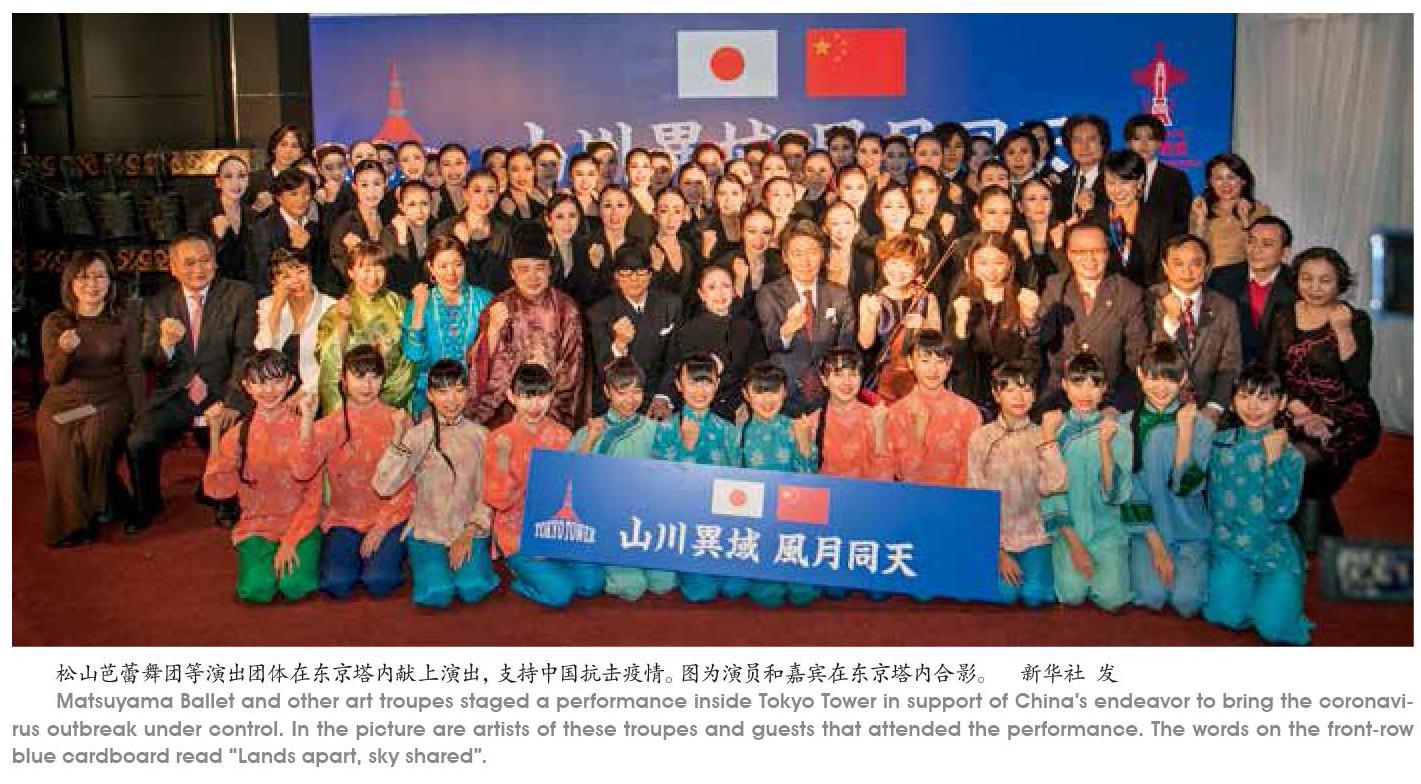
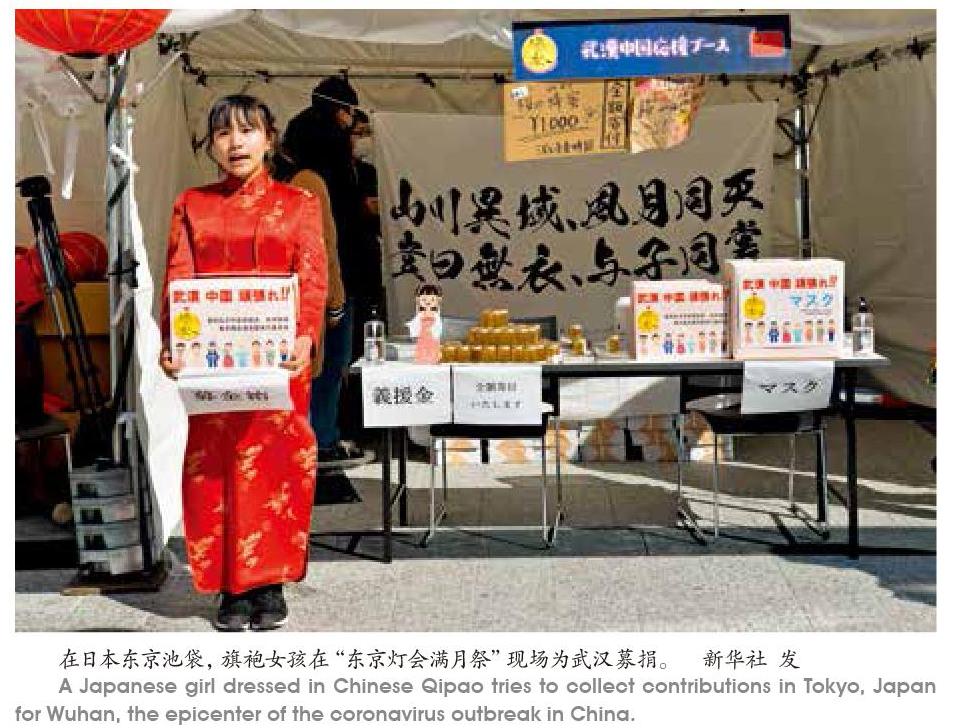
“山川異域,風月同天”“豈曰無衣,與子同裳”“青山一道同云雨,明月何曾是兩鄉”“此去與師誰共到,一船明月一帆風”……當古人寫下這些優美的詩句時,恐怕想不到它們在數千年后會被如此準確地傳達。
自新冠肺炎疫情在武漢暴發后,日本先后幾次援助醫療用品,他們在包裝箱上分別寫下了這些詩句,以表達出最暖的鼓勵和支持。
這些動人的留言,在帶給中國人應對災難的力量的同時,也讓我們看到了超越國界的人文之美,更加理解了中日兩國一衣帶水的特殊關系。
八字背后的感人典故
“山川異域,風月同天”,八個字對仗很是工整。“域”是地,對“天”,“山川”對“風月”,意為我們不在同一個地方,未享同一片山川,但當我們抬頭時,看到的是同一輪明月。
一個國度的山川地貌不能挪移,必然異于他國;而風月卻是無邊之物,不同國度的人皆可共見。
“山川異域,風月同天”這八個字背后的故事,和唐代東渡日本的鑒真和尚,以及日本長屋王有莫大的關聯。
唐代,日本不斷往中國派遣遣唐使交流學習。長屋親王是日本當時的宰相,他曾命人制作千件袈裟送給大唐高僧們。這些袈裟上繡著四句話:“山川異域,風月同天,寄諸佛子,共結來緣。”鑒真禪師深受感動,于是泛海東渡日本傳佛教。這則故事,在《唐大和上東征傳》《唐揚州大云寺鑒真傳》中都有記載。
開元二十一年(733年),日本第九次派“遣唐使”,隊伍中有榮睿、普照兩個和尚。二人受日本佛教界和朝廷的委托,邀請中國精通佛法的高僧去日本設壇。
據《唐大和上東征傳校注》等文獻記載,當時日本經過了“大化革新”之后,農民迫于賦稅徭役,不少棄地逃亡,私自剃度為僧,把寺院作為避難所躲避課役,導致僧侶成分復雜,紀律廢弛。而中國則有一套嚴格的戒律制度。日本亟需建立制度,于是派來了榮睿、普照。
據《唐揚州大云寺鑒真傳》載,二人來到揚州請求鑒真:“我國在海之中,不知距齊州幾千萬里。雖有法而無傳法人,譬猶終夜有求于幽室,非燭何見乎?愿師可能輟此方之利樂,為海東之導師乎!”
當時航海技術不發達,遣唐使也有不少喪生于大海的。鑒真的弟子面對這樣的請求,認為“彼國太遠,生命難存;滄海淼漫,百無一至”。而鑒真說:“是為法事也,何惜身命?諸人不去,我即去耳。”
鑒真歷經千辛萬苦,終于在天寶十二年第六次東渡成功,此時他已雙目失明。日本朝野上下非常感激,孝謙天皇頒詔,封“傳燈大法師”,在東大寺立戒壇。
“山川異域,風月同天。”1500年前,日本送來袈裟,帶著這8個字。今天,日本送來了醫療物資,又帶上這8個字。這8個字背后,是1500多年的中日友誼。
熱血同裳的兄弟情
若說“山川異域,風月同天”是一種浪漫式的支持,那么“豈曰無衣,與子同裳”則是滾燙的熱血鼓勵。說白了,意思就是“怎么能說沒有衣服呢?來,我們同穿一件!”
“豈曰無衣”,是先秦詩歌,出自《詩經·秦風·無衣》。據《左傳》記載,魯定公四年(公元前506年),吳國軍隊攻陷楚國的國都郢都,楚臣申包胥到秦國求援,“立依于庭墻而哭,日夜不絕聲,勺飲不入口,七日,秦哀公為之賦《無衣》,九頓首而坐,秦師乃出”。于是一舉擊退了吳兵。
全詩如下:“豈曰無衣?與子同袍。王于興師,修我戈矛,與子同仇!豈曰無衣?與子同澤。王于興師,修我矛戟,與子偕作!豈曰無衣?與子同裳。王于興師,修我甲兵,與子偕行。”
直譯過來就是:“誰說我們貧窮,我們跟您一樣也有戰袍。要出兵打仗了,我們已經磨好了戈矛,君王啊,我們與您同仇敵愾,共同抗敵!”
這些話,只是平常的答話,可是寫在紙上,便是一份言辭慷慨、情緒激昂的請戰書,于是被秦人記錄了下來,改寫成了鼓舞斗志的歌。詩的語言質樸無華,但情緒是發自內心的,所以有震撼人心的力度,這是其流傳千古的另一原因。
不過,歷史上對這首詩的解讀分兩種——
以鄭玄為代表的學者認為,這首詩是秦國人諷喻秦康公的,東周時,秦國秦康公好戰,屢屢起兵打仗,秦國人寫這首詩,說他窮兵黷武,平時不曾對百姓說過“與之同裳/袍”,只有打仗時才說“與子同仇”。
另一種是以朱熹為代表,認為秦人崇尚勇武,輕生忘死,所以軍人之間會說“與子同裳/袍”,面對國家的戰事,都奮勇百戰,同仇敵愾。
水乳交融的中日文化
日本文化深受中國文化影響。隋唐時,日本人十分崇尚中國文化,很多日本人的文化修養也很高——比如長屋王;又比如曾與王維、李白知交甚深的晁衡,他寫的“蓬萊鄉路遠,若木故園林”“平生一寶劍,留贈結交人”等漢詩,非常精彩。
同時,日本人也把中國的《詩經》、白居易等詩歌,以及宗教、建筑等文化帶回日本。
在日本,還有一些我們都遺忘的古語在流傳沿用,讓我們在另一片土壤上看到另一個“文化的中國”。
指非寫實的,卻在人腦海中浮現,被描述或被記憶的風景。
転是“轉”的日本漢字,指世間萬事萬物都在不停變化,片刻也不會停留。
群青,深藍色;日和,晴天。即蔚藍晴空的好天氣。
指想盡孝時雙親已不在,與“樹欲靜而風不止,子欲養而親不待”同源,出自漢代典籍《韓詩外傳》。
無論是從哪個方向看這個人都是美人。也指那種誰都不得罪的人。
大自然的美好景色。
將綻放的花朵支撐起來的小小枝條。
世上常會的人也必有離散之時,相遇的人終究還是要分開。出自《佛遺教經》。
秋冬之際如同春天的暖和晴天。中國有“十月小陽春”。
酣睡之中,不知身邊的事。白河是日本京都鐮倉,這是產生自日本本土的詞匯,但是是用中國成語的形式造出來的。
一輩子就一次的事物。
伝是“傳”的日本漢字,指會心,心領神會。
形容蛙聲和蟬聲,使人聽了厭煩,多用于形容眾口喧鬧或拙劣的議論或文章。
光陰似箭,時光飛逝。
比喻選擇太多反而會無所適從。中國有“歧路亡羊”,出自《列子·說符》。
氷(bīng)同冰,是月下老人(月老)、冰人的合稱,撮合男女姻緣的人,媒人。月老出自《續玄怪錄》,冰人典出《晉書》。
在某件事物上投注上自己的生命。
指與愛的人離別的痛苦。在中國也用,出自佛經《《瑜伽師地論》。金代元好問有詞“歡樂趣,離別苦,就中更有癡兒女。”
生同衾,死同穴。白頭偕老和死同穴的組合。明代關漢卿《西廂記》也有“生則同衾,死則同穴”。
冬去春來,物換星移,在日本也指壞事情會向好事情轉化。出自《易經》孔穎達疏。宋王安石《回賀冬啟》有:“伏以四序密移,一陽來復。”
The Chinese civilization has proudly produced numerous beautiful poems, the authors of which may have never imagined how much positive energy these graceful words would bring to people living in modern times and struggling to win battles against the caprices of Nature, as has been vividly illustrated by the love and support sent from across the sea by the Japanese people.
Encapsulated in the messages written on the cartons of medical supplies sent to Wuhan is a love as mighty and eternal as the universe itself.
On some cartons was printed 山川異域, 風月同天 (One translation reads “Lands apart, sky shared”. Another reads “The destiny will finally bring us together, because we share the same sky”). This is part of a poem penned by Prince Nagaya of Japan in the 8th century. The prince had the poem embroidered on 1,000 Buddhist kasaya robes as gifts to China. The Japanese princes poem is in , the largest existing collection of Tang poetry which was put together in the Qing Dynasty (1644-1911). Another message is豈曰無衣, 與子同裳 (One translation reads “Fear not the want of armor, for mine is also yours to wear”), a quotation from , the most ancient Chinese poetry collection edited by Confucius (551-479BC) more than 2,500 years ago.
The love without borders, conveyed in these messages, cheered up all Chinese people not only in the sense of medical support but through the beauty and power of humanism that forever glorifies the China-Japan bond.
These two messages and many others have gone viral on all social media platforms in China and moved Chinese people in such a painfully critical time.
Behind one of these messages is a lesser-known story about how Prince Nagaya had inspired Monk Jianzhen (688-763), who in the Tang Dynasty (618-907) braved all the hardships to make his eastward voyages to Japan. He succeeded on the sixth attempt. His sitting statue is still enshrined and worshipped in Toshodai-ji Temple, Nara.
In the Tang times of China, many Japanese including diplomatic envoys to China, students and monks came to Chang'an, an international capital city. Many of these special envoys, determined to come to China to learn from the countrys well-established disciplines of Buddhism, drowned on the sea-crossing voyages. The lucky ones included two monks who eventually landed in Yangzhou, where they met with Jianzhen and talked about possibilities of the latter preaching Buddhism in Japan.
豈曰無衣, 與子同裳, or “Fear not the want of armor, for mine is also yours to wear” in English, is from , under the title “” (meaning “having no armors to wear”). The verse was created by the King of Qin after he heard the weeping of an envoy sent by the Chu State. “You are not fighting alone!” The king wrote a heartwarming poem to boost the morale of the Chu troops who had by that time had lost the capital city to their rivals. The Chu State eventually turned the tables.
The Chinese culture plays a pivotal part in the evolution of Japanese culture, as is fully demonstrated in almost all aspects of the life of the Japanese people.
Classical Chinese poetry has far-reaching impact on the literary tradition of Japan, and spawned beautiful communication between Chinese poetry masters, such as Li Bai (701-762), and their counterparts in Japan. The Japanese are such big fans of the literary magic of Chinese characters that what have long been forgotten by modern Chinese people is still cherished and used by the Japanese today. In this sense, it is no exaggeration to say that in modern times the dazzling glamour and profundity of ancient Chinese is more celebrated in Japan than in its birthplace. A case in point is the many ways ancient Chinese is used in the Japanese language, either in everyday life of commoners or in the literary world. It is easy to notice that many literarily beautiful expressions in the Japanese language are invented by Chinese men of letters and master monks in ancient times, but are rarely seen in modern Chinese literary world.
Take “一期一會” for example. Widely used among Japanese, it is the Japanese way of saying “once in a lifetime”. The phrase also suggests a strong “Zen” feel. Another example多岐亡羊, (literarily, you dont know which way to go to find a lost sheep at a crossroads), is an idiom created from a story in ?to warn the hazard of having too many options to know which one to take.
All these charming idioms and phrases are shining like stars in the sky of modern Japanese culture, reminding todays Chinese people of the immeasurable charisma of ancient Chinese literature and classics.