海底熱液噴口流體中H2S濃度數據統計及其探測技術進展
2020-03-09 00:57:32馬媛媛
海洋科學 2020年2期
馬媛媛, 辛 洋, 蔣 磊
海底熱液噴口流體中H2S濃度數據統計及其探測技術進展
馬媛媛1, 2, 辛 洋2, 3, 蔣 磊2
(1. 浙江大學 海洋學院, 浙江 舟山 316000; 2. 中國科學院深海科學與工程研究所, 海南 三亞 572000; 3. 中國科學院大學, 北京 100049)
統計了全球38個熱液活動區264個熱液噴口流體樣品中的H2S濃度數據, 結果表明H2S濃度主要受巖漿去氣、水巖反應、相分離作用影響, 而廣泛使用的非氣密保壓采樣技術不能反映原始噴口流體狀態和化學組成, 可能會造成H2S濃度測量誤差。為了提高測量數據的精度, 一方面需要進一步發展氣密保壓采樣技術, 以提高樣品的保真水平; 另一方面利用深海原位電化學傳感器或拉曼光譜系統進行海底原位探測也將是一個重要的發展方向。
海底熱液噴口; H2S濃度; 氣密采樣器; 原位探測
海底熱液噴口是海洋與地殼之間物質和能量交換的重要窗口[1-2], 是20世紀海洋科學界的重大發現之一[3]。海水沿著洋殼的斷裂或裂隙向下滲透, 并在下滲過程中發生水巖相互作用, 被加熱和改造后形成了富含H2S、Si、Fe、Mn等化學成分的噴口端元流體[4]。自1979年在加拉帕戈斯裂谷首次采集到熱液噴口流體并分析化學成分以來[5], 熱液噴口流體的采樣分析研究引起了國內外學者的持續關注。近40年來, 隨著海底熱液噴口的不斷發現[6]和采樣技術的逐步提升[7], 前人進行了大量的熱液噴口流體化學分析研究, 為闡明海底熱液系統中的地球化學和生物學過程提供了重要線索[7-8]。

在前人研究基礎上, 本文介紹了海底熱液噴口調查現狀和熱液流體采樣技術的發展歷程, 統計了不同構造背景下各熱液區噴口流體中的H2S濃度, 初步分析了H2S濃度數據并討論了其探測技術的進展。
1 研究背景
1.1 海底熱液噴口調查現狀
1963年美國“發現號”首次在紅海發現多金屬熱鹵水和軟泥, 隨后在東太平洋海隆陸續發現了多金屬化合物, 從而逐步開展了全球海底熱液調查。據最新數據統計(http://vents-data.interridge.org), 迄今為止已經發現600多個海底熱液噴口, 其中已證實仍在活動的熱液噴口有294個, 推斷為活動的熱液噴口有354個。海底熱液噴口分布區域主要集中在東太平洋海隆區、西太平洋弧后盆地區和大西洋中脊區(圖1), 構造背景以洋中脊為主(65%), 弧后盆地次之(22%), 火山弧相對較少(12%), 板內火山則最少(1%)[1-2]。
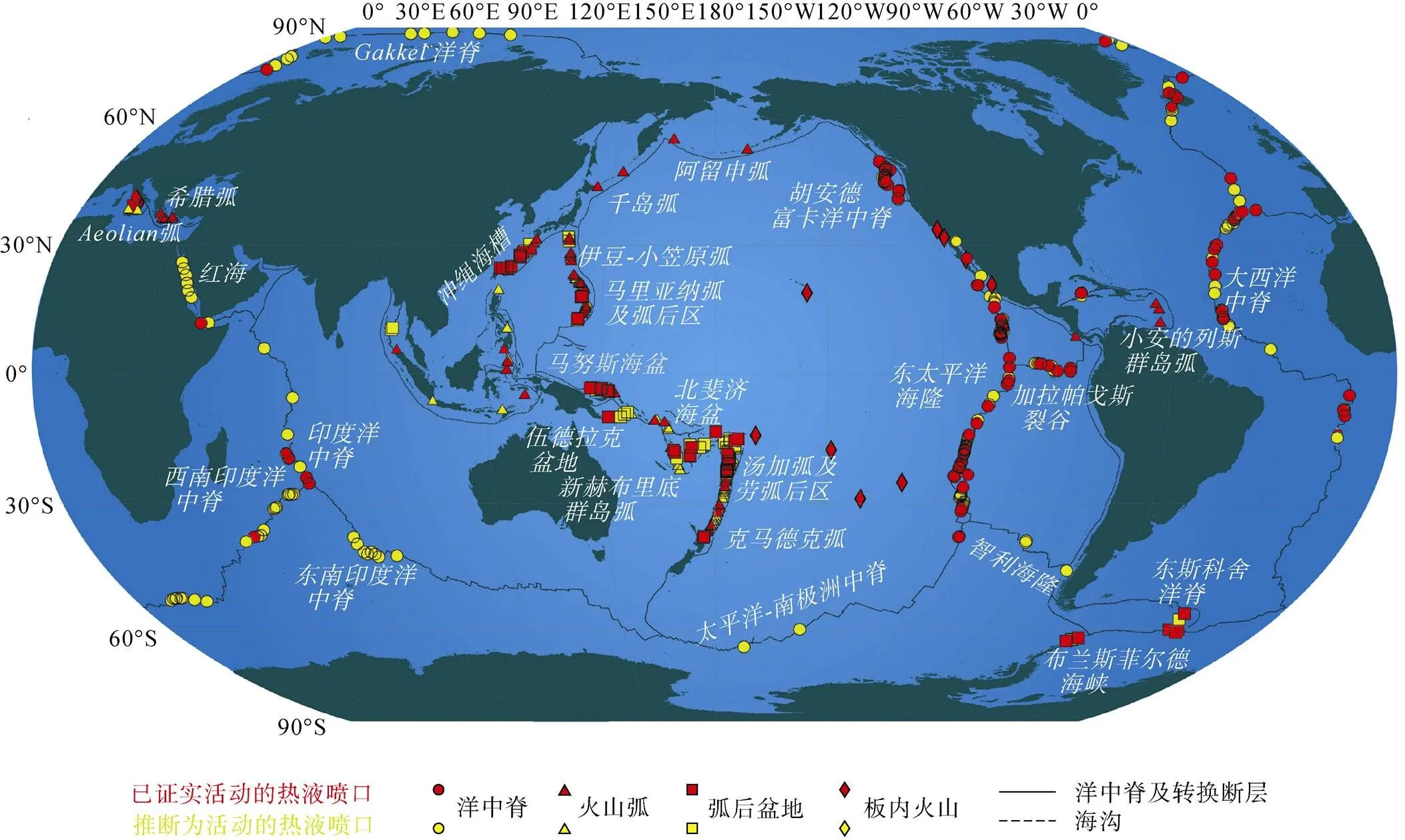
圖1 全球熱液噴口分布圖(據InterRidge Vents Database 2.1版修改)
1.2 熱液噴口流體采樣技術
熱液噴口流體樣品主要由搭載在潛水器(ROV)上的采樣器獲得, 采樣過程為: 當潛水器下潛至目標區域后, 采樣器通過操作自身機械手打開采樣閥, 抽取熱液流體樣品到采樣腔(采樣瓶)中, 隨后關閉采樣閥, 攜帶充填的流體樣品隨潛水器從海底上升至水面, 完成樣品采集工作[3, 15]。自熱液噴口流體采樣工作開始, 研究者們陸續研發了多種采樣器, 其中應用最廣泛的是非氣密采樣器和氣密不保壓采樣器兩類。
1.2.1 非氣密采樣技術
非氣密采樣器是最早被研發并投入使用的采樣裝置, 包括鈦采樣器、Niskin采樣器、NOAA采樣器、ORI泵采樣器等, 其中使用最頻繁、最具代表性的是鈦采樣器。鈦采樣器在采樣時, 由機械手驅動[15], 利用彈簧拉動活塞把樣品抽取到采樣腔。以鈦采樣器為代表的非氣密采樣器不能較好地保留流體樣品中的化學成分, 降低了樣品分析結果的精度和可靠性[16]。
1.2.2 氣密不保壓采樣技術
在非氣密采樣器的基礎上, 各國先后研發了多種氣密不保壓采樣器。其原理是通過壓力補償措施保持采樣器內部壓力與外部環境壓力基本一致, 再通過一定的密封技術保證流體樣品不泄漏, 包括“Lupton”氣密采樣器、多瓶氣密采樣器WHATS II、真空采樣器、旋轉式采樣器等, 其中具有代表性的有“Lupton”氣密采樣器和WHATS II。“Lupton”氣密采樣器結構簡單緊湊、尺寸較小, 采樣前先將采樣腔內抽成真空, 再依靠機械手驅動采樣閥, 然后樣品在壓力差作用下被吸入采樣腔。由于采樣時速度較快, 常常吸入大量周圍的海水而降低了樣品的純度[17]。WHATS II通過電機驅動的機械手操縱8個閥門來控制4個采樣瓶, 利用蠕動泵抽取樣品, 可以一次采取不同要求的流體樣品, 有效提升了采樣效率[16]。但該采樣器幾何形狀復雜, 閥門操作繁瑣而且機械穩健性還有待提高[7]。
2 熱液噴口流體中H2S濃度數據分析
2.1 H2S濃度數據統計
自1982年以來, 學者們[15, 18-20]在瓜伊馬斯海盆、胡安德富卡洋中脊、東太平洋海隆、大西洋中脊、沖繩海槽、馬里亞納弧和伊豆-小笠原弧等熱液活動區域采集了一系列的熱液流體樣品, 在船上或者室內實驗室進一步處理后, 獲得了大量噴口流體中的H2S濃度數據。本文共統計了38個熱液活動區264個H2S濃度數據, 為了更好地認識和理解噴口流體中H2S濃度差異, 也統計了相應的基底巖性、Cl元素濃度等參數(表1)。
2.1.1 洋中脊構造背景
在洋中脊構造背景下, 東太平洋海隆、大西洋中脊和胡安德富卡洋中脊是海底熱液活動的重要研究區域。熱液活動區的基底巖性主要為MORB(洋中脊玄武巖), 含少量超鎂鐵質巖、E-MORB(富集型洋中脊玄武巖), 部分區域有沉積物覆蓋; 熱液噴口的溫度集中在270~390℃, 水深集中在1 500~3 000 m (圖2a); 噴口流體中的H2S濃度范圍為0.12~81.6 mmol/kg (圖2c)。
東太平洋海隆區(EPR)中H2S濃度主要在3.0~ 10.0 mmol/kg范圍內變化, 部分可達24.8~81.6 mmol/kg, 是熱液噴口流體中H2S濃度最高的區域。Von Damm等[33]通過研究EPR 9°N噴口流體化學變化發現, 海底火山事件造成的相對高溫、低壓條件可以提高H2S濃度并且通常會產生低氯蒸氣相流體。EPR 9°N熱液區中F熱液點還顯示H2S濃度、Fe濃度與H2S濃度之比Fe/H2S同生物群落活動關系密切, 1991年H2S濃度為41 mmol/kg, Fe/H2S小于1(Fe濃度為1.49 mmol/kg),過量的H2S有利于生物群落生長; 但1994年H2S濃度下降到8.7 mmol/kg, Fe/H2S大于1(Fe濃度為12.1 mmol/kg), 鐵硫化合物生成后H2S濃度過低不能支持生物生長, 導致生物群落死亡[34]。
大西洋中脊區中H2S濃度范圍為0.1~ 11.0 mmol/kg。其中Rainbow和Lost city熱液區基底為超鎂鐵質巖, 與區域內MORB基底熱液區的化學成分有顯著差別[8], 顯示H2S濃度相對較低, 這可能與超鎂鐵質巖發生蛇紋石化有關[40]。Menez Gwen和Lucky Strike熱液區基底均為E-MORB, 但Menez Gwen熱液區溫度更低以及水巖反應區更淺, 所以H2S濃度相對更低[47]。Edmond等[13]發現大西洋中脊以及東太平洋海隆區熱液噴口流體中Fe/H2S與Cl濃度呈正相關線性關系, 且Fe/H2S在高鹽度流體中大于1, 但由于Fe2+主要與Cl–形成絡合物, 所以Fe/H2S與Cl濃度的比值不能應用于解釋熱力學過程。
胡安德富卡洋中脊中H2S濃度在1.4~10.5 mmol/kg范圍內變化, 部分可達20~25 mmol/kg。Seyfried等[18]發現在Endeavour熱液區中由于海底地震活動導致熱液流體發生相分離, 造成流體化學特征發生大的變化。Endeavour熱液區中蒸汽相的Sully和Cantilever熱液點(Cl濃度為32~39 mmol/kg)的H2S濃度達到20~23 mmol/kg; Hulk和Dante熱液點(Cl濃度為418~ 426 mmol/kg)的H2S濃度只有7~13 mmol/kg, 這可能是由于相分離后的蒸汽相流體與海水混合而造成的。
2.1.2 弧后盆地構造背景
在弧后盆地構造背景下, 沖繩海槽、馬努斯海盆是重要的熱液活動研究區域。熱液活動區的基底巖性主要為MORB、BABB(弧后盆地玄武巖)、英安巖、安山巖; 熱液噴口溫度集中在240~360℃, 水深多在2 500 m以淺(圖2a); 噴口流體中H2S濃度范圍為0.2~23 mmol/kg(圖2c)。ISHIBASHI等[20]通過分析沖繩海槽Biwako熱液點34S同位素數據, 認為該熱液點H2S濃度較高(23 mmol/kg)可能是由于熱液源區因素以及微生物還原硫酸鹽作用。Sakai等[1, 67]通過分析沖繩海槽Jade熱液區流體化學成分以及碳、硫和氦同位素值, 認為熱液流體中CO2、CH4和H2S氣體含量較高可能反映巖漿去氣作用。Nakagawa等[14]發現沖繩海槽Iheya North熱液區發生相分離作用, 相對于鹵水相流體, 富H2、H2S和CO2的蒸汽相流體, 能夠為海底微生物群體化能自養提供更多的能量。Reeves等[57]對比馬努斯海盆中Vienna Woods熱液區和PACMANUS熱液區的流體化學成分, 發現它們均受到水巖反應和相分離作用影響, 但PACMANUS熱液區H2S的34S為負值(低至–2.7‰), 顯示其熱液流體成分受到更強烈的酸性巖漿流體輸入的影響。馬瑤等[68]通過分析數值模擬結果也發現, PACMANUS熱液系統中具有巖漿流體的輸入。而且與Vienna Woods熱液區相比, PACMANUS熱液區水深相對較淺, 其熱液活動強度和流體組成受到巖漿作用影響更明顯。
2.1.3 火山弧構造背景
在火山弧構造背景下, 馬里亞納弧、伊豆-小笠原弧、克馬德克弧是重要的熱液活動研究區域。熱液活動區的基底巖性主要為IAB(島弧玄武巖)、玄武巖、安山巖; 熱液噴口溫度集中在16~40℃、257~ 311℃, 水深多在1 700 m以淺(圖2a); 噴口流體中的H2S濃度范圍為0.002~5.8 mmol/kg(圖2c)。Butterflied 等[62]研究指出SO2通過不同反應可以分別生成S(0)、H2SO4、H2S, 但馬里亞納弧NW Rota熱液區中幾乎沒有H2S, 這可能是由于火山口的熱液通道太短而不能產生H2S。
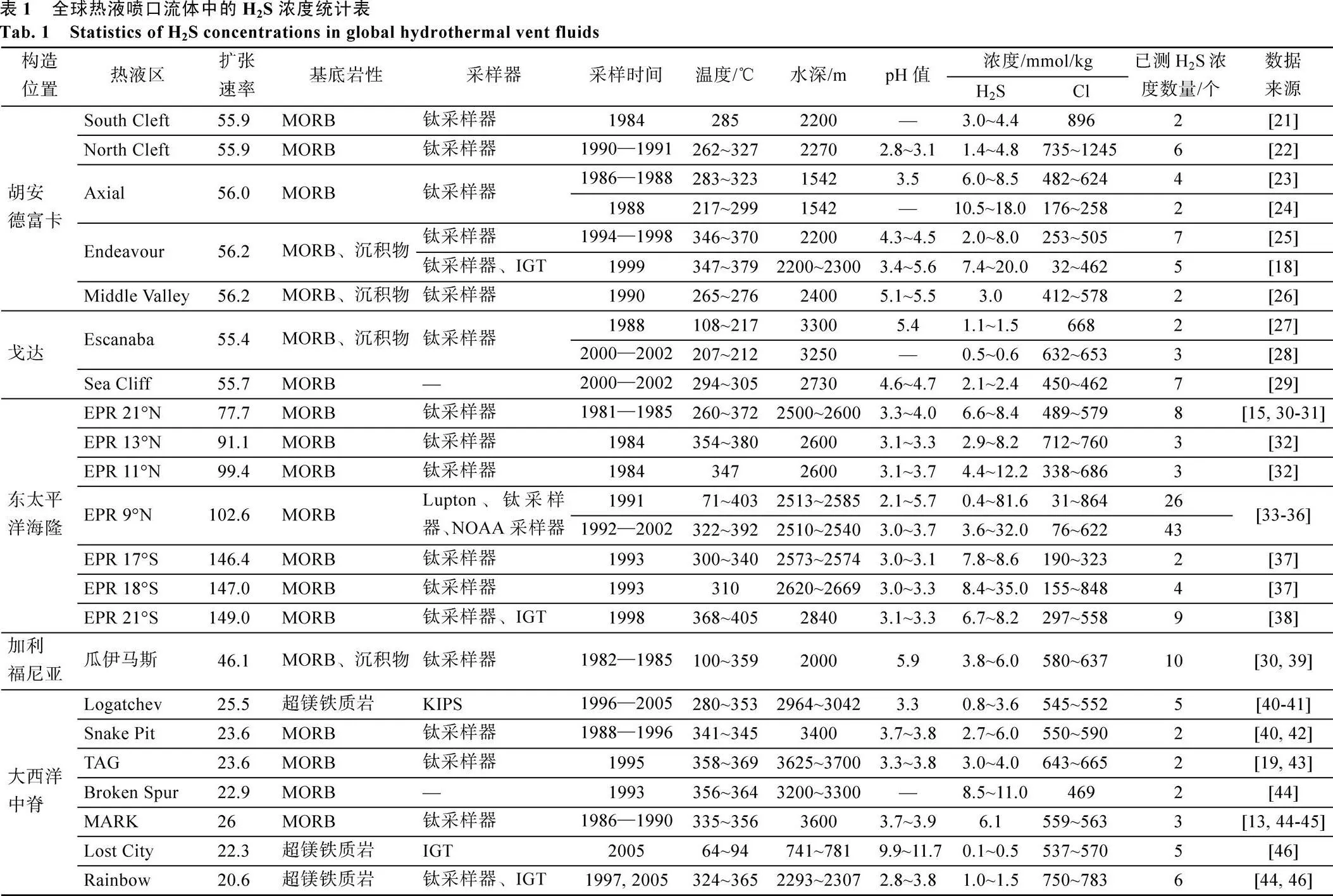
圖2 已測H2S濃度的熱液噴口統計圖
Fig. 2 Statistics of the global hydrothermal vents with H2S concentrations
a: 溫度-水深對應關系(據文獻[65-66]修改); b: pH值; c: 不同構造背景區的H2S濃度; d: H2S-Cl濃度關系(海水Cl濃度范圍, 據文獻[29, 41])
2.1.4 板內火山構造背景
在板內火山構造背景下, 目前已測得H2S濃度的熱液區為夏威夷地區Loihi熱液區, 主要巖性為OIB(洋島玄武巖); 溫度為31℃, 水深為980 m(圖2a); 噴口流體H2S濃度為0.002 mmol/kg。Sedwick等[64]認為可能因為熱液中相當高含量的Fe2+消耗H2S生成了鐵硫化物所以導致H2S濃度極低, 這一結果與溶液中黃鐵礦處于過飽和狀態一致。
2.2 H2S濃度影響因素
綜合前人研究成果, 可以發現不同構造背景的熱液系統經歷了相同的物理化學過程, 如水巖反應、巖漿去氣、相分離、流體混合等[57-58, 69]。所以從整體上來說, 影響各熱液區噴口流體中H2S濃度的因素除了溫度、壓力[47]條件外, 還主要包含以下因素:
1) 巖漿去氣。前人研究表明與弧火山相關的熱液噴口有巖漿揮發物的直接輸入[1-2, 60, 68], 盡管沒有明確證據顯示H2S可以直接由巖漿去氣化加入到熱液系統中[3], 但SO2和H2S是兩種主要的巖漿來源的含硫氣體, 而且SO2是高溫巖漿氣體的主要成分之一, 在總溶解度降低、pH值偏高條件下SO2容易發生歧化反應轉化為H2S[62]。
2) 水巖反應。基巖組分較大程度影響了熱液端元流體化學組分[44], 玄武巖是熱液系統中主要的基底巖性, 通過水巖作用浸出其中的火成硫化物可以產生大量的H2S[3]; 但在慢速或超慢速擴張洋脊中, 超鎂鐵質巖基底比較常見, 其中的橄欖石、輝石等礦物發生蛇紋石化作用導致pH值降低并產生大量的CH4和H2, 而H2S濃度則相對較低, 這可能與超基性巖中硫含量較低有關[4, 41]。此外, 海底微生物也可還原硫酸鹽生成H2S, 為自身化合作用提供能量[20]。但在洋中脊構造背景下熱液噴口流體中的34S范圍為1‰~7‰, 表明H2S主要來源于玄武巖基質中的硫化物, 海水硫酸鹽的貢獻小于10%[70-71]。
3) 相分離作用。前人曾對胡安德富卡、戈達、東太平洋海隆、大西洋中脊等熱液區域的噴口流體進行長期化學成分觀察, 發現EPR 21°N、瓜伊馬斯海盆等區域流體化學成分長期保持穩定[30-32], 而North Cleft、EPR 17°S、EPR 18°S等熱液區由于火山作用促使熱液流體發生亞臨界相分離[22, 37], 造成流體化學成分發生較大變化。研究顯示相分離作用在海底熱液流體中普遍發生[51, 58, 72], 可以分配流體中的可溶性氣體(如H2S、H2等)[35], 即在相分離作用中H2S等氣體組分優先進入蒸汽相, 主要陽離子則在鹵水相中聚集[19, 31, 33, 35-36, 38, 47], 造成H2S濃度與Cl濃度整體上呈負相關。如圖2d所示, 海水中Cl濃度主要分布在540~560 mmol/kg, 低氯蒸汽相中的H2S濃度明顯高于高氯鹵水相。所以盡管在同一熱液區, 流體來源相同, 不同熱液點由于相分離作用可能導致流體化學成分不同[70]。
3 采樣及探測技術進展
目前用于分析熱液流體化學成分的研究手段基本可分為兩類: 一類是傳統的“采樣-實驗室分析”方法, 即使用采樣器采集流體樣品后, 再分離富集和定量檢測其中的流體成分; 另一類是近年來國內外致力發展的海底原位探測技術, 該技術可以直接在海底進行物理與化學量的原位測定[17]。在“采樣-實驗室”分析方法使用過程中, 由于研究技術手段的限制可能會造成H2S濃度測量誤差[15, 19, 22, 24, 28, 33, 52]。測量誤差主要來源于: (1)非氣密采樣。早期非氣密采樣器在返回海面過程中內部形成過壓環境, 可能使采樣閥門被打開導致流體樣品發生泄漏或者混合死區預裝的蒸餾水或海底海水而受到污染[15-16], 盡管這種污染可以進行校準, 但校準階段的一些偏差是不可避免的[7]; (2)不保壓采樣。由于大量使用的采樣裝置不具備保壓性能, 從深海的高壓環境到海面的常溫常壓環境時, 流體樣品中的H2S濃度超過海洋表面溫壓條件下的溶解度[16], 會導致H2S逸散[15, 73]或者發生硫化物沉淀反應[24, 49, 51], 使其不能較好地反映原始流體狀態和化學組成。只有提高熱液噴口流體中H2S濃度的測量精度, 才能為海底熱液流體以及流體-巖石相互作用的熱力學過程提供更準確的基礎數據, 進而為相關的海底熱液成礦作用和海底微生物化能合成作用提供更可靠的證據。
3.1 氣密保壓采樣技術
在傳統“采樣-實驗室”分析方法中, 精確測量熱液流體成分的濃度對采樣技術提出了更高的要求。在非氣密、氣密不保壓采樣器基礎上, 氣密保壓采樣器進一步完善采樣性能, 能夠在密封條件下完整保存熱液流體的化學成分, 同時保持采集樣品時的壓力。
美國伍茲霍爾海洋研究所(WHOI)研制了“Jeff”氣密保壓采樣器, 該采樣器設計了兩個分立腔體結構, 通過在蓄能腔內預充氮氣緩沖壓力波動來保持內部樣品壓力(將預充氮氣壓力調節至采樣深度靜水壓力的10%), 并在兩個腔體間安裝阻尼孔來調節樣品采集速率, 有效避免了因熱液擾動而造成的大量海水夾帶[73], 但采樣器使用電機驅動打開采樣閥, 驅動結構復雜而且需要消耗較大的電能。“Jeff”氣密保壓采樣器曾多次被應用于采集海底熱液噴口流體樣品, 如2006年在馬努斯海盆[57]以及2012年在開曼群島收集噴口流體樣品。
我國浙江大學研究團隊依據采樣閥觸發方式不同研制了機械觸發式、液壓觸發式、電控自動觸發式系列氣密保壓熱液采樣器, 并分別于2005、2008、2010年在大西洋中脊、龜山島海域成功進行了多次海試實驗。其中液壓觸發式氣密保壓熱液采樣器使用了雙向自緊密封式設計使采樣閥密封力更加可靠, 但采集深海樣品時需要提供很大的驅動力才能開啟采樣閥門, 而且容易造成采樣管抖動導致周圍海水混入[74-75]; 電控自動觸發式氣密保壓熱液采樣器自帶電控驅動器, 無需外力即可打開采樣閥, 能夠在人工模式或者自動模式下根據溫度自動采集流體樣品[76]。其中基于時間序列的氣密保壓采樣器由一個控制模塊和6個采樣模塊組成, 可在海底長期部署以獲取序列的熱液流體樣品。2012—2013年, 該采樣器作為CALLISTO系統的一部分在MARS海底觀測網成功通過了測試[77]。
近期, 圍繞如何提升采樣器的氣密性能、保壓性能、操作性能等關鍵問題, 部分學者們也開展了許多性能優化實驗, 如Wu等[78]在新設計的氣密保壓采樣器中采用了Maxon直流電機(DCX22L), 該電機具有體積小、驅動力大和可控性好的優勢。但大部分性能優化實驗尚未用于實際測試, 其效果還有待進一步的應用驗證。整體來說, 采樣分析技術的開發和優化既繁瑣又耗時[46], 采樣器經歷了“非氣密采樣器—氣密不保壓采樣器—氣密保壓采樣器”的發展歷程。但現有的氣密保壓采樣器的共同特點是結構復雜且成本高昂, 還需大力發展氣密保壓技術來提高樣品保真水平, 為精確測定熱液噴口流體中的H2S濃度提供采樣技術支持。
3.2 海底原位探測技術
海底原位探測技術, 是指利用原位化學傳感器或原位化學分析器直接在海底采樣點對樣品進行分析的技術, 能夠解決氣密保壓采樣技術存在的局限, 可以較好地反映原始流體化學狀態, 有效提升熱液噴口流體化學成分測量精度[9]。目前國內外熱液噴口流體原位H2S探測技術主要有: 基于電勢分析法的電化學傳感技術、基于伏安法的電化學傳感技術以及基于激光拉曼光譜系統的光學傳感技術[79-80]。
3.2.1 原位電化學傳感器
原位電化學傳感器可在極端條件下原位測量熱液流體的化學參數, 具有體積小、操作簡單、成本低的優勢, 既可以搭載在深潛器上進行實時探測, 也可以放置在海底進行長期海底熱液流體化學成分監測, 等待回收后再讀取儲存的探測數據。

張榮華等[86]自主研制了Zr/ZrO2電化學傳感器, 在實驗室以及中國南海成功通過試驗, 被證實能夠在2~200℃范圍對熱液流體進行原位檢測, 較好地彌補了YSZ電化學傳感器在200℃以下響應不靈敏的缺陷。其中Zr/ZrO2電極是由熔融Na2CO3氧化Zr金屬線在其表面上形成ZrO2薄膜而制成的[87], 具有耐腐蝕性和良好的機械穩定性。在前期基礎上, 他們研制出了用于測量高溫高壓流體中溶解態H2S的新型化學傳感器, 該傳感器由Ag/Ag2S測量電極配合YSZ/HgO/Hg參比電極以及Zr/ZrO2參比電極構成, 在溫度為0~400℃、壓力為25 MPa和33 MPa的條件下分別進行了實驗測試, 結果顯示該傳感器適合在高壓條件下測量溶液中溶解態H2S的濃度, 但存在部分實驗數據較離散、擬合程度較差的問題[82]。
Luther等[79]將固態金汞齊電極安裝在CTD上, 隨Alvin潛水器下潛后, 成功檢測了EPR 9°50′N熱液區噴口流體中的H2S濃度, 為準確測定熱液中的H2S濃度提供了一種有效的技術。其工作原理基于伏安法: 在掃描整個固態電勢范圍時測量電極電流, 在該電勢范圍內進行氧化還原反應的物質會產生一定的特征伏安波形, 且波峰高度與濃度大小成正比[88]。金汞齊電極能夠快速測量熱液中的O2、Mn2+、Fe2+、HS–、I–、FeS和Fe(III), 具有非常好的再現性[79], 但由于伏安法具有非選擇性, 允許在相同的空間區域中測量多種物質, 可能存在由于不同物質氧化還原電位接近而產生波峰重疊現象, 導致測量結果不準確[89]。
從當前的應用情況來看, 原位電化學傳感器可以有效地反映海底熱液的真實化學狀況, 具有結構簡單、操作靈活、靈敏度高等優點, 但在海底探測中還存在抗干擾能力較差、信號漂移等不足。目前電化學傳感器主要使用Ag/Ag2S電極作為工作電極進行海底原位H2S濃度測量, 使用壽命短不適合長期監測, 不能獲取熱液流體H2S濃度長期連續的變化, 所以還有待進一步研發在海底高溫高壓環境下能正常、準確、持久探測H2S參數的原位電化學傳感器。
3.2.2 原位激光拉曼光譜系統
拉曼光譜技術作為一種定性分析手段, 被廣泛的應用于具有拉曼活性鍵的固體、液體(包括熔體)和氣體物質[90], 而基于內標定理論的拉曼光譜分析方法使拉曼光譜技術也可以進行定量分析[91]。隨著深海原位激光拉曼光譜系統的成功研制, 拉曼光譜技術已經開始應用于海底原位探測研究, 提供了原位、實時、無接觸光學傳感的新可能[80]。
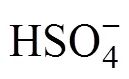
美國蒙特利海灣研究所(MBARI)和華盛頓大學聯合研制了一套基于ROV平臺的DORISS系統(深海拉曼光譜系統), 該系統由Kaiser Optical的激光拉曼光譜系統改裝而成, 包括光譜接收系統、控制及激光發射系統和光學探頭三部分, 被分別安裝在可承受41 MPa海水壓力的耐壓艙內[92]。DORISS系統在3 600 m深度成功獲得了高質量的拉曼光譜, 這些光譜來自海洋中的氣體、液體、礦物固體以及海水本身的信號[93], 但在使用過程中也發現DORISS系統存在較多缺陷, 比如體積重量太大不能與其他探測儀器一起使用; 光學探頭是由ROV機械手控制的, 探測過程中ROV振動和滑動將影響光學探頭的精確定位[92, 94]。White等[95]設計了一款水下精確定位系統(PUP), 該系統能夠以0.1 mm的精度平移DORISS光學探頭, 能夠為深海拉曼光譜探測提供所需的穩定性和精確定位。在DORISS系統基礎上, MBARI研究所研制了DORISS II系統, 將光譜儀、激光器和控制與通訊系統集成在一個耐壓艙內。與DORISS系統相比, DORISS II系統整體重量減少, 功耗大幅度降低, 光學平臺更加穩定, 工作可靠性大幅提高[96]。2005年10月, Dunk 等[91]首次在蒙特利海灣使用DORISS II系統定量分析了海水中的CO2濃度, 結果顯示DORISS II系統還需要使用信號增強技術將靈敏度提高5~10倍。2008年, Zhang等[80]在蒙特利海灣利用DORISS II系統獲得了沉積物孔隙水的拉曼光譜, 并使用拉曼特征峰面積定量計算了孔隙水中溶解硫化物(H2S, HS-)的濃度。2016年, Peltzer等[97]在加利福尼亞州近海的SantaMonica盆地使用DORISS II系統利用沉積物孔隙水中H2S與HS-拉曼特征峰強的比值估算了沉積物孔隙水的pH值。以DORISS II系統為基礎, 側重于增加靈敏度的DORISS III系統目前已完成概念設計并進行集成測試, 預計系統靈敏度將提高19倍[98]。
海底熱液的原位定量分析能夠大量獲取實時的原位海底熱液信息, 為研究熱液系統的演化、熱液系統的物質能量交換等科學問題提供重要的原位數據支持。但目前的原位探測技術在實際使用過程中還存在較多缺陷, 無法取代傳統的采樣分析技術, 因此具實用性、可靠性和智能化的原位探測設備還亟待進一步的研發。
4 結論與展望
熱液噴口流體化學分析能夠為海水與洋殼之間的物理、化學和生物過程提供重要的線索, 通過統計和分析38個熱液活動區264個H2S濃度數據, 我們發現H2S濃度主要集中在低于10 mmol/kg范圍, 其中東太平洋海隆的部分熱液區可達到24.8~81.6 mmol/kg。除了基本的溫度壓力條件外, 影響各熱液區噴口流體中H2S濃度的主要因素還包括: (1)巖漿去氣, 可能造成熱液噴口流體中H2S氣體含量較高; (2)水巖反應, 與玄武巖基底體系浸出火成硫化物產生大量H2S相比, 超鎂鐵質巖基底體系發生蛇紋石化產生大量CH4、H2, 而H2S濃度相對較低; (3)相分離作用, 在相分離作用過程中H2S等揮發性組分傾向于進入低氯蒸汽相, H2S濃度與Cl濃度整體上呈負相關。
已有的H2S濃度數據主要通過非氣密保壓采樣技術獲得, 不能準確地反映原始流體狀態和化學組成, 可能會造成H2S濃度測量誤差。只有精確測定熱液噴口流體中的H2S濃度, 才能為相關的海底熱液成礦作用和海底微生物化能合成作用提供更可靠的證據。實踐已經說明, 要獲得精確的科學數據往往需要相應高水平工程技術的支撐, 進一步發展氣密保壓采樣技術, 以提高樣品的保真水平, 仍然是推動深海相關學科發展的重要動力。另一方面, 利用深海原位電化學傳感器或拉曼光譜系統等進行海底原位探測, 讓傳統的分析測試裝備進入深海, 可能是一個更為廣闊的發展方向。
[1] Hannington M D, de Ronde C E J, Petersen S. Sea-floor tectonics and submarine hydrothermal systems[C]//Hedenquist J W, John F H T, Goldfarb R J, et al. Economic Geology 100th Anniversary Volume. Colorado: Society of Economic Geologists, 2005: 111–141.
[2] Humphris S E, Klein F. Progress in deciphering the controls on the geochemistry of fluids in seafloor hy-dro-thermal systems[J]. Annual Review of Marine Science, 2018, 10: 315-343.
[3] Shanks W C. Stable isotopes in seafloor hydrothermal systems: Vent fluids, hydrothermal deposits, hydrothermal alteration, and microbial processes[J]. Reviews in Mi-neralogy and Geochemistry, 2001, 43(1): 469-525.
[4] 曾志剛. 海底熱液地質學[M]. 北京: 科學出版社, 2011: 1-567. Zeng Zhigang. Submarine Hydrothermal Geology[M]. Beijing: Science Press, 2011: 1-567.
[5] Edmond J M, Measures C, Mangum B, et al. On the formation of metal-rich deposits at ridge crests[J]. Earth and Planetary Science Letters, 1979, 46(1): 19-30.
[6] Beaulieu S E, Baker E T, German C R, et al. An authoritative global database for active submarine hydrothermal vent fields[J]. Geochemistry, Geophysics, Geosystems, 2013, 14(11): 4892-4905.
[7] Miyazaki J, Makabe A, Matsui Y, et al. WHATS-3: An improved flow-through multi-bottle fluid sampler for deep-sea geofluid research[J]. Frontiers in Earth Science, 2017, 5: 45.
[8] Seyfried W E, Pester N J, Ding K, et al. Vent fluid chemistry of the Rainbow hydrothermal system (36°N, MAR): Phase equilibria and in situ pH controls on subseafloor alteration processes[J]. Geochimica et Cos-mochimica Acta, 2011, 75(6): 1574-1593.
[9] Ding K, Seyfried W E, TiveyM K, et al. In situ measurement of dissolved H2and H2S in high-tem-perature hydrothermal vent fluids at the Main Endea-vour Field, Juan de Fuca Ridge[J]. Earth and Planetary Science Letters, 2001, 186(3-4): 417-425.
[10] Brugger J, Liu W, Etschmann B, et al. A review of the coordination chemistry of hydrothermal systems, or do coordination changes make ore deposits?[J]. Chemical Geology, 2016, 447: 219-253.
[11] Suleimenov O M, Seward T M. A spectrophotometric study of hydrogen sulphide ionisation in aqueous solu-tions to 350℃[J]. Geochimica et Cosmochimica Acta, 1997, 61(24): 5187-5198.

[13] Edmond J M, Campbell A C, Palmer M R, et al. Time series studies of vent fluids from the TAG and MARK sites (1986, 1990) Mid-Atlantic Ridge: a new solution chemistry model and a mechanism for Cu/Zn zonation in massive sulphide orebodies[J]. Geological Society of London Special Publications, 1995, 87(1): 77-86.
[14] Nakagawa S, Takai K, Inagaki F, et al. Variability in microbial community and venting chemistry in a sedi-ment-hosted backarc hydrothermal system: Impacts of subseafloor phase-separation[J]. FEMS Microbiology Ecology, 2005, 54(1): 141-155.
[15] Von Damm K L, Edmond J M, Grant B, et al. Che-mistry of hydrothermal solutions at 21°N East Pacific Rise[J]. Geochimica et Cosmochimica Acta, 1985, 49(11): 2197-2220.
[16] Saegusa S, Tsunogai U, Nakagawa F, et al. Develop-ment of a multibottle gas–tight fluid sampler WHATS II for Japanese submersibles/ROVs[J]. Geofluids, 2006, 6(3): 234-240.
[17] 吳世軍. 深海熱液保真采樣機理及其實現技術研究[D].杭州: 浙江大學, 2009. Wu Shijun. The principle and technologies for sampling deep-sea high-fidelity hydrothermal fluids[D]. Hangzhou: Zhejiang University, 2009.
[18] Seyfried W E, Seewald J S, Berndt M E, et al. Chemistry of hydrothermal vent fluids from the Main Endeavour Field, northern Juan de Fuca Ridge: Geochemical controls in the aftermath of June 1999 seismic events[J]. Journal of Geophysical Research: Solid Earth, 2003, 108(B9): 2429.
[19] Charlou J L, Donval J P, Jean-Baptiste P, et al. Gases and helium isotopes in high temperature solutions sam-pled before and after ODP Leg 158 drilling at TAG Hydrothermal Field (26°N, MAR)[J]. Geophysical Research Letters, 1996, 23(23): 3491-3494.
[20] Ishibashi J, Noguchi T, Toki T, et al. Diversity of fluid geochemistry affected by processes during fluid upwelling in active hydrothermal fields in the Izena Hole, the middle Okinawa Trough back-arc basin[J]. Geoche-mical Journal, 2014, 48(4): 357-369.
[21] Von Damm K L, Bischoff J L. Chemistry of hydro-thermal solutions from the southern Juan de Fuca Ridge[J]. Journal of Geophysical Research: Solid Earth, 1987, 92(B11): 11334-11346.
[22] Butterfield D A, Massoth G J. Geochemistry of north Cleft segment vent fluids: Temporal changes in chlori-nity and their possible relation to recent volcanism[J]. Journal of Geophysical Research: Solid Earth, 1994, 99(B3): 4951-4968.
[23] Massoth G J, Butterfield D A, Lupton J E, et al. Submarine venting of phase-separated hydrothermal fluids at Axial Volcano, Juan de, Fuca Ridge[J]. Nature, 1989, 340(6236): 702-705.
[24] Butterfield D A, Massoth G J, Mcduff R E, et al. Geochemistry of hydrothermal fluids from Axial Seamount hydrothermal emissions study vent field, Juan de Fuca Ridge: Subseafloor boiling and subsequent fluid-rock interaction[J]. Journal of Geophysical Research: Solid Earth, 1990, 95(B8): 12895-12921.
[25] Butterfield D A, McDuff R E, Mottl M J, et al. Gradients in the composition of hydrothermal fluids from the Endeavour segment vent field: Phase separation and brine loss[J]. Journal of Geophysical Research: Solid Earth, 1994, 99(B5): 9561-9583.
[26] Butterfield D A, Mcduff R E, Franklin J, et al. Geochemistry of Hydrothermal Vent Fluids from Middle Valley, Juan de Fuca Ridge[C]//Mottl M J, Davis E E, Fisher A T, et al. Proceedings of the Ocean Drilling Program, Scientific Results. Texas: Texas A&M University, 1994: 95-410.
[27] Campbell A C, German C R, Palmer M R, et al. Chemistry of hydrothermal fluids from Escanaba Trough, Gorda Ridge[J]. Oceanographic Literature Review, 1994, 42(9): 732.
[28] Von Damm K L, Parker C M, Zierenberg R A, et al. The Escanaba Trough, Gorda Ridge hydrothermal system: Temporal stability and subseafloor complexity[J]. Geo-chimica et Cosmochimica Acta, 2005, 69(21): 4971- 4984.
[29] Von Damm K L, Parker C M, Lilley M D, et al. Chemi-stry of vent fluids and its implications for subsurface conditions at Sea Cliff hydrothermal field, Gorda Ri-dge[J]. Geochemistry, Geophysics, Geosystems, 2006, 7, Q05005, doi: 10.1029/2005GC001034.
[30] Campbell A C, Suter B T, Measures C I, et al. A time series of vent fluid compositions from 21°N, East Pacific Rise (1979, 1981, 1985), and the Guaymas Basin, Gulf of California (1982, 1985)[J]. Journal of Geophysical Research: Solid Earth, 1988, 93 (B5): 4537- 4549.
[31] Von Damm K L. Seafloor hydrothermal activity: black smoker chemistry and chimneys[J]. Annual Review of Earth and Planetary Sciences, 1990, 18(1): 173-204.
[32] Bowers T S, Campbell A C, Measures C I, et al. Che-mical controls on the composition of vent fluids at 13°– 11°N and 21°N, East Pacific Rise[J]. Journal of Geo-physical Research: Solid Earth, 1988, 93(B5): 4522- 4536.
[33] Von Damm K L, Oosting S E, Kozlowski R, et al. Evolution of East Pacific Rise hydrothermal vent fluids following a volcanic eruption[J]. Nature, 1995, 375(6526): 47-50.
[34] Von Damm K L, Buttermore L G, Oosting S E, et al. Direct observation of the evolution of a seafloor ‘black smoker’ from vapor to brine[J]. Earth and Planetary Science Letters, 1997, 149(1-4): 101-111.
[35] Von Damm K L. Chemistry of hydrothermal vent fluids from 9°–10°N, East Pacific Rise: “Time zero”, the imme-diate posteruptive period[J]. Journal of Geophysical Research: Solid Earth, 2000, 105(B5): 11203- 11222.
[36] Von Damm K L. Evolution of the hydrothermal system at East Pacific Rise 9°50'N: Geochemical evidence for changes in the upper oceanic crust[C]//German C R, Lin J, Parson L M. Geophysical Monograph Series(148). Washington DC: American Geophysical Union, 2004: 285-304.
[37] Charlou J L, Fouquet Y, Donval J P, et al. Mineral and gas chemistry of hydrothermal fluids on an ultrafast spreading ridge: East Pacific Rise, 17° to 19°S (Naudur cruise, 1993) phase separation processes controlled by volcanic and tectonic activity[J]. Journal of Geophy-sical Research: Solid Earth, 1996, 101(B7): 15899-15919.
[38] Von Damm K L, Lilley M D, Shanks W C, et al. Extraordinary phase separation and segregation in vent fluids from the southern East Pacific Rise[J]. Earth and Planetary Science Letters, 2003, 206(3-4): 365-378.
[39] Von Damm K L, Edmond J M, Measures C I, et al. Chemistry of submarine hydrothermal solutions at Guaymas Basin, Gulf of California[J]. Geochimica et Cosmochimica Acta, 1985, 49(11): 2221-2237.
[40] Douville E, Charlou J L, Oelkers E H, et al. The rainbow vent fluids (36°14′N, MAR): The influence of ultramafic rocks and phase separation on trace metal content in Mid-Atlantic Ridge hydrothermal fluids[J]. Chemical Geology, 2002, 184(1-2): 37-48.
[41] Schmidt K, Koschinsky A, Garbe-Sch?nberg D, et al. Geochemistry of hydrothermal fluids from the ultramafic-hosted Logatchev hydrothermal field, 15°N on the Mid-Atlantic Ridge: Temporal and spatial investigation[J]. Chemical Geology, 2007, 242(1-2): 1-21.
[42] Jeanbaptiste P, Charlou J L, Stievenard M, et al. Helium and methane measurements in hydrothermal fluids from the mid-Atlantic ridge: The Snake Pit site at 23°N[J]. Earth and Planetary Science Letters, 1991, 106(1-4): 17-28.
[43] Edmonds H N, German C R, Green D R H, et al. Continuation of the hydrothermal fluid chemistry time series at TAG, and the effects of ODP drilling[J]. Geophysical Research Letters, 1996, 23(23): 3487-3489.
[44] Charlou J L, Donval J P, Fouquet Y, et al. Geochemistry of high H2and CH4vent fluids issuing from ultramafic rocks at the Rainbow hydrothermal field (36°14′N, MAR)[J]. Chemical Geology, 2002, 191(4): 345-359.
[45] Campbell A C, Palmer M R, Klinkhammer G P, et al. Chemistry of hot springs on the Mid-Atlantic Ridge[J]. Nature, 1988, 335(6190): 514-519.
[46] Konn C, Charlou J L, Donval J P, et al. Hydrocarbons and oxidized organic compounds in hydrothermal fluids from Rainbow and Lost City ultramafic-hosted vents[J]. Chemical Geology, 2009, 258(3-4): 299-314.
[47] Charlou J L, Donval J P, Douville E, et al. Compared geochemical signatures and the evolution of Menez Gwen(37°50′N) and Lucky Strike (37°17′N) hydrother-mal fluids, south of the Azores triple junction on the Mid- Atlantic Ridge[J]. Chemical Geology, 2000, 171(1-2): 49-75.
[48] Von Damm K L, Bray A M, Buttermore L G, et al. The geochemical controls on vent fluids from the Lucky Strike vent field, Mid-Atlantic Ridge[J]. Earth and Planetary Science Letters, 1998, 160(3): 521-536.
[49] Pester N J, Reeves E P, Rough M E, et al. Subseafloor phase equilibria in high-temperature hydrothermal fluids of the Lucky Strike Seamount (Mid-Atlantic Ridge, 37°17′N)[J]. Geochimica et Cosmochimica Acta, 2012, 90: 303-322.
[50] Gamo T, Chiba H, Yamanaka T, et al. Chemical chara-cteristics of newly discovered black smoker fluids and associated hydrothermal plumes at the Rodriguez Triple Junction, Central Indian Ridge[J]. Earth and Planetary Science Letters, 2001, 193(3-4): 371-379.
[51] Gallant R M, Von Damm K L. Geochemical controls on hydrothermal fluids from the Kairei and Edmond Vent Fields, 23°-25°S, Central Indian Ridge[J]. Geochemistry, Geophysics, Geosystems, 2006, 7(6): 1-24.
[52] Mcmurtry G M, Sedwick P N, Fryer P, et al. Unusual geochemistry of hydrothermal vents on submarine arc volcanoes: Kasuga Seamounts, Northern Mariana Arc[J]. Earth and Planetary Science Letters, 1993, 114(4): 517- 528.
[53] Sakai H, Kanayama S, Tsunogai U, et al. Gas geochemistry of submarine hydrothermal systems at Oki-nawa backarc basin and Ogasawara arc[J]. Mineral Ma-gazine, 1994, 58A: 797-798.
[54] Kawagucci S, Ueno Y, Takai K, et al. Geochemical origin of hydrothermal fluid methane in sediment- associated fields and its relevance to the geographical distribution of whole hydrothermal circulation[J]. Che-mical Geology, 2013, 339: 213-225.
[55] Kawagucci S, Chiba H, Ishibashi J, et al. Hydrothermal fluid geochemistry at the Iheya North field in the mid-Okinawa Trough: Implication for origin of methane in subseafloor fluid circulation systems[J]. Geochemical Journal, 2011, 45(2): 109-124.
[56] Sakai H, Gamo T, Kim E S, et al. Unique chemistry of the hydrothermal solution in the mid-Okinawa Trough Backarc Basin[J]. Geophysical Research Letters, 1990, 17(12): 2133-2136.
[57] Reeves E P, Seewald J S, Saccocia P, et al. Geoche-mistry of hydrothermal fluids from the PACMANUS, Northeast Pual and Vienna Woods hydrothermal fields, Manus Basin, Papua New Guinea[J]. Geochimica et Cosmochimica Acta, 2011, 75(4): 1088-1123.
[58] de Ronde C E J, Stucker V K. Seafloor hydrothermal venting at volcanic arcs and backarcs[C]//Sigurdsson H. The Encyclopedia of Volcanoes. Amsterdam: Academic Press, 2015: 823-849.
[59] Grimaud D, Ishibashi J, Lagabrielle Y, et al. Chemistry of hydrothermal fluids from the 17°S active site on the North Fiji Basin Ridge (SW Pacific)[J]. Chemical Geology, 1991, 93(3): 209-218.
[60] Tsunogai U, Ishibashi J, Wakita H, et al. Peculiar features of Suiyo Seamount hydrothermal fluids, Izu- Bonin Arc: Differences from subaerial volcanism[J]. Earth and Planetary Science Letters, 1994, 126(4): 289-301.
[61] Kishida K, Sohrin Y, Okamura K, et al. Tungstenenriched in submarine hydrothermal fluids[J]. Earth and Planetary Science Letters, 2004, 222(3-4): 819-827.
[62] Butterfield D A, Nakamura K I, Takano B, et al. High SO2flux, sulfur accumulation, and gas fractionation at an erupting submarine volcano[J]. Geology, 2011, 39(9): 803-806.
[63] de Ronde C E J, Massoth G J, Butterfield D A, et al. Submarine hydrothermal activity and gold-rich mineralization at Brothers Volcano, Kermadec Arc, New Zea-land[J]. Mineralium Deposita, 2011, 46(5-6): 541-584.
[64] Sedwick P N, Mcmurtry G M, Macdougall J D. Chemistry of hydrothermal solutions from Pele's Vents, Loihi Seamount, Hawaii[J]. Geochimica et Cosmochimica Acta, 1992, 56(10): 3643-3667.
[65] Bischoff J L, Rosenbauer R J. The critical point and two-phase boundary of seawater, 200–500℃[J]. Earth and Planetary Science Letters, 1984, 68(1): 172-180.
[66] Bischoff J L, Rosenbauer R J. Liquid-vapor relations in the critical region of the system NaCl-H2O from 380 to 415℃: A refined determination of the critical point and two-phase boundary of seawater[J]. Geochimica et Cosmochimica Acta, 1988, 52(8): 2121-2126.
[67] Sakai H, Gamo T, Kim E S, et al. Venting of carbon dioxide-rich fluid and hydrate formation in mid- Oki-nawa Trough backarc basin[J]. Science, 1990, 248(4959): 1093-1096.
[68] 馬瑤, 殷學博, 王曉媛, 等. 構造-巖漿作用對熱液活動的控制機理: 馬努斯海盆為例[J]. 海洋科學, 2018, 42(5): 165-173. Ma Yao, Yin Xuebo, Wang Xiaoyuan, et al.Influence of tectonic-magmatism on hydrothermal activity: A case study of the Manus Basin[J]. Marine Sciences, 2018, 42(5): 165-173.
[69] 張俠, 翟世奎, 于增慧, 等. 巖漿作用對海底熱液系統物質的貢獻[J]. 海洋科學. 2018, 42(4): 153-161. Zhang Xia, Zhai Shikui, Yu Zenghui, et al. Review on magmatic contribution to seafloor hydrothermal system[J]. Marine Sciences, 2018, 42(4): 153-161.
[70] Gamo T. Wide variation of chemical characteristics of submarine hydrothermal fluids due to secondary modi-fication processes after high temperature water-rock interaction: a review[C]//Sakai H, Nozaki Y. Biogeo-chemical Processes and Ocean Flux in the Western Pacific. Tokyo: Terra Scientific Publishing Company, 1995: 425-451.
[71] Shanks W C, B?hlke J K, Seal R R I. Stable isotopes in mid-ocean ridge hydrothermal systems: Interactions between fluids, minerals, and organisms[C]//Humphris R A, Zierenberg L S M, Thomson R E. Geophysical Monograph Series. Washington: American Geophysical Union, 1995, 91: 194-221.
[72] Ishibashi J I, Urabe T. Hydrothermal activity related to arc-backarc magmatism in the Western Pacific[C]//Taylor B. Backarc Basins. Boston: Springer, 1995: 451-495.
[73] Seewald J S, Doherty K W, Hammar T R, et al. A new gas-tight isobaric sampler for hydrothermal fluids[J]. Deep Sea Research Part I: Oceanographic Research Papers, 2001, 49(1): 189-196.
[74] Wu S, Yang C, Pester N J, et al. A new hydraulically actuated titanium sampling valve for deep-sea hydrothermal fluid samplers[J]. IEEE Journal of Oceanic Engineering, 2011, 36(3): 462-469.
[75] 孫輝. 基于電機驅動采樣閥的深海水體采樣技術研究[D]. 杭州: 浙江大學, 2013. Sun Hui. The water sampling technology based on the motor actuated sampling valves[D].Hangzhou: Zhejiang University, 2013.
[76] Wu S J, Yang C J, Huang H C, et al. Development of an electric control gas-tight sampler for seafloor hydrothermal fluids[J]. Journal of Zhejiang University Science A, 2014, 15(2): 120-129.
[77] Wu S, Yang C, Ding K, et al. A remotely operated serial sampler for collecting gas-tight fluid samples[J]. China Ocean Engineering, 2015, 29(5): 783-792.
[78] Wu S J, Wang S, Yang C J. Collection of gas-tight water samples from the bottom of the challenger deep[J]. Journal of Atmospheric and Oceanic Technology, 2018, 35(4): 837-844.
[79] Luther G W, Glazer B T, Ma S, et al. Use of voltammetric solid-state(micro)electrodes for studying biogeochemical processes: Laboratory measurements to real time measurements with an in situ electrochemical analyzer (ISEA)[J]. Marine Chemistry, 2008, 108(3): 221-235.
[80] Zhang X, Walz P M, Kirkwood W J, et al. Development and deployment of a deep-sea Raman probe for measurement of pore water geochemistry[J]. Deep Sea Research Part I: Oceanographic Research Papers, 2010, 57(2): 297-306.
[81] Macdonald D D, Hettiarachchi S, Lenhart S J. The thermodynamic viability of yttria-stabilized zirconia pH sensors for high temperature aqueous solutions[J]. Journal of Solution Chemistry, 1988, 17(8): 719-732.
[82] Zhang R H, Zhang X T, Hu S M. Novel sensor based on Ag/Ag2S electrode for in situ measurement of dissolved H2S in high temperature and pressure fluids[J]. Sensors and Actuators B: Chemical, 2013, 177: 163-171.
[83] Beat Müller S R. In situ determination of sulfide profiles in sediment porewaters with a miniaturized Ag/Ag2S electrode[J]. Analytica Chimica Acta, 1999, 401(1-2): 257-264.
[84] 葉瑛, 黃霞, 韓沉花, 等. 海底熱液擴散流溶解硫化物的原位觀測: 電極的制備與性能標定[J]. 傳感技術學報, 2008, 21(1): 5-8. Ye Ying, Huang Xia, Han Chenhua, et al.In-situ measurement of the dissolved S2-in seafloor diffuse flow system: sensor preparation and calibration[J].Chinese Journal of Sensors and Actuators, 2008, 21(1): 5-8.
[85] Tan C, Ding K, Seyfried W E, et al. An in-situ chemical sensor system for cabled ocean observatory applications at hydrothermal vents[C]//The Marine Technology Society (MTS), The Oceanic Engineering Society of IEEE (OES). OCEANS 2015-MTS/IEEE Conference. Washington: IEEE Press, 2015: 1-4.
[86] Zhang X T, Zhang R H, Hu S M, et al. Development of Zr/ZrO2high temperature and high pressure sensors for in-situ measuring chemical parameters of deep-sea water[J]. Science in China Series E: Technological Sciences, 2009, 52(8): 2466-2473.
[87] Zhang R H, Zhang X T, Hu S M. Zr/ZrO2sensors for in situ measurement of pH in high-temperature and-pres-sure aqueous solutions[J]. Analytical chemistry, 2008, 80(8): 2982-2987.
[88] Bond A M. Modern Polarographic Methods in Analytical Chemistry[M]. Florida: CRC Press, 1980.
[89] 潘依雯. 海底熱液探測的電化學傳感器制備與海上試驗應用研究[D]. 杭州: 浙江大學, 2012. Pan Yiwen. Development and sea trial study of electrochemical sensors for seafloor hydrothermal vent[D].Hangzhou: Zhejiang University, 2012.
[90] Chou I M, Wang A. Application of laser Raman micro-analyses to earth and planetary materials[J]. Journal of Asian Earth Sciences, 2017, 145: 309-333.
[91] Dunk R M, Peltzer E T, Walz P M, et al. Seeing a deep ocean CO2enrichment experiment in a new light: Laser Raman detection of dissolved CO2in seawater[J]. Environmental Science and Technology, 2005, 39(24): 9630-9636.
[92] Brewer P G, Malby G, Pasteris J D, et al. Development of a laser Raman spectrometer for deep-ocean science[J]. Deep Sea Research Part I: Oceanographic Research Papers, 2004, 51(5): 739-753.
[93] Brewer P G, Pasteris J, Malby G, et al. Laser Raman spectroscopy used to study the ocean at 3600-m depth[J]. Eos, Transactions American Geophysical Union, 2002, 83(42): 469-470.
[94] Pasteris J, Wopenka B, Freeman J J, et al. Raman spectroscopy in the deep ocean: Successes and challenges[J]. Applied Spectroscopy, 2004, 58(7): 195A- 208A.
[95] White S N, Kirkwood W, Sherman A, et al. Development and deployment of a precision underwater positioning system for in situ Laser Raman spectroscopy in the deep ocean[J]. Deep Sea Research Part I: Ocea-nographic Research Papers, 2005, 52(12): 2376-2389.
[96] Zhang X, Kirkwood W J, Walz P M, et al. A review of advances in deep-ocean Raman spectroscopy[J]. Applied Spectroscopy, 2012, 66(3): 237-249.
[97] Peltzer E T, Zhang X, Walz P M, et al. In situ Raman measurement of HS?and H2S in sediment pore waters and use of the HS?: H2S ratio as an indicator of pore water pH[J]. Marine Chemistry, 2016, 184: 32-42.
[98] Wilson A. Deep-sea Laser Raman-developments for in-situ chemical analysis and applications[J]. Journal of Petroleum Technology, 2016, 68(9): 116-117.
[99] 程凱. 深海原位激光拉曼光譜系統機械結構設計及海上試驗關鍵問題研究[D]. 青島: 中國海洋大學, 2011.
[100]Du Z, Li Y, Chen J, et al. Feasibility investigation on deep ocean compact autonomous Raman spectrometer developed for in-situ detection of acid radical ions[J]. Chinese Journal of Oceanology and Limnology, 2015, 33(2): 545-550.
[101]Zhang X, Du Z, Zheng R, et al. Development of a new hybrid Raman insertion probe for deep-ocean science[C] //The Marine Technology Society (MTS), The IEEE Oceanic Engineering Society (OES). OCEANS 2016 MTS/IEEE Conference. Monterey: IEEE Press, 2016: 1-6.
[102]Li L, Du Z, Zhang X, et al. In situ Raman spectral characteristics of carbon dioxide in a deep-sea simulator of extreme environments reaching 300℃ and 30?MPa[J]. Applied Spectroscopy, 2017, 72(1): 48-59.
[103]Li L, Zhang X, Luan Z, et al. In situ quantitative Raman detection of dissolved carbon dioxide and sulfate in deep-sea high-temperature hydrothermal vent fluids[J]. Geochemistry, Geophysics, Geosystems, 2018, 19(6): 1809-1823.
[104]Zhang X, Du Z, Zheng R, et al. Development of a new deep-sea hybrid Raman insertion probe and its application to the geochemistry of hydrothermal vent and cold seep fluids[J]. Deep Sea Research Part I: Oceanographic Research Papers, 2017, 123: 1-12.
[105]Xi S, Zhang X, Luan Z, et al. A direct quantitative Raman method for the measurement of dissolved bisulfate in acid-sulfate fluids[J]. Applied Spectroscopy, 2018, 72(8): 1234-1243.
[106]Li L, Zhang X, Luan Z, et al. Raman vibrational spectral characteristics and quantitative analysis of H2up to 400℃ and 40 MPa[J]. Journal of Raman Spectroscopy, 2018, 49(10): 1722-1731.
Concentration statistics and detection technology of hydrogen sulfide in submarine hydrothermal vent fluids
MA Yuan-yuan1, 2, XIN Yang2, 3, JIANG Lei2
(1. Ocean College, Zhejiang University, Zhoushan 316000, China; 2. Institute of Deep Sea Science and Engineering, Chinese Academy of Sciences, Sanya 572000, China; 3. University of Chinese Academy of Sciences, Beijing 100049, China)
A total of 264 hydrogen sulfide (H2S) concentrations in hydrothermal vent fluids were collected from 38 hydrothermal fields worldwide, indicating that H2S concentrations are mainly affected by magma degassing, water-rock reaction, and phase separation. However, the widely used non gas-tight, pressure-retaining sampling technology cannot reflect the state and chemical composition of original hydrothermal vent fluids and may cause errors in the measurement of the H2S concentrations. To improve data precision, it is necessary to develop the pressure-retaining, gas-tight sampler to enhance the accuracy of the samples. Alternatively, the application of deep-sea in-situ electrochemical sensors or a Raman spectroscopy system for in-situ detection will also be an important development.
hydrothermal vent fluids; H2S concentrations; gas-tight sampler; in-situ detection
Mar. 11, 2019
[National Natural Science Foundation of China, No. 41873068]
P736.4
A
1000-3096(2020)02-0146-15
10.11759/hykx20190311002
2019-03-11;
2019-04-01
國家自然科學基金項目(41873068)
馬媛媛(1994-), 女, 湖北荊門人, 碩士, 主要從事實驗地球化學研究, 電話: 13329789445, E-mail: 21634046@zju.edu.cn; 蔣磊,通信作者, 電話: 18689571979, E-mail: jl @idsse.ac.cn
(本文編輯: 劉珊珊 李曉燕)