一維鎘(Ⅱ)和鎳(Ⅱ)配位聚合物的合成、晶體結構、熒光及磁性質
2020-02-11 09:01:34陳泳璇馮安生鄒訓重
無機化學學報 2020年1期
關鍵詞:綠色
黎 彧 陳泳璇 趙 娜 馮安生 鄒訓重
(廣東輕工職業技術學院,廣東省特種建筑材料及其綠色制備工程技術研究中心/佛山市特種功能性建筑材料及其綠色制備技術工程中心,廣州 510300)
0 Introduction
In the past few decades, the design and hydrothermal syntheses of functional coordination polymers have attracted tremendous attention owing to their fascinating architectures and topologies, as well as potential applications in catalysis, magnetism, luminescence, and gas absorption[1-8]. However, it is difficult to predict the structures of coordination polymers,because a lot of factors influence the construction of complexes, such as the structural features of organic ligands, the coordination requirements of metal ions,solvent systems, temperatures, and pH values[9-15].
In this regard, various types of aromatic polycarboxylic acids have been proved to be versatile and efficient candidates for constructing diverse coordination polymers due to their rich coordination chemistry,tunable degree of deprotonation, and ability to act as H-bond acceptors and donors[11,13,15-19].
As a combination of the aforementioned aspects and our previous research work, we have selected a novel biphenyl tetracarboxylate ligand, 3-(2,4-dicarboxyphenyl)-2,6-pyridinedicarboxylic acid (H4L) and explored it for the construction of novel coordination polymers. The H4L block possesses the following features: (1) it can twist and rotate freely to generate different angles between the two aromatic planes via the C-C bond to furnish a subtle conformational adaptation; (2) it has nine potential coordination sites(eight carboxylate O donors and one N donor), which can lead to diverse coordination patterns and high dimensionalities, especially when acting as a multiply bridging spacer; (3) apart from a limited number of coordination compounds derived from H4L, this acid block remains poorly used for the generation of coordination polymers[20].Given these features,the main objective of the present study consisted in the exploration of H4L as a novel biphenyl tetracarboxylate block for the assembly of diverse metal-organic networks.
In this work, we report the syntheses, crystal structures, luminescent and magnetic properties of two Cd (Ⅱ) and Ni (Ⅱ) coordination polymers constructed from biphenyl-type tetracarboxylate ligands.
1 Experimental
1.1 Reagents and physical measurements
All chemicals and solvents were of AR grade and used without further purification. Carbon, hydrogen and nitrogen were determined using an Elementar Vario EL elemental analyzer. IR spectra were recorded by a Bruker EQUINOX 55 spectrometer using KBr pellets. Thermogravimetric analysis (TGA) data were collected on a LINSEIS STA PT1600 thermal analyzer with a heating rate of 10 ℃·min-1. Excitation and emission spectra were recorded on an Edinburgh FLS920 fluorescence spectrometer using the solid samples at room temperature. Magnetic susceptibility data were collected in the 2~300 K temperature range on a Quantum Design SQUID Magnetometer MPMS XL-7 with a field of 0.1 T. A correction was made for the diamagnetic contribution prior to data analysis.
1.2 Synthesis of {[Cd2(μ3-L)(phen)3]·5H2O}n(1)
A mixture of CdCl2H2O (0.040 g, 0.20 mmol),H4L (0.033 g, 0.10 mmol), phen (0.060 g, 0.3 mmol),NaOH (0.016 g, 0.40 mmol), and H2O (10 mL) was stirred at room temperature for 15 min, and then sealed in a 25 mL Teflon-lined stainless steel vessel,and heated at 160 ℃for 3 days, followed by cooling to room temperature at a rate of 10 ℃·h-1. Colourless block-shaped crystals of 1 were isolated manually, and washed with distilled water. Yield: 52% (based on H4L). Anal. Calcd. for C51H39Cd2N7O13(%): C 51.79, H 3.32, N 8.29; Found(%): C 51.64, H 3.31, N 8.32. IR(KBr, cm-1): 3 540w, 3 055w, 1 607s, 1 556s, 1 515m,1 454w,1 424m,1 357s,1 275w,1 250w,1 220w,1 184 w,1 138w,1 102w, 1 016w, 908w, 853m, 817w, 781w,730w, 684w, 638w.
1.3 Synthesis of {[Ni2(μ3-L)(phen)3]·5H2O}n(2)
The preparation of 2 was similar to that of 1 except NiCl2·6H2O was used instead of CdCl2H2O.After cooling the reaction mixture to room temperature,green block-shaped crystals of 2 were isolated manually,washed with distilled water, and dried. Yield: 61%(based on H4L). Anal. Calcd. for C51H39Ni2N7O13(%): C,56.97; H, 3.66; N, 9.12. Found(%): C, 57.13; H, 3.65;N, 9.07%. IR (KBr, cm-1): 3 572m, 3 045w, 1 618s,1 541s, 1 510m, 1 464w, 1 408m, 1 367s, 1 275w,1 209w,1 184w,1 148w,1 097w,1 010w,954w,913w,857m, 817w, 786w, 765w, 724m, 678w, 664w.
The compounds are insoluble in water and common organic solvents, such as methanol, ethanol,acetone, and DMF.
1.4 Structure determinations
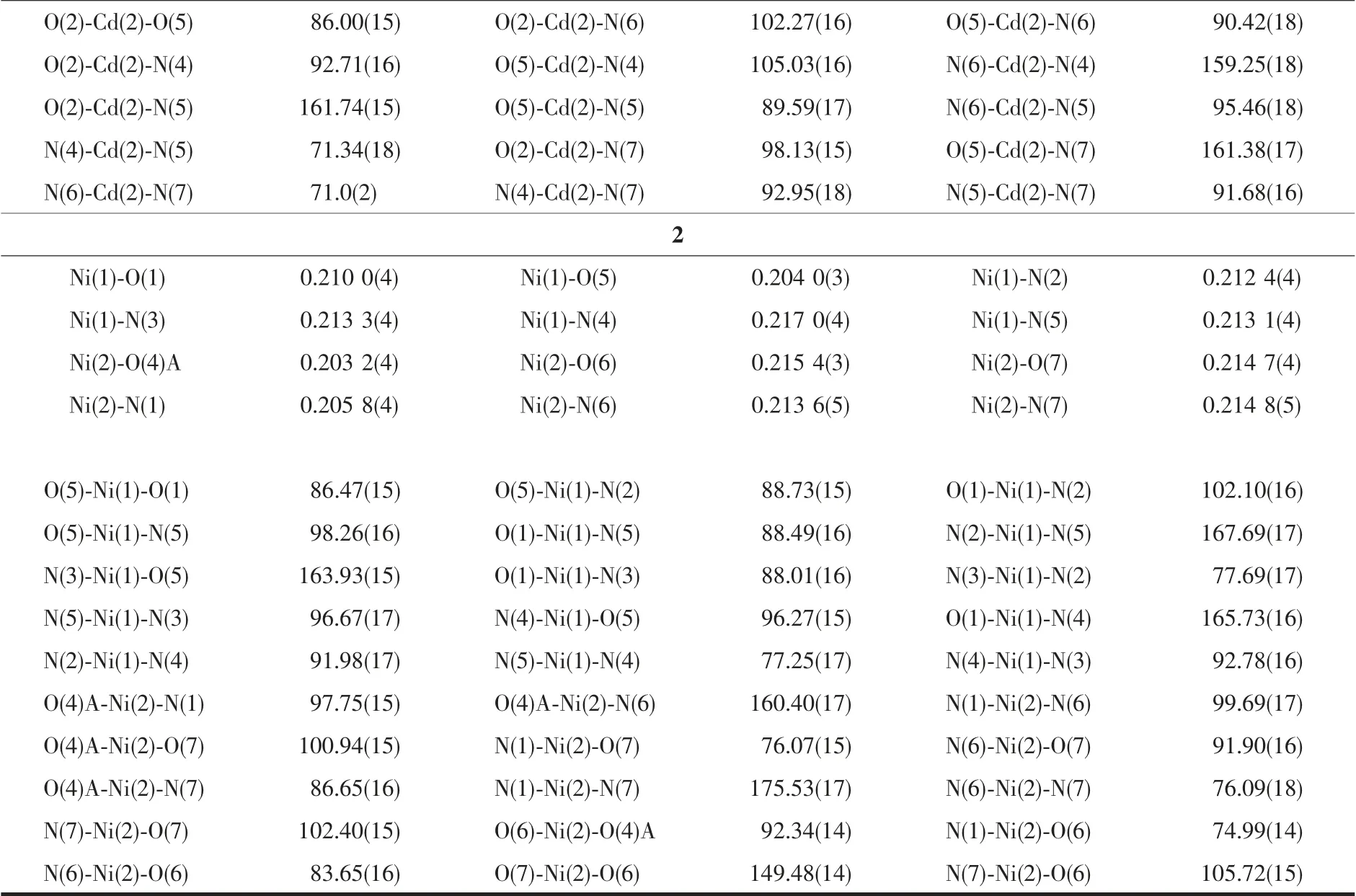
Two single crystals with dimensions of 0.26 mm×0.24 mm×0.23 mm (1) and 0.26 mm×0.22 mm×0.21 mm(2)were collected at 293(2)K on a Bruker SMART APEX ⅡCCD diffractometer with Mo Kα radiation(λ=0.071 073 nm) for 1 and Cu Kα radiation (λ=0.154 184 nm) for 2. The structures were solved by direct methods and refined by full matrix least-square on F2using the SHELXTL-2014 program[21]. All nonhydrogen atoms were refined anisotropically. All the hydrogen atoms were positioned geometrically and refined using a riding model. Disordered solvent molecules in 1 and 2 were removed using the SQUEEZE routine in PLATON[22]. The number of solvent water molecules was obtained on the basis of elemental and thermogravimetric analyses. A summary of the crystallography data and structure refinements for 1 and 2 is given in Table 1. The selected bond lengths and angles for compounds 1 and 2 are listed in Table 2. Hydrogen bond parameters of compounds 1 and 2 are given in Table 3 and 4.
CCDC: 1915948, 1; 1915949, 2.
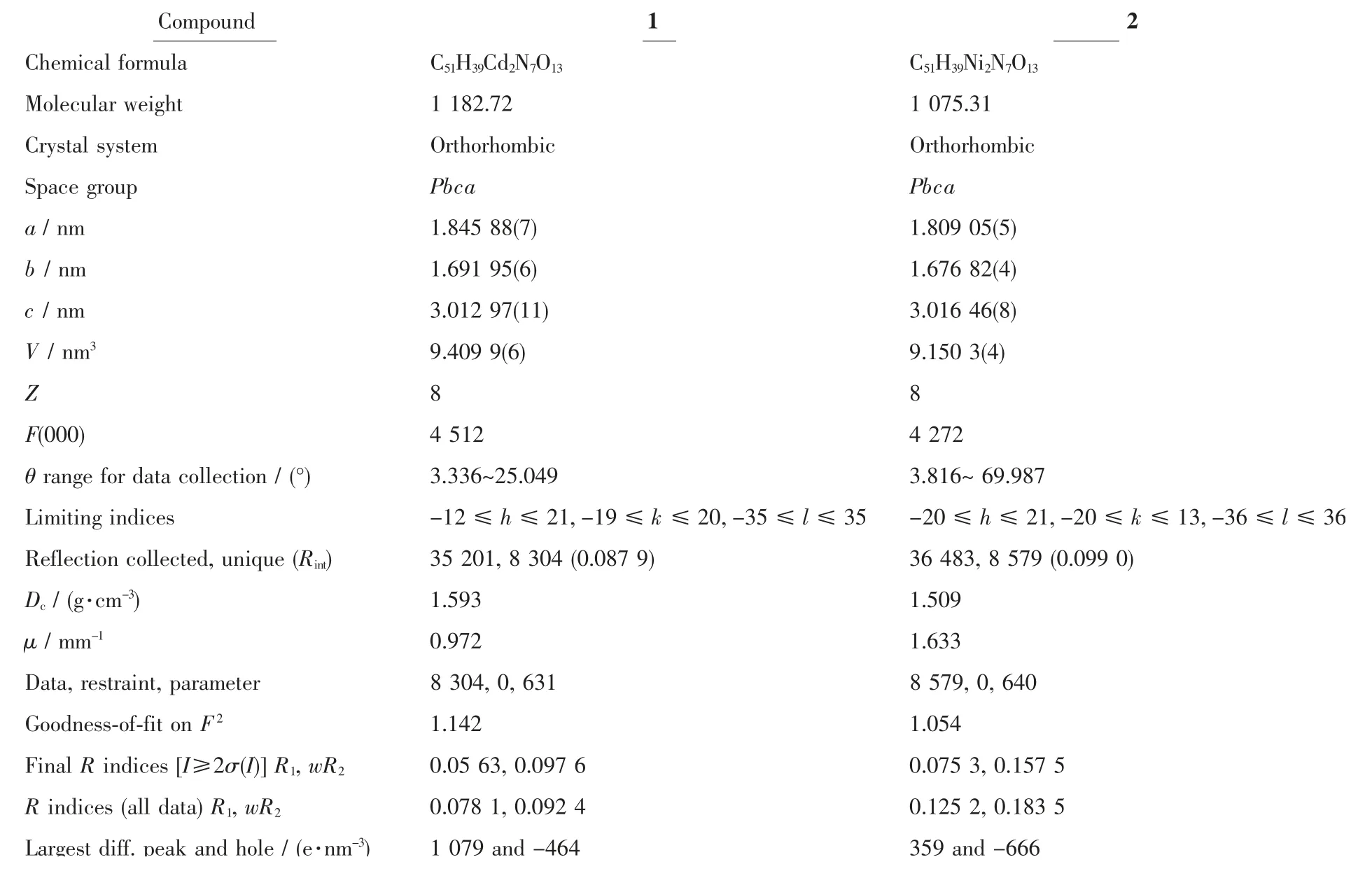
Table 1 Crystal data for compounds 1 and 2
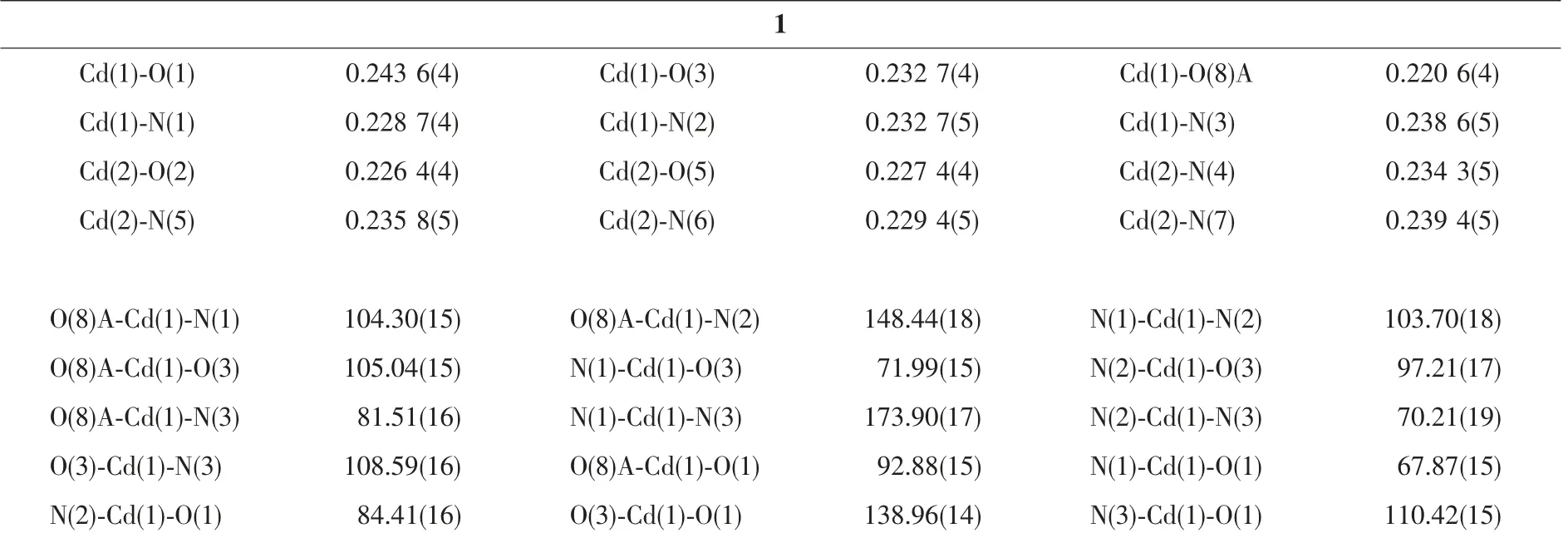
Table 2 Selected bond distances (nm) and bond angles (°) for compounds 1 and 2
Continued Table 2

Table 3 Hydrogen bond parameters of compound 1
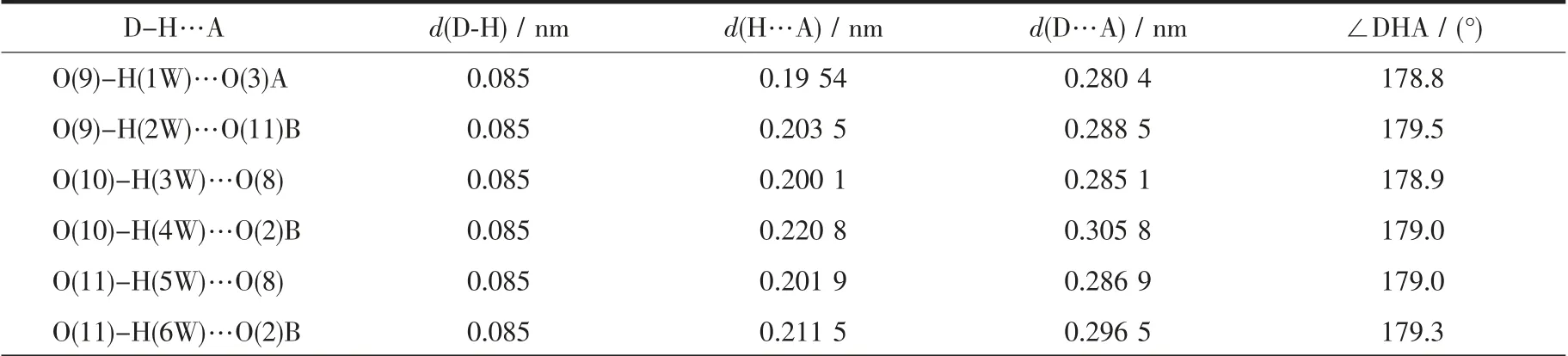
Table 4 Hydrogen bond parameters of compound 2
2 Results and discussion
2.1 Description of the structure
2.1.1 Structure of {[Cd2(μ3-L)(phen)3]·5H2O}n(1)
Compounds 1 and 2 are isostructural (Table 1)and the structure of 1 is discussed in detail as an example. Asymmetric unit of 1 comprises two Cd (Ⅱ)centers (Cd1 and Cd2), one μ3-L4-spacer, three phen moieties, and five lattice water molecules (Fig.1). The six-coordinated Cd1 atom adopts a distorted octahedral {CdN3O3} geometry, which is populated by one N and two O atoms from one μ3-L4-spacer and a carboxylate O donor from another μ3-L4-ligand, in addition to two phen N donors. The Cd2 center is also six-coordinated with a distorted octahedral {CdN4O2}environment, which is filled by two O atoms of μ3-L4-block and two pairs of phen N donors. The lengths of the Cd-O and Cd-N bonds are 0.220 6(4)~0.243 6(4)and 0.228 7(4)~0.239 4(5) nm, respectively, which are within the normal values for related Cd (Ⅱ)derivatives[11,15,23]. The L4-block acts as a hexadentate μ3-bridging ligand (Scheme 1), in which the four carboxylate groups adopt different monodentate or bidentate bridging modes. The dihedral angle of two aromatic rings in the L4-ligand is 62.53°. The carboxylate groups of L4-blocks bridge alternately adjacent Cd(Ⅱ)atoms to form a 1D chain (Fig.2). These chains are further extended into a 2D supramolecular network via the O-H…O hydrogen-bonding interactions (Fig.3 and Table 3).
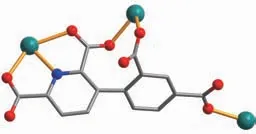
Scheme 1 Coordination mode of L4-ligand in compound 1
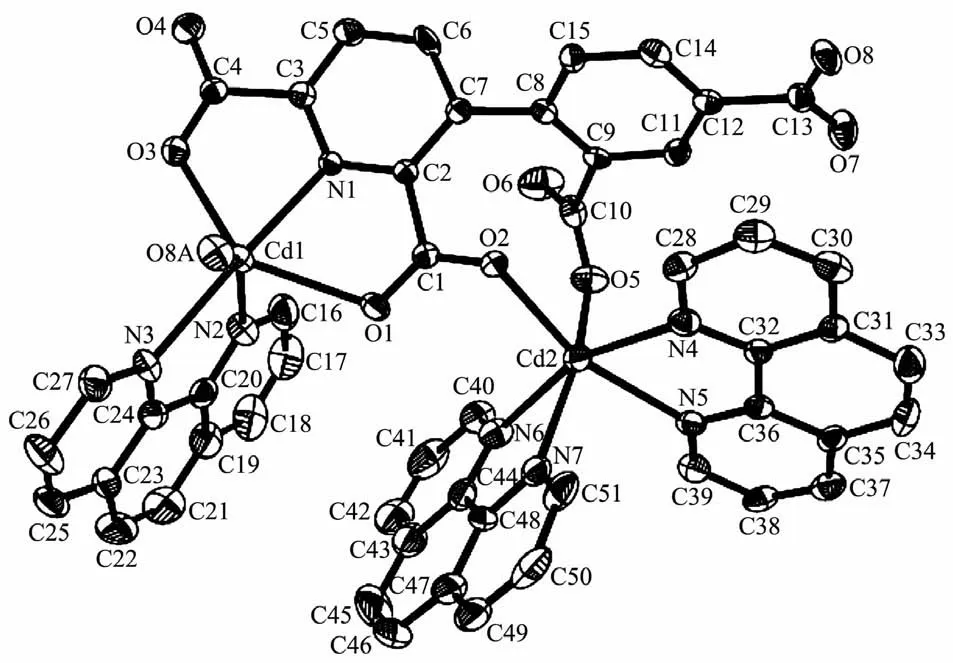
Fig.1 Drawing of the asymmetric unit of compound 1 with 30% probability thermal ellipsoids
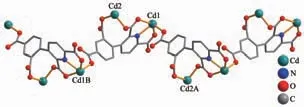
Fig.2 View of 1D chain in compound 1 along a axis
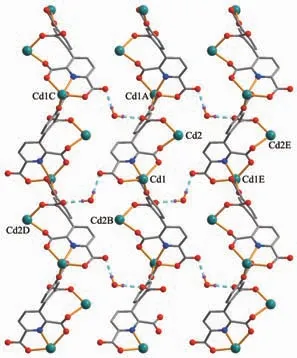
Fig.3 Perspective of 2D supramolecular network parallel to ab plane in 1
2.2 TGA analysis
To determine the thermal stability of polymers 1 and 2, their thermal behaviors were investigated under nitrogen atmosphere by thermogravimetric analysis(TGA). As shown in Fig.4, TGA curve of compound 1 showed that there was a loss of five lattice water molecules between 30 and 130 ℃ (Obsd.7.4%;Calcd.7.6% ); further heating above 312 ℃ led to a decomposition of the dehydrated sample. Compound 2 lost its five lattice water molecules in a range of 30~160 ℃ (Obsd. 8.2%; Calcd. 8.4%), followed by the decomposition at 294 ℃.
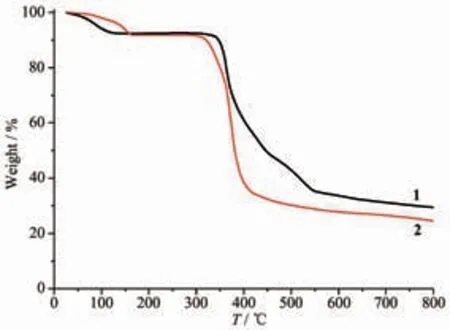
Fig.4 TGA curves of compounds 1 and 2
2.3 Luminescent properties
Solid-state emission spectra of H4L and cadmium(Ⅱ)compound 1 were measured at room temperature(Fig.5). The spectrum of H4L revealed a weak emission with a maximum at 366 nm(λex=325 nm).In comparison with H4L, the coordination compound 1 exhibited more extensive emission with a maximum at 358 nm (λex=315 nm). These emissions correspond to intraligand ππ* or n-π* transition of H4L[11,13,15].Enhancement of the luminescence in 1 compared to H4L can be explained by the coordination of ligands to Cd(Ⅱ);the coordination can augment a rigidity of ligands and reduce an energy loss due to radiationless decay[13,15,23].
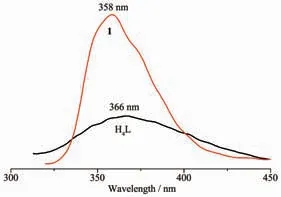
Fig.5 Solid-state emission spectra of H4L and compound 1 at room temperature
2.4 Magnetic properties
Variable-temperature magnetic susceptibility measurements were performed on powder samples of 2 in the 2~300 K temperature range (Fig.6). For 2, as shown in Fig.6, the χMT value at room temperature was 2.03 cm3·mol-1·K, which is close to the value (2.00 cm3·mol-1·K) for two magnetically isolated high-spin Ni(Ⅱ)ion(S=1,g=2.0).The χMT values increased slowly on lowering the temperature until about 48 K, and then increased quickly to 3.42 cm3·mol-1·K at 2.0 K.Between 2 and 300 K, the magnetic susceptibilities can be fitted to the Curie-Weiss law with C=1.99 cm3·mol-1·K and θ=5.76 K. These results indicate a ferromagnetic interaction between the adjacent Ni(Ⅱ)centers in compound 2.
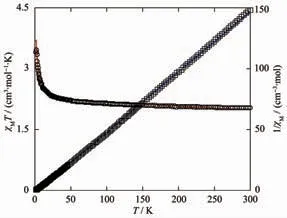
Fig.6 Temperature dependence of χMT (○) and 1/χM(□)for compound 2
The magnetic data for 2 can be fitted with the expression for a dinuclear Ni(Ⅱ)unit[24]:

where x=J/(kT). The best fit for the experimentally observed data was obtained with a J value of 2.48 cm-1,which indicates reasonable ferromagnetic interactions.
According to the chain structure of 2 (Fig.2),adjacent Ni (Ⅱ)centers within the Ni2unit possess a single type of the magnetic exchange path, namely through one syn-anti carboxylate bridge,which explains a ferromagnetic exchange observed in this compound.The syn-anti carboxylate bridging moiety has been observed in some Ni(Ⅱ)complexes with ferromagnetic interactions reported elsewhere[25-28].
3 Conclusions
In summary,we have successfully synthesized and characterized two new cadmium/nickel coordination polymers by using one biphenyl-type tetracarboxylic acid as bridging ligand under hydrothermal condition.Two polymers all feature 1D chain. Besides, the magnetic (for 2) and luminescent (for 1) properties were also investigated and discussed. The results show that such tetracarboxylic acid can be used as a versatile multifunctional building block toward the generation of new coordination polymers.
猜你喜歡
品牌研究(2022年29期)2022-10-15 08:01:00
品牌研究(2022年26期)2022-09-19 05:54:46
品牌研究(2021年31期)2022-01-25 06:41:46
品牌研究(2021年36期)2022-01-21 09:29:28
品牌研究(2021年34期)2022-01-18 10:54:04
品牌研究(2021年35期)2022-01-18 08:45:18
品牌研究(2021年20期)2022-01-11 04:07:56
品牌研究(2021年27期)2022-01-04 06:41:14
品牌研究(2021年17期)2021-12-09 05:06:54
海峽姐妹(2019年3期)2019-06-18 10:37:10