近紅外光譜技術法快速鑒別茶油摻偽
2019-12-14 14:10:45榮菡羅懿黃鏝淳
安徽農業科學
2019年19期
關鍵詞:模式識別
榮菡 羅懿 黃鏝淳
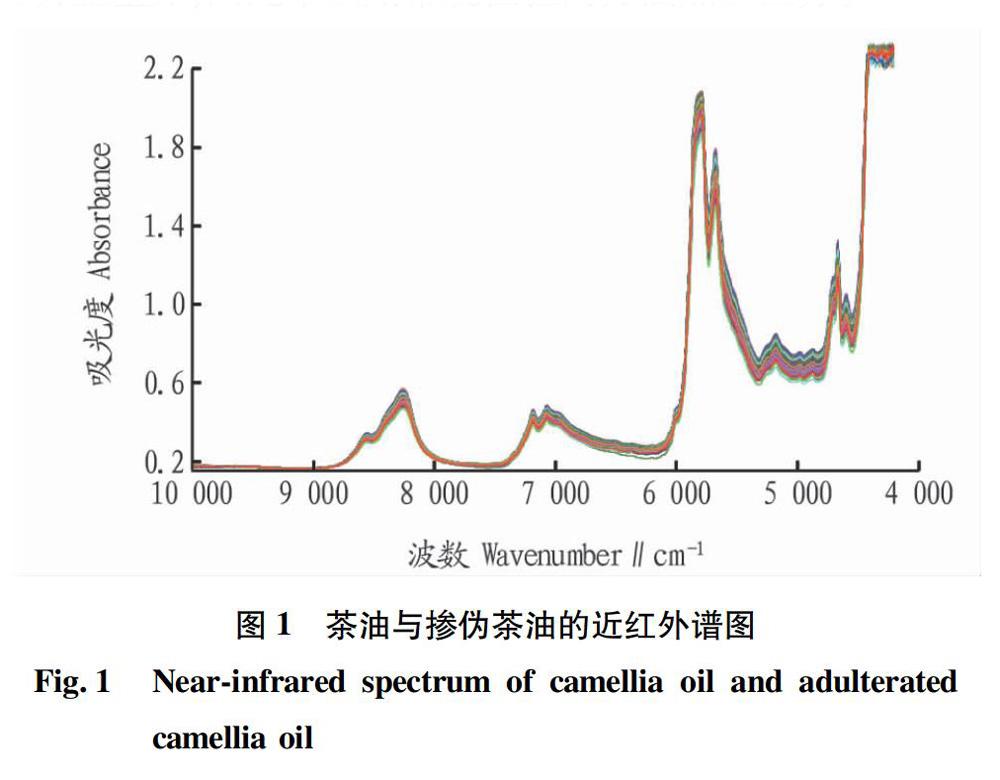
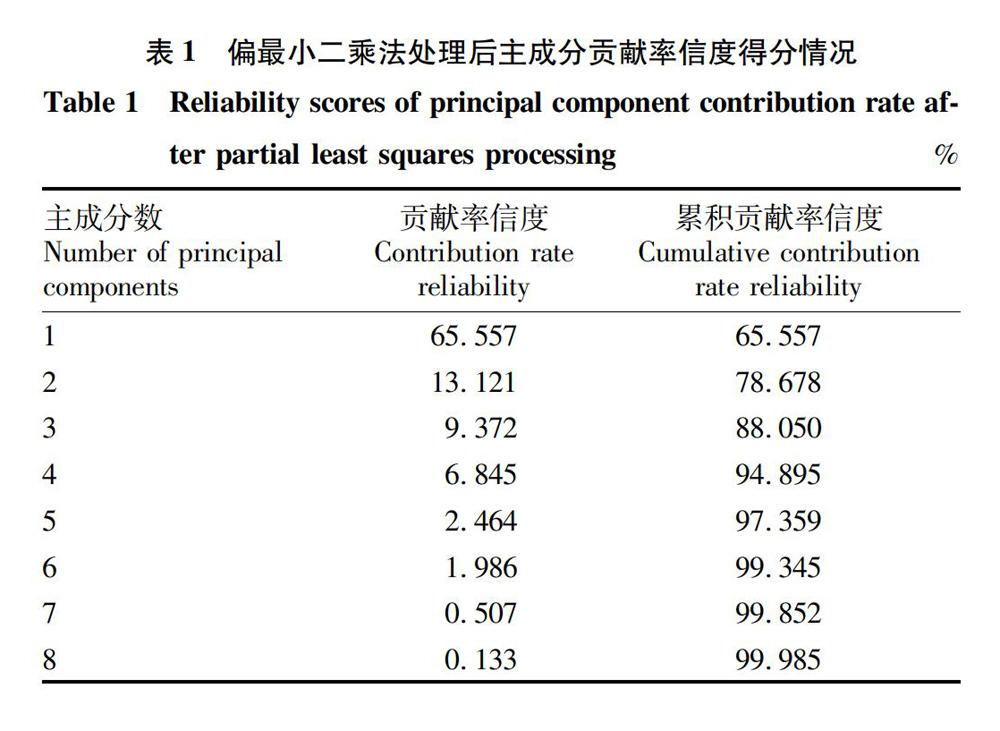

摘要 [目的]采用近紅外光譜技術法,快速鑒別茶油摻偽。[方法]基于近紅外光譜技術,比較馬氏距離聚類分析法與反向傳播神經網絡,建立茶油與摻有菜籽油、棕櫚油摻偽茶油的模式識別模型。[結果]采用馬氏距離聚類分析法建模時,參數如下:光譜一階導數處理后,結合SNV、Norris Derivative濾波方法,經主成分分析法,提取8個主成分,模型對預測集樣本的準確率達100%;采用反向傳播神經網絡建模時,參數如下:輸入向量為前8個主成分的33個吸收峰,隱含層神經元個數為15,訓練學習速度為0.1,訓練220步時,模型對預測集樣品識別準確率亦為100%。[結論]反向傳播神經網絡方法更加具有較快的運算速度和較好的收斂性,可為茶油品質評價與檢測提供一種新方法。
關鍵詞 近紅外光譜;模式識別;馬氏距離;反向傳播神經網絡;茶油;摻偽油
中圖分類號 TS227文獻標識碼 A
文章編號 0517-6611(2019)19-0204-03
Abstract [Objective]Using nearinfrared spectroscopy technology to quickly identify camellia oil adulteration.[Method]Based on near infrared spectroscopy, two pattern recognition models were developed for discriminating camellia oil and adulterated oil with rapeseed oil and palm oil, which were bulit by Mahalanobis distance discriminative model and BackPropagation (BP) network.[Result]When modeling with Mahalanos distance clustering, the parameters were as follows:first derivative spectrum combined with standard normal variate (SNV)and Norris Derivative, 8 principal components compressed from the original data processed by PCA, the models accuracy of discrimination in the prediction set was 100%. When modeling with BP neural networks, the parameters were as follows:33 absorption peaks data, 8 principal components processed by PCA were taken as inputs of the BP Network, the number of hidden neurons was 15, learning rate was 0.1, training steps were 220, the BP model was built for identification of camellia oil and adulterated oil, and the models recognition correct rate was 100%. [Conclusion]The BP network has rapider operation speed, better convergence,which provides a new method for the quality evaluation and determination of camellia oil.
Key words Near infrared spectroscopy;Pattern recognition;Mahalanobis distance;Backpropagation network;Camellia oil;Adulterated oil
茶油是維持人體新陳代謝和生命活動不可缺少的供能營養物質,為人體提供必需脂肪酸和脂溶性維生素,因其豐富的單不飽和脂肪酸,在清理血栓、調節血脂、促進神經細胞發育、抗炎性等方面的重要功效更加突出。不同的食用植物油因脂肪酸組成不同,營養價值存在較大的差異,市場售價也存在較大的差別。一些商家為謀取利潤,會在茶油中摻入玉米油、大豆油、菜籽油、棕櫚油等較低價位的植物油,降低茶油營養價值,影響消費者的健康。
目前,在茶油品質檢測技術中,主要是通過……
登錄APP查看全文
猜你喜歡
中成藥(2018年2期)2018-05-09 07:19:52
智能系統學報(2018年6期)2018-02-04 11:23:57
中成藥(2017年10期)2017-11-16 00:50:05
電子測試(2017年23期)2017-04-04 05:06:50
智能系統學報(2017年5期)2017-01-22 11:21:30
電測與儀表(2016年6期)2016-04-11 12:07:48
海軍航空大學學報(2015年1期)2015-11-11 17:17:57
智能系統學報(2015年3期)2015-01-29 15:20:12
電測與儀表(2014年15期)2014-04-04 12:05:20
河南科技(2014年5期)2014-02-27 14:08:35