
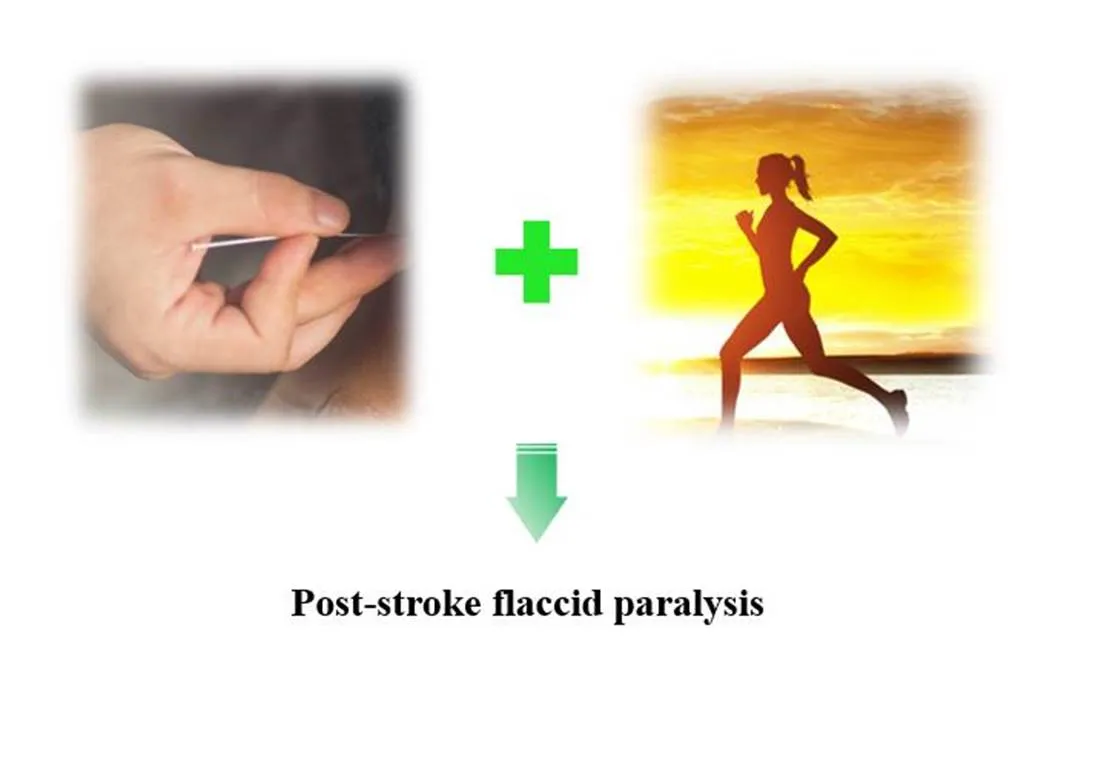
Acupuncture combined with modern rehabilitation therapy for post-stroke flaccid paralysis
2019-09-16 02:02:02XinMaYuLiangZhang
TMR Non-Drug Therapy 2019年3期
Xin Ma, Yu-Liang Zhang, *
Acupuncture combined with modern rehabilitation therapy for post-stroke flaccid paralysis
Xin Ma1, Yu-Liang Zhang1, *
1Department of Traditional Chinese Medicine, Hebei University, Baoding 071000, Hebei, China.
Stroke has been in a high incidence, and stroke sequelae have become the main cause of motor dysfunction. The treatment of flaccid paralysis is critical to stroke recovery. In recent years, traditional treatment, especially acupuncture therapy has achieved certain effects for the treatment of post-stroke flaccid paralysis. Acupuncture treatment can promote the recovery of nerve conduction, increase muscle strength and improve joint flexibility, and correct abnormal movement patterns of limbs. Acupuncture combined with rehabilitation training will be the focus for the treatment of post-stroke flaccid paralysis. In this review, the combination of different acupuncture therapies with modern rehabilitation for the treatment of post-stroke flaccid paralysis has been summarized in order to effectively promote the recovery of motor function and significantly improve their life quality.
Stroke, Flaccid paralysis, Acupuncture, Modern rehabilitation
This paper summarized the common acupuncture methods and explored the effects of the combination of different acupuncture methods and modern rehabilitation in the treatment of post-stroke flaccid paralysis, in order to effectively promote the recovery of motor function and significantly improve their life quality.
With the aging of the social population, the incidence rate of stroke has increased year by year in China. Though with the development of modern disease diagnosis and rescue techniques, the mortality rate of stroke has been effectively controlled, about 80% of the surviving patients have different degrees of limb dysfunction. As one of the most important non-drug therapy, acupuncture could prevent muscle atrophy, improve the relaxed muscle tension and improve the motor functions. This article lists the treatment of different acupuncture methods combined with modern rehabilitation, providing clinical guidance for the involvement of acupuncture treatmentin the comprehensive treatment of post-stroke flaccid paralysis.
Introduction
In China, stroke has been in a high incidence and stroke sequelae have become the main cause of motor dysfunction as more than 70% of stroke patients have different levels of dysfunction [1]. After stroke, the motion functional recovery has to go through two stages, the flaccid paralysis period and the spasmodic period. The flaccid paralysis refers to a period in which the patient's vital signs are stable but the muscle strength and muscle tension are low within 1 to 3 weeks after the stroke [1]. Effective rehabilitation for patients with hemiplegia during flaccid paralysis can shorten the recovery duration, improve the motor function and reduce the disability rate. In recent years, traditional treatment, especially acupuncture therapy has achieved certain effects for the treatment of post-stroke flaccid paralysis. Acupuncture treatment can promote the recovery of nerve conduction, increase muscle strength and improve joint flexibility, and correct abnormal movement patterns of limbs. However, the pathological mechanism of stroke is complicated and the evolution of illness is multifarious. Simple acupuncture method cannot completely solve all problems. Therefore, acupuncture combined with rehabilitation training will be the focus for the treatment of post-stroke flaccid paralysis. In this review, the combination of different acupuncture therapies with modern rehabilitation methods for the treatment of post-stroke flaccid paralysis has been summarized in order to effectively promote the recovery of motor function and significantly improve their life quality.
Abnormal blood rheology caused by microcirculatory disorders and thrombosis is an important risk factor for ischemic stroke. In clinical treatment, acupuncture can improve cerebral circulation and increase cerebral blood supplement, by which promote the recovery of motor function. At the present time the common use acupuncture methods include traditional body acupuncture, scalp acupuncture, Tongdu Tiaoshen acupuncture (one of the acupuncture therapeutic methods in traditional Chinese medicine), as well as the modern acupuncture methods, which also showed obvious effects.
Traditional body acupuncture combined with modern rehabilitation
The symptoms of post-stroke paralysis are limb paralysis and weakness, which are considered as flaccid syndrome in traditional Chinese medicine (TCM). Body acupuncture is a kind of traditional acupuncture with filiform needle stimulating the meridians and acupoints so as to dredge meridians and reconcile blood. Combined with modern rehabilitation, acupuncture on the acupoints from Yangming meridians could promote the recovery of limb movement. This combined method has achieved remarkable curative effects on acute ischemic apoplexy and paralysis. Body acupuncture could nourish the liver and kidney, dredge channels and collaterals, benefit Qi and blood circulation; through these functions, it could prevent muscle atrophy, improve the relaxed muscle tension and increase the joints motions. The modern acupuncture technology further studies the phenomenon and finds that the physiological basis of sensation is the connection of neurons, synapses and their mutual relationship. The characteristics of sensation are consistent with the ancient meridian route. Different stimuli can produce different sensations. Rehabilitation training can promote the recovery of microvascular ultrastructure and the formation of new blood vessels in the marginal zone of cerebral infarction through the feedback effect of muscle exercise on the brain, and greatly promote the plasticity of the brain, thereby promoting the formation of normal functional patterns and reaching the maximum recovery limit. Therefore, the combination of acupuncture and rehabilitation training can not only quickly restore the muscle strength of the affected limb, but also prevent sputum, thereby promoting the recovery of normal motor function, reducing the degree of sickness of stroke patients and improving the quality of life. Hu Rong divided 128 patients with flaccid paralysis in three groups, namely, patients in group A were given modern rehabilitation (42 cases), patients in group B were treated with acupuncture (43 cases), patients in group C was given early acupuncture and modern rehabilitation (43 cases) [3]. The motor function and daily living ability were compared. The results showed that the daily living ability of patients in group C was significantly higher than that of group A and group B after treatment, as the motor function scores were greatly improved. It is believed that exercise-intensified rehabilitation is the main method to induce limb movement through various stimuli and to stabilize and maintain good limb position. At the same time, combined with acupuncture of Yangming meridians in patients with post-apoplexy paralysis can achieve better curative effect than simple rehabilitation therapy [4].
Scalp acupuncture combined with traditional herbal treatment and modern rehabilitation
The scalp can promote the establishment of cerebral collateral circulation, dilate the cerebral blood vessels, reduce blood flow resistance, increase cerebral blood flow, improve the ischemic and hypoxic state of brain cells around the lesion, which plays a role in promoting blood circulation and removing blood stasis. The combination of scalp acupuncture, traditional herbal treatment and modern rehabilitation has a good effect on the treatment of flaccid limb dyskinesia after stroke. Combination treatment for post-apoplectic paralysis can significantly improve clinical symptoms and patient's life self-care ability, which is better than acupuncture or rehabilitation therapy alone on the rehabilitation of motor function. Zhou Jianwei, in a 4-center, single-blind, randomized, controlled study, randomly divided 240 patients into a combination group, acupuncture group, rehabilitation group, and traditional herbal treatment in a 1:1 ratio [5]. Acupuncture therapy includes scalp needle therapyreinforcing and reducing method and body needle therapy of twisting reinforcing and reducing method at antagonistic muscle group points of affected limbs. Efficacy and safety of treatment measures were evaluated with TCM syndrome, limb motor function, daily living ability, fainting reaction, and allergic reaction and the combination treatment had showed advantages over the acupuncture, traditional herbal treatment or rehabilitation therapy alone in these four indexes (< 0.05). The improvement of TCM syndromes in the acupuncture group and traditional herbal treatment group was significantly higher than that in the rehabilitation group.< 0.05); the improvement of upper limb motor function in acupuncture group was significantly higher than that in rehabilitation group and traditional herbal treatment group (both< 0.05). It is safe and effective to treat stroke flaccid limb dysfunction with a comprehensive program consisting of acupuncture, TCM and rehabilitation therapy. Compared with any single therapy, it had more curative effect advantages. In the combination therapy, traditional herbal treatment could exterminate the causes and predisposing causes of stroke, acupuncture and rehabilitation had better effects on the improvement of the symptoms [6].
Tongdu Tiaoshen acupuncture combined with modern rehabilitation therapy
The Tiandu Tiaoshen acupuncture method is based on the Du meridian acupoint, supplemented by the heart and the pericardial acupoints to regulate the central nervous system diseases, mental and psychological disorders and other chronic diseases with psychiatric symptoms. Du meridian is one of eight extraordinary meridians. The 6 Yang channels and the Du channels circulate over the head, which are closely related to Yang Qi and brain function. The distribution of Back-Shu acupoint is similar to that of spinal nerve, as the distribution of Back-shu acupoints and the distribution of spinal nerve segments are basically in accordance with the anatomical position. The Back-shu acupoints are all connected with human organ. Benign stimulation of Back-Shu acupoints by acupuncture can stimulate superior nerve center and regulate the functions of organ. Brain dominates all life activities of the body, including nerve and limb motor function. Scalp acupuncture is closely related to the meridians and viscera. It can stimulate the interaction between the corresponding excitation points of acupoints and lesions, improve neurological dysfunction and restore biomechanical balance. Acupuncture of head group acupoints and corresponding functional areas can stimulate acupoints to improve nerve dysfunction. Jiang TX randomly divided 40 patients with post-stroke flaccid paralysis into the treatment group and the control group, 20 cases in each group [7]. The treatment group was mainly treated with Du meridian + Back Shu acupoint + scalp acupuncture + body acupuncture + Tongdu Tiaoshen acupuncture, while the control group was treated with traditional acupoints such as Renzhong (LG25), Baihui (LG19), anterior oblique line of parietal-temporal and posterior oblique line of parietal-temporal. Both groups of patients were given symptomatic treatments such as conventional nutritional cranial nerves and improved circulation 6 times a week. The neurological deficit degree score, activities of daily living, limb motor function had significantly improved after 3 weeks (< 0.05), which showed that Tongdu Tiaoshen acupuncture combined with modern rehabilitation therapy not only had significant effects on restoring patients' daily living ability and improving limb motor function, but also had long-term effects.
Modern acupunctures combined with modern rehabilitation therapy
In addition to the above-mentioned common methods, clinical commonly used methods also include electro-acupuncture, microwave acupuncture method, acupoint laser irradiation method, acupoint sticking method, acupoint embedding method, acupoint magnetic therapy, acupoint pointer method, acupoint iontophoresis method, acupoint cutting method, acupoint ligation method and so on [8]. Modern research recognized that these methods can directly act on nerve conduction pathways and transmit needle sensation from nerve stimulation point to nerve distribution, by which shorten the period of peripheral nerve shock, conduce to the reconstruction and repair of damaged nerve function [9]; the increased temperature by the modern heating methods are benefit for arthralgia, flaccidity, deficiency syndrome [10, 11]; these methods have a definite effect in improving muscle strength, muscle tension, and preventing spasm in patients with flaccid motor dysfunction during post-stroke paralysis. The main factors affecting the therapeutic effect of acupuncture are acupoints, acupuncture manipulation, needle retention time, treatment course, combined with electrical stimulation and acupuncture treatment of spastic hemiplegia. Modern acupuncture treatment affects many aspects of stroke rehabilitation and is also indispensable for the overall rehabilitation of patients.
Prospects for treatment
It shows that the combination of TCM and conventional rehabilitation therapy can enhance the curative effect and promote the rehabilitation of patients. At present, routine rehabilitation therapy is recognized as an ideal method for functional recovery of limbs after stroke. Despite this, due to the complex pathological mechanism of stroke and the evolution of the disease, the outcome of the disease depends more on the strength of the constitution, the rise and fall of the patient's own righteousness, the severity of the illness, the correct diagnosis and treatment, and the proper recuperation. Its complexity and changeability determine the difficulty of prevention and treatment and recovery, and make recovery after stroke become a difficult clinical problem. Although the Chinese and Western methods currently used have different degrees of efficacy, there is no single method that can completely solve all the problems. Therefore, we should integrate their respective advantages, learn from each other's strengths and make up for each other's weaknesses, in order to make a breakthrough in improving the therapeutic effect of stroke.
1. Wu J, Zeng W, Cai SF. Effect of rehabilitation therapy with mirror therapy combined with sports imagination in stroke patients in soft-dry stage. J Contem Med 2019, 17: 19-21.
2. Li GS, Luo J, Liu NS,. Rehabilitation treatment of hemiplegia patients with stroke and flaccid paralysis. Internal Med 2019, 14: 51-52, 102.
3. Hu R. Clinical efficacy of early acupuncture and moxibustion combined with modern rehabilitation in the treatment of acute ischemic stroke with flaccid paralysis. Med Information 2018, 18: 148.
4. Zhang Y. Clinical efficacy of early acupuncture combined with modern rehabilitation in the treatment of acute ischemic apoplexy palsy in flaccid phase. Modern Chin Med Clinical 2017, 24: 42-44, 51.
5. Zhou JW, Li Y, Yuan XL,Acupuncture and Chinese herbal rehabilitation program for stroke flaccid limb dysfunction: a multi-center randomized controlled study. Chin Acupunc Moxibustion 2012, 32: 1057-1062.
6. Li TG. 98 cases of flaccid limb dysfunction due to apoplexy treated by comprehensive therapy. Henan Tradit Chin Med 2015, 35: 1071-1073.
7. Jiang TX, Wu WW, Li F. Tongdutiaoshen acupuncture combined with rehabilitation technology in the treatment of flaccid paralysis after stroke. J Changchun Univer Tradit Chin Med 2018, 34: 102-105.
8. Yan WQ, Qiu T, Zhou Y. The role of physiotherapy in orthopedic rehabilitation. Health Frontier 2016, 269-269.
9. Zhu Q. Clinical study of electro-acupuncture at nerve stimulation points in the treatment of post-stroke flaccid paralysis. J Shandong Univer Tradit Chin Med 2007, 6: 469-471.
10. Jiang TX, Li F. Clinical research progress of acupuncture in the treatment of dysfunction of flaccid paralysis after apoplexy. J Changchun Univer Tradit Chin Med 2017, 67: 683-685
11. Zhou W, Wang LP. Observation and study on the curative effect of scalp-abdominal acupuncture on stroke. Shanxi Tradit Chin Med 2008, 67: 35-38.
Submit a manuscript: https://www.tmrjournals.com/ndt/EN/2538-0583/home.shtml
TCM, Traditional Chinese medicine.
Ma X, Zhang YL. Acupuncture combined with modern rehabilitation therapy for post-stroke flaccid paralysis. TMR Non-Drug Therapy 2019, 2(3): 103-107.
Chang Liu
10.12032/TMRND201902018
The authors declare that there is no conflict of interests regarding the publication of this paper.
*Corresponding to:Yu-Liang Zhang, Department of Traditional Chinese Medicine, Hebei University, Baoding 071000, Hebei, China. Email: Maxin0314@163.com
- TMR Non-Drug Therapy的其它文章
- Exploring the characteristics of acupoints in the treatment of stroke with complex network and point mutual information method
- Comparison of the effects of moxibustion and lipid-lowering drugs for primary hyperlipidemia: a meta-analysis
- Advances in the application of acupuncture in military first aid
- Evaluation of therapeutic effects of self-made pelvic floor muscle rehabilitation on elderly female stress urinary incontinence
- An effective and easy to insist on self-made pelvic floor muscle rehabilitation for the elderly women with stress urinary incontinence