
Exploring the characteristics of acupoints in the treatment of stroke with complex network and point mutual information method
2019-09-16 02:03:50JingChaoSunYueYaoLiYuXiaYiDiWangYiXuanJiangYuQiuLi
TMR Non-Drug Therapy 2019年3期
Jing-Chao Sun, Yue-Yao Li, Yu Xia, Yi-Di Wang, Yi-Xuan Jiang, Yu-Qiu Li, *
Exploring the characteristics of acupoints in the treatment of stroke with complex network and point mutual information method
Jing-Chao Sun1, Yue-Yao Li1, Yu Xia1, Yi-Di Wang1, Yi-Xuan Jiang1, Yu-Qiu Li1, *
1School of Acupuncture and Massage, Shandong University of Traditional Chinese Medicine, Jinan 250355, China.
Explore the characteristics of acupoints in the treatment of stroke with complex network and point mutual information method.The complex network and point wise mutual information system-developed by Chinese academy of Chinese medical sciences wereused to analyze the specific acupoints, compatibility, frequency174 acumoxibustion prescriptions were collected, including 163 acupoints. among them eighteen acupoints were used more than 30 times such as Hegu (LI4), Zusanli (ST36), Quchi (LI11) and Fengshi (GB31). The combinations of 31 acupoints were usedmore than 15 times, such as the combination of Quchi (LI11) and Zusanli (ST36), the combination of acupoint Quchi (LI11) and Jianyu(LI15) , Hegu and Quchi (LI11). The most commonly used treatment method for stroke treatment is to dredge the Yangming meridian and Shaoyang meridian through acupuncture the multiple acupoints located on these two meridians.. The commonly used acupoints are mainly distributed in the limbs, head and face. The most commonly used specific acupoint is intersection acupoint. The usage frequency of specific acupoints are higher than that of non-specific acupoints.Dredging the collaterals, dispelling wind-evil and restoring consciousness are the main principle for the treatment of stroke. Specific acupoints in head, face and climbs maybe the main targeted acupoints. Combination of Yang meridians with other meridians is needed to improve the effects. The Yangming meridian and Shaoyang meridian are most used meridians and Hegu (LI4), Quchi (LI11) and Zusanli (ST36) are the most used acupionts.
Acupuncture, Stroke, Data mining, Complex network, Point mutual information method
This research finds that dredging the collaterals, dispelling wind-evil and restoring consciousness are the main principle of acupuncture for the treatment of stroke. Specific acupoints in head, face and climbs maybe the main targeted acupoints. Combination of Yang meridians with other meridians is needed to improve the effects. The acupoints Yangming meridian and Yangming-Shaoyang meridian are most used meridians, Hegu (LI4), Quchi (LI11) and Zusanli (ST36) are the most used acupionts.
With complex network and point mutual information method, the authors explored the characteristics of meridian points in the treatment of stroke. This study found that the most commonly used treatment method is to dredge the meridian through multiple acupoints to improve the therapeutic effects of acupuncture. The traditional meridian treatment for stroke is mainly to dredge meridian Qi and blood to recover the motor function of paralyzed limbs. Researches have shown that the frequency of Yang meridian is much higher than that of Yin meridian. Yang meridian and Shaoyang meridian counts the most meridians. For the treatment of limbs powerless and activity obstacle, it should combine the Yang meridians with other meridians in order to obtain better curative effects. Hegu (LI4), Quchi (LI11) and Zusanli (ST36) are the most used acupionts.

Introduction
According to "Criteria for diagnosis and evaluation of curative effect of stroke disease (for trial implementation)", stroke refers to a type of disease characterized by hemiplegia, coma, slurred or silent speech, hemiparesthesia, and facial distortion [1]. As early as in(an ancient book of Chinese medicine, B.C. 220-211, Han Dynasty), it has emphasized the importance of acupuncture in the treatment of apoplexy. Cerebral stroke, also known as stroke, the Chinese Stroke Prevention Report (2018) showed that the number of stroke patients over 40 years old is 12.42 million, and global burden of disease data has showed that 70% of survivors suffered varying degrees of permanent disabilities [2]. Therefore, it is urgent to find the most effective treatment for stroke sequelae.
Traditional Chinese medicine (TCM) has its unique advantages in treating apoplexy, and acupuncture has a definite curative effect. Combined with western medicine treatments, resuscitation acupuncture method, scalp acupuncture and pricking blood at Jing acupoint can improve neurological function scores and life quality [3].
Based on the TCM theory, the occurrence of stroke is mainly characterized by the occurrence of symptoms in the distribution areas of Yangming meridians, Shaoyang meridians and Du meridian [4]. Therefore, most of the treatment acupoints for stroke were from the distal end, and most of them are specific acupoints [5]. However, how the acupoint selection affects the therapy effects is still unclear. Complex network and acupoint-based mutual information method are mainly used to summarize the compatibility characteristics of clinical core prescriptions and commonly used acupoints [6]. Acupoint-based mutual information method is used to analyze the variation rules of clinical acupoints addition and subtraction. The combination of the two methods can completely summarize the medication rules and reveal the core commonness of acupuncture.
It has been well known that acupuncture exerts effects through meridians or nerves, which has definite therapeutic effects on the rehabilitation of limb function and improvement of dysphagia [7]. By analyzing the characteristics of meridian points in the treatment of stroke with complex network and point mutual information method, this study intends to explore the therapy effects of acupoint selection in the stroke treatment.
Method
Sources of acupuncture prescriptions
In this study, 174 kinds of acupuncture prescriptions for treating apoplexy sequelae were selected by searching the book of “New Dictionary of Acupuncture”, “Chinese Acupuncture”, “Modern Clinical Medicine”, “Shanghai Journal of Acupuncture”, “Selected Medical Records of Lu Shouyan's Acupuncture and Moxibustion Works”, “Selected Medical Records of Modern Acupuncture and Moxibustion”, “Journal of New Chinese Medicine”, “Jiangsu journal of traditional Chinese medicine” and “Selected Modern Acupuncture and Moxibustion Proposals” [8].
Selection of acupuncture prescription
(1) Inclusion criteria:①the acupuncture prescriptions were used to improve apoplexy sequelae; ② acupuncture was the main treatment; ③ there was an obvious treatment effect.
(2) Exclusion criteria: acupuncture was the main treatment method or only as a complementary treatment; there were no specific clinical symptoms and implementation methods; as to these duplicate prescriptions, the most original data were retained.
Document data processing
Check and entry of acupuncture prescriptions
The terminology and the name of the acupoint were standardized based on the Manual for International Standardization of Acupuncture Acupoint Names and the 2006 edition of the national standard "Acupoint Names and Locations" (GB/T12346-2006) [9]. After ensuring the correctness of the data, the selected acupuncture prescription was entered into the TCM complex relationship analysis system.
Data analysis Firstly, the network of large-scale acupuncture clinical data was conducted through the "Complex Relationship Analysis System of Traditional Chinese Medicine" [10]. The general and individual characteristics of acupuncture for the treatment of stroke sequelae and the hierarchy of acupoint compatibility laws were analyzed to complain the complex network characteristic of acupuncture. The frequency statistics, network construction and node degree distribution characteristics of 174 acupuncture prescriptions and acupoints were entered into the system, and the acupoints with higher frequency were selected as core acupoints. Then location and meridian tropism statistics were then analyzed.
Results
Count of selected acupuncture prescriptions
A total of 174 acupuncture prescriptions were selected, including 163 acupoints. The functions of these acupoints were smoothening energy channel (45.00%), opening the mind (12.40%), dispelling wind-evil (9.60%), regulating Qi and blood (8.40%), relaxing tendons and activating collaterals (4.40%), and restoring consciousness (4.40%).
Acupoints selection
The complex relationship analysis system of TCM developed by the Chinese academy of traditional Chinese medicine was used to analyze 174 acupuncture prescriptions (Figure 1). In this figure, each node represents an acupoint, and the line between the node and the surrounding nodes represents the connection between acupoints, which can measure the close degree of compatibility between acupoints and reflect the correlation degree between acupoints. From this, 18 commonly used acupoints are selected as core acupoints for further research.
Analysis results of application frequency of acupoints used in prescription
The acupoints with the frequency more than 30 times are taken as the core acupoints, as the frequency is far less than the average when the frequency is less than 30. According to frequency statistics, there are 18 acupoints with the frequency more than 30 times, and the top 3 acupoints with the highest frequency are Hegu (LI4), Zusanli (ST36) and Quchi (LI11) in sequence (Table 2).
Analysis results of core acupoints
There are 5 core acupoints located in upper limb [Hegu (LI4), Quchi (LI11), Jianliao (LI15), Jianjing (GB24), Shousanli (LI10)], 6 core acupoints located in lower limb [Zusanli (ST36), Fengshi (GB31), Xuanzhong (GB39), Kunlun (BL60), Yanglingquan (GB34), Huantiao (GB30)], 6 core acupoints located in head and neck face [Baihui (GV20), Buche (ST6), Shuigou (DU26), Dicang (ST4), Chengjiang (CV24), Fengchi (GB20)], and 1 core acupoints located in neck [Dazhui (GV14)]. Most of core acupoints locate in upper limbs (27.78%), lower limbs (33.33%) and head and neck face (33.33%). Only 5.56 % of the total core acupoints locate in chest and back waist. (Table 3)

Figure 1 Method of complex network of all acupoints
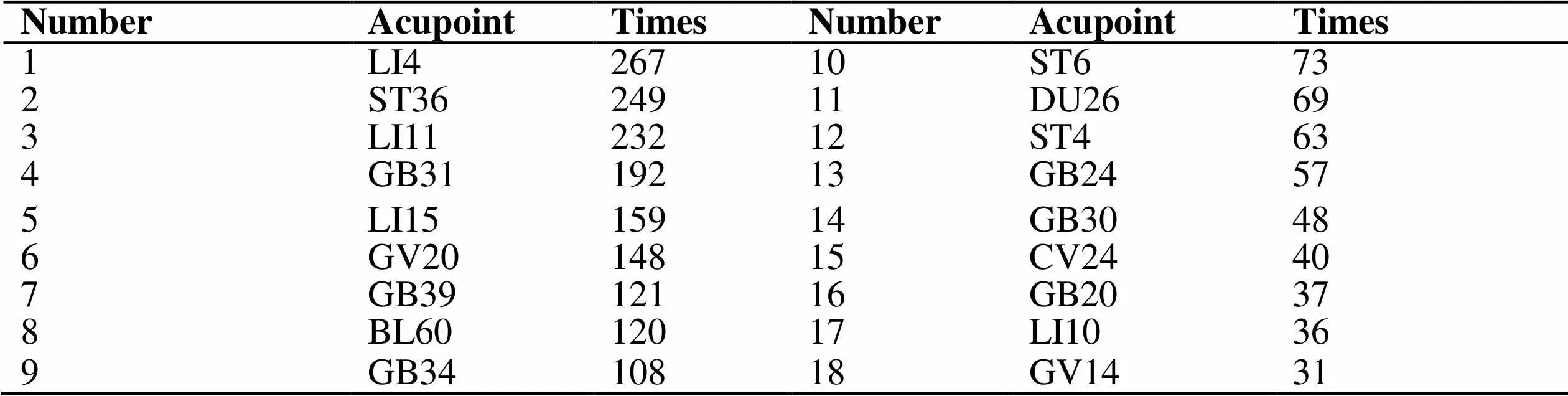
Table 2 Acupoint appeared over 30 times
Note: Hegu (LI4), Quchi (LI11), Jianliao (LI15), Jianjing (GB24), Shousanli (LI10), Zusanli (ST36), Fengshi (GB31), Xuanzhong (GB39), Kunlun (BL60), Yanglingquan (GB34), Huantiao (GB30), Baihui (GV20), Buche (ST6), Shuigou (DU26), Dicang (ST4), Chengjiang (CV24), Fengchi (GB20), Dazhui (GV14).

Table 3 The location of core acupoints
Note: Hegu (LI4), Quchi (LI11), Jianliao (LI15), Jianjing (GB24), Shousanli (LI10), Zusanli (ST36), Fengshi (GB31), Xuanzhong (GB39), Kunlun (BL60), Yanglingquan (GB34), Huantiao (GB30), Baihui (GV20), Buche (ST6), Shuigou (DU26), Dicang (ST4), Chengjiang (CV24), Fengchi (GB20), Dazhui (GV14).

Table 4 Meridian tropism of core acupoints
Note: Hegu (LI4), Quchi (LI11), Jianliao (LI15), Jianjing (GB24), Shousanli (LI10), Zusanli (ST36), Fengshi (GB31), Xuanzhong (GB39), Kunlun (BL60), Yanglingquan (GB34), Huantiao (GB30), Baihui (GV20), Buche (ST6), Shuigou (DU26), Dicang (ST4), Chengjiang (CV24), Fengchi (GB20), Dazhui (GV14).
Table 4 Meridian tropism of core acupoints
Note: Hegu (LI4), Quchi (LI11), Jianliao (LI15), Jianjing (GB24), Shousanli (LI10), Zusanli (ST36), Fengshi (GB31), Xuanzhong (GB39), Kunlun (BL60), Yanglingquan (GB34), Huantiao (GB30), Baihui (GV20), Buche (ST6), Shuigou (DU26), Dicang (ST4), Chengjiang (CV24), Fengchi (GB20), Dazhui (GV14).
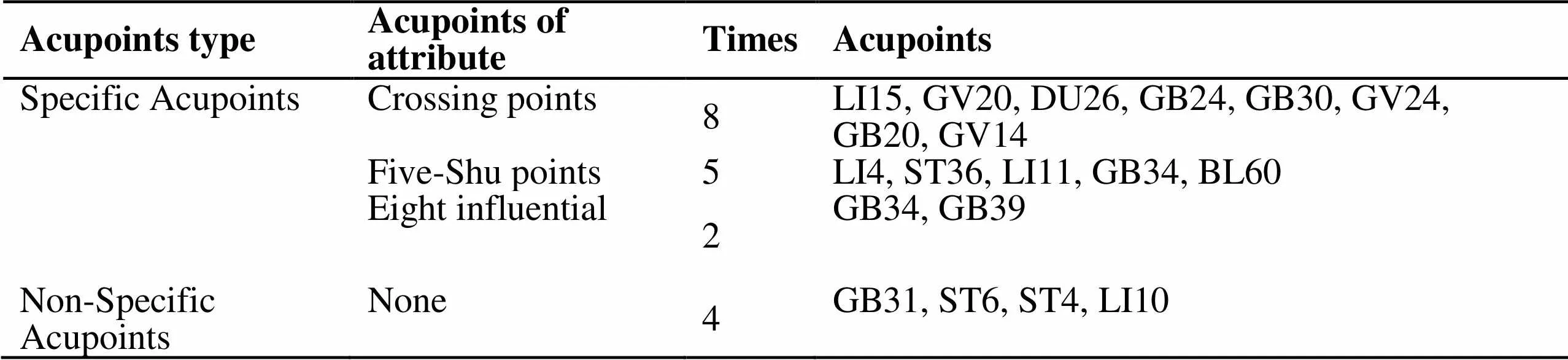
Table 5 Attribute analysis on specific points of core acupoints
Note: Hegu (LI4), Quchi (LI11), Jianliao (LI15), Jianjing (GB24), Shousanli (LI10), Zusanli (ST36), Fengshi (GB31), Xuanzhong (GB39), Kunlun (BL60), Yanglingquan (GB34), Huantiao (GB30), Baihui (GV20), Buche (ST6), Shuigou (DU26), Dicang (ST4), Chengjiang (CV24), Fengchi (GB20), Dazhui (GV14).
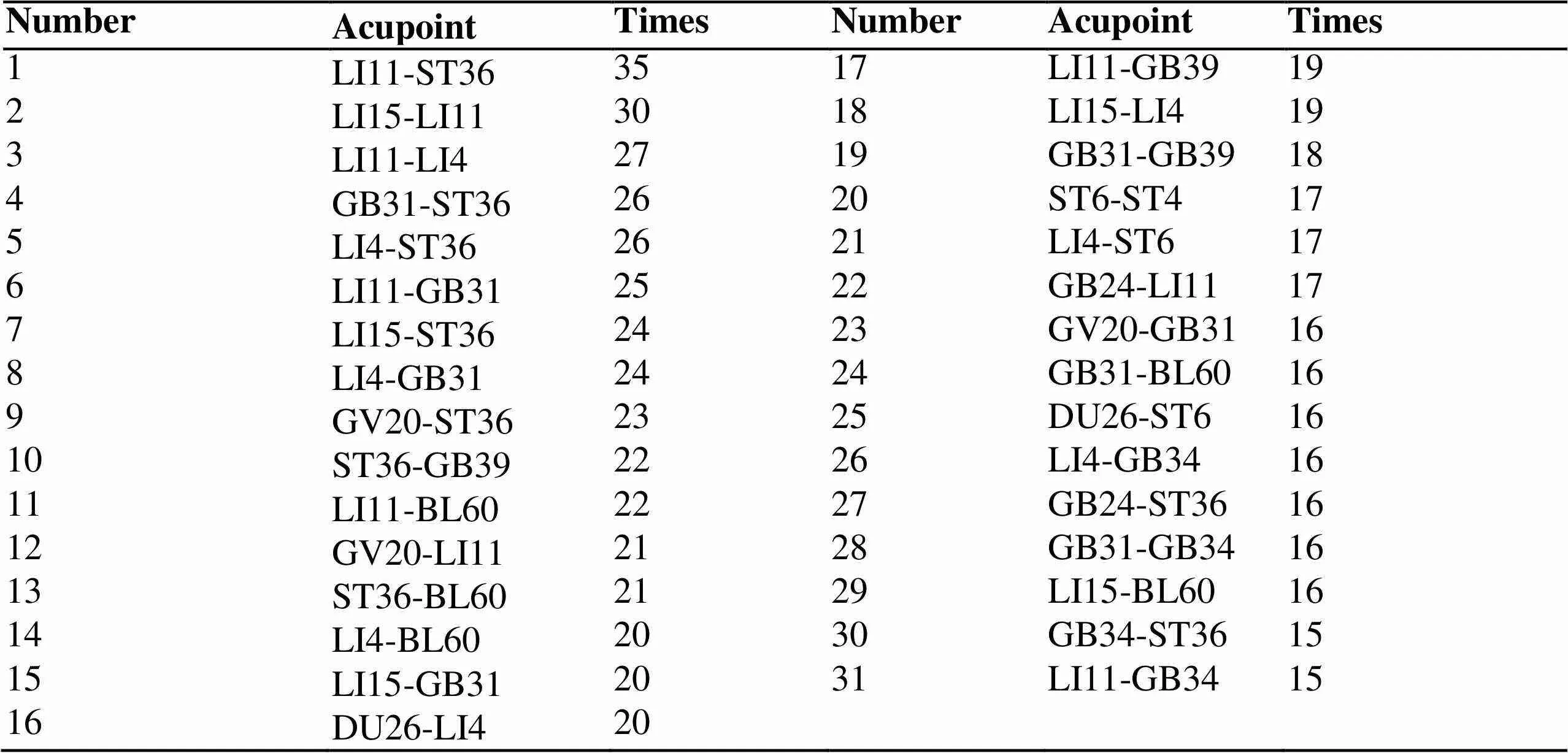
Table 6 The combination of core acupoints based on complex network analyses
Note: Hegu (LI4), Quchi (LI11), Jianliao (LI15), Jianjing (GB24), Shousanli (LI10), Zusanli (ST36), Fengshi (GB31), Xuanzhong (GB39), Kunlun (BL60), Yanglingquan (GB34), Huantiao (GB30), Baihui (GV20), Buche (ST6), Shuigou (DU26), Dicang (ST4), Chengjiang (CV24), Fengchi (GB20), Dazhui (GV14).
Analysis results of meridian tropism of core acupoints There are a total of 18 core acupoints, including 7 in Yangming meridian (38.89%), 6 in Shaoyang meridian (33.33%), 3 in Du meridian (16.67%), 1 in conception vessel (5.56%), and 1 in Taiyang meridian (5.56%) (Table 4). It can be seen that the core acupoints were mainly distributed in the Yang meridian.
Results of attribute analysis on specific points of core acupoints
Specific points are the Shu acupoints that have special therapeutic effects among the 14 meridian points and were generalized with specific titles. After analysis, there are 14 specific acupoints and 4 non-specific acupoints. Among the specific acupoints, Confluence acupoints contain the largest quantity, followed by the five Shu acupoints, and finally eight Conferential acupoints (Table 5).
Construction of complex network of core acupoints
In clinical, the compatibility of different core acupoints is the key to improve the clinical effects. The compatibility of 18 core acupoints were analyzedwith the complex relationship analysis system of TCM (Figure 2). Each point represents each commonly used core acupoints. The connection line between each acupoint represents the compatibility relationship between acupoints. The times in Table 6 represents the frequency of this compatibility.
Analysis of compatibility rule of core acupoints by acupoint mutual information method
Through acupoint-to-acupoint mutual information method, the correlation (node degree, frequency) of core acupoints was analyzed, and the compatibility tightness between core acupoints was obtained. The tightness represents the correlation degree between core acupoints. The greater the tightness, the greater the compatibility possibility of using such acupoints in treatment (Table 7). When treating apoplexy sequelae, the acupoints of Hegu (LI4), Zusanli (ST36), Quchi (LI11), Baihui (GV20) and Fengshi (GB31) has higher tightness (tightness > 40%), which indicating that these acupoints are most likely to be applied to patients during treatment.
Discussion
Modern researches have shown that acupuncture can obviously improve cerebral circulation, increase the oxygen partial pressure in the brain, strengthen the nutrition of brain cells around the focus, and improve the inhibition state of cerebral cortex. In this paper, the complex network and acupoint-to-acupoint mutual information method were used to analyze the acupoints used in acupuncture prescriptions for stroke in modern and ancient Chinese medicine classics, and summarized their laws for clinical use. The main symptoms of stroke sequelae patients were hemiplegia, speech impairment and coma. The ultimate goal of acupuncture was to restore the dysfunction.
This study found that the most commonly used treatment method was to dredge the meridian through multiple acupoints to improve the therapeutic effects of the meridian. The traditional meridian treatment method for stroke was mainly to dredge meridian Qi and blood to recover the motor function of paralyzed limbs [11]. The second is to strengthen cerebral blood perfusion through restoring consciousness and inducing resuscitation, so as to restore some brain functions. Researches have shown that acupuncture acupoints located on Du meridian can reduce the inhibition of brain electrical activity during cerebral ischemia and promote the recovery of brain electrical activity after reperfusion. It could also regulate the levels of nitric oxide and endothelin in brain tissue and blood, and further improve cerebral blood flow, which are beneficial to protect neuronal damage after cerebral ischemia [12]. The frequency of Yang meridian is much higher than that of Yin meridian (Table 4). Yang meridian and Shaoyang meridian count most, with the frequency of 38.89% and 33.33%, respectively. However, in the statistical process, it was found that many ancient physicians acupuncture acupoints located on Yang meridians while modern clinicians attach great importance to Yin and Yang meridians [13, 14]. From the statistical results, the treatment of limbs powerless and activity obstacle should combine the Yang meridians with other meridians in order to obtain better curative effects.
In this study, we found most of core points were located in the head and limbs, accounting for 94.44%. Stimulation of the head acupoints could stimulates the cerebral cortex so as to re-appear the synaptic regeneration of nerve cells, which in turn enhances the brain's control over limbs. Acupuncture of the limbs' acupoints could promote the recovery of limb nerves through the receptor-trunk afferent nerve-spinal cord-cerebral cortex pathway, enhancing muscle strength, reducing muscle tension, inhibiting hyperreflexia of tendons, and stimulating the recovery of high central nervous function. However, other secondary urinary system and digestive system diseases have fewer related acupoints, which are not commonly associated with clinical complications. The location of the acupoints is the same as the lesion site. At the same time, statistics show that although there are many acupoints selected, which conforms to the emphasis in(an ancient book of Chinese medicine, A.D. 1578, Ming dynasty) that "meridians is more important than acupoints, thus choice meridians when could not get the right acupoints".
Many different acupuncture prescriptions for treating apoplexy have the same fixed compatibility of acupoints. Statistics showed that some acupuncture prescriptions for apoplexy do have high frequency and fixed compatibility of acupoints. The compatibility methods are mainly the combination of acupoints in Yangming meridian and Shaoyang meridian. The combination of Quchi (LI11) and Zusanli (ST36) meridian can reduce blood pressure and improve cerebral blood flow to varying degrees. The mechanism of blood pressure reduction is related to the partial mediation of opioid receptor in brain and the effect of heart rate reduction. Acupuncture of Quchi (LI11) and Yanglingquan (GB34) can observe the cerebral blood flow diagram of patients with acute stroke. It can be seen that cerebral blood flow increases, cerebrovascular resistance decreases, cerebral blood flow increases after acupuncture can still maintain 35 min, but cerebrovascular resistance decreases inconspicuously. This shows that electroacupuncture at Quchi (LI11) and Zusanli (ST36) can reduce the area of cerebral infarction and provide certain protective effect on nerve cells in the marginal area of infarction [15].
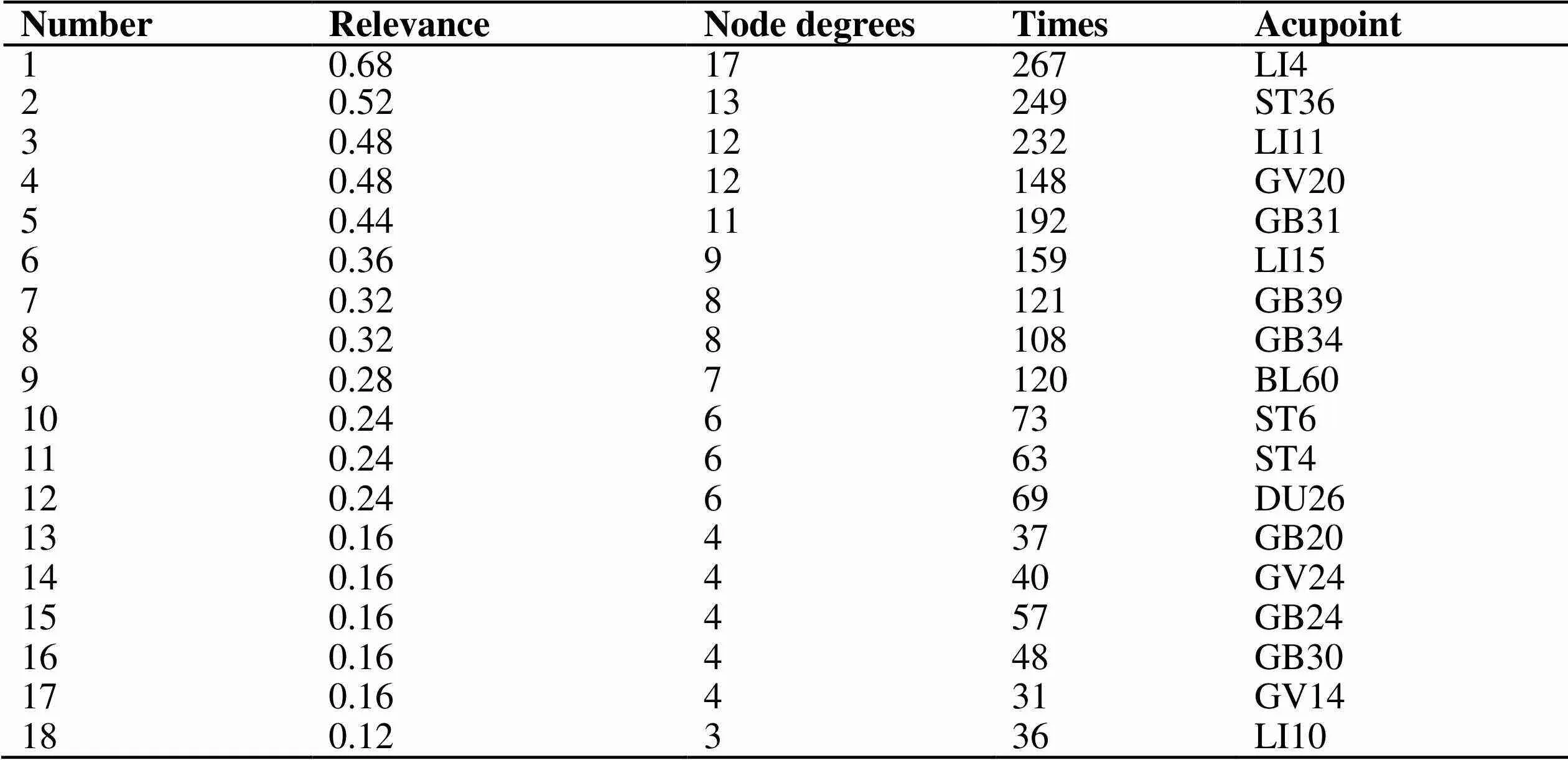
Table 7 Compatibility rule of core acupoints by acupoint mutual information method
Note: Hegu (LI4), Quchi (LI11), Jianliao (LI15), Jianjing (GB24), Shousanli (LI10), Zusanli (ST36), Fengshi (GB31), Xuanzhong (GB39), Kunlun (BL60), Yanglingquan (GB34), Huantiao (GB30), Baihui (GV20), Buche (ST6), Shuigou (DU26), Dicang (ST4), Chengjiang (CV24), Fengchi (GB20), Dazhui (GV14).
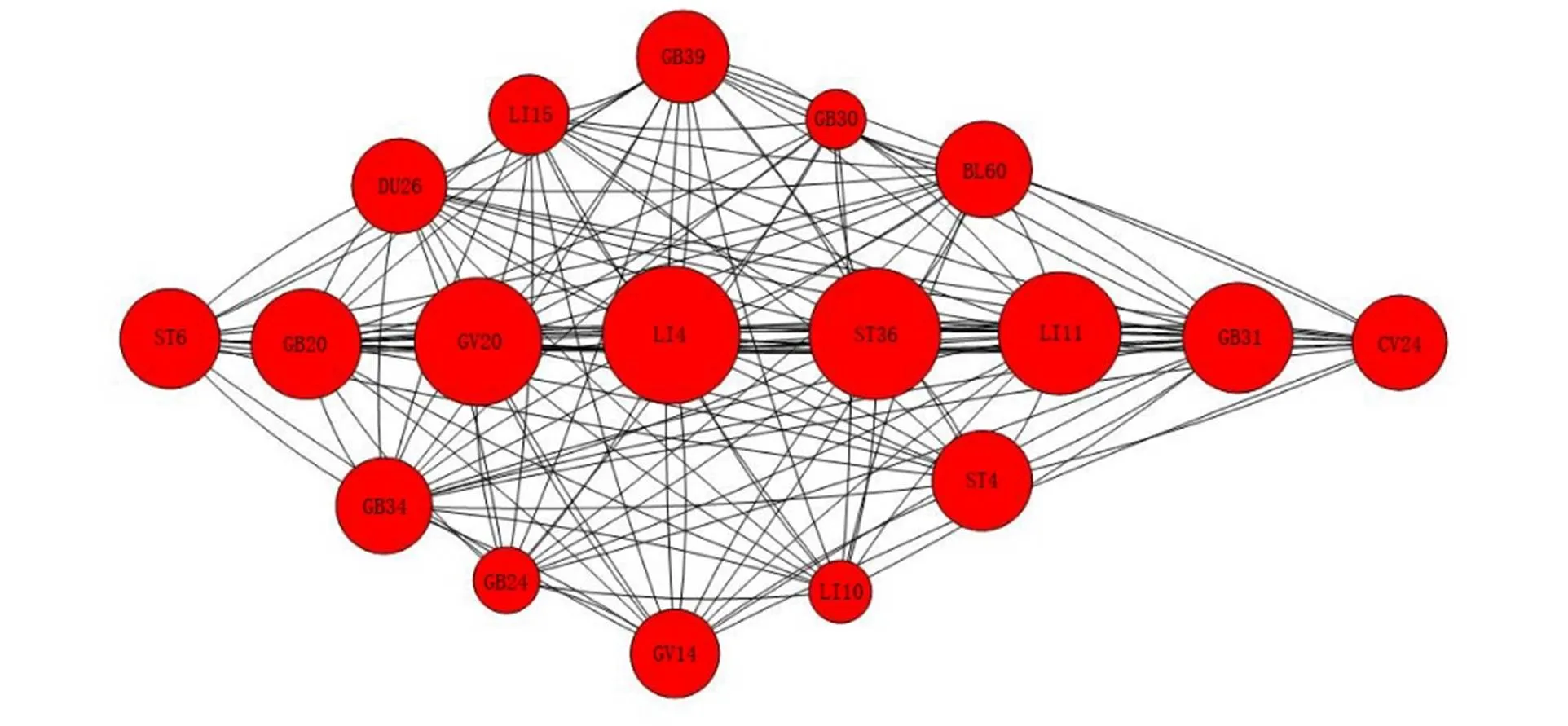
Figure 2 The compatibility of 18 core acupoints
Note: Hegu (LI4), Quchi (LI11), Jianliao (LI15), Jianjing (GB24), Shousanli (LI10), Zusanli (ST36), Fengshi (GB31), Xuanzhong (GB39), Kunlun (BL60), Yanglingquan (GB34), Huantiao (GB30), Baihui (GV20), Buche (ST6), Shuigou (DU26), Dicang (ST4), Chengjiang (CV24), Fengchi (GB20), Dazhui (GV14).
Through acupoint mutual information method (Table 7), Hegu (LI4), Quchi (LI11) and Zusanli (ST36) acupoints had the highest degree of tightness, which indicated that they were more closely related to other acupoints, highlighting the close relationship between Yangming meridian acupoints and other meridians. Yangming meridians were rich in Qi and blood. For patients with stroke sequelae, acupuncture was important to supplement deficiency. Stimulating Yangming meridian can restore the body's immune system and neuro-humoral system to normal and strengthen the induction ability to acupuncture.
Conclusion
The main treatment method for patients with apoplexy sequelae is to dispel wind and wake up the brain. Combination of Yang meridians with other meridians is needed to improve the effects. The acupoints Yangming meridian and Shaoyang meridian are most used meridians, Hegu (LI4), Quchi (LI11) and Zusanli (ST36) are the most used acupionts.
1. Chen WS. Criteria for diagnosis and efficacy evaluation of apoplexy. J Beijing Univer Tradit Chin Med 1996, 1: 55-56.
2. Wang LD, Liu JM, Yang Y,. Prevention and treatment of cerebral apoplexy in China still faces great challenges-report on prevention and treatment of cerebral apoplexy in China 2018. Chin Circ 2019, 34: 105-119.
3. Gao CY, Wu CY, Zhao JG,Chinese guidelines on diagnosis and treatment of cerebral infarction by integrated traditional Chinese and western medicine (2017). Chin J Integr Med 2018, 2: 136-144.
4. Li CJ. Literature study on acupuncture therapy for stroke. Heilongjiang Univer Tradit Chin Med 2007, 12: 234-237.
5. Shen GM. Analysis of acupuncture therapy for hemiplegia in stroke. J Anhui Tradit Chin Med College 2000, 19: 35.
6. Wang YH, Zhou XZ, Zhang RS,Using complex network and point mutual information method to analyze and explore the drug use experience of famous old Chinese medicine. China Digital Med 2011, 6: 76-80.
7. Du YH, Li J, Sun DW,Study on the spectrum of modern acupuncture and moxibustion in China. Chin Acupunc 2007, 5: 373-378.
8. Chen XR. Treasure after the first heavy needle, the study room fragrance everywhere. Chin Acupunc 1994, 2: 44.
9. Wu LT, Li Y, Ren YL. Analysis on the characteristics of acupuncture points in treating apoplexy sequelae based on data mining. Chin Acupunc 2013, 33: 125-130.
10. Li YQ, Rong LY. Study on the law of stroke medical case medication based on complex network. Shandong J Tradit Chin Med 2018, 37: 552-556.
11. Dai GH, Zhang T, Han MX. Analysis on acupuncture treatment of apoplexy. China J Basic Med Tradit Chin Med 2001, 5: 62-64.
12. Xu NG. Effects of electroacupuncture on nitric oxide and endothelin in rats with acute cerebral ischemia. Chin Acupunc 1996, 21: 18.
13. Shi XM. Clinical study of 9005 cases of stroke treated by acupuncture. Guiding J Tradit Chin Med 2005, 1: 3-5.
14. Lu SY. Discussion on acupuncture technique of reinforcing and reducing. Shanghai J Tradit Chin Med 1962, 2: 1-6.
15. Wang MJ, Song J, Yang YQ. Complete book of Chinese acupuncture. Zhengzhou: Henan Science and Technology Press, 2012.
TCM, Traditional Chinese medicine.
The authors declare that there is no conflict of interests regarding the publication of this paper.
Sun JC, Li YY, Xia Y,. Analysis of acupoint compatibility of acupuncture and moxibustion for stroke by complex network and point mutual information method. TMR Non-Drug Therapy 2019, 2(3): 95-102.
Chang Liu
10.12032/TMRND201902017
*Corresponding to: Yu-Qiu Li, School of Acupuncture and Massage, Shandong University of Traditional Chinese Medicine, Jinan 250355, China. E-mail: xiaoyusd@sina.com
- TMR Non-Drug Therapy的其它文章
- Comparison of the effects of moxibustion and lipid-lowering drugs for primary hyperlipidemia: a meta-analysis
- Advances in the application of acupuncture in military first aid
- Evaluation of therapeutic effects of self-made pelvic floor muscle rehabilitation on elderly female stress urinary incontinence
- Acupuncture combined with modern rehabilitation therapy for post-stroke flaccid paralysis
- An effective and easy to insist on self-made pelvic floor muscle rehabilitation for the elderly women with stress urinary incontinence