香蕉樹中度蔭蔽下充分灌水提高干熱區咖啡產量及品質
2019-08-19 03:07:02費良軍劉小剛劉利華何紅艷楊啟良
農業工程學報 2019年12期
關鍵詞:產量
郝 琨,費良軍,劉小剛,劉利華,何紅艷,楊啟良
香蕉樹中度蔭蔽下充分灌水提高干熱區咖啡產量及品質
郝 琨1,2,3,費良軍1,2,劉小剛3※,劉利華1,2,何紅艷4,楊啟良3
(1. 西安理工大學水利水電學院,西安 710048;2. 省部共建西北旱區生態水利國家重點實驗室,西安 710048; 3. 昆明理工大學現代農業工程學院,昆明 650500;4. 云南省農業科學院熱帶亞熱帶經濟作物研究所,保山 678025)
為研究香蕉蔭蔽栽培下灌溉對干熱區小粒咖啡產量和品質的影響,以5 a生小粒咖啡為研究對象,通過大田試驗,設3個灌水水平:充分灌水(FI)、輕度虧缺灌水(DIL:75%FI)和重度虧缺灌水(DIS:50%FI),4個蔭蔽栽培模式:無蔭蔽(S0:單作咖啡)、輕度蔭蔽(SL:4行咖啡間作1行香蕉)、中度蔭蔽(SM:3行咖啡間作1行香蕉)、重度蔭蔽(SS:2行咖啡間作1行香蕉),并運用主成分分析和TOPSIS法對生豆營養品質(總糖、蛋白質、脂肪、咖啡因、綠原酸、粗纖維和水浸出物)進行綜合評價。結果表明:小粒咖啡干豆產量受蔭蔽栽培模式和灌水水平極顯著的影響(<0.01),其中FISM處理的干豆產量最高(5 854.34 kg/hm2),且百粒干質量最大,而該處理的百粒體積和百粒鮮質量與各處理中的最大值相比差異不顯著(>0.05)。小粒咖啡大多生豆營養品質在不同蔭蔽栽培模式和灌水水平下差異顯著(<0.05),蛋白質、脂肪、綠原酸和水浸出物含量間呈極顯著正相關(<0.01)。主成分分析法和TOPSIS法均表明,FISS處理的綜合品質最優,其次是FISM處理,而DISS0處理的最差。與FIS0相比,FISM處理的產量增加14.32%,而FISS處理減少15.69%。從小粒咖啡提質增產的綜合效益考慮,建議干熱區小粒咖啡灌水處理和香蕉蔭蔽栽培模式的最佳組合選用中度蔭蔽栽培下充分灌水,該結果可為干熱區小粒咖啡水光管理提供理論依據和實踐參考。
灌溉;品質;主成分分析;咖啡豆;蔭蔽模式;產量; TOPSIS法
0 引 言
咖啡是云南省第3大出口創匯的高原特色商品。2016年云南省咖啡種植面積為1.17×10⁵hm2,產量達1.58×10⁸kg,分別占全國的98.44%和98.80%。小粒咖啡具有喜溫涼喜濕潤的生長習性[1],而云南干熱河谷區作為小粒咖啡的主產區,光照強烈,降雨時空分布不均,水光管理不科學嚴重制約當地小粒咖啡優質高產。
虧缺灌溉是基于各項生理調節理論而發展起來的一種節水灌溉新技術[2]。虧缺灌溉能大量節約灌溉用水,適度虧缺灌溉對作物有顯著的穩產增產效益,同時改善品質[3-5]。有研究表明,增加灌水量能顯著提高咖啡產量[6-7],而水分虧缺不同程度抑制咖啡樹營養生長的同時,也改變咖啡生豆中總糖、蛋白質、脂肪、粗纖維、咖啡因和綠原酸等的含量[6,8]。部分根區虧缺灌溉顯著提高咖啡品質而不顯著降低產量[9],適度虧缺灌溉能提高咖啡生豆中蛋白質、粗脂肪和綠原酸的含量[6,10]。小粒咖啡適宜在蔭蔽或半蔭蔽的環境中生長。有研究表明,適宜的蔭蔽栽培可使咖啡豆粒更大更飽滿[11-12],并提高產量和品質,而過度蔭蔽栽培導致花果稀少,產量降低[8,13-14]。生產中常通過高位作物和低位作物在時間和空間上合理搭配實現喜蔭作物的蔭蔽栽培,使光能資源得以高效利用[15],而高位作物的蔭蔽必然會改變低位作物的微生長環境,進而影響到系統生產力[13,16-17]。在咖啡園間作香蕉,喜光作物香蕉居上層,耐蔭作物小粒咖啡居下層,可使日光能被充分利用[1],而香蕉蔭蔽栽培下小粒咖啡的實際生產力和品質亟待研究。
前人關于灌溉或蔭蔽栽培對咖啡產量和品質的影響研究較多[9,12,14],但多集中于單一因素,而云南干熱區小粒咖啡在作物蔭蔽栽培下如何與灌溉有效結合,實現穩產提質尚不清楚。為此,本研究在香蕉樹為小粒咖啡樹提供不同的蔭蔽條件下,研究不同灌溉定額對小粒咖啡產量和品質的影響,并運用主成分分析法和TOPSIS法對營養品質進行綜合評價,以期找到小粒咖啡在香蕉提供蔭蔽環境時的最佳灌水模式,為干熱區小粒咖啡水光管理提供理論依據。
1 材料與方法
1.1 試驗材料
試驗于2016年3月—2018年1月在云南省保山市潞江壩(25°4′ N,99°11′ E,海拔799 m)進行。試驗期內降雨量為1 394.9 mm,其中2016年3月1日—2017年1月31日降雨量為576.3 mm,2017年2月1日—2018年1月31日降雨量為818.6 mm,日均氣溫最高和最低分別為32.3 ℃和10.4 ℃。選擇長勢一致的5 a生小粒咖啡(L. cv. Caturra)為供試材料,株高171~179 cm,莖粗22.27~24.34 mm,株行距為1.5 m×2 m(3 333株/hm2)。選擇速生易控,樹冠蔭蔽性好,與咖啡共生性強的香蕉樹(威廉斯8818)作為蔭蔽樹種。2016年3月9日在試驗區種植長勢一致的香蕉苗,株高50~55 cm,葉片5~6個。2016年7月5日,試驗區內所有香蕉的株高達1.8~2.1 m,冠幅達1.6~2 m,2016年12月27日,試驗區內所有香蕉的株高達6~6.8 m,冠幅達4.5~6 m。土壤為老沖積層上發育形成的紅褐色砂壤土,土壤容重1.40 g/cm3,田間持水量23%,pH值6.7,有機質20.2 g/kg,堿解氮106 mg/kg,有效磷12.6 mg/kg,速效鉀56 mg/kg。
1.2 試驗設計
本試驗設3個灌水水平和4個蔭蔽栽培模式。采用完全組合設計,共12個處理,每處理4個重復。3個灌水水平見表1,其中充分灌水(FI)灌水定額根據該地區小粒咖啡逐月需水量資料[18]并結合降水量來確定,其值為小粒咖啡耗水量減去有效降雨量,所有處理灌水周期約為7 d[8,19-20],遇到降雨順延。采用地表滴灌,滴頭設在距樹基部兩側0.4 m處,間距與樹距相同,滴頭流量2 L/h,工作壓力0.1 MPa,水表計量控制灌水。于2016年3月14日開始灌水,2018年1月31日結束灌水。2016年3月14日—2017年1月31日試驗期間FI、DIL和DIS的灌水量分別為492.0、369.0和246.0 mm,2017年2月1日—2018年1月31日試驗期間FI、DIL和DIS的灌水量分別為453.0、339.8和226.5 mm。
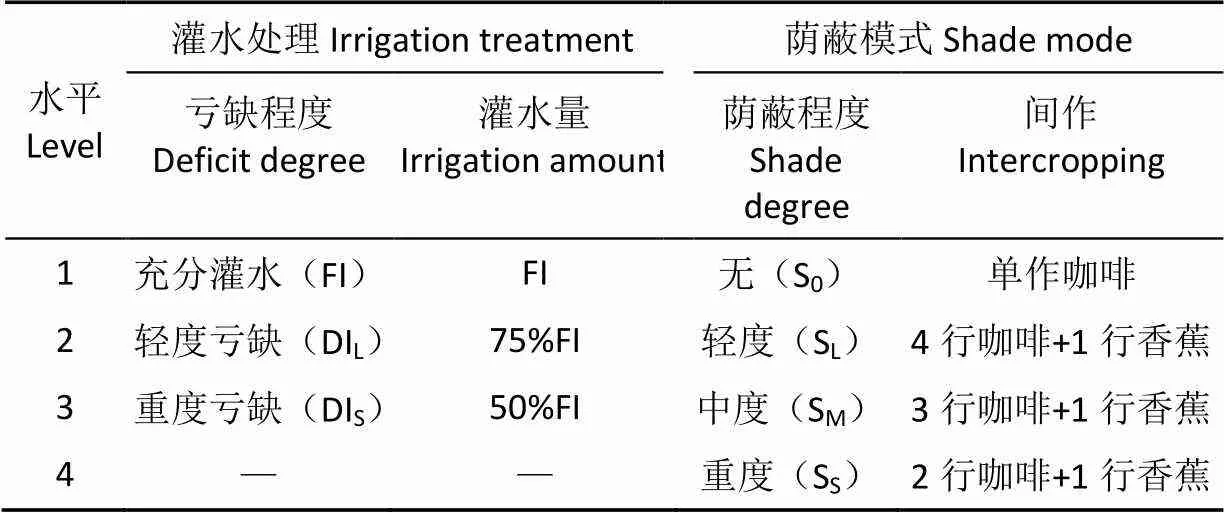
表1 咖啡灌水蔭蔽試驗設計
4個蔭蔽栽培模式見表1,輕度、中度、重度蔭蔽處理中香蕉株行距分別為4.5 m×8 m、4.5 m×6 m、4.5 m×4 m;對應的種植密度分別為278、370、556株/hm2。香蕉為小粒咖啡提供蔭蔽栽培時,各試驗區的寬為10.5 m(8株咖啡中間種植3株香蕉)。各灌水水平下S0、SL、SM和SS的試驗區面積分別為7.5×4=30 m2、10.5×16=168 m2、10.5×12=126 m2和10.5×8=84 m2,總面積為1 224 m2。為控制同一蔭蔽栽培模式下試驗區單位面積上的灌水量均勻,不對香蕉進行灌水處理,試驗期間香蕉未出現明顯的缺水缺肥癥狀。分別于2016年5月12日、2016年8月26日、2017年5月6日和2017年8月24日施入等量復合肥(N+P2O5+K2O為15-15-15)500 g/株。施肥方式為環形施肥:在距小粒咖啡樹干40 cm處,挖寬5 cm、深15 cm的環形施肥槽,均勻施肥后覆土。
1.3 測定項目及方法
于2017年年底分批采摘鮮紅或紫紅色成熟鮮豆,各處理隨機選取320~480粒咖啡鮮豆,測定百粒鮮質量及體積。所有咖啡鮮豆蛻皮后加水淹沒,靜置發酵后清洗搓揉脫膠,日光自然干燥后測定百粒干質量和總干質量(折算公頃產量),計算干鮮比,碾碎脫殼、磨碎過篩后測定其品質。品質指標包括總糖、蛋白質、脂肪、咖啡因、綠原酸、粗纖維和水浸出物,分別按GB/T 5009.7-2008、GB/T 5009.5-2010、GB/T 5009.6-2003、GB 5009.139-2014、GB/T 5009.10-2003、GB/T 5009.10-2003和GB/T 8305-2013測定。
1.4 SPSS中主成分分析法基本原理及分析步驟
1)建立評價對象與評價指標的數據矩陣:本研究有3×4(灌水水平×蔭蔽栽培模式)個評價對象,7(總糖、蛋白質、脂肪、咖啡因、綠原酸、粗纖維和水浸出物含量)個評價指標。
(r)×n(1)
式中r表示原始數據第個評價對象中第個評價指標,=12,=7。
2)對低優指標做倒數變換為高優指標形成新的數據矩陣(r′)×n:本研究中咖啡因和粗纖維為低優指標。
3)對矩陣進行標準化處理形成新的數據矩陣(r′′)×n。
4)對矩陣進行降維:a)描述項中統計量選擇“原始分析結果”,相關矩陣選擇“系數”和“KMO和Bartlett的球形檢驗”;b)抽取項中方法選擇“主成分”,分析選擇“相關性矩陣”,輸出選擇“未旋轉的因子解”和“碎石圖”,抽取選擇“基本特征值”并設置特征值大于1,最大收斂性迭代次數設置為25;c)旋轉項中方法選擇“無”,輸出選擇“載荷圖”;d)得分項與選擇項默認。
5)結果解讀:a)通過相關矩陣和球形檢驗,判斷矩陣是否適合做主成分分析;b)通過公因子方差、解釋總方差和碎石圖提取主成分;c)分析成分矩陣和成分圖。
=(a)×t(2)
式中a為成分矩陣第個評價指標中第個解釋信息量,=7,為提取主成分的數量。
6)求特征向量矩陣:
=(q)×t(3)
q=a/λ0.5(4)
式中λ表示提取主成分所對應的特征值。
7)求主成分系數:
=·(5)
8)計算綜合評價指數,并進行排序,越高,評價越好。

1.5 TOPSIS法基本原理及分析步驟
1)同式(1)建立。
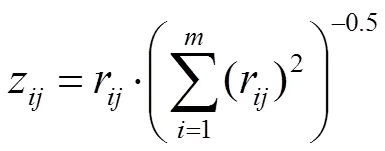
2)對小粒咖啡干豆營養品質指標用向量規范法求得規范決策矩陣(z)×n。
3)權重確定:
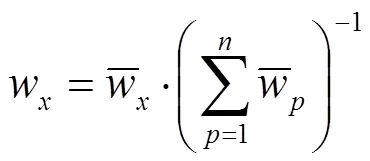
a)構造判斷矩陣,即行向量為評價對象,列向量為評價指標。
=(b)×m=(z)×m(8)
b)將判斷矩陣每一列歸一化。

c)對按列歸一化的判斷矩陣,再按行求和。
(10)
4)構成加權規范矩陣,矩陣內元素為:
(12)
5)確定正理想解與負理想解向量矩陣,矩陣內元素如下:
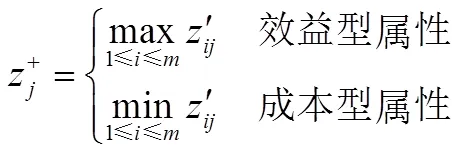
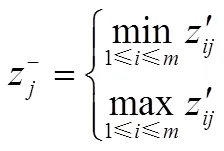

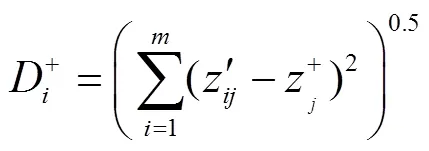
(16)
7)計算各評價對象與最優方案的接近程度C,并進行排序。C越接近1,表明評價對象越優。
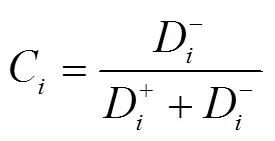
1.6 數據處理
采用Excel 2013軟件進行數據統計分析,用SPSS 19軟件進行相關分析、主成分分析和方差分析(ANOVA),多重比較采用Duncan法(=0.05)。
2 結果與分析
2.1 不同蔭蔽栽培模式與灌水對小粒咖啡產量及產量構成的影響
由表2可知,灌水水平和蔭蔽栽培模式及其交互作用對小粒咖啡干豆產量的影響顯著(<0.05)。小粒咖啡的干豆產量介于3 184.16~5 854.34 kg/hm2,其中FISM處理產量最高。與FIS0處理相比,DILSS處理的干豆產量差異不顯著(>0.05),FISL、FISM、DILSL和DILSM處理的干豆產量分別增加12.89%、14.32%、9.11%和9.09%(<0.05),其余處理減少11.58%~37.82%(<0.05),其中FISS處理減少15.69%。
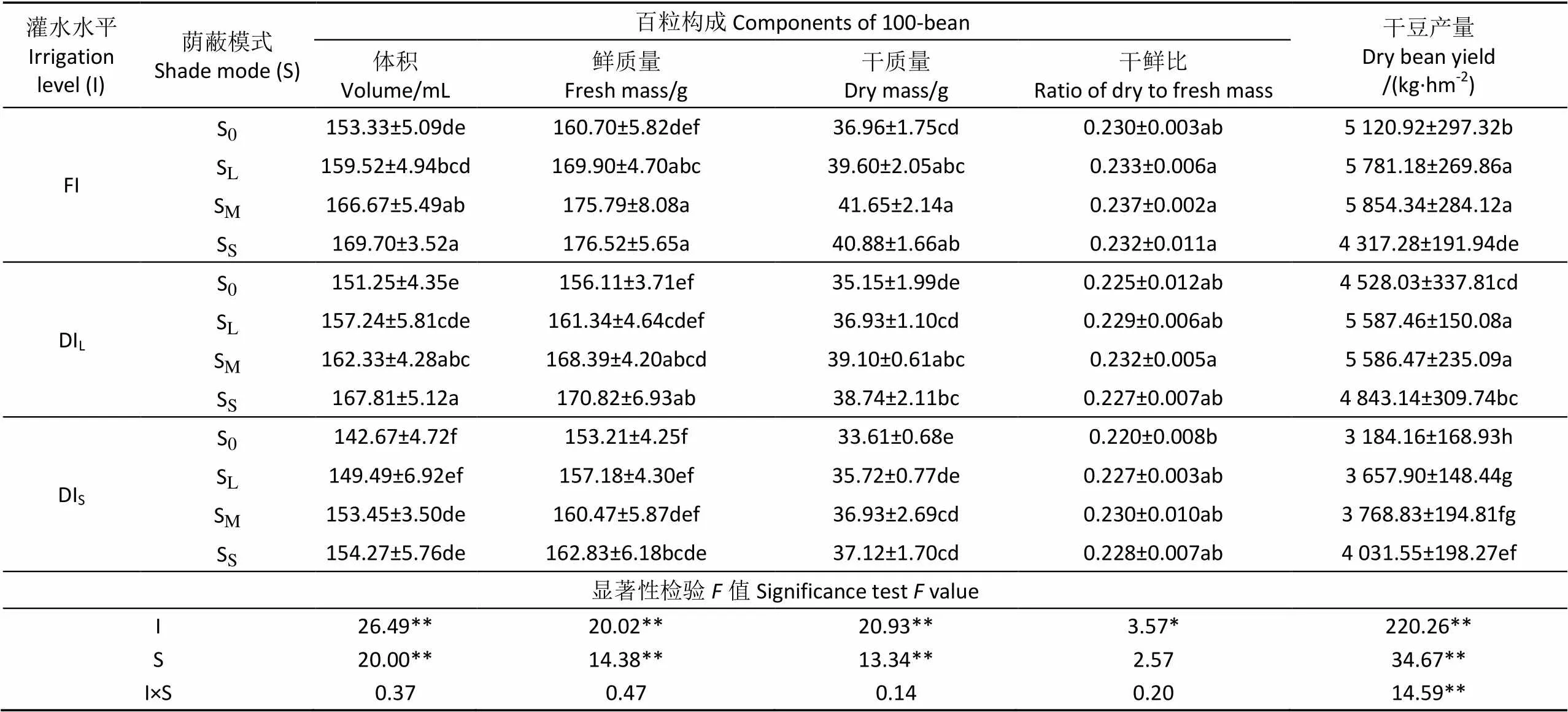
表2 不同蔭蔽模式下虧缺灌溉對小粒咖啡產量及產量構成的影響
注:同列不同小寫字母表示差異顯著(<0.05)。*<0.05;**<0.01。下同。
Note: Different small letters in the same column indicated significant difference at 0.05 level. *<0.05; **<0.01.the same below.
表2還表明,灌水水平和蔭蔽栽培模式對小粒咖啡百粒產量的體積、鮮質量和干質量的影響顯著(<0.01),但二者交互效應不顯著(>0.05)。百粒體積和鮮質量隨灌水量的增大而減小,隨蔭蔽程度的增大而增大。FI和DIL下,百粒產量的干質量均在SM時最大,且與SS相比差異不顯著(>0.05)。灌水水平對小粒咖啡干鮮比的影響顯著(<0.05),而蔭蔽栽培模式對干鮮比的影響不顯著(>0.05),表明小粒咖啡鮮豆含水率主要取決于灌水量。
2.2 不同蔭蔽栽培模式與灌水對小粒咖啡生豆營養品質的影響
灌水水平對小粒咖啡生豆總糖含量的影響不顯著(>0.05),除此之外,單獨的灌水水平和蔭蔽栽培模式處理對咖啡豆品質指標均影響極顯著(<0.01);灌水水平和蔭蔽栽培模式的交互作用僅對脂肪和粗纖維含量的影響不顯著(>0.05)(表3)。小粒咖啡生豆的品質指標除DISS0處理的咖啡因含量略大于標準外,其余品質指標均在標準之內。與FIS0相比,大多處理總糖含量差異不顯著(>0.05),然而FISM、DILSL和DISSS處理的總糖含量分別增加6.11%、4.29%和6.11%,DISS0處理減小3.75%(<0.05);除DILS0處理的蛋白質含量減少5.27%,FISL、DISS0和DISSL處理變化不顯著(>0.05)外,其余處理增加3.33%~19.88%(<0.05),其中FISM和FISS處理分別增加10.79%和19.88%;除FISL和DILSL處理的咖啡因含量減少13.73%和8.82%外(<0.05),其余處理增加3.92%~21.57%(<0.05),其中FISM和FISS處理分別增加7.84%和3.92%;除DISS0處理的綠原酸含量減少7.80%(<0.05),DILS0處理變化不顯著(>0.05)外,其余處理增加7.15%~43.10%(<0.05),其中FISM和FISS處理分別增加40.58%和43.10%;除DISS0處理的水浸出物含量減少7.58%(<0.05),DILS0和DISSL處理變化不顯著(>0.05)外,其余處理增加3.39%~11.94%(<0.05),其中FISM和FISS處理分別增加9.95%和11.94%。
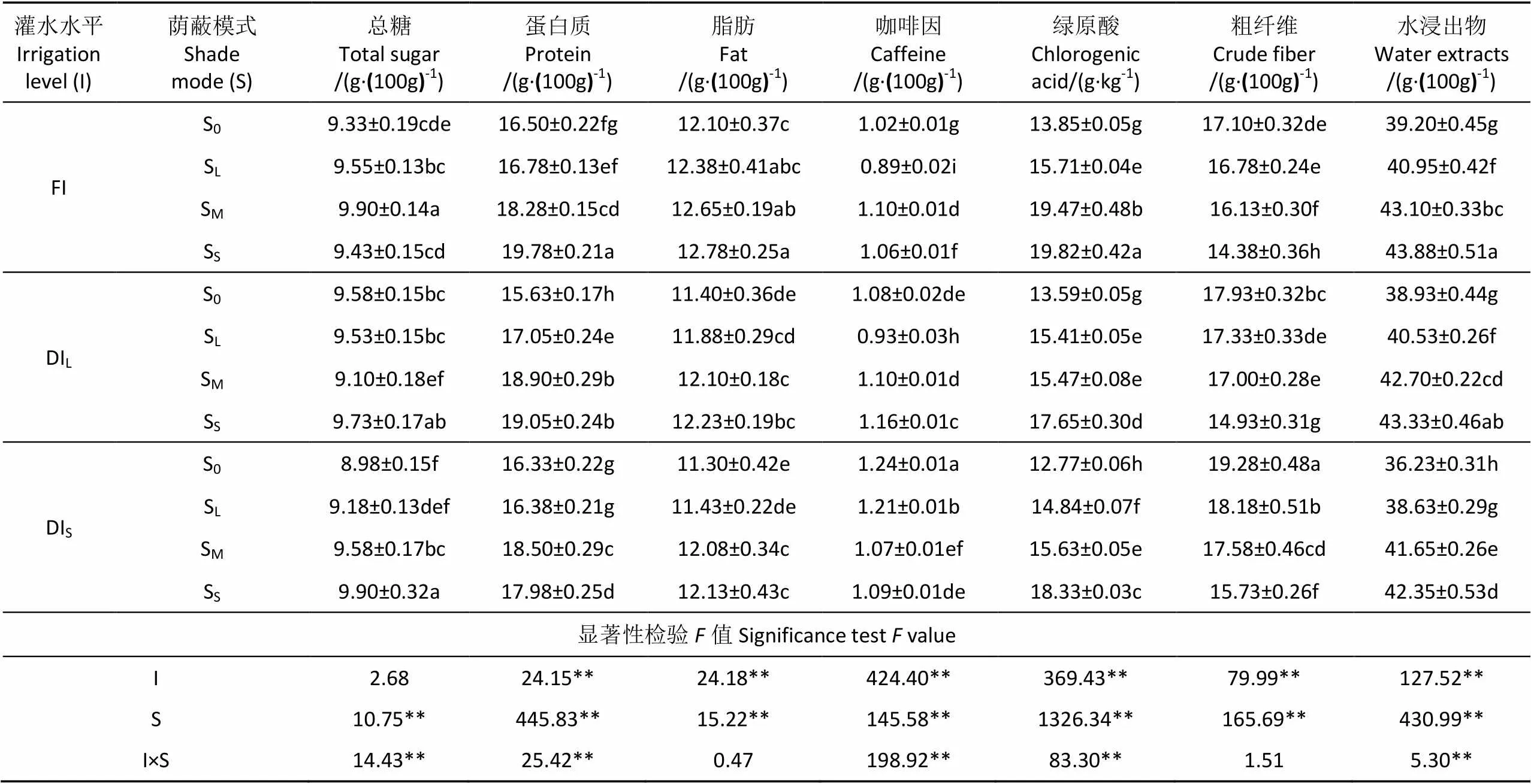
表3 不同蔭蔽模式下虧缺灌溉對小粒咖啡生豆營養品質的影響
注:標準要求:總糖、蛋白質、脂肪、咖啡因、粗纖維和水浸出物質量分數分別≥ 9.0、≥11.0、≥ 5.0、≤ 1.2、≤ 35.0和≥ 20.0 g·(100g)-1。
Note: Standards: the contents of total sugar, protein, fat, caffeine, crude fiber and water extracts are ≥ 9.0, ≥ 11.0, ≥ 5.0, ≤ 1.2, ≤ 35.0 and ≥ 20.0 g·(100g)-1, respectively.
2.3 不同處理小粒咖啡生豆營養品質評價
對小粒咖啡生豆營養品質指標進行Pearson相關分析(表4),結果表明,總糖分別與綠原酸和水浸出物之間呈顯著正相關關系(<0.05),蛋白質與脂肪、綠原酸和水浸出物之間呈極顯著正相關關系(<0.01),脂肪與綠原酸和水浸出物之間呈極顯著正相關關系(<0.01),綠原酸與水浸出物之間呈極顯著正相關關系(<0.01),粗纖維與總糖、蛋白質、脂肪、綠原酸和水浸出物之間呈顯著負相關關系(<0.05)。
KMO統計量為0.739>0.5,表明樣本量足夠。Bartlett的球形度檢驗<0.001,球形檢驗的假設被拒絕,表明7個品質指標是有關系的,與相關分析結果一致。采用主成分分析對指標進行降維,結果如表5所示。
主成分特征向量及第1和第2主成分如式(18)~式(20)。通過成份矩陣和提取的主成分特征根,計算特征向量。
Q1=4.74-0.51;2=1.18-0.52(18)
式中1、2分別為第1、第2特征向量,1、2分別為第1、第2成分矩陣。
結合營養品質指標標準化向量(表6)和特征向量,確定主成分表達式并計算綜合得分。
1=0.30總糖+0.39蛋白質+0.42脂肪+0.10咖啡因+0.44綠原酸+0.43粗纖維+0.44水浸出物(19)
2=0.33總糖-0.37蛋白質+0.14脂肪+0.85咖啡因-0.11綠原酸-0.08粗纖維-0.05水浸出物(20)
<
f=(4.74/5.92)×1+(1.18/5.92)×2(21)
式中1、2分別為第1、第2主成分得分,為綜合得分,總糖、蛋白質、脂肪、咖啡因、綠原酸、粗纖維、水浸出物分別為總糖、蛋白質、脂肪、咖啡因、綠原酸、粗纖維、水浸出物含量標準化向量。
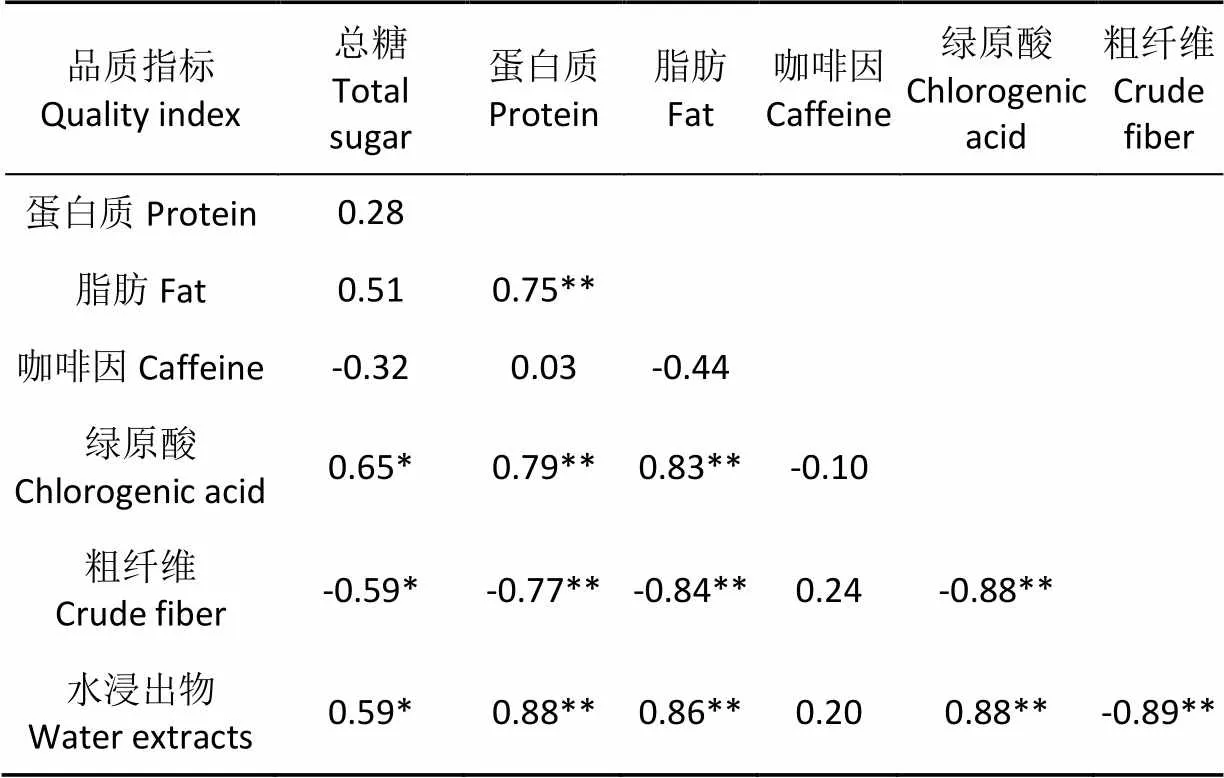
表4 小粒咖啡生豆營養品質的相關分析
表5表明,第1主成分的特征根為4.74,解釋了總變異的67.68%,其大小主要由蛋白質、脂肪、綠原酸、粗纖維、水浸出物和總糖含量決定(見表6中1),其中總糖含量的影響偏小;第2主成分的特征根為1.18,它解釋了總變異的16.85%,其大小主要由咖啡因含量決定(見表6中2);第3主成分雖然解釋了總變異的9.43%,但它的特征根為0.66,小于1,說明該主成分解釋力還不如直接引入原變量大,這7個變量只需提取前2個主成分即可。前2個主成分可解釋總變異的84.53%。
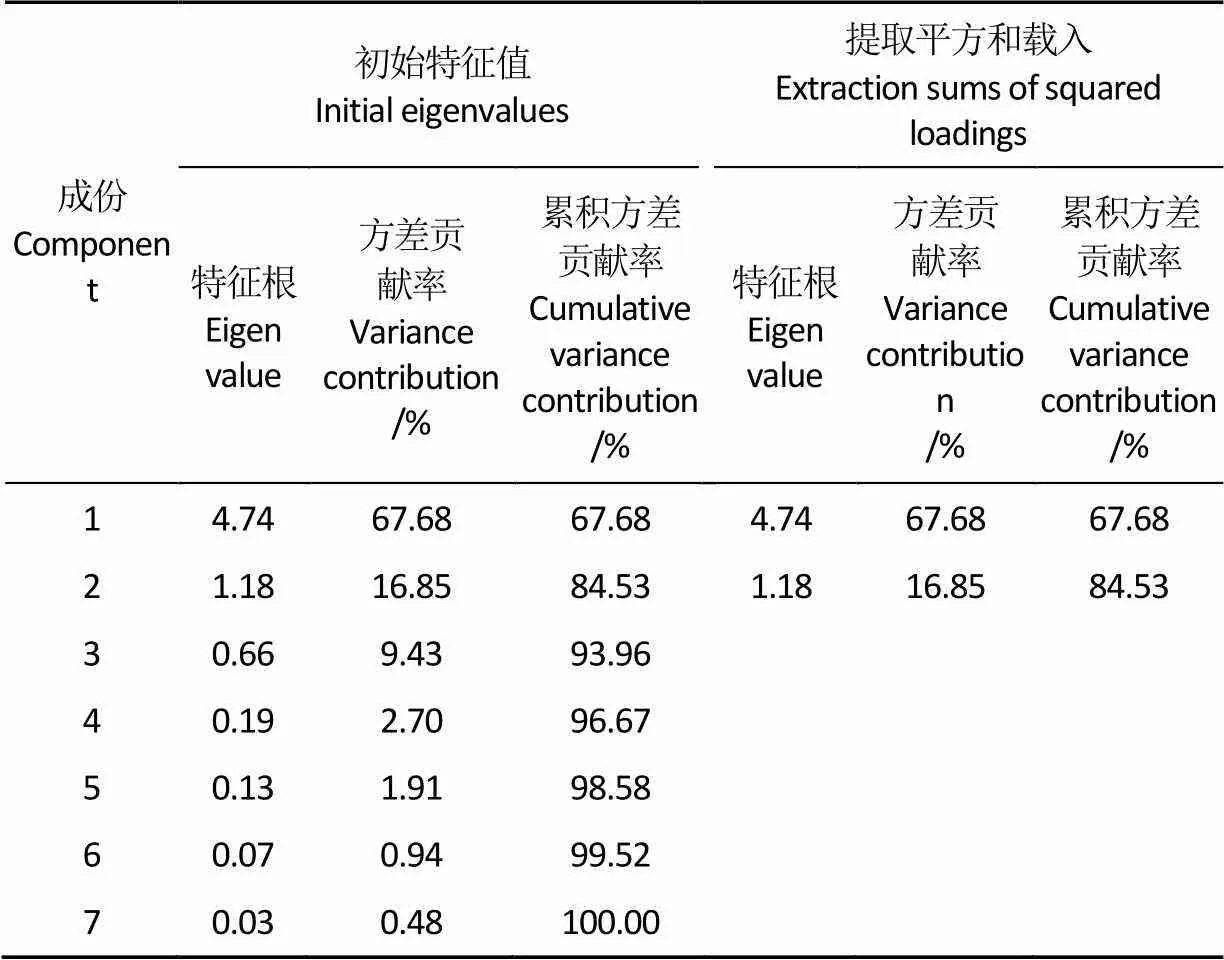
表5 主成分分析中的解釋總方差
對各處理下小粒咖啡生豆營養品質進行主成分分析(表6)和TOPSIS分析(表7)的評價結果一致,均表明FISS的綜合效益最優,其次是處理FISM,而處理DISS0的綜合效益最差。
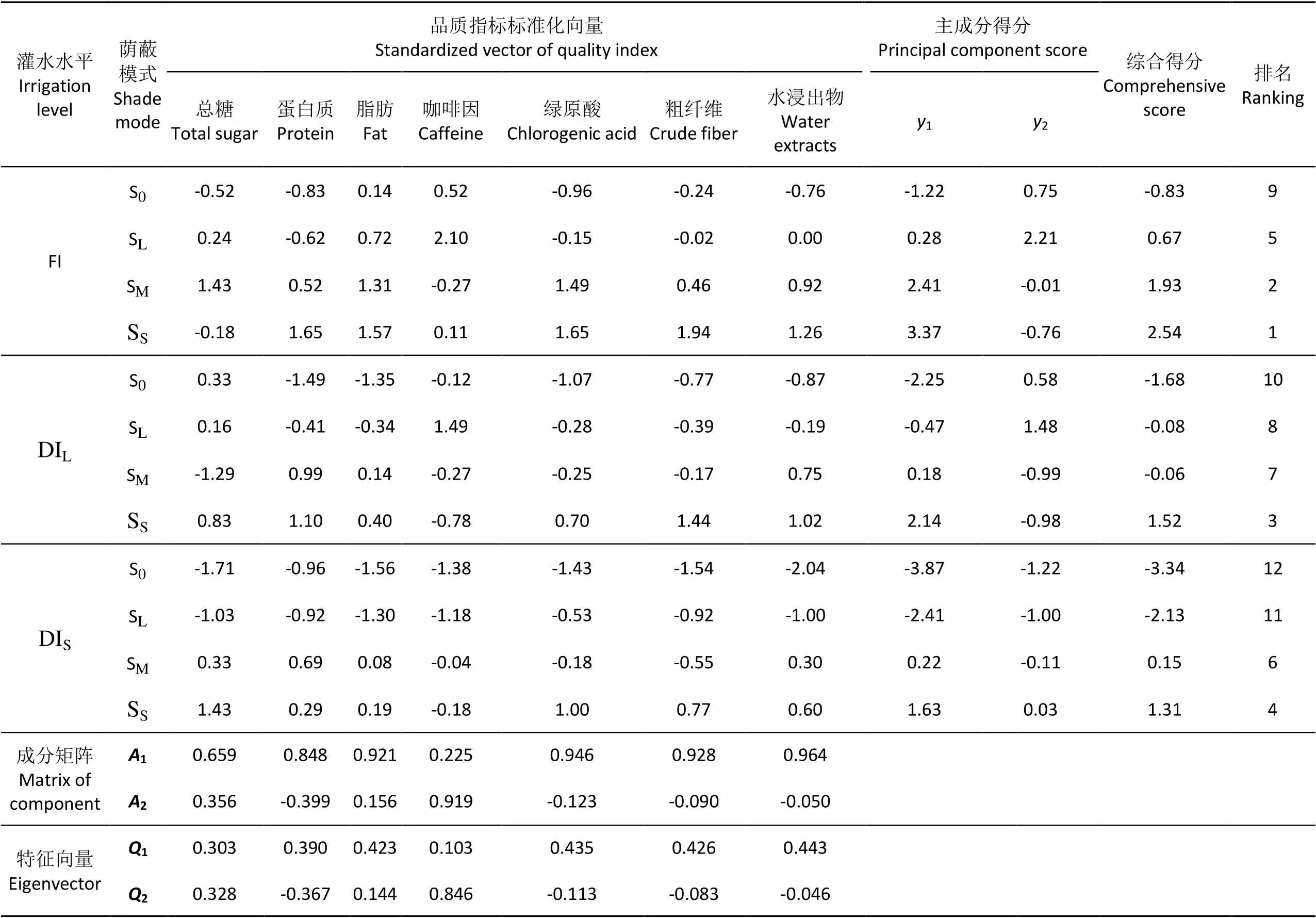
表6 小粒咖啡生豆營養品質的主成分分析
注:1、2分別為第1、第2主成分得分,1、2分別為第1、第2成分矩陣,1、2分別為第1、第2特征向量。
Note:1and2are first and second principal component score, respectively.1and2are first and second matrix of component, respectively.1and2are first and second eigenvector, respectively.

表7 小粒咖啡生豆營養品質的TOPSIS分析
3 討 論
不同的水分和光照環境對次生代謝產物在作物不同的器官、組織和細胞內的合成與積累的誘導及調控效應不同,最終改變作物產量及品質的形成[21]。云南省干熱區光照強烈,冬季氣溫較暖,降雨量少,蒸發量大,旱季持續時間長,降雨和光照不匹配限制了小粒咖啡的高效生產[22]。本研究發現,在重度虧缺灌水時,小粒咖啡的干豆產量隨蔭蔽度的增加而增加,可能由于蔭蔽栽培降低環境溫度,減小蒸騰耗水及土壤表層水分蒸發,緩解咖啡水分脅迫的壓力,起到不影響或少影響咖啡的正常坐果。充分灌水和輕度虧缺灌水時,輕度蔭蔽栽培和中度蔭蔽栽培下的干豆產量較高且差異不顯著,表明土壤水分適宜時,適度蔭蔽栽培可提高小粒咖啡的產量,而過度蔭蔽栽培減少小粒咖啡的花芽分化和結果數,導致產量降低。本研究還發現,小粒咖啡的百粒體積和百粒鮮質量隨灌水量和蔭蔽度的增加有增加趨勢,可能由于適宜的水光環境促進營養物質分配比例的提高,增大果粒的飽滿度,這與前人的研究結果一致[23-24]。
作物品質往往受環境因素的影響,合理的水光調配可實現產量和品質的同步提高[8,10]。本研究發現,灌水水平和蔭蔽栽培模式及二者的交互作用對小粒咖啡生豆的大多營養品質影響顯著,可能由于蔭蔽環境下進行灌溉緩解了土壤干旱脅迫、改善光合特性、促進光合產物累積和轉化,并延緩了咖啡漿果的成熟[11,23],同時水分影響植株體內生理代謝以及無機物和有機物吸收、運輸和轉化,從而改變了咖啡豆的營養組份含量[6]。小粒咖啡生豆中綠原酸含量隨灌水量和蔭蔽度的增加而增加,原因可能是在土壤水分嚴重虧缺下,植株的初級生產力受到較大抑制,合成次級產物的原料減少,導致綠原酸含量減少[6,8],而提高灌水量和蔭蔽度對綠原酸累積產生了“稀釋效應”[8,25]。不同蔭蔽環境必然造成不同程度的源-庫關系變化,使得咖啡豆中儲藏的蛋白質、淀粉、脂肪等水解程度不同。本研究發現,小粒咖啡生豆中蛋白質、脂肪和水浸出物含量隨蔭蔽度的增加有增加趨勢,表明一定的蔭蔽環境提高了小粒咖啡“源”器官供給同化物的能力,使咖啡豆體積變大,“源”器官供應力強,“庫”器官總體接受力弱,因此咖啡豆獲得了良好的充實,降低了堊白的發生[26]。
在生產實踐中,為了全面系統地反映問題,往往要通過較多的變量進行綜合評價,而這些變量之間可能存在錯綜復雜的相關關系,直接用它們分析現實問題,很可能會因存在多重共線性而引起極大的誤差。國內外學者通過主成分分析[27-30]、聚類分析[27-29,31]、模糊綜合評判[31]、TOPSIS法[20,30]、層次分析法[32]和灰色關聯度法[30]等對作物品質進行綜合評價。不同的評價方案因計算方法的不同而有所差異,本研究采用主成分分析和TOPSIS法對小粒咖啡生豆中總糖、蛋白質、脂肪、咖啡因、綠原酸、粗纖維和水浸出物含量進行綜合評價,發現主成分分析和TOPSIS法的評價結果基本一致,2種方法均表明FISS處理的綜合品質最優,其次是FISM處理,而DISS0處理的綜合品質最差。這與Liu等[8]的研究結果相同之處在于主成分分析和TOPSIS法在評價小粒咖啡生豆中營養品質時擇優的結果是一樣的,不同之處在于Liu等[8]的研究表明灌水量為充分灌水的75%,蔭蔽度為30%時的綜合品質最優,其次是充分灌水下蔭蔽度為30%,自然光照下灌水量為充分灌水的50%時的綜合品質最差。可能是本研究采用香蕉樹為小粒咖啡提供蔭蔽環境,與Liu等[8]通過遮蔭網為小粒咖啡提供蔭蔽環境的研究有所不同,本研究所產生的蔭蔽度是一動態變化過程,且環境通風性、溫濕度、土壤水肥的吸收利用等差異較大所致。也有可能與試驗灌水量的大小設計,降水量的差異,所分析營養品質指標的不同有關。本研究只對采用香蕉蔭蔽栽培第2年的小粒咖啡生豆營養品質進行了探索,而不同蔭蔽栽培時長下的小粒咖啡生豆營養品質是否存在差異,還應系統深入研究。
4 結 論
本研究通過3個灌水水平和4個蔭蔽栽培模式,研究香蕉蔭蔽栽培下灌溉對干熱河谷區小粒咖啡產量和品質的影響,結果表明:
1)小粒咖啡干豆產量在重度虧缺灌溉時隨蔭蔽度的增加而增加,在充分灌溉和輕度虧缺灌溉時隨蔭蔽度的增加呈先增大后減小的趨勢,其中FISM處理的干豆產量(5 854.34 kg/hm2)最大。灌水水平和蔭蔽栽培模式對小粒咖啡百粒產量的體積、鮮質量和干質量的影響顯著(<0.05),其中FISM處理的百粒干質量最大,而其百粒體積和百粒鮮質量與最大的處理(FISS)相比差異不顯著(>0.05),與FIS0處理相比顯著增大。
2)灌水水平對小粒咖啡生豆總糖含量的影響不顯著(>0.05),除此之外,單獨的灌水水平和蔭蔽栽培模式處理對咖啡豆品質指標均影響極顯著(<0.01);灌水水平和蔭蔽栽培模式的交互作用僅對脂肪和粗纖維含量的影響不顯著(>0.05)。
3)蛋白質、脂肪、綠原酸和水浸出物含量之間相互呈極顯著正相關關系,粗纖維分別與總糖、蛋白質、脂肪、綠原酸和水浸出物之間呈顯著負相關關系。主成分分析與TOPSIS法均表明處理FISS的綜合效益最優,其次是處理FISM,而處理DISS0的綜合效益最差。
4)研究雖表明FISS處理的綜合品質最優,但其干豆產量僅4 317.28 kg/hm2,與FIS0處理相比減產15.69%,而FISM處理的綜合品質排名第2,干豆產量最高達5 854.34 kg/hm2,與FIS0相比增產14.32%。從提高營養品質和增加經濟產量的角度綜合考慮,FISM處理(中度蔭蔽栽培下充分灌水)對干熱區小粒咖啡有顯著的提質增產作用,該組合可作為干熱區小粒咖啡在香蕉蔭蔽栽培下的最佳水光耦合模式。
[1] 郝琨,劉小剛,韓志慧,等. 不同蔭蔽栽培下虧缺灌溉對干熱區小粒咖啡水光利用和產量的影響[J]. 應用生態學報,2018,29(11):3550-3558. Hao Kun, Liu Xiaogang, Han Zhihui, et al. Effects of deficit irrigation on water-radiation use and yield ofunder different shade cultivation modes in dry-hot region[J]. Chinese Journal of Applied Ecology, 2018, 29(11): 3550-3558. (in Chinese with English abstract)
[2] 張效星,樊毅,賈悅,等. 水分虧缺對滴灌柑橘光合和產量及水分利用效率的影響[J]. 農業工程學報,2018,34(3):143-150. Zhang Xiaoxing, Fan Yi, Jia Yue, et al. Effect of water deficit on photosynthetic characteristics, yield and water use efficiency in Shiranui citrus under drip irrigation[J]. Transactions of the Chinese Society of Agricultural Engineering (Transactions of the CSAE), 2018, 34(3): 143-150. (in Chinese with English abstract)
[3] Patanè C, Tringali S, Sortino O. Effects of deficit irrigation on biomass, yield, water productivity and fruit quality of processing tomato under semi-arid Mediterranean climate conditions[J]. Scientia Horticulturae, 2011, 129(4): 590-596.
[4] Santesteban L G, Miranda C, Royo J B. Regulated deficit irrigation effects on growth, yield, grape quality and individual anthocyanin composition inL. cv. ‘Tempranillo’[J]. Agricultural Water Management, 2011, 98(7): 1171-1179.
[5] Marsal J, Casadesus J, Lopez G, et al. Sustainability of regulated deficit irrigation in a mid-maturing peach cultivar[J]. Irrigation Science, 2016, 34(3): 201-208.
[6] 劉小剛,郝琨,韓志慧,等. 水氮耦合對干熱區小粒咖啡產量和品質的影響[J]. 農業機械學報,2016,47(2):143-150,160. Liu Xiaogang, Hao Kun, Han Zhihui, et al. Effect of water and nitrogen coupling on yield and quality of Arabica Coffee in dry-hot area[J]. Transactions of the Chinese Society for Agricultural Machinery, 2016, 47(2): 143-150, 160. (in Chinese with English abstract)
[7] 郝琨,劉小剛,張巖,等. 干旱脅迫-復水與氮肥耦合對小粒咖啡生長和水氮生產力的影響[J]. 應用生態學報,2017,28(12):4034-4042. Hao Kun, Liu Xiaogang, Zhang Yan, et al. Coupling effects of periodic rewatering after drought stress and nitrogen fertilizer on growth and water and nitrogen productivity of[J]. Chinese Journal of Applied Ecology, 2017, 28(12): 4034-4042. (in Chinese with English abstract)
[8] Liu X G, Qi Y T, Li F S, et al. Impacts of regulated deficit irrigation on yield, quality and water use efficiency of Arabica coffee under different shading levels in dry and hot regions of southwest China[J]. Agricultural Water Management, 2018, 204(4): 292-300.
[9] Shimber G T, Ismail M R, Kausar H, et al. Plant water relations, crop yield and quality in coffee (L. ) as influenced by partial root zone drying and deficit irrigation[J]. Australian Journal of Crop Science, 2013, 7(9): 1361-1368.
[10] 劉小剛,李義林,齊韻濤,等. 干熱區小粒咖啡提質增產的灌水和遮蔭耦合模式[J]. 應用生態學報,2018,29(4):1140-1146. Liu Xiaogang, Li Yilin, Qi Yuntao, et al. Coupling mode of irrigation and shading for good quality and proper yield ofin dry-hot region[J]. Chinese Journal of Applied Ecology, 2018, 29(4): 1140-1146. (in Chinese with English abstract)
[11] Muschler R G. Shade improves coffee quality in a sub-optimal coffee-zone of Costa Rica[J]. Agroforestry Systems, 2001, 51(2): 131-139.
[12] Bote A D, Struik P C. Effects of shade on growth, production and quality of coffee () in Ethiopia[J]. Journal of Horticulture and Forestry, 2011, 3(11): 336-341.
[13] Moreira S L S, Pires C V, Marcatti G E, et al. Intercropping of coffee with the palm tree,, can mitigate climate change effects[J]. Agricultural and Forest Meteorology, 2018, 256/257: 379-390.
[14] Somporn C, Kamtuo A, Theerakulpisut P, et al. Effect of shading on yield, sugar content, phenolic acids and antioxidant property of coffee beans (L. cv. Catimor) harvested from north-eastern thailand[J]. Journal of the Science of Food and Agriculture, 2012, 92(9): 1956-1963.
[15] Qian X, Zang H D, Xu H S, et al. Relay strip intercropping of oat with maize, sunflower and mung bean in semi-arid regions of Northeast China: Yield advantages and economic benefits[J]. Field Crops Research, 2018, 223: 33-40.
[16] Peng X B, Zhang Y Y, Cai J, et al. Photosynthesis, growth and yield of soybean and maize in a tree-based agroforestry intercropping system on the Loess Plateau[J]. Agroforestry Systems, 2009, 76(3): 569-577.
[17] 蘇本營,宋艷霞,陳圣賓,等. 大豆幼苗對套作玉米遮蔭環境的光合生理生態響應[J]. 生態學報,2015,35(10):3298-3308. Su Benying, Song Yanxia, Chen Shengbin, et al. Photosynthetic responses of soybean () seedlings to shading caused by maize in an intercropping system[J]. Acta Ecologica Sinica, 2015, 35(10): 3298-3308. (in Chinese with English abstract)
[18] 陳玉民,郭國雙,王廣興,等. 中國主要農作物需水量與灌溉[M]. 北京:水利電力出版社,1995.
[19] Nogueira C U, Rodriacute R A, Padroacute G, et al. Irrigation depth and harvest date in sweet potato for conversion to biofuels[J]. African Journal of Agricultural Research, 2016, 11(51): 5116-5123.
[20] Liu X G, Li F S, Zhang Y, et al. Effects of deficit irrigation on yield and nutritional quality of Arabica coffee () under different N rates in dry and hot region of southwest China[J]. Agricultural Water Management, 2016, 172: 1-8.
[21] 吳能表,李琳琳,楊衛星,等. 光強對長春花葉片碳氮及次生代謝產物積累的影響[J]. 草業科學,2014,31(8):1508-1514. Wu Nengbiao, Li Linlin, Yang Weixing, et al. Effects of light intensity on carbon-nitrogen metabolism and secondary metabolite ofleaves[J]. Pratacultural Science, 2014, 31(8): 1508-1514. (in Chinese with English abstract)
[22] Cai C T, Cai Z Q, Yao T Q, et al. Vegetative growth and photosynthesis in coffee plants under different watering and fertilization managements in Yunnan, SW China[J]. Photosynthetica, 2007, 45(3): 455-461.
[23] Vaast P, Bertrand B, Perriot J J, et al. Fruit thinning and shade improve bean characteristics and beverage quality of coffee (L.) under optimal conditions[J]. Journal of the Science of Food and Agriculture, 2006, 86(2): 197-204.
[24] Imru N O, Wogderess M D, Gidada T V. A study of the effects of shade on growth, production and quality of coffee () in Ethiopia[J]. International Journal of Agricultural Sciences, 2015, 5(5): 748-752.
[25] 邢英英,張富倉,張燕,等. 滴灌施肥水肥耦合對溫室番茄產量、品質和水氮利用的影響[J]. 中國農業科學,2015,48(4):713-726. Xing Yingying, Zhang Fucang, Zhang Yan, et al. Effect of irrigation and fertilizer coupling on greenhouse tomato yield, quality, water and nitrogen utilization under fertigation[J]. Scientia Agricultura Sinica, 2015, 48(4): 713-726. (in Chinese with English abstract)
[26] 杜彥修,季新,張靜,等. 弱光對水稻生長發育影響研究進展[J]. 中國生態農業學報,2013,21(11):1307-1317. Du Yanxiu, Ji Xin, Zhang Jing, et al. Research progress on the impacts of low light intensity on rice growth and development[J]. Chinese Journal of Eco-Agriculture, 2013, 21(11): 1307-1317. (in Chinese with English abstract)
[27] Patras A, Brunton N P, Downey G, et al. Application of principal component and hierarchical cluster analysis to classify fruits and vegetables commonly consumed in Ireland based onantioxidant activity[J]. Journal of Food Composition and Analysis, 2011, 24(2): 250-256.
[28] 潘治利,田萍萍,黃忠民,等. 不同品種小麥粉的粉質特性對速凍熟制面條品質的影響[J]. 農業工程學報,2017,33(3):307-314. Pan Zhili, Tian Pingping, Huang Zhongmin, et al. Effects of flour characteristics of different wheat cultivars on quality of frozen cooked noodles[J]. Transactions of the Chinese Society of Agricultural Engineering (Transactions of the CSAE), 2017, 33(3): 307-314. (in Chinese with English abstract)
[29] 宋江峰,劉春泉,姜曉青,等. 基于主成分與聚類分析的菜用大豆品質綜合評價[J]. 食品科學,2015,36(13):12-17. Song Jiangfeng, Liu Chunquan, Jiang Xiaoqing, et al. Comprehensive evaluation of vegetable soybean quality by principal component analysis and cluster analysis[J]. Food Science, 2015, 36(13): 12-17. (in Chinese with English abstract)
[30] 李紅崢,曹紅霞,郭莉杰,等. 溝灌方式和灌水量對溫室番茄綜合品質與產量的影響[J]. 中國農業科學,2016,49(21):4179-4191. Li Hongzheng, Cao Hongxia, Guo Lijie, et al. Effect of furrow irrigation pattern and irrigation amount on comprehensive quality and yield of greenhouse tomato[J]. Scientia Agricultura Sinica, 2016, 49(21): 4179-4191. (in Chinese with English abstract)
[31] 劉美迎,李小龍,梁茁,等. 基于模糊數學和聚類分析的鮮食葡萄品種綜合品質評價[J]. 食品科學,2015,36(13),57-64. Liu Meiying, Li Xiaolong, Liang Zhuo, et al. Comprehensive quality assessment of table grapes varieties using fuzzy mathematics and cluster analysis[J]. Food Science, 2015, 36(13): 57-64. (in Chinese with English abstract)
[32] 杜清潔,李建明,潘銅華,等. 滴灌條件下水肥耦合對番茄產量及綜合品質的影響[J]. 干旱地區農業研究,2015,33(3):10-17. Du Qingjie, Li Jiangming, Pan Tonghua, et al. The compound effects of water and fertilizer on yield and quality of tomato under drip irrigation[J]. Agricultural Research in the Arid Areas, 2015, 33(3): 10-17. (in Chinese with English abstract)
Improving coffee yield and quality by full irrigation under moderate shade cultivation of banana tree in dry-hot region
Hao Kun1,2,3, Fei Liangjun1,2, Liu Xiaogang3※, Liu Lihua1,2, He Hongyan4, Yang Qiliang3
(1.,,710048,; 2.,710048,; 3.,,650500,; 4.,,678025,)
The yield and quality ofcannot be guaranteed due to irrational irrigation and light management in dry-hot region of southwest China. In order to evaluate the effects of deficit irrigation on yield and quality ofunder the shade of banana trees in dry-hot region, the local(5 years) was chosen for test material. In the field experiment, 3 levels of irrigation,, full irrigation (FI, which was determined by the monthly water demand data ofand precipitation in dry-hot region), light deficit irrigation (DIL: 75%FI) and severe deficit irrigation (DIS: 50%FI), and 4 modes of shade cultivation,, no shade cultivation (S0: monoculture,, natural light intensity), light shade cultivation (SL: intercropping with 4 lines ofand 1 line of banana), moderate shade cultivation (SM: intercropping with 3 lines ofand 1 line of banana) and severe shade cultivation (SS: intercropping with 2 lines ofand 1 line of banana) were designed. Principal component analysis and TOPSIS method were used to evaluate total sugar, protein, fat, caffeine, chlorogenic acid, crude fiber and water extracts content ofcomprehensively.The results showed that the dry bean yield ofwas significantly different under different shade cultivation modes and irrigation levels (<0.05), and there were the highest dry bean yield (5 854.34 kg/hm2) and the highest dry mass of 100-bean ofin the FISMtreatment. But FISMwas not significantly different with the FISStreatment (>0.05)in the volume and fresh mass of 100-bean of. The effects of irrigation level on total sugar content ofwere not significant (>0.05), and that of interaction between irrigation level and shade cultivation mode on fat and crude fibre content were also not significant (>0.05). However, the effects of their interaction on total sugar, protein, caffeine, chlorogenic acid and water extract content ofwere extremely significant (<0.01).There were higher content of total sugar, protein, fat, chlorogenic acid and water extracts content ofof FISMtreatment, while lower content of caffeine and crude fiber. Pearson correlation analysis showed that there were extremely significant positive correlation between protein, fat, chlorogenic acid and water extracts content of, while significant negative correlation between crude fiber and total sugar, protein, fat, chlorogenic acid and water extracts content of, respectively. Based on both principal component analysis and TOPSIS method, the best comprehensive quality ofwas FISStreatment, the next was FISMtreatment, and the poorest comprehensive quality was DISS0treatment. Compared with the FIS0treatment, total sugar, protein, chlorogenic acid, water extracts content and dry bean yield of FISMtreatment increased by 6.11%, 10.79%, 40.58%, 9.95% and 14.32%, respectively, while protein, chlorogenic acid and water extracts content of FISStreatment increased by 19.88%, 43.10% and 11.94%, respectively, dry bean yield decreased by 15.69%. Considering the comprehensive benefit of high production and superior quality, the suitable combination of irrigation treatment and banana shade cultivation mode forwas full irrigation under moderate shade cultivation (FISM). To summarize, the results of the study could provide guidance for irrigation and light management ofin dry-hot region of southwest China.
irrigation; quality;principal component analysis; coffee bean; shade mode; yield; TOPSIS method
2018-11-24
2019-05-24
國家自然科學基金項目(51469010、51769010、51779205);陜西省水利科技項目(2014slkj-02)
郝 琨,博士生,主要從事節水灌溉理論與新技術研究。Email:haokgz@126.com.
劉小剛,教授,博士,主要從事節水灌溉理論與新技術研究。Email:liuxiaogangjy@126.com.
10.11975/j.issn.1002-6819.2019.12.009
S571.2;S275.6
A
1002-6819(2019)-12-0072-09
郝 琨,費良軍,劉小剛,劉利華,何紅艷,楊啟良. 香蕉樹中度蔭蔽下充分灌水提高干熱區咖啡產量及品質[J]. 農業工程學報,2019,35(12):72-80. doi:10.11975/j.issn.1002-6819.2019.12.009 http://www.tcsae.org
Hao Kun, Fei Liangjun, Liu Xiaogang, Liu Lihua, He Hongyan, Yang Qiliamg. Improving coffee yield and quality by full irrigation under moderate shade cultivation of banana tree in dry-hot region[J]. Transactions of the Chinese Society of Agricultural Engineering (Transactions of the CSAE), 2019, 35(12): 72-80. (in Chinese with English abstract) doi:10.11975/j.issn.1002-6819.2019.12.009 http://www.tcsae.org
猜你喜歡
礦山安全信息(2022年40期)2022-04-07 02:16:52
當代水產(2021年10期)2021-12-05 16:31:48
今日農業(2021年14期)2021-11-25 23:57:29
今日農業(2021年13期)2021-08-14 01:37:56
石油與天然氣地質(2021年1期)2021-02-22 14:14:44
今日農業(2020年20期)2020-11-26 06:09:10
中國果業信息(2019年10期)2019-11-13 01:21:34
中國化肥信息(2019年2期)2019-01-18 15:24:35
中國化肥信息(2019年1期)2019-01-17 21:31:12
中國化肥信息(2019年4期)2019-01-17 18:47:06