4種耕作方式對玉米主要農藝性狀的影響
2019-07-19 06:43:54閻曉光李洪董紅芬
安徽農業科學
2019年12期
關鍵詞:產量
閻曉光 李洪 董紅芬
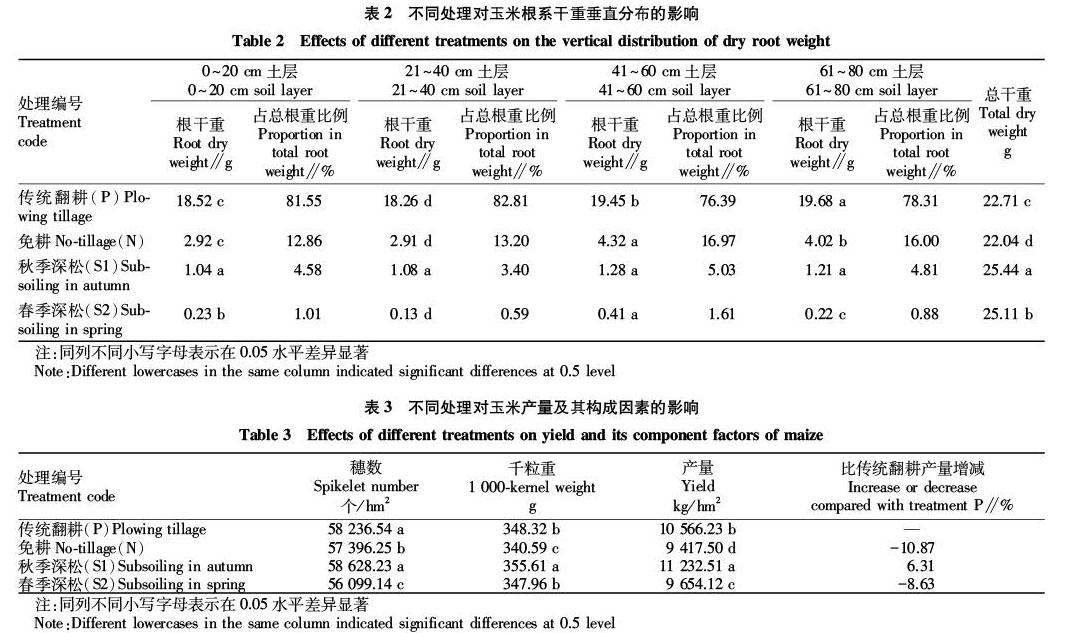
摘要 采用通過傳統翻耕、免耕、秋季深松和春季深松4種耕作方式,探討不同耕作方式對春玉米出苗率、葉面積指數、單株干物質積累量、根系干重垂直分布情況和產量及其構成因素的影響。結果顯示,春季深松與免耕影響正常出苗率;秋季深松能夠顯著提高葉面積指數與干物質積累量;2種深松處理均能提高根總干重與21~40 cm土層根的占比;不同處理產量由高到低依次為秋季深松、傳統翻耕、春季深松、免耕。在該試驗條件下,山西晉東南地區采用秋季深松和傳統翻耕隔年循環的方式來獲得高效生產。
關鍵詞 玉米;產量;葉面積指數;干物質積累;根系干重垂直分布
中圖分類號 S 513 ?文獻標識碼 A
文章編號 0517-6611(2019)12-0038-03
doi:10.3969/j.issn.0517-6611.2019.12.011
開放科學(資源服務)標識碼(OSID):
Abstract Four cultivation methods of plowing tillage, notillage,subsoiling in autumn and subsoiling in spring were adopted to determine the effects of different tillage methods on emergence rate, leaf area index, dry matter accumulation per plant, the vertical distribution of root dry weight, yield and its components of maize. The results showed that subsoiling in spring and notillage treatments decreased the emergence percentage of maize;leaf area index and single trunk dry matter accumulation significantly increased with the cultivation methods of subsoiling in autumn;total dry weight of root and the proportions of roots in soil layer 21-40 cm both increased effectively by two subsoiling treatments;yields of different treatments from high to low were in the order of subsoiling in autumn, plowing tillage, subsoiling in spring, notillage. Cultivation method of the circulation of subsoiling in autumn and traditional tillage could obtain high efficiency in Southeastern Shanxi under the trial condition.
Key words Maize;Yield;Leaf area index;Dry matter accumulation;Vertical distribution of root dry weight
玉米在我國糧食生產中占有舉足輕重的地位,種植面積逐年穩中有升,單產與總產也逐年增高[1-2]。耕作方式作為玉米大田生產中的一項主要技術指標,對耕地土壤、病蟲草害、玉米生長發育以及產量狀況都有深遠的影響[3-5]。多年來,根據氣候環境和當地農民生產習慣等眾多因素,農民在玉米大田生產方式中已經形成了地域式的基本固定傳統的耕作方式,在山西省春玉米區基本是有傳統翻耕和免耕2種主要的耕作方式[6-7]。連年的傳統翻耕與免耕操作使得玉米田土壤耕層較淺,犁底層越來越厚,土壤蓄水保水能力降低,也影響到玉米根系向更深的土層下扎吸取水分與營養,隨之而來的是玉米倒伏風險加大,倒伏直接影響到了玉米全程機械化生產的發展進程[8-10]。……
登錄APP查看全文
猜你喜歡
礦山安全信息(2022年40期)2022-04-07 02:16:52
當代水產(2021年10期)2021-12-05 16:31:48
今日農業(2021年14期)2021-11-25 23:57:29
今日農業(2021年13期)2021-08-14 01:37:56
石油與天然氣地質(2021年1期)2021-02-22 14:14:44
今日農業(2020年20期)2020-11-26 06:09:10
中國果業信息(2019年10期)2019-11-13 01:21:34
中國化肥信息(2019年2期)2019-01-18 15:24:35
中國化肥信息(2019年1期)2019-01-17 21:31:12
中國化肥信息(2019年4期)2019-01-17 18:47:06