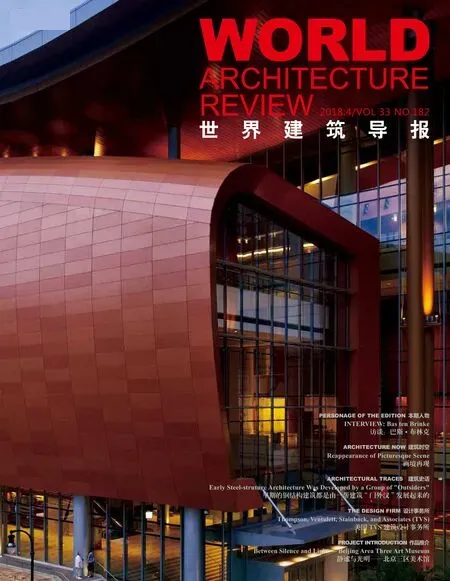
人物訪談:巴斯· 布林克
2018-09-21 09:05:36
世界建筑導報 2018年4期
1.您成立70F建筑事務所已有17年,能不能和我們分享一下,您是如何保持對建筑設計的極大熱情?
沒錯,建筑事務所已經(jīng)成立很多年了。我想關鍵在于,建筑代表的是一種生活方式。要做我就專心投入地做,要么就不做。這是設計好作品的核心要素,也是取得好成績所必備的。我們這里有固定的核心團隊,也有一小部分年輕的實習生在這兒實習。因此,我們可以不斷拓展新的主題,捕捉不同時間階段的重點。建筑是一個不斷變化的動態(tài)領域,需要我們不斷地去適應,去改變,去傾聽,去變革,去掌控。
2.您一般是如何開始一個設計的,設計理念往往是源自哪里呢?
所有項目開始之前,我們都會與客戶進行深入的會談和探討。最重要的就是要收集我們所需要的全部信息。不僅僅是固定數(shù)據(jù)(例如:3間臥室、2間浴室等),建筑上的構想和空間布置方面的要求,同樣重要。問題是,客戶很難描述清楚自己所需要的,或者表達自己腦海中的空間感。這也就需要我們思維靈活,富于想象。我們要通過精準的提問,去挖掘客戶內(nèi)心的想法。確定設計理念是整個過程中最為重要的環(huán)節(jié),同時也是最花費時間的。設計理念是各個項目的支柱,會影響到后面每一個階段;后期如果出現(xiàn)疑問,或者找不到好的設計思路時,往往需要回頭參考設計理念。比如,在Duivenvoorde游客中心項目中,我們足足花了6個星期的時間來尋找設計理念,經(jīng)過反復的推敲,討論,起草,和修訂,終于找到了滿意的答案。然而,客戶卻不太理解我們的理念,因為那時候還沒有太多能體現(xiàn)這一理念的東西。只有整個建筑竣工之后,客戶才真正理解其含義。
3.在整個職業(yè)生涯中,您還曾參與過建筑學教育,那么您向?qū)W生傳遞的是怎樣的建筑觀呢?
很榮幸成為世界多所大學的客座教授。在建筑領域,教書育人是我最熱愛的工作之一。在大學里,你會遇到很多極具天賦的年輕人,他們有著獨到的眼光,常常提出有深度的問題,很有意思。我希望把我所知道的都教給他們。而在這個過程中,我自己也受益匪淺。在課堂上,最重要的是要學會問問題。學會如何準確的向客戶提問,向項目提問,最重要的是,向自己提問。比如,我的設計思路和設計方法想表達什么,為什么這么設計?在盧布爾雅那大學(斯洛文尼亞)的時候,我曾經(jīng)讓學生們設計一座“寧靜教堂”,讓人們可以在城市中體驗,甚至是購買一片寧靜。先不說建筑效果,學生們首先要做的是理解并深入思考寧靜這個詞在當代的含義。我的課堂上總會有大量討論和交流時間。繪圖簡單,思路難尋。在繪制圖紙之前,我們需要進行認真思考,反復討論。
4.您的許多建筑作品體量不大,造型簡潔,但在外表皮的選材和設計上卻頗為關注,能談談您是如何處理建筑表皮的嗎?
對我們而言,體量不是最重要的。所有建筑都以理念為基礎,進行建筑環(huán)境和設計的選擇。對每個建筑而言,困難的是要確定最佳設計方案、平面布置圖、以及建筑物正面解決方案。此外,我們設計的建筑是綜合考量所有建筑參數(shù)的成果。所以,建筑表皮不僅僅是建筑表皮,而是一個完整流程的效果體現(xiàn),與其它方面也息息相關。一般而言,您所說的建筑表皮正是建筑風格的體現(xiàn)。所以對我們所設計的建筑至關重要。建筑正面所選用的材料,其材質(zhì)和使用方式,是建筑風格的總體表現(xiàn)。但在選擇正面用料之前,還需要進行嚴謹深入的研究,以確定建筑正面的最終方案。在這方面,絕對不能隨心所欲,其對整個建筑效果的影響遠超過我們?nèi)庋鬯吹降摹?/p>
5.您認為“越是簡單的設計,越需要時間使設計精確”,能具體和我們談談如何讓簡潔的造型更精確嗎?
要達到簡潔的效果,就需要大量的工作,確實如此。相比而言,建造審美復雜的建筑則容易很多。其中一個問題就是精確性;在我看來,要做到精確,需要對每個已知的建筑元素進行推敲,我們在工作中就是這樣做的。比如,建筑正面采用的插釘術,或者主梁等子系統(tǒng)的建造,都要仔細推敲,謹慎選擇。而對于這些,建造商通常會隨意選擇。比如我們曾在2008年巴塞羅納設計建筑節(jié)上獲獎的Sheepstable項目,所有必要的建筑零件,包括建筑正面的支撐板,都經(jīng)過謹慎考量,以確保其位置的精確性。讓建造商抓狂的是,這些小問題竟然對最終效果至關重要。另一個問題是審美上的簡潔。外觀上的簡潔并沒有固定的模式。在開始的時候,或者處理偏差的時候,都需要有具體的設計方案來確保與整體外觀的融合性。我們需要制定具體的設計方案,但可能不會展示出來。所有簡潔效果的實現(xiàn)都并非偶然。
6.您的許多項目都在荷蘭,荷蘭的地域文化和氣候特征對您的設計有怎樣的影響呢?
在荷蘭,氣候條件和預算是關鍵因素。在這里往往需要大量的絕緣材料,因而預算也會比較高,如果沒有這個問題,我們在荷蘭的項目會輕松很多。另外,荷蘭的濕度也常常造成材料使用方面的困難。但我們也有收獲——學會了如何通過方案上的創(chuàng)新來達到預期效果,同時控制好成本。這需要有充足的知識儲備,而我們多年以來積累的專業(yè)技術知識就派上了用場。選用的建筑材料主要是木材和砌磚,都是典型的荷蘭建筑材料,尤其是砌磚。然而荷蘭建筑業(yè)主要采用標準方案或過去用過的方案來處理這些材料,建筑商發(fā)現(xiàn)很難改變他們的固定模式。我們一般會再三考量這些建筑方法,然后說服他們嘗試新的方案。要做到這一點,簡單來說就需要“了解你的材料”。或者,就像我常常和學生們開玩笑地說,不是我吹牛,我只是懂得多……
總之,不同的國家有不同的情況。比如,在意大利托斯卡納區(qū)附近的奢華度假屋項目中,關鍵的是要了解當?shù)卣伪尘埃谡_的地方認識正確的人。再比如在伊朗,溝通成了關鍵問題,不僅僅因為語言不通,更重要的是當?shù)厝说谋硎隹傆泻芏嘌酝庵猓钊穗y以琢磨。在進行伯利茲城精品海島度假村時,我們要將建筑材料從伯利茲城海運到小島,為了減輕運輸壓力,同時抵御颶風,我們需要在45分鐘左右將材料運至目的地,所以我們選擇的是輕型建筑材料。
7.您對中國當代建筑有什么看法?如果有機會的話,您想在中國開展什么項目呢?
我印象里,中國的建筑一般規(guī)模比較大,建筑物數(shù)量也很多,這一點比較有意思。中國的當代建筑發(fā)展水平很高,我一直在想,應該怎樣才能在這樣一個人口稠密的國家開展項目。中國在城市規(guī)劃和建筑方面肯定是花費了大量精力,這也是我認為不可思議的地方。我們將很愿意在中國開展私人住宅、公寓大樓、設計酒店等項目。目前我們事務所主要專注于后者,也就是設計酒店或者稱之為精品酒店。我們發(fā)現(xiàn)節(jié)假日期間,人們的活動方式和出行方式都有很大變化。這是我們想要進一步調(diào)查的,我們希望以此為基礎,可以制定出前沿的創(chuàng)新性酒店設計理念。
8.我們知道您還有許多室內(nèi)設計作品,您是如何通過材料與色彩來體現(xiàn)室內(nèi)空間特色的呢?
沒錯,除了建筑設計之外,我們也進行室內(nèi)設計,比如,位于阿姆斯特丹的Acibadem國際醫(yī)療中心。在某種程度上來說,室內(nèi)設計和建筑設計是一樣的。都需要有創(chuàng)新性,都以設計本身為核心。但相比而言,室內(nèi)設計更注重細節(jié),精確性要求更高。室內(nèi)設計在材料和紋理的選擇上要求更高,因為室內(nèi)設計你可以近距離感受得到,如果效果好,甚至會為之震撼。但如果不使用紋理,那么設計效果很容易會黯然失色。要達到材料與色彩之間的和諧,讓人有“賓至如歸”的感覺,尤其是住宅或酒店的室內(nèi)設計。我們可能傾向于選擇極簡主義設計。設計應該突出功能性和空間性,同時又不會讓人覺得像在電影里一樣,所有設計環(huán)節(jié)都要認真仔細。這也是為什么我們要實現(xiàn)萬能設計,從外套到車鑰匙的擺放位置,我們都會考慮到。一般客戶找到我們的時候,會跟我們講很多很多想法,而這些想法并不一定適用。我們要做的就是將客戶所提出的想法都融合到同一個設計作品中。因為需要充分了解和尊重客戶的需求,我們一般會與客戶進行很多次的商討。很多地方我們都會為客戶量身定制,不放過任何小的細節(jié),哪怕是一個壁櫥。比如我們設計的Villa Frenay,就很好地體現(xiàn)了園藝與住宅、空間與細節(jié)的和諧美。要給出好的設計方法,需要具有創(chuàng)新能力,同時要能夠切身體會客戶的想法和需求。
9.能和我們分享一下您從業(yè)以來遇到的最具挑戰(zhàn)性的項目嗎?
我想到目前為止,最具挑戰(zhàn)性的項目應該是Duivenvoorde游客中心了。當時客戶要求的是,建筑外觀上像一個坐落于中世紀大花園中的谷倉(一扇窗都沒有),而功能上像一個現(xiàn)代餐廳(很多扇窗),這完全就是自相矛盾的,設計非常困難。而設計方案出來后,實施過程又遇到困難,因為沒有建造商能夠?qū)崿F(xiàn)我們想要的效果。所以我們要參與到所有環(huán)節(jié)中,進行必要的監(jiān)督指導,從草圖開始。建筑正面有可以打開的天窗,而實現(xiàn)這一點所需的所有機械零件都要隱藏起來。比如,框架木材寬度僅為67mm,卻需要與玻璃相匹配安裝,兩側(cè)的天窗有不少機械零件,而這些零件都需要隱藏起來,難度可想而知。我們還有一項艱巨的任務,就是保證客戶實時了解我們的最新進展,并且始終能相信我們所做的選擇。好在最終的結果很理想,還贏得了2018凡爾賽大獎。但這確實是目前我們遇到的最具挑戰(zhàn)性的項目。另一個比較有難度的項目是位于阿姆斯特丹的Moravian教堂。這一項目曾入圍新加坡世界建筑節(jié)提名名單。當時由于全部資金都是明顯處于弱勢地位的教堂群體個人攢下的,所以數(shù)額不大,預算有限。為了一切從簡,我們專注于設計的核心部分,也就是“明亮”和“白色”,以此為基礎保證建筑的專業(yè)水準。
10.您認為70F建筑事務所未來的發(fā)展方向如何?
作為一家事務所,我們始終在不斷前進和發(fā)展。我們的作品在全球范圍內(nèi)得到廣泛認可,因此我們的視野以及能力毋庸置疑。我們在逐漸接手大型項目,但同時也要保證有出類拔萃的經(jīng)久不衰的作品出現(xiàn)。目前主要專注于能給更多群眾帶來更多體驗的多功能的建筑,例如酒店和公寓大樓等。除了本地的一些此類項目之外,我們也愿意并且已經(jīng)開始著手其它國家或地區(qū)的類似項目。
1. It's been 17 years since you founded 70F,could you share with our readers how you have maintained the great passion for architectural design?
Yes, it’s been a long time already. I guess the thing is, architecture is a lifestyle. I can only do it with passion, or not at all. It is in the core of any good architect, and a must for any top result. Also we have a fixed core team of people we work with, and a small group of interns and young architects who do internships here. This keeps us keen on any new theme or sense of what’s important to focus on for any moment in time. Architecture is a dynamic field; we need to adapt, change, listen, evolve, innovate and take charge towards it continuously.
2. How do you start the design of a project?And how the design concepts are activated and generated?
We start all of our projects with in depth interviews and meetings with the client. It is paramount to have all the input needed. More than just the absolute numbers (3 bedrooms, 2 bathrooms etc.) the definition of their architectural and spatial wishes is important. The problem is people find it hard to describe their feelings or express them in a spatial sense. That’s where we have to be smart and creative, asking the right questions to find the answers the client didn’t even know they had. Finding the concept is the most important and time consuming part of the process. The concept becomes the backbone of every project which is important in any stage later on; something to fall back to when you are in doubt or searching for a design solution. Finding the concept for the Duivenvoorde visitors Centre for instance, was a six week process of intense thinking, debating, sketching and reviewing. After these six weeks we were happy as can be having found the answer, while the client didn’t understand because there was nothing much to show for it yet. Only after the building was finished, they really understood.
3. Architectural education is included in your career. What architectural views you’d transmit to your students?
I am a visiting professor at several universities in the world. Working with students is one of my favourite jobs in architecture. You are met with huge talent, fresh eyes, good questions an interesting people. I love teaching students all I know. At the same time, in return the whole experience teaches me new things. The core of my lecturing lies in learning to ask the right questions. That could be questions to your client, to your project but most and foremost to yourself. What do I want to express with this design or solution, and why? At the university of Ljubljana, Slovenia for instance, I had the students design a Silence Chapel, a place within the city where one could still experience or even buy a piece of silence. Apart from the architectural outcome, first there is a take and reflection on the issue of silence in current times by the student necessary. There is a lot of dialogue in my teaching. Drawing is easy, thinking is more difficult. I think we need to contemplate hard and debate intensely,before we start drawing.
4. The volume of most of your buildings is not very big, and the moulding is concise. However,you focus on the design and the choice of materials for the skin. Could you say something about your treatment on the building skin?
For us, size doesn’t matter. All buildings have their context and design choices based on the concept. The challenge with every building is to find the best design, floorplan and fa?ade solution. Moreover, our buildings are an integral result of all building parameters. So the skin is not just a skin, it is the result of an integral process related to everything, not just anything. Often, the skin of the building as you call it, is the thing expressing the architecture of it. Therefore it has huge importance to the buildings that we make. The choice of the fa?ade material, it’s texture and the way it is used becomes the overall expression. But it is the result of a serious indepth research that defines the final fa?ade solution. This is something far from arbitrary, and can be felt more than it can be seen.
5.You think "the simpler you design, the more time you need to make the design more accurate". Would you specifically tell us how you would make the concise moulding more accurate?
It is a true that in simplicity often lies a profound battle to make this simplicity happen. It is much easier to make a not-simple building, aesthetically. One issue is accuracy; in my opinion and in our buildings we realise this by deciding on every available construction element. It could be saying something about a nailing pattern that will be used in the fa?ade, or the position of sub construction like girders that would normally be chosen randomly by the builder. If you look at our Sheepstable project for instance, a project with which we won the World Architecture Festival in Barcelona in 2008, you will find that all necessary construction parts down to the supporting slats of the fa?ade were given a specific and consequent position. Driving the builder insane, it turned out to have been crucial in the end result. Another issue is the demand for aesthetic simplicity in general. There is no standard solution to generate a simple look. Every opening or deviation needs a specific design solution, in order to make it fit the general look. It should be there, but not show. Simplicity and accidentality do not combine.
6. Most of the projects you designed are in the Netherlands. How would the regional culture and climate affect and influence your design?
In the Netherlands especially the climate and budget are key factors. Creating our architecture would be much easier if there would be less insulation demands or a bigger budget. Also the specific humidity often leads to a challenging use of materials. The good thing is, it has made us very creative into finding solution to get it the way we want it, at a low price. This requires huge knowledge of building techniques, which we have acquired over the years. The building materials we use are predominantly wood and brickwork, both typical Dutch building materials, especially the latter. The Dutch building trade however is focused on standard or proven solutions for these materials, and builders find it difficult to change their ways. Rethinking these construction methods and convincing them to try a new solution is part of the job and can only successfully be done by simply ‘knowing your stuff’. Or, as I often tell my students humorously; I am not arrogant, I simply know better...
Different countries bring a different context in any case. We are doing a project of luxury holiday homes in Italy,on the edge of Tuscany, where politics and knowing the right people in the right places is important. Or our project in Iran, where communication is an issue not only because of the language, but also because of the customary rules that are invisible written between the lines. And our boutique island resort in Belize offers the challenge of hurricanes and light construction materials in order to be able to easily transport these materials to the small island some 45 minutes by boat from Belize city.

7. What do you think of the contemporary architecture in China? If you have a chance, what kind of project you’d like to design in China?
I think China is a very interesting country, mainly because of the scale and numbers things are being done in.Your contemporary architecture evolves on a very high level and I always wonder how the interaction in relation to such a densely populated country works out. It’s a super scale kind of city planning and architecture the Chinese seem to be working with, which is fascinating. We would be very keen on doing a private house, an apartment building or a design hotel in China. Our office focus at the moment is on especially the latter, design- or boutique hotels. We see a huge shift in the way people experience and move around while on holiday. This is something we want to investigate and show in a new, forward looking hotel design concept.
8. We noticed you also design a lot of interiors.How do you apply the materials and colours to express the space characteristics?
Yes, we also do interior design which is an extension of our architecture, like the Acibadem International Medical Centre in Amsterdam. In some way it is the same as architecture; both creative and focused on designing. But interior design is more detailed and refined in another way. Materials and textures are more intense in an interior because you experience them up close and can be overwhelmed by them, but at the same time can easily become dull when you don’t use any texture at all. It’s all about the balance between materials, colour and making it an interior where you long to ‘come home’ to, especially in designing a house or hotel interior. We tend to be on the edge with our minimalistic designs. The design must be functional and spatial but at the same time not give the feeling you’re on a filmset and have to be careful with every design solution. That’s also why we design a spot for everything, from your coat to your car keys. When a client comes to us, they usually have a ton of ideas and they never fit. It is our job to combine their many ideas in to one design that captures everything they want. It’s very personal and therefore we have a lot of consultations with the client. We do a lot of customization and design everything up till the handles of cabinets. A good example of this is Villa Frenay, which turned out to be a very balanced project on garden and house, space and detail. To make a good design you need more than creativity,you have to empathize with your client.
9. Would you please share with our readers the most challenging project since you took up the occupation?
I guess the most challenging project so far was the Duivenvoorde visitors Centre. The completely contradictory demands of a building that should look like a barn in a medieval monumental garden (no windows) but should function like a modern restaurant (lots of windows) was challenging. Executing the solution was even more challenging, since there was no builder able to make what we had in mind. So we had to engineer everything from scratch; the fa?ade had to be openable, but without showing any of the mechanical parts necessary to do so. With a limited frame wood width of 67 mm having to fit the glass and the mechanical parts for the hatches on two sides as just an example of part of the problem, the challenge becomes clear. Keeping the client in the loop and convinced of the choices we had made at the same time was also part of this tedious process. It turned out very well in the end, even winning the Prix Versailles 2018 with it, but it must have been the biggest challenge so far. Another demanding project was the Moravian Church we built in Amsterdam and was nominated for the World Architecture Festival in Singapore. The budget, all money saved privately by the predominantly underprivileged church community, was very limited. By keeping things simple an focussing on the core of this design, being ‘light’and the colour ‘white’, we managed to keep the level at a high architectural standard.
10. What do you think the trend and development direction of 70F?
As an office we are growing and developing continuously. Our architecture is being appreciated worldwide so there is no doubt on our vision or take on it. We are slowly but surely working on larger projects but at the same time we need our contact with the projects to be eminent and constant. Our focus now is on buildings that have a verity of functions and offer a wider experience to a larger public, like hotels and apartment buildings. Working on some local projects within this focus, we are also interested in and focussing on doing this somewhere else in the world.
猜你喜歡
大眾文藝(2023年9期)2023-05-17 23:56:00
蘭州文理學院學報(自然科學版)(2022年3期)2022-06-08 08:03:02
建材發(fā)展導向(2022年4期)2022-03-16 06:11:46
中老年保健(2021年12期)2021-11-30 02:58:01
現(xiàn)代裝飾(2020年12期)2021-01-18 05:38:16
攝影之友(影像視覺)(2019年2期)2019-03-05 08:27:14
中華詩詞(2018年11期)2018-03-26 06:41:34
消費導刊(2017年20期)2018-01-03 06:26:34
上海建材(2017年2期)2017-07-21 14:02:10
Coco薇(2016年8期)2016-10-09 02:11:50