Manchester and Wuhan - Sister Cities Collaborate to Build Smart Cities
2018-04-10 03:27:03ByBoNingLiuDongli
Special Focus 2018年3期
關鍵詞:智慧
By Bo Ning & Liu Dongli
The concept of smart cities is now trending around the globe and is anticipated to be the way of life in the future. Since IBM launched its Smarter Planet initiative in 2008 which seeks to resolve problems faced by Mother Earth,such as population growth,environmental issues and energy use, through digitalized and smarter systems, nations have enthusiastically started building their smart cities.
Wuhan in China and Manchester in the UK are both industrial cities with long histories. They both play important roles in their own countries. And in making cities smart, they’ve made remarkable achievements.
Manchester has been a leader in the world arena, implementing smart city projects in various industries with manufacturing,energy, medical, and digital innovations. One such example is the City Verve project which is backed by the British government with an investment of 10 million pounds. The program aims to test better services for citizens using Internet of Things technologies.Its Smart Bus Stops (interactive bus stops) can update bus operators with data about their passengers, and the sensors installed along the bus routes will collect and send data to bus stops to help passengers manage their trips. The City Verve project also includes smart healthcare,lighting, air quality control and many other aspects.
In 2012, China released the first list of pilot cities for implementing smart city concepts, and Wuhan was among them. Today, in cloud computing infrastructure, Wuhan has built the first location source data center in China, which allows smart sensing, analyzing,serving, and decision-making for geospatial data. The Wuhan Supercomputing (Data) Center,currently under construction,will be capable of handling 10PB(10*1024 TB) of data at 1PF (1000 trillion times/second) at its initial stage. Through building cloud computing, supercomputing and other communication infrastructure, Wuhan is aiming to form an electronic information industry cluster.
眼下,智慧城市的建設已經成了各國關心的大事,智慧城市的未來與人們的生活將密不可分。自2008年IBM提出“智慧地球”理念,期望以數字化和智能化手段解決地球所面臨的人口、環境、能源等問題以來,全世界掀起了智慧城市建設的熱潮。
中國的武漢和英國的曼徹斯特,都是世界著名的老牌工業城市,在各自的國家都起著非常重要的作用,兩個城市在智慧城市建設方面也都取得了一些可喜的成就。
曼徹斯特實踐著層出不窮的智慧城市項目,在先進制造業、能源、醫療創新和數字領域具有世界領先水平。比如獲得1000萬英鎊政府資金支持的曼徹斯特“城市活力”項目,旨在利用物聯網技術去測試更好的服務并且提供給居民。其智慧巴士站(互動式巴士站),可幫助公交車運營者了解乘客等待、園區內以及沿著通勤路線的傳感器網絡數據等,幫助人們把握時間,處理好手中的事。該項目還包括智慧醫療、智能照明以及智能空氣質量監測等等許多方面。
2012年,中國公布首批90個智慧城市試點地區,武漢是其中之一。如今,在云計算基礎建設方面,武漢市已建成國內首個位置源數據中心,初步實現了地理空間信息的“智慧感知、智慧分析、智慧服務、智慧決策”。建設中的武漢超算(數據)中心,初期將達到1PF(1000萬億次/秒)、10PB(10X1024TB字節)的服務能力,通過云計算、超算等重大信息基礎設施建設,形成電子信息產業聚集區。
Wuhan also launched Easy Transport, a smart transportation management system which has more than 40 functions, to centrally control traffic coordination and car administration, in order to relieve traffic congestions. On a larger scale,transportation management center can allocate resources to nearby congested areas in a timely manner based on real-time information;on a more personal level, drivers can find out real-time traffic data through the Easy Transport app to plan their driving routes to divert their courses away from or at least avoid aggregating congestions.
In recent years, the two cities have been making more and more frequent communications on smart cities construction. At the end of February 2018, Sir Richard Leese, Deputy Mayor of Greater Manchester together with a delegation of 30 entrepreneurs,visited Hubei Province. At the Greater Manchester-Wuhan City Circle Cooperation Summit held on February 27, experts and scholars communicated in depth about how the two cities can collaborate and learn from each other in fields such assmart cities and health innovation.

為緩解交通擁堵,該市建立“易行江城”智慧交通系統,集成行車停車誘導、車駕管服務等40多項功能。一方面,交管指揮中心對城市擁堵,可實時調度,民警及時就近處置,縮短擁堵時間;另一方面,司機可通過“易行江城”APP和道路行車誘導屏,了解實時路況,合理計劃行車路線,既避開堵點,又減少堵源,共治共享。
近年來,兩個城市間關于智慧城市建設的交流逐漸頻繁起來,在智慧城市建設方面,互相學習,取長補短。2018年2月底,大曼徹斯特郡副郡長理查德·里斯爵士率政府及企業代表團一行30人訪問湖北。在2月27日的大曼徹斯特郡與武漢城市圈合作交流會上,專家與學者就智慧城市、創新醫療等領域的發展與合作進行深入交流,雙方都表示有相互借鑒的空間。
在智慧醫療領域,曼城的先進醫療科研成果值得學習,而武漢在疾病防疫以及互聯網+在醫療領域的應用,也十分令英方稱道。
以人口老齡化這一各國共同面臨的問題為例,曼城利用高科技手段,如借助思特沃克公司專門為獨居老人研發的遠程健康監護系統,在老人家中及身上部署多種傳感器,獲取心率、運動、上廁所的次數、睡眠時間等數據,計算老人高血壓、心臟病等疾病風險,以便讓老人的家人隨時了解其健康狀況,及早應對可能出現的疾病。武漢則通過發布健康武漢客戶端、建立全市大數據平臺、推廣電子健康卡、數字化家庭醫生和遠程醫療服務等措施,幫助患者找到醫生、醫生共享資源和經驗,普及健康教育,以實現預防與治療并重。

交流會上,武漢與曼徹斯特市簽署《2018年友好交流合作行動計劃》,將在地方政府合作、經貿、科教、體育、文化、旅游等多領域深化合作,包含共同申報“對華友好城市交流合作獎”、互相提供投資項目藍皮書、利用兩市高校校友資源發展新時代“校友經濟”、促成曼徹斯特諾貝爾獎得主和著名科學家來漢講學和開展科研合作等事項。
曼城與武漢這兩座在人類歷史上扮演過重要角色的名城,如今依托科技的力量與智慧的理念,共同站立在世界潮頭。
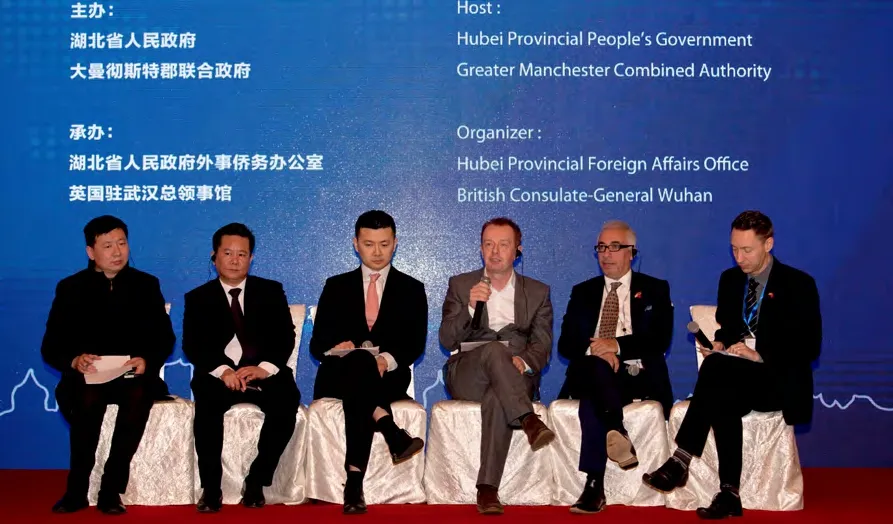
交流會上,專家暢談智慧城市建設 Panel discussion on smart cities at the summit
In smart healthcare,Manchester has its expertise in scientific research, while Wuhan’s experience in disease prevention and applying Internet technologies in healthcare is well praised.
For example, in dealing with the problem of an aging society, a shared concern for many countries, Manchester has adopted high technologies such as ThoughtWorks’ remote health monitoring system specially designed for senior people living alone. The system collects physical data such as heart rate,exercises, times of excretion,sleeping times, etc. from sensors placed on the body and around the house to calculate the risk of the person suffering from hypertension, heart diseases,and other maladies. The data allows the family of an elderly person to understand his/her health condition in order to intervene at an early stage.Meanwhile in Wuhan, experts have developed Health Wuhan app, and are building a city-wide big data platform, promoting e-health cards, and digitalizing family doctor and remote medical services, which can help patients find suitable doctors, allow doctors to share resources and experience, and educate people on health knowledge, so that both prevention and treatment of diseases can be achieved.
At the summit, Wuhan and Manchester signed the 2018 Communication and Collaboration Joint Action Plan.The two cities will deepen their collaborations in government cooperation, economy and trade,science and education, culture and tourism, as well as jointly apply for the China International Friendship Cities Award. The cities will provide each other with blue books on investment projects, promote the alumni economy by utilizing the two cities’ university resources, and bring Nobel winner scientists to visit Wuhan to lecture or run joint research projects in universities.
Manchester and Wuhan,historically significant cities in their own countries, are now hand-in-hand leading the smart city trend with the help of technologies and innovative concepts.
In the Economist Intelligence Unit’s list of the World’s Most Livable Cities in 2016,Manchester was the most livable city in the UK. In China Economy and Life Survey 2017-2018,Wuhan was voted the happiest city. The blueprints revealed in the information era by the sister cities with over 30 years’friendship are now demonstrating prospects of a much better living space for everyone.◆
Background
There isn’t an internationally agreed definition for the vision and concept of a smart city.
According to the definition given by the Massachusetts Institute of Technology, US in 2013, smart cities “should be seen as systems of systems,and that there are emerging opportunities to introduce digital nervous systems,intelligent responsiveness,and optimization at every level of system integration.”
《經濟學人》在2016年“全球宜居城市調查”中,將曼徹斯特列為英國最宜居城市,武漢也于2017年被《中國經濟生活大調查(2017—2018)》評為中國最幸福城市。這對友誼長達30多年友好城市,在信息時代逐漸為人們展現出的城市藍圖,無疑在向我們證明,人類未來的生存空間會更加舒適和美好。◆
相關鏈接》》》
國際上關于智慧城市的概念和愿景眾說紛紜。
美國麻省理工學院2013年將智慧城市定義為“系統之上的系統,且在系統集成的各個層面都有可能引入數字神經系統、智能響應和優化。”學者尼茨坎普等人則認為智慧城市“投入人力與社會資本以及傳統(運輸)和現代(信息通信技術)通訊基礎設施,通過多方參與治理,以智慧方式管理自然資源,以促進經濟可持續增長,提升人類生活質量。”
筆者采訪英國索爾福德大學建筑學院院長希沙姆·艾爾卡迪時,他給出一個以生態為中心的定義,認為“智慧城市應當能夠根據不同的情況和過去的經驗,及時調整狀態或行動,能對城市自身進行組織管理。”
他認為,城市也是生態系統的一個部分,城市發展應當效法自然。構建智慧城市,就是要給城市加上一個智慧的“大腦”,使之能夠自我發展、自我完善。
這種向自然界學習生存之道的觀點,與中國古代哲人“天人合一,道法自然”的思想契合。老子說:“人法地,地法天,天法道,道法自然。”宇宙自然是大天地,人是一個小天地。人和自然本質相通,一切人事均應順乎自然規律,達到人與自然和諧共處。
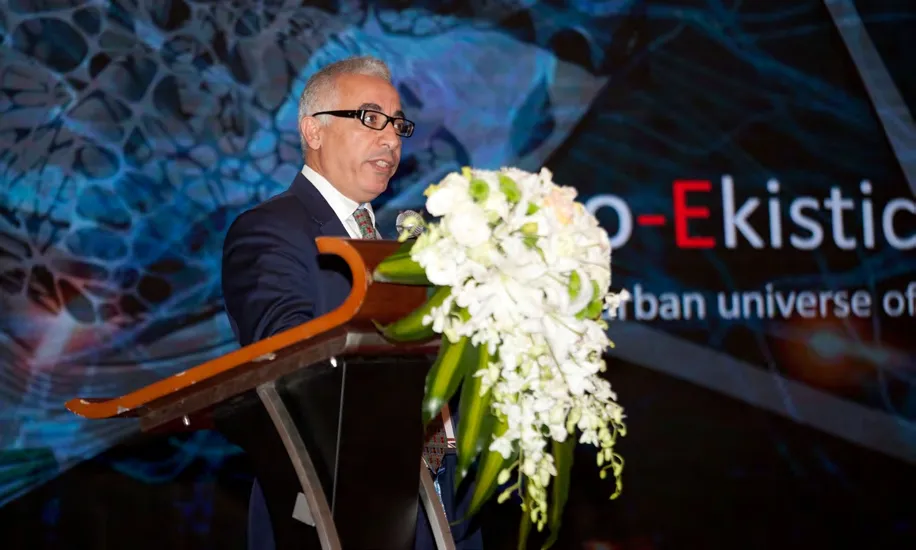
英國索爾福德大學建筑學院院長希沙姆·艾爾卡迪Professor Hisham Elkadi, Dean of the School of the Built Environment, University of Salford UK giving a speech at the summit
Nijkamp and his fellow scholars concluded, “A city may be called'smart' when investments in human and social capital and traditional (transport) and modern (ICT) communication infrastructure fuel sustainable economic development and a high quality of life, with a wise management of natural resources,through participatory action and engagement.”
When being interviewed,Hisham Elkadi, Dean of the School of the Built Environment,University of Salford UK, gave an eco-centered definition of smart city which emphasizes that“Smart cities should be those who have the ability to vary their status or actions in response to varying situations and past experience;those that have self-organizing characteristics.”
He believes that a city is a part of the ecological system, and that it should mimick the nature.Building smart cities is like giving a brain to a city, to enable it to develop and improve on its own.
This view of learning from nature coincides with Chinese Daoist philosophies. Laozi said,“For I am abstracted from the world, the world from nature,nature from the way, and the way from what is beneath abstraction.” The universe is large while men are small. Essentially,men and nature are connected.Therefore, men should follow nature’s rules to achieve harmony and balance.
猜你喜歡
金橋(2022年10期)2022-10-11 03:29:32
智富時代(2019年2期)2019-04-18 07:44:42
閱讀與作文(小學高年級版)(2019年2期)2019-03-27 03:48:04
文苑(2018年20期)2018-11-09 01:36:02
文史春秋(2017年12期)2017-02-26 03:16:10
小天使·一年級語數英綜合(2014年6期)2014-07-22 23:32:38
智慧與創想(2013年7期)2013-11-18 08:06:04
網球俱樂部(2009年9期)2009-07-16 09:33:54