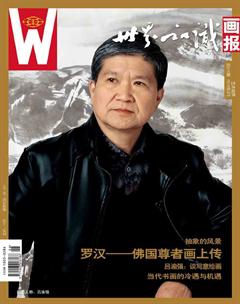
當代書畫的冷遇與機遇
2018-04-09 17:05:26唐詩
世界知識畫報·藝術視界
2018年3期
唐詩

The Chinese art market has gradually walked out of the trough in recent years; however, contemporary Chinese painting and calligraphy is still in a downturn. Even though the ancient and modern painting and calligraphy have already risen in market and frequently set a record, few people have shown any interest in contemporary painting and calligraphy, which are the local art expressing the ecology and emotion of Chinese art. However, it is not necessarily a bad thing. The market will not falter forever and is expected to be more mature after experiencing ups and downs. The valuable artwork will not lose its value because of the rise and fall of the market.
中國藝術市場已經逐漸走出前幾年的低谷,盡管很多門類還未能達到巔峰時的價位,但或多或少的回升已經給了市場明確的信號,也給了業界人士極大的信心。然而,在眾多藝術門類中,中國當代書畫始終處于低迷狀態,即便古代和近現代書畫早已節節高升、屢創紀錄,但作為表達中國當代藝術生態與情感的本土藝術,當代書畫門類卻顯得十分寂寥、乏人問津。與文物類藝術品相比,當代藝術幾乎沒有絲毫歷史文化的附加價值,有的只是作品和藝術家本身的藝術水平,這就給購買者和收藏者評鑒其價值以及預估未來升值空間造成了相當大的困擾。因此,當市場調整時,最先下跌且跌幅最大的往往是當代藝術。在中國,當代油畫和當代書畫都遭遇了類似的狀況,且至今未能翻身。
根據雅昌藝術網市場監測中心樣本公司統計出的數據顯示,在剛剛過去的2017年,當代書畫的整體行情依舊低迷,調整期似乎遠未結束。除了崔如琢、范曾、黃永玉等少數早已受到市場肯定的大家和王明明、何家英、賈又福、史國良、劉丹、李津、田黎明、徐累等近年較為活躍的中堅力量,其余當代書畫家的作品并不被市場青睞。如果按照年代劃分,在2017年度成交總額TOP30中,50后藝術家占據最多的12個席位,其次是40后藝術家,共有7位,60后藝術家只有3位,而70后和80后藝術家分別只有1位,分別是任重和郝量。由此也可以看出,正處于創作成熟期且年齡并不算很大的50后藝術家最為市場看好,而年輕一代的藝術家,大多尚未達到自身藝術水平的巔峰,且未來如何發展還有很多可能,因此市場在選擇時十分謹慎。……
登錄APP查看全文
猜你喜歡
創作(2020年3期)2020-06-28 05:52:44
讀友·少年文學(清雅版)(2020年2期)2020-06-15 11:16:34
兒童繪本(2018年22期)2018-12-13 23:14:52
讀友·少年文學(清雅版)(2018年3期)2018-09-10 06:04:54
讀者·校園版(2018年13期)2018-06-19 06:20:12
Coco薇(2016年2期)2016-03-22 16:58:59
讀者(2016年7期)2016-03-11 12:14:36
文藝論壇(2016年23期)2016-02-28 09:24:07
爆笑show(2014年10期)2014-12-18 22:27:48
小說月刊(2014年1期)2014-04-23 09:00:04