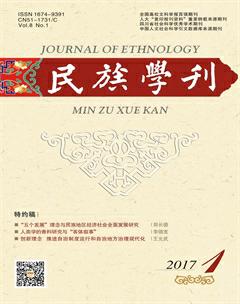
Criminal Control and Evaluation of ExtremeNationalist Terrorist Crime
2017-03-12 05:22:06RanHui
民族學刊 2017年1期
Ran+Hui
DOI:10.3969/j.issn.1674-9391.2017.01.07 Abstract:After entering the 21st century, terrorist crimes have become more serious. Terrorism has become one of the worst problems of the modern world and will continue to be a serious problem in the future. China is also facing the challenge of terrorist crime. Can the present criminal system accomplish the mission of legislative control of these crimes and fulfill the goal of penalising them? It seems that a review and evaluation of the relevant criminal legislation and policies is necessary.
There are different definitions of terrorist crimes. American scholars Alex P. Schmid and Albert J. Jongman gave a review of 109 different definitions that appeared during the period from 1936 to 1983, and proposed their own opinions in the book Political Terrorism. Chinese scholar Hu Lianhe analyzed 50 definitions that appeared after 1982, and proposed his own idea. On January 1 2016, the third article of the Zhonghua renmin gongheguo fan kongbu zhuyi fa (Anti-terrorism Law of the P.R.C) formally defines “terrorism” and “terrorist activities”. Generally speaking, both the academic and legal definitions have generalized three characteristics of “terrorist crime” from subjective and objective aspects: 1) taking social order, public security, personnel and property as the target of the (terrorist) behavior; 2) hurting the targets described above or threatening the state organs or international organizations by way of violence, destruction or intimidation; 3) taking the realization of some certain political or ideological purpose and claims as the ultimate goal of the (terrorist) behavior.
Concerning the relation between extreme nationalism and terrorism, the general idea is that “there is no pure form of nationalism; it is always combined with some certain political or social power, and characterized with social movement or historical process”. And seeing from the development course of terrorism, “nationalism is one of the most permanent roots of terrorism”, and is also “one of the most powerful roots of terrorism.”
China has mainly experienced five revisions of its law concerning terrorist crimes: 1) revising criminal law in 1997, and including terrorist organizations into the criminal penalty for the first time ; 2) legislating about terrorist crimes in the xingfa xiuzhengan san (Criminal Law Amendment III) in 2001; 3) intensifying the applicability of the criminal law to terrorist crimes in the xingfa xiuzhengan ba (Criminal Law Amendment VIII) in 2011; 4) including technical detection measures of crime on terrorist activities in the xingshi susong fa (Criminal Procedure Law) revised in March 2012, thereby establishing the legal position of this kind of detection measure in criminal procedure; 5) substantially adding accusations in the xingfa xiuzhengan jiu (Criminal Law Amendment IX) revised in 2015, and strongly fighting against the terrorist crime .
“As one of the social policies, criminal policy is a kind of countermeasure to handle different kinds of crime without delay - this determines that the formulation of criminal policy is bound to social politics and economics in a period of time.” Since the founding of New China, China has made up corresponding criminal policies according to the social needs and criminal status in different eras. In order to maintain a harmonious relationship between various ethnic groups, and respect the ethnic culture and customs, a criminal policy called “liangshao yikuan” (“less arrested, less killed, and punished leniently”) had been carried out concerning the ethnic minority crimes. However, this criminal policy which had played an important role in juridical practice in handling criminal cases of ethnic minorities is unlikely to be a basic criminal policy for the control of extreme nationalist terrorist crimes in the present day. On the new historical stage, “kuanyan xiangji” (combining punishment with leniency) has become a basic policy for dealing with criminals in China—this policy is based on the inheritance of the rational connotation of the combination of serious and lenient punishment in the criminal policy, and learning the experience or lessons of “seriously fighting” criminal crimes since the implementation of the reform and opening-up policy. Doubtlessly, this new criminal policy has a guidance significance in the punishment of all criminal activities, including extreme nationalist terrorist crimes of the present.
A basic evaluation of Chinas criminal legislation on the punishment of extreme nationalist terrorist crimes is: 1) it has developed from non-existence to existence; the relevant criminal legislation is in accord with the developmental direction of domestic terrorist crimes and the anti-terrorism situation; 2) it has worked in concert with the anti-terrorism strategy of the UN, and performed a state partys duty; 3) it has an obvious tendency of “severe penalty ”; 4) the revision of criminal law has started to be influenced by the risk concept of criminal law.
In summation, Chinas criminal legislation and criminal policies have a positive significance in controlling the extreme nationalist terrorism crimes. However, there are still some deficiencies of the strategies of controlling crime. Hence, the following issues should be addressed in the subsequent legislation: 1) Before identifying a kind of behavior as a crime, one should judge whether the duty attached to the new accusation is a kind of excessive demand on the ordinary people; 2) The rationality of the expected goal of criminal legislation cannot guarantee the rationality of a specific system, therefore, the lawmakers also need to consider whether the measures for realizing the goal are reasonable. 3) The deserved function of the non-criminal penalty method should be noticed, and it should be developed rationally and harmoniously together with the criminal penalty,thus a solid system which can control extreme nationalist terrorist crime should then be constructed. 4) The guarantee of human rights also cannot be ignored in the anti-terrorist legislation and criminal policies.
Key Words:extreme nationalism; terrorism; criminal control;criminal policies
References:
Anthony D.Smith.quanqiuhua shidai de minzu yu minzu zhuyi( Nation and Nationalism in a Global Era).Gong Weibin,Liang Jingyu trans.Beijing:zhongyang bianyi chubanshe,2002.115.
Duan Zhidang. “dongtu”yundong shi jiduan minzu zhuyi he jiduan zongjiao zhuyi de chanwu(“East Turkistan”Movement is a product of extreme nationalism and religious extremism ).In Xinjiang Social Sciences, 2007(6).
Du Miao,Xu Yuheng.kuanyan xiangji zai zhengzhi kongbu zhuyi fanzui zhong de yunyong( Combining of Punishment with Leniency in the Controlling of Terrorist Crime).In Politics and Law,2008(1).
Donna M.Schlagheck. International Terrorism,Lexington Books,1988:31.
Fan Chongyi,Zhang Pinze.lun “kongbu huodong fanzui” susong chengxu—yi xinshi susongfa xiuzhengan wei fenxi duixiang(On the Legal Proceedings of “Terrorist Activities Crime”—Taking the Criminal Procedure Amendment as Analytic Target). In shehui wending yu fangkong douzhen xueshu yantaohui lunwenji( Collected Papers of Social Stability and Anti-Terrorism Combat Seminar ),Beijing: Institute of Law Studies, Chinese Academy of Social Sciences. 2012/10/13:339.
He Bingsong.zhongguo youzuzhi fanzui yanjiu (A Study on the Organized Crime in China[Vol.1]).Beijing:qunzhong chubanshe,2009:311.
Hu Lianhe.dangdai shijie kongbu zhuyi yu duice(Terrorism in the Modern World and the Countermeasures).Beijing:dongfang chubanshe,2001:45-48.
Hu Lianhe.disanzhi yan kan kongbu zhuyi(Observation of the Terrorism with the Third Eye).Beijing:shijian zhishi chubanshe,2002:20.
Lang Sheng ed.zhonghua renmin gongheguo xingshi susongfa xiugai yu shiyong(The Revision and Application of Criminal Procedure Law of the P.R.C).Beijing:xinhua chubanshe,2012:67.
LinYuxiong. xin xingfa zongze(General Provisions of the New Criminal Law).Beijing:zhongguo zhengfa daxue chubanshe,2009:344.
Li Renwen.kongbu zhuyi yu xingfa guifan(Terrorism and the Norm of Criminal Law).In China Law Review Volume,2015(2).
Luo Kaijuan,Li Weihua.minzuxin kongbu zhuyi fanzhui fangfan qianyi—zhongguo yujingxia de tantao(On Prevention of Ethnic Terrorist Crime—A Discussion in the Context of China). In Criminal Research,2007(1).
Ma Kechang.zhongguo xingshi zhengce xue (On Chinas Criminal Policy).Wuhan: wuhan daxue chubanshe,1992.
Paul H. Robinson.Imputed Criminal Liability .93YaleL.J.671.
Tian Hongjie.Kongbu zhuyi fanzhui de jieding(A Definition on the Terrorist Crime),In Law and Science,2003(6).
Tian Gang.woguo kongbu zhuyi fanzhui de shizheng fenxi he weilai xingfa zhi yingdui(An Empirical Analysis on Terrorist Crime in China and the Future of Criminal Law). In Studies in Law and Business,2015(5).
Wang Huiqiang,Zhang Xueyan.dangqian woguo minzu zongjiao wenti tuxian yuanyin ji zhili silu(The Causes of Present Ethnic Religious Problems in China and the Idea of Regulation ).In Journal of Northwest University for Nationalities,2015(1).
Wang Leimin.gonganbu rending diyipi “dongtu”kongbu zuzhi he kongbu fenzi(The Ministry of Public Security affirms the first group of “East Turkistan” terrorist organizations and terrorists ) [2002-12-15].http://www.people.com.cn/GB/shehui/1060/2247175.html.
Wu Mengshuan,Luo Qingdong.xingfa lifa xiuzheng shiyong tongjie(General Introduction to the Criminal Law).Beijing:zhongguo jiancha chubanshe,2002.
Wu Dahua.lun xibu kaifa yu shaoshu minzu renquan baozhang—linian,zhengce yu zhidu(On Development of Western Region and the Guarantee of Ethnic Minorities Human Right—Concept,Policy and System).In Journal of Guangxi University for Nationalities,2004(2).
Wang Xinjian.dangqian woguo kongbu huodong xingshi fenxi yu duice yanjiu(An Analysis of the Situation of Terrorist Activities in China and Its Countermeasures).In Journal of the Police Vocational College of Anhui,2005(3).
Wang Zhiyuan. xingfa xiudingan(9)de fanzui kongzhi celue shiye pingpan(An Evaluation on the Criminal Controlling Strategy of the Criminal Law Amendment IX ). In Contemporary Law Review, 2016,(1).
Xu Xun.minzu zhuyi(Nationalism).Beijing:zhongguo shehui kexue,1998:42.
Zhao Bingzhi.guoji kongbu zhuyi fanzhui jiqi fangfan duice zhuanlun(International Terrorist Crime and the Prevention Countermeasures).Beijing:zhongguo renmin gongan daxue chubanshe,2005:10.
Zhou Guangquan ed.xingfa lici xiuzhengan quanwei jiedu(Authoritative Interpretation to All Previous Amendments of Criminal Law ).Beijing:zhongguo renmin daxue chubanshe,2011:331.
Zhuang Jiannan,Ye Jiannan.kuanyan xiangji xingshi zhengce yu jiancha gongzuo(The Policy of Combining Punishment with Leniency and Procuratorial Work).In zhongguo jiancha ( Procuratorial Work of China[Vol.13]).Beijing: beijing daxue chubanshe,2007:365-366.