An Anthropological Study of Spice and “Object of Narration ”
2017-03-12 05:19:01LiDekuan
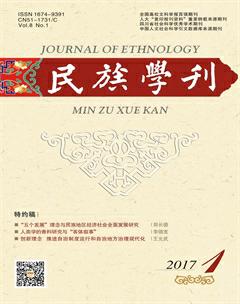
民族學刊 2017年1期
Li+Dekuan
JOURNAL OF ETHNOLOGY, VOL. 8, NO.1, 39-42, 2017 (CN51-1731/C, in Chinese)
DOI:10.3969/j.issn.1674-9391.2017.01.04 Abstract:Spice is not an object of narration in classical anthropology. In anthropological works, such as Edward Burnett Taylors Anthropology and Julius E. Lips The Origin of Things, studies on material culture mainly focus on the basic necessities of daily life, like clothing, houses, movement,and utensils which embody humankinds thoughts, technology and clusters of traditions and customs as cultural carriers. In these studies, food and spice are always understated, if mentioned at all. The return of spice to the foreground of anthropological knowledge seems to signal a formal return to the narrative objects found in classical anthropology. The objects, however, are totally different. Moving from conspicuous large-scale objects in the field and life, the focus is on minimalist objects such as spice. Spice, sugar, tea, coffee, chocolate, salt and other such things have become the objects of narrative in anthropology. This change continues the objective of plain subject in the discipline. This return to heritage, intensifies and surpasses the classical themes of anthropology. It is all about building the Noahs Ark for anthropologys returning home.
Traditional anthropologists firmly defended focus on “the pure, primitive ethnic group”. They never considered their own western world as the object of fieldwork. In the beginning, anthropologists upheld the theoretical ideal of the uniformity of ethnic groups. However, practically, they drew a distinct line between the primitive “other” and their own groups (themselves). If anthropoplogy is trying to do reflexive research, then, the commonly-used material objects in daily life are the best ones for self-reflexive observation. Whereupon, “eating” becomes a common divisor of humans uniformity. Food systems, like language or the other acquired behaviors, not only reflect diversities in uniformity, but also locates in the core of self-defining conception (S. W. Mintz, Chinese Version, 2010,3). Spice, sugar, tea, coffee, chocolate, salt and other such minimalist objects provide a mirror for the Western anthropologists to engage in self-reflection and inward self-gazing, and also to reflect on the interactivity of emic-etic. The desire, motivation, event, symbol, change and influence hidden in the modernization of western society are reflected. This kind of research also unpacks the process of food supply from the “other” before our eyes, and weaves the world into an interdependent and distinctive network through the dual change between “self” and the “other”.
Following the “thread” of “eating” has become a growing trend for engaging in self-reflection, and returning home. An increasing number of anthropologists are engaging in this trend and making significant achievements. Mintz, Turner, and Rain are influential representatives.
Spice, as an element of food, is quite subtle. If these anthropological works are merely considered as the “texts” of food anthropology, then, it is misleading. If viewed intuitively, the category of spice is quitebroad. Daily seasoning, adventurous seasoning, and traditional aromatics are all concluded in this category, as well as sugar, salt, coffee, chocolate and tea. The types and classes are numerous and complex. These spices play various roles beyond the food and cuisine systems in the world, permeating into the relevant social and cultural fields, and reflect cultural phenomena and intrinsic meaning. Compared with the macro objects in material culture, spice, like the atom in physics, is a component of material culture. By studying the minimalist elements of material culture, we can uncover the universality of humanity, provide better explanations for group differences, and achieve an ideal link and interaction between the differences and similarities. Disassembling the atomic symbols, together with the reference of “otherness”, Western society is well situated in the field to complete its self re-exploration and cultural writings (S. W. Mintz, Chinese Version, 2010, 210). By playing a narrative role, the subtle pieces of spice deliver profound and significant meaning. This attempt is brand new for anthropology. Its academic purport goes far beyond the field of food anthropology.
Among these texts in which spice is used as a narrative object, a mixed research method is mainly adopted. Fieldwork is essential. It is important to make investigations of spice in the field, and to gather first-hand observations. Collecting historical references and doing a literature review are also necessary. Documents, personal notes and dairies, and relevant references should be collected and processed. From the academic point of view, it has obvious cross-disciplinary characteristics. Not only is anthropological training needed, but also a rich knowledge of various disciplines such as history, international trade, botany, perfume, and chemistry. Compared with some anthropologists who sit in rocking chairs, and others who work in the field, the narration of spice is a much tougher task. In these above instances, after one year of fieldwork, an ethnography can be written and published quickly. However, it took Mintz 30 years to conceive and produce his ethnography on sugar. This striking contrast reveals the great difficulties and challenges the research encountered.
There are three kinds of contexts contained in writing this kind of narrative. The first one is “atomic” context. It takes spice as the essential component of the established culture of material, spirit and institution, and attempts to discover the way different ethnic groups mould their concept of group values and behavior. It is also the process of moulding the nation-ness of ethnic groups which is linked with the holistic structure of the groups. Spice experiences diving from the luxuries confined to kings and great noblemen to the common daily consumption of the middle class and underclass. When items which were once luxuries become daily supply, national tastes and living styles will form or change. The next is the “radial” context. The multiple-uses of aromatics, which are given fresh meaning in the process of their use, turn into symbols. In the sacrificial rituals of ancient civilizations which used aromatics, the fragrant spices symbolized the concept of “attracting and appealing to the gods, and expelling evil spirits” (J. Turner, Chinese Version, 2007,p.274). In the medical context, spices could maintain health, prevent plague and treat disease. The culinary spices represented communication and identity of the rich and politically connected, and illustrated their control and power over other classes (S. W. Mintz,Chinese Version, 2010,p.101). The preservative function of spices was not only used in food preservation, but also used as one of the materials for mummifying the pharaohs. The function of beauty and cleaning reveals their lifestyle. The different fragrances used by the sexes illustrate their stimulation and enhancement for reproduction. (P. Rain, Chinese Version, 2007, p.30& 43). Spice, as a cultural symbol, radiates (extends) into multiple fields, and presents the patterns of thinking of certain ethnic groups. The last one is a context of concatenation. Spice is an ever flowing and changing material object. The fluidity of spice stems from its rareness, remoteness, and high price. The pursuit of aromatics developed into a worldwide spice trade. But the spice trade did not change the taste of different people radically. During the establishment of the modern world system, spice brought about great change not only of the production pattern, but also the western lifestyle. In this process, the production of spice, sugar, tea and so on, the trade, the consumption of these daily supplies is linked together through a network. A series of events such as the great maritime expansion, colonial expansion, the slave trade and plantation economy, the alternation of the world hegemony, and the bulk agricultural trade are woven into this interconnected context. The interactive causality of the evolution of culture is the needle of linkage, and is the mirror image of the tandem structure as well.endprint
This triple context organizes the micro-scale object, medium-scale society and the larger scale macro world into one text. It focuses on the core object of the Western society itself, ultimately implements the mutual reflection of “micro spice” and the “macro world, and completes the “self-observation” of western society.
Key Words:spice; narrative objects; anthropologys return home
References:
Jack Turner.xiangliao chuanqi—yibu youhuo yansheng de lishi ( Spice:The History of a Temptation). Zhou Ziping, trans.Beijing:shenghuo·dushu·xinzhi sanlian shudian, 2007.
Sidney W. Mintz. tian yu quanli—tang zai jindai lishi shang de diwei (Sweetness and Power: The Place of Sugar in Modern History), Wang Chao,Zhu Jiangang,trans.Beijing:shangwu yishuguan, 2010.
Patricia Rain. xiangcao wenhua shi—shiten zui xiai de xiangwei he xiangliao (Vanilla:The Cultural History of the Worlds Most Popular Flavor and Fragrance),Hou Kaizong,Li Chuanjia,trans. Beijing: shangwu yinshuguan,2007.