
Discrimination of wine age of Chinese rice wine by electronic tongue based on amino acid profiles
2017-02-17 07:36:07YuHaiyanZhangYanXuChunhuaTianHuaixiang
農(nóng)業(yè)工程學(xué)報(bào) 2017年2期
Yu Haiyan, Zhang Yan, Xu Chunhua, Tian Huaixiang
?
Discrimination of wine age of Chinese rice wine by electronic tongue based on amino acid profiles
Yu Haiyan, Zhang Yan, Xu Chunhua, Tian Huaixiang
(201418)
To ensure a good reputation for the producers and to guarantee the basic quality of wine for the consumers, an electronic tongue (E-tongue) coupled with a chemometric method was applied to rapidly discriminate the wine age of Chinese rice wine. Amino acid profiles analyzed by an amino acid analyzer together with principal component analysis (PCA) was used for validation of the wine age of the Chinese rice wine samples sourced from 1-year, 3-year, and 5-year. E-tongue responses collected by a potentiometric E-tongue together with discriminant analysis (DA) were used for the rapid discrimination of the wine age. The correlation between the E-tongue responses and the amino acid profiles was established by partial least squares regression (PLSR). The results showed that the calibration and validation samples were all correctly discriminated by the E-tongue coupled with DA. The E-tongue could be used for screening isoleucine (Ile), aspartic acid (Asp), tyrosine (Tyr), and valine (Val), with a residual predictive deviation (RPD) of greater than 2.0. The results indicated that using an E-tongue combined with DA was a reliable method for the discrimination of the wine age of Chinese rice wines.
amino acids; principal component analysis; models; chemometric method; Chinese rice wine; electronic tongue
0 Introduction
The wine aging process has the potential to improve wine quality over time. Most grape wines are aged in oak barrels prior to bottling, allowing them to mature. For similar reasons, Chinese rice wines are stored in ceramic pottery to age. During the aging process, air penetrates through the mud seal of the ceramic pottery and aids in many reactions[1]. The aged Chinese rice wines have a smoother, mellower, and richer mouthfeel and more harmonious flavor than non-aged wines[2]. Compared with grape wines, Chinese rice wine is fermented by rice, wheat Qu (the source of the microorganisms and crude enzymes),and yeast[3]. The brewing craft includes steeping rice, steaming rice, stirring, fermenting with wheat Qu and yeast, squeezing, aging in pottery, and bottling. The unique materials and brewing craft lead to a low alcohol content and an abundance of amino acids, proteins, oligosaccharides, and vitamins[4].
To guarantee the basic quality of wine for consumers and to ensure a good reputation for the producers, wine laws are strict on wine age labeling. For wine age or vintage year determination, sensory evaluation is commonly used. However, panelists must be well trained and highly experienced to successfully evaluate the wine age. Instrumental methods have been utilized for wine age or vintage year discrimination to distinguish certain chemical features, such as phenolic compounds[5], amino acids, pigment composition[6], flavonoids[7], acid[8], and volatile compounds[9]. The chemicalfeatures are analyzed by high performance liquid chromatography and gas chromatography/mass spectrometry. Amino acids not only correlate with nutritional value[10], but also contribute to the characteristic taste of wine[11]. The type and amount of amino acids present influence the taste of the wine[12]. Therefore, many attempts have been conducted to use amino acid profiles for the discrimination of wines, such as to classify white wines by variety, geographical origin, and vintage year[13], and to correlate amino acids and storage time of white wines, red wines, ice wines, and sparkling wines[14]. Additionally, amino acid profiles have been used to classify rice wines according to aging time and brand[15]and to distinguish Merlot and Torrontés wines[16]. These methods are of high accuracy. However, they require extensive sample preparation and expensive instrumentation.
The electronic tongue (E-tongue) is an analytical instrument that mimics the human sense of taste. It uses nonspecific chemical sensors with a partial specificity to differentiate compounds in a solution[17]. Due to its simple and rapid use, E-tongue has been used for the discrimination of wines according to vintage year or wine age[18], geographical origin[19], and variety[20]. The studies of Rudnitskaya et al.[18]showed that the Port wine age was correctly predicted using an E-tongue. However, there was no comparison with the traditional analysis results.
In the current study, the amino acid profiles analyzed by high performance liquid chromatography together with principal component analysis (PCA) were applied for validation of the wine age of the Chinese rice wine samples. The taste fingerprint collected by a potentiometric E-tongue together with discriminant analysis (DA) were used to rapidly classify Chinese rice wines by wine age (1-year, 3-year, and 5-year). The correlation between the amino acid profiles and E-tongue responses was established by partial least squares regression (PLSR).
2 Materials and methods
2.1 Chinese rice wine samples
Three wine age sample groups (1-year, 3-year, and 5- year) were collected from one brewery in Shanghai, China. There were 13, 12, and 7 samples for the three groups, respectively. Among the 32 samples, 6 samples were randomly selected to be validation samples (2 samples from each wine age year group); the other 26 samples were used as calibration samples. The three wine age groups were selected from different production dates.
2.2 Amino acid analysis
The amino acid profiles of the Chinese rice wines were analyzed by a Hitachi 835-50 amino acid analyzer (Hitachi, Tokyo, Japan). The amino acids were aspartic acid (Asp), glutamic acid (Glu), asparagine (Asn), serine (Ser), glutamine (Gln), histidine (His), glycine (Gly), threonine (Thr), arginine (Arg), alanine (Ala), tyrosine (Tyr), cysteine (Cys), valine (Val), methionine (Met), tryptophan (Trp), phenylalanine (Phe), isoleucine (Ile), leucine (Leu), lysine (Lys), and proline (Pro). They were separated on a #2619 Hitachi ion-exchange resin (2.6 mm×150 mm). The buffer was sodium citric acid with the pH value adjusted to 2.2. The flow rate was 0.225 mL/min. The wavelength used was 338 nm. The column temperature was maintained at 53 ℃.
The peaks were assigned by comparing the peak retention time with amino acid standard solutions (Sigma- Aldrich Corp., St. Louis, Mo., USA). The concentrations were determined by comparing the peak areas with those of the external standards.
2.3 E-tongue analysis
The taste fingerprints of the Chinese rice wines were collected on a potentiometric E-tongue (Alpha M.O.S. Toulouse, France). Seven silicon-based potentiometric sensors were used as working electrodes. An Ag/AgCl electrode was used as a reference electrode. The potentiometric difference between the working and reference electrode was recorded as the E-tongue response. The intensity of the response was identified by the flavors sour (SRS), sweet (SWS), bitter (BRS), salty (STS), umami (UMS), composite (GPS), and composite (SPS). Nine replicate measurements were conducted on each of the 32 Chinese rice wine samples and were averaged for further analysis. Between the measurements, the sensors were rinsed with a 10 % (v/v) alcohol solution.
2.4 Chemometric methods
The differences between the E-tongue responses of different wine age was analyzed by Duncan’s multiple-range test using the software SAS 8.2 (SAS Inc., Cary, NC, USA).
The E-tongue responses and discriminant analysis (DA) were used to determine the wine age of the 32 Chinese rice wine samples. Mean scores for each class were calculated. Then the Mahalanobis distance of each observation’s scores from each group mean was computed, and the observation was assigned to the nearest group mean[21]. Principal component analysis (PCA) was used to process the amino acid data to classify the samples by their wine age.
The correlation between the E-tongue responses and the amino acid profiles was analyzed by PLSR. PLSR was a commonly used linear multivariate analysis method to find fundamental relationships between(E-tongue responses) and(amino acid content, mg/L). Statistics including correlation coefficient for calibration (r), root mean square error of calibration (RMSEC), correlation coefficient for validation (r) and root mean square error of validation (RMSEP) were calculated. Residual predictive deviation (RPD) was used to evaluate how well the calibration models could predict the compositional data. RPD was the ratio of standard deviation (SD) and RMSEP. When RPD was higher than 3.0, the model could be used for analytical purposes[22]. When the RPD was higher than 2.0 but lower than 3.0, the model could be used for the screening purpose. When the RPD was lower than 1.5, the model could not be used.
DA, PCA, and PLSR were performed using TQ Analyst (Thermo Nicolet Corp., Madison, Wisconsin, USA).
3 Results and discussion
3.1 Amino acid data analysis
Table 1 summarized the quantitative analysis results for the 20 amino acids in the 32 Chinese rice wine samples.The most abundant amino acids were Ala, Arg, Glu, Pro, Leu, and Lys, with the average amount above 200 mg/L. The results were in accordance with those obtained by other researchers examining amino acid content in Chinese rice wine[4]. Amino acids were mainly from the hydrolysis of nitrogen sources. Proteins in rice and wheat were the main source of the nitrogen in the Chinese rice wines[4]. The abundance of the nitrogen sources was the reason for the high amino acid contents in the Chinese rice wines. Because amino acids were the precursors of aroma compounds, they could play important roles in the organoleptic properties[23]. They had high correlation with the taste properties[24]. The taste attributes of the amino acids could be summarized as follows: Glu and Asp tasting sour; Gly, Ala, and Thr tasting sweet; Arg and Lys tasting sweet/bitter; and others tasting bitter[25-26]. The abundance in amino acids could provide Chinese rice wine a rich mouth feeling.
Table 1 showed that the contents of Asp, Glu, Asn, Ser, Thr, Ala, Tyr, Val, Phe, Ile, Leu, Lys, and Pro in the 3-year sample group were higher than those in the 5-year sample group, and those in the 5-year group were higher than those in the 1-year group. Amino acids were mainly released from proteins during the fermentation process[12]. Their contents could vary according to the protein content in the raw materials. The protein content in the raw materials could vary according to the species, climate, region of origin, et al.[27]. Therefore, the investigation of amino acid profiles was considered as a strategy to ensure the authenticity of the wine[13]. These researchers revealed that the analysis of the amino acid profiles was meaningful for understanding the differences between various wines.
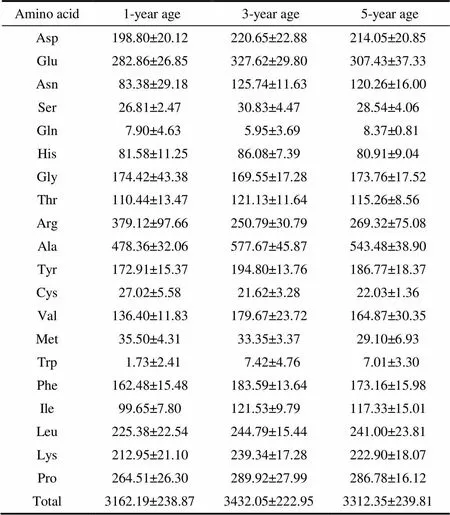
Table 1 Statistical analysis results of free amino acids concentration in 32 Chinese rice wine samples analyzed by amino acid analyzer mg·L-1
The profiles of the 20 amino acids of the 32 Chinese rice wine samples were analyzed by PCA. The first three principal components (PCs) explained 90.465 % of the total variance. PC1 and PC2 explained 53.236 % and 25.254 %, respectively. As Fig. 1 showed, the Chinese rice wines sourced from the same wine age gathered together. This indicated that the samples were all correctly labeled.
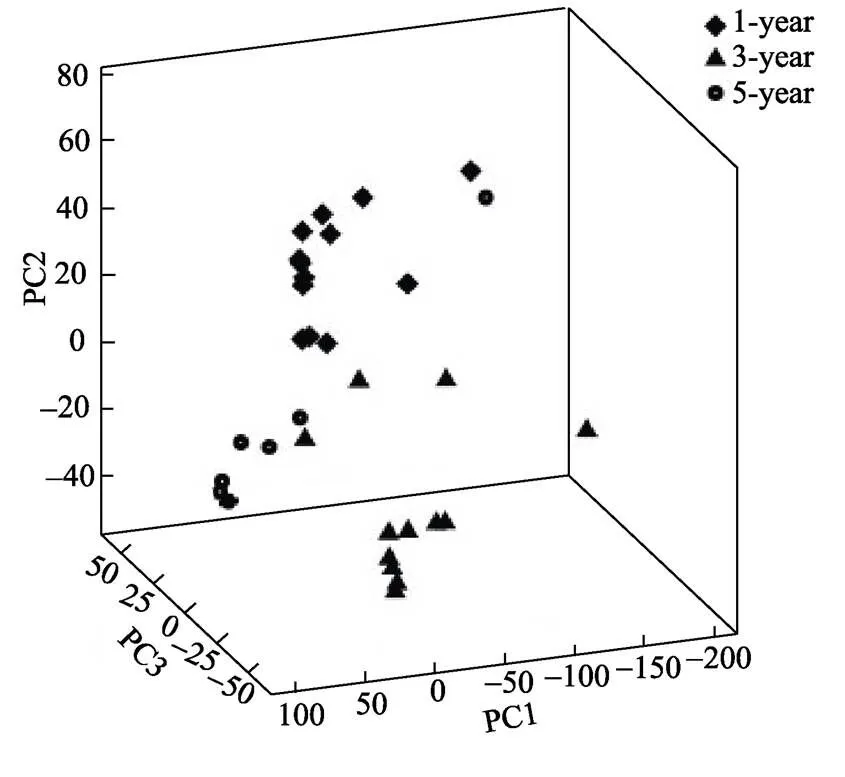
Fig.1 PCA results for 32 Chinese rice wine samples sourced from 1-year, 3-year, and 5-year based on their amino acid profiles
3.2 E-tongue data analysis
Once prepared, the E-tongue sensors were immersed in the Chinese rice wine samples and potentiometric experiments were carried out. The responses of the seven potentiometric sensors were stable after the 100thsecond with a relative standard deviation response lower than 1 %. Using the transient recording at the 120thsecond of the SRS, SWS, BRS, STS, UMS, GPS, and SPS sensors, the average E-tongue responses of the 1-year, 3-year, and 5-year Chinese rice wine sample groups were illustrated in Fig 2. Fig 2 showed that the signal intensity differences of BRS, GPS, STS, SPS, and SWS sensors among the 1-year, 3-year, and 5-year sample groups were small. This indicated that the taste of the 1-year, 3-year, and 5-year groups were similar in sour, salty, bitter, sweet and composite flavors. The bitter flavor of the Chinese rice wine was mainly related to peptide, higher alcohol, amino acid contents, and other factors[28]. There was signal difference (<0.05) in the responses of the UMS and BRS sensor.
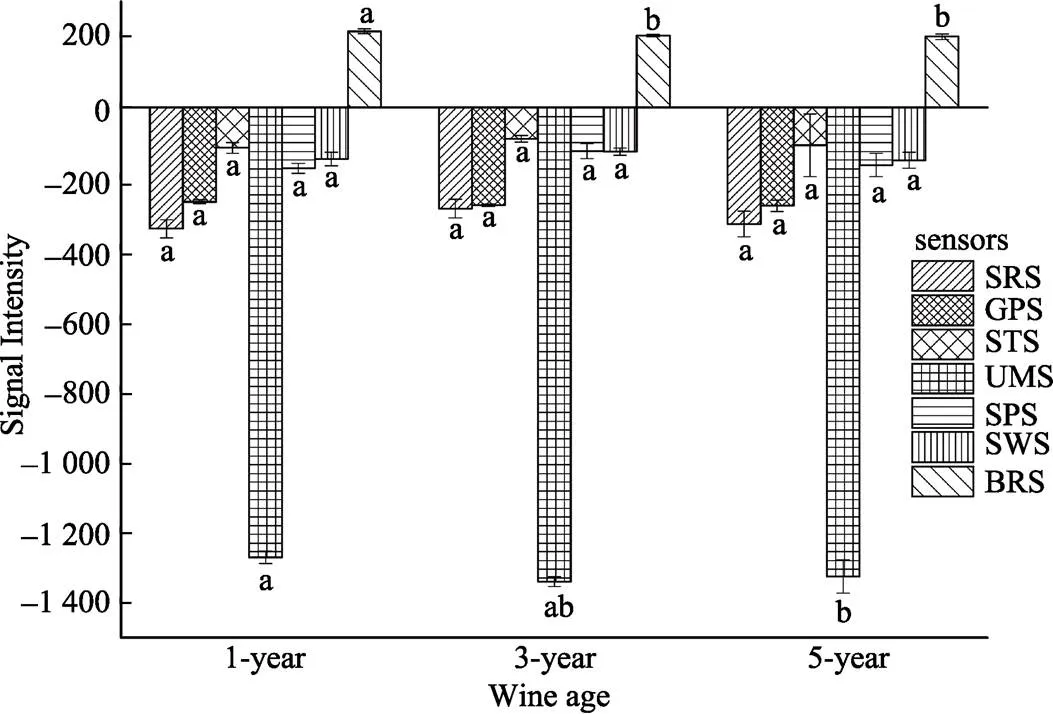
Note: Different abc letters on the SRS, GPS, STS, UMS, SPS, SWS and BRS sensors indicated they were significantly different at P<0.05.
Using the transient recording at the 120ths of the seven sensors, wine age discrimination models were developed. Fig 3 showed the pairwise distance plots for the 1-year and 3-year, 1-year and 5-year, and 3-year and 5-year groups, respectively. For the calibration samples, it was observed that the 1-year and 3-year, 1-year and 5-year, 3-year and 5-year groups separated clearly, except one 5-year calibration sample. The Mahalanobis distance of the sample from 1-year, 3-year, and 5-year group mean distance was 4.35, 3.79, and 3.26, respectively. Therefore, it was correctly classified. For the validation samples, the 1-year, 3-year, and 5-year validation samples were all in their own group. The 6 validation samples were all correctly classified. In the research of Gay et al.[29]and Rudnitskaya et al.[30], E-tongue also demonstrated a good capability to discriminate wines by wine age.
3.3 Correlation between E-tongue responses and amino acid profiles
PLSR models for the 20 amino acids were established. The performances of the calibration and validation models were shown in Table 2. For the determination of Ile, good results were obtained, with anrhigher than 0.9 and a low RMSEP. The RPD value for the Ile model was 2.70, close to 3.0, indicating that the model was robust. The RPD values for Asp, Tyr, and Val were all slightly higher than 2.0, indicating that these models could be used for screening purposes. This indicated that the E-tongue responses had correlation with these four amino acids. The E-tongue system displayed insufficient prediction performance for Arg and Gly, with lowrand RPD value. This might be due to the low sensor sensitivity to Arg and Gly. Due to the low concentration of Ser, Gln, Cys, Met, and Trp, the E-tongue system displayed insufficient prediction performance for these compounds with RPD value lower than 2.0.
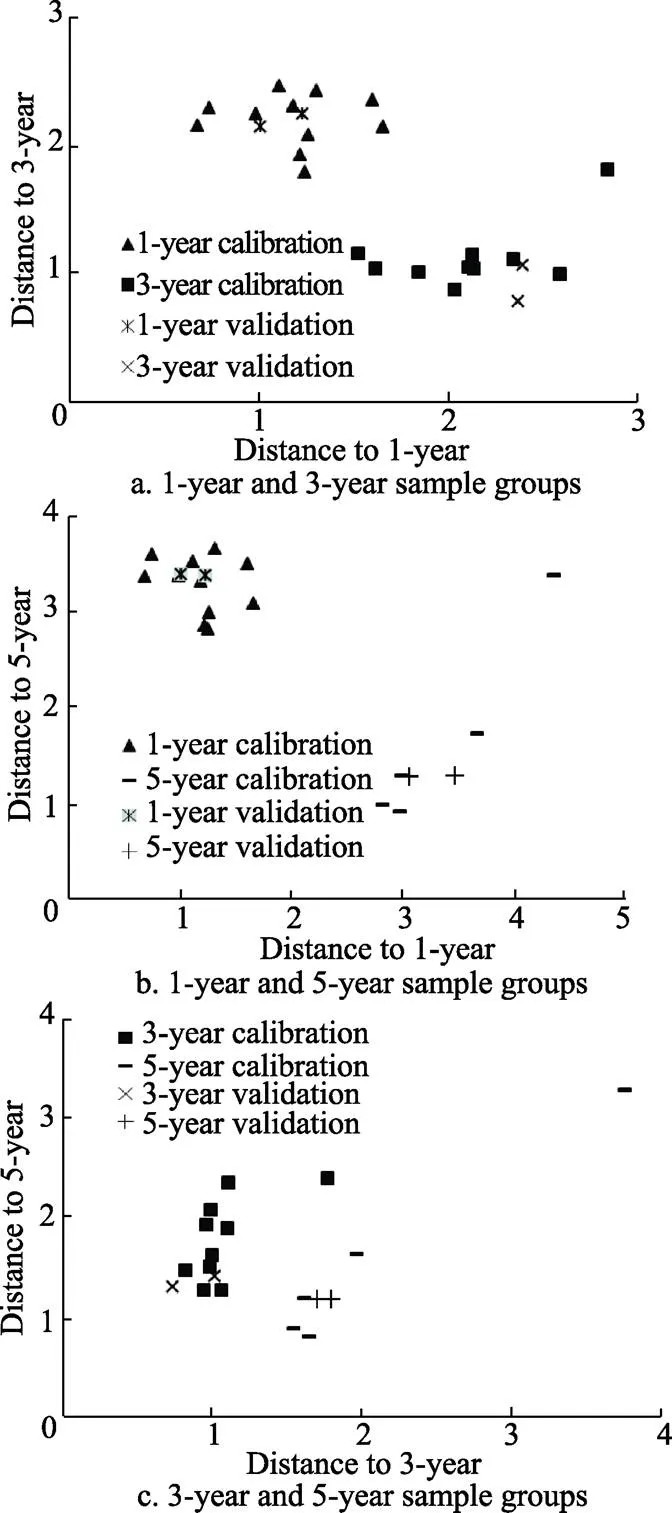
Fig.3 Pairwise distance plot for wine age discrimination models established by E-tongue and DA
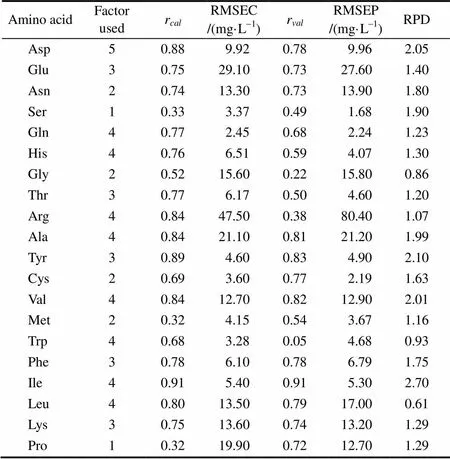
Table 2 Calibration and validation performance for PLSR models for 20 amino acids in Chinese rice wine
4 Conclusions
The applicability of the E-tongue combined with chemometrics for the rapid routine control of wine age was demonstrated in this study. The suitability of the E-tongue system for wine age discrimination was confirmed, with the validation samples all correctly classified. The E-tongue method combined with the DA was a reliable for wine age discrimination. The E-tongue could be used for screening isoleucine (Ile), aspartic acid (Asp), tyrosine (Tyr), and valine (Val), with a residual predictive deviation (RPD) of greater than 2.0.
[1] Xu Rongnian, Bao Zhongding, Pan Xingxiang, et al. Maurtization of Chinese rice wine[J]. Liquor Making, 2003, 30(2): 50-52.(in Chinese with English abstract)
[2] Shen Fei, Li Fangzhou, Liu Dong, et al. Ageing status characterization of Chinese rice wines using chemical descriptors combined with multivariate data analysis[J]. Food Control, 2012, 25(2): 458-463.
[3] Mo Xinliang, XuYan, Fan Wenlai. Characterization of aroma compounds in Chinese rice wineby solvent-assisted flavor evaporation and headspace solid-phase microextraction[J]. Journal of Agricultural and Food chemistry, 2010, 58(4): 2462-2469.
[4] Shen Fei, Niu Xiaoying, Yang Danting, et al. Determination of amino acids in Chinese rice wine by Fourier transform near-infrared spectroscopy[J]. Journal of Agricultural and Food Chemistry, 2010, 58(17): 9809-9816.
[5] Jaitz Leonhard, Siegl Kathrin, Eder Reinhard, et al. LC–MS/MS analysis of phenols for classification of red wine according to geographic origin, grape variety and vintage[J]. Food Chemistry, 2010, 122(1): 366-372.
[6] Boido Eduardo, Alcalde-eon Cristina, Carrau Francisco, et al. Aging effect on the pigment composition and color of Vitis vinifera L. Cv. Tannat wines. Contribution of the main pigment families to wine color[J]. Journal of Agricultural and Food Chemistry, 2006, 54(18): 6692-6704.
[7] Fang Fang, Li Jingming, Pan Qiuhong, et al. Determination of red wine flavonoids by HPLC and effect of aging[J]. Food Chemistry, 2007, 101(1): 428-433.
[8] Bellomarino SA, Parker RM, Conlan XA, et al. Partial least squares and principal components analysis of wine vintage by high performance liquid chromatography with chemiluminescence detection[J]. Analytica Chimica Acta, 2010, 678(1): 34-38.
[9] Pereira Ana C, Reis Marco S, Saraiva Pedro M, et al. Analysis and assessment of Madeira wine ageing over an extended time period through GC–MS and chemometric analysis[J]. Analtica Chimica Acta, 2010, 660(1): 8-21.
[10] Callejon RM, Troncoso AM, Morales ML. Determination of amino acids in grape-derived products: A review[J]. Talanta,2010, 81(4): 1143-1152.
[11] Tan Fuyuan, Tan Chao, Zhao Aiping, et al. Simultaneous determination of free amino acid ontent in tea infusions by using high-performance liquid chromatography with fluorescencedetection coupled with alternating penalty trilinear decomposition algorithm[J]. Journal of Agricultural and Food Chemistry, 2011, 59(20): 10839-10847.
[12] Arrietaa Marina Patricia, Prats-Moya María Soledad. Free amino acids and biogenic amines in Alicante Monastrell wines[J]. Food Chemistry, 2012, 135(3): 1511-1519.
[13] Soufleros E H, Bouloumpasi E, Tsarchopoulos C, et al. Primary amino acid profiles of Greek white wines and their use in classification according to variety, origin and vintage[J]. Food Chemistry, 2003, 80(2): 261-273.
[14] Hatem Salama Mohammed Ali, Ralf P?tzold, Hans Brückne. Gas chromatographic determination of amino acid enantiomersin bottled and aged wines[J]. Amino Acids, 2010, 38(3): 951-958.
[15] Shen Fei, Ying Yibin, Li Bobin, et al. Multivariate classification of rice wines according to ageing time and brand based on amino acid profiles[J]. Food Chemistry, 2011, 129(2): 565-569.
[16] Duchowicz Pablo R, Giraudo Miguel A, Castro Eduardo A, et al. Amino acid profiles and quantitative structure–property relationship models as markers for Merlot and Torrontés wines[J]. Food Chemistry, 2013, 140(1): 210-216.
[17] Gutierrez Manuel, Domingo Carme, Vila-planas Jordi, et al. Hybrid electronic tongue for the characterization and quantification of grape variety in red wines[J]. Sensors and Actuators: B-chemical, 2011, 156(2): 695-702.
[18] Rudnitskaya Alisa, Delgadillo Ivonne, Legin Andrey, et al. Prediction of Port wine age using an electronic tongue[J]. Chemometrics and Intelligent Laboratory Systems, 2007, 88(1): 125-131.
[19] Ciosek Patrycja, Wroblewski Wojciech. The recognition of beer with flow-through sensor array based on miniaturized solid-state electrodes[J]. Talanta, 2006, 69(5): 1156-1161.
[20] Gutierrez Juan Manuel, Moreno-baron Laura, Pividori Maria Lsabel, et al. A voltammetric electronic tongue made of modified epoxy-graphite electrodes for the qualitative analysis of wine[J]. Microchimca Acta, 2010, 169(3): 261-268.
[21] Legin A, Rudnitskaya A, Seleznev B, et al. Electronic tongue for quality assessment of ethanol, vodka and eau-de-vie[J]. Analytica Chimica Acta, 2005, 534(1): 129-135.
[22] Williams Phil, Norris Karl. Near Infrared Technology in the Agricultural and Food Industries[M]. Minnesota: American Association of Cereal Chemist, 2001.
[23] Niu Yunweing, Zhang Xiaoming, Xiao Zuobing, et al. Characterization of taste-active compounds of various cherry wines and their correlation with sensory attributes[J]. Journal of Chromatography B, 2012, 902(902): 55-60.
[24] Wang Mengxin, Bo Xiaopei, Han Shanjie, et al. Difference of taste among streaming tea soup from tea plantations under different measures against frost based on electronic tongue[J]. Transactions of the Chinese Society of Agricultural Engineering, 2016, 32(16): 300-306. (in Chinese with English abstract)
[25] Shallenberger RS. Taste Chemistry: Blackie Academic and Professional[M]. London: Springe, 1993.
[26] Kang Bo-Sik, Lee Jang-Eun, Park Hyun-Jin. Electronic tongue-based discrimination of Korean rice wines (makgeolli) including prediction of sensory evaluation and instrumental measurements[J]. Food Chemistry, 2014, 151(151): 317-323.
[27] Barrado E, Rodriguez JA, Castrillejo Y. Determination of primary amino acids in wines by high performance liquid magneto-chromatography[J]. Talanta, 2009, 78(3): 672-675.
[28] Li Jiashou. Sources of color components, aroma components and taste components in yellow rice wine[J]. Liquor-making Science Technology, 2001(3): 48-50.(in Chinese with English abstract)
[29] Gay M, Apetrei C, Nevares I, et al. Application of an electronic tongue to study the effect of the use of pieces of wood and micro-oxygenation in the aging of red wine[J]. Electrochimica Acta, 2010, 55(22): 6782-6788.
[30] Rudnitskaya A, Rocha S M, Legin A, et al. Evaluation of the feasibility of the electronic tongue as a rapid analytical tool for wine age prediction and quantification of the organic acids and phenolic compounds. The case-study of Madeira wine[J]. Analytica Chimica Acta, 2010, 662(1): 82-89.
基于氨基酸組成的黃酒酒齡電子舌鑒別
于海燕,張 燕,許春華,田懷香
(上海應(yīng)用技術(shù)大學(xué)食品科學(xué)與工程系,201418)
該研究采用電子舌結(jié)合化學(xué)計(jì)量學(xué)方法用于黃酒酒齡的快速鑒別。為確證黃酒樣品酒齡,采用氨基酸分析儀分析了1年陳、3年陳和5年陳黃酒中20種氨基酸,并利用主成分分析(principal component analysis,PCA)對氨基酸數(shù)據(jù)進(jìn)行了分析。采用電位型電子舌采集了不同酒齡黃酒樣品的味覺指紋信息,并采用判別分析(discriminant analysis,DA)方法結(jié)合味覺指紋信息建立黃酒酒齡快速鑒別模型。采用偏最小二乘法(partial least squares regression,PLSR)建立電子舌響應(yīng)信號(hào)與氨基酸含量之間的相關(guān)關(guān)系。氨基酸數(shù)據(jù)結(jié)合PCA分析表明所有樣品均標(biāo)注正確;電子舌結(jié)合DA所建黃酒酒齡鑒別模型可將3個(gè)年份預(yù)測集樣品正確區(qū)分;異亮氨酸(Ile)、天門冬氨酸(Asp)、酪氨酸(Tyr)和纈氨酸(Val)與電子舌相關(guān)性高,模型的相對分析誤差(Residual predictive deviation, RPD)高于2。研究表明電位型電子舌結(jié)合判別分析是黃酒齡鑒別的穩(wěn)健方法。
氨基酸;主成分分析;模型;化學(xué)計(jì)量學(xué)方法;黃酒;電子舌
10.11975/j.issn.1002-6819.2017.02.041
TS262.4
A
1002-6819(2017)-02-0297-05
2016-05-14 Revised date:2016-08-13
The science funds for national excellent doctoral dissertation of China (201059)
Biography:Yu Haiyan, female, Yantai Shandong, PhD, master’s supervisor, Department of Food Science and Technology, Shanghai Institute of Technology, majoring in food flavor analysis. Email: hyyu@sit.edu.cn
Yu Haiyan, Zhang Yan, Xu Chunhua, Tian Huaixiang.Discrimination of wine age of Chinese rice wine by electronic tongue based on amino acid profiles[J]. Transactions of the Chinese Society of Agricultural Engineering (Transactions of the CSAE), 2017, 33(2): 297-301. (in English with Chinese abstract) doi:10.11975/j.issn.1002-6819.2017.02.041 http://www.tcsae.org
于海燕,張 燕,許春華,田懷香. 基于氨基酸組成的黃酒酒齡電子舌鑒別[J]. 農(nóng)業(yè)工程學(xué)報(bào),2017,33(2):297-301. doi:10.11975/j.issn.1002-6819.2017.02.041 http://www.tcsae.org
猜你喜歡
童話王國·奇妙邏輯推理(2024年5期)2024-06-19 16:03:38
民用飛機(jī)設(shè)計(jì)與研究(2020年4期)2021-01-21 09:15:02
中學(xué)生數(shù)理化·七年級(jí)數(shù)學(xué)人教版(2020年10期)2020-11-26 08:24:50
數(shù)學(xué)物理學(xué)報(bào)(2020年2期)2020-06-02 11:29:24
電子制作(2018年18期)2018-11-14 01:48:24
山東工業(yè)技術(shù)(2016年15期)2016-12-01 05:31:22
光學(xué)精密工程(2016年6期)2016-11-07 09:07:19
核科學(xué)與工程(2015年4期)2015-09-26 11:59:03
中國中醫(yī)藥現(xiàn)代遠(yuǎn)程教育(2014年11期)2014-08-08 13:23:44
終身教育研究(2014年5期)2014-02-28 01:23:06
 農(nóng)業(yè)工程學(xué)報(bào)2017年2期
- 農(nóng)業(yè)工程學(xué)報(bào)的其它文章
- 結(jié)合高光譜信息的土壤有機(jī)碳密度地統(tǒng)計(jì)模型
- 溫室墻體中覆鋁箔封閉空氣腔熱工性能模擬分析
- 沙障風(fēng)荷載作用下嵌固端受力分析
- 高集約化農(nóng)區(qū)投入減量化與環(huán)境風(fēng)險(xiǎn)降低潛勢的時(shí)空分異特征
- Design and experiment on real-time monitoring system of wheat seeding
- Modeling and validation on path loss of WSN in pig breeding farm