
Comparative analysis of results from a cognitive emotion regulation questionnaire between international students from West Asia and Xinjiang college students in China
2016-12-09 08:30:47HongxingHUBahargulALSRONBinXUWeiHAO
上海精神醫學 2016年6期
Hongxing HU, Bahargul ALSRON, Bin XU, Wei HAO*
Comparative analysis of results from a cognitive emotion regulation questionnaire between international students from West Asia and Xinjiang college students in China
Hongxing HU1, Bahargul ALSRON1, Bin XU1, Wei HAO2*
cognitive emotion regulation, life events, depression, international students, Chinese students
1. Background
Cognitive and emotional regulation refers to the cognitive approach taken by individuals when dealing with information that causes emotional arousal,which mainly refers to the cognitive part of a coping method. The process of emotion mediation through thinking or cognition is closely related to the life of an individual, which is helpful for emotional regulation after stressful life events.[1,2]Studies have shown that maladaptive cognitions in individuals dealing with negative life events was a strong risk factor for depressive symptoms.[3-5]Results of one study showed that among juveniles aged 13 to 15 years old girls were more likely to have maladaptive cognitions (i.e. negative thinking) than boys, and that they were at a higher risk for depression.[6]Maladaptive cognitive methods such as self-blaming, catastrophizing, contemplation, and blaming-others, were related to negative emotions such as depression and anxiety.[7,8]Furthermore, in the face of stressful life events, differences exist in cognitive coping methods between males and females. Some studies showed that males used positive cognitions more often than females[3], while others showed that males used unhealthy cognitions more often.[9]Therefore, there are differences in cognitive coping methods among different individuals, and among genders as well. When speaking in terms of an individual’s mental health, it is also widely acknowledged that cognitive strategies for dealing with stressful life events can increase or decrease the risk for depression. Schools and universities can be high stress environments in which social and academic pressures are high, but psychsocial support is not always readily available to students in need. In this setting it can also be difficult for staff and fellow students to identify those struggling students if they do not reach out for help on their own. Psychosocial interventions such as support groups or simple cognitive training to reduce stress and increase productivity can be designed to help students. However, there is a lack of data about the cognitive coping methods of Chinese college students and central Asian college students who are studying in China. Therefore, we collected data on these two groups using the Cognitive Emotion Regulation Questionnaire in hopes of designing psychosocial interventions for students at risk for depression or anxiety.
2. Methods
2.1 Participants
Random cluster sampling was conducted on sophomore and junior international students (mainly from Pakistan,and a small number from Afghanistan, Sudan and other countries) enrolled at the International College of Education of Xinjiang Medical University in 2015. A total of 255 (171 males and 84 females)students filled out the questionnaire, among whom 234 students were from Pakistan, 6 were from Afghanistan, 5 were from Mongolia, 3 were from Sudan, 1 was from Mauritius,and 6 were from Kazakhstan. The mean(sd) age was 21.9(1.2) years old. Random stratif i ed cluster sampling was conducted on enrolled sophomore and junior Chinese students using the same method. There were a total of 262 participants (124 male and 138 female)in the sampled Chinese group, among which 96 were ethnic Uygur students and 166 were ethnic Han students. The mean(sd) age in the Chinese group was 21.8(1.0) years old. There was no signif i cant difference in the mean age between the international and Chinese students (t=1.11, p=0.266).
2.2 Questionnaire
College Students’ Life Events Scale (ASLEC) is a selfrating questionnaire, consisting of a total of 27 items.It investigates the impact of negative life events on students in the past 6 months, with a total repeated measure correlation coefficient of 0.69, and an internal consistency Cronbach coefficient of 0.85.[10]Each item is graded from 1 to 6 measuring impact of specificlife events, with 1 standing for “no occurrence of event”,2 for “no impact”, to 6 for “very severe impact”. The scale includes 6 factors: (a) interpersonal relationships,(b) study pressure, (c) punishment, (d) loss of relative/friend/property, health and (e) adjustment problems.Students fi lled out the questionnaire according to their actual life situation.
Chinese students use the Chinese version of the ASLEC, while the ASLEC scale for international students was translated by two English language professionals according to the Chinese version. After review of this English translation version of the ASLEC the optimal version was determined and used for this study.
A Self-rating Depression Scale (SDS), (i.e. Zung’s Self-rating Depression Scale) consists of 20 items with4 grading levels.[11]Cronbach’s α coefficient for this scale was 0.88-0.93, and correlation coefficient among the items is 0.80-0.85. The evaluation cut-off value is 53 points. A higher score reflects a greater tendency towards depression. A score of less than 52 is within normal limits (i.e. no depression), score of 53-62 reflects mild depression, 63-72 reflects moderate depression and a score of greater than 72 indicates severe depression.
Chinese students used the Chinese version of the SDS questionnaire, while international students used the English version of the SDS questionnaire.
The Cognitive Emotion Regulation Questionnaire(CERQ): CERQ questionnaire was compiled by Garnefski to assess the cognitive emotion regulation strategies adopted by individuals when facing negative life events.This scale is shown to have good reliability and validity.Its internal consistency coefficient α is in the range of 0.67 to 0.81, and the correlation coefficient of its sub-scales is -0.02 to 0.55.[1]It consists of a total of 36 items, in the form of 9 sub-scales: (a) self blame, (b)acceptance, (c) contemplation, (d) positive re-focus,(e) re-focus on planning, (f) positive re-evaluation, (g)rational analysis, (h) catastrophizing, and (i) blaming others. Each sub-scale consists of 4 items,rated from 1 to 5, with 1 being “rarely” to 5 being “has always been so”. The higher the score on a sub-scale, the more likely the subject is to use this specific cognitive strategy when faced with negative events. A study by Garnefski and colleagues showed that the 9 sub-scales can be divided into adaptive emotion regulation strategies and maladaptive emotion regulation strategies.[1]Adaptive strategies include: (a) acceptance, (b) positive re-focusing, (c) re-focus on planning, (d) positive reevaluation and (e) rational analysis. Maladaptiveemotion regulation strategies include: (a) self-blaming,(b) contemplation, (c) catastrophizing and (d) blamingothers. Zhu and colleagues studied the Chinese version of the CERQ and found the reliability and validity to be good, with full scale Cronbach coefficient α being 0.81, full scale inter-item correlation coefficient being 0.1, and the inter-item average correlation coefficient of each sub-scales being in the range of 0.19 to 0.71.[12]Ethnically Han and Uygur students used the Chinese version of the CERQ, while international students all used the English version of the CERQ.

Figure 1. Flowchart of the study
2.3 Data analysis
SPSS16.0 was used for data processing. Single sample t-test method was used to compare mean scores on the CERQ, SDS and ASLES for international and Chinese students. Logistic stepwise regression analysis was used to analyze factors that affect depressive emotion, using depressive emotion as the dependent variable, and life events as well as individual cognitive emotion regulation methods as the independent variables.
3. Results
3.1 Comparison of international and Chinese students
Table 1 shows the age comparison results between international and Chinese students. There were 171 male international students, with a mean(sd) age of 21.7 (1.5), and 84 female international students, with an average age of 21.4(1.3). There were no significant differences between the two groups in age (t=1.73,p=0.086). There were 124 male Chinese students,with a mean(sd) age of 21.6 (1.0), and 138 female Chinese students, with a mean(sd) age of 21.5(1.1).There was no significant difference between the two groups (t=0.67, p=0.503). The Cronbach α coefficient of the ASLES scale was in the range of 0.812 to 0.869 for international students.
Table 2 shows t-test analysis results of the 9 component scales, (ASLES, SDS, CERQ) for international and Chinese students. The CERQ’s Cronbach α coefficient for the foreign students group was 0.734,and 0.733 for the Chinese students group. There were no signif i cant differences in either the life events scale scores or SDS scores between the international student and Chinese student groups. Looking at the CERQ scores results, there were signif i cant differences on items such as “positive refocusing”, “refocusing on planning” and“catrastrophizing” between the international student and Chinese student groups. Compared to Chinese students, international students were more likely to use cognitive regulation methods like “positive re-focusing”(international students 13.92(3.79), Chinese students 12.95(3.63), t=2.86, p=0.004), “re-focus on planning”(international students 15.50(3.95), Chinese students 14.33(3.93), t=3.23, p=0.001), and “catastrophizing”(international students 10.31(4.27), Chinese students 9.09(4.34), t=3.09, p=0.002)
3.2 Comparison of ASLES, SDS and CERQ results between male and female students of different races
The results in Table 3 showed that, between male and female international students, there were significant differences in the scores of the life events scale. Male students had higher mean (sd) scores in life events(male =23.56 (14.16), female =19.03 (11.23), t=2.71,p<0.001). Meanwhile, in the face of life events, there were significant differences between male and female students in items such as “catastrophizing” and “blaming others”. Male students used more cognitive regulation methods such as “catastrophizing” (male mean (sd)score= 11.07(4.22), female mean (sd) score= 8.75(3.95),t=4.21, p<0.001) and “blaming others” (male mean (sd)score=10.17(3.93), female mean (sd) score= 9.02(3.56),t=2.26, p=0.03) than female students. Among Chinese students, there were signif i cant differences in the scores of the life event scale and depression scale between male and female students. Male students had higher mean (sd) ASLES scores (male 23.5 (14.5), female 19.0(10.6), t=2.68, p<0.001).Meanwhile, in the face of life
events, male students used more cognitive regulation methods such as ”catastrophizing” (male mean(sd)score=10.32(4.71), female mean(sd) score 8.07(3.7),t=4.0), p<0.001and “blaming others” (male mean (sd)score=10.0(4.11), female mean (sd) score=8.60(3.58),t=2.68, p<0.001) than female students.

Table 1. Comparison of the general information of international and Chinese students

Table 2. Comparison of mean (sd) CERQ, SDS and ASLES item scores between international and Chinese students

Table 3. Comparison of mean (sd) ASLES, SDS and CERQ scores between male and female students of different nationalities
3.3 Regression analysis of depression among students of different ethnicity
Tables 4 and 5 showed the correlation analysis between each item in the scores on the CERQ scale and life events scale and depression scale, for international students and Chinese students. For international students, depressive emotions were positively correlated with self-blaming, catastrophizing, blaming others, and were negatively correlated with acceptance,positive re-focusing, positive re-evaluation, and refocusing on planning. For Chinese students, depressive emotions were positively correlated with self-blaming,contemplation, catastrophizing, and blaming others.These emotions were negatively correlated with positive re-evaluation. Logistic regression analysis was done with SDS score as the dependent variable, and scores on the CERQ’s 9 items and life event scale as independent variables. Tables 6 and 7 showed the results after input into the regression equation of independent variables for international and Chinese students. The regressionequation for international students was as follows: Y(depression) =48.48+0.88×self-blaming-0.55×acceptanc e+0.43×disasterization, with Adjusted R2=0.18, F=6.59,p<0.001, N=10. For international students, “selfblaming”, “acceptance” and “catastrophizing” were in the regression equation. International students’depressive emotion was positively correlated with“self-blaming” and “catastrophizing”, and negatively correlation with “acceptance”. The regression equation for Chinese students was as follows: Y (depression)=31.83+0.59×life events-0.56×positive re-evaluat ion+0.42×disasterization, with Adjusted R2=0.63,F=38.96, p<0.001, N=10. Chinese students’ depressive emotions were positively correlated with “life events”and “catastrophizing”, and negatively correlated with“positive re-evaluation”.

Table 4. Correlation Analysis between CERQ items and life events, SDS for international students

Table 5. Correlation Analysis between CERQ items and life events, SDS for Chinese students
4. Discussion
4.1 Main findings
CERQ can effectively reflect the cognitive regulation methods during an individuals’ emotional arousal.Numerous studies have shown that adaptive strategies were negatively correlated with depression and anxiety,while maladaptive strategies were positively correlated with depression and anxiety. Adaptive strategies include acceptance, positive re-focusing, re-focusing on planning, positive re-evaluation, and rational analysis. Maladaptive strategies include self-blaming,rumination, catastrophizing and blaming others.[2,13-15]We conducted CERQ study on international and Chinese students. Although two questionnaire versions(English and Chinese) were used, a validity check of the Cronbachα coefficients of the two versions were in the range of 0.733 to 0.734, indicating good validity and comparability. In this study, Logistic regression analysis showed that both international students and Chinese students showed a positive correlation between depressive symptoms and the maladaptive strategies of “self-blaming” and “catastrophizing”. In addition there was a negative correlation between depressive symptoms and the adaptive strategies of “acceptance”and “positive re-evaluation”. This correlation held regardless of the ethnicity of the participants.
CERQ is a fairly mature scale to measure individuals’cognitive emotion regulation methods after stressful events. Numerous studies have shown that adaptive strategies are negatively correlated with depression and anxiety, while maladaptive strategies are positively correlated with depression and anxiety. Adaptive strategies include acceptance, positive re-focusing, refocusing on planning, positive re-evaluation, and rational analysis. Maladaptive strategies include self-blaming,rumination, catastrophizing and blaming others. Our results also showed that depressive emotions were positively correlated with the maladaptive strategies of “self-blaming” and “catastrophizing”, and negatively correlated with the adaptive strategies of “acceptance”and “positive re-evaluation”. This correlation was demonstrated in both international and Chinese students. This relationship is also similar regardless of participants ethnicity. However, there were still some differences in cognitive emotional regulation strategies between participants of different ethnicities. Compared to Chinese students, international students tended to use cognitive emotional regulation methods such as “positive re-focusing”, “re-focusing on planning”and “catastrophizing” in the face of life events. In the regression analysis of the influences on depressive emotions for international students, “self-blaming”and “catastrophizing” contributed to depression,and “acceptance” was negatively correlated with depression. For Chinese students, life event score and “catastrophizing” contributed to depression, and“positive re-evaluation” was negatively correlated with depression.
In terms of gender differences, both international and Chinese male students’ life event scores were higher than female students’. In the face of life events,male students tended to use maladaptive strategiessuch as “catastrophizing” and “blaming others” more than female students, which was not the same as some overseas studies. A study by Garnefski and colleagues showed that females tended to use strategies such as “catastrophizing”, “rumination” and “re-focusing on planning” strategy more often than males.[16]This difference could be related to sample group and sample size. Based on our apparently quite vaguely conceived notion of social roles we usually think of males as being characteristically more strong, independent and persevering than women. The so called ‘general public’ also assigns qualities to men such as strength,independence, responsibility and commitment to male roles, considering them to be more likely to display calm and problem solving abilities when faced with stressful events. So surprisingly, our results show that men tend to use more negative cognitive coping methods than females when faced with stressful life events. Therefore,men’s mental health issues are equally worthy of attention, if not more so.
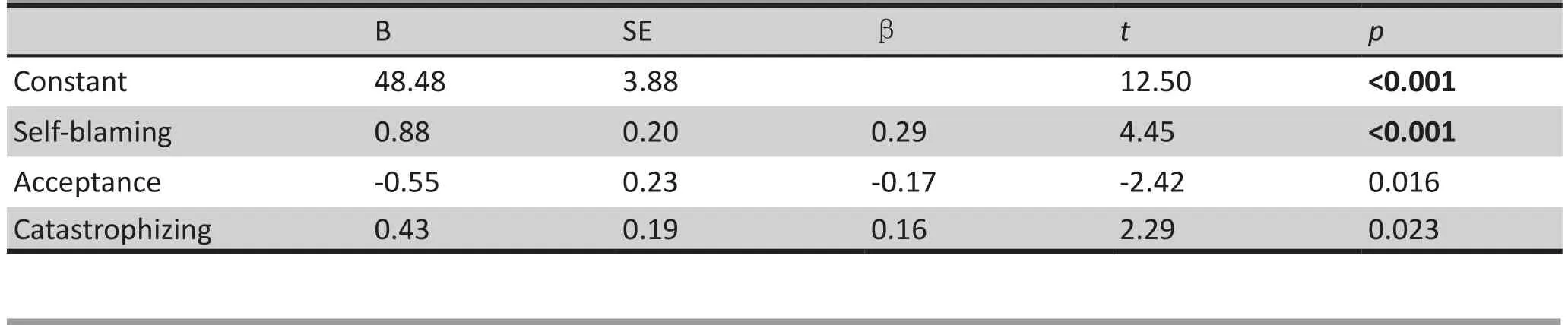
Table 6. Regression Analysis of factors inf l uencing depression in international students

Table 7. Regression Analysis of factors inf l uencing depression in Chinese students
4.2 Limitations
This study administered Chinese versions of the measurement tools to Han Chinese and Uygur participants while administering English versions (or translated versions of the tools that had not been validated) to international students studying in China who came from a wide variety of cultural, ethnic and linguistic backgrounds. Given the enormous linguistic and cultural heterogeneity of this sample(including students in the‘local’ group) results should be interpreted with caution. In addition, personality tests were not carried out for subjects in this study.Personality may also influence ones cognitive coping methods and emotional state in the face of stressful life events. However comparisons between personality and CERQ, SDS and other measures were not done.Finally this study was cross sectional in nature and therefore the impact of cognitive coping styles have on depressive symptoms over time could not be measured.
4.3 Implications
CERQ can be used to evaluate cognitive emotion regulation methods and strategies in individuals. In the counseling of college students, we may use CERQ to understand frequently used cognitive emotional strategies in individuals facing life events in order to provide appropriate counseling methods such as cognitive therapy. Regardless of an individual’s ethnicity, using cognitively adaptive strategies is a protective factor for depression, whereas using maladaptive strategies is a risk factor for depression.During the course of counseling with college students,encouraging students to engage in cognitively adaptive ways of thinking can serve as solid method to prevent depression.
Funding
Authors received no funding support for this study.
Conflict of interest statement
The authors declare no conflict of interest related to this manuscript.
Informed consent
All participants in this study provided written informed consent.
Authors’ contributions
Hongxing Hu: was responsible for the design of study,statistical analysis and article writing, Bahargul Alsron and Bin Xu were responsible for data collection and entry, Wei Hao: the overall design of study and proofreading.
1. Garnefski N, Kraaij V, Spinhoven P. Negative life events,cognitive emotion regulation and emotional problems. Pers Indiv Differ. 2001; 30(8): 1311–1327. doi: http://dx.doi.org/10.1016/S0191-8869(00)00113-6
2. Nadia G,Vivian K. Relationships between cognitive emotion regulationstrategies and depressive symptoms:A comparative study of five specific Samples. Pers Indiv Differ.2006; 40: 1659-1669. doi: http://dx.doi.org/10.1016/j.paid.2005.12.009
3. Aldao A, Nolen-Hoeksema S. Specif i city of cognitive emotion regulation strategies: A transdiagnostic examination. Behav Res Ther. 2010; 48: 974-983. doi: http://dx.doi.org/10.1016/j.brat.2010.06.002
4. Aldao A, Nolen-Hoeksema S, Schweizer S. Emotionregulation strategies across psychopathology: A metaanalytic review. Clin Psychol Rev. 2010; 30: 217-237. doi:http://dx.doi.org/10.1016/j.cpr.2009.11.004
5. Oftadehal M, Mahmoodi K B, Torabi NM. Cognitive emotion regulation, Depression and stress in Iranian students.Neurosci Res Lett. 2012; 3(1): 44-47
6. Ana C D, Ana P M, Cristiana M. Cognitive emotion regulation strategies and depressive symptoms: gender’s moderating effect. Procedia- Soc & Behav Sci. 2015; 165: 275–283. doi:http://dx.doi.org/10.1016/j.sbspro.2014.12.632
7. Markarian SA, Pickett SM, Deveson DF, Kanona BB. A model of BIS/BAS sensitivity, emotion regulation difficulties, and depression, anxiety, andstress symptoms in relation to sleep quality. Psychiatry Res. 2013; 210: 281-286. doi: http://dx.doi.org/10.1016/j.psychres.2013.06.004
8. Majid PO. Relationships between cognitive emotion regulation strategies with depression and anxiety.Open J Psychiatry. 2011; 1: 106-109. doi: http://dx.doi.org/10.4236/ojpsych.2011.13015
9. Natalio E, Lourdes R. Health-related quality of life and cognitive emotion regulation strategies in the unemployed:a cross-sectional survey. Health Qual Life Outcomes. 2014;12: 172-181. doi: http://dx.doi.org/10.1186/s12955-014-0172-6
10. Liu X, Liu L, Yang J, Chai F, Wang A, Sun L, Zhao G, Ma D.The reliability and validity of the adolescent life event scale.Zhongguo Lin Chuang Xin Li Xue Za Zhi. 1997; 1(10): 39-41
11. Gabrys JB, Peters K. Reliability, discriminant and predictive validity of the Zung Self-rating Depression Scale. Psychol Rep.1985; 57(3): 1091-1096. doi: http://dx.doi.org/10.2466/pr0.1985.57.3f.1091
12. Zhu X, Luo F, Yao S, Auerbach RP, Abela JRZ. The reliability and validity of the Chinese version of the Cognitive Emotion Regulation Questionnaire (CERQ-C). Zhongguo Lin Chuang Xin Li Xue Za Zhi. 2007; 15(2): 121-124. doi: http://dx.chinadoi.cn/10.3969/j.issn.1005-3611.2007.02.004
13. Nadia G, Hendrik K, Vivian K, Rebecca C. Brief report:Cognitive emotion regulation strategies and psychological adjustment in adolescents with a chronic disease. J Adolesc. 2009; 32: 449-454. doi: http://dx.doi.org/10.1016/j.adolescence.2008.01.003
14. Ryan CM, Eric RD. Cognitive emotion regulation in the prediction of depression, anxiety, stress and anger. Pers Indiv Differ. 2005; 39: 1249-1260. doi: http://dx.doi.org/10.1016/j.sbspro.2014.12.459
15. Luo F, Wang X, Zhang S, Shen D. [Characteristics of cognitive emotion regulation strategies in adolescents].chinese.Zhongguo Lin Chuang Xin Li Xue Za Zhi. 2010; 18(1): 93-95
16. Nadia G, Jan T, Vivian K, Jeroen L, Tessa van den K. Cognitive emotion regulation strategies and depressive symptoms:Differences between males and females. Pers Indiv Differ.2004; 36: 267-276. doi: http://dx.doi.org/10.1016/S0191-8869(03)00083-7

Hongxing Hu graduated in 1994 from Xinjiang Medical University, and received a doctoral degree in psychiatry in 2015 from Central South University, Changsha, China. Since August 1994, she has been working in the psychiatric department of the First Affiliated Hospital of Xinjiang Medical University. She currently holds the positions of deputy chief physician, lecturer, secretary of the Teaching and Research Sector of the Department of Psychiatry and Mental health at the Center of Psychological Medicine, member of the Standing Committee for Mental Health Management Specialized Committee of the Xinjiang Hospital Association, of the Xinjiang Uygur Autonomous Region Mental Health Center Quality Control Committee, and of Xinjiang Mental Health Association of Psychosomatic Medicine Specialized Committee. Her current research interests: substance dependence and addictive behaviors, as well as mechanisms of depression and suicidal behaviors.
西亞留學生與中國新疆大學生認知情緒調節問卷的對比分析
胡紅星,巴哈古麗?阿爾斯郎,徐斌,郝偉
認知情緒調節,生活事件,抑郁,留學生,中國學生
Background:The Cognitive Emotion Regulation Questionnaire (CERQ) is a cognitive and emotional tool measuring how individuals deal with stressful life events. However differences exist in the results of CERQ among individuals.Objective:This study was conducted to investigate the CERQ results and depressive symptoms of students at our university (both local and international students) in order to provide further guidance for psychological interventions.Methods:255 sophomore and junior international students (171 male and 84 female) and 262 sophomore and junior Chinese students (124 male and 138 female) were investigated using CERQ, ASLEC and SDS questionnaires. Results were analyzed using SPSS 16.0.Result:Compared to Chinese students, international students more often used cognitive adjustment methods such as “positive refocusing”,“re-focus on planning” and “catastrophizing”. In regression equations where depression symptoms were used as the dependent variable, “self-blaming” and “catastrophizing”positively contributed to depression symptoms in international students, while“acceptance” was negatively correlated with depression symptoms.In Chinese students, “life events score” and “catastrophizing”were positively correlated withdepression symptoms, while “positive re-evaluating” was negatively correlated with depression symptoms.Conclusion:Among students of different races, positive coping methods were negatively correlated with depression symptoms and could possibly prevent the occurrence of depression, while negative coping methods were positively correlated with depression.Encouraging students to use adaptive coping methods during psychological intervention is an effective way to adjust cognitions and behavior for depression prevention.
[Shanghai Arch Psychiatry. 2016; 28(6): 335-342.
http://dx.doi.org/10.11919/j.issn.1002-0829.216067]
1Department of Psychology, the First Affiliated Hospital, Xinjiang Medical University, Urumqi, China
2Institute of Mental Health, Xiangya No.2 Hospital, Central South University, Changsha, China
*correspondence: Professor Hao Wei, Mailing address: Renmin Rd, Changsha Xiangya No.2 Hospital Research Institute of Mental Health, Changsha, Hunan,China. Postcode: 410011, E-mail: weihao57@gmail.com
背景:認知情緒調節方式(CERQ)是個體處理應激性生活事件所采取的認知情緒管理方式。個體間采取的CERQ方式存在差異,本研究對我校大學生及留學生的CERQ、抑郁狀況進行調查分析,以便對個體進行心理干預時提供指導依據。目的:研究留學生與中國學生使用認知情緒調節方式的情況及對照分析。方法:對255名大二、大三的留學生(男生171人,女生84人)及262名中國大二、大三的學生(男生124人,女生138人)進行CERQ、ASLEC、SDS問卷調查。結果使用SPSS16.0進行分析。結果:留學生較中國學生更經常地使用“積極重新關注”和“重新關注計劃”及“災難化”等認知調節方式。以抑郁為應變量的回歸方程中,在留學生中,對抑郁有貢獻的是“責難自己”和“災難化”,與之負相關的則是“接受”;中國學生中,對抑郁有貢獻的是生活事件評分和“災難化”,與抑郁情緒呈負相關的則是“積極重新評價”。結論:在不同種族的學生中,均顯示積極的應對方式與抑郁負相關,可以預防抑郁的發生,而消極的應對方式與抑郁正相關。對學生進行心理干預時鼓勵其使用適應性應對方式,后者是預防抑郁的一種有效的認知行為調節方式。
猜你喜歡
民用飛機設計與研究(2020年4期)2021-01-21 09:15:02
小學科學(學生版)(2019年12期)2020-01-06 07:29:02
小學科學(學生版)(2019年11期)2019-12-09 09:06:32
好日子(2019年4期)2019-05-11 08:47:56
小學科學(2019年12期)2019-01-06 03:38:45
電子制作(2018年18期)2018-11-14 01:48:24
風流一代·青春(2018年2期)2018-02-26 15:27:06
風流一代·青春(2017年6期)2018-02-14 19:28:55
風流一代·青春(2017年5期)2018-02-14 09:32:37
山東工業技術(2016年15期)2016-12-01 05:31:22
- 上海精神醫學的其它文章
- Two Paradoxes in Linear Regression Analysis
- Comment on "Disability, psychiatric symptoms, and quality of life in infertile women: a cross-sectional study in Turkey"
- Choking phobia : an uncommon phobic disorder, treated with behavior therapy : A case report and review of the literature
- Psychogenic blepharospasm: a diagnostic dilemma
- Why is diagnosing MDD challenging?
- Eye movement indices in the study of depressive disorder