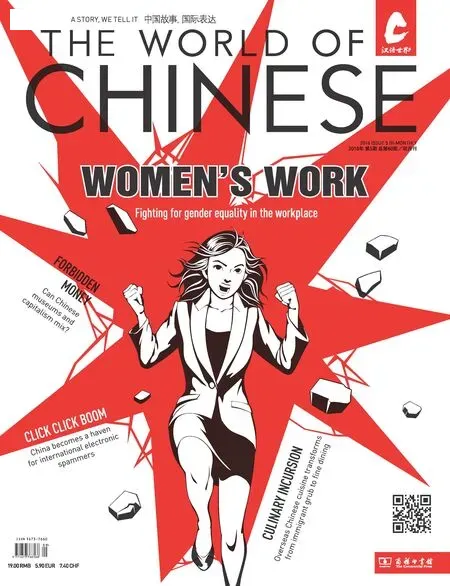
GETTING RIGHTS WRONG
2016-10-25 01:42:16
漢語世界 2016年5期
?
GETTING RIGHTS WRONG
Making her closing statement at a session of the Guangzhou Intermediate People's Court on August 19, lawyer Lu Miaoqing outlined what she believed was the obstacle to ending gender-based inequality in the workplace in China.“I told the court, I admired my client for making this [complaint], because rights for women have always been something we ourselves have had to push for,” Lu recounted to TWOC.“China's laws on the national level have always emphasized gender equality, but there needs to be a system of appropriate institutions and guidelines to realize it.”
Lu's client, Gao Xiao (alias), is the plaintiff in a gender discrimination lawsuit against Guangzhou's Huishijia Restaurant, which refused to consider her application for the position of apprentice chef because she was female. According to Lu,stories like Gao's are the starting end of a series of persistent and often institutionalized gender-based barriers that follow women in China throughout their professional lives. From discriminatory hiring to sexual harassment at work,unequal pay to an unequal retirement age, gender-based employment discrimination in
China today is informed by a mix of Communist legacy and traditionalist social attitudes,underwritten by contradictions between policy,regulation, and society.
According to the ILO, China as of 2014 had one of the world's highest female labor force participation rates(LFPR) at 63.9 percent. A 2015 ILO working paper attributes China's high female LFPR to policies enacted during the Communist era; equal rights for men and women “in all areas” of life were enshrined in the frst constitution of the People's
Republic of China. During the
Cultural Revolution, under Mao Zedong's famous slogan, “women hold up half the sky,” female LFPR rose to an estimated 90 percent in urban areas and was supported by state assistance in childcare, education, and even laundry.
In these fondly remembered heydays of egalitarianism, traditional social structures and gender roles, families' lack of investment in female education disqualifed women from many leadership roles in work units. Women were often assigned to lower-paying,low-skilled industries that conformed to their traditional roles in the domestic sphere: textiles, canteen, and laundries.
In the period after China's market reforms, competition for employment became intense, and the situation for women's employment worsened. According to a study from the Indiana University School of Law,the proportion of female workers fell to one third of the total labor force in non-agricultural sectors in the early years of the reform. Females in leadership positions acquired during the Cultural Revolution were transferred or forced to retire, and women lost jobs frequently in heavy labor sectors under the justifcation of “natural sex differences”. Textiles,healthcare, and other traditionally“feminine” occupations remained open to women.
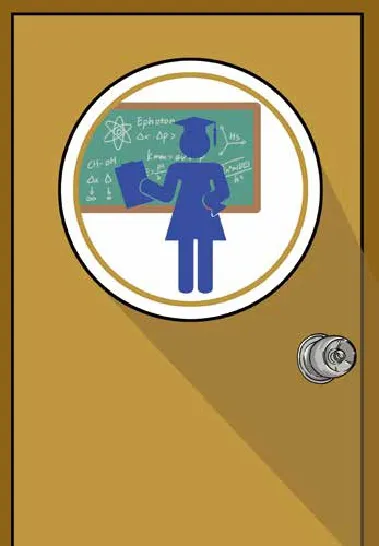
Hailed by state media as a landmark regulatory achievement when it was passed in 1988, and again when it was revised in 2012, China's “Regulation Concerning the Labor Protection of Female Staff and Workers” is a post-Reform era example of whenthe progressive language of policies is overwritten by an inadequate system of implementation and by an enduring fxation on gender differences. The 2012 version of the regulations grant female workers rights such as a maternity leave of 98 days and prohibit dismissing or reducing the salary of workers during the maternity period. However,according to the UN Human Rights Council, the practice of dismissing pregnant workers remains widespread. Companies can also skirt the regulation by refusing to hire women at all or hiring only those who have already had children, while women can be forced to resign anyway due to inadequate childcare options.
The regulation entitles women to complain to the local labor department in case of violation of their rights, but according to Lu, the labor department will not typically get involved in gender discrimination disputes “where an employeremployee relationship has not been established,” such as in all cases of discriminatory hiring.
In the absence of a national-level regulatory body responsible for equal employment opportunity, local labor departments are the only institutions that can process such complaints outside of the courts. Where such a relationship does exist, the employee has little incentive to complain due to fear of losing her job or taking away time from work.
The regulations also enshrine long-held prejudices about women's suitability for certain types of work. In a section called “Sectors of Labor Forbidden to Female Workers” the regulations prohibit women from employment in mine pits, “physical labor of the fourth degree of intensity specifed by the state”, or labor involving lifting more than 20 kilograms of weight more than six times an hour; lumber work, construction, and working on electrical poles are no longer closed to women as of the 2012 revision. Menstruating and pregnant women are also prohibited from work involving high altitudes and low temperatures.
According to the Southern Metropolis Daily's account of Gao's frst court hearing in 2015, Gao submitted photos of herself performing physical labor in the kitchen to challenge notions that women can't handle the physical requirement of a chef's job. Gao told TWOC that until she began her lawsuit, she had no idea that there were regulations that legally discriminated against women based on their perceived abilities. “It's like having your parents tell you what you can and can't do,” she said. “If the restaurant is concerned about the physical aspects of the job, they can say so in the ad instead of assuming women who are weaker, and I can decide for myself if I'm up for it.”
Moving from physical to white-collar and intellectual work, traditional perceptions about gender can limit opportunities for women in the workplace even without help from the labor regulations, mostly through the real and perceived obligations of women in childcare and the domestic sphere. In an earlier lawsuit in 2015, Hangzhou's New Oriental Cooking School compensated job applicant Huang Rong for running a“male-only” ad for a clerical position partly on the justifcation that the job involves travel, which women are stereotyped as being unsuited or unwilling to do due to obligations at home.
Studies from the China Academy of Science (CAS) from 2007 to 2013 indicate that females comprise about one-third of the workforce in science and technological professions nationwide, and tend to be far less successful than their male colleagues: only fve percent of CAS members and 4.6 percent of chief scientists under the government's National Basic Research Program are female. Male scientists tend to also be successful in accruing grants and publication titles before the age of 36, as female scientists still tend to take on childraising responsibilities in their homes. To combat these societal expectations, the National Natural Science Foundation of China extended the maximum age of eligibility for female applicants of its Young Scientists Funds to 40, compared with 35 for men. The CAS is also calling for stipulations of gender equality to be written into the nation's laws about science. However, so far these measures can only mitigate the effects rather than attack the root causes of gender discrimination that survived generations of revolution and are coded into the culture, often even in the laws.
These challenges are summed up by Gao's demands in the second hearing of her case this August, after coming away from the frst hearing last year with 2,000 RMB in courtordered compensation from Huishijia Restaurant. “We felt like the penalty barely scratched the surface of what it cost Gao Xiao fle her lawsuit, isn't harsh enough to prevent the company from doing this again, and isn't enough to encourage other job-seekers to go to the courts in the future,” Lu Miaoqing said. “Gender discrimination is a society-wide problem in China, rooted in tradition maybe, but enabled by the disjunction between progressive policies and lack of enforcement and legal penalty.”
“Second, we want a written apology from the restaurant,” Lu said.
“Broadcasting a naturalized view on gender discrimination on the web is harmful to society, and we want that to be acknowledged before all society.”
- H.L.