Win-Win Cooperation along the Belt and Road
2016-10-08 01:18:23ByXUYANZHUO
CHINA TODAY 2016年9期
By XU YANZHUO
SINCE President Xi Jinping proposed the stra- tegic idea in 2013 of jointly building the Silk Road Economic Belt and the 21st-Century Maritime Silk Road, the Belt and Road Initiative has taken shape and become part of Chinas midand long-term foreign strategy.
Platform for Open, Inclusive, Cooperative and Shared Development
The proposal of the Belt and Road Initiative was aimed at promoting Chinas exchanges with neighboring countries and strengthening the channels linking China and Central Asian countries. In 2014, President Xi and Russian President Vladimir Putin reached consensus on building the Belt and Road and connecting it with Russias trans-Eurasian railway. Later, in his speech delivered at the Bruges-based College of Europe, Xi indicated Chinas intention to dovetail China-EU cooperation with building the Silk Road Economic Belt. After his two visits to the continent in 2014, Europe was incorporated into the Belt and Road map. In 2015, in a speech at the U.K.-China Business Summit, President Xi emphasized that the Belt and Road would cross Africa and connect Europe with Asia. Thus, the Belt and Road strategy, going beyond the scope of the ancient Silk Road and the boundary of neighborhood diplomacy, has shaped a platform for open, inclusive, cooperative and shared development open to all countries intent on joining in.
In the short run, the focus of the platform is for China to promote and fuel development of countries along the Belt and Road through its own development momentum and enable these countries to share in Chinas economic achievements. In the medium term, the Belt and Road Initiative will link the rapidly developing Chinese economy with the interests of countries in the area, thus promoting Asia-Pacifi c economic integration. In the long run, advancing the Belt and Road Initiative will help improve the existing global economic governance mechanism and contribute to the improvement of international rules related to such fi elds as trade and investment. It will thus balance the current international economic order and deter polarization of central and marginalized countries.
Flying Geese Model Benefits Concerned Countries
The year 2015 marked the start of implementation of the Belt and Road Initiative. Since then, it has drawn widespread attention from countries along the Belt and Road, many of whom have joined in. As of now, China has signed related memoranda of understanding and agreement with 34 countries. More than 24 countries mentioned cooperation on the Belt and Road Initiative in their joint statements with China, and more than 70 countries and organizations have clearly indicated their intention to join this initiative. Following a strong start, the program has so far seen preliminary achievements.
Chinas traditional strength in such fields as infrastructure construction, energy and resources, industrial parks, and industrial investment in its foreign cooperation will constitute the basis and core of the Belt and Road Initiative. China has accumulated plentiful experience in overseas infrastructure construction, and many countries along the Belt and Road have huge requirements in this regard. The Asian Development Bank has predicted that from 2010 to 2020, Asias infrastructure investment demand will reach US $8 trillion. Chinas supply capacity and the huge needs of related countries in these sectors lay a solid foundation for advancing the strategy regionally and globally.
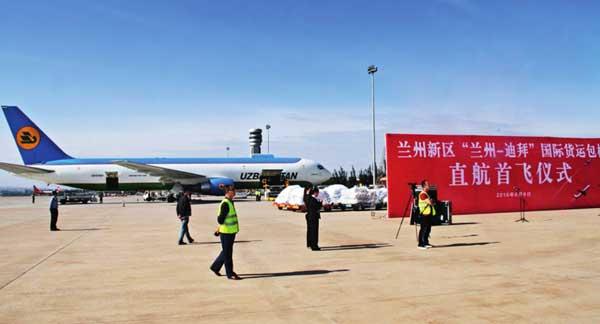
The first batch of cooperation projects has borne fruit. They include the railway from Budapest to Belgrade, and the China-Kazakhstan (Lianyungang) International Logistics Cooperation Base, which all demonstrate Chinas infrastructure advantage. Establishing demonstration parks is also one of the pragmatic methods China has used to push forward its reform and opening-up drive. The first step in this strategy is selecting a trial site, and after seeing good results, the model is promoted in other places. This practical method is becoming the key model at the initial stage of the Belt and Road Initiative. In Southeast Asia, Chinas demonstration projects include a new deep-water port at Kyauk Phyu of Myanmar and the Rayong industrial park in Thailand. Chinas demonstration projects also include the China-Pakistan industrial park, the China-Belarus industrial park, and the ChinaEgypt Suez economic and trade cooperation zone. All these projects and related experiences will serve as reference and guidance for the initiatives future projects.
Chinas abundant foreign exchange reserves and funds provide a guarantee for it to simultaneously advance the initiative in different directions. As the above-mentioned large-scale infrastructure projects usually require huge, long-term investment with low return rates, due to inadequate capital supplies some developing countries have no capacity to carry them out. The backward state of infrastructure in such countries often inhibits their economic development. Thus a vicious circle is formed.
Chinas high domestic savings rate and foreign exchange reserves ensure its abundant capital supply, which can be invested in developing countries in urgent need of capital. Statistics from the Ministry of Commerce show that Chinese enterprises direct investment in countries along the Belt and Road reached US $14.8 billion in 2015, an increase of 18.2 percent. The first half of this year saw the value of newly signed contracts for foreign projects by Chinese enterprises with countries along the Belt and Road rise by 37 percent. Chinese firms are taking advantage of their successful domestic experience by fully tapping their infrastructure construction and manufacturing capacity and resorting to Chinas ample capital reserves. China provides comprehensive solution plans at reasonable prices to economically backward countries along the Belt and Road.
Given its current development stage, China is forming a flying geese model together with countries along the Belt and Road. By receiving industrial operations transferred from Japan, the labor-intensive manufacturing industry has boomed in China, shaping the country into the worlds largest exporter and “worlds factory.” As China restructures its industry, and considering Chinas economic aggregate, the scale of those industries in need of relocation is huge. Countries along the Belt and Road could become a good destination for the transfer of Chinas labor-intensive, exportoriented industry. Data analysis shows that Southeast Asia has the biggest potential to receive Chinas transferred industries, and also the highest index in terms of interconnectivity with China. It features good policy coordination, unimpeded trade and agreeable financial integration and people-to-people bonds. This means that such countries have been gradually integrated into the radius of Chinas industrial upgrading. Their interconnectivity degree has also influenced to what extent they can make use of Chinas development achievement to drive their own economies.
Improved Foreign Economic Relations
At the initial stage of the Belt and Road Initiative, China rapidly gained endorsement from countries along the routes and secured many cooperation projects by taking advantage of its development strengths. Under the midand long-term development strategy, Chinas cooperation with countries along the Belt and Road will further improve and complement the relevant bilateral and multilateral relations.
First, the current infrastructure construction and investment under the Belt and Road Initiative is changing the unequal positions of the investing country and the recipient one under the traditional OECD (Organization for Economic Cooperation and Development) framework. Guided by the concept of consulting with countries in the area, China doesnt control the progress or extent of implementing the strategy. Instead, the joint efforts and recognition of the related countries determine the progress. The joint building concept attaches importance to teaching the recipient country expertise and skills. It thus changes the mistaken perception that the assistancegiving country gains the advantage in cooperative relations by according equal standing to patron and recipient countries. Under the model featuring volunteer partnership, its up to countries in the area to decide whether or not they want to join the cooperation framework and how to cooperate.
Second, policy coordination among countries along the Belt and Road has made headway facilitated by state leaders diplomatic efforts and strategic state visits. Infrastructure connectivity serves as a foundation to realize unimpeded trade, financial integration and people-topeople bonds. Currently preliminary results have been achieved in this regard, also embodying Chinas strength in infrastructure construction. Unimpeded trade, financial integration and people-to-people exchanges will be the key areas for cooperation in implementing the strategy in the coming years. Accomplishing these three goals not only demands national policy support, but also the participation of ordinary people and non-governmental organizations from both China and other countries along the Belt and Road. Unimpeded trade and financial inte- gration depends on peoples recognition of the business opportunities and profits implied in the strategy. Peopleto-people bonds will be shaped by public perceptions in related countries of Chinas international influence. Given the current situation, much effort is still needed to realize these goals.
Third, in the long run, as the Belt and Road Initiative further advances, countries enjoying high-level policy coordination, facility connectivity, unimpeded trade, financial integration and people-to-people bonds, are benefiting from the strategy. For example, Malaysia, Thailand, Mongolia, and Kazakhstan, which in the past were marginalized in the international trade system, have changed their positions. India, however, long regarded as an exemplary model for democracy among developing countries and an important economy with great potential, appears worried that its leadership in South Asia will be impaired by the initiative because, in contrast to other countries, it has not shown any positive response to it. In fact, the Bangladesh-China-India-Myanmar economic corridor passes northeastern India, which could undoubtedly propel local economic development.