
益氣養陰聯合呼吸功能鍛煉對肺癌患者術后臨床癥狀的影響
2016-08-09 03:32:47董澤清劉玉學徐紹敏李陸平
中國醫藥指南 2016年4期
董澤清 劉玉學 徐紹敏 李陸平 魏 斐
(山東省壽光市中醫醫院外三科,山東 壽光 262700)
?
益氣養陰聯合呼吸功能鍛煉對肺癌患者術后臨床癥狀的影響
董澤清 劉玉學 徐紹敏 李陸平 魏 斐
(山東省壽光市中醫醫院外三科,山東 壽光 262700)
【摘要】目的 探討中醫益氣養陰法對開胸肺癌患者術后臨床癥狀的影響。方法 選取我院經開胸治療后的肺癌患者70例隨機分為兩組,每組35例。對照組患者給予氨溴索口服液治療;治療組患者給予益氣養陰湯劑口服,兩組均給予呼吸功能鍛煉,經8 d治療后,比較兩組患者治療后炎性反應及總有效率的差異。結果 治療組患者白細胞數和C反應蛋白均明顯低對照組(P<0.05);治療組總有效率(91.43%)明顯高于對照組(80.00%)(P<0.05)。結論 中醫益氣養陰法對開胸肺癌患者術后臨床癥狀效果顯著。
【關鍵詞】益氣養陰;肺癌術后;呼吸功能鍛煉;臨床癥狀
近年來,在我國惡性腫瘤中肺癌發病率逐漸增高,中醫認為正氣不足貫穿肺癌發病的始終,其中氣陰兩虛者尤為多見。應當益氣養陰以治本,采用傳統辨證論治方法,調整臟腑功能,恢復患者的元氣。本文探討中醫益氣養陰法對開胸肺癌患者術后臨床癥狀的影響,報道如下。
1 資料與方法
1.1資料:壽光市中醫醫院2015年3月至2015年10月收治的70例肺癌術后患者,隨機分為對照組和治療組,每組35例。入選標準:開胸手術行肺葉切除+縱隔淋巴結清掃;術后中醫辯證屬于氣陰兩虛型者。兩組患者的一般資料對比等均無統計學意義(P>0.05)。
1.2方法:對照組術后給予氨溴索口服液30 mg口服(2次/天),治療組術后給予益氣養陰法湯劑口服(2次/天),給予呼吸功能鍛煉,療程均為8 d。益氣養陰法方劑:生黃芪45 g,茯苓15 g,炒白術10 g,北沙參30 g,太子參30 g,麥冬15 g,五味子10 g,山萸肉10 g,女貞子15 g,浙貝母10 g,桃仁10 g,炙甘草6 g。每天1劑,水煎取400 mL,分早、晚2次飯后溫服。呼吸功能鍛煉方法:術后第1天開始由護士指導進行腹式呼吸和膈肌呼吸鍛煉。訓練過程注意傷口情況及患者反應,每天3次,并記錄鍛煉情況。
1.3觀察指標和療效標準。①觀察指標:記錄患者術后第2天、4天、6天、8天的監測數據,實驗室檢查白細胞計數(WBC)和C反應蛋白值(CRP),根據《中藥新藥臨床研究指導原則》中的肺癌中醫證候的標準進行評價,根據臨床觀察分為4級。0級為無癥狀,1級為輕
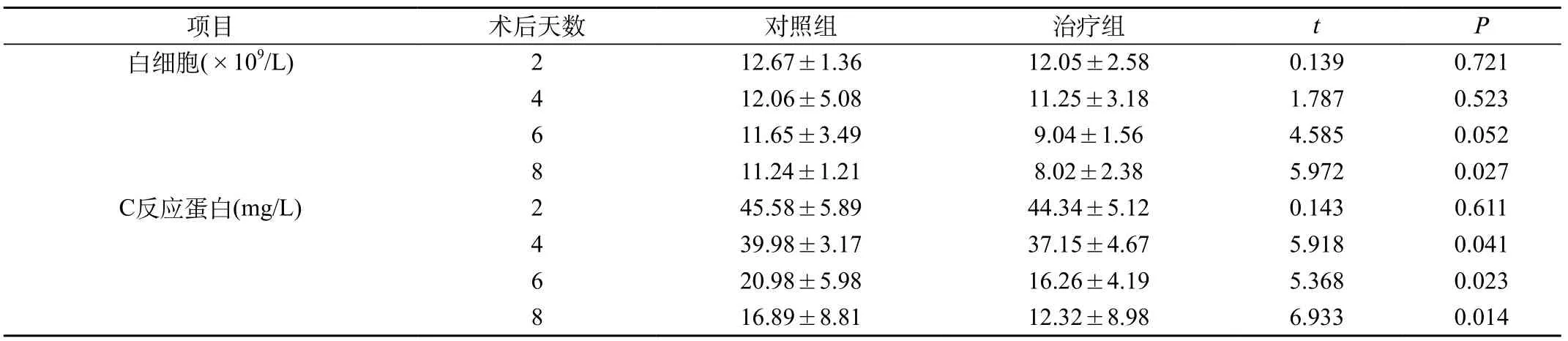
表1 兩組患者治療后WBC和CRP的比較

表2 兩組患者治療后總有效率的比較
中圖分類號:R734.2
文獻標識碼:B
文章編號:1671-8194(2016)04-0010-02
Clinical Research for the T reatment of Postoperative Lung Cancer by T onifying Qi and Nourishing Y in Method Combined with Respiratory Function Exercise
DONG Ze-qing, LIU Yu-xue, XU Shao-min, LI Lu-ping, WEI Fei
(Department of the Three Surgery, the Traditional Chinese Medicine Hospital of Shouguang, Shouguang 262700, China)
[Abstract]Objectives To investigate the traditional Chinese medicine of tonifying Qi and nourishing Yin method to lung cancer patients with open chest postoperatively of clinical symptoms infuence. Methods Selection of patients with lung cancer after treatment with thoracotomy in our hospital 70 cases randomly were divided into two groups, each 35 cases. The control group was given oral use of postoperative of ambroxol hydrochloride oral solution,the treatment group was treated by tonifying Qi and nourishing Yin decoction. The two groups were given respiratory function exercise, after 8 days after treatment, two groups after treatment in patients with infammatory reaction and the total effective rate difference were compared. Results The treatment group patients' white blood cell count and C-reactive protein were signifcantly lower in the control group (P<0.05); the treatment group total effective rate (91.43%) were signifcantly higher than control group (80.00%) (P<0.05). Conclusions The traditional Chinese medicine of tonifying Qi and nourishing Yin method to lung cancer patients with open chest postoperatively of clinical symptoms effect were obvious.
[Key words]Tonifying Qi and nourishing Yin; Postoperative lung cancer; Respiratory function exercise; Clinical symptoms
