不同微生物發(fā)酵劑對青貯甜玉米秸稈營養(yǎng)成分的影響
2016-05-30 10:48:04韓建成陳水秀江楊賈汝敏
熱帶農(nóng)業(yè)工程
2016年3期
韓建成 陳水秀 江楊 賈汝敏

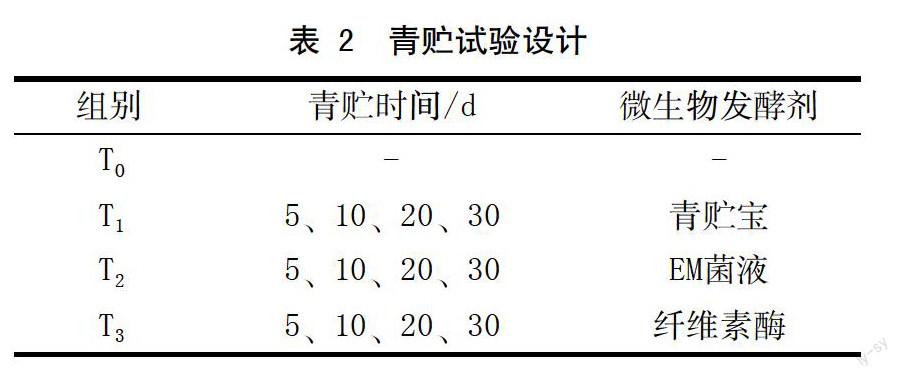
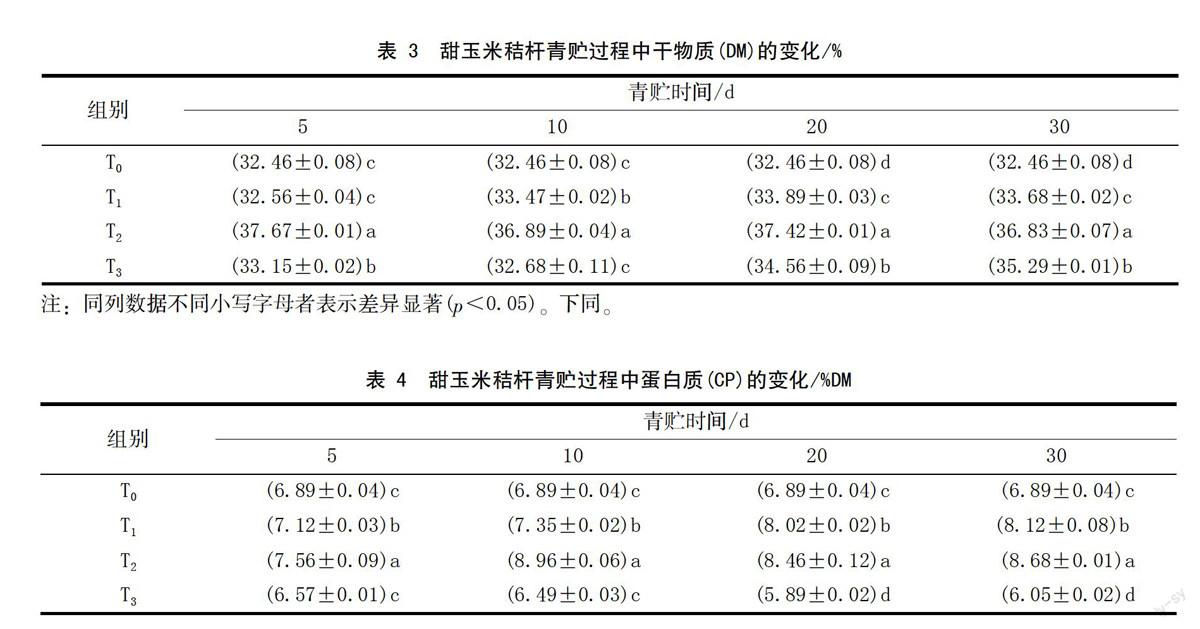
摘 要 為了研究不同微生物發(fā)酵劑對甜玉米秸稈營養(yǎng)成分的影響,用新鮮甜玉米秸稈為原料,分析了青貯寶(T1)、EM菌液(T2)和纖維素酶(T3)3種微生物發(fā)酵劑對甜玉米秸稈青貯營養(yǎng)成分的影響。結(jié)果表明:添加青貯寶、EM菌液和纖維素酶后,甜玉米秸稈粗蛋白含量分別提高了11.07%、22.13%和18.35%,中性洗滌纖維分別降低了15.63%、18.59%、18.35%。由此可見,添加EM菌液對提高甜玉米秸稈青貯的品質(zhì)效果最佳,本研究可為今后甜玉米秸稈飼料化開發(fā)提供理論依據(jù)。
關(guān)鍵詞 甜玉米秸稈 ;青貯飼料 ;微生物發(fā)酵劑 ;營養(yǎng)成分
中圖分類號 S641.2
Effects of Different Microbial Fermentation Agents on the Nutritional
Components of Sweet Corn Stalk Silage
HAN Jiancheng CHEN Shuixiu JIANG Yang JIA Rumin
(1 Research Institute of Agricultural Machinery,Chinese Academy of Tropical Agricultural Sciences,
Zhanjiang,Guangdong 524013;
2 Agricultural College, Guangdong Ocean University,Zhanjiang, Guangdong 524088)
Abstract For the influence of different microbial fermentation agents on nutrient composition of sweet corn straw,the experiment using fresh sweet corn stalk as raw material,silage treasure (T1) and EM bacteria liquid (T2) and cellulase (T3) 3 kinds of microbial fermentation of sweet corn stalk silage nutrition component of. The results show that after adding the silage of treasure,EM bacteria liquid and cellulase and sweet corn stalk crude protein content were increased,11.07% 22.13% and 18.35%,neutral detergent fiber were reduced by 15.63%,18.59%,18.35%. Thus,add EM bacteria liquid to improve the effect of sweet corn stalk silage quality is the best,so as to provide a theoretical basis for the future of sweet corn straw feed development.
Key words sweet corn stover ;silage ;microbial agents ;nutrients
甜玉米(Zea mays var.rugosa)起源于美洲大陸,是世界上分布最廣的一種作物,美國是世界上種植面積最大的國家,占世界總面積的70 %左右;中國甜玉米的栽培面積360 000 hm2左右,約占世界的21 %[1]。進(jìn)入21世紀(jì),中國甜玉米有了長足的發(fā)展,2015年全國甜玉米種植面積達(dá)383 000 hm2,主要集中在廣東、廣西、云南、浙江、江蘇、福建等南方省(區(qū))[2],其中廣東甜玉米種植面積達(dá)217 800 hm2,占全國總面積60 %以上[3]。
隨著甜玉米種植產(chǎn)業(yè)的不斷發(fā)展,收獲后的甜玉米秸稈也越來越多,2015年全國甜玉米秸稈產(chǎn)量達(dá)2 000萬t[4-5],收獲后甜玉米秸稈未經(jīng)加工處理直接飼喂牛羊,造成秸稈利用率低,再加上夏季氣候炎熱,大量秸稈集中收獲后無法長期儲存而就地焚燒或遺棄田間地頭腐敗,造成了甜玉米秸稈資源浪費(fèi)和環(huán)境污染。
甜玉米秸稈通過微生物發(fā)酵可作為很好的飼料資源被反芻動(dòng)物所利用[6-7]。然而,在中國南方由于氣候炎熱、濕度大,采取傳統(tǒng)的青貯方法,腐敗率高、品質(zhì)差、適口性不好[8-10]。……
登錄APP查看全文