SECURITY UPDATE
2016-03-29 01:45:12ByYuLintao
Beijing Review 2016年12期
By+Yu+Lintao
Just when world leaders thought that they could breathe easily after the successful Iran nuclear deal, nuclear security issues have been catapulted to the top of their agendas following North Koreas recent testing of its nuclear bombs capabilities.
When the Fourth Nuclear Security Summit(NSS) takes place from March 31 to April 1 in Washington, D.C., the Korean Peninsula will be a hot topic if not the main focus, along with efforts to improve security and close loopholes that could allow weapons to get in the hands of terrorists.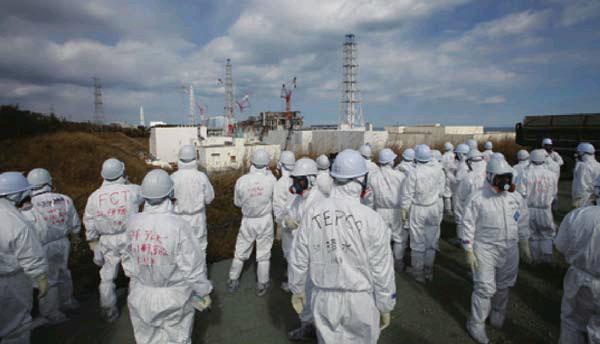
What must also be explored is the way in which the global governance system related to nuclear security can be improved beyond the NSS for the advancement of nations big and small, nuclear states or not.
Urgent problems
While the development of nuclear technology has helped diversify the worlds energy resources, it has also brought incredible security risks due to its potential use in acts of aggression. The international community has long recognized the importance of keeping such powerful weapons out of the wrong hands, and have tried to maintain only the peaceful use of the technology.
To that end, a series of treaties and mechanisms have been proposed and established, including the Nuclear Non-Proliferation Treaty, the Comprehensive Nuclear Test Ban Treaty (CTBT) and the International Atomic Energy Agency (IAEA). These institutions and mechanisms have played an important role in preventing the proliferation of nuclear weapons before the end of the Cold War era. At that time, the number of countries that had been publicly recognized as nuclear powers was limited to five.
After the end of the Cold War, however, the problem of proliferation among nation states became more prominent across the globe, particularly in South Asia, the Middle East and Northeast Asia. Longtime observers attributed the increase in the 1990s to the temporary disorder brought about to the international system after the end of the Cold War.
On the one hand, the collapse of the bipolar structure, characterized by Russia and the United States, has indirectly loosened constraints on some countries nuclear activities; on the other hand, the fundamentals of nuclear technology are no longer a secret after decades of development, which potentially allows more and more countries to manufacture dangerous weapons, Wu Chunsi, Director of the Institute of International Strategic Studies at the Shanghai Institutes for International Studies, said in an interview with Beijing Review. Nonetheless, Wu emphasized, in recent years, more non-state actors—including terrorist groups—have become the new risk for nuclear proliferation.
In the face of terrorism threats, the security—or lack thereof—of nuclear and radioactive materials in numerous countries is of primary concern.
Professor Han Hua, a researcher of international studies with Peking University, said in an analysis recently published in The Contemporary World, a Beijing-based monthly, that after the September 11th attack on the United States, more and more countries became anxious about the potential risk of terrorists acquiring nuclear weapons. It cannot be ruled out that terrorist groups could acquire enough nuclear materials to make radioactive dirty bombs. If a nuclear terrorist attack takes place, it would trigger catastrophic consequences, Han wrote.
Statistics from the IAEA show that from 1993 to 2011 there were more than 2,100 events involving theft or the illegal acquirement of nuclear or other radioactive material; about 120 each year on average. If these materials fall into the hands of terrorists, the potential consequences are unimaginable. If there is a terrorist attack on nuclear facilities, the risks posed by the potential fallout of radioactive material leakage are substantial.
U.S. President Obama described the danger of terrorists acquiring nuclear weapons as “the most immediate and extreme threat to global security” in his well-known speech in Prague in 2009. The NSS which he initiated may then be a response to perceived nuclear terrorist threats.
Moreover, Wu said that the nuclear terrorist threat has exposed the shortcomings of the existing global nuclear security governance mechanism, “particularly the lack of control and management on the nuclear activities of the non-state actors.” But she emphasized that “Obamas proposal of holding the NSS was the right kind of response for the international community to improve global efforts to protect nuclear security.”
The NSSs constraints
Since the first NSS was held in Washington, D.C. in 2010, its progress on this issue has gained recognition as it has brought the attention of world leaders back to the very technical and often neglected problem of security. The summit has since attracted an increasing number of policymakers representing both nuclear and non-nuclear states.
“With the summit as a platform, the international community reached more consensuses on the rigorous management of nuclear and other radioactive materials as well as the prevention and responses to nuclear terrorism,”said Wu. “It also contributed to the improvement of the institutional structure of nuclear security governance,” Wu added.
At the Seoul NSS in 2012, Ukraine and Mexico announced the transfer of their stock of highly enriched uranium (HEU) to another nation for safekeeping. On the same occasion, the United States and Russia agreed to convert part of their HEU, which can be used to make 3,000 nuclear weapons to low-enriched uranium. At the Hague NSS in 2014, the United States and Japan confirmed that the latter would transfer hundreds of kilograms of nuclear materials including HEU and separated plutonium to the former for disposal. Whats more, pushed by the NSS during the Hague summit, 35 countries signed the Trilateral Initiative, or Strengthening Nuclear Security Implementation, in which the signatories have committed to implementing IAEA recommendations, hosting peer reviews, and ensuring personnel competency.
Despite these accomplishments, the international community has a much higher expectation of the NSS.
First, the summits shelf-life is still in question, according to Wu. “President Obama is at the end of his term. The future of the NSS has therefore become uncertain,” said Wu. Although Obama put forward the concept of a permanent global governance body for nuclear security, his administration hasnt yet contributed specific ideas on how to construct it.
In effect, the NSS has not yet brought any lasting changes to the pre-existing architecture, and endorsement of key international agreements remains limited. So far, only 93 countries have joined the International Convention on the Suppression of Acts of Nuclear Terrorism, while the 2005 amendment to the Convention on the Physical Protection of Nuclear Materials still requires 12 more ratifications to enter into force. At present, the NSS process still lacks co- hesion and has had a relatively small impact on countries outside of the process.
In addition, Wu noted, the topics of the NSS were strictly limited to nuclear material management and the prevention of nuclear terrorism. That is of little help for the settlement of other nuclear security issues including the nuclear issue on the Korean Peninsula, and the reduction of military nuclear stockpiles, which constitute a large portion of all usable weapon materials.
Wu also pointed out that although the Obama administration made effort to push the NSS process, it has not done enough to promote other global multilateral nuclear nonproliferation mechanisms. For example, the Obama administration has not yet submitted the CTBT to the U.S. Congress for approval.
Enriching global governance
Against this backdrop, observers said new thinking should occur regarding the appropriate global governance apparatuses. Wu suggested that the new architecture should break down the historical model of big power dominance and explore a more balanced and multilateral governance structure.
“After the Cold War, the international situation has evolved greatly. More and more nonnuclear countries and developing countries have become active in nuclear governance issues. Their voice must be given full consideration,” said Wu.
Wu also claimed that the principles proposed by President Xi at the Hague NSS offer practical solutions that should be revisited. Xi said that the world should place equal emphasis on development and security; that rights and obligations should be given the same attention; and that the world should place equal emphasis on treating symptoms and causes, and advance the nuclear security endeavor in a bid to remove risks at the root.
Wu argued that although the aim of nuclear non-proliferation is peace and stability, it should not be used as an excuse to deprive developing countries legitimate rights to their own development and use of nuclear energy. Therefore, consideration toward development becomes more prominent in global nuclear security governance.